It’s a subjective question, and I’ll not be so forward as to assume any objective answers here. But it’s a question very worth whiskey fans asking ourselves as the whiskey boom continues its downward sputter.
Quite some time ago, after having blown a lot of cash on a lot of limited editions, I began to recognize the fallacy of the term. With new “limited editions” coming out nearly every week from one distillery or another, there would seem to actually be an unlimited supply of limited offerings.
It’s marketing, used to justify prices that might not fly otherwise. But one soon begins to notice the cracks in that system, how it’s a game played to stoke FOMO and fuel sales, spinning a myth of rarity and scarcity. In evident fact, the rev-up in production during the boom years ensures there will be no shortage of whiskey anytime soon. And sales have now dropped substantially. The boom is over. And the next new normal is in the process of settling in.
Considering all this, I find myself checking in again with the question of what exactly makes a “limited edition” worth its higher price tag. And I ask this question subjectively. What for me makes it worth it? Because what other people are willing to spend their money on is their business. Also, I’m not asking are they worth it. That’s a too general, too limited question. Rather, when I find them worth it or not, either way, what makes them so?
I will say, I do have some pretty strong points of view around capitalism and opportunistic business networks building false notions into their systems of marketing and distribution. I likewise have pretty strong points of view around the customer as sucker, not king, and how we deserve what we get and what we lose when we buy into these capitalist schemes. We’re not victims. We’re dumb.
But currently I’m not asking about those aspects of the big picture. Right now I really just want to touch base with my own sense of priority when it comes to this ever evolving whiskey hobby.
In an effort to draw my attention to why I buy what I do, I recently committed to only buying twelve bottles from June 2026 through June 2027. Similarly, back in June 2023 I committed to buying no whiskey at all through the following June 2024. The results of that Year of No Buying were informative. I opened many “rare” bottles I might not have otherwise. And a year of abstinence from buying effectively eradicated any remaining feelings of FOMO I’d had up until then. I felt more clear about what whiskeys I was really curious about, and what I could pass on. And “limited edition” lost any assumed luster.
So here are a handful of “limited editions” I found to be worth the elevated cost, followed by a handful I found not worth it.
In each category, I’ll note what made a bottle worth it versus not. Finally, I’ll take last call with a formal tasting of the 2022 St. George Single Malt 40th Anniversary Edition—a perfect case study for the question at hand.
Worth It
😊
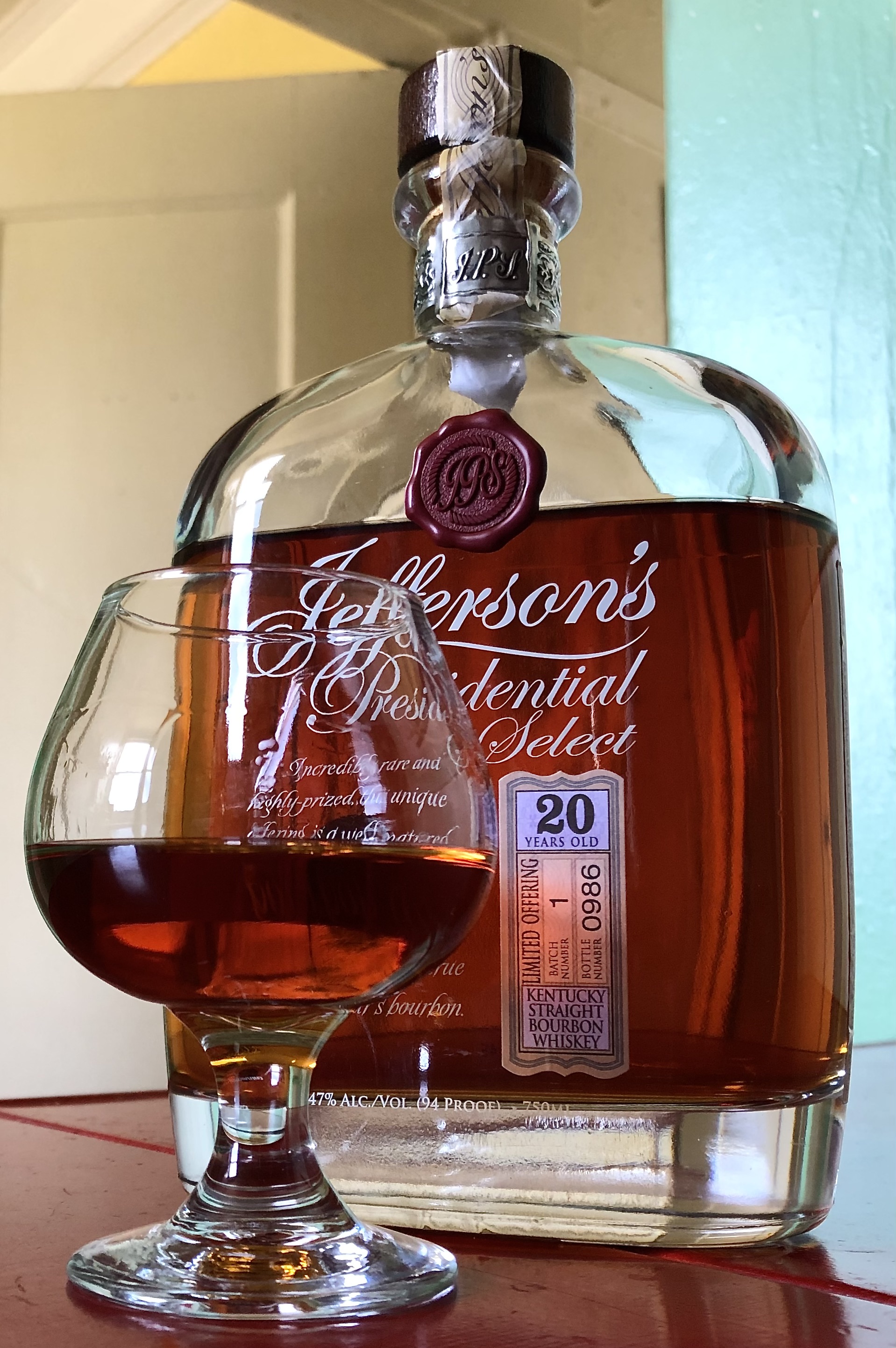
Jefferson’s
Presidential Select 20 Year
$242 – Released 2016; Bought 2020
I bought this 2016 release in 2020, from Must Have Malts in the Netherlands, so, that price includes shipping. It was a Pandemic Era impulse buy, and I was so taken with it I immediately ordered a second bottle.
This kind of find wouldn’t likely happen today. Now this same bottle would go for a few hundred more, I’m sure. Not that $242 is cheap. But in 2020 and going stir crazy at home for weeks on end, I was willing to gamble $242 on this sourced Kentucky bourbon from Jefferson’s.
Jefferson’s is one of those non-distiller producer brands that seldom kicks up much dust on the whiskey social meds. They’re respected, but not terribly sought after. And this bourbon was not among their fabled Stitzel-Weller picks from the days when nobody cared about Stitzel-Weller. I have no idea who distilled it.
But I do know that it was incredibly silky, smooth, deep, and dark. The nose led with dark cherry pie, juicy plump raisins, dusty thick cut oak, a faint eucalyptus menthol, some kind of fancy candy with chocolate and cherry truffle, everything deep and relaxed. The taste carried on with dark syrupy cherry, a bit of those juicy raisins, smooth gooey caramel sauce, some rich chocolate, and dense refined oak. The finish then lingered… for… ever…
In 2020, I was very pleased to have snagged a 2016 bottle that cost me less re-imported than many 2020 domestic 20-year bourbons would have at that same time. Once I’d tasted it, I didn’t flinch at buying a second bottle. (1) A long gone one-off release (2) of an exceptional and well-aged Kentucky bourbon (3) offered at a price that bested its contemporaries? (4) Worth it!
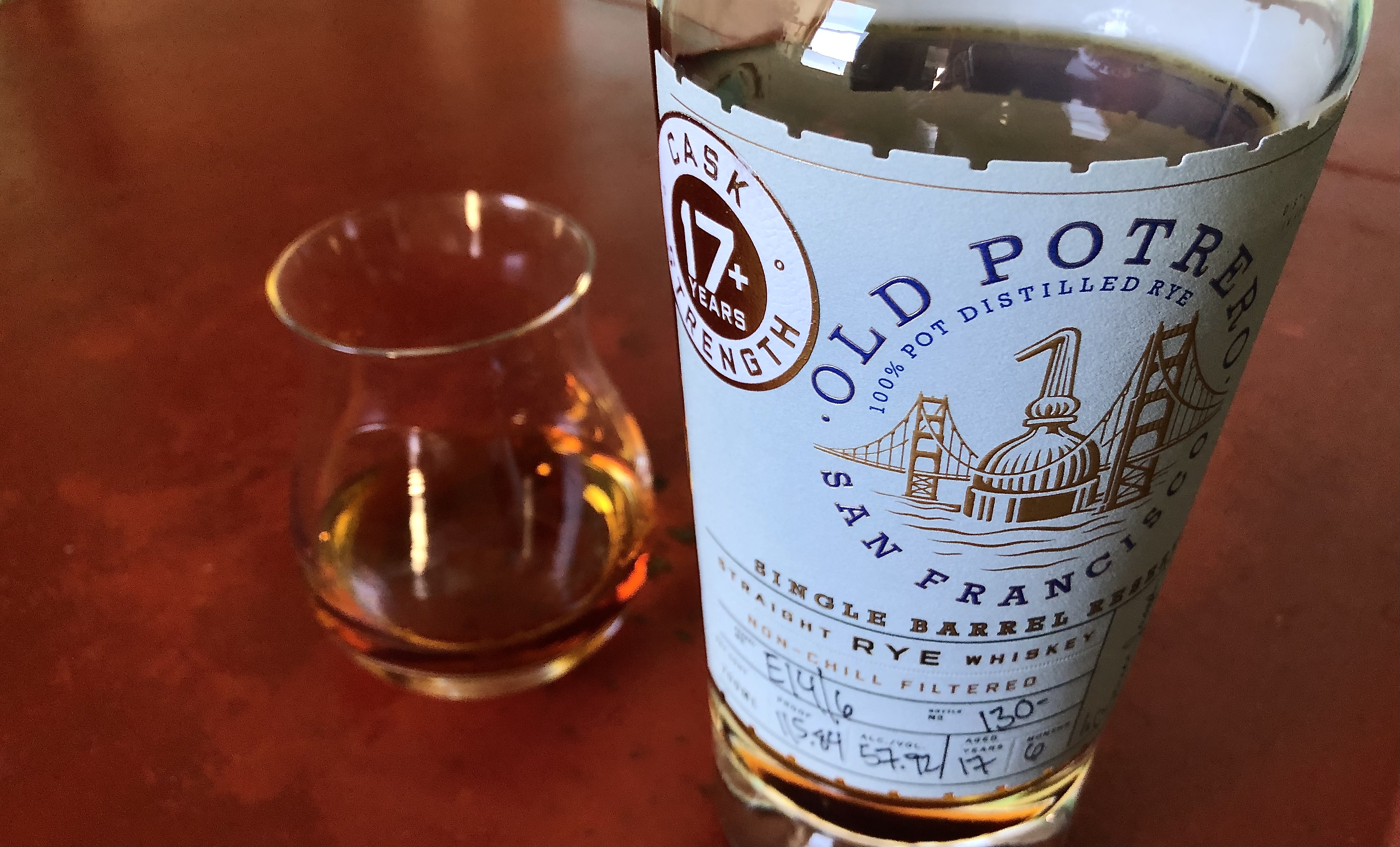
Old Potrero 17 Year
Single Barrel Cask Strength Rye
$272 – Released & Bought 2024
As a longtime Old Potrero fan, this surprise release was a no brainer for me. That said, the fact that Old Potrero SiBs can swing wildly between the brand’s dryer malt and sweet fruit notes made even this impressively well-aged release a gamble. Would it be pure bitter malt and oak? Or a dark orchard of sweetness?
Well, it came across like a fine old Armagnac, balancing its sweet and dry notes exceptionally well. On the dry side—malt, rye grass, oak, leather. On the sweet side—cherry, crème brûlée, and chocolate. I loved it.
What made it worth it was (1) my being a big fan of the brand, which is local to me and I like supporting locals; in combo with (2) the incredibly brazen yet balanced flavor profile coming from (3) 17 dang years in the barrel. Also (4) it arrived with no advanced fanfare. It just showed up on shelves one day. Boom. This lack of brouhaha was reassuring. Old Potrero just put it out, almost like it was anything else in their lineup and not an entirely unprecedented limited release. They had never before put out a proper rye whiskey anywhere near that age. I was so glad they did. And as they’ve not released more since then, it would appear to have been honest-to-goodness “limited.”
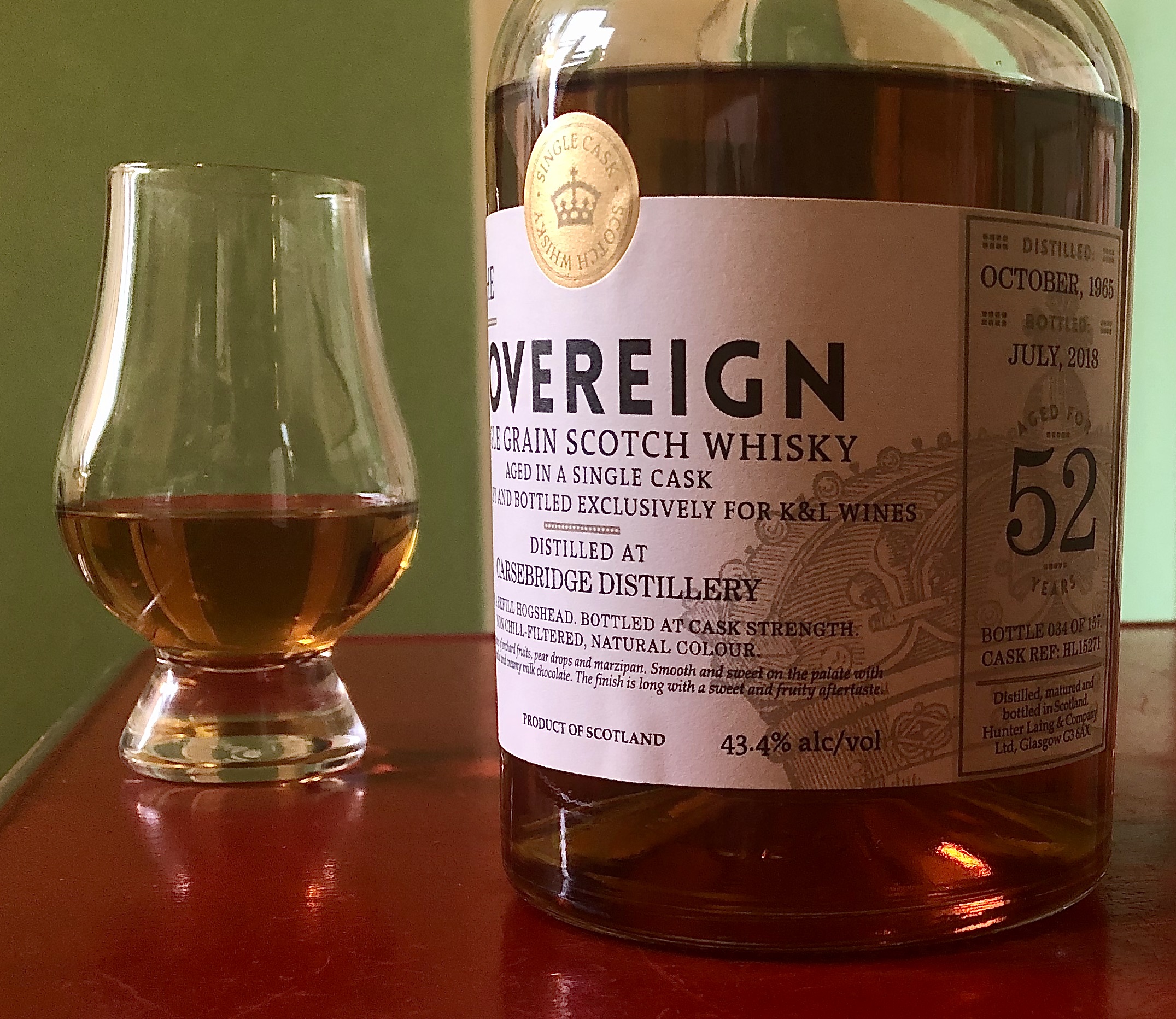
Carsebridge 52 Year
Single Grain Scotch
$381 – Released & Bought 2018
Like the Jefferson’s, does this 2018 release still count? After all, 2018 was quite a long time ago in whiskey boom years. This same release today would cost a few hundred more at least. But at the time, at $350 before tax I took a deep sigh before making my purchase.
And I was so glad I did. That same month, Macallan had also released a 52 Year bottle… for $60,000. That’s right. So I felt like I’d got quite the deal.
Carsebridge is a closed distillery with no discernible fan base. When in operation, they supplied whiskey destined to go unnamed into mass blends.
What made the purchase worth it to me was (1) the very old age, (2) priced at ~$56.6K less than Macallan’s braggart release. But also (3) I bought it in anticipation of my partner’s 52nd birthday. She is not nearly as into whisky as I am. But she has a nostalgic liking for scotch, having spent significant time in Scotland. And luckily (4) when we cracked it open it more than lived up to the hype I’d built up in my head. Apple brandy, juicy golden raisins, dried Turkish figs, crystalized honey, smoothly sanded oak, honeyed caramel, spiced throughout by cardamom, turmeric, and cumin. Utterly unique.
And a fine demonstration of why any whisky fan must keep their eye on the secondary bottlers. That’s where the truly limited editions can be found! How often does one have the opportunity to try a scotch aged half a century, and to match it with a loved one’s birthday?
Not Worth It
☹️

Wild Turkey
Master’s Keep: One
$175 – Released & Bought 2021
In 2021, the price of the annual Wild Turkey Master’s Keep series was on its ascent. Once a brand extension that sat like dust bunnies on shelves for ~$125 on average, the confluence of pandemic induced bourbon booming and Wild Turkey’s genuinely excellent whiskey was lifting the tide. By the time the Master’s Keep line came to its end with the 2025 Beacon release, the msrp had hit $300. No thank you.
The perfunctorily named One was a blend of 9, 10, and 14-year bourbons finished in toasted barrels—a trendy technique making the rounds at the time. I’m a big ol’ Wild Turkey fan, which hardly makes me unique. And like many fans I’d already been bemoaning the uptick in prices on their limited edition variations. So my expectations were climbing as my patience for the brand’s e$calation was descending.
At uncorking I found One immediately unpleasant—all dry cracked oak and little else. I didn’t even want to finish the pour! After two weeks I sat down for a formal tasting. It was better, with familiar Wild Turkey oak, cherry, and baking spice notes. But still it just wasn’t great.
A week and a half later I gave it another formal tasting. To my surprise, it had transformed. Dusty oak on the nose, backed by bright baked cherry, a dusting of baking spices like in a cinnamon roll, and faint dry caramel. On the taste, the dusty oak and baked cherry were in perfect balance, with a nice soft caramel note running underneath them. The finish then took its time to wrap things up, lingering with caramel, dark chocolate, a bit of the cherry and the soft dusty oak.
Although I was relieved the bottle had taken this turn, still it was on par with standard Wild Turkey releases like certain Russell’s Reserve SiBs I’d had. So why pay $175 rather than $65?
And that’s a key beef I’ve had with Wild Turkey as its limited edition pricing has continued to skyrocket, culminating (for the moment) with their 2026 Gold Foil 16 Year priced at a laughable $400 msrp. In 2020 they’d released the exceptional Russell’s Reserve 16 Year at $250 msrp. Same age, $150 less and still overpriced back then.
What made One—and what has likewise made several other Wild Turkey limited editions—not worth it is (1) the fact that so many of their standard releases are so good. Russell’s Reserve SiBs, whether their bourbons or ryes, can be extraordinary. Even Wild Turkey 101 8 Year and 12 Year hold their own against much pricier bourbons. Comparing various Wild Turkey releases side by side can reveal how whackadoodle their pricing is in relation to their general quality.
In short, I don’t buy Wild Turkey limited editions anymore. Those who do, you’re welcome—I’m one less person in line! 😉
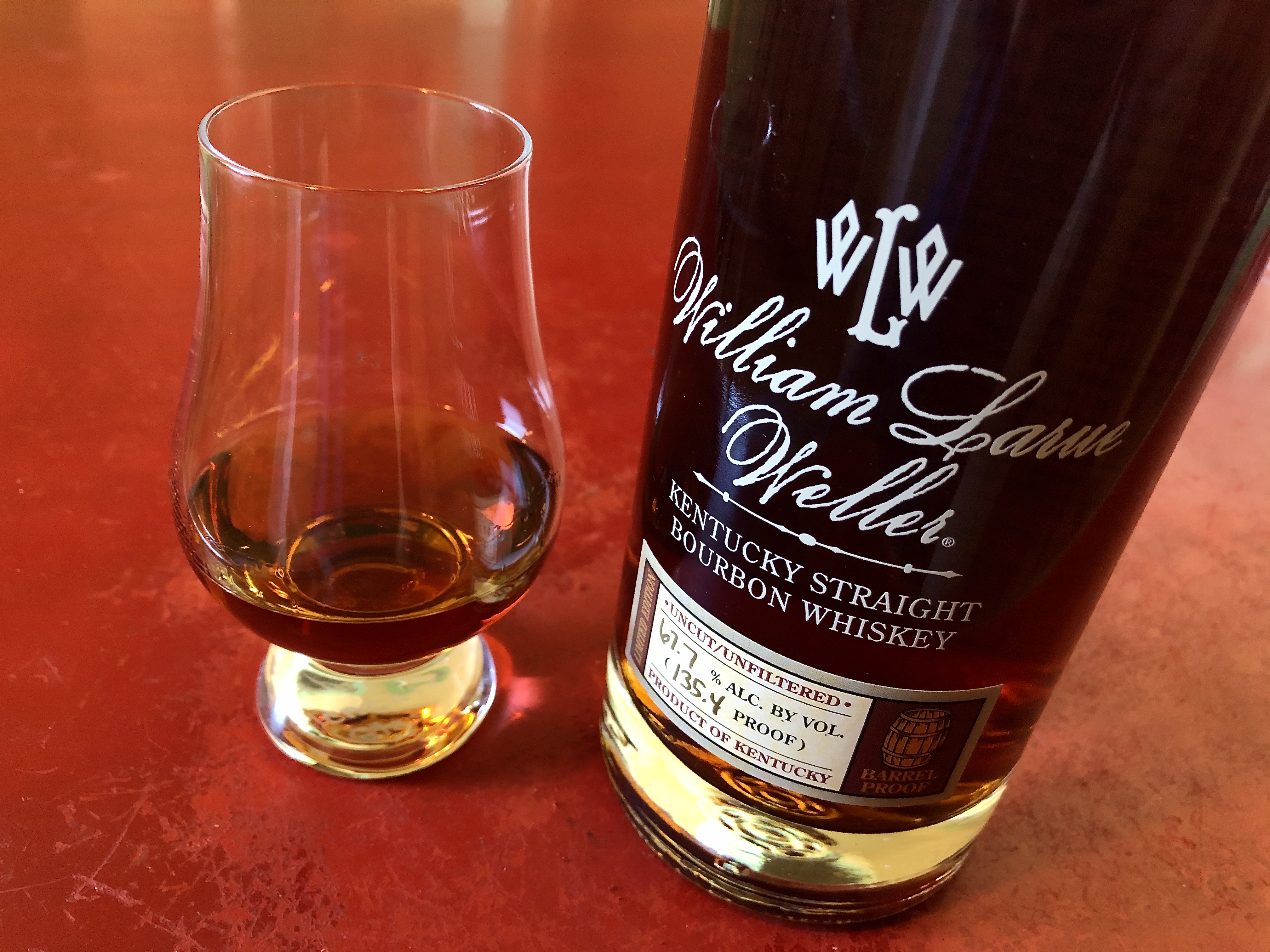
William Larue Weller (2016)
Msrp was $90 in 2016
I paid $200 in 2018
But good luck now at even 4x that price!
This will be heresy to some, and a dead horse to others. I tried and tried with this bottle. Halfway through it, I sold it to a friend for $100.
Of the annual Buffalo Trace Antique Collection releases, William Larue Weller is easily the most sought after, with George T. Stagg a close second. It’s because Weller shares the same wheated mash bill with the Van Winkle bourbons—still the holy water held high on the hill for many bourbon fans, ever since Anthony Bourdain anointed it many years ago. William Larue Weller is effectively a well-aged, barrel strength cousin to Van Winkle.
This 2016 release was aged 12 years 7 months, and bottled at a scorching 135.4 proof. When I picked it up for $200 I was ecstatic. Not only did I never expect to nab a William Larue Weller, I never imagined I’d do so for “only” $200. But a local shop keeper was kind to me.
This was 2018, of course, and very shortly thereafter that kind of kindness would pretty much end anywhere in San Francisco. Bourbon fans just got too demanding, and many retailers grew understandably annoyed by the entitled shenanigans of these fair-weather customers. Kind favors around bourbon unicorns were soon replaced with raffles, bundle “deals,” and four-digit prices. I get it, supply and demand and FOMO-fueled hype and all. But nope.
Originally intended as a gift for my dad, who’s fleeting interest in distilled spirits had passed, I eventually cracked this bottle for my birthday in 2020. I set it up as the final leg of a Buffalo Trace wheated flight, starting with the 107-proof Pappy Van Winkle 15 Year, then a Weller Full Proof store pick bottled at 114 proof, and finally the William Larue at its blazing 135.4 proof.
To my surprise and disappointment, out of the gate, the fabled William Larue Weller was not my favorite experience. The familiar Weller apple, caramel, and cherry flavors were all there, but hemmed in by a harsh edge. Weeks and then months later, that harsh edge persisted. I held on to the bottle, clinging to my hopes that either it or I would come around. I tried it neat, on ice, watered down. I tried it in a variety of glasses. After about a year, though there were some aspects of the bourbon I enjoyed, that grating bitter edginess was still just too much. I understood why William Larue Weller was so sought after. It’s a flavor bomb for sure. And maybe at a lower proof I’d have gone gaga over it.
I’ll never know. I let the second half of the bottle go for half what I’d paid, and no regrets. I’ve never hunted for any BTAC since. I don’t find them worth it, primarily due to (1) the price having continued to climb into the solar system, and (2) that the sheer intensity of hype around these bottles is so unappealing to my anti-capitalist tendencies.
Whiskey is a privileged hobby, and I’m privileged to be able to indulge in it. When whiskey fans become hysterical about a brand, and retailers openly take up piracy, the fun just drops out of the bottom for me personally. And at this point, most things Buffalo Trace are no fun. Why stumble over myself for their stuff given the massive selection of good whiskeys available to us now?

Midleton Very Rare
Dair Ghaelach Kylebeg Wood Tree 6
$304 – Released & Bought 2022
The $304 I paid was on sale plus tax. The original msrp for the Midleton Very Rare Dair Ghaelach Kylebeg Wood series was $350.
On the one hand, I like Irish whiskey. As a region, it’s the great party whiskey. Dance parties or dinner parties. Dress down or dress up. Rambunctious or witty. There’s nothing wrong with good ol’ Jameson. The punchy Redbreast 12 Year Cask Strength always hits the spot. Teeling makes a fine host for most any occasion.
Irish Whiskey reminds me of Wild Turkey in a certain way. Not in terms of flavor profile. It’s that problem that when even the bottom-shelf stuff is so good, why pay a hefty amount for the top-shelf stuff?
Midleton Very Rare sits on Midleton Distillery’s top-most shelf. It’s an annual release in variation, often quite well aged. In 2022, the variation was to have used barrels made of rare native Irish oak trees, to finish whiskeys that had already aged 15 to 28 years. Six specific trees were brought down and barrels made from their wood. Six batches were released, each featuring whiskeys aged in a different tree. I read multiple reviews before rolling the dice on Tree 6.
It was… fine. Mysterious in a way. Yet dull, like a thick but very dry forest.
I’d enjoyed various Redbreast limited editions far more, and at roughly a third the price. This whiskey confirmed once and for all that I never need to spend $$$ on Irish whiskey. (1) There are enough $$ and $ Irish whiskey brands that are already quite good, sometimes better! (2) The fancy wooden packaging of high-end releases adds nothing to the taste, only to the world’s trash heaps. Similarly (3) there was a kind of icky irony that these rare Irish oak trees, growing on a private estate’s nature reserve, were cut down and sliced into barrels. And (4) the general Irish whiskey profile is pretty consistent to my tastes from brand to brand, even when I get out from under the massive Midleton umbrella. So, even when I like it, I’m never really surprised by Irish whiskey. And If I’m going to pay a premium I’d like to be surprised.
Last Call
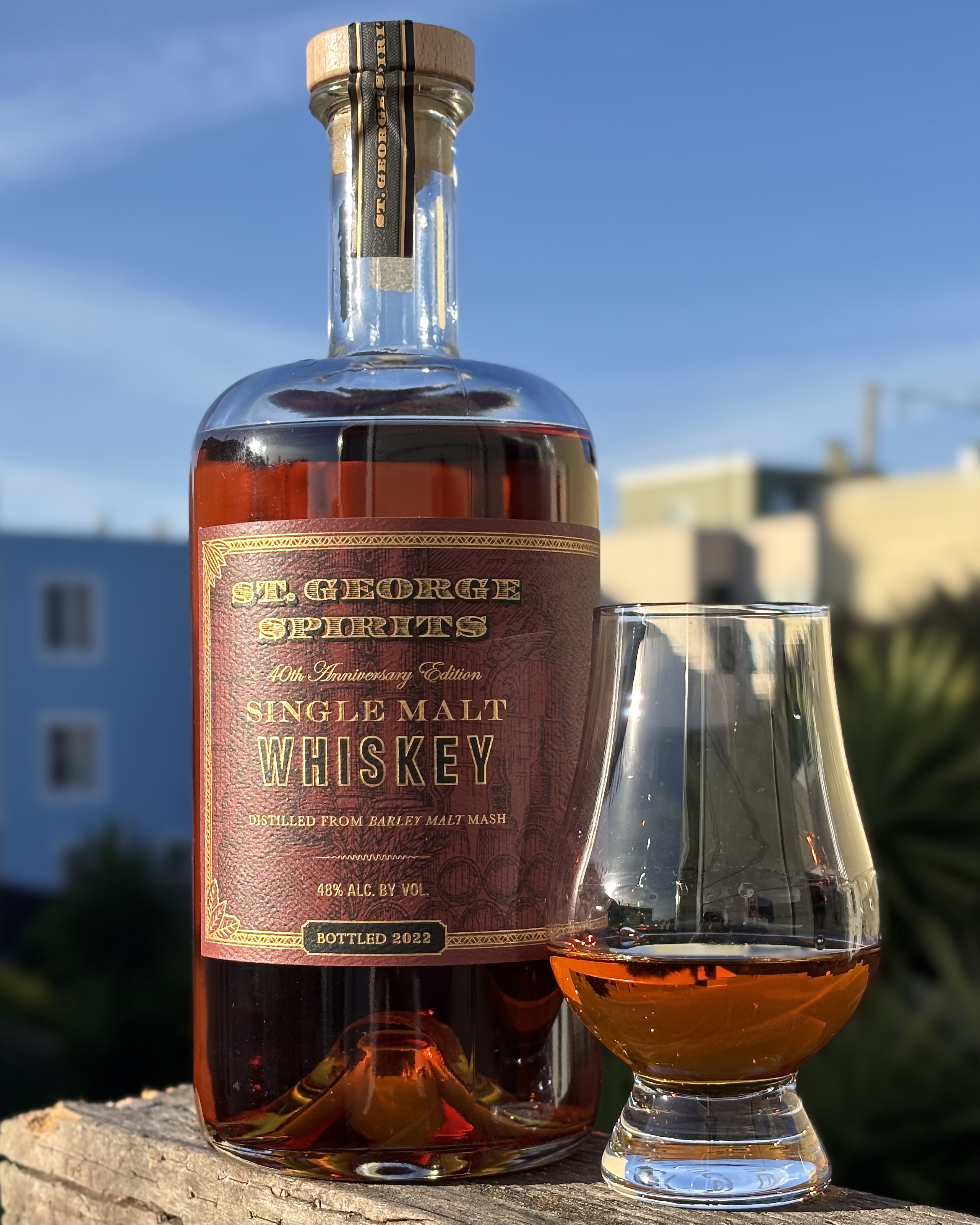
So let’s taste something! And this is actually the bottle that inspired this post.
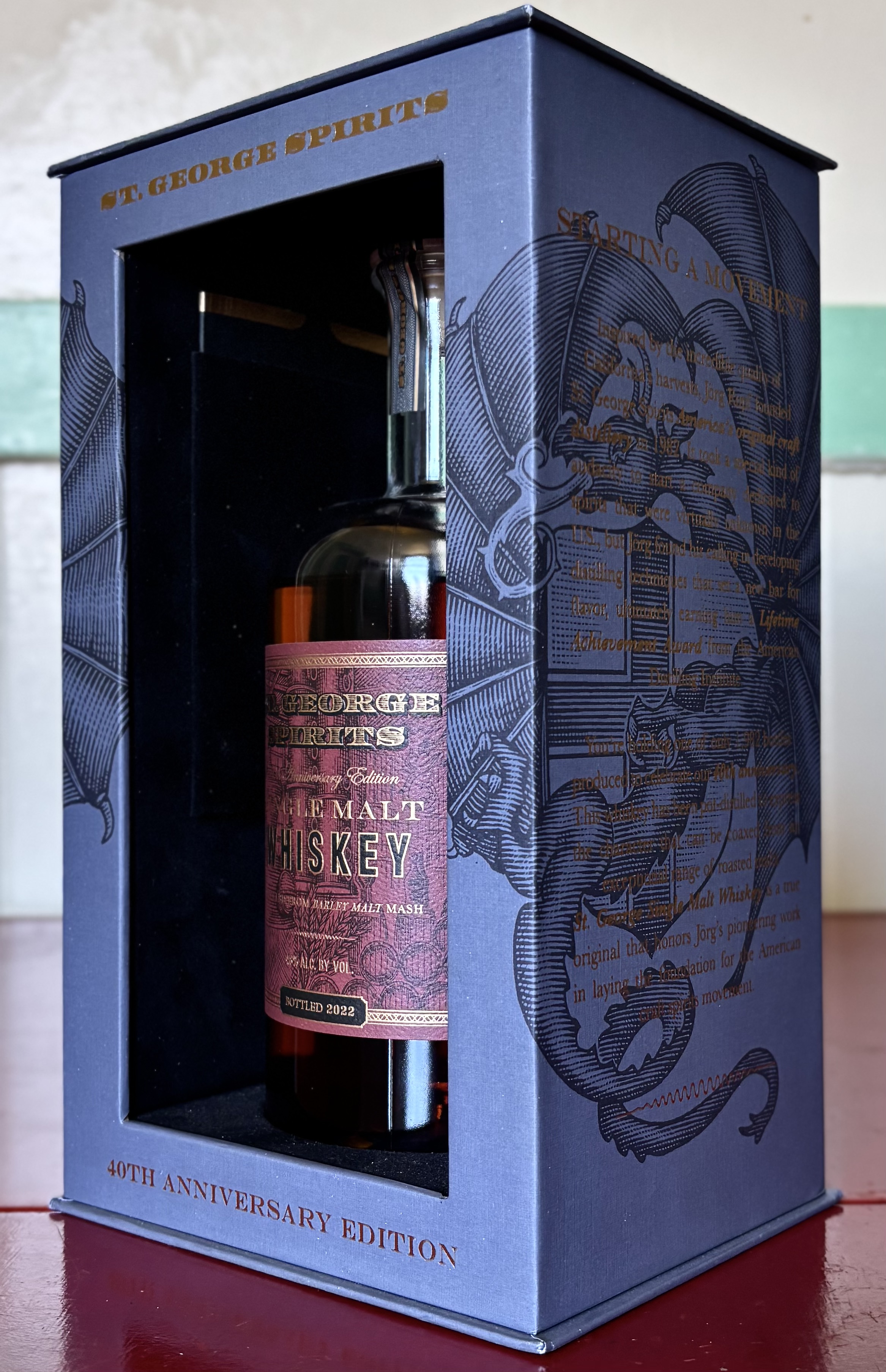
ST. GEORGE SINGLE MALT
40TH ANNIVERSARY EDITION (2022)MASH BILL – 100% two-row barley
PROOF – 96
AGE – either 4-to-13 years or 5-to-25 years, depending on who you read 🤷🏼♂️, in 14 casks, including used Umeshu, Apple Brandy, Cognac, Sherry, Port, and California Style Sauternes
DISTILLERY – St. George Spirits
PRICE – $407 (on sale at $375 before tax; msrp +tax was originally ~$545)
I’ll start by noting that I am a big St. George Single Malt fan. Their annual release is a December holiday staple on my home shelf. I love its dependable flavor profile of cream, citric, and candy notes. In any variation from year to year, this whiskey reminds me of Christmas cookies my grandma used to make. It’s also just a really elegant, approachable, complex American single malt whiskey. Love it.
So imagine my excitement in 2022 when their 40th Anniversary Edition was announced. And then imagine my disappointment that they’d priced it at $500 msrp.
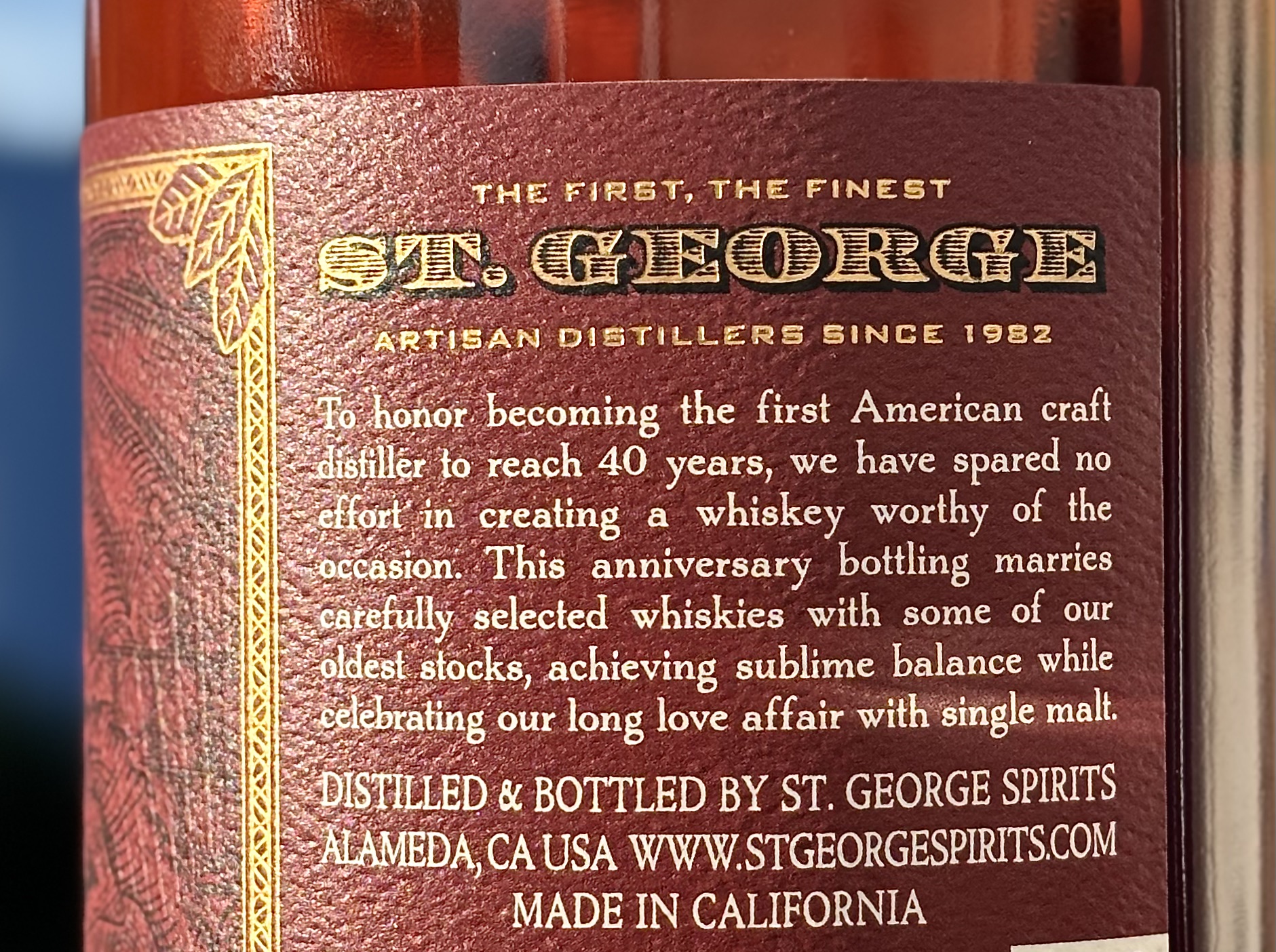
To be frank, I believe St. George Spirits overestimated their value, even to their fans. After a flurry of initial sales to the diehards with deep pockets, bottles sat on shelves all over town. Eventually some retailers got wise, and marked it down to $400. Still it sat there. When a local shop recently put it out for $375, which is only a nudge above their wholesale cost, as a birthday splurge to myself I finally bit. Meanwhile, I know another local shop currently asking $1000 for a bottle—a clueless price. That bottle has never moved and it never will.
At uncorking I found it to be as familiar and exceptional as any of the standard annual releases. I loved it—as a tasting experience. But given the consistent quality of the standard releases, I did not find it worth the price I’d paid. The age range, whatever it actually is, is not unprecedented among past annual releases, so age isn’t the draw. I understand from the press release that they were very selective about which barrels they included in the blend, a first-ever use of an ex-umeshu cask among them. Great. The results of that careful attention are excellent. But with St. George the results are always excellent, so…
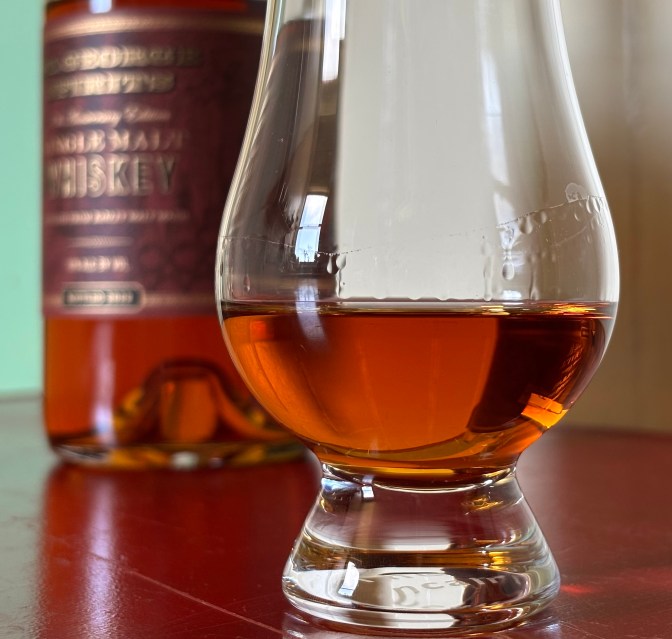
Let’s get into this glass. Here we are now, two weeks after uncorking and two pours into the bottle. These brief notes were taken using a traditional Glencairn.
COLOR – vibrant medium-oranges, slightly russet, with rich highlights in the same range of color, verging into tarnished brass
NOSE – rich, dark in a vibrant way, with candied and brandied stone fruits like plum, cherry, and apricot; also black and boysenberries, syrupy chocolate-caramel, subtle malt and oak etching a nice thin bitter line around it all
TASTE – Echoes the vibrancy and darker fruit and caramel notes of the nose right up front, with a silky-syrupy texture, a subtle dash of bitter grapefruit zest, ending in a peppery burst made of equal parts black pepper and ABV
FINISH – the malt and oak are etched a touch thicker here, still allowing the syrupy candy and rich dark fruit and berry notes to linger
OVERALL – a rich, decadent, complex, broody single malt
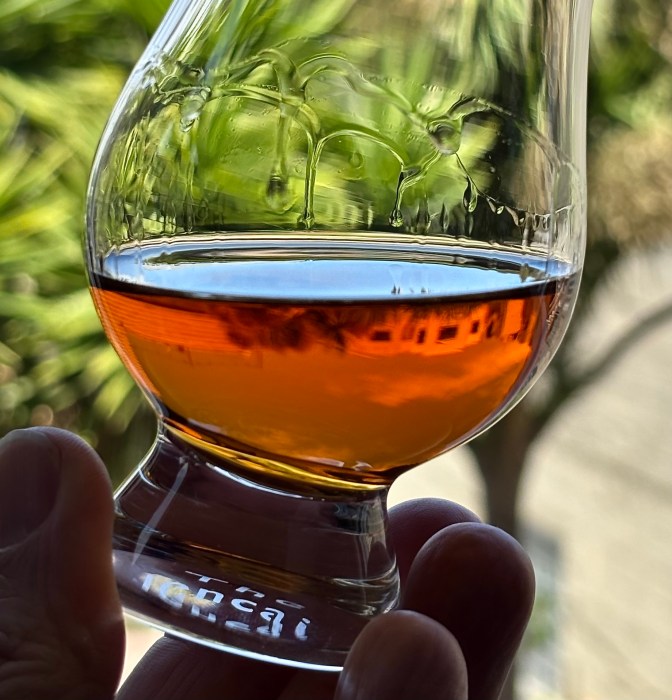
On this second tasting, I’m appreciating the distinction from the standard annual releases much more. This blend is certainly darker. The standard annual St. George Single Malts tend to lean toward much brighter takes on the core aromas and flavors. This 40th Anniversary release is easily broodier, with a wider range of related notes.
The inclusion in this release of port wine casks took my sense memories to a single barrel that came out in early 2025. That bottle spent nearly 10 years in a port cask, and, like this 40th Anniversary release, the results were stormier than the annual blend. The 40th is even darker than that single barrel, while still not relinquishing the vibrant brightness that makes St. George Single Malt so appealing.
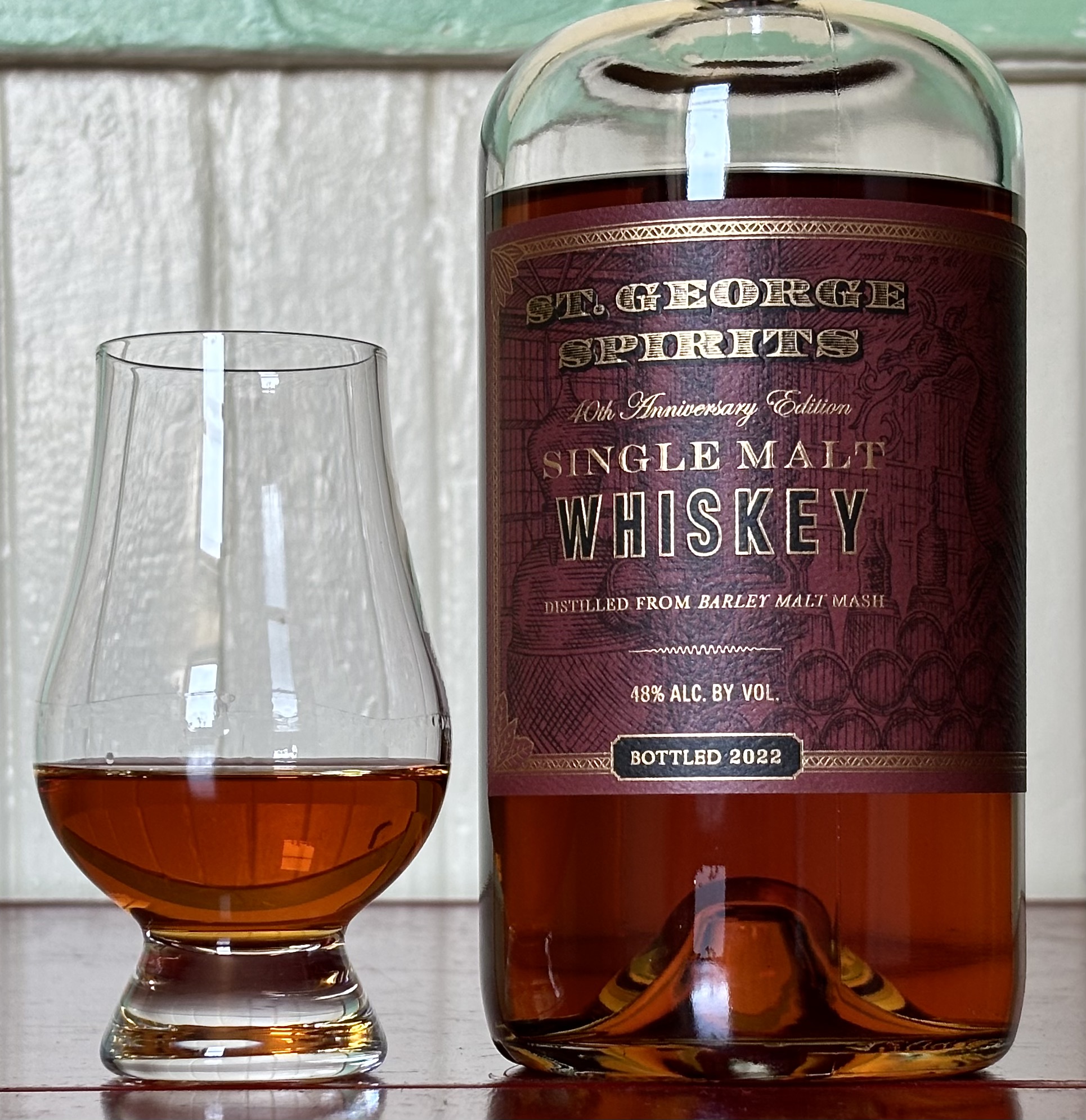
And with regard to the present post’s subject, is it worth it?
Ultimately no. Even at the discounted price I paid. It’s an excellent whiskey. And although the distinctions between this and the annual releases are clearer for me now, a price jump from $100 to $500 still strikes me as outrageous. The 40th Anniversary release does come with a fancy box. But I don’t like excess packaging. It’s trash, even when it’s pretty.
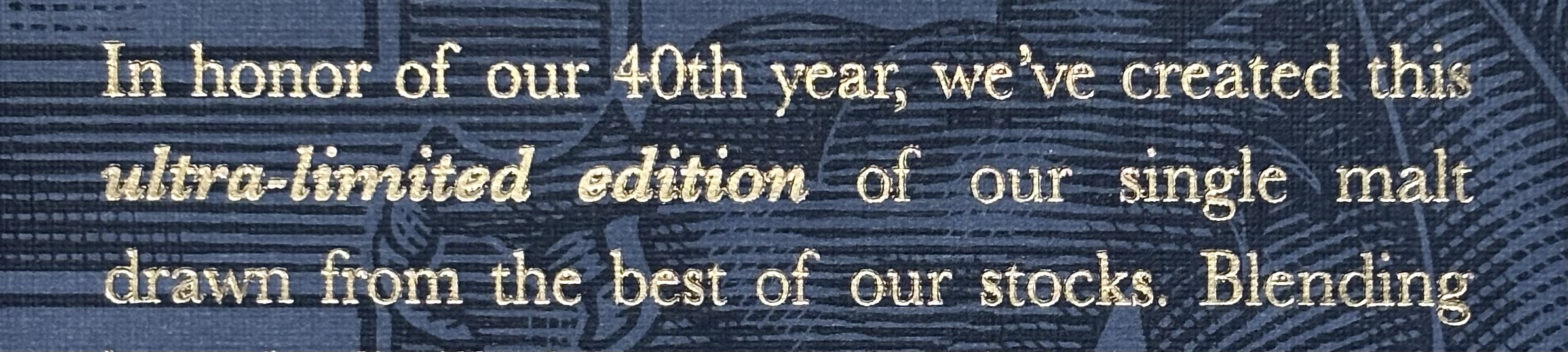
On the side of this fancy box, the release is described as an “ultra-limited edition.” Is it? They only made 1,982 bottles—a reference to the year St. George Spirits was founded. And one can certainly argue that 1,982 bottles is quite limited compared to most mass or even “premium” releases. Yet the fact remains one can find this bottle sitting on shelves today. Four years after its release, I got mine at a nudge or two above wholesale before tax. That means it’s not selling. So, despite the number of bottles produced, is “limited” a term also relative to sales? Does “limited” status have an expiration date?
Looking back over the seven bottles detailed in this post, the factors of “worth it” versus “not worth it” appear to be—for me—not any one of these alone, but some combination of them:
I doubt this range of factors comes as a surprise to any longtime whisk(e)y geek. Anyone develops their tastes and consumer threshold over time. As geeks, however, our sense of curiosity and penchant for obsession sometimes get the better of our wallets. So it can be useful to check in now and then, as we evolve, with why we buy what we do. All the better for the journey ahead.
Cheers!
🥃