THE OLD-FASHIONED
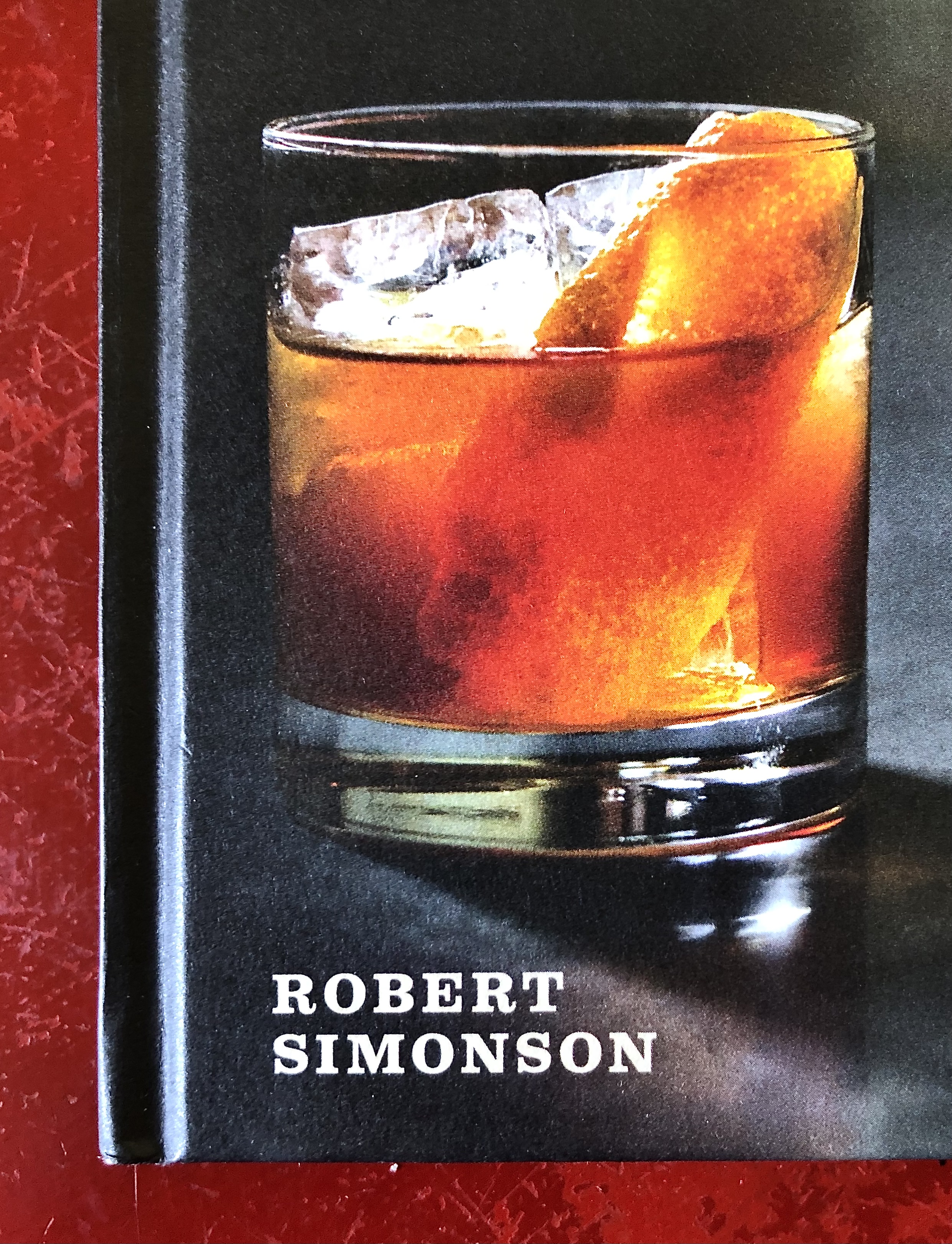
The Story of the World’s First Classic CocktailBY – Robert Simonson. Photography Daniel Krieger.
PUBLISHER – Ten Speed Press, Berkeley.
YEAR – 2014

When I wrote about Tom Bullock’s 1917 book, The Ideal Bartender, in February 2022, I began by noting this:
I have avoided cocktails. They intrigue me greatly, from the standpoints of taste and creativity. But I fear what going down the cocktail rabbit hole would do to my bank account! My kitchen’s cramped pantry already houses roughly 150 bottles of whiskey on any given day, arranged in tight orderly lines like a corps de ballet. A bottle-kill inevitably signals a fresh uncorking. Emptied bottles are ushered away and promptly replaced by new hopefuls waiting in the wings for their moment.
Were I to add to this ensemble a corps de bottlé of vermouth, gin, vodka, bitters, syrup, amaro, mezcal, tequila, brandy, all in variation, not to mention a steady supply of fresh lemons, limes, oranges, apples, cherries, assorted other seasonal fruit and herbal garnishes, not to further mention fresh ice in cubes of various dimensions and the occasional sphere, and I haven’t even got into all the shiny metal equipment—jiggers, special spoons and knives, shakers, strainers… Well, it’s quite a lot.
But a seed had been planted. I’d picked up Jim Meehan’s Bartender Manual and Gary Regan’s The Joy of Mixology as well. Yet still that seed of curiosity lay dormant…
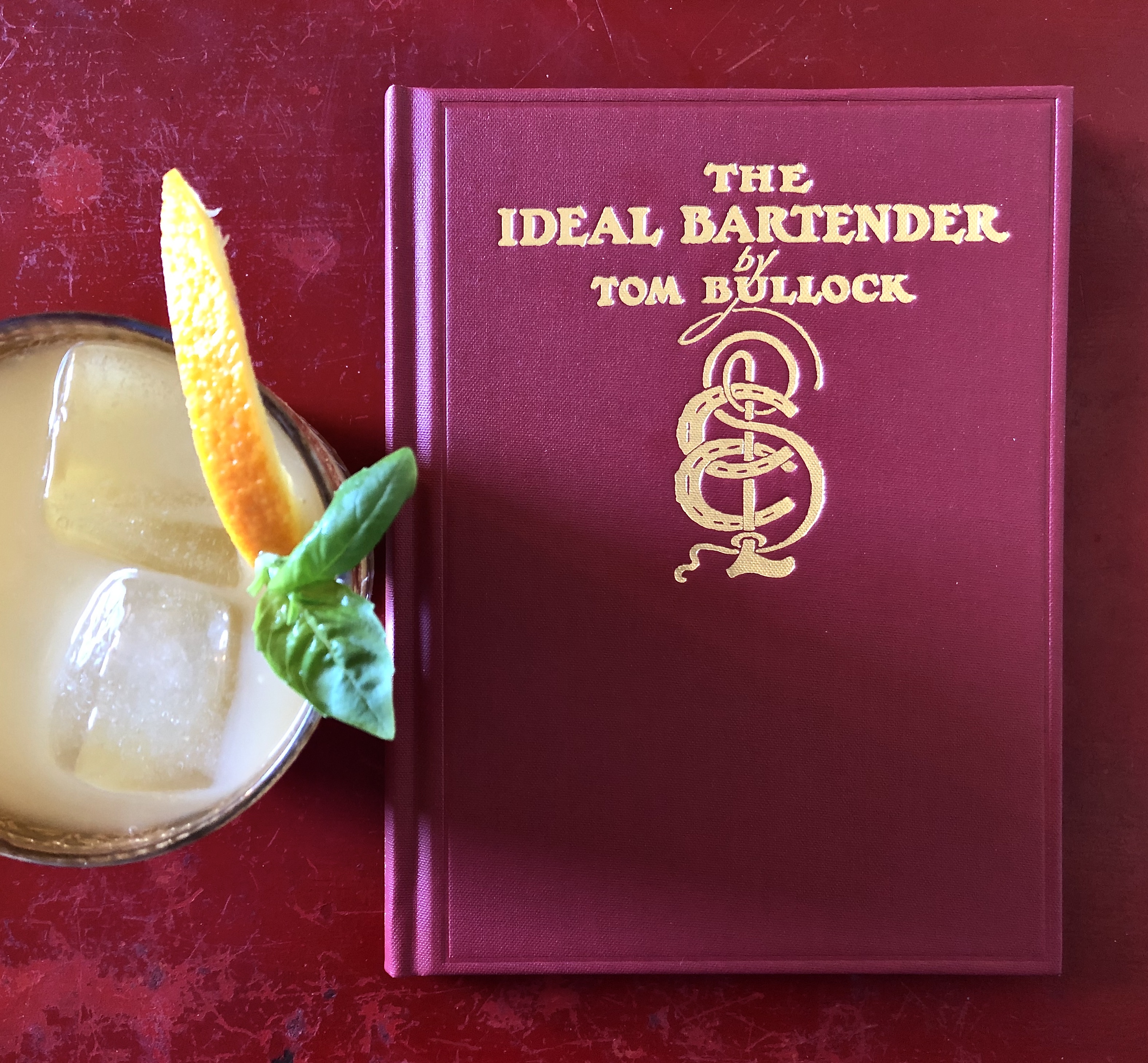
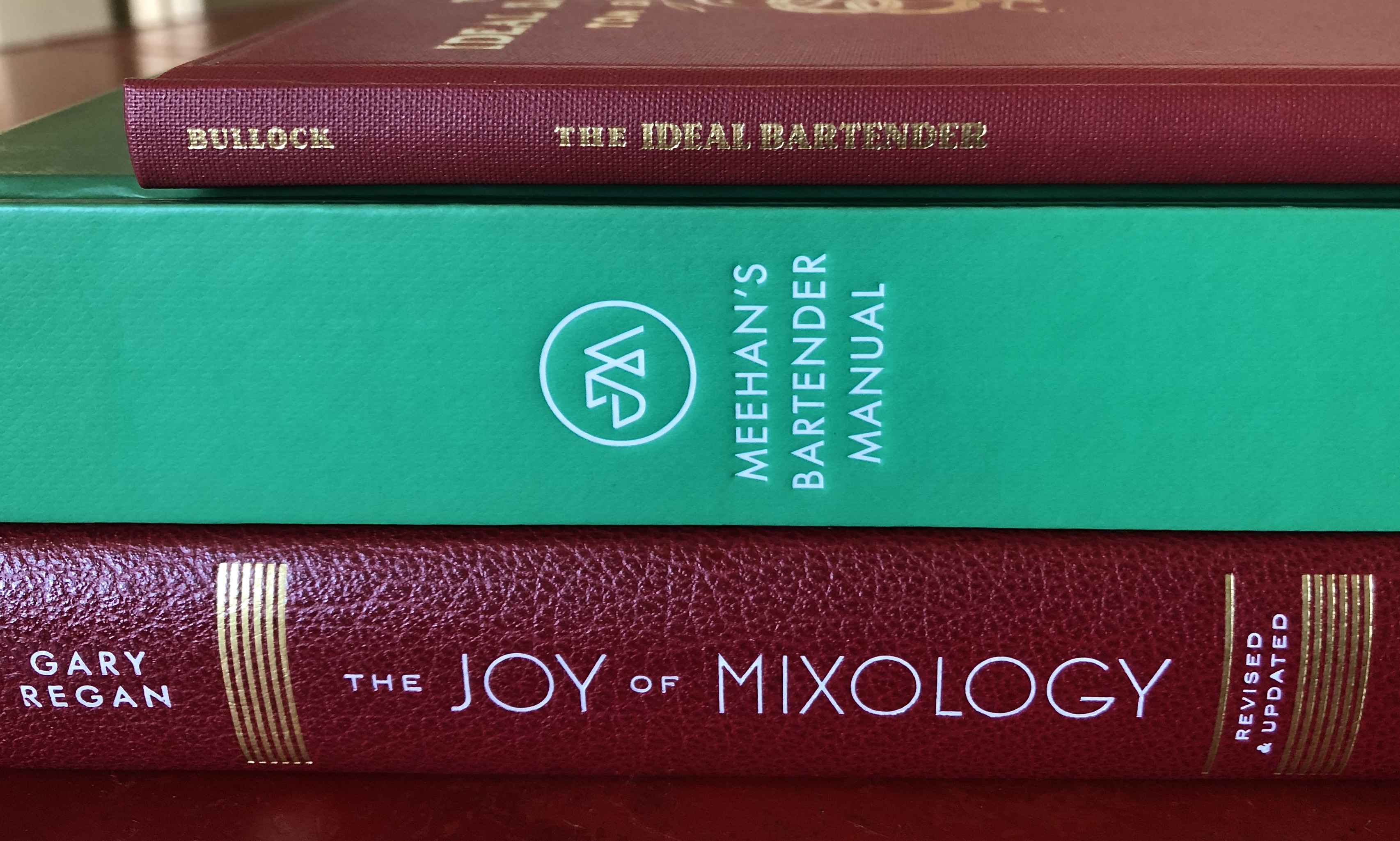
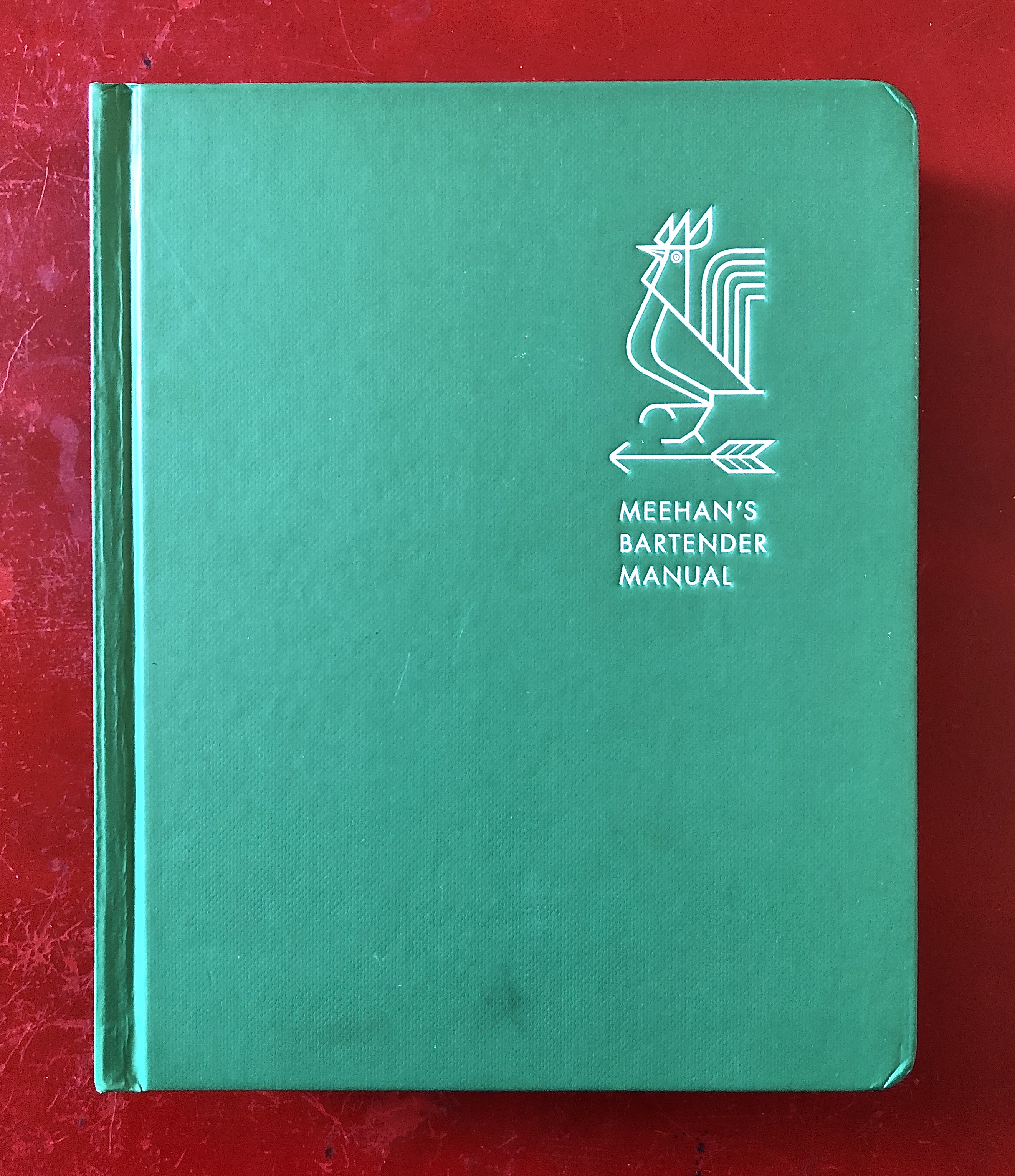
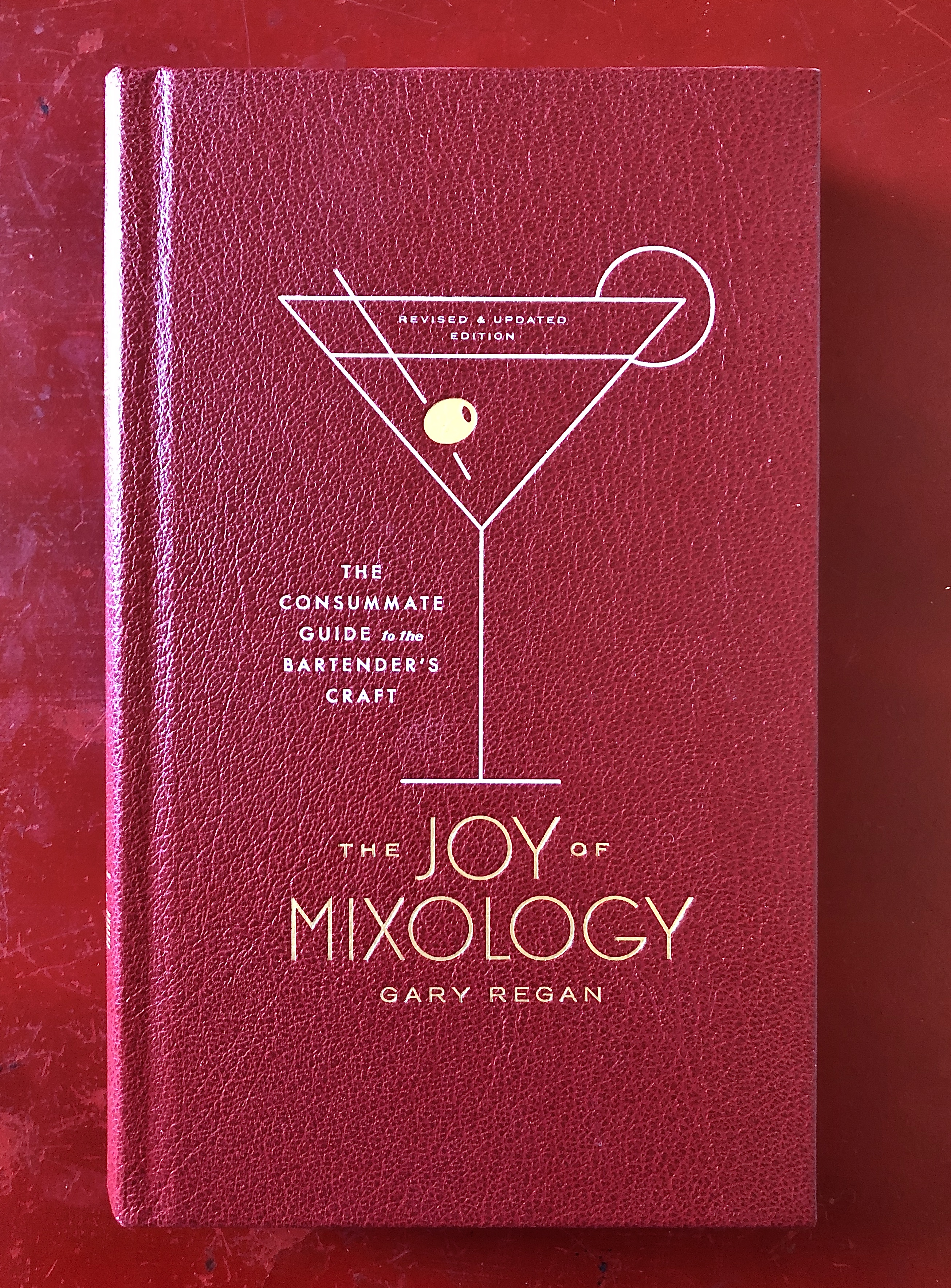
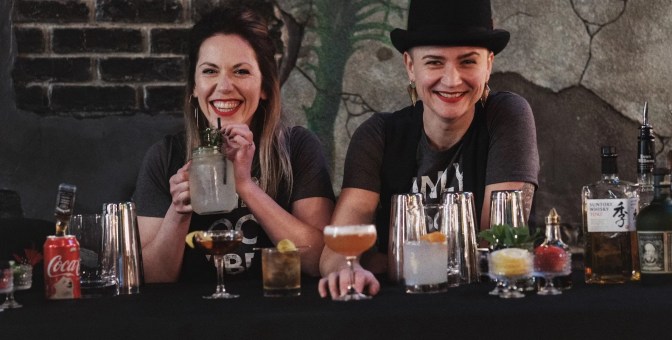
…Until later that year. In August 2022, I interviewed Yana Nogid and Katya Skye, joint founders of Manhattan Zodiac, a San Francisco bar and cocktail consulting business. Their philosophical approach to making, talking about, and teaching how to mix more inclusive cocktails was intriguing. The seed planted by Bullock’s book had now gotten a little rain, but no sprout had yet cracked the hull.
Then in October 2022, I happened upon a copy of William “Cocktail Bill” Boothby’s 1908 book, The World’s Drinks and How to Mix Them. That set me off on a time-hopping journey across San Francisco, using Boothby’s prolific career behind the bar as a map. The experience heightened my attention to the many layers of San Francisco’s history. And I enjoyed several Boothby Cocktails at a variety of bars. But still I managed to resist the stirring allure of mixology.

Finally, in January 2023, I succumbed.
Yana Nogid invited me to sit in on a cocktail making class she was teaching. We made two cocktails, a Winter Daisy (vodka, lemon and lime juice, rosemary grenadine syrup, Cointreau) and a Maple Old-Fashioned (bourbon, maple syrup, bitters). I went straight from the class to Cask on Third, one of San Francisco’s high-end liquor shops featuring a table full of bar tools. I purchased everything Yana had indicated was essential. Then I headed over to The Booksmith, my neighborhood brick-and-mortar book shop, and picked up Julia Momosé’s The Way of the Cocktail. Her particular attention to detail echoed Yana’s, with an emphasis on Momosé’s Japanese heritage and its heightened attention to hospitality.

That seed planted by Bullock had now fully cracked through the surface and was growing wildly. As did the number of bottles on my small pantry shelf and the door-rack in my refrigerator!
Experimenting with recipes and tweaks on recipes, I found myself honing in on the classic Whiskey Sour and Old-Fashioned as my go-to templates. Of the two, the Old-Fashioned was the simpler to execute. So when I heard about Robert Simonson’s 2014 book dedicated to the history of this key cocktail, I headed straight on over to The Booksmith.
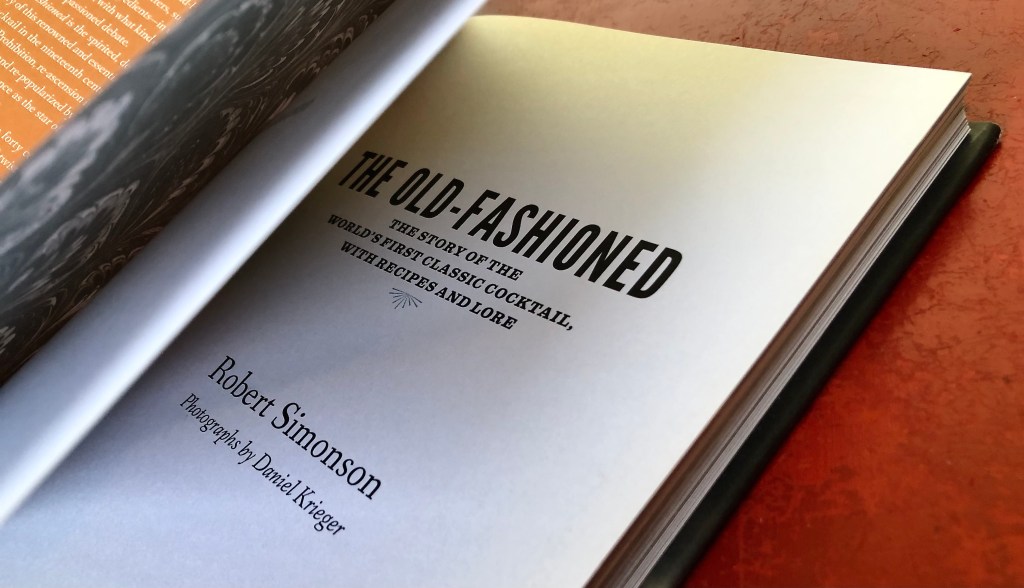
At 168 pages bound within compact dimensions, The Old-Fashioned is easy to hold and carry and a relatively quick read. A great book for your bus or subway commute, if you have one. More obviously it makes a perfect companion for your five o’clock drink.
After a brief preface, the book proceeds in two parts—the first a history of the drink, and the second an assortment of recipes drawn from the cocktail’s various eras.
Simonson’s historical account is remarkably thorough. Who would guess the evolution of a single drink would feature so many characters over so many generations? Some facts cannot be confirmed with finality, of course—often the case when liquor is involved. But Simonson does a good job cross-referencing various cocktail manuals and menus, checking their dates and venues, analyzing shifts of language, in these ways mapping the progress of trends from the cocktail’s origins as the “Whiskey Cocktail,” a medicinal breakfast eye-opener circa 1862, served in a wine glass, to the classic Old-Fashioned holding down the corner of most any bar’s menu today.

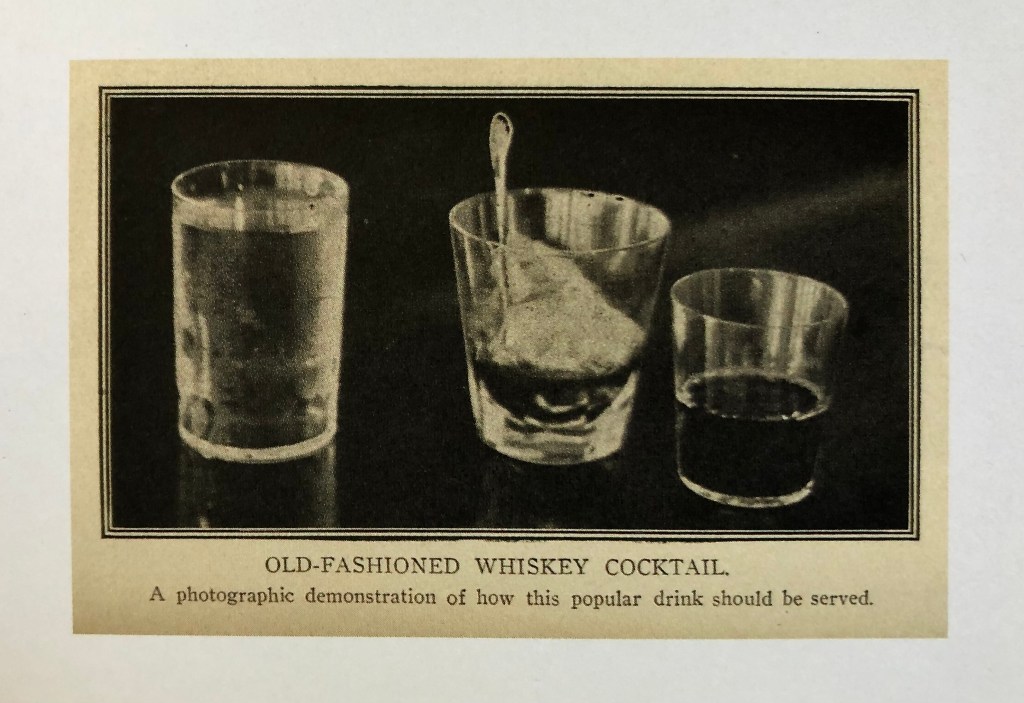
For a period from the late nineteenth century and into the early twentieth, the drink often retained an aesthetic aspect of its medicinal origins. Patrons might be served the cocktail in parts, the sugar and bitters pre-muddled by the bartender but the whiskey and some water provided in side glasses, for the patron to add themselves. A spoon was also supplied for stirring, and to scrape out the sweet mash of sugar at the bottom of the glass, the drink’s final punctuation.
When Prohibition then sent drinking underground and behind revolving wall panels, poor quality whiskey used in Old-Fashioned cocktails was made palatable with the addition of muddled fruit. This became so prevalent that drinkers who preferred their cocktail the old fashioned way dismissed the revised drink as fruit salad having a night on the town.

Simonson continues to follow the cocktail’s evolution through the twentieth century, marking ongoing regional claims and debates around various nomenclature, recipes, and supposed firsts.
Here the gender socio-politics of cocktails are briefly explored as well. In the post-Prohibition era, women emerged with comparatively greater freedoms to socialize as they pleased, which also meant drinking as they pleased. In the twenty-first century, the television show Mad Men would mark the Old-Fashioned as a mid-century man’s drink. But back in the first half of the twentieth century, it was still the top pick of women ordering at the bar. Their innately keen sense of smell and taste made them more attentive to ingredients than their male counterparts, resulting in requests that in turn resulted in the cocktail’s further evolution. More or less fruit, this fruit versus that, how many dashes of bitters were too many, rye or bourbon or brandy…
The popularity of Mad Men in combination with whiskey’s revival as the distilled spirit of choice brought about renewed interest in mixology, and a heightened attention to the history of drinks. Star bartenders at influential bars and restaurants began to promote classic cocktails in their most austere forms, while others emphasized wildly creative tangents from those classics, featuring unusual garnishes and house-made tinctures. It is a testament to the sensual profundity of the Old-Fashioned’s most simple template that it has survived all of this—and, in one instance at least, even compelled an articulate aficionado to go to the trouble of documenting its history and influence.

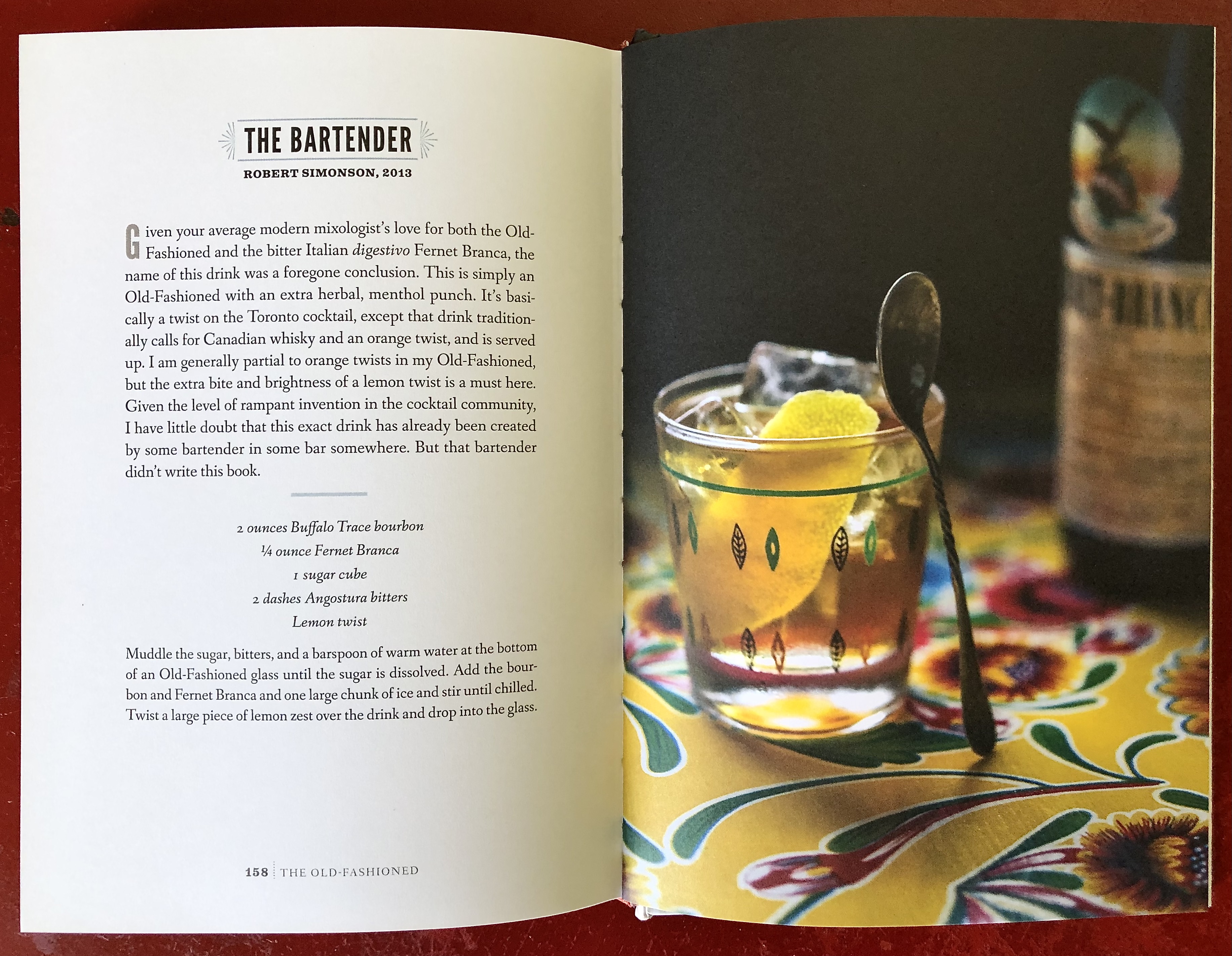
Simonson completes that documentation with his book’s second part, The Recipes. After an outline of necessary bar tools and ingredients to have on hand, forty-five different recipes, drawn from every era, are described in clear detail, with lush photographs illustrating their presentation. Additional recipes for various syrups and bitters invented for specific variations are also detailed when necessary. This recipe book within the book is more than a utilitarian manual. In both word and image, it serves as a compelling alternative accounting of the historical narrative that we’ve already read. After reading the Old-Fashioned cocktail’s epic story, now we can taste it.
Last Call
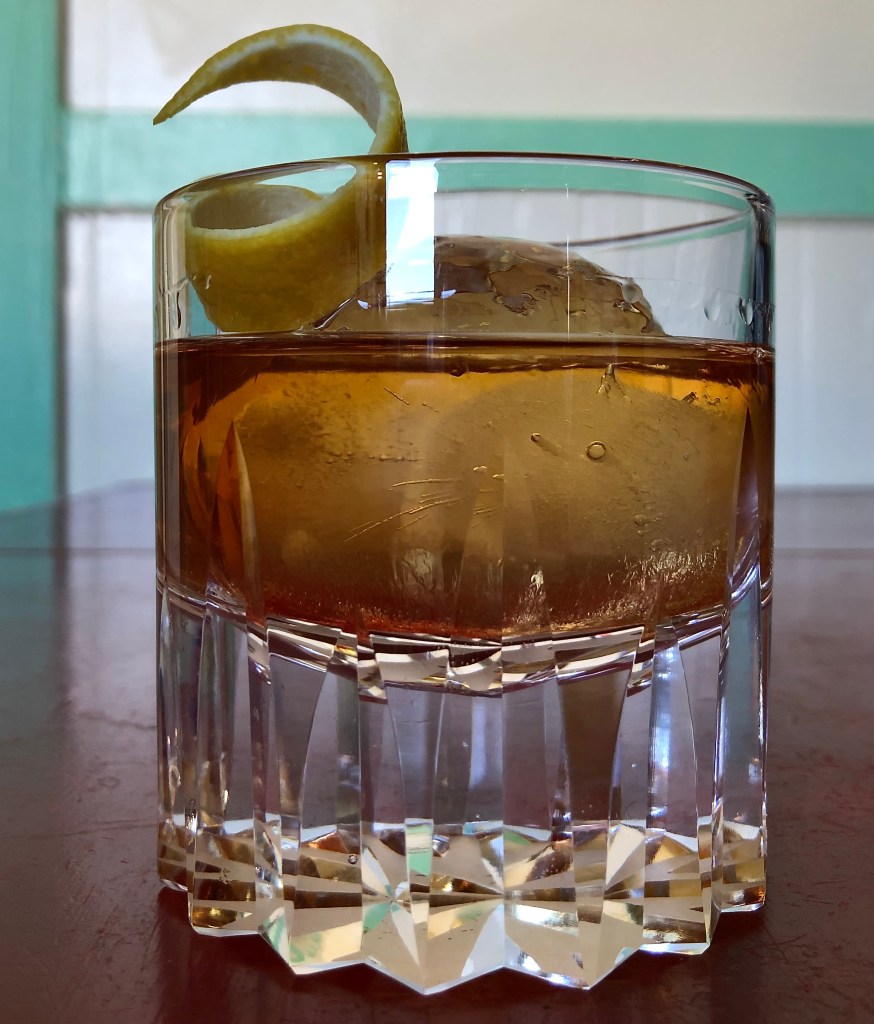
Robert Simonson’s The Old-Fashioned is a great read for cocktail fans and a handy resource for those of us who enjoy making them at home. Given the cocktail’s basic recipe template is such a dependable go-to, the recipe chapter alone provides solid instruction and creative inspiration for even more variations. Knowing the history of how and why those variations came about provides further food (drink?) for thought. Just as the story behind any given whiskey can open up discussions of region, culture, history and politics, so too might the story of the Old-Fashioned cocktail serve as preface to any number of cocktail party conversation ice breakers, sunset sipping meditations, or late night philosophical rabbit holes explored with a solid tumbler anchored in hand.
Cheers!


 The Right Spirit