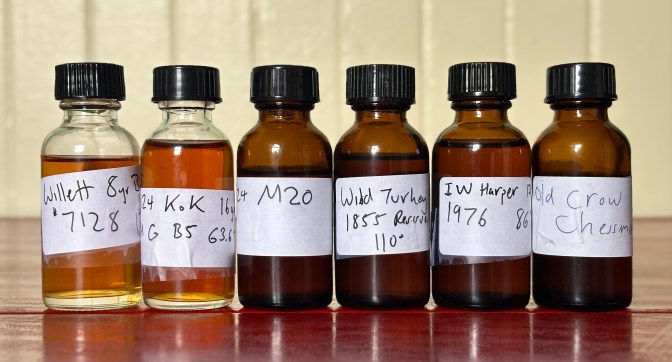
THE SIX SAMPLES:
🥃 Willett Bourbon (2026), SiB 7128 “Don’t H8 The Player,” aged 8 years, 126.4 proof
🥃 King of Kentucky (2024), SiB WH G B5, aged 16 years, 127.2 proof
🥃 Michter’s 20 Year Bourbon (2024), 114.2 proof
🥃 Wild Turkey 1855 Reserve (1992), blend of 6, 8, and 12 year bourbons, 110 proof
🥃 I.W. Harper (1976), aged 10 years 10 months, 86 proof
🥃 Old Crow Chessman (1969), aged 10 years, 86 proof
🥃 Last Call
Clink a 🥃 to jump to that whiskey.
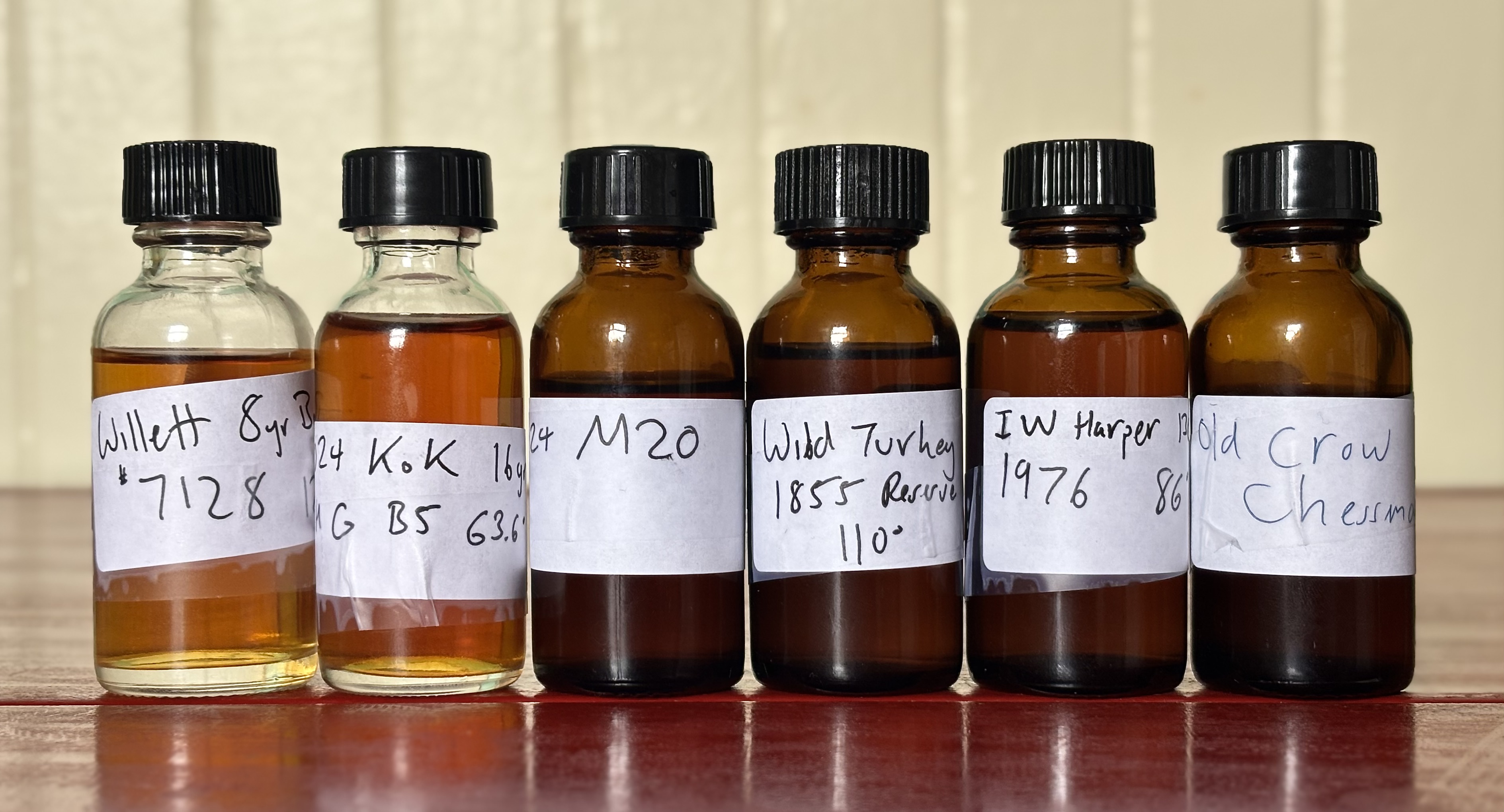
One afternoon I received a DM from a fellow member of my local Facebook whiskey group. He wanted to share some whiskey samples with me as a gesture in acknowledgment of the writing I do here on the blog, and to add to the variety of what’s in my glass during my current Year of Twelve Bottles.
Random acts of kindness like this are one of the joys of the whiskey community. Much of my own engagement with the community is online, with only occasional meet-ups. My teaching and theater schedules are generally so thick they often double as my social time—roughly half the year I work six days a week and the other half seven. Vacations get squeezed into August, when my partner—also a teacher and artist—has open time as well. When friends come over or I go to theirs, I’m often the bartender and that’s a contribution I enjoy. So it’s mostly not whiskey-diehards with whom I share whiskey. Which is fine. I love sharing the love! But I rarely see members of my online community offline.
So it was with pleasure and gratitude that I met my generous whiskey friend at a local cafe. We chatted briefly about the latest in our personal lives, and then he handed me a bag with these six unusual samples, variously bottled from 2026 on back to 1969!
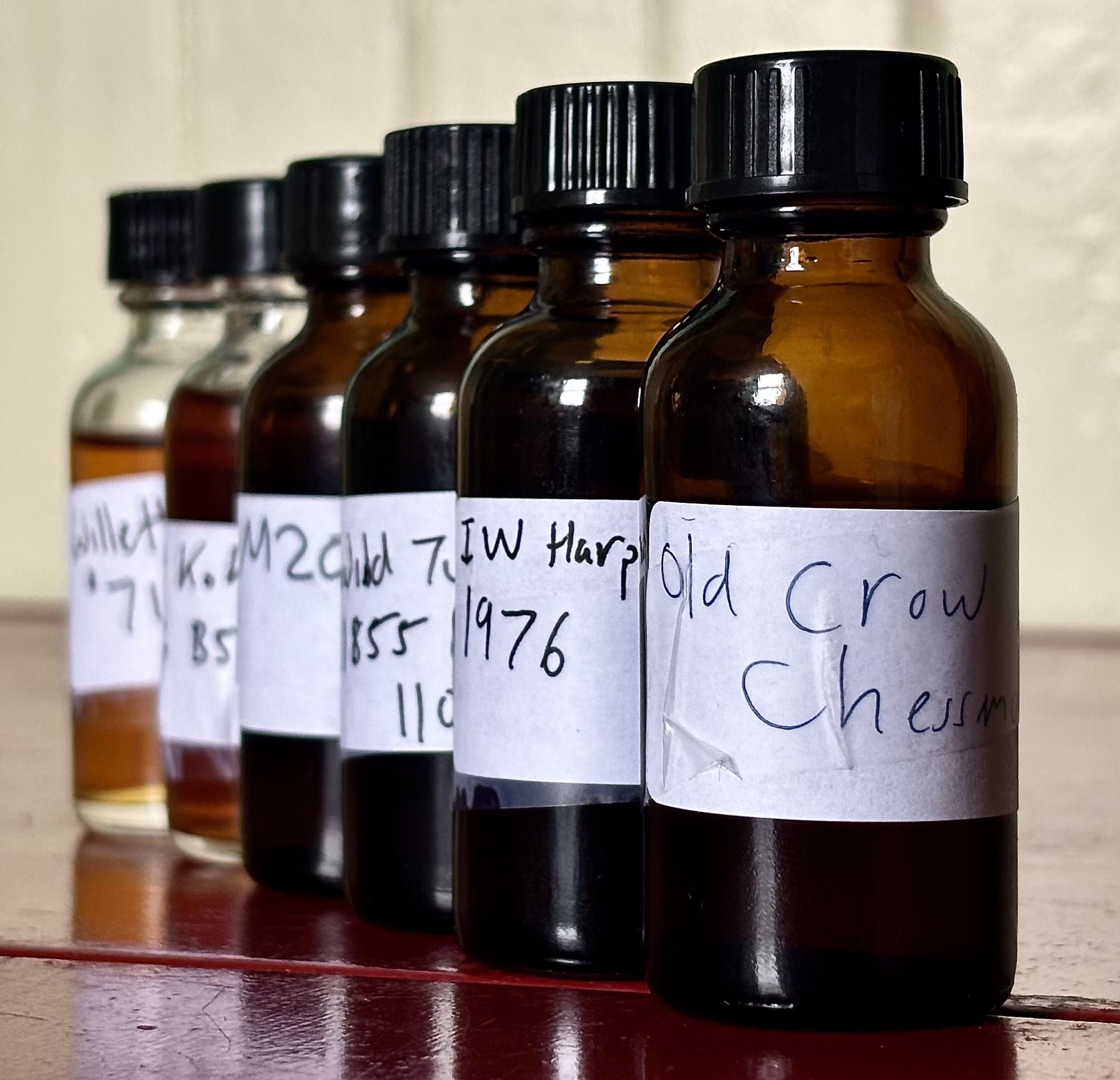
Over a couple weeks I made my way through them, taking notes as I went. Here they are in the order I sampled them, working my way back in time…
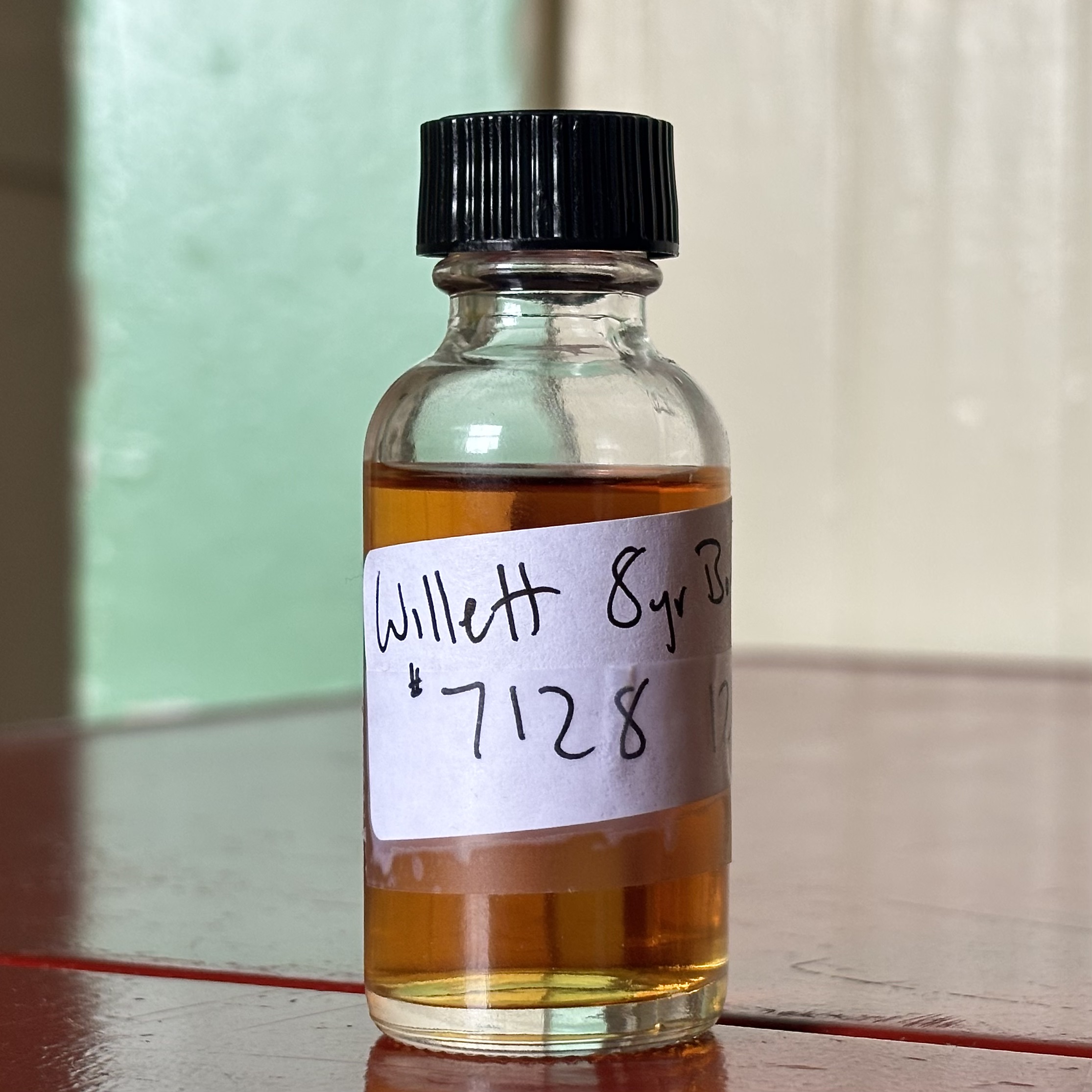
Willett Bourbon (2026)
SiB 7128 “Don’t H8 The Player”
aged 8 years, 126.4 proof
When this bottle was released, it was priced at $250 on a good day. Regular readers of this blog may recall I recently uncorked my last ever Willett, a SiB rye aged 6 years. Willett Rye figured among my foundational ryes when I embarked on this hobby ~10 years ago. But over time I came to believe Willett thinks a bit too much of them$elve$ and for single-digit age statements their whiskeys aren’t worth the ask, all options in the wide whiskey world considered.
That said, when their bourbons and ryes age past the 10-year mark, the experience takes a leap. But by then we’re talking $500 at least and no thank you. The only 10-year+ Willett I’d buy now would be from some of the much better priced sourced options.
All to say I was delighted to find this 8-year Willett Bourbon SiB among these samples. Though I’m no longer willing to pay the distillery’s toll, I’d never turn down a ride. So long as it’s none of Willett’s inferior alternate offerings—i.e. Johnny Drum, Pure Kentucky XO, Noah’s Mill, Rowan’s Creek—I’ll always be glad to have Willett in my glass. Let’s pour this and try it.
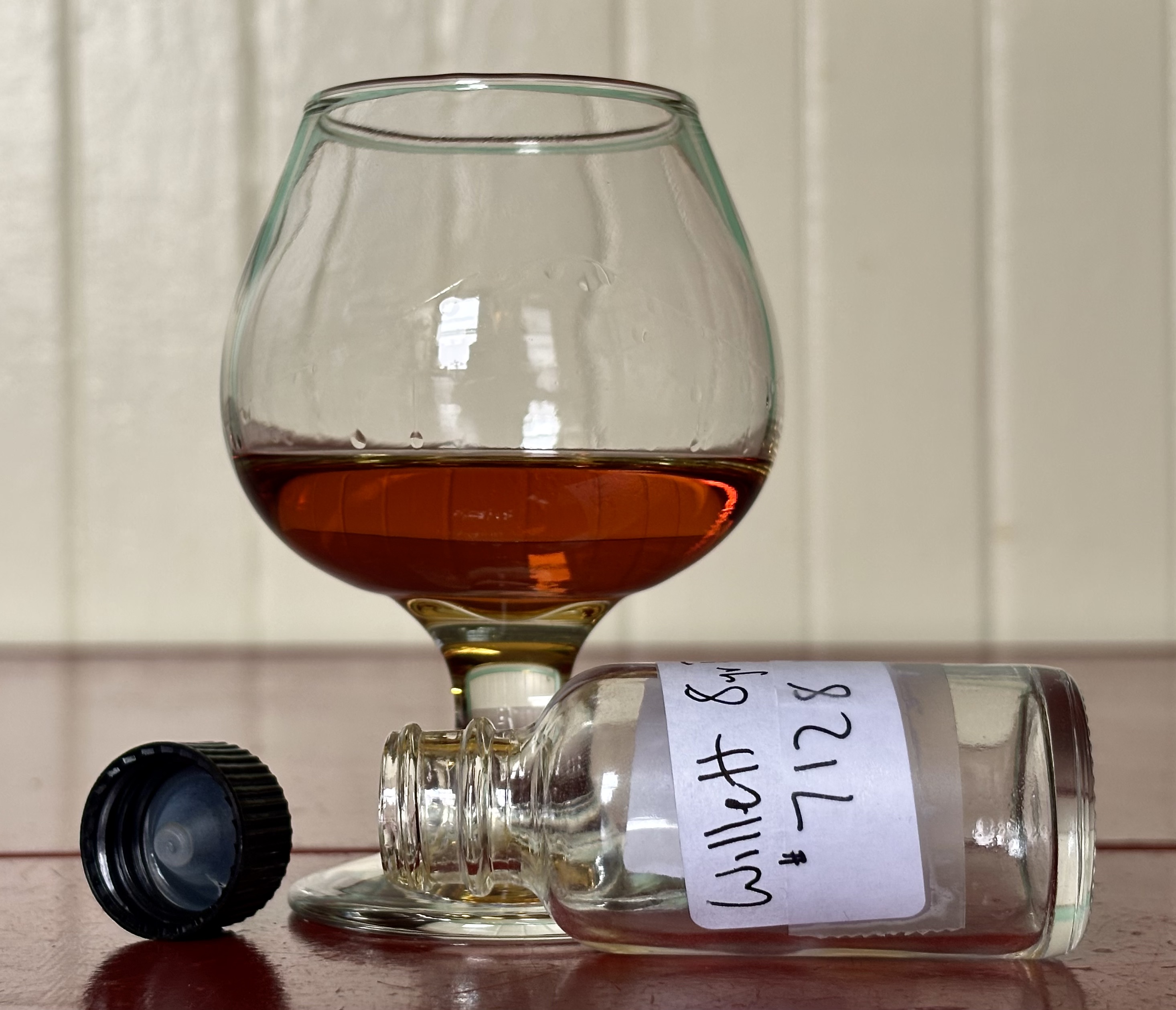
The color is a vibrant, pale-to-medium orange. On the nose, a blast of vanilla-laden caramel and herbaceous spiciness. The spice medley is a potpourri of herbal notes I strongly associate with Willett, something in their yeast I suspect. Eventually I can parse out a nice dry oak note and tart stewed apricot.
On the taste, that tart apricot note leans forward immediately, simmering in the prickly heat of the substantial 126.4 proof. Around it I get the spice medley, now emphasizing rye spices. Also vanilla, caramel, and a kind of rusty bucket note. Then on the finish, a dusting of black pepper washes over the candy and fruit notes and the metallic rust gets lost amidst the spices.
I’ve had more and less satisfying Willett bourbons. And the ABV on this one is well above the heat I favor these days. Still, it’s a far cry better than the younger blended Willett bourbons tend to be. The rusty bucket aspect is not strong enough to be ruinous. But it does take the bourbon down a peg for me. I’m glad to reconnect to the Willett-direct SiB bourbons. But I’ll continue to hold out for those better priced 10-year+ secondary bottlings as they come about.
King of Kentucky (2024)
SiB WH G B5, aged 16 years
127.2 proof
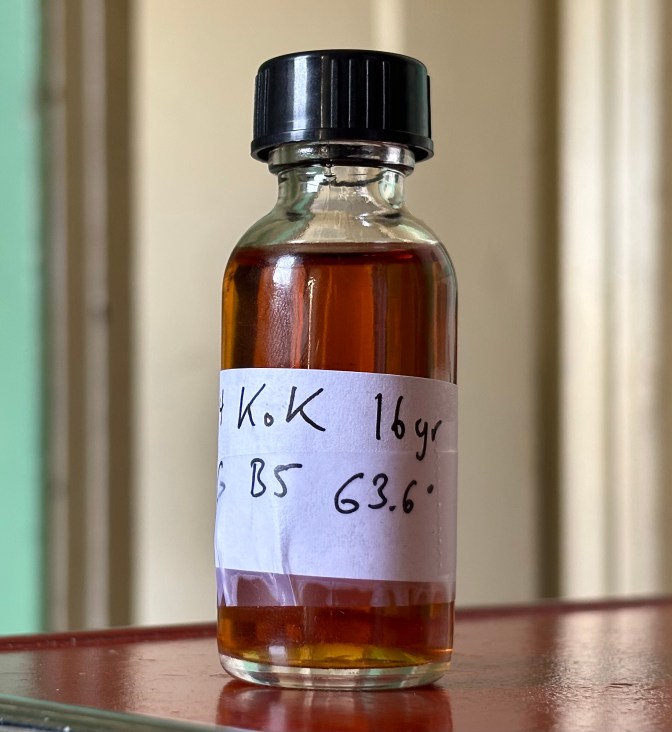
When the King of Kentucky brand first arrived (revived?) on the market, a local shop keeper I knew dismissed it as overpriced Bourbon Boom era opportunism. Mainly he was reacting to the tab, not the quality of the whiskey itself. But perhaps in part due to his dismissal, it’s not a brand I’ve paid much attention. I even assumed it was some non-distiller producer sourced thing, not clocking it was a Brown-Forman product.
King of Kentucky counts among the many mid-twentieth century bourbon brands that got discontinued, only to be revived in name in the twenty-first century. Sometimes these revivals have shown integrity, sometimes they just seem to be a cash grab. Why exactly Brown-Forman decided to re-up this name on their roster—originally acquired by them in 1936 and discontinued in 1968—I don’t know. But they did so in 2018, arguably a pivotal year of the protracted Bourbon Boom, when many pennies dropped and many critical masses amassed.
In any event, it’s essentially a new bourbon brand to me, so, that’s always of interest. The proof exceeds my preference—I try to stay below 120 these days. But the age is right in my bourbon and rye sweet spot. I love the layers of oak notes that emerge once bourbon and rye get past the 10-year mark. Let’s pour this in a glass and see what’s what.
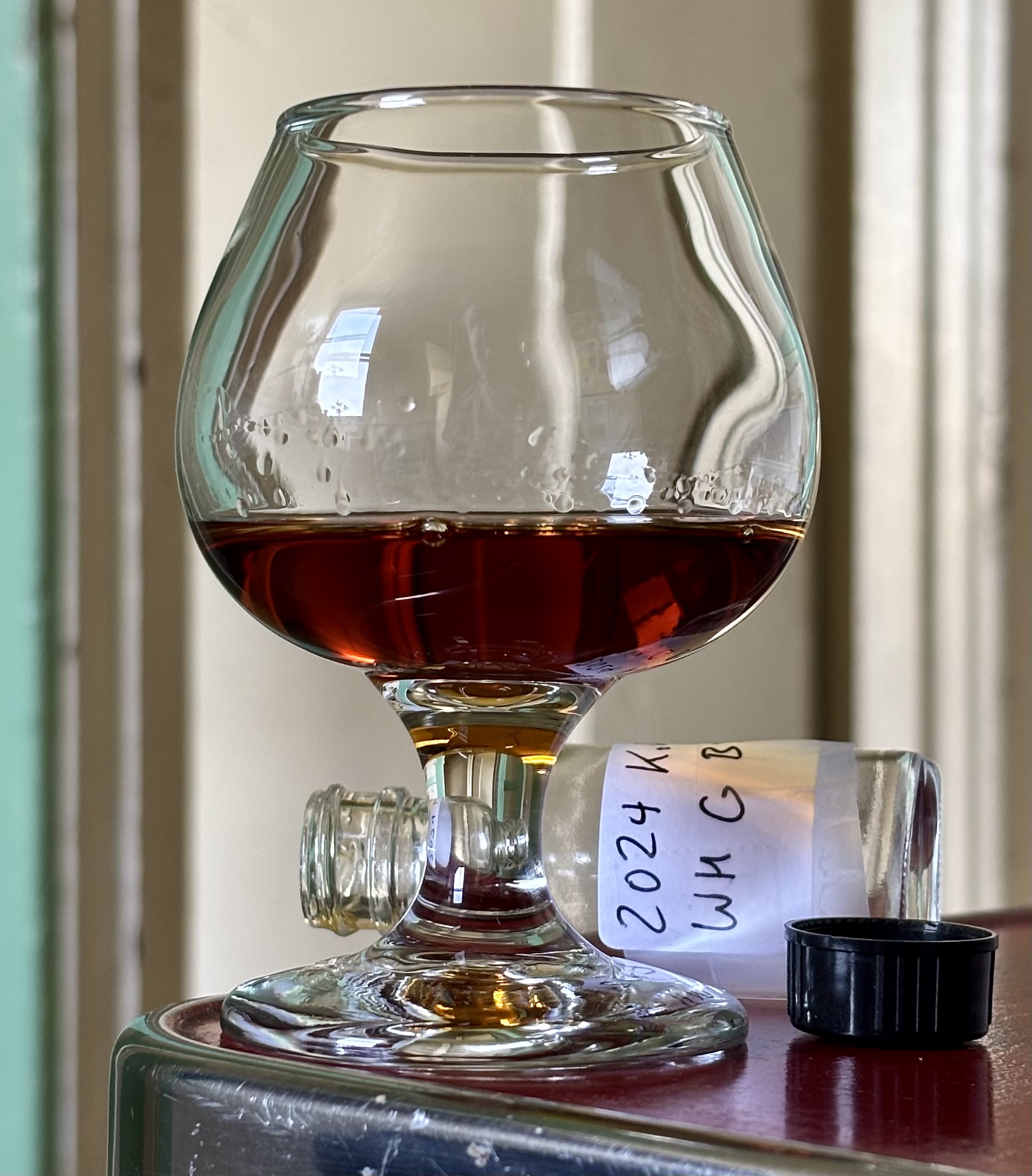
The color shows a wonderful range of smoldering oranges and reds. Echoing that dark vibrancy, the aromas reach out of the glass like a smoke, offering rustic old oak, baked cherry, rye spice, toasted cinnamon and allspice, and an underlying layer of thick vanilla-caramel.
On the taste, the heat is fiery and has bite, without ever singeing. The baked cherry note seems to heat up with the proof’s generous nudge, holding sway over the lovely oak and spice notes. Despite knowing this comes from Brown-Forman—makers of Old Forester and Woodford Reserve—I’m getting strong Wild Turkey vibes here, my sense memory going back to some well-aged Russell’s Reserve and Master’s Keep releases. It’s that strong cherry and oak combo. And the texture is syrupy and sticky, like the drippings of a cherry pie.
The finish is warming, both like a nearby fire and a cooling mint. Very cozy and clean. The cherry and oak continue their duet here, blending their sweet and rustic elements beautifully. The 127.2 proof helps them linger long, aided by the bourbon’s sticky texture.
If this is representative of what King of Kentucky tends to offer, I dare say I might someday give a full bottle a go. Of course, this sample is from a single barrel, and not all single barrels are created equal. But it sure makes for an impressive introduction.
Michter’s 20 Year Bourbon (2024)
114.2 proof
Oh Michter’s… I’ve always had a mixed relationship to this brand.
Back in 2018 I enjoyed bottles of both their 10 Year bourbon and rye, though I found them akin to the Elijah Craig 18 Year—good, but not $$$ good. Similarly, their Bomberger’s and Shenk’s were great in their $40 days. But I’ve not bought either since they doubled and then tripled that price. My favorite Michter’s experiences have been with their Barrel Strength Ryes. But again, their price-to-experience ratio just teeters too irregularly for my ta$te$.
And in that regard, it was usually the finish that was the culprit. Enticing aromas. Lovely flavors. And then… gone. At $$$ I want a whiskey to stick around a while.
Nevertheless, I was delighted to find this 2024 Michter’s 20 Year Bourbon among these samples. The proof is well within my ABV sweet range of 92 to 119. And an age statement this senior always promises the wisdom of oak—or the cantankerousness of oak! But as my taste for oak is broad, I’m always optimistic.
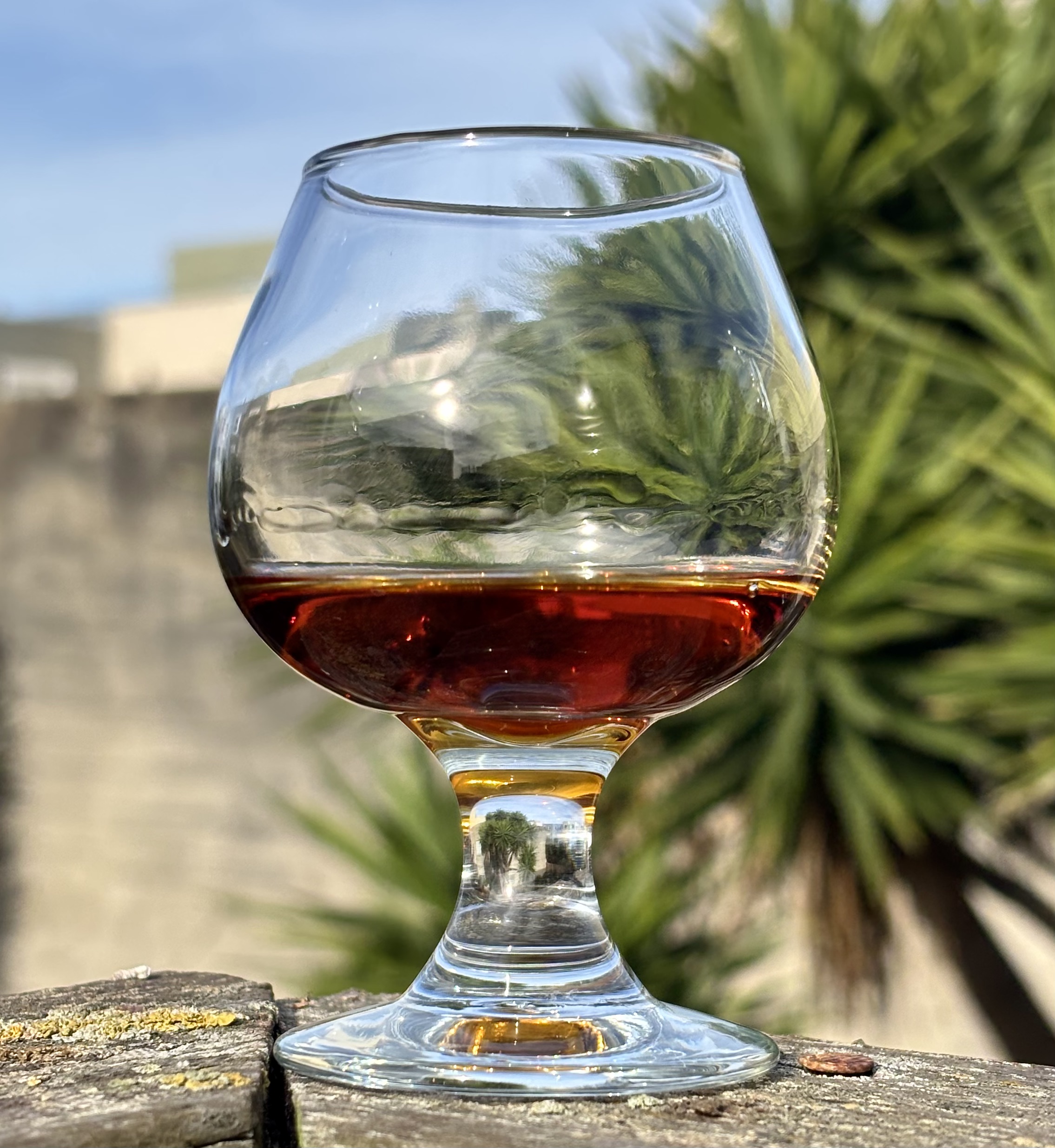
The color has that wonderful forest fire on the horizon at night range to it. Not a welcome sight in life—especially for someone like me who grew up in California’s fire country! But in a glass of bourbon, it means only welcoming things.
The nose follows through with plentiful oak, both sweet and savory. Immediately beneath that, baked cherry and vanilla-caramel. This is very like the King of Kentucky, actually, only without the same spice emphasis and not as eagerly forthcoming out of the glass.
Then on the taste, very dry up front, emphasizing the oak. But soon a wave of cherry crashes against that wall, and this seems to release a burst of rye and baking spices that the nose had withheld.
And then, true to Michter’s past, the finish dies down pretty quickly. I will say, it does linger longer than my sense memory of other Michter’s experiences. It’s more that the intensity lightens up earlier than I would prefer.
Still, this is an excellent bourbon. I can’t say it will get me back on the Michter’s wagon. The brand’s prices are what they are. But the opportunity to experience quality bourbon aged 20 years is rare, and I’m very grateful for this opportunity.
Wild Turkey 1855 Reserve (1992)
blend of 6, 8, and 12 year bourbons
110 proof
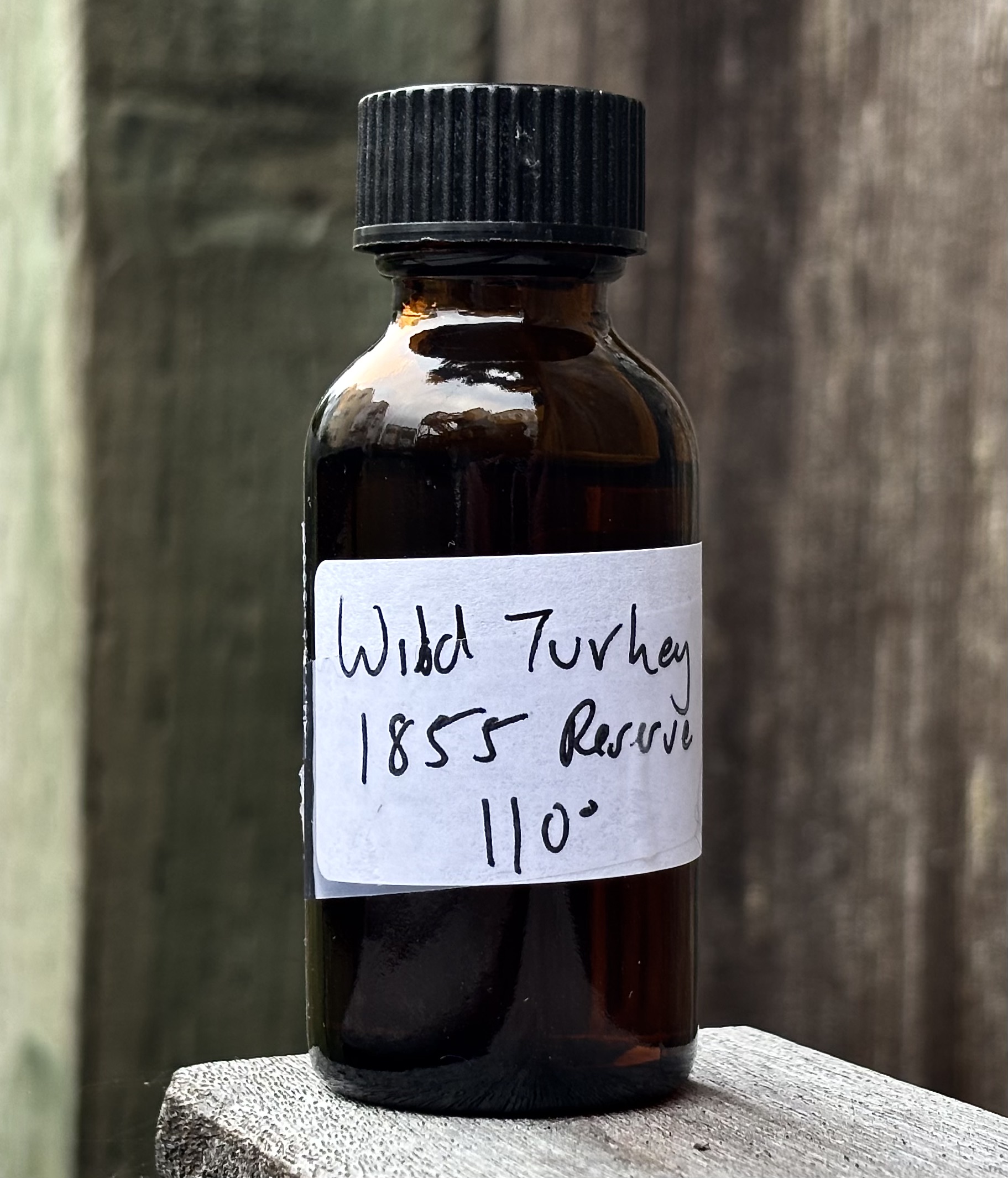
With an age range in its blend of 6 years up to 12 years, this 1992 Wild Turkey one-off release was distilled anywhere from 1986 on back to 1980. Throughout that time, the entry proof for Wild Turkey whiskies was 107, as compared to today’s 115. Lower entry proofs mean good things for density of flavor, since the eventual outcome need not be watered down as much to reach the desired proof—in this case a robust 110.
This kind of ABV and time tracking is a habit of many Wild Turkey diehards. As one of the most classic Kentucky distilleries, known for their attention to consistency and quality, savoring the fine details of variance is a draw for fans of the brand, and I’m certainly no exception. But Wild Turkey’s consistency also raises criticism. As their prices joined the Bourbon Boom’s ascension, some fans—me included—began to question the value of the distillery’s limited releases, given the high caliber of their standard releases.
But no Wild Turkey aficionado questions the quality. Let’s see what this 1855 Reserve offers in that regard.
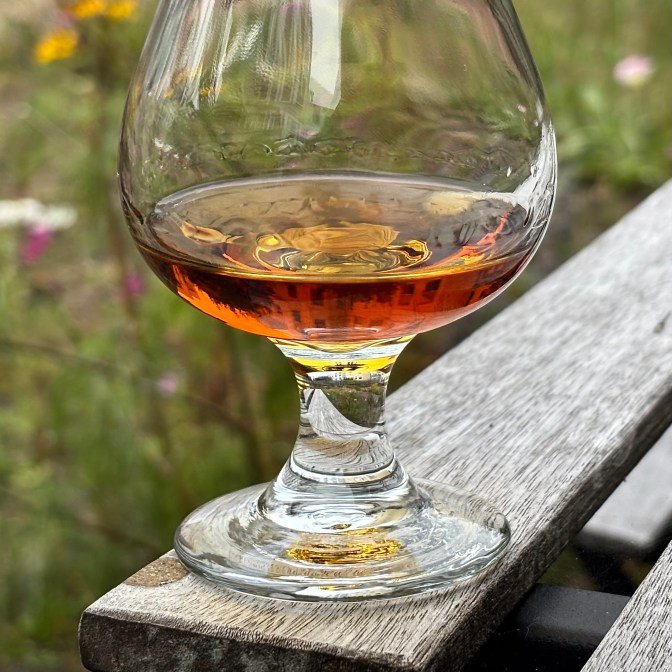
The color is a lovely range of vibrant and russet medium-oranges. Very autumnal. The nose offers plentiful oak, with orange zest, cinnamon and allspice, and a subtle but juicy cherry pie note.
On the taste, the oak is served up on a river of gooey caramel. The orange zest and baking spices are there, and now also chocolate syrup. The cherry ebbs a bit here. But it comes rolling back in on the finish, accented by the spices and citrus notes. The warmth of the bourbon then cools like a mint, creating occasional whiffs of those thin after-dinner chocolate covered mints, once common with the check in medium-end restaurants during the eras when this bourbon was distilled and bottled.
And as I sit now with the finish, faint wafts of that famous old-school Wild Turkey funk gradually emerge. It’s an earthy note, which can sometimes lean into something like mildew while other times verging into charred meats. This funk is a counter-intuitive pleasure. In Wild Turkey’s 2013 Forgiven release, I did not like it at all at first, and for a long time. But with air it gradually morphed into something interesting. Whereas in various older bottles of the standard Wild Turkey 101 the funk has added enjoyable complexity right out of the gate.
With its age range and 110 proof, this 1992 bottle seems to be a kind of origin story to the subsequent Russell’s Reserve and Rare Breed lines. It’s a pleasure to taste. I always enjoy going back in time with Wild Turkey. I know what I’m going to get. I know it will be good in some manner or another. Wild Turkey’s lively, rambunctious quality, tempered by the steady hand of consistency, always leaves me feeling very present and alive to the moment.
I.W. Harper (1976)
aged 10 years 10 months
86 proof
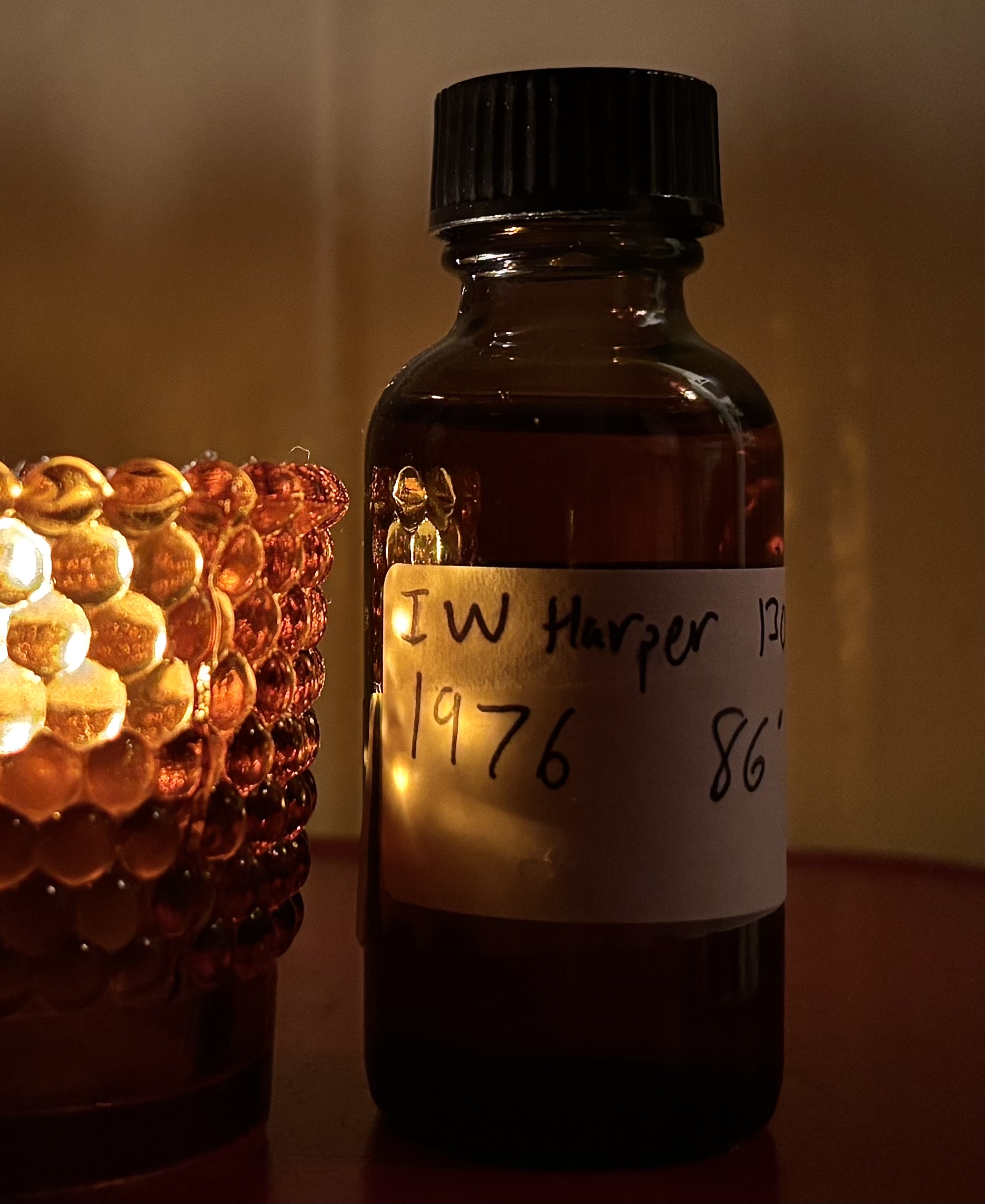
In 1976 I was in the early single digits of age. A decade+ before then when this bourbon was distilled, even my older brother was not yet a glint in our parents’ eyes. I have no specific 1976 memories, other than a vague one of receiving from either my father or grandfather a small framed case with American bicentennial coins, framed for the country’s 200th anniversary. I still have those coins.
Or so I thought! I just went and dug them out of the drawer where I’ve kept them. Turns out they are actually a set from my birth year, not 1976. Goes to show how dependable memory is—not terribly.
In any case, even a memory gaff taps neatly into one of my favorite aspects of tasting whiskeys from long-gone eras. It’s an opportunity to reflect on how things were, how things have evolved since, and how things are now. I’ve used dusty whiskeys to reminisce with old friends, contemplate the trajectory of my journey through adulthood, and in many other ways reflect on the past as prologue to the present.
So, other than misremembered coins, let’s see what this old I.W. Harper conjures up!
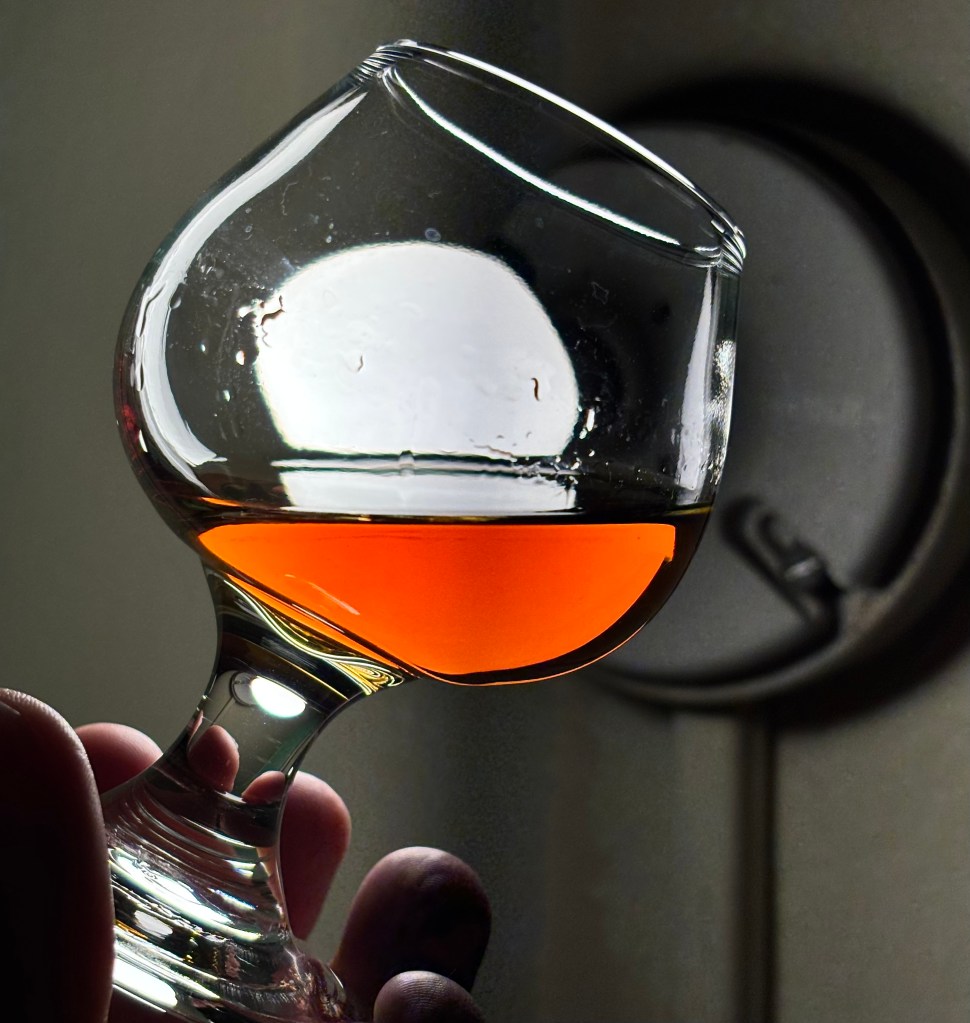
The color is a range of medium rusty oranges, very vibrant in a variety of light. The nose likewise offers vibrancy, with a good ol’ olde Kentucky bourbon funk note slathered on chocolate and caramel, bright cinnamon chewing gum, cheap graham cracker, floral rye spices.
On the taste it’s surprisingly prickly for 86 proof, but not at all hot. The prickle is more textural, and yet there’s a syrupy slick to it as it coats the mouth. All the notes from the nose reprise here, with the cinnamon bubble gum and graham cracker taking the lead. There is a cheap brightness to it all, like a traveling carnival at night with its plastic clowns and sputtering old bulbs.
Then on the finish, things fade fairly soon. The sweet notes dry out, leaving oak tannin and dry cinnamon to linger gently with an old metal bucket note.
Good old-school cheap bourbon. A country town dive bar in a glass kind of situation. I’m reminded of some mystery samples I was once given, which turned out to be 1990s Old Grand Dad 114 and 1970’s Early Times. There is a sepia toned, tinny quality to these old whiskeys. They taste of nostalgia for the rock-bottom, a twentieth century romanticization of alcoholics finding their illusion of life in the dim and dirty confines of the local dive. In the safety of my home, at least, I’m here for it.
Old Crow Chessman (1969)
aged 10 years
86 proof
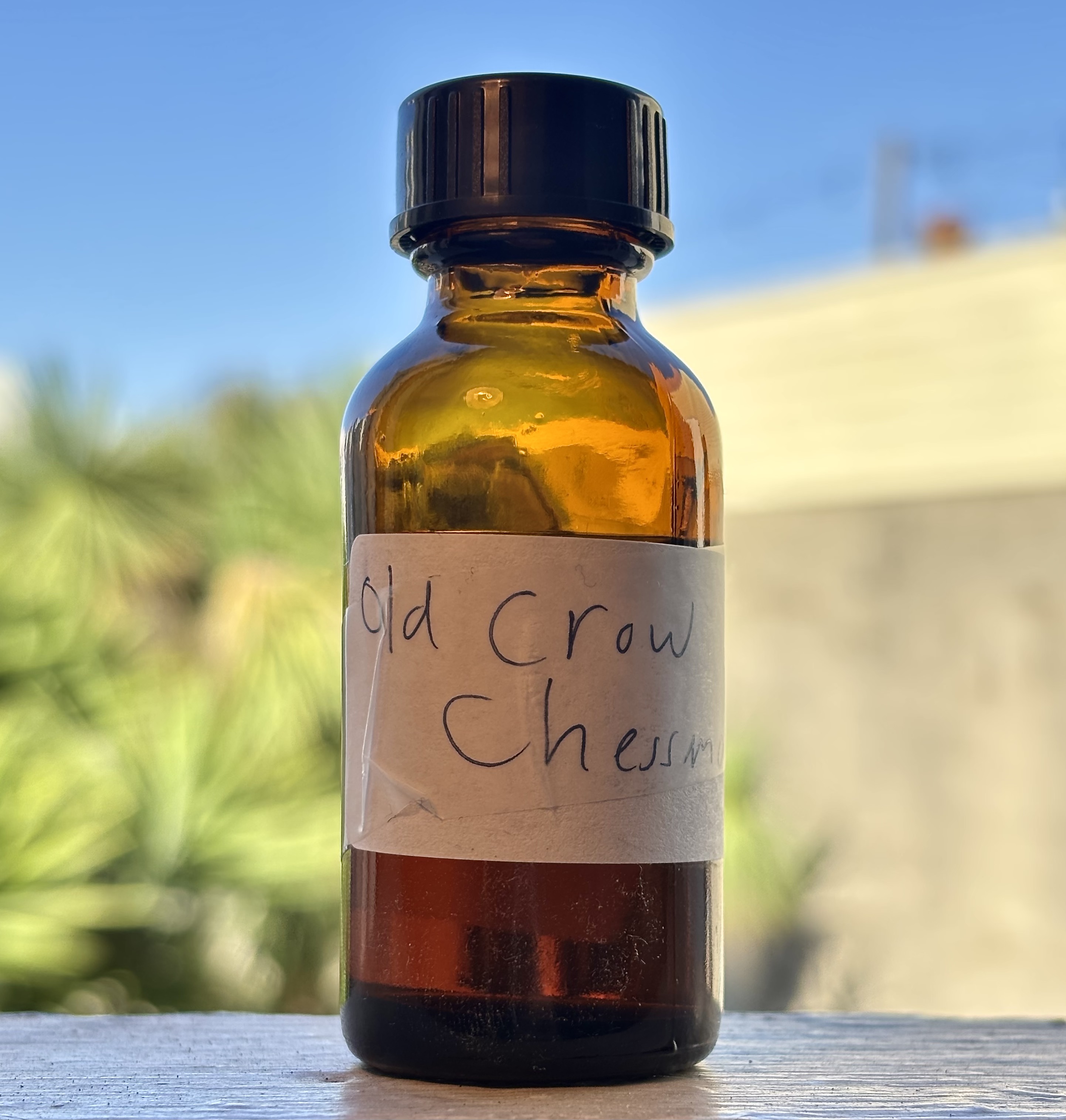
I don’t know that I’ve had Old Crow from any era. It’s such the classic bottom-shelter, you’d think Jim Beam would have given it a Bourbon Boom era zhuzh by now, like they have done for that other bottom-shelf staple, Old Grand Dad. It’s very likely I’ve had it in a cocktail at some dive bar. But anyway the brand and a 1969 bottling year are both new to me.
Old Crow was originally owned by National Distillers. Jim Beam bought them out in 1987. The National Distillers era Old Crow Chessman series was a decanter set featuring thirty-two large chess pieces, each filled with 10-year bourbon. They can still occasionally be spotted, perched on top shelves at old or nouveau liquor stores.
I’ve had 1997 Old Grand Dad. I’ve had 1978 Wild Turkey 101. I’ve had scotch distilled in 1965. But this Old Crow Chessman sample will be the oldest bourbon I’ve personally tried. Time travel through the portal of whiskey being among my favorite means of travel, let’s pour this old bird into a glass and see where it takes me.
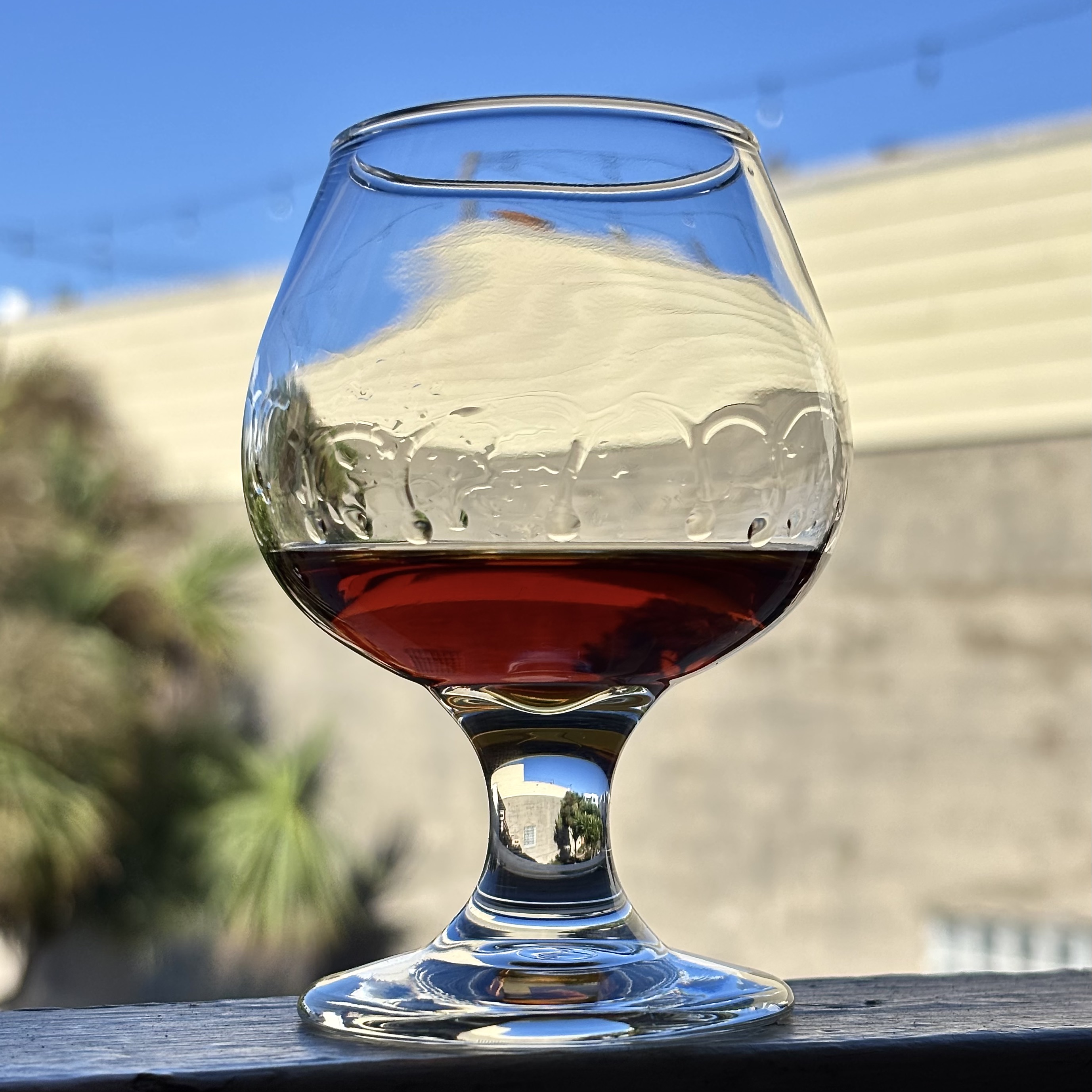
The color shows an absolutely lovely range of deep russet oranges and reds, with thick drips in the glass. On the nose, a vibrant dark-cherry note leads, surrounded by dust clouds of oak spice and that bygone-era bourbon funk, in this instance a pleasing musty/mulchy aroma.
On the taste, the vibrant dark cherries now read baked. Oak tannin, dry cinnamon, and allspice shimmer on the softer fruit note. The mulchy funk swirls with caramel and toasted vanilla.
Then on the finish, vanilla and funk step forward and the cherry steps back. With time, the funk lingers longest, gently pulling the oak forward to sit beside it.
I’ve always been a fan of dive-bar-in-a-glass bourbons. That pleasing cheapness that nevertheless offers interest and panache. I’ve often gotten this from old Jim Beam Black 8 Year bottlings or early Wild Turkey 101. It’s on par with good fun B movies, cheap traveling carnivals that hop from State Fair to State Fair, or the old dive bars themselves, with their authentic lived-in ambiance.
I wasn’t around in 1969 for this bourbon to conjure memories from that time. But it sure does conjure atmosphere.
Last Call
What a treat and a journey. My gratitude again to my Facebook whiskey group friend who gifted me with these six samples. The range. The quality. The distinct nuances from sample to sample.
But most of all the generosity of sharing. That’s what whiskey is for. No shade on savoring a good pour alone. I do it all the time, with the sunset, the rain, or a good movie to keep me company. But when you find a whiskey you love, pouring it for someone else—whether you can clink glasses with them or not—is one of the great gestures by which whiskey fans share the love.
Cheers!