WAIHEKE WHISKY
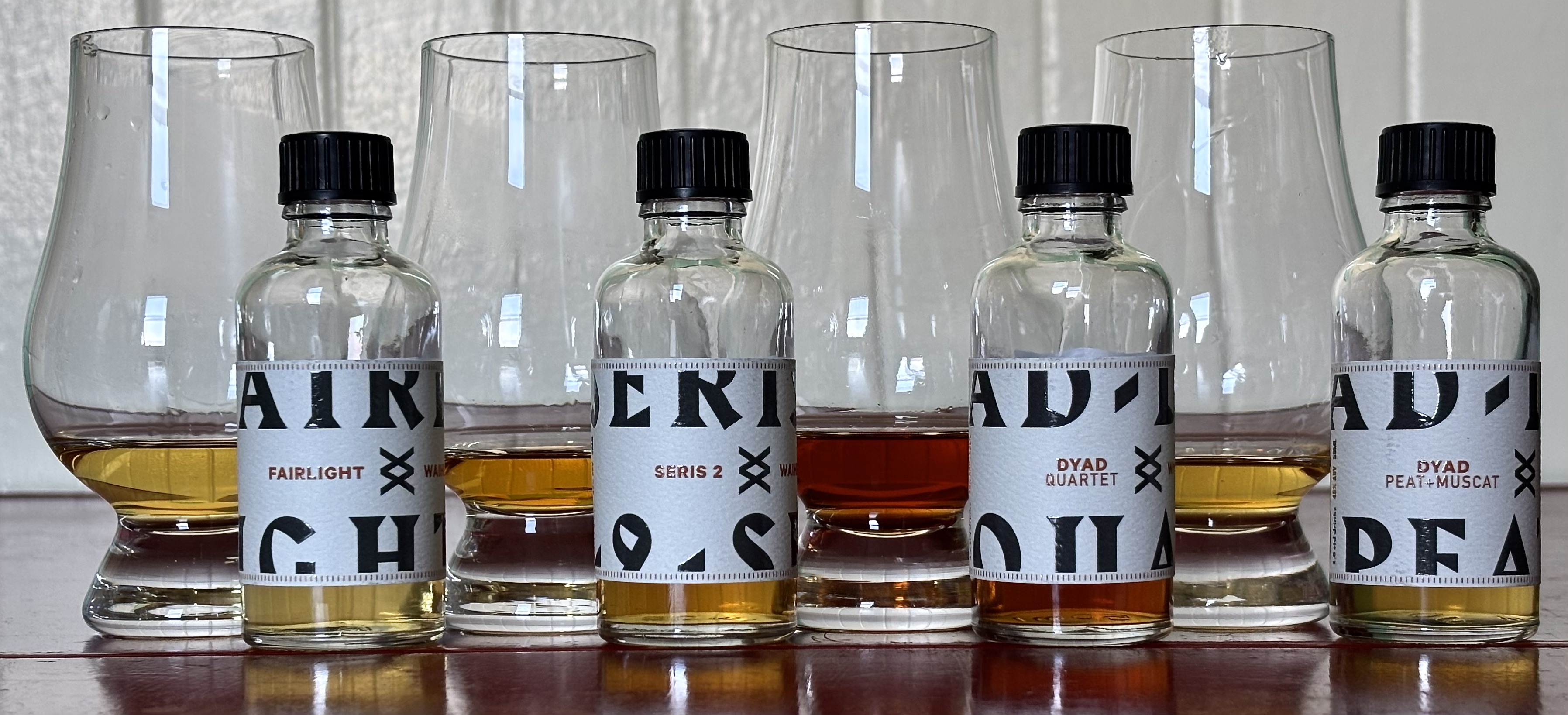
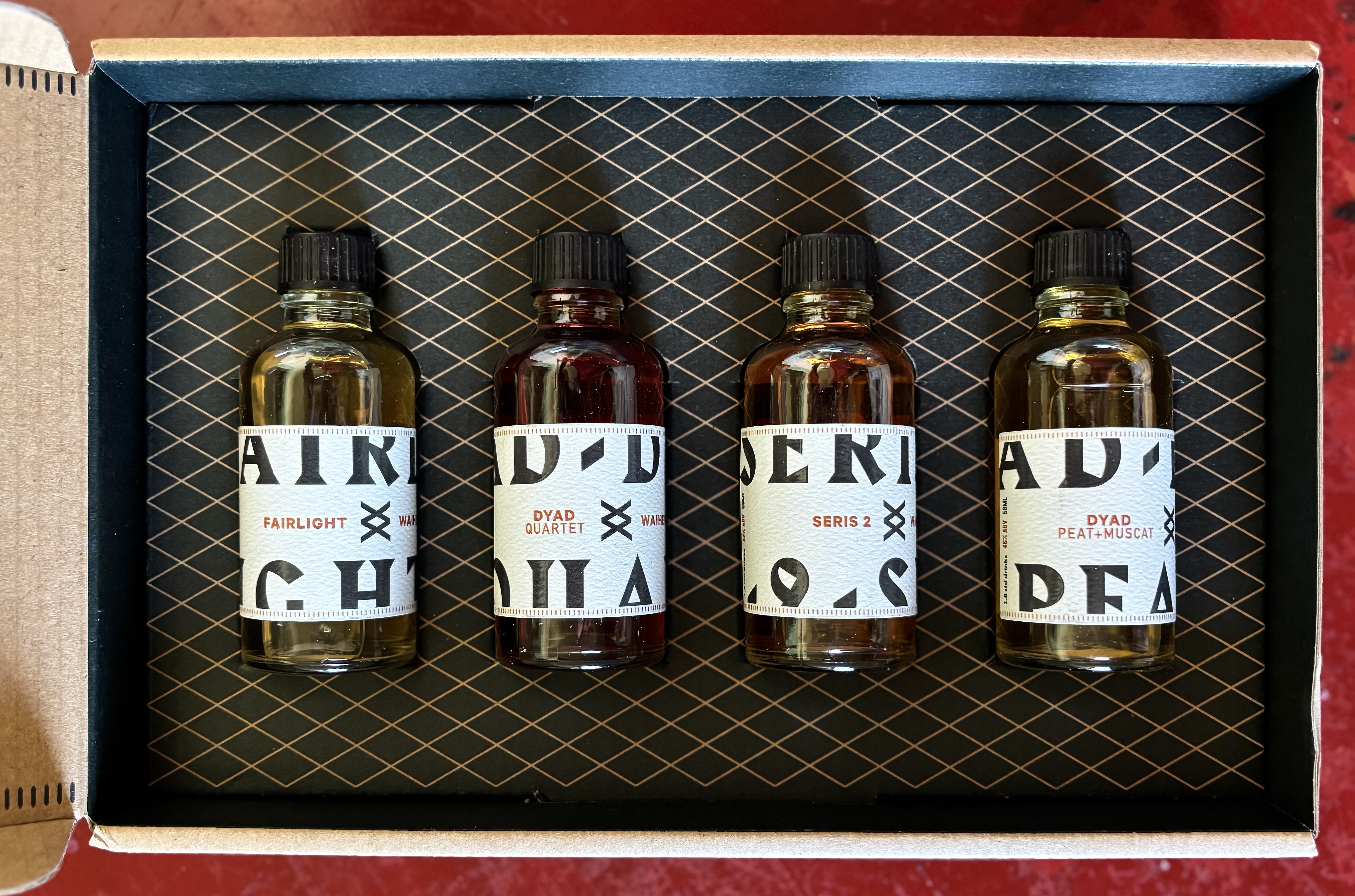
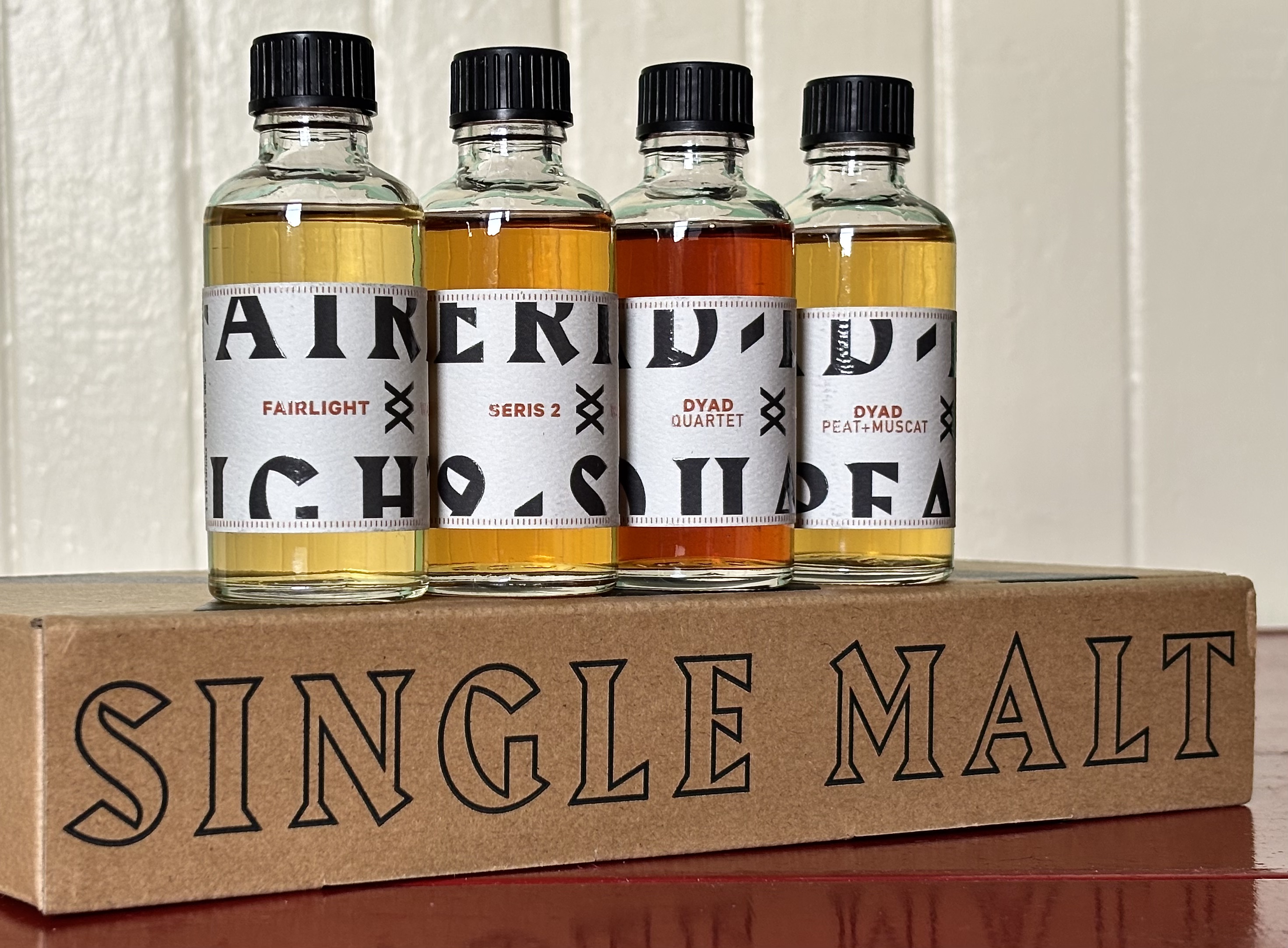
The Dram Sessions Vol.1 Tasting Set (2025)FLIGHT INCLUDES – Fairlight, Seris 2, Dyad Quartet, Dyad Peat + Muscat
MASH BILL, PROOF & AGE – variesDISTILLERY – Waiheke Whisky
PRICE – free sample set ($50 USD msrp)
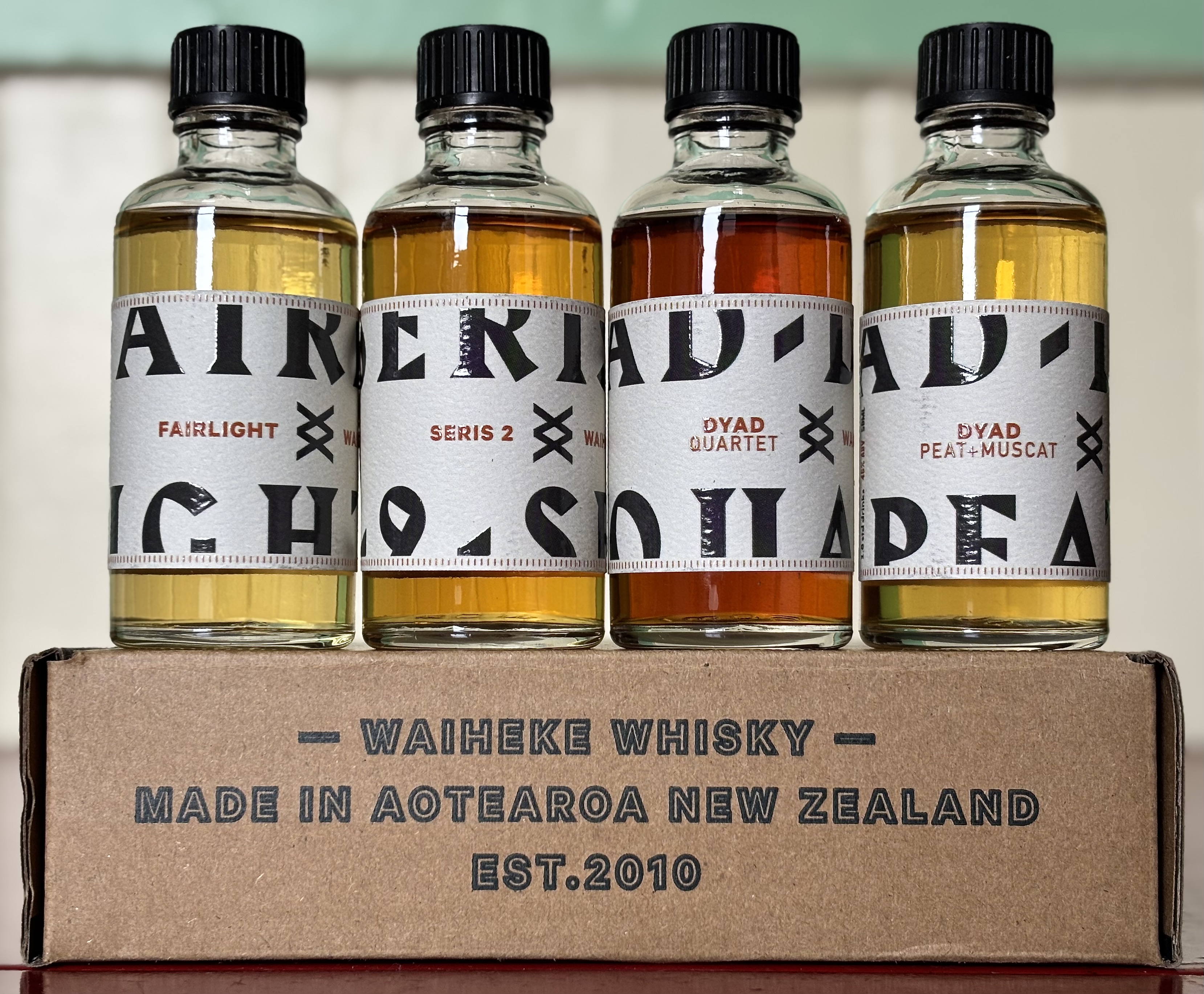
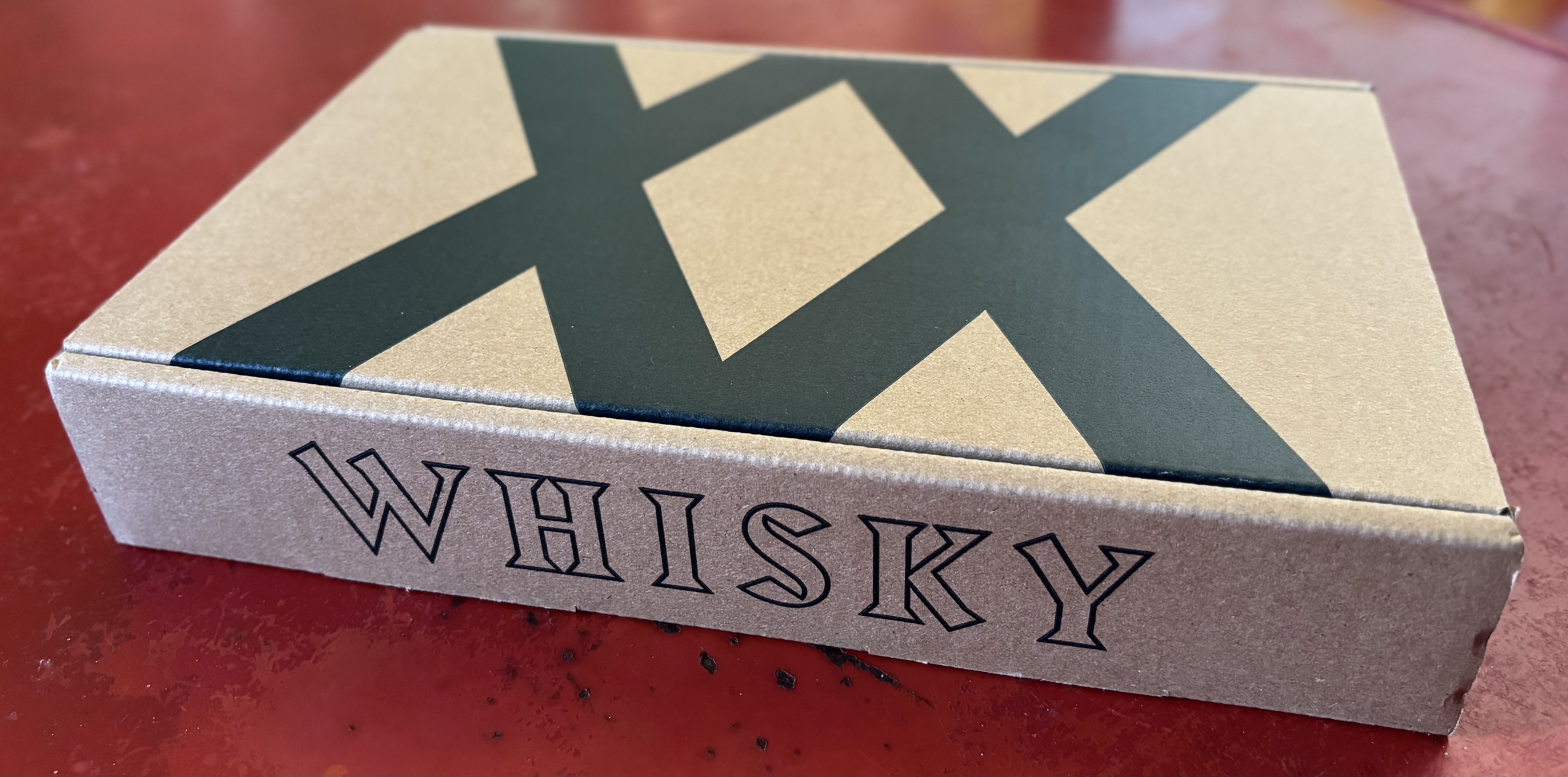
Waiheke Whisky reached out to me through The Right Spirit Instagram account prior to embarking on an American PR tour. They didn’t make it to California. But while in Texas during their visit, their rep sent me this packaged introductory flight of four whiskies.
I’d never thought about New Zealand in relation to whisky before. Wine, natural splendor, bungie jumping, sane politics, and Peter Jackson movies, absolutely. But whisky?
Shouldn’t be a surprise. Whisky can be made anywhere someone has the inclination to distill grain. Waiheke has been at it for 15 years at this point. But they’re just starting to promote themselves in the American market. (At the time I’m writing this, word is their bottles will hit US shelves sometime later next year.) In addition to distilling their own whiskies, they also occasionally blend theirs with sourced world whiskies, and use a range of local and international casks for aging and finishing. The current flight highlights four directions this broad range might take.
I’ll taste through the flight in the order presented, noting the specs of each whisky as we go along. All notes were taken using a traditional Glencairn.
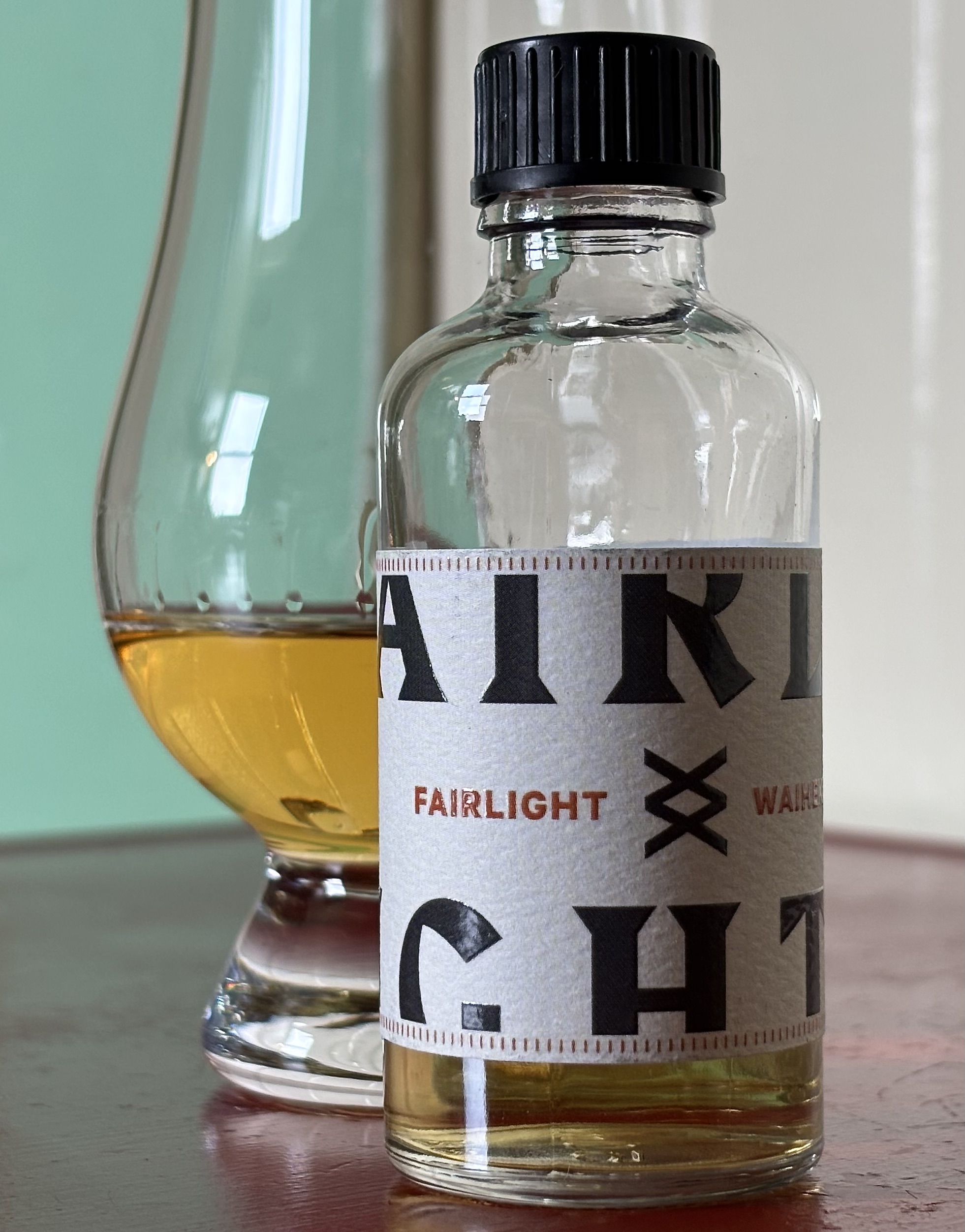
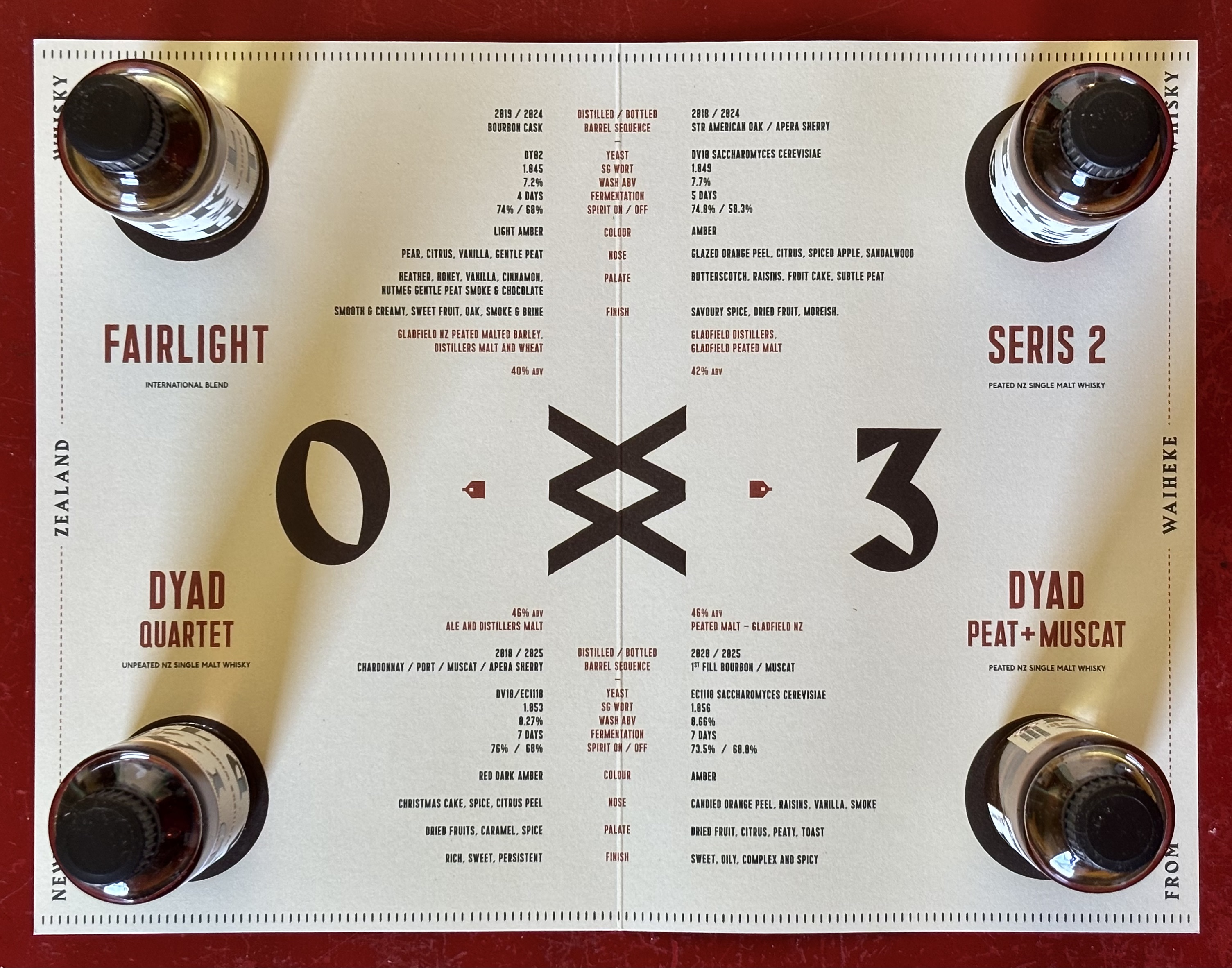
First up, Fairlight, a blend of Waiheke’s own single malt whisky with sourced scotch grain and malt whiskies. Bottled at 80 proof, the component whiskies were aged a minimum of 5 years in STR (shaved, toasted, and re-charred) American oak casks, first fill Bourbon, and virgin oak.
COLOR – pale straw and butter yellows
NOSE – cantaloupe, pear, salt, beach sand, dry raw cut oak, vanilla
TASTE – a silky buttery texture carries sweet vanilla, milk chocolate, caramel, and subtle oak tannin
FINISH – milk chocolate, white chocolate, caramel, vanilla sauce, subtle oak tannin
OVERALL – a simple, familiar, pleasing single malt emphasizing classic bourbon cask notes
This takes my sense memories to Shinobu Newborn and Fuji Gotemba Riku. It’s that youthful brightness and directness, and the emphasis on vanilla from the bourbon casks. There’s also a subtlety I associate with Japanese whiskies. Neither particularly complex nor simplistic, if I had a full bottle I imagine it would go toward Cameron’s Kick and Godfather cocktails—which is no slight on the whisky. Good whiskies make good cocktails. But overall Fairlight is not so unique that I’d seek it out. It lives up to its name—fair and light. As that, it’s perfectly nice.
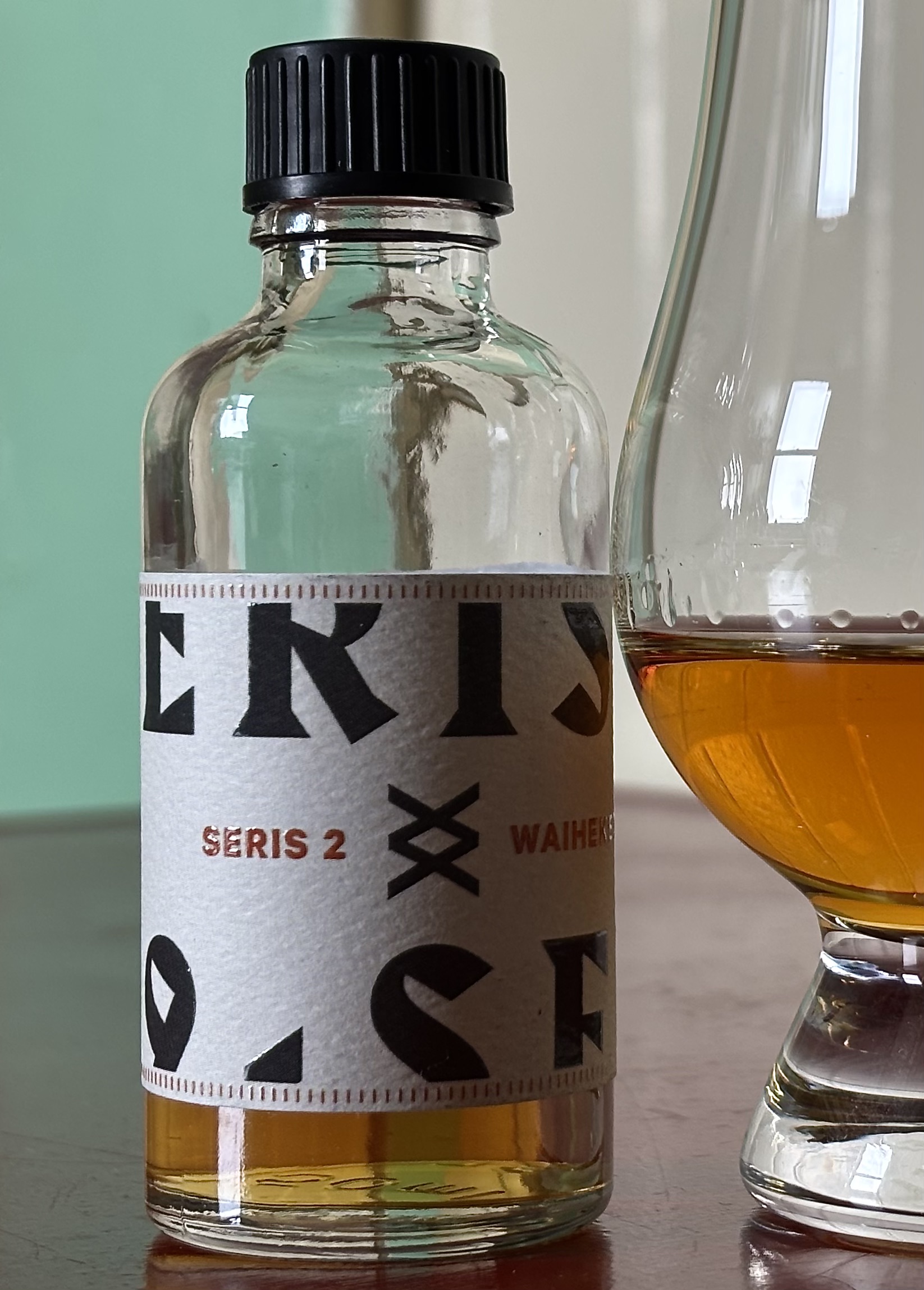
Next we have Seris 2, made entirely from peated New Zealand malted barley, double distilled in copper pot stills. Bottled at 84 proof, the whisky was aged 6 years—initially in American STR wine casks before a finishing period in used casks that previously held PX Apera, an Australian sherry.
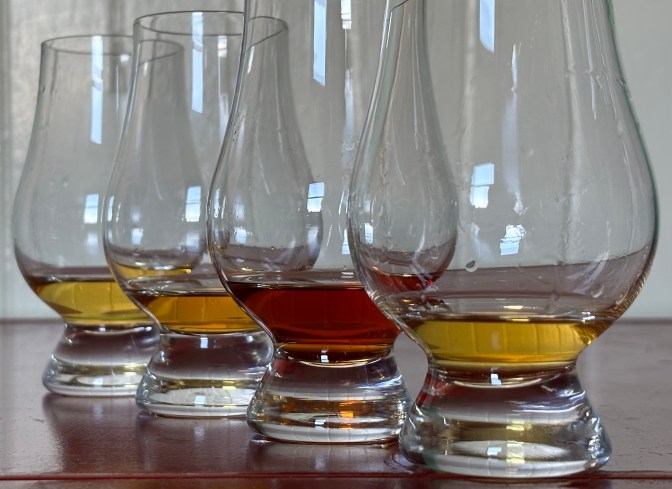
COLOR – pale, warm amber-orange
NOSE – exotic wood spice, wood and charcoal smoke, subtle wine notes like from a syrupy dessert wine, thick dry caramel fudge in the background, dried vanilla syrup
TASTE – syrupy, mildly sweet but thick caramel, the wood smoke more prominent but still easygoing
FINISH – that thick caramel note, vanilla, subtle smoke, brown sugar, a bright wood spice kick right at the end accented with something like candied persimmon
OVERALL – a relaxed dessert pour, subtle but confident
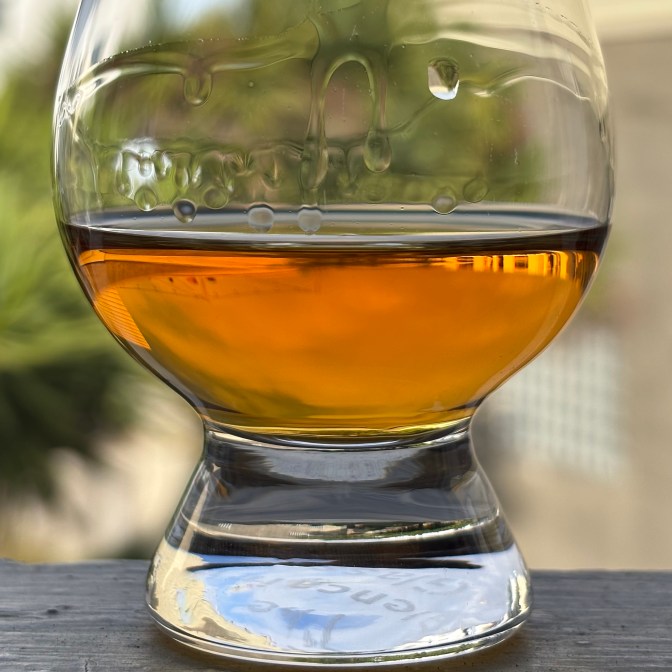
As with Fairlight, the whisky’s youth is evident here. But this isn’t a bad thing. Good whiskies aged in the single digits can offer an appealing brightness. Here that brightness is tempered by deeper caramel notes, that subtle wood smoke, and the array of unusual wood spices that show themselves most readily on the nose. I especially appreciate that nice accent of persimmon at the end, appearing like a little sparkle as the light fades. This whisky isn’t showy about what it has to offer. It’s complex, yet very relaxed. This might go nicely after dinner, paired with a dessert that also has the confidence to share its flavors without fuss.
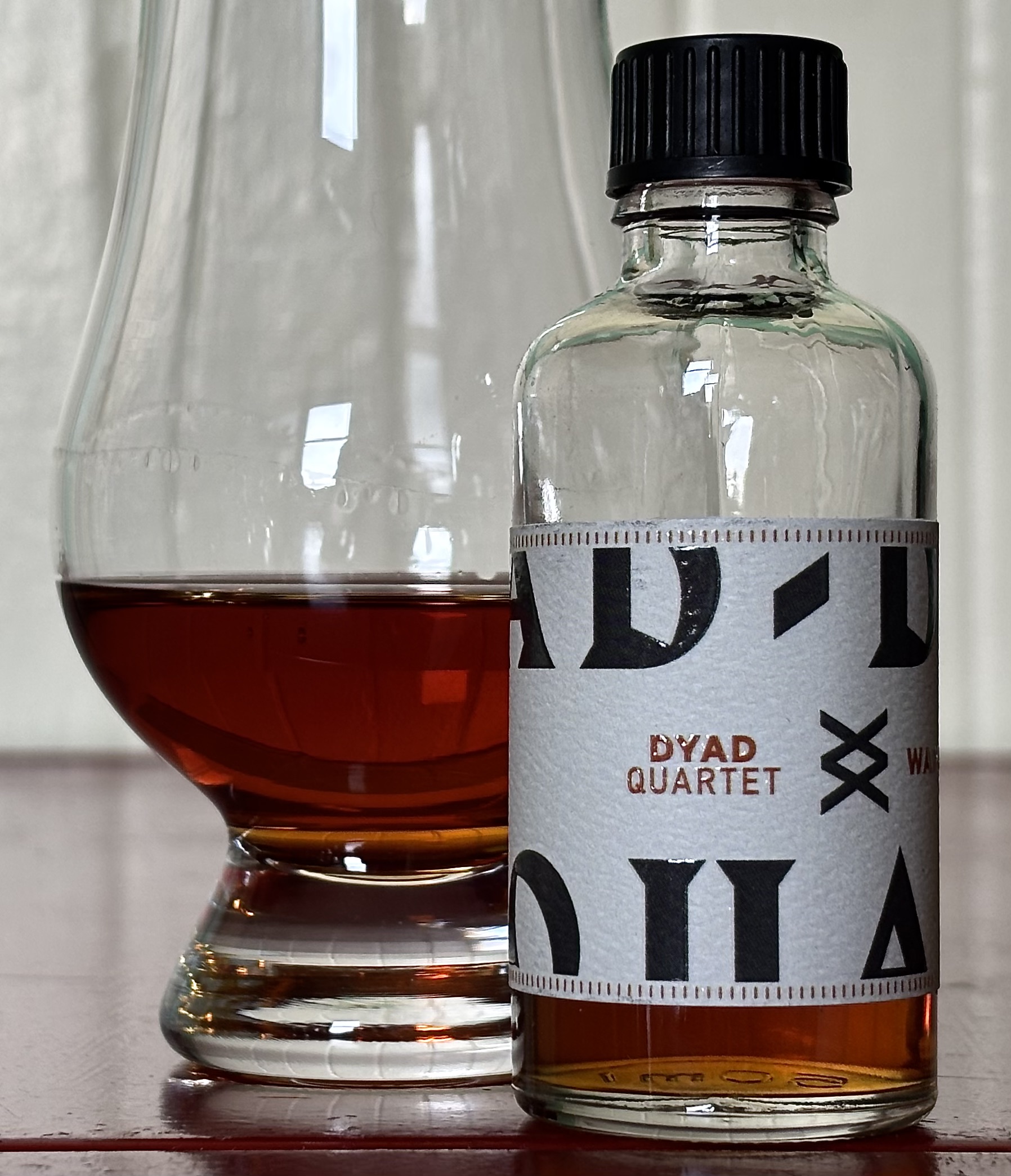
Third we have Dyad Quartet, a four-barrel blend of Waiheke single malt whiskies. Bottled at 92 proof, the whisky aged 7 years in Chardonnay, Port, Apera Sherry, and Muscat casks.
COLOR – rich, red oranges, like a fire on the horizon at night
NOSE – reserved yet rich, with sherry syrup (is that a thing?), dark fruity chocolate, and dense vanilla-caramel cake
TASTE – syrupy, with a thick fruity chocolate sauce note and lovely wood smoke
FINISH – dark sherry, subtle smoke, lingering gently
OVERALL – reserved, rich, alluring in its restraint
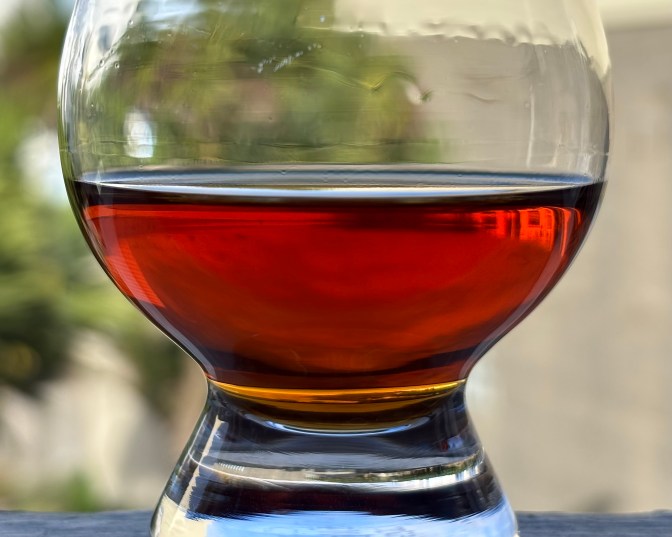
The rich color of the whisky belies its reserve. But that deep richness definitely continues into the aromas and flavors. The overall restraint tempers things just enough to compel me to keep reaching for the glass. “Leave’m wanting more,” as the saying goes. Dyad Quartet shares the confidence shown by Seris 2. It’s more opulent, yet just as relaxed. It’s as if the whisky knows it’s good, and is content to let the drinker come to it, rather than reaching out to grab attention. The cask blending is seamless, bringing the four distinct wines involved into balance. And that subtle smoke note adds just the right accent, a touch of savory to outline the sweet.
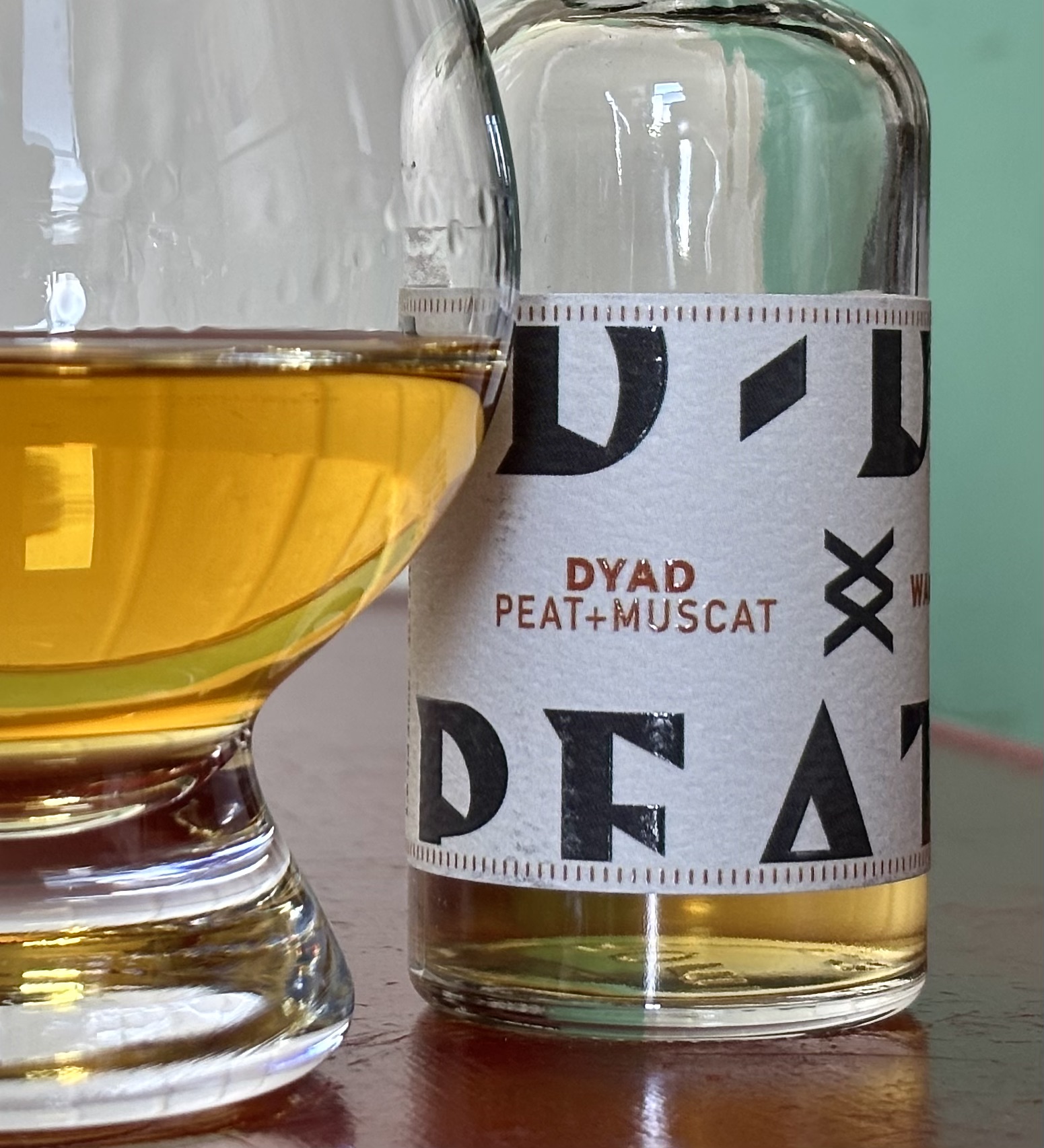
And finally, Dyad: Peat + Muscat, a small batch blend of peated Waiheke single malt whiskies, bottled at 92 proof after aging 5 to 6 years—first in used bourbon casks and then Australian Muscat liqueur casks.
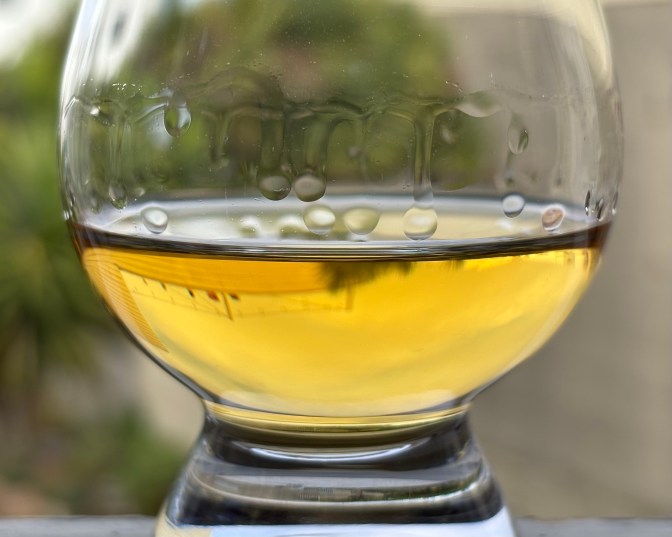
COLOR – pale butter and straw, very reflective of the world outside the glass
NOSE – bright, slightly astringent, with raw oak wood, wafts of subtle peat and campfire smoke, sweet grape skins, lemon zest, lightly smoked vanilla
TASTE – the muscat influence comes on stronger here, adding a sweet grape note to the smokiness, also vanilla, custard, a touch of candied ginger, some syrupy peach
FINISH – smoke, muscat grape jelly, the candied ginger, also candied grape skins and a bit of marmalade (that might be two ways of describing the same note)
OVERALL – like eating candied dried stone fruits by a woodland campfire
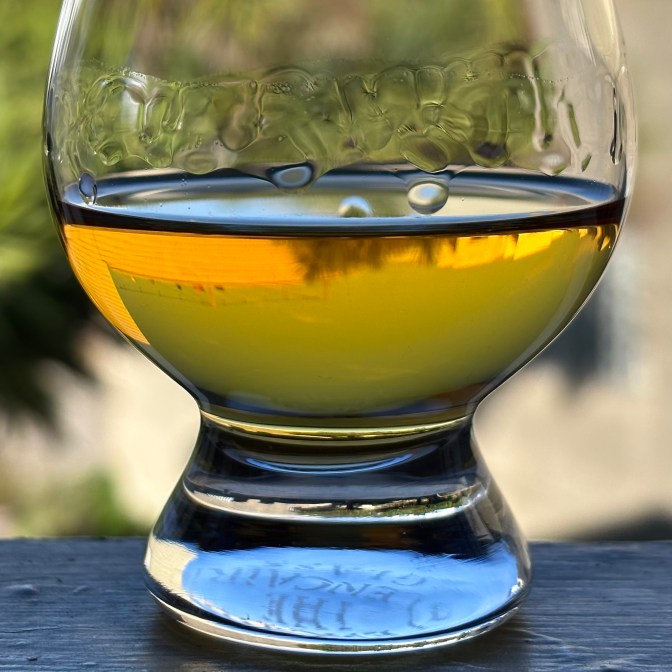
Something about this harks back to where this flight started, with the Fairlight. There is a similar simplicity and brightness at work. But here it’s elevated in complexity by the smoky aspects and candied spiciness. The vanilla comes on strong. But it’s wrapped in the smoke and accented with the ginger and acidic elements—the grape skins and citrus. It’s very inviting. Rather than a mysterious sultriness like the Dyad Quartet, the Dyad Peat + Muscat appeals in a more up front fashion. Like its name. We’re told what to expect. We get it. Yet it still manages to surprise with those candied notes and the utterly lovely smokiness.
Very interesting. And tasty!
What strikes me most about this flight is the overall confidence of the whiskies, despite their youth. They aren’t setting off flashy fireworks or making a pretense of anything grander than their evident ambition to pique interest and to please. The wood notes have something unique to their spiciness, something I can’t locate in America, Scotland, Ireland, or Japan—the regions I’m most familiar with. I must assume this has something to do with the New Zealand terroir. The smokiness is similarly unique, carrying the various spices and sugars of the whiskies along.
And though I do appreciate how they defy the typical expectation that young whiskies are somehow inherently boring or otherwise “not ready,” I do look forward to experiencing what more age will bring to the easygoing confidence these whiskies already exhibit. If they’re achieving what they are now, what greater depths will they offer then?
I received these samples for free. No matter what the purists and YouTubers claim, I will always maintain that knowing what price we did or did not pay impacts our experience of any whisky. Maybe above a certain income, price no longer matters. But it does to anyone living closer to the ground.
Looking at the Waiheke website, the prices for 700ml bottles of these whiskies are substantial, though not at all unprecedented. Converted to American dollars, they run from roughly $70 to $130 per bottle. I’m sure I’d be at least a bit less delighted by them at those prices. Certainly I’d appreciate their quality and unique aspects. But at those prices I’d hope for even greater complexity and depth. I’ve felt the same about certain Japanese whiskies. Kanosuke comes immediately to mind—very high quality, but still too young and simple to justify the tab for me personally.
So when Waiheke does reach American shelves, price could very well play its hand in how they are received. New Zealand does not (yet!) have the clout in whisky circles that Japan has managed to amass. It’s surprising what people will pay for mediocre Japanese whiskies. Given Waiheke’s unshowy approach, and without showy age statements to draw the eye, will their unique qualities be given a chance?
Kia ora!

 The Right Spirit