RUSSELL’S RESERVE 10 YEAR
Batch LL/ME200600 (2024)MASH BILL – 75% corn, 13% rye, 12% malted barley
PROOF – 90
AGE – 10 years
DISTILLERY – Wild Turkey
PRICE – $38 (discounted from $54)
WORTH BUYING? – Oh so yes!

Russell’s Reserve is not a brand that needs another plug online. It’s long known to be a great standby among well-aged, medium priced bourbons. So I’m not here to plug it. I’m here to revisit the brand via a very particular batch, and to explore the question of batch variance. Is it a thing? Does it really matter?
I was watching a Mash & Drum live episode a while back, and in passing, host Jason C mentioned that David Jennings of RareBird101 had said there was something special about the Russell’s Reserve 10 Year LL/ME batch. I contacted Jennings through his Instagram to ask whether the rumor was true. He said indeed it was.
Jennings is the foremost Wild Turkey expert—outside of Jimmy, Eddie, and Bruce Russell themselves. In addition to his blog, he’s written more than one book about the brand. He is consulted regularly by other spirits writers and fans. And in recent years he’s moved into curating sourced whiskeys as well. Jennings has dissected the subtle variations of more bottles of Wild Turkey whiskey than the bourbon community has fingers and toes. So if he says a particular batch of one of their standard releases is special, I’m inclined to believe him.
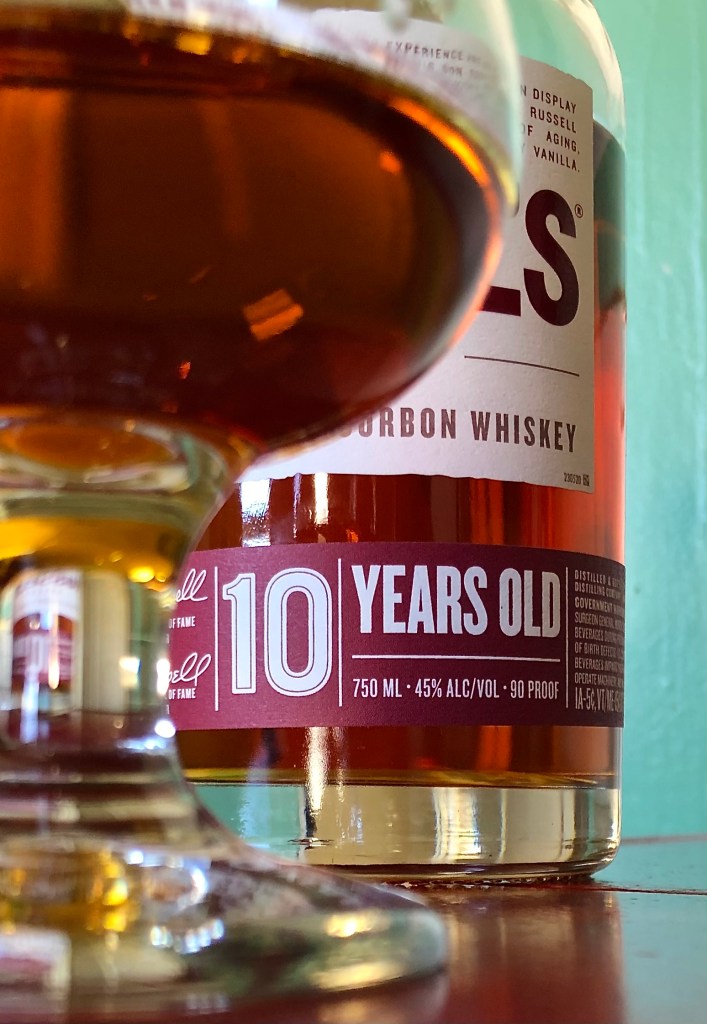
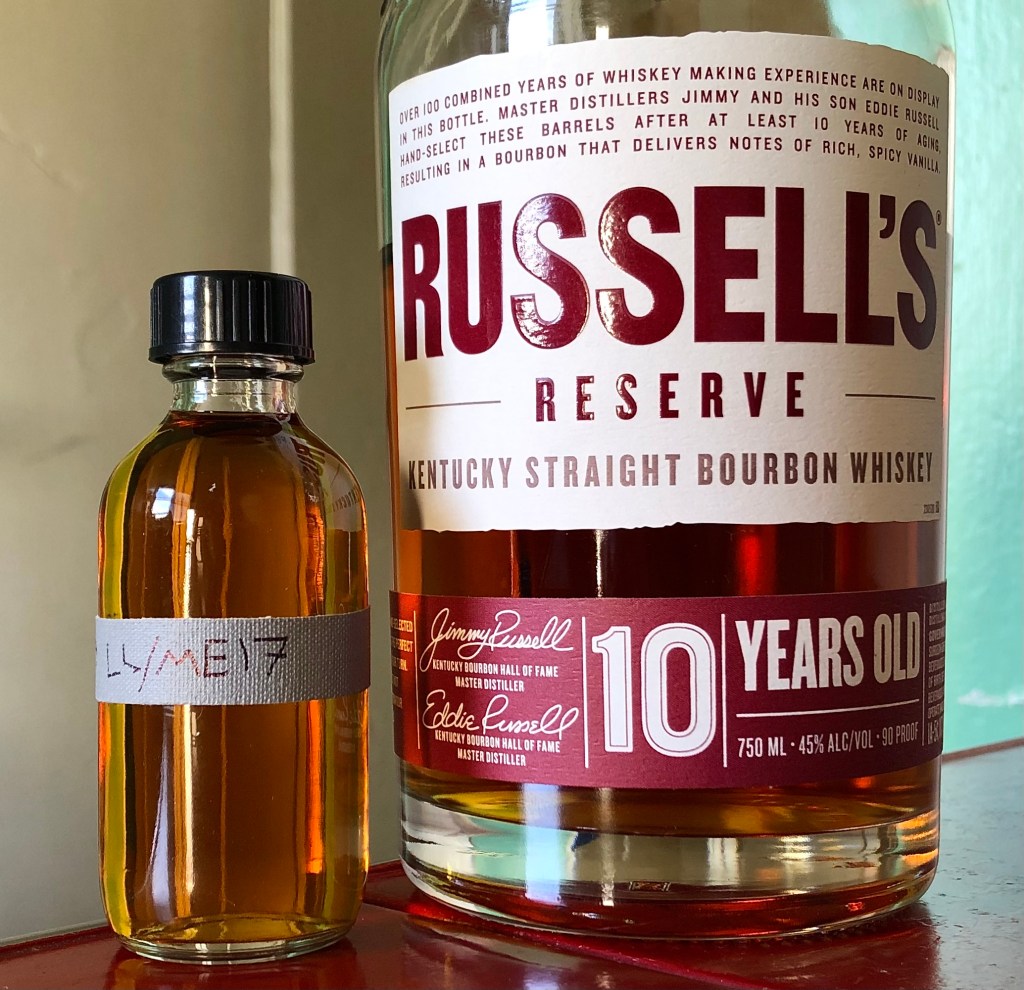
As luck would have it, it didn’t take me long to find a bottle. The laser code on it (LL/ME200600) refers to the bottling date of May 20, 2024—M for 2024, E for the month of May, and 20 for the 20th day of the month. The 0600 indicates the time of the bottling run, 6:00 AM. I found this bottle in October 2024, five months after it was bottled.
So is it special?
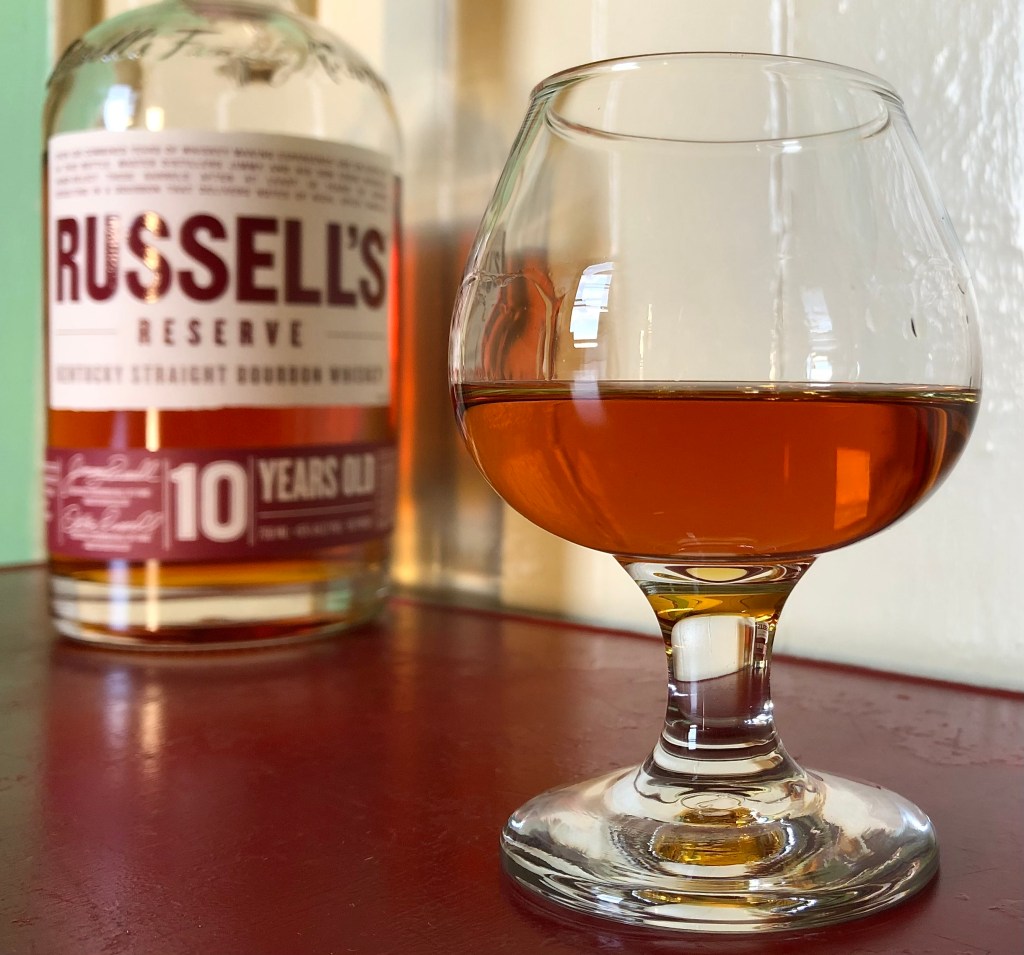
Here we are, three days after uncorking and three pours into the bottle. These brief notes were taken using a simple brandy glass, my favorite for Wild Turkey.
COLOR – that familiar Wild Turkey soft amber-orange
NOSE – baked cherry, baking spices like cinnamon and nutmeg, smooth oak, freshly baked flaky pie crust, caramel taffy
TASTE – syrupy, with cherry notes of various kinds (freshly picked, baked, in a syrup, in a liqueur) dominating on a solid foundation of oak and caramel
FINISH – cherry cough syrup, oak, thick caramel
OVERALL – Wild Turkey perfection
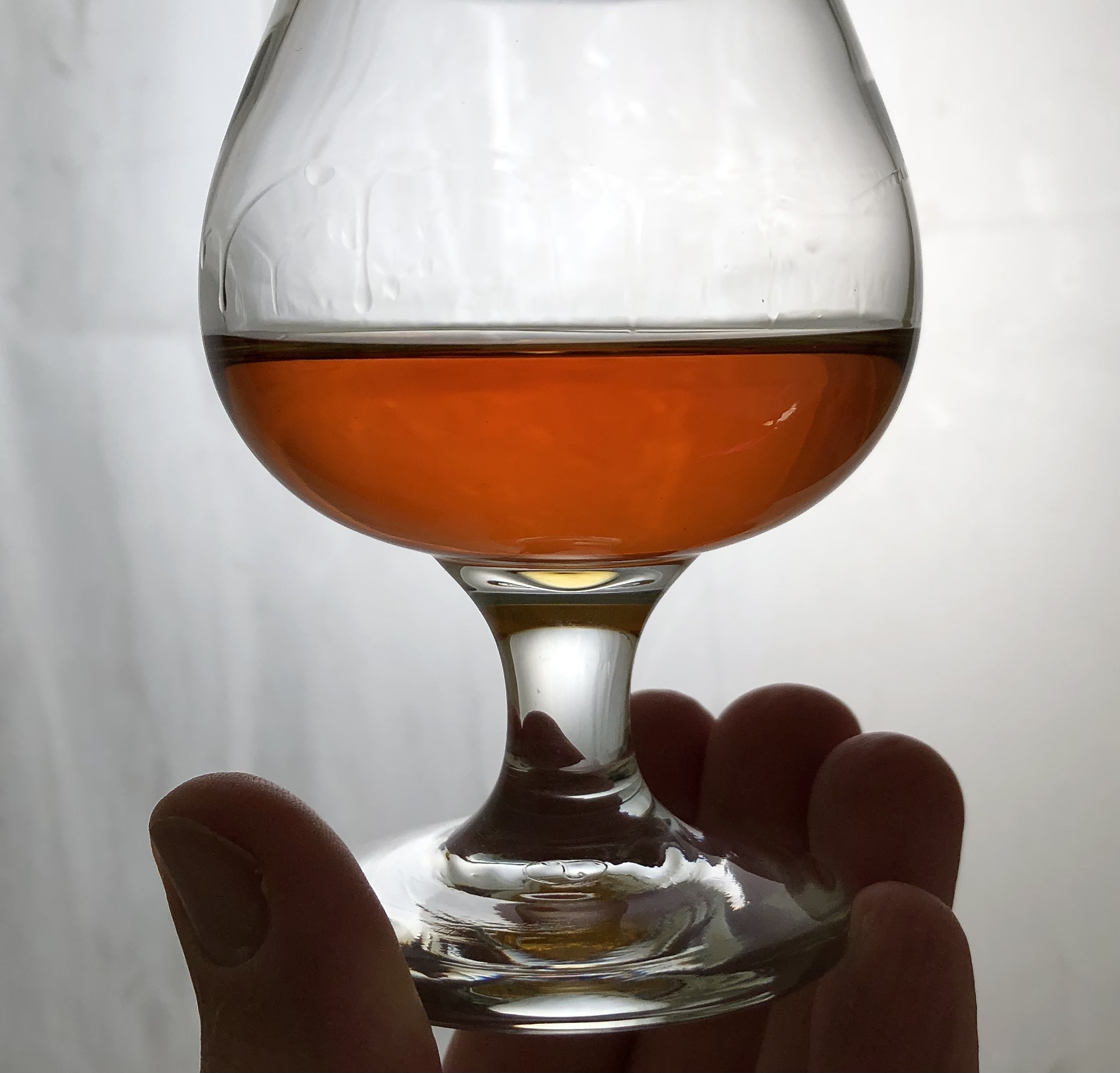
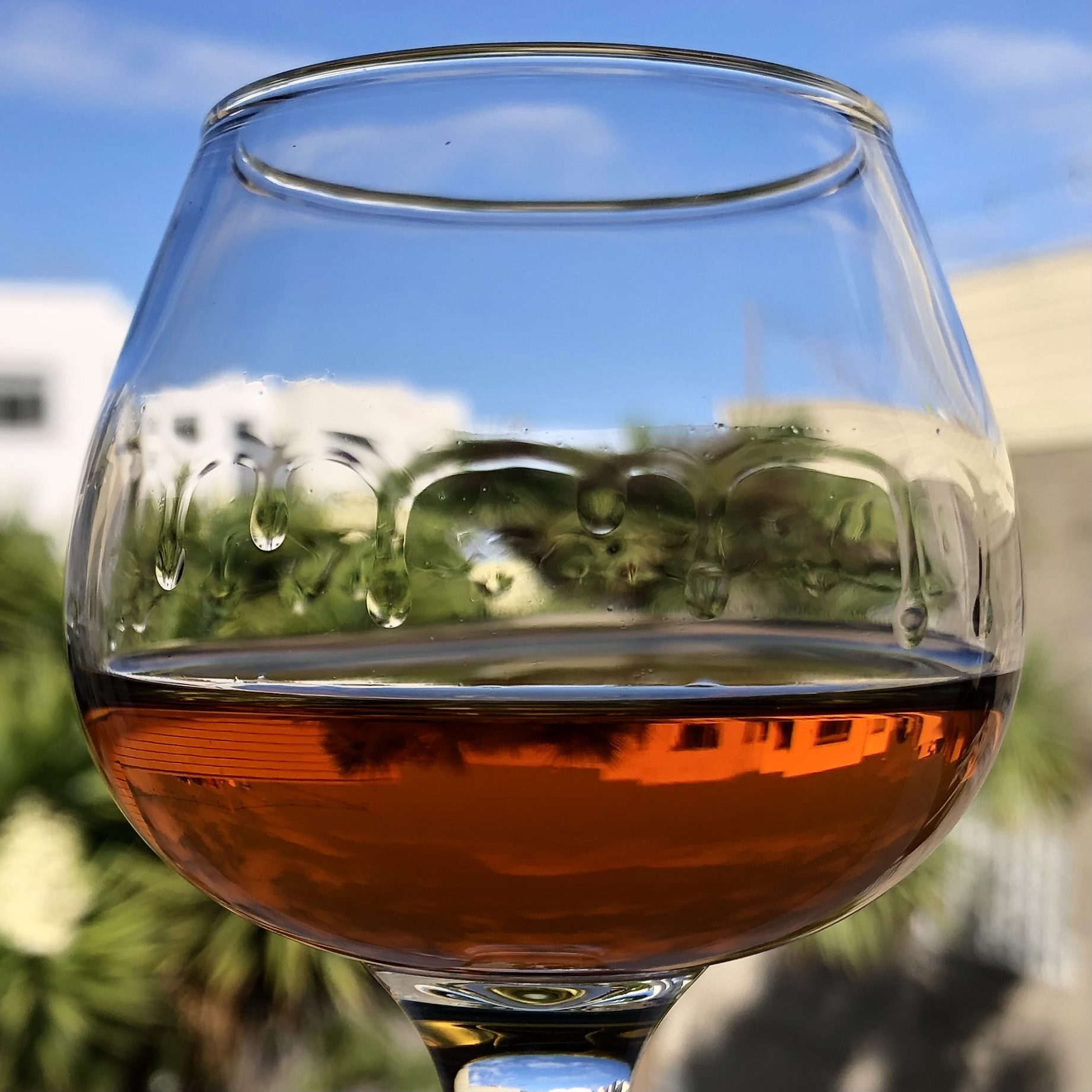
Excellent. So excellent. It’s that wide range of cherry notes that makes this batch special. The syrupy texture keeps them lingering. And the caramel and oak foundation holds everything up, keeping the sweetness from cloying by grounding it in the savoriness of oak and the steadiness of thick caramel.
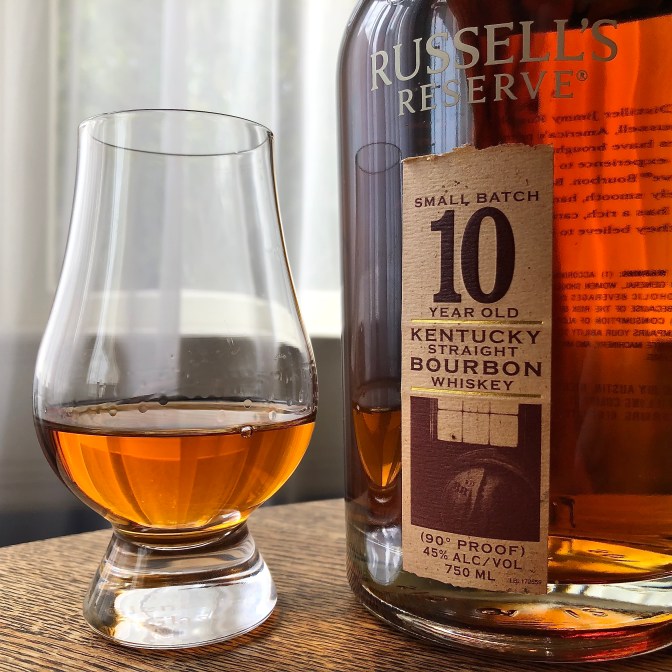
The last time I had an open bottle of Russell’s Reserve 10 Year in the house was actually in the Fall of 2022, and that was a 2013 bottle, featuring the discontinued entry proof of 107. Today’s Wild Turkey products go into the barrel at 115 proof—still lower than the 125 common to a number of large distilleries. Lower entry proofs mean good things for flavor. That dusty 2013 bottle was excellent, so full of flavor, and with a touch of the classic Wild Turkey funk of legend. The more current May 2024 bottling lacks the funk, but boy does it lay on the cherries. And in such variation, like they’re in full season and need to be put to use quickly before they turn. And even at 90 proof that syrupy texture coats the mouth and throat, helping the flavors to linger.
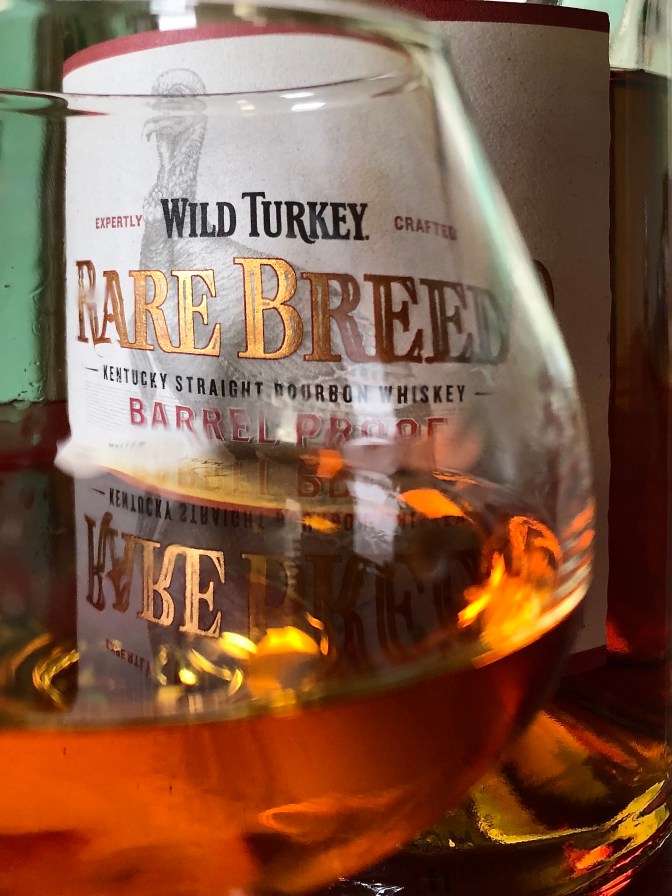
Wild Turkey Rare Breed was also a bottle I’d not revisited in a while, when in that same Fall of 2022 the boys at Bourbon Junkies went gaga over an LL/KB batch. I found one, and for me it was actually quite lacking—all dry baking spice and oak with almost zero sweetness to it. I even thought that were I to taste it blind, I’d not guess it was Wild Turkey but some lesser Jim Beam product! The LL/KB batch I found was dated February 6, 2022, whereas the Bourbon Junkie’s batch was dated February 5. What a difference a day makes!
All to say these batch recs aren’t a guarantee that everyone will like them equally. But in the case of this particular LL/ME20 Russell’s Reserve 10, I’d be very surprised if any bourbon drinker, Wild Turkey geek or not, didn’t enjoy it.

I couldn’t help thinking about the Wild Turkey 8 Year 70th Anniversary release, a bottle of which I’d also recently uncorked and was thoroughly enjoying. The price is the same—unless you buy it from a pirate. But I didn’t remember the 70th being so sweet. A side by side was in order.
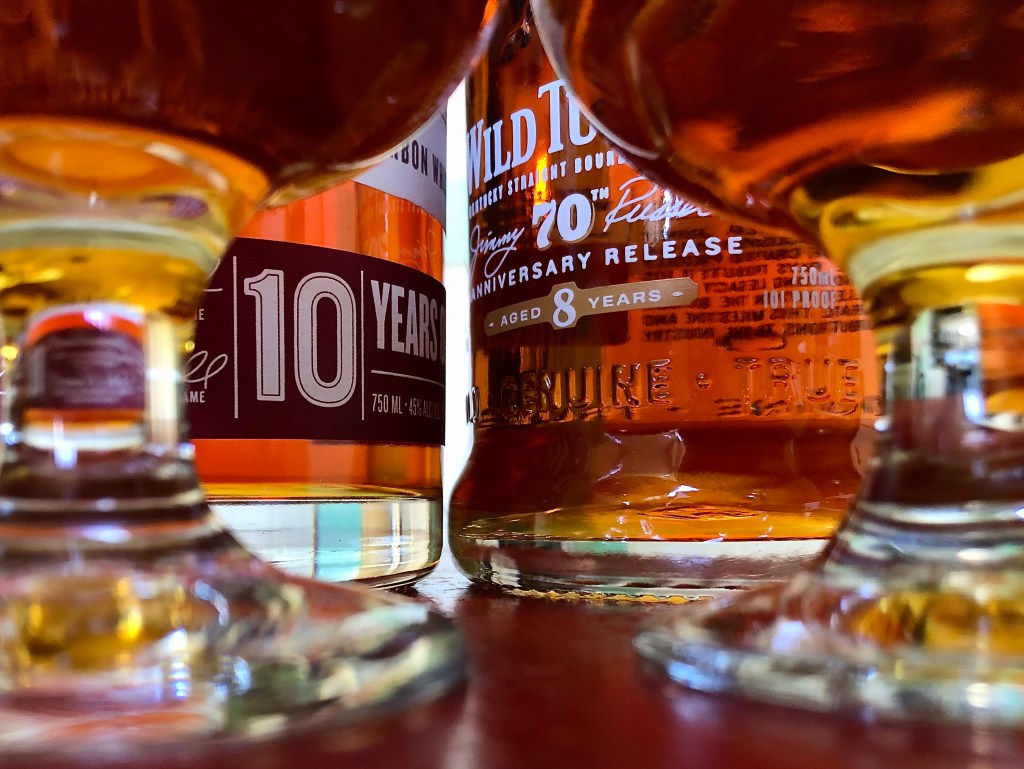
The color is pretty much indistinguishable. A difference of two years and 11 proof points seemed to even them out in that regard.
Nosing them, the difference is immediately apparent, with the Russell’s brimming with its cherries and the 70th leading with cinnamon and baking spices. Both have all the notes—cherry, oak, caramel, spice. But the emphasis of each is distinct.
On the taste, same. A cherry bounty versus a spice bounty. (I even ran them under the nose of my partner, not telling her what they were. “This one’s fruit,” she said, “And this one’s spice.” Boom.)
Another clear difference is texture. The Russell’s has that sumptuous syrupy quality to it, whereas the 70th is quite dry. The finish of each lingers fairly equally, allowing the flavors of the taste and aromas of the nose to gradually fade on medium heat.
This isn’t a contest. And I enjoy both of these whiskeys. But if it was a contest, the Russell’s wins for me hands down. No question. It’s sweet without cloying, sumptuous not sticky, and very balanced between its fruit emphasis and foundational oak and caramel. The 70th is good, balanced in its own way, but drier, allowing bitter oak tannin to edge its way in on the finish where the Russell’s allows only smooth oak.
Well alrighty. Back to the Russell’s Reserve brand itself, I’d say batch variance is indeed a thing. Though I’ve not had a contemporary bottle of Russell’s 10 open at home in a while, I’ve certainly ordered it at bars and brought it to parties. And this LL/ME20 is indeed unusually good. It’s also unusually good for a standard release of anything in this price range, especially from a mass producing operation like Wild Turkey. There are core flavors one can depend on with Wild Turkey products. But the sweet and spice dials do tend to swing. For the average consumer, this is of little importance. To the obsessive whiskey geek, this is a reason to get up in the morning. Finding a special bottle, and sipping it on a cool autumn day like I am now? Perfection.
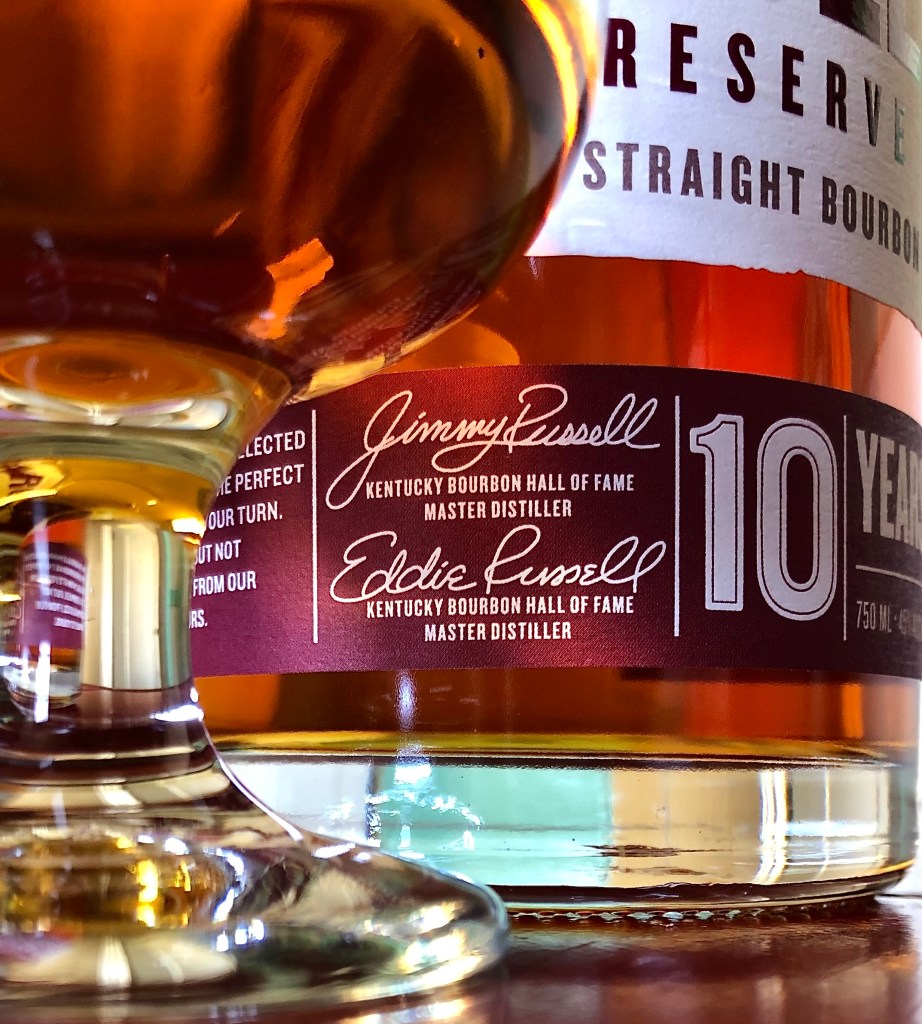
Depending on when you read this, the LL/ME20 Russell’s 10 Year batch might still be out there or long gone. Grab’m if you see’m. And if you still haven’t found a bottle of the WT101 70th, or can only find it jacked up to pirate prices, I’d say don’t sweat it. Your sweat would be much better spent on finding an LL/ME20 RR10. That’s according to my tastes of course. And tastes are just that.
Cheers!
Addendum
A few days after posting these notes, a fellow member of my local Facebook whiskey group and I had this exchange in the comments below the FB post where I’d shared my article:

So his batch was bottled three days earlier than mine, with the full laser code LL/ME170037—May 17, 2024, 12:37 AM. We indeed exchanged samples. Here now is a side-by-side comparison of the LL/ME20 and LL/ME17.
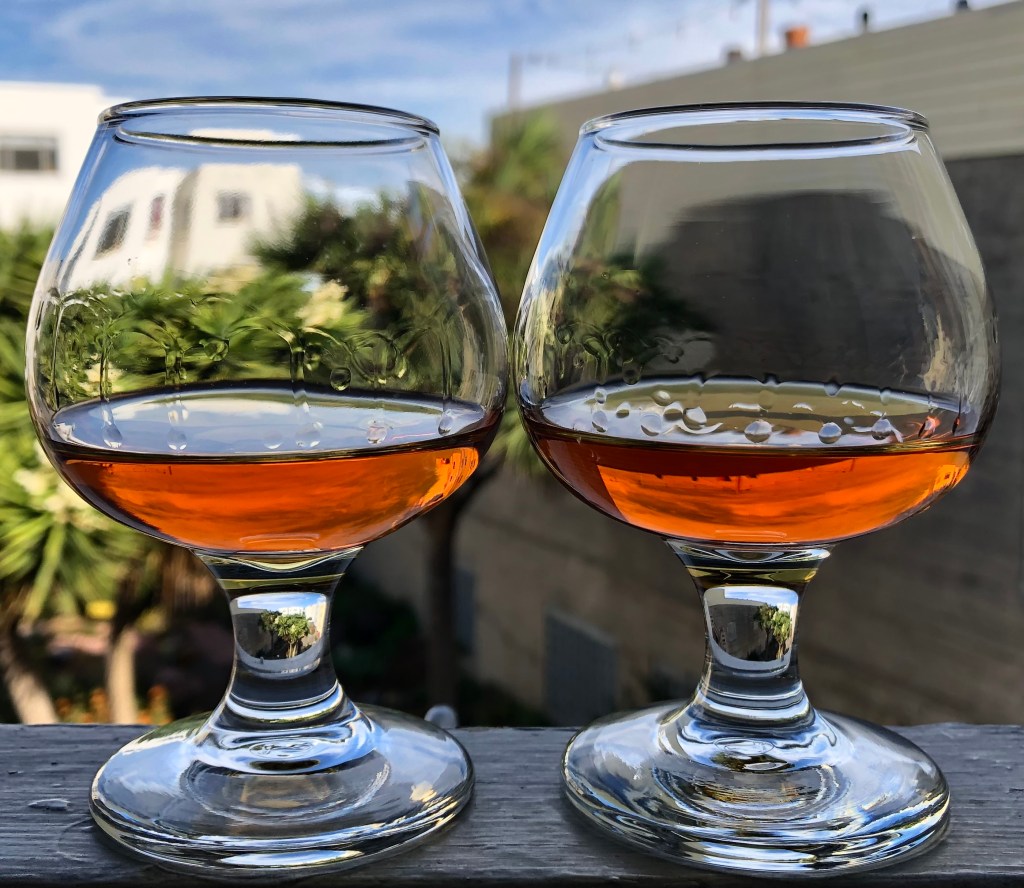
The color between them is basically indistinguishable, with the ME20 tinting just a hint dustier in some lights.
The nose is quite close, with both showing baking spice, cherry, and oak. But the ME17 comes off a notable touch brighter, and with a whiff of what smells to me like a bit of the ol’ Wild Turkey funk, that slightly mildewing herbal note of yesteryear. The ME20 being a notch darker, its aromas are also slightly less forthcoming out of the glass. These are subtle differences, but immediately noticeable.
On the taste then, the ME17 leads with caramel, oak, bitter oak tannin, and sweet cherry cough drop. On the finish, a bit of the funk mingles with cherry menthol, oak, and a quite drying oak tannin. The ME20 is immediately sweeter, with cherry and caramel blending right up front, surrounded by smooth oak, and with oak tannins that are less bitter than the ME17. The ME20 texture is also more syrupy, allowing the sweet cherry notes to stick around for the finish, alongside oak, oak tannin, and a toffee-like mix of caramel and chocolate.
Overall I’d say the primary distinction is that the ME17 leans dry and the ME20 leans sweet. The ME20 also has that syrupy texture, which impacts the finish in particular, coating the mouth with sticky remnants of the various sweet cherry notes. The ME17’s drying tannic quality emphasizes its bitter and medicinal notes. But something the ME17 does have going for it that the ME20 does not is that whiff of Wild Turkey funk. This note can be off-putting, as it very much was for me when I first uncorked Forgiven Batch 302. But in small doses it can add a curious complexity.
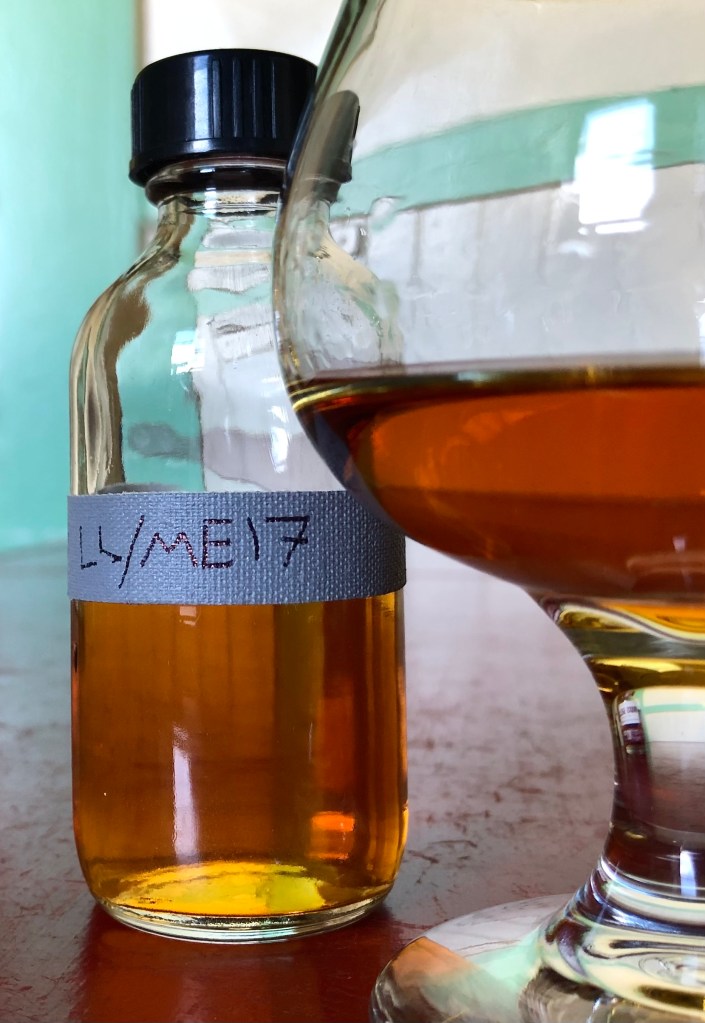
Well, I wouldn’t say the ME17 is a drain pour, as my Facebook friend felt it was. But I also understand why someone might not find a dry, slightly medicinal Russell’s Reserve to be appealing. I don’t mind dry whiskeys myself, up to a point. And the medicinal aspect doesn’t bother me here given the strength of the cherry aspect—a sweet medicine, as opposed to something more herbal.
The ME20 is still a banger for me. The taste to price ratio is excellent. It’s quite interesting to try it next to a very close cousin, to discern the differences, and especially to note how even subtle shifts can make the difference between a whiskey that raises your eyebrows and one that passes uneventfully.
David Jennings, who got this ball rolling, has since written his own review of the LL/ME. His bottle was also the ME20 batch. Had I found the ME17 instead, I’d likely have wondered what he was so excited about. The ME17 is not bad, imo. It’s just not special. And to enjoy it you have to be okay with dry bourbon and a certain amount of medicinal quality as well. But the ME20? I still say seek it out if you’re a Russell’s Reserve fan.
Cheers!


I have both and agree the ME20 is special with the ME17 lagging behind a touch with slightly different highlights. While one is better than the other, I am not at all disappointed with either, though, admittedly, I’ll polish of the 17 a good amount of time before I do the 20.
LikeLike
I never met a Russell’s Reserve 10 I didn’t like, I must say. Thanks so much for reading the blog and sharing your notes! Cheers!
LikeLike
I am with you there! They are always good, but the ME20 is indeed a special bottling of RR10.
I acquired mine before the hype train left the station in a big damn hurry (unknowingly, of course). Which in hindsight was really quite fortunate as I haven’t seen one since.
Anyway, When I read DJ’s post I stopped and thought to myself, “man, that bottle I cracked recently was pretty outstanding. Let me go check it out.” Sure enough, I had the winner in house. While I moved through the first few glasses a bit quickly (come on, it’s great stuff), I’ve slowed up to savor that one’s unique greatness.
LikeLiked by 1 person