There are some bottles that impact our whiskey journey more than others.
For me, these are whiskeys that maybe opened up my senses in some particular way. Or they made a striking introduction to a new-to-me region or style of whiskey. Or they enlightened me to matters outside of whiskey itself, certain moments in history or philosophical perspectives. These are whiskeys that sent me down new pathways of pursuit and perception. Whiskeys that taught me something.
Here are some significant whiskeys pinned on my own journey’s map, and why they earned their pin there. I invite you to pour yourself a glass of one of your turning-point whiskeys, and enjoy!
🥃

Booker’s 2015-05
Maw Maw’s Batch
In the late summer of 2016, I returned from a trip to Scotland having been enlightened as to the magic that is sunlight in a glass. With my sights set on scotch, I realized, oh right, in the US scotch is imported and much more expensive. So I turned to bourbon.
In 2016, Booker’s ran about $50 and I thought that was high. Today that’s considered an average price for most anything good. But I splurged, and when I cracked open Maw Maw’s Batch, poured a glass and took a sip, I think I smacked my forehead and held my hand there for the full duration of the impressive finish, which reverberated at length in the wake of the caramel bonfire that had just erupted on my palate. When I later shared a pour with a friend, at sip one his head involuntarily jerked to the side and he said, “Woah, that’s cowboy whiskey!”
Over its lifespan on my shelf, that bottle evolved like a wild field whipped by wind and flames, shifting erratically around its herbal and spice notes. But underneath whatever flavors a given pour emphasized, a thick current of toasted caramel always grounded the experience. Bourbon could do that? I was hooked.
And luckily I still have a bottle of Maw Maw’s in my bunker!
🥃
Willett Family Estate Bottled Small Batch Rye
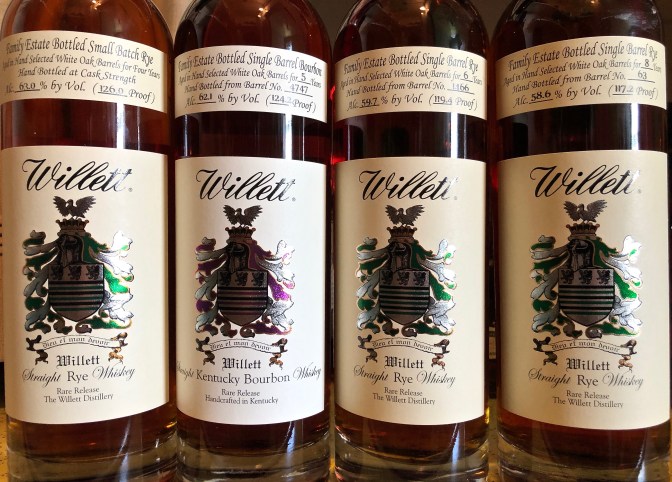
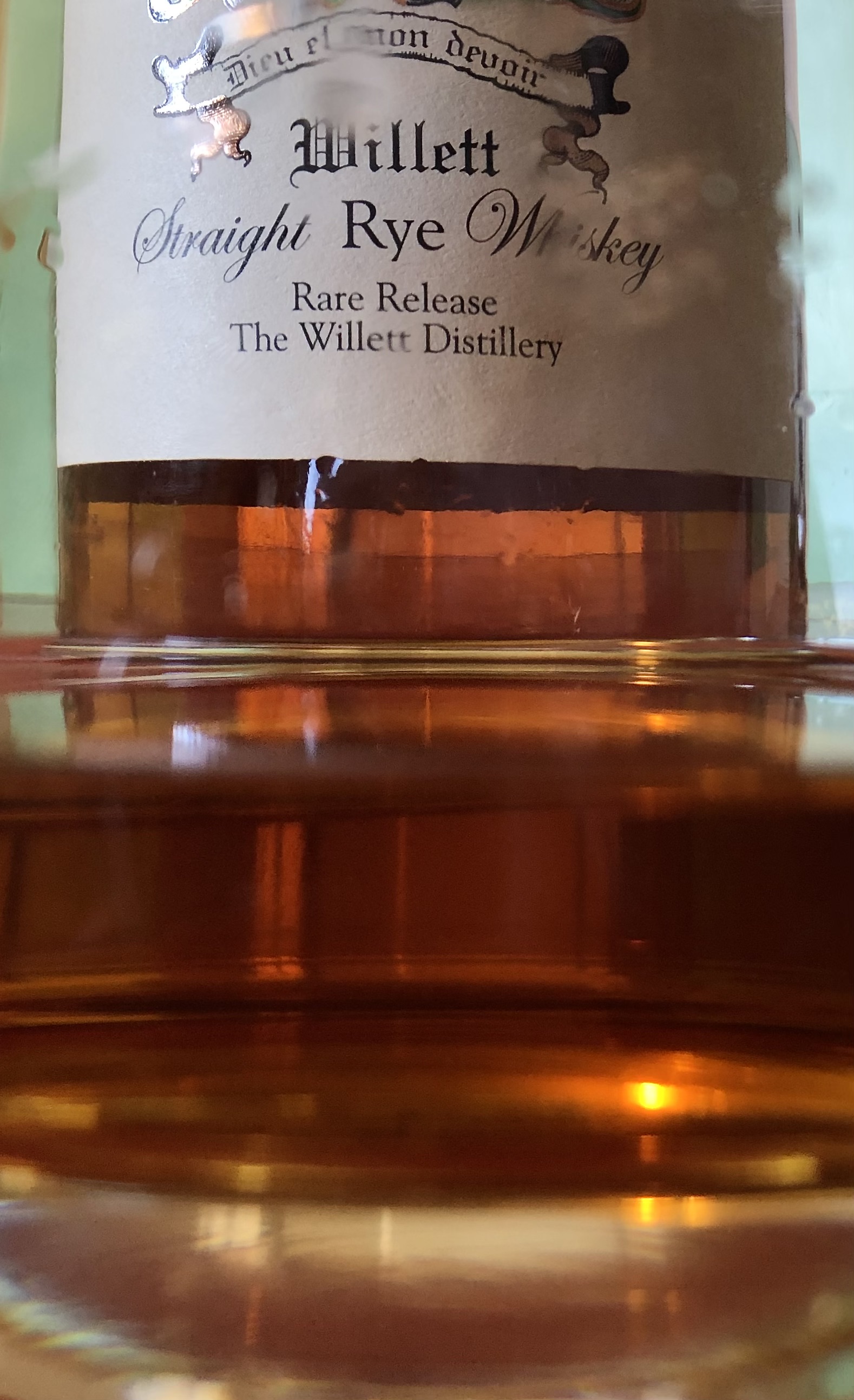
Around that same time in 2016/17 when my palate was getting batted about by Booker’s, Willett’s then 3 Year Rye dunked me in dark chocolate and threw me out into another wild field, fragrant with herbs and grasses. And like a field, the whiskey evolved in the uncorked bottle over time, wildly but always enjoyably. I found the nose of that first bottle incongruously restrained considering its 112.8 proof. But then the palate opened up with multiple layers of dark chocolate, and the finish lingered endlessly. “It’s the hot cacao of ryes,” I wrote in my notes. In 2018 when the age bumped up to 4 years, I tried the 3 year next to the new 4 year and was impressed by how well it held its own!
Next to bourbons with their sweeter corn foundation, Willett’s rye struck me as a rougher and more rambunctious grain, full of surprises. Willett inspired me to explore other rye whiskeys. And though I drink Willett less these days due to the price hikes, Willett’s standard release rye remained my benchmark rye whiskey for quite a long while. It’s my first rye love, and I still return to it fondly from time to time.
🥃

Old Potrero
Straight Malt Rye
Chardonnay Cask Finished
Single Barrel
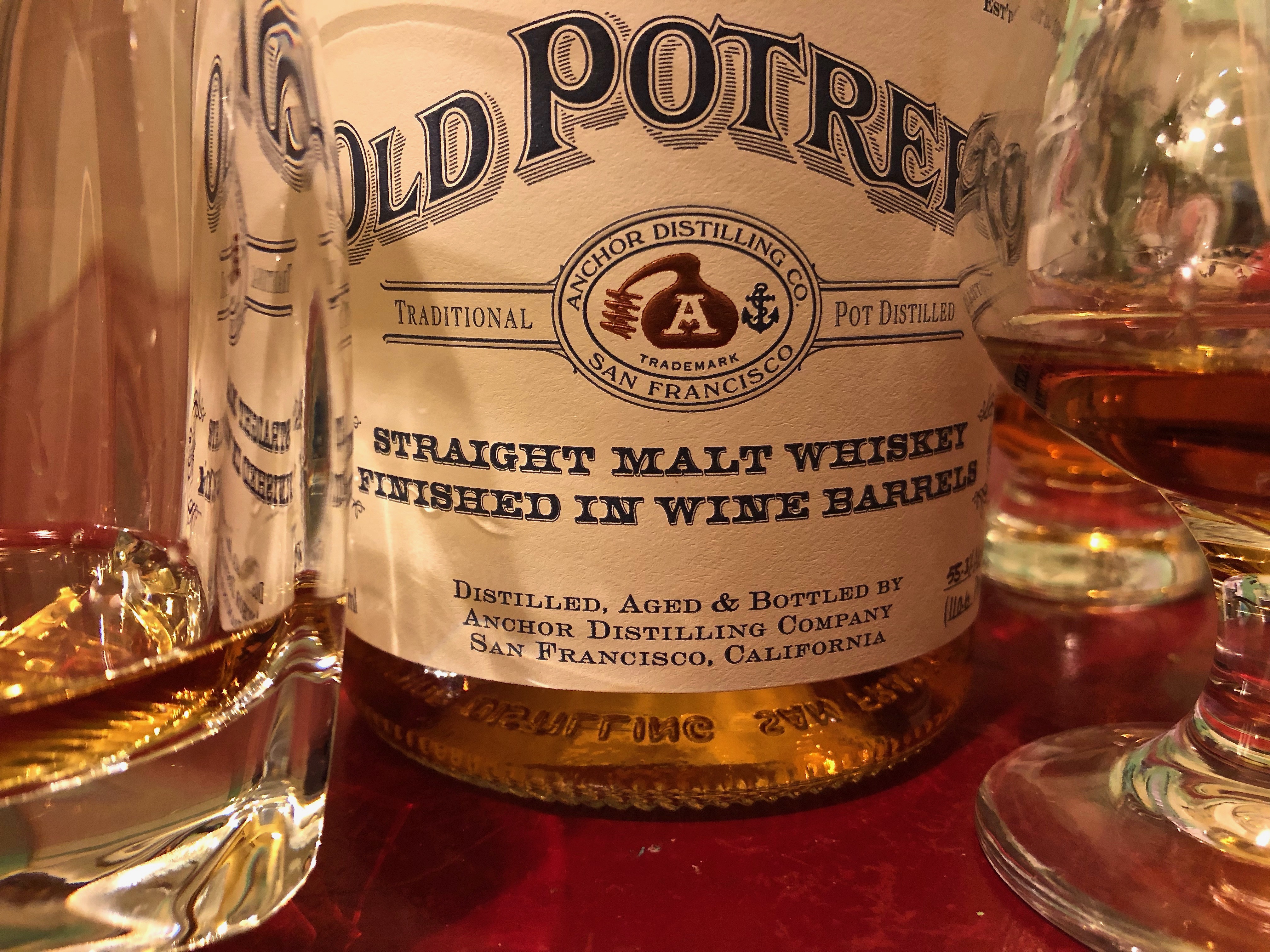
I can’t recall at this point whether this was my first experience with a wine cask finished American whiskey. But it’s certainly my earliest memory. This single barrel came out in the summer of 2017, and counted among the first Old Potrero single barrels ever released. Red wine cask finishing experiments followed, as well as regular single barrel releases minus any special cask finishing. But this early Chardonnay release was a singular anomaly, and a masterful flavor explosion, balanced like an expertly choreographed fireworks display.
Whether bottled on its own pure merits or nudged by a wine cask, Old Potrero Rye is even more brash than Willett. A 100% malted rye whiskey distilled in a copper pot still, it counts as a single malt even though it’s billed as a rye. Rich malt and chocolate notes abound, often paired with dark plum and fig notes adding sweetness to the wild grassy field of dry herbal rye notes.
The Chardonnay cask finished release is the bottle that first opened my senses to the off-beat offerings of American craft whiskey. The intense flavor profile made an impression. But the most lasting impression for me is the intention of Old Potrero’s founder, Fritz Maytag, to revive an older style of American whiskey making. So I set out to find other intention-driven craft whiskey makers, whether they favored rye, bourbon, or single malt.
With respect to Maytag, it was all and only about the rye. Rye was once the dominant grain in American whiskey. It’s a tough grain that can wreak havoc on distilling equipment. Copper pot distillation was also traditional, though less cost effective compared with the more efficient column still that came later and largely replaced it. Maytag was determined to create a traditional American whiskey in the traditional way—in 1993, when nobody cared about whiskey! But he did it. And now imitators abound.
Across the spectrum of my many Old Potrero experiences, it’s as if I can taste the makers’ love for their product. They don’t need to make it the way they do. Yet they make it the way they do. It’s a kind of genuinely joyous extravagance—both “unnecessary” and yet so authentic and particular as to constitute a gift. And I love that it’s local to me, a true San Francisco product made in the eccentric spirit of this city, where tradition and innovation have always played together with exuberance.
🥃

Elijah Craig Small Batch
Single Barrels Aged 12+ Years
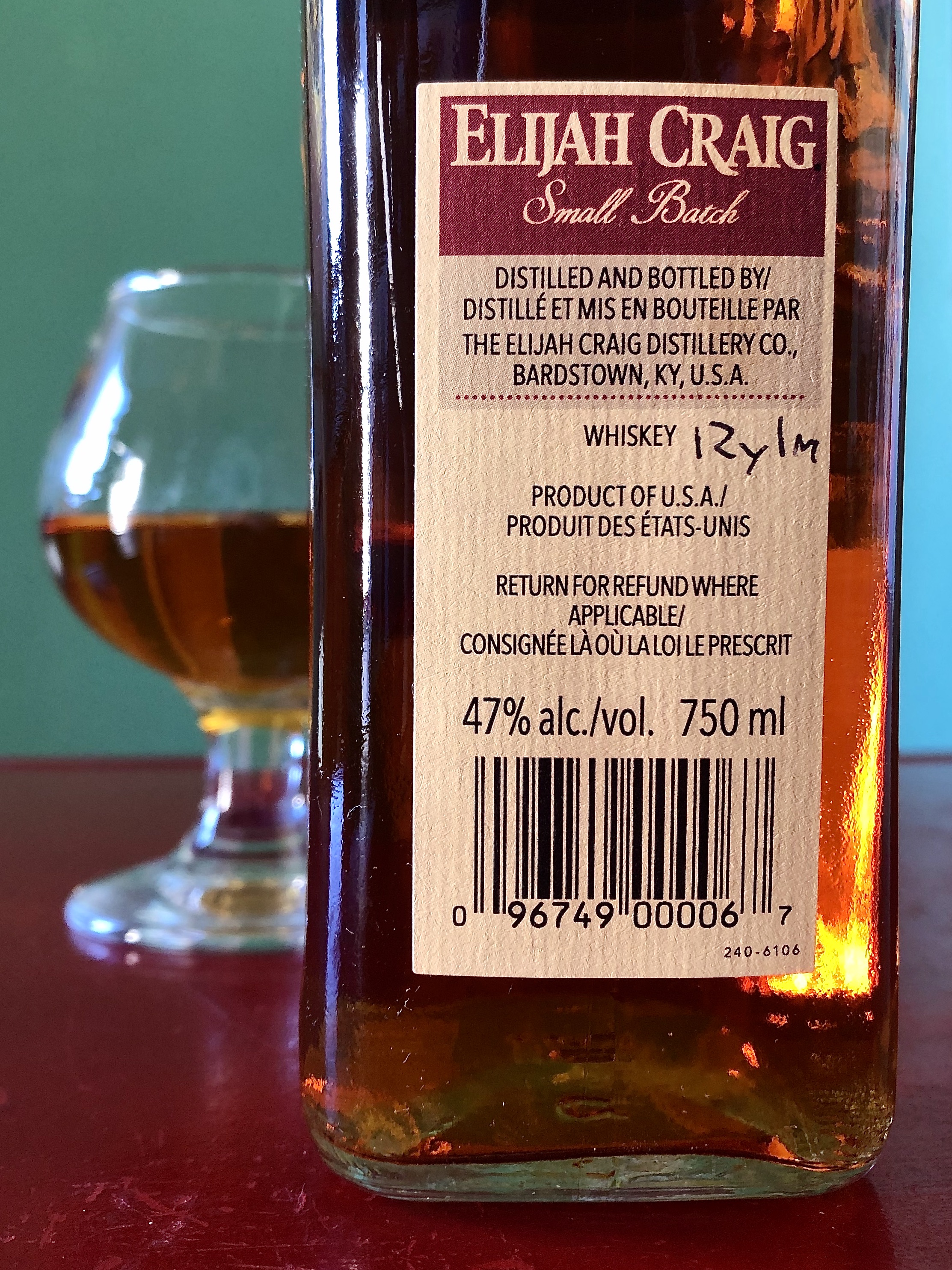
It was the Elijah Craig brand in general, but their older Small Batch single barrel releases in particular, that helped me begin to understand my keen sense for oak notes. I found myself picking out sweet versus savory oak, dry late-summer oak cut for firewood versus damp autumn oak, fresh cracked oak wood versus rough and mossy oak bark. This made me aware of how our own personal histories impact our palates. I’d grown up in the California Sierra Nevada mountains, packed with oak trees. I climbed the oak trees around our house and knew their branches, textures, and aromas intimately. But I’d never thought about that.
Once I recognized that it was this circumstance of my childhood that left me able to pick out oak notes in bourbon with such nuance, I similarly became conscious of my sense for pine and fresh baked goods. Pine forests are ubiquitous in Northern California. And the abundance of apple orchards where I lived meant autumn was always filled with fresh pies, fritters, donuts, cookies, and a variety of other goodies packed with other local fresh fruits like cherries and blackberries. So my sense for what happens when various baked bread and fruit notes collide is keen, along with the differences between fresh, baked, or stewed fruits.
And of course another result of all this was the memories these bourbons brought back for me. Often very specific memories of hikes around Echo Lake with my family. Or getting into trouble with my friends out in the woods, where we should have died a thousand times falling out of trees or stumbling down narrow ravines. I’m so glad helicopter parenting wasn’t a thing when I was a kid—the adventures I’d have missed!
🥃
Home Base Bourbon
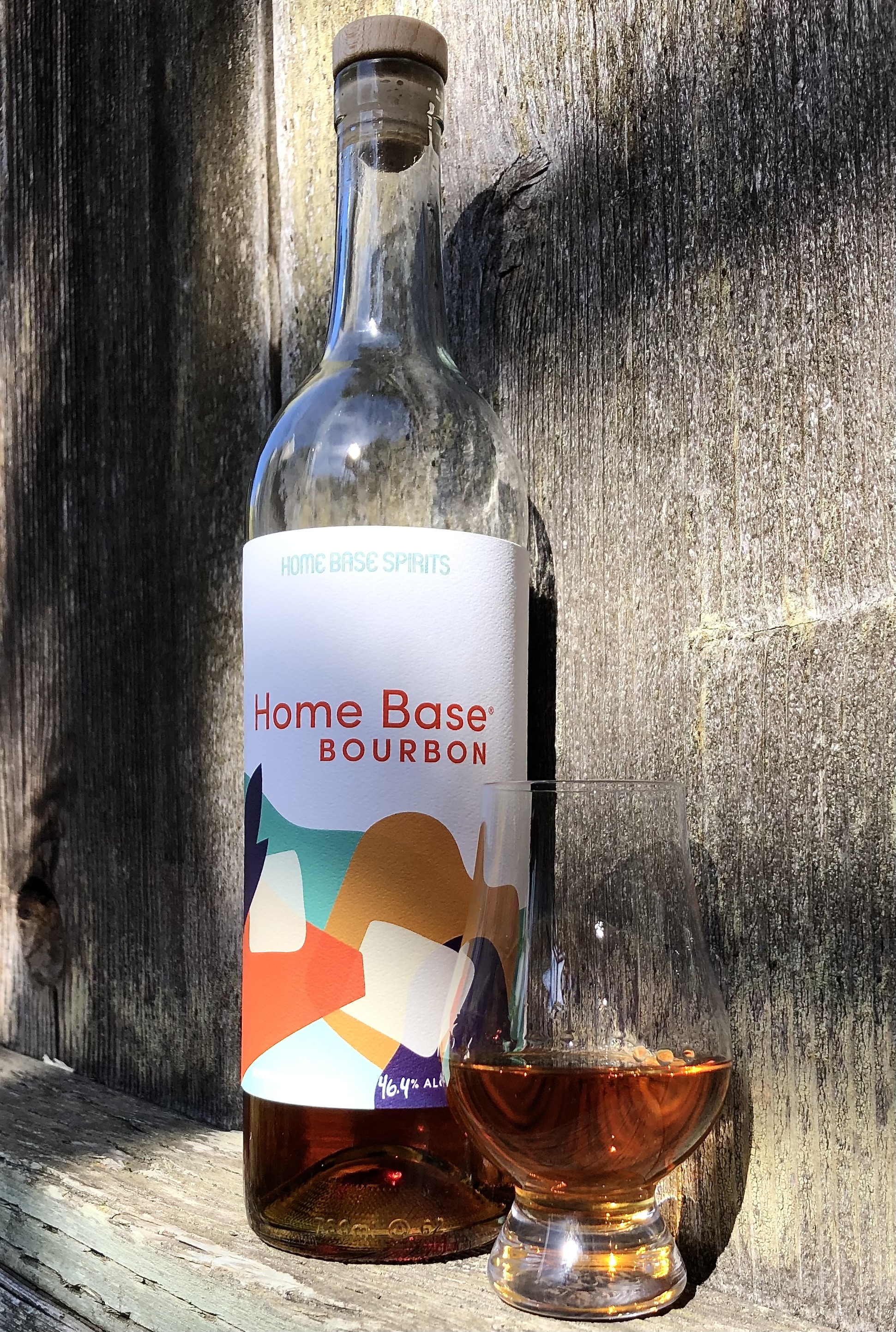
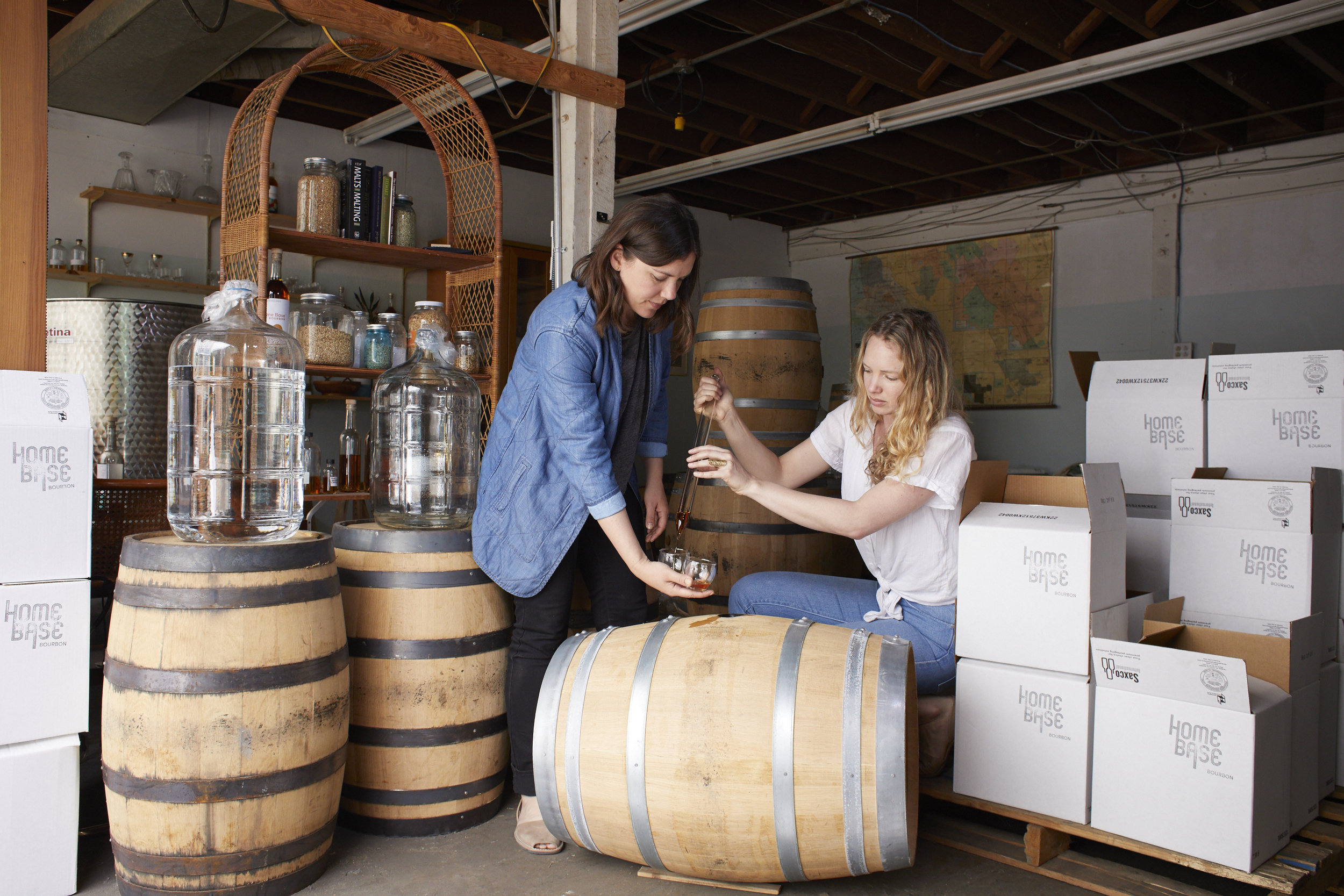
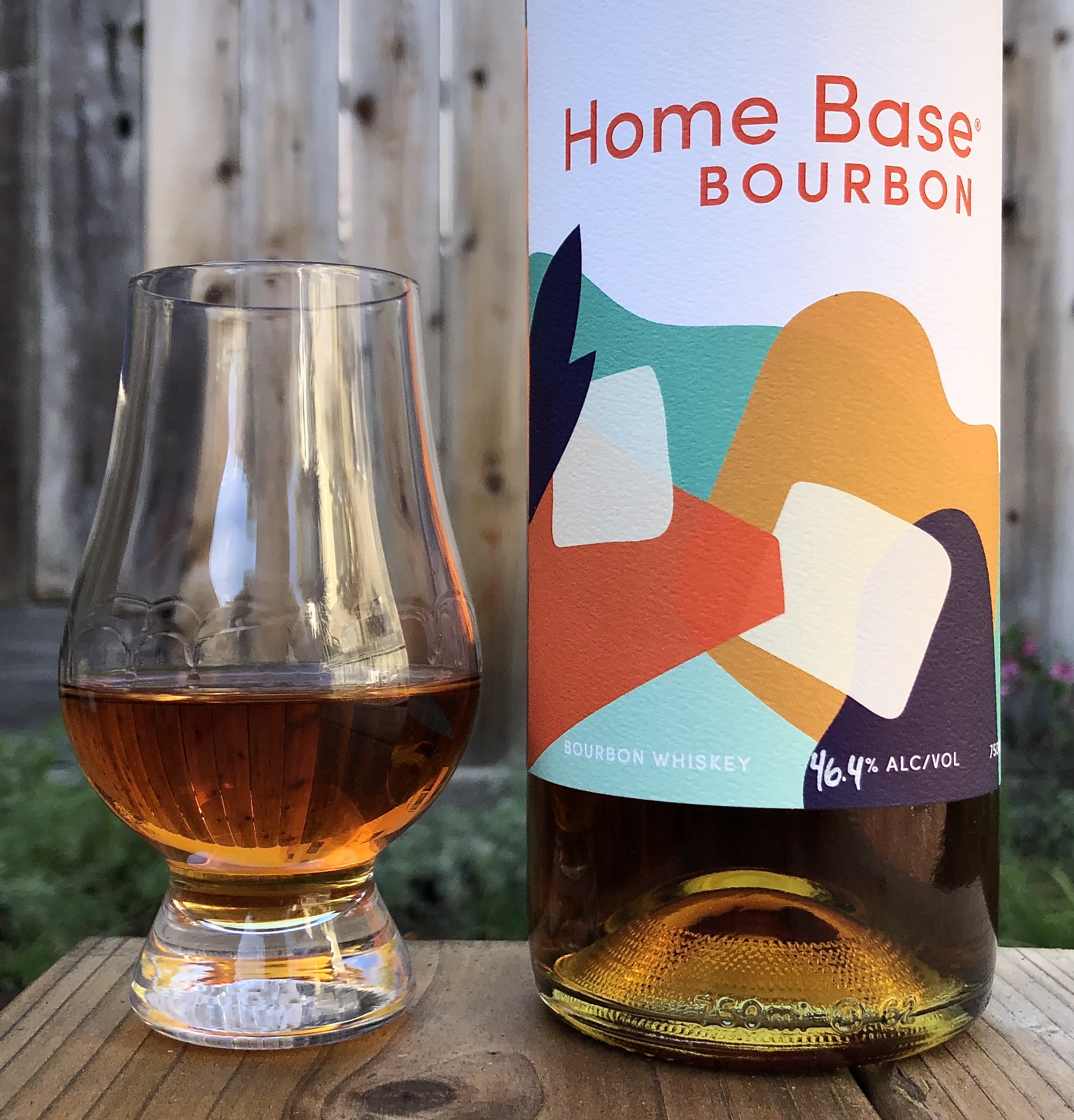
My first experience with Home Base Bourbon wasn’t great. It was their first batch, aged a mere 15 months, and I found it splintery and bitter. But I loved that it was made by two twin sisters, Ali and Sam Blatteis, born and raised in Oakland, across the bay from San Francisco.
When I eventually returned to Home Base they were at Batch 10, aged a nice round 3 years, and what a change since that first batch! Still young, the bourbon now opened up exceptionally well with time and air. Now it was less woody, more fruity and creamy. And I could taste the Blatteis sisters’ goal of creating a Northern California bourbon, distinct from the traditional southern state bourbons. Northern California is a very agricultural area. Home Base whiskeys conjure the nourishing fruit orchards and fresh baked goods that any Northern Californian comes to know.
Home Base Spirits helped me begin to understand the roles of terroir and place in whiskey, how circumstance, intention, and local culture impact flavor. It’s also a very modern whiskey, respecting tradition while recognizing the current state of the world. The Blatteis sisters are committed to using grains from local small farms, for example. They source bottles made from recycled glass. They commission local artists to create their labels, choosing designs that break from the traditional masculine image of bourbon in hopes of welcoming more people into whiskey. All these choices inform how the Blatteis sisters distill, age, blend, bottle, market, and share their whiskeys, and how we who drink them enjoy them. Whenever I share a Home Base Bourbon with friends, I share its story as well. Sometimes we then get into stories of where we came from, and how circumstance and intention impact who we are. That’s good whiskey doing what whiskey does best.
🥃
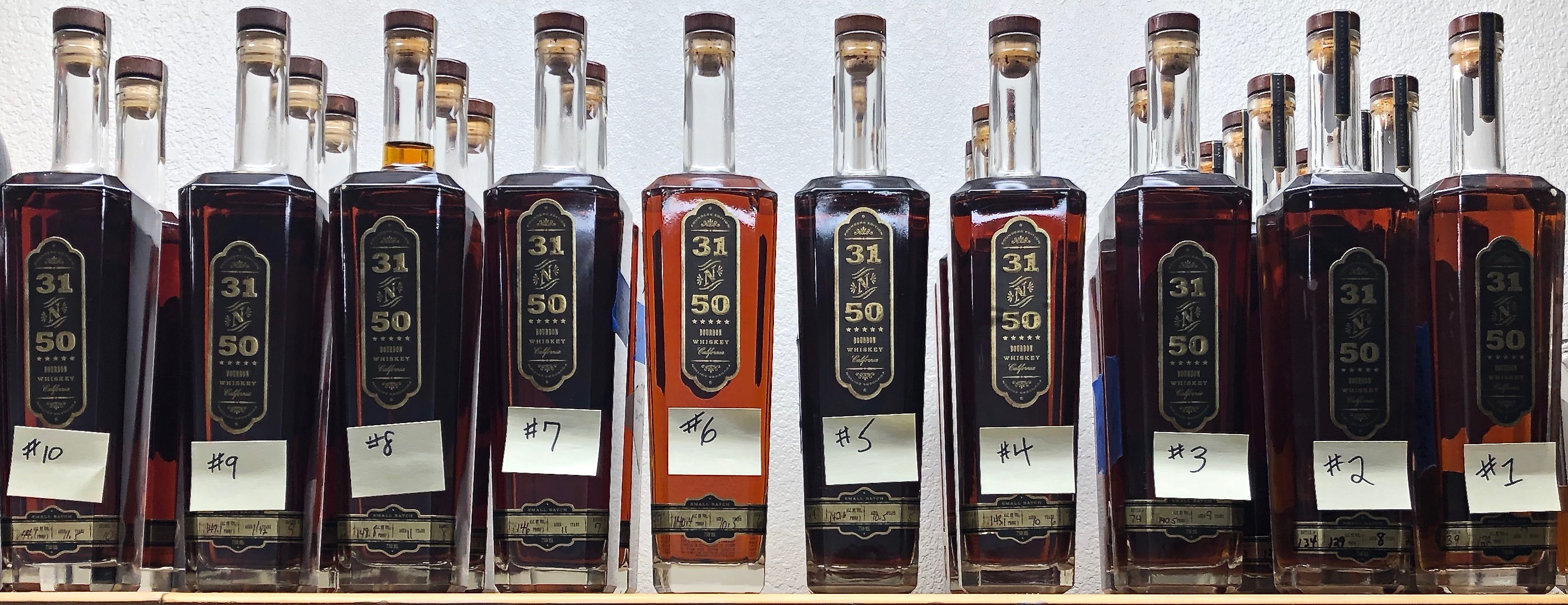
31n50 Bourbon
This one is particularly special to me.
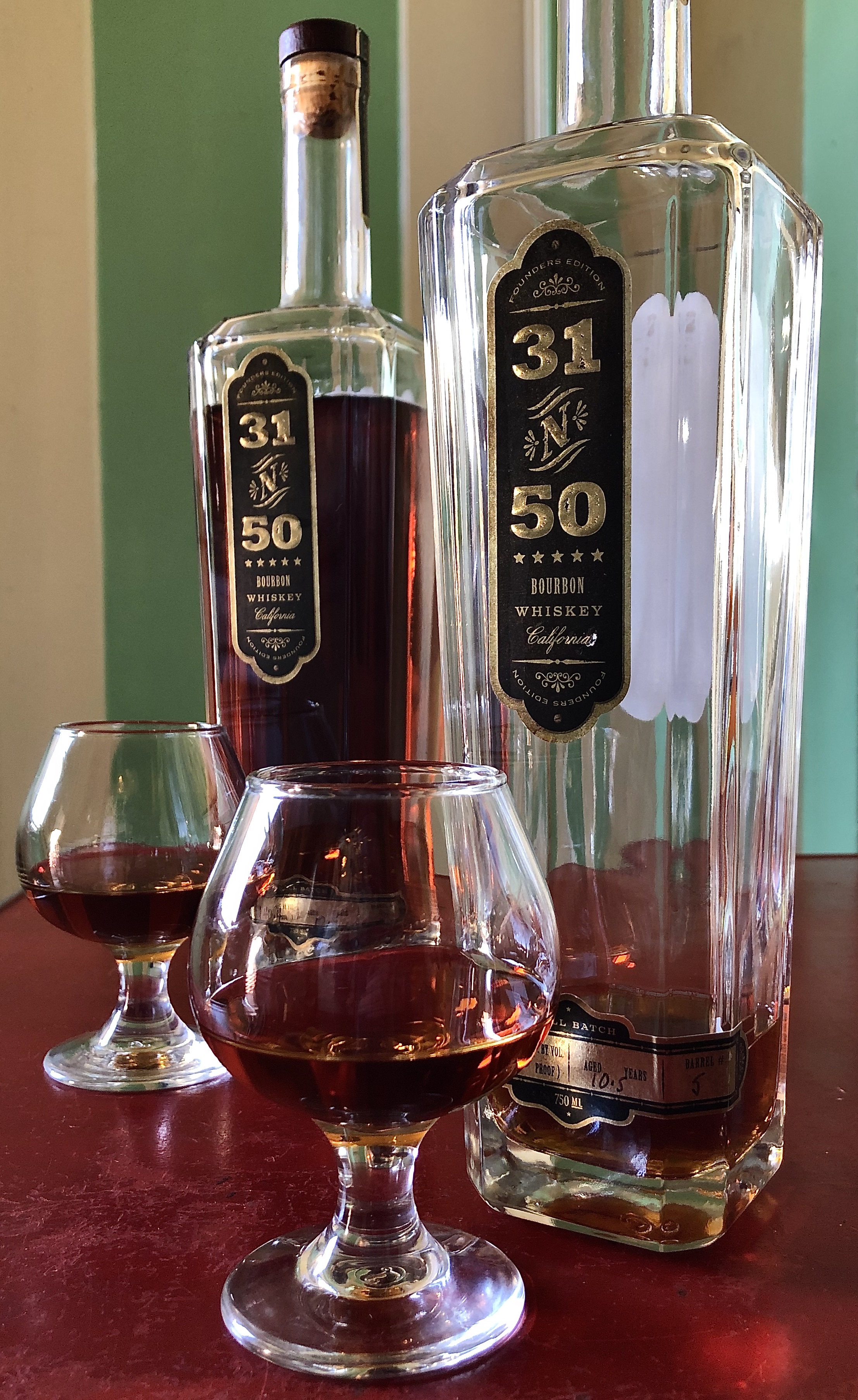
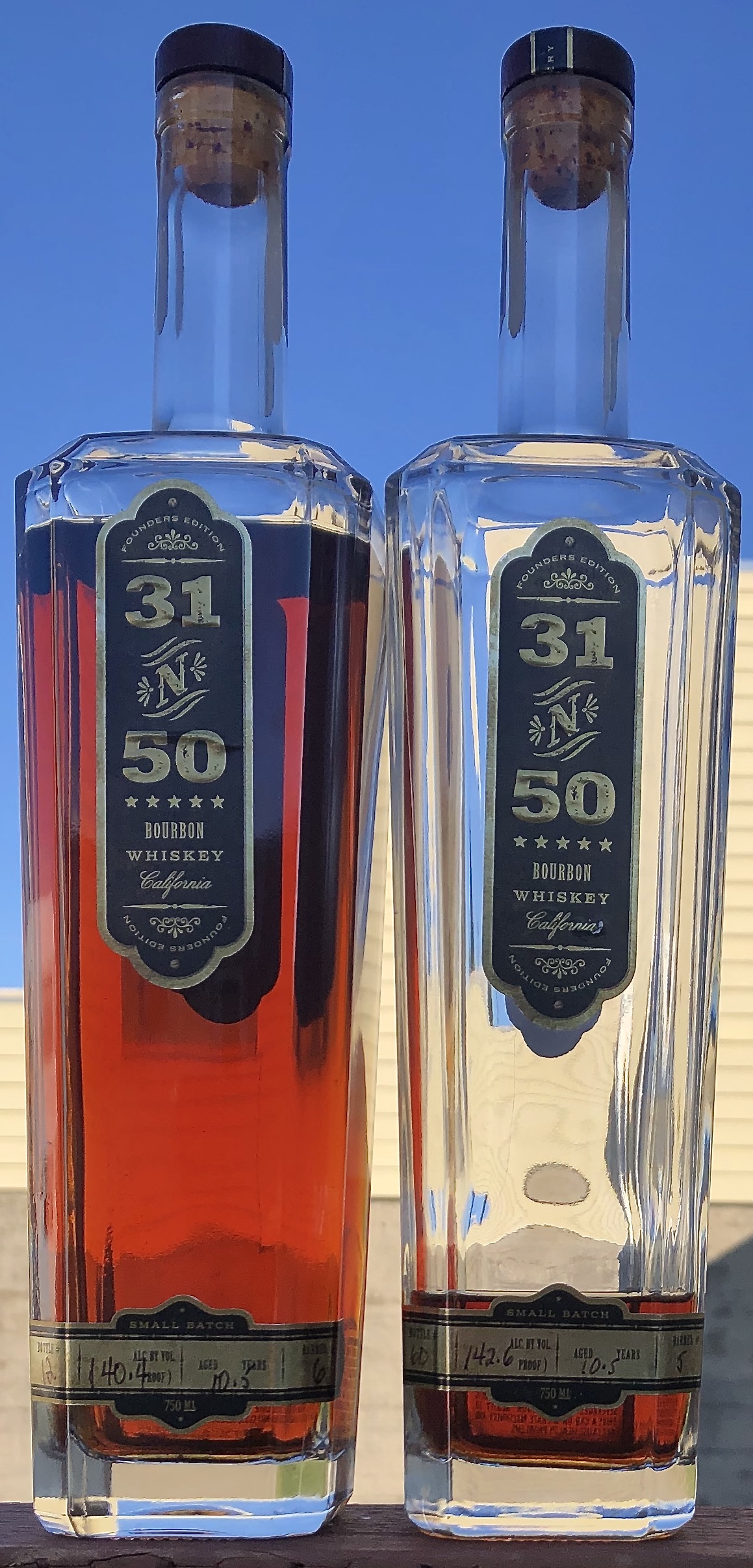
Dry Diggings Distillery is my home-county distillery. My journey with their 31n50 Bourbon began in the summer of 2018, when I first stopped in to visit the distillery, nestled off the beaten track in El Dorado Hills, CA. Owner Cris Steller shared with me a taste of 31n50 Barrel 3. The bourbon’s statuesque bottle, and the care with which Steller presented it, were immediate indications this was no ordinary whiskey. One sip confirmed this was indeed a very special caramel atomic bomb of a bourbon!
Twelve barrels of 31n50 were originally laid down when Dry Diggings first got going. The intent was to bottle one barrel every year, starting at year 7 when the first was deemed ready, in order to understand the impact of the local weather on the whiskey. But by year 10 it was apparent that the angels were taking more than their fair share, given El Dorado County’s incredibly dry heat. So at that point, all remaining barrels were bottled. Steller planned to release each when the previous sold out. Then after Batch 6, he tucked away Batches 7 to 12 in anticipation of a restaurant project he had in mind. So the brand is no longer available for sale.
But back when Steller was selling 31n50, even then one might argue it was barely for sale. 31n50 is Steller’s labor of love. He wants people to enjoy it as it was intended to be enjoyed, not water it down or dilute it in a cocktail, and certainly not hawk it on the secondary market. As he put it when I interviewed him:
The whole purpose of 31n50 is purity… With good seafood, for example, are you going to plaster it with tartar sauce and ketchup, or are you going to first give it a shot the way it was meant to be eaten? That’s my biggest request. This is your special opportunity bottle. It’s not famous, so you’re drinking it because there’s a connection there. Drink it the way the chef intended. I don’t at all see myself as being in the same league of some other brands. But with 31n50 I hope what people will get out of it is the kind of involvement and care that went into it.
I’ve been lucky to enjoy three batches of 31n50—barrels 4, 5 and 6. For me, 31n50 came to represent the integrity of the artist and craftsperson. Though Dry Diggings must charge money for it, in Steller’s conception it hardly constitutes a “product” in any usual sense. 31n50 is a distillation of tradition, region, and intention. It defies “product,” embodying instead a process and a way of thinking that values other things more than commerce—namely intention and integrity.
I’m reminded here of Dave Broom’s comment in his book, A Sense of Place, when he says about scotch whisky:
We respond emotionally to the waver, the hand of the maker. Things that are identikit take you away from that impulse, reduce the item to a product. Great music, great art… is the opposite of that. So are great whiskies.
There’s another book, Tell Them I Said No by Martin Herbert, about artists who chose to operate outside of the mainstream art world or even leave it behind entirely, finding its values counter to their own intentions and beliefs. A chapter on 31n50 would not have been out of place in such a book!
31n50 opened up the term “unicorn” for me beyond how it’s typically applied to whiskey. It didn’t start out as a common bottom-shelfer that got catapulted to the stratosphere by influencers, nor was it manufactured by a marketing department to fake such a leap. It doesn’t come out once a year and sit on shelves in plain sight at whackadoodle prices. It is so actually obscure, in fact, it’s on virtually nobody’s radar. Steller is fine with that, and I can’t help respect him for it. 31n50 is good bourbon sold for love, not greed—a refreshing alternative to the usual whiskey unicorn narrative!
🥃
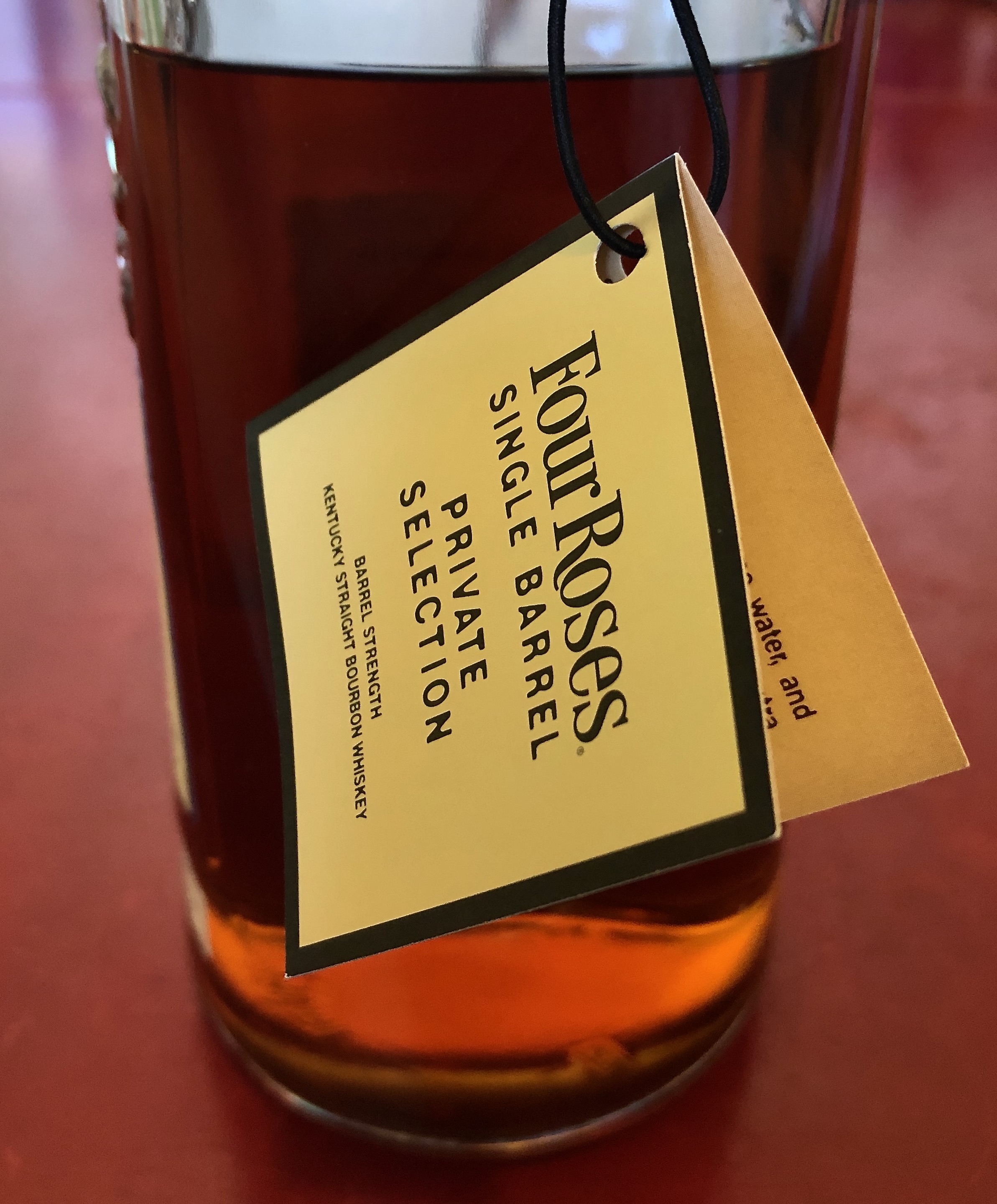
Four Roses Single Barrel
Store Pick Comparisons
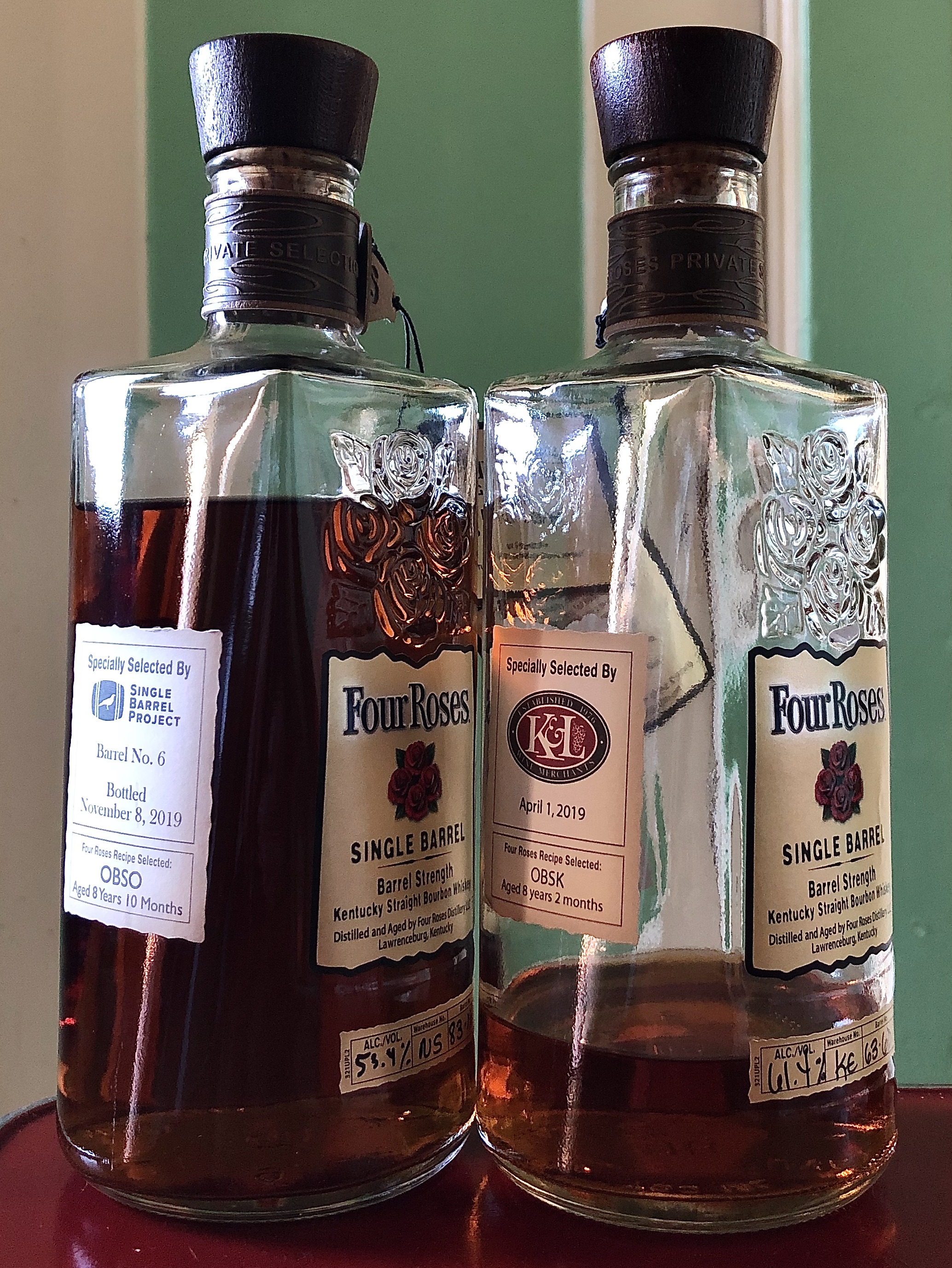
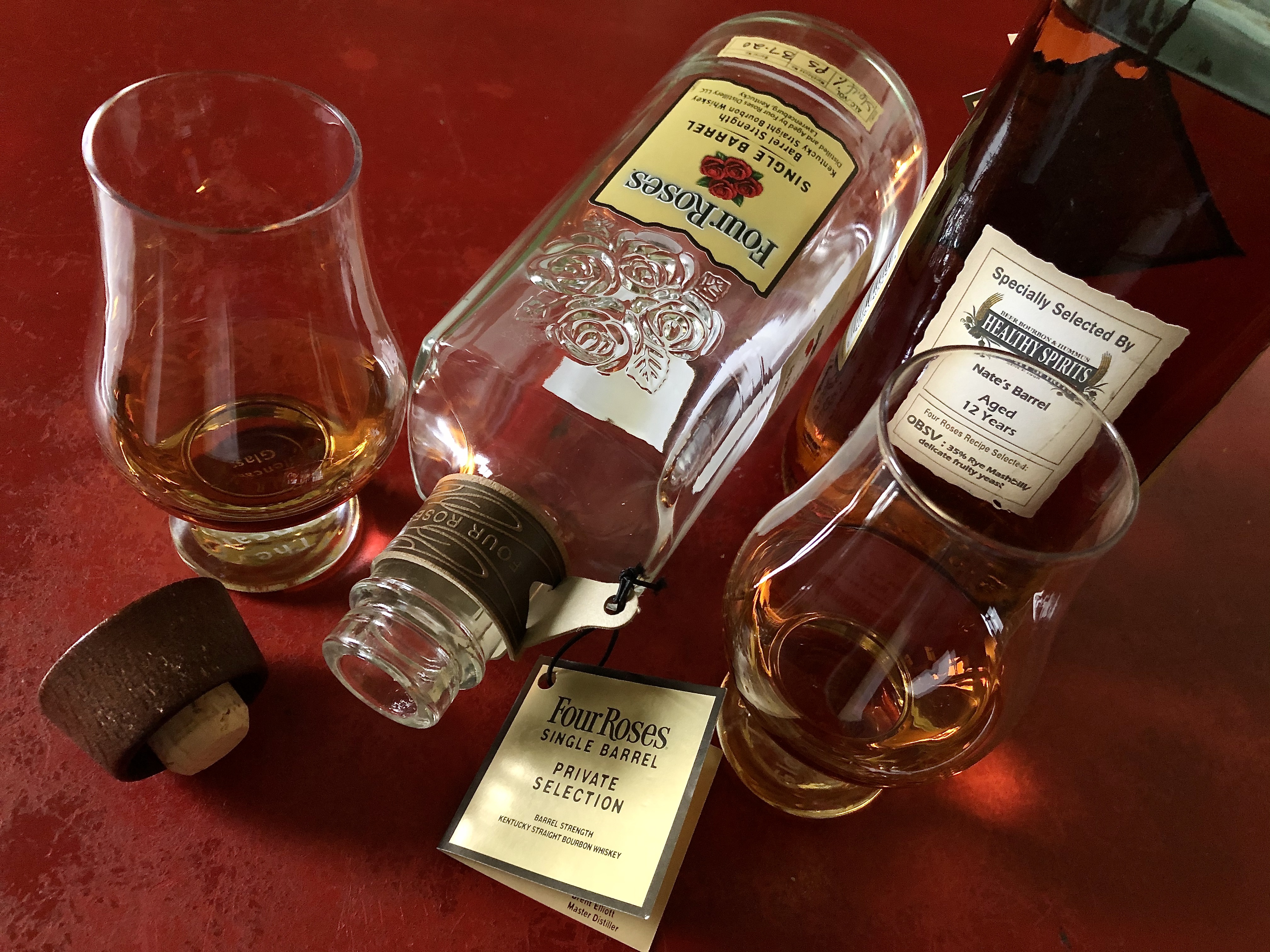
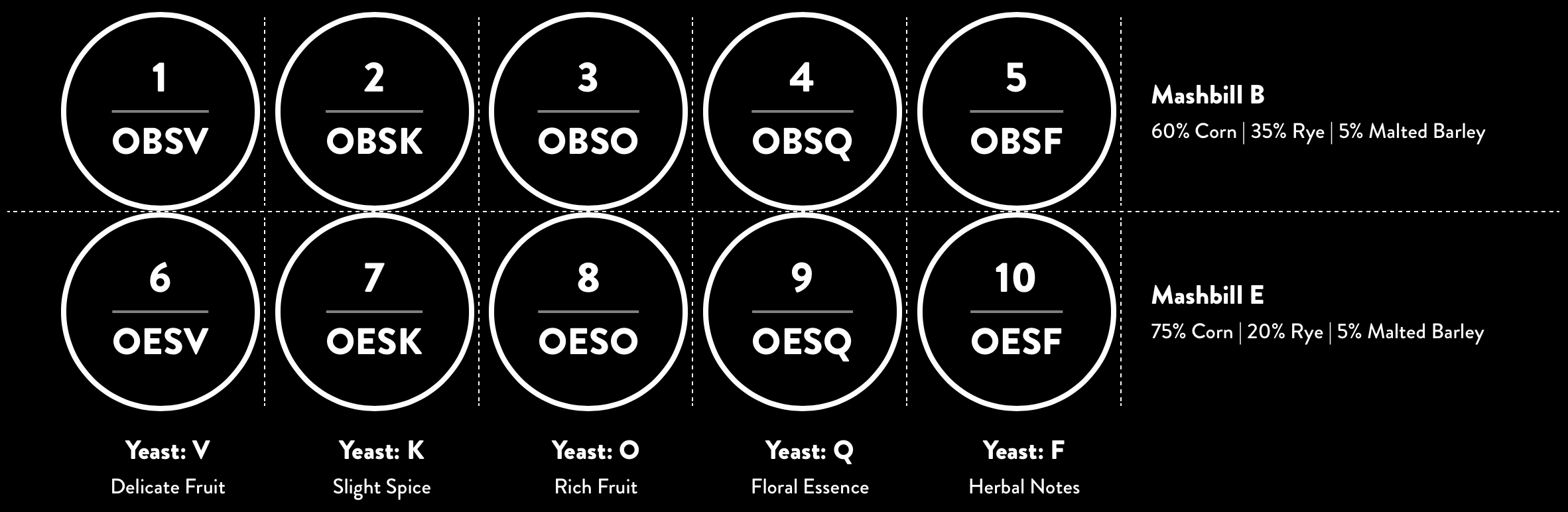
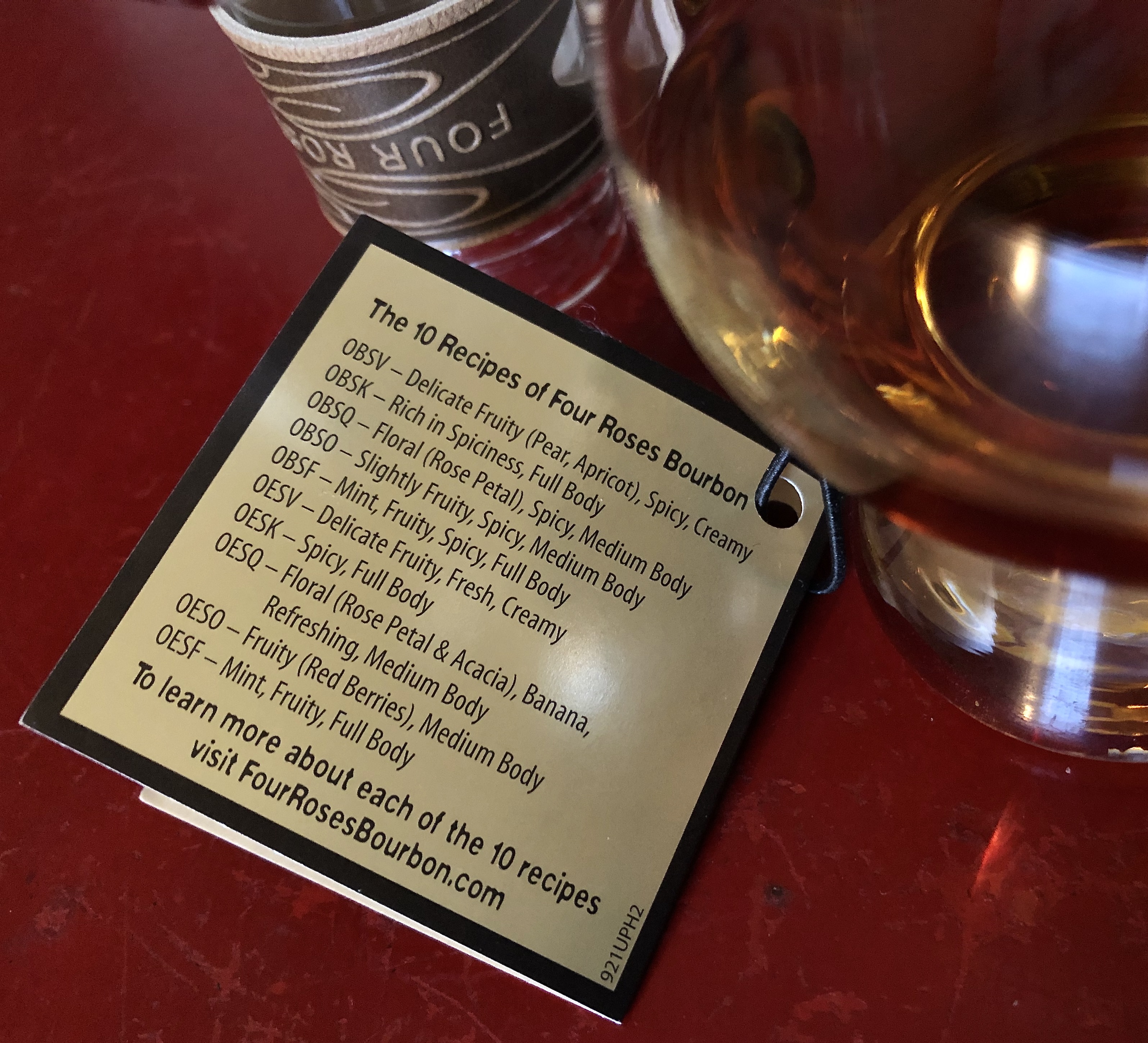
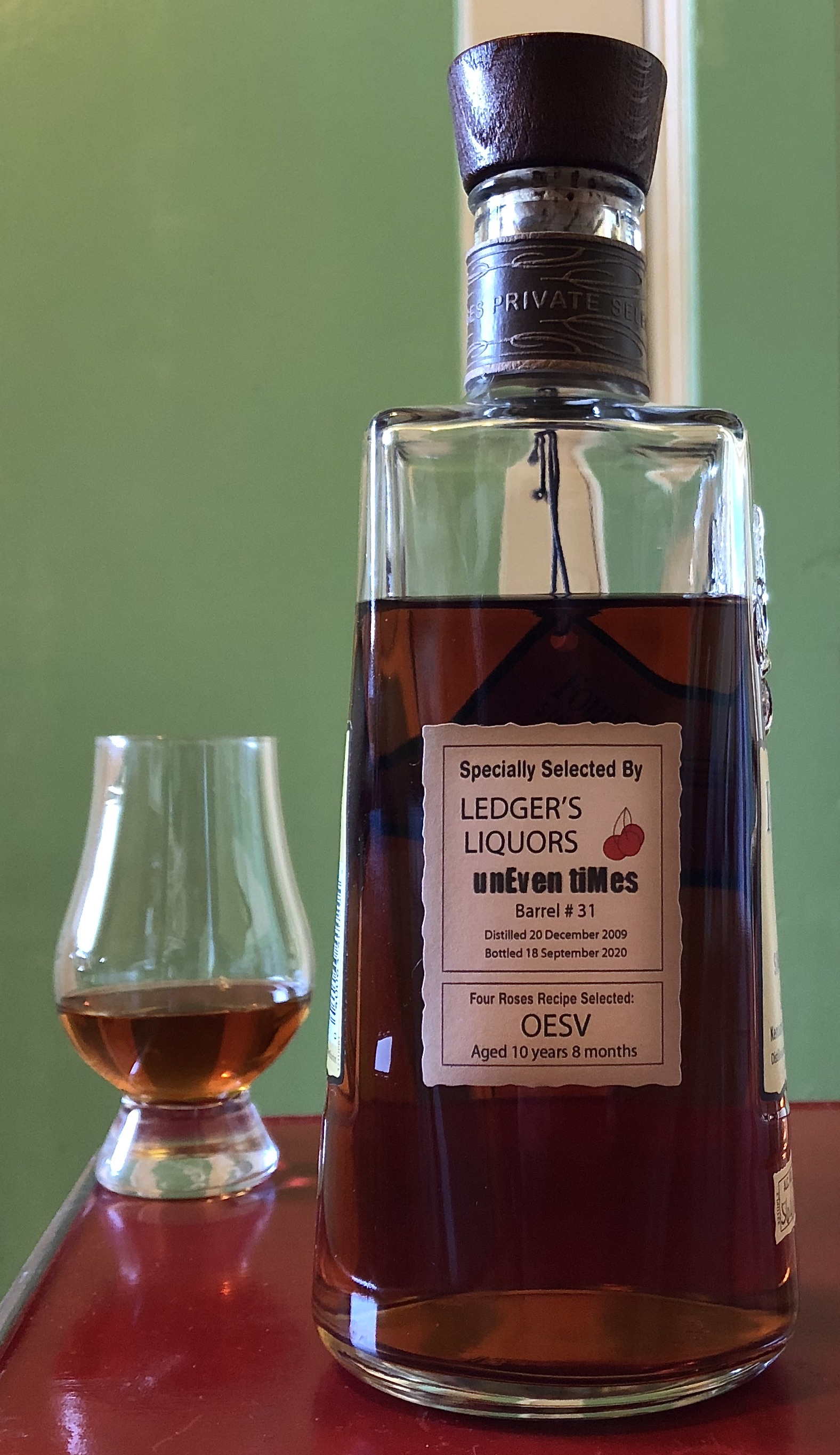
By 2019 when I started this blog, I’d already collected a good number of Four Roses Barrel Strength Single Barrel store picks. And I’d already commenced on a slow comparison project, by which as one bottle drew toward its end I’d crack open the next, always picking one that varied from its predecessor by a single aspect of the recipe. So an OESV might be followed by an OESK, an OESK by an OBSK, that by an OBSO, and so on. I did not get into other distinctions like warehouse factors or age.
In the end I’d compared fourteen bottles. Nine of those have been written up here on the blog. By the end, the price per bottle had gone from $65 to $110 on average, with some smaller shops pricing their picks at $150 and enforcing bundle deals. Satisfied with my long-haul Four Roses flight, I stopped buying them, with only occasional exceptions.
This longterm experiment proved illuminating. I learned that my tastes generally leaned toward the E mash bill over the B, and the K and V yeast strains over the F, O and Q. And though I hadn’t been paying as strict attention to age and warehousing, I did notice I tended toward bottles aged 8-10 years on Tier 1, the lowest tier of any given warehouse, where temperatures are cooler and so the eventual bottling proof lower.
These findings helped guide the few Four Roses SiB purchases I’ve made since. But the experience also had a valuable ripple effect beyond Four Roses. By comparing variations on a theme over an extended period of a few years, my sense for picking out nuances in any whiskey expanded alongside my evolving palate. Likewise, I’m now better able to make educated guesses when considering a new purchase of any brand. So my extended Four Roses journey expanded and deepened my whiskey journey overall, and to lasting effect.
🥃
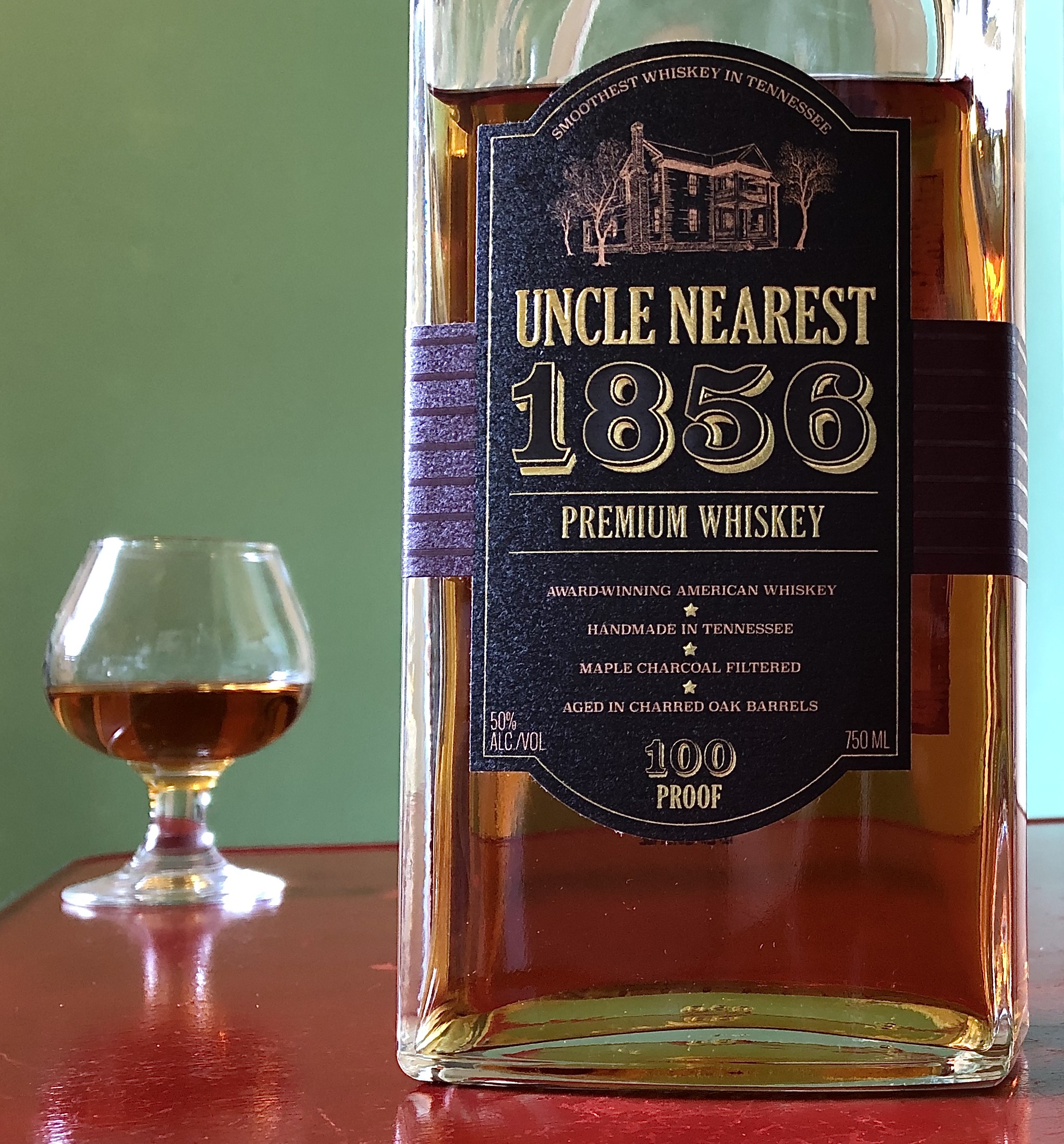
Uncle Nearest 1856
More than any other, Uncle Nearest embodies the metaphor of whiskey as “history in a bottle.” In fact, the brand effectively corrected the history books. In brief:
Jack Daniel was a small boy when, in 1856, he was introduced to “Uncle Nearest,” a West African slave owned by a preacher named Dan Call, who ran a whiskey business on the side. Nathan “Nearest” Green was Call’s chief distiller. Green taught the young Daniel the distilling trade, including the process of maple charcoal filtration, a traditional West African method of purifying drinking water that Green had applied to whiskey.
Ten years later Daniel had come of age. President Lincoln’s Emancipation Proclamation was in effect—freeing American slaves in word if not entirely in deed. Daniel forged ahead in the whiskey business, opening a distillery under his own name and hiring the recently freed Green as his head distiller. Green’s maple charcoal filtration process became the defining feature of Jack Daniel’s Tennessee Whiskey. But of course it was Daniel, not Green, to whom history gave the credit.
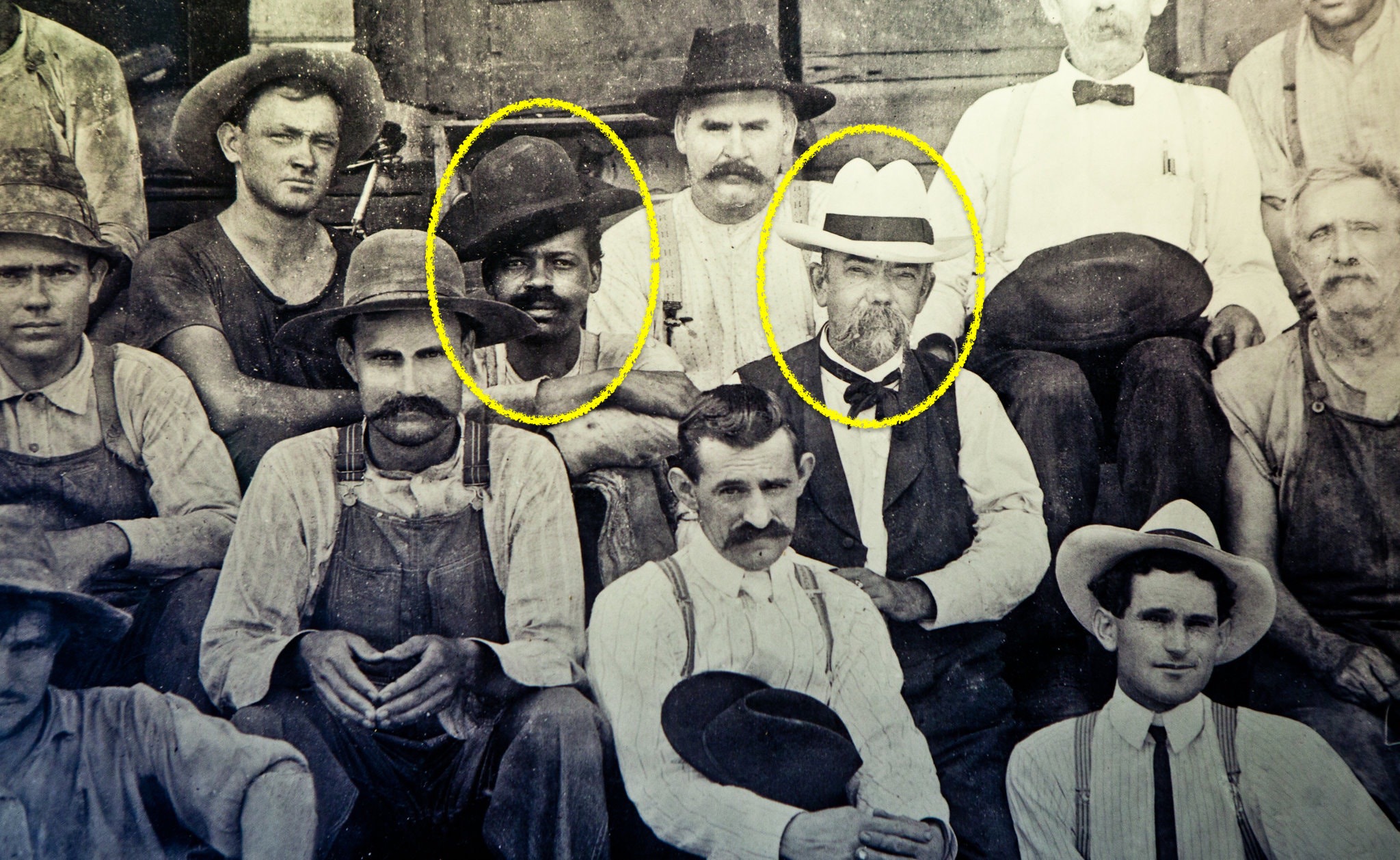
Leap ahead to 2016: Jack Daniel’s is long since the single most recognizable whiskey in the world, and entrepreneur Fawn Weaver notices a 1904 photo, printed in a New York Times article, featuring Green’s son, George, seated center next to a much older Daniel. Why, Fawn Weaver wondered, did a Black man share the central position in a company photo with that company’s White proprietor—and in the 1904 American South of all times and places?
Weaver’s pursuit of that question eventually led her to found Uncle Nearest, Inc., and its sister organization, the Nearest Green Foundation. Uncle Nearest whiskeys quickly garnered an international reputation, and the Nearest Green Foundation continues to provide historical research and scholarships for Green’s descendants.
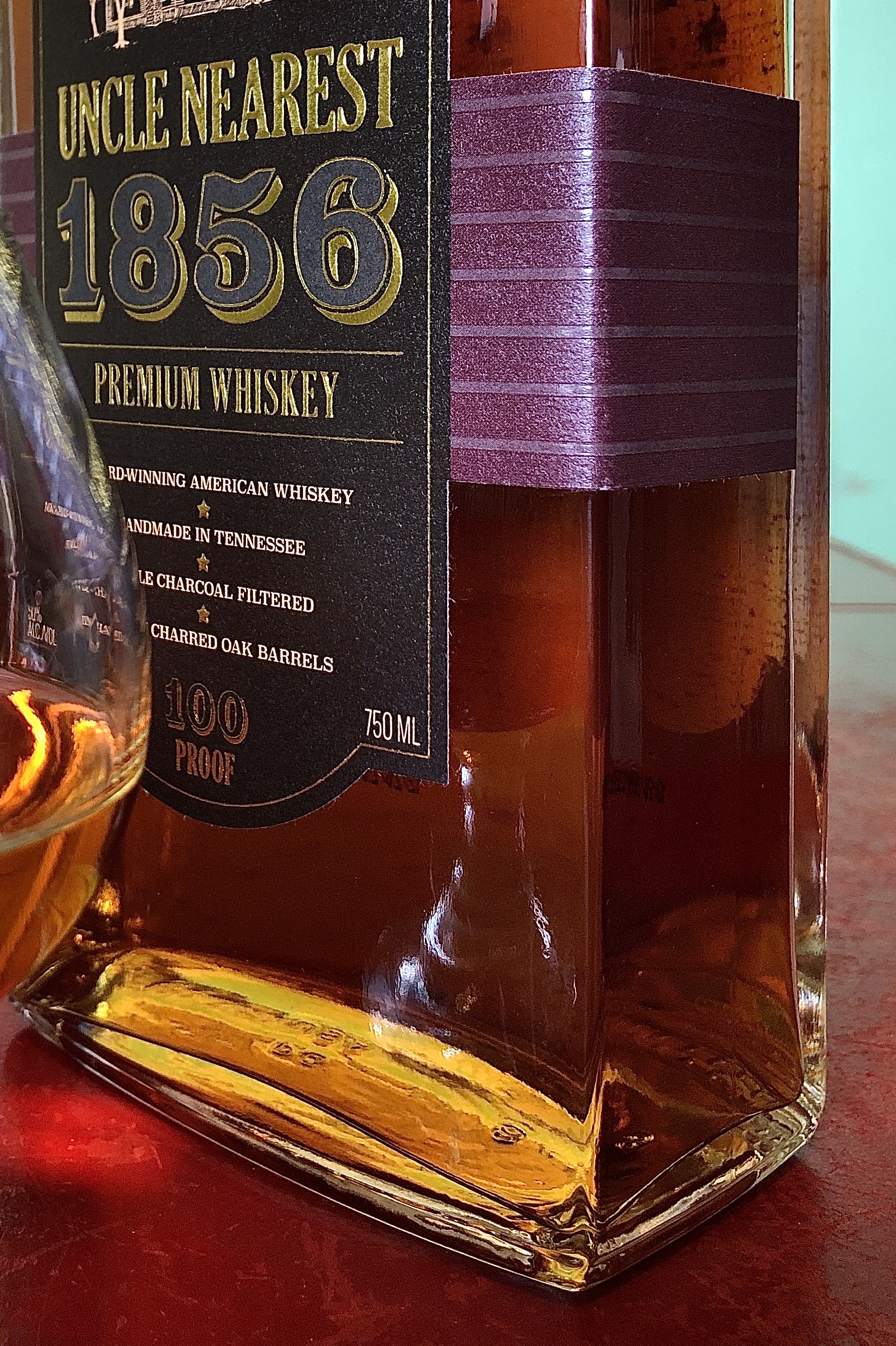
I’d already known the metaphor of whiskey as history in a bottle. But no other bottle had demonstrated to me just how literally true that is—and how important it could be—than the bottle of Uncle Nearest 1856 I picked up for the first time in late 2019. Though there are many other events in our nation’s history in which whiskey played a role (check out Susan Cheever’s book on the subject for just a few of them), Fawn Weaver’s achievement in creating an entire brand in order to correct a major page in whiskey history must be counted among the most significant achievements in American whiskey.
🥃
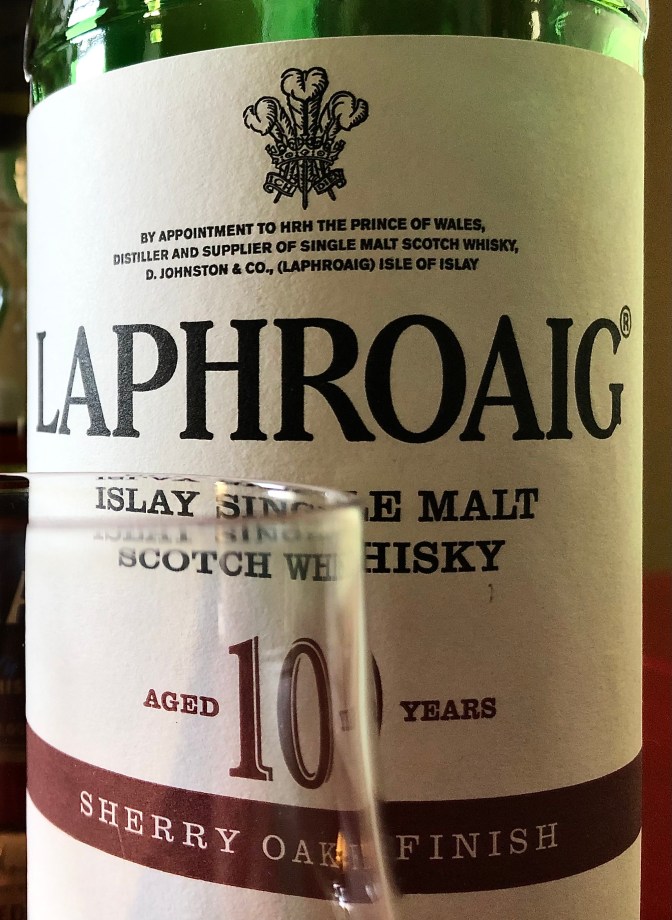
Laphroaig Sherry Oak
I didn’t like Laphroaig for the longest time. I tried and tried. It’s a divisive whisky—a quality that tends to pique my interest, as I’ve always been more a fan of diverging points of view than consensus. (The latter is easier to deal with, but the former is much healthier!) I do like peated whiskies. Croftengea and Highland Park are faves. But Laphroaig’s particularly brash and medicinal peat just didn’t go down well with me…
…Until I tried the Laphroaig Sherry Oak release. It’s chill filtered and they add color, two choices I don’t prefer or respect. Nevertheless a solid decade aging and a well-balanced finishing in sherry casks seemed to alter the peat’s effect considerably!
Laphroaig’s characteristic confidence was there. But it was more relaxed, less brash, not seeming to try so hard or prove anything. Dry, smoky, sweet in a subtle and dark way, with red fruits and dark chocolates. The peat had zero of the medicinal or diesel qualities I so associated with past Laphroaig bottles. Here the peat was much more campfire and BBQ, emphasizing the smokiness over the peatiness itself.
This bottle demonstrated to me the rewards of persistence, patience, curiosity, and especially second chances. Or in this case fourth and fifth chances! (I think it also demonstrated my stubbornness. 😉) But now I knew that Laphroaig with a strong sherry cask influence was something I quite liked. Sure enough, when I later picked up a sherried Laphroaig bottled by Hart Brothers, it was fantastic.
So now when I encounter a widely beloved brand and find I just “don’t get it,” if I’m nevertheless intrigued for any reason, I know to start exploring. I don’t have to like everything. That’s not the point. It’s about keeping my sense of curiosity strong. My journey with Laphroaig embodies this for me.
🥃

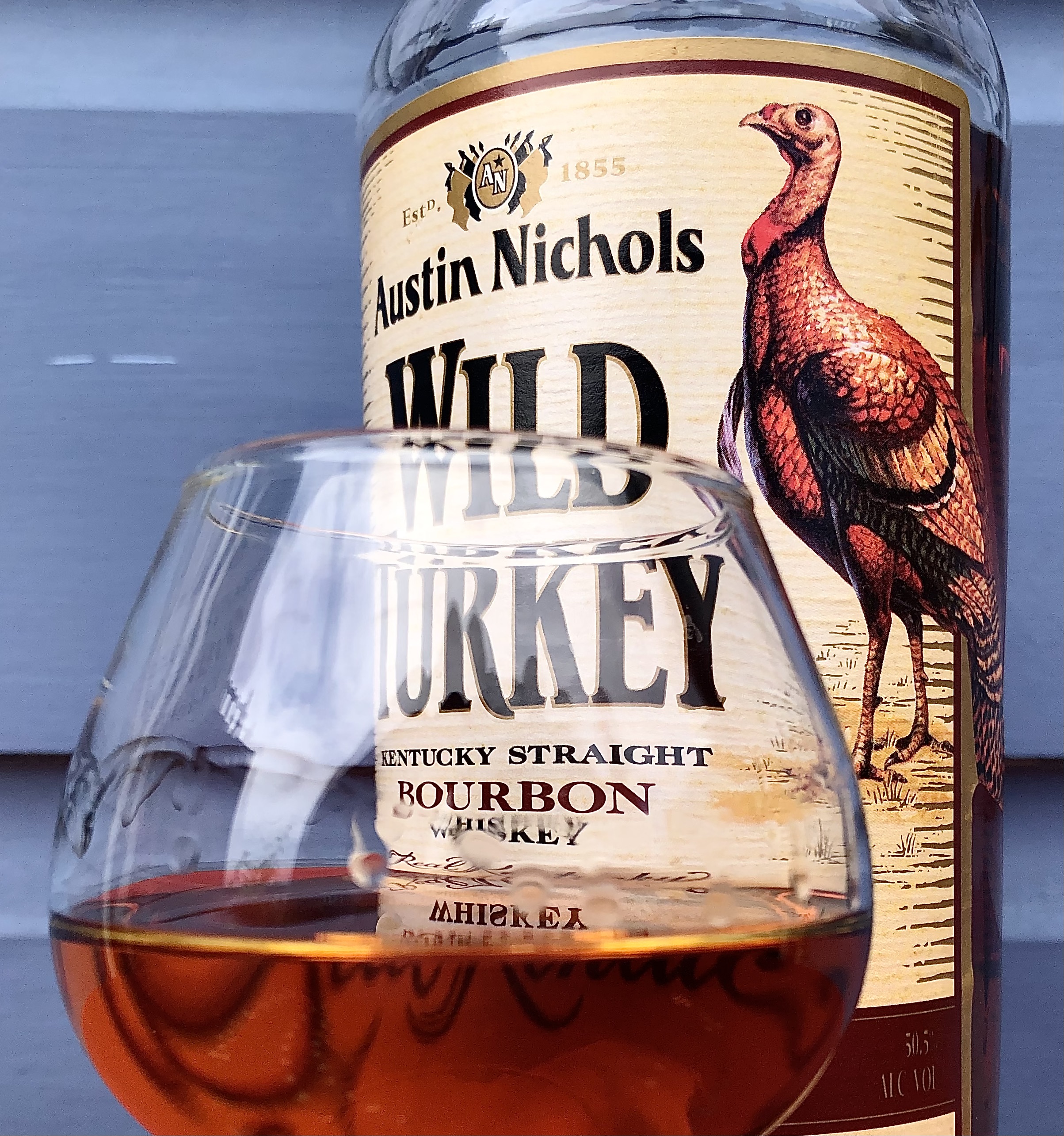
Wild Turkey
All roads lead to Wild Turkey.
What can I say about Wild Turkey that hasn’t been said a zillion times already—by David Jennings of Rare Bird 101 alone! In my own notes on Wild Turkey whiskeys, I often refer readers to Jennings’ blog. He has devoted more time and attention than anyone to making a rolling study of the brand, and I’ve found his insights invaluable.
For myself, Wild Turkey products are a benchmark of quality consistency. Like any brand, one batch verses another will have its variances. But with Wild Turkey these are typically subtle. Three generations of the Russell family—Jimmy, Eddie, and Bruce—have managed to steward the brand through multiple parent corporations without ever sacrificing quality or taste. With Jimmy hewing steadfastly to tradition, and Eddie and Bruce leaning into experimentation, what the Russell family and their whiskeys have demonstrated to me is the value of putting tradition in healthy conversation with experimentation. They understand that just because something ain’t broken and don’t need fixing doesn’t mean one shouldn’t explore new possibilities with it. Their goal is not change for change’s sake, but rather breadth, nuance, and depth.
One result of this has been that, literally for generations, Wild Turkey was arguably the best openly kept secret in bourbon—great whiskey, always affordable. I now say this was the case, when only recently I was saying it is. But around 2021/22, the current parent company, Campari, made a very clear decision to meet the secondary market head on and start pricing Wild Turkey’s special releases—e.g. the annual Master’s Keep series and periodic Russell’s 13 Year releases—at secondary prices right out of the gate. This marks a sad end to Wild Turkey’s status as a great value. Lower-end products like Wild Turkey 101 and Russell’s 10 Year remain decently priced. But the shadow of their high-end counterparts looms. We’ll see how long even good ol’ WT101 remains a “value” bourbon. But I do trust it will always be a quality bourbon.
🥃
Last Call
There are other whiskeys with which I’ve enjoyed significant experiences. The annual St. George Single Malt is a regular December holiday pour for me, for example. I’ll always welcome any Westward Whiskey offering into my glass, knowing whatever it is the flavors will simply not be contained! And the 2021 Sagamore 8-Year-Old Rye will always take me back to a good friend’s backyard, where we first cracked that bottle open one spontaneous afternoon, and where I’ve spent many other wonderful afternoons and evenings as a guest at he and his partner’s generous parties.
I could mention more. But it’s the whiskeys that have pinned themselves to my journey’s map that have done most to shape the journey itself. (And I expect there will be others in the future. The whiskey world is wide!) These are the whiskeys that tap into why I’m on this journey at all—curiosity. Without it, I don’t know what any journey is about.
Cheers to the journey!

Past Whiskey Journey Posts
Part 1 – Getting Started
Part 2 – Checking In
Part 3 – Why I Whiskey
Part 4 – On Weller Antique 107 and the Art and Practice of Letting Go
Part 5 – What have three years of writing whiskey notes done to me?
Part 6 – Nosing The Grind
Part 7 – What would happen if I didn’t buy whiskey for a year?
Part 7.5 – halfway through The Year of No Buying

 The Right Spirit
Indeed! We all have our own stories – even though I’m a newer whiskey drinker and haven’t tried nearly as much as most people. But I may as well share mine.
During COVID quarantine, I watched a lot of Youtube (still do!) and somehow came across whiskey channels. Now I’d tried whiskey before – shots in college, amateur attempts at easy cocktails like Jack ‘n Coke, even tried Laphroaig once due to a co-worker’s urging (revolting!). But what piqued my interest in revisiting whiskey was seeing YT praise things like Lagavulin, Ardbeg and yes Laphroaig. I learned that once you get past the smoke and bandaid, there’s a lot of fruity nuance. So with that, I’ll mention 3 whiskey experiences since:
Lagavulin GoT House Lannister 9 – Lucked upon this at deep discount, roughly $30? My 2nd peated exposure, after the shock and disgust I had with Laphroaig a good decade prior. But unlike Laphoaig, I knew what to expect. It’s exactly what people said – smoke and bandaid upfront, but then really beautiful fruity sweet notes afterwards. I “got” it immediately and loved it. Surprisingly I similarly primed my wife, and she tried it and liked it too. (I then got Lagavulin 16 and we enjoyed it even more so, but for $30 Lagavulin 9 was amazing! Wish I had bought an extra bottle, esp. now that I know how much Lagavulin costs.)
Wild Turkey 101 – A perennial favorite among YTers, I never tried any Turkey in the past. But during this newfound journey into bourbon, I went through Buffalo Trace, Eagle Rare 10, Elijah Craig SB, Four Roses SiB, and the like… and immediately, WT101 was a bit different. It felt spicier, both in feel but also with cinnamon and baking spice flavors over a cherry base. I enjoyed it but didn’t realize until after the bottle was gone – this might be the only bourbon I miss and would buy again.
LAWS Four Grain Single Barrel 1253 (SFWTC Pick) – Whiskey Vault reviewed this, and SFWTC is in my neighborhood, so I picked it up! This was a lot of firsts for me. First craft distillery. First cask strength whiskey (around 120 proof). First time spending above $20-40 for a bottle. (It was $80, I believe.) The biggest for me was getting to understand why anyone would want high-alcohol content. I used to think the booze was too much in 40 proofers. But with this cask strength offering, this opened my eyes to the boldness of real flavor that comes from not diluting with water, and all the subtle nuances too. Also since I was not so steeped in bourbon tradition, I quite enjoyed the crafty grain notes.
LikeLike
Thanks for sharing your journey TH! I really enjoy your notes. And LAWS! That brand doesn’t get enough attention imo. Great, flavor-packed whiskeys made with integrity. Cheers!
LikeLike