Every December I’m tapped by my work to lead a whisky tasting for the annual holiday party.
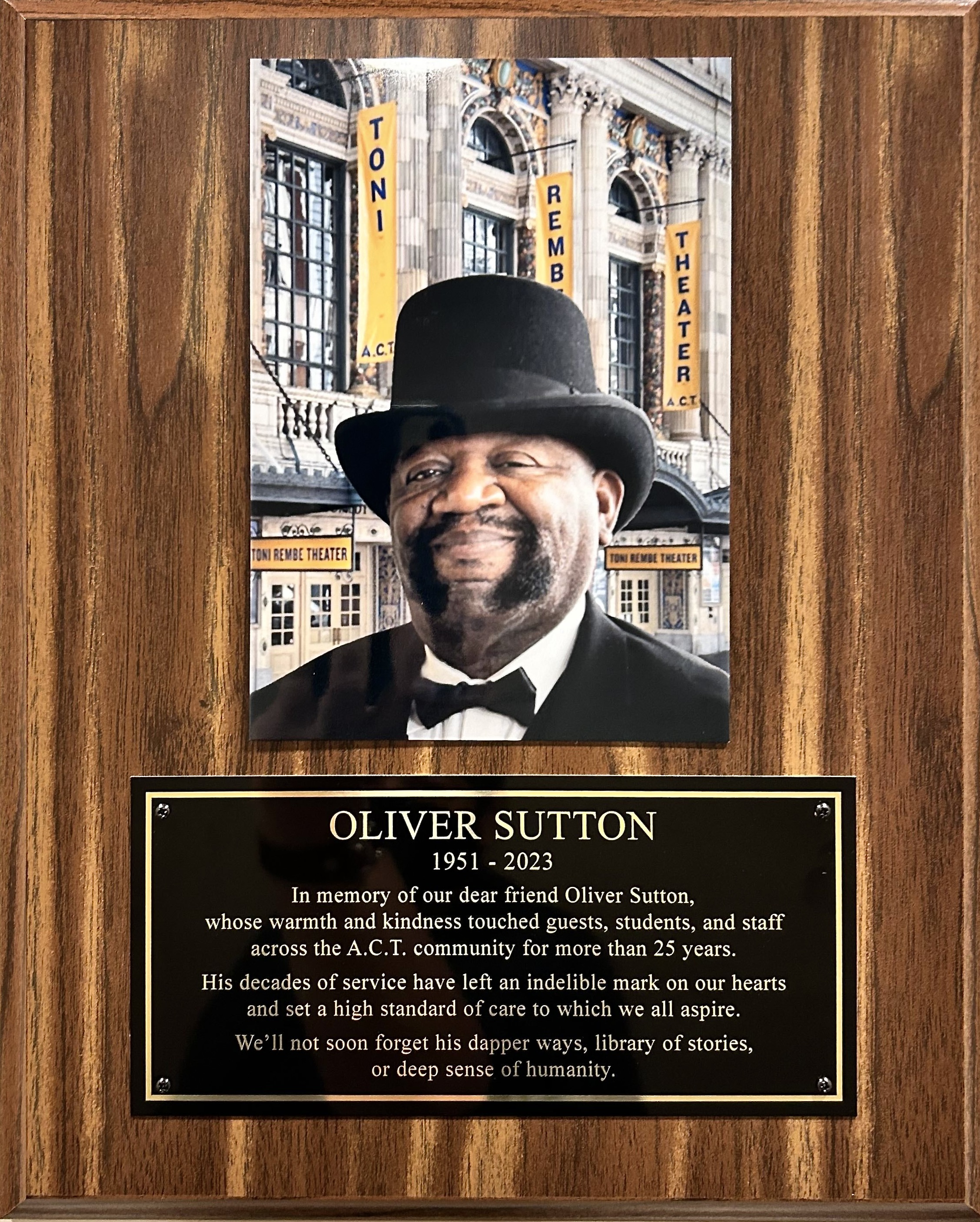
Usually I’ve focused on bourbons and ryes, while another colleague focused on scotch. Sadly, my colleague passed away earlier in 2023. He was a beloved member of the organization. This was our first holiday party without him. A plaque was hung on the wall in his memory. And to honor him further, for this year’s gathering I lined up an assortment of scotch whiskies I thought he would enjoy. As my co-workers came by the tasting table to try the flights, we’d toast our dear friend, trusting he was enjoying his deserved allotment of the angels’ share. No doubt he had a thing or two to say about their heavenly selection!
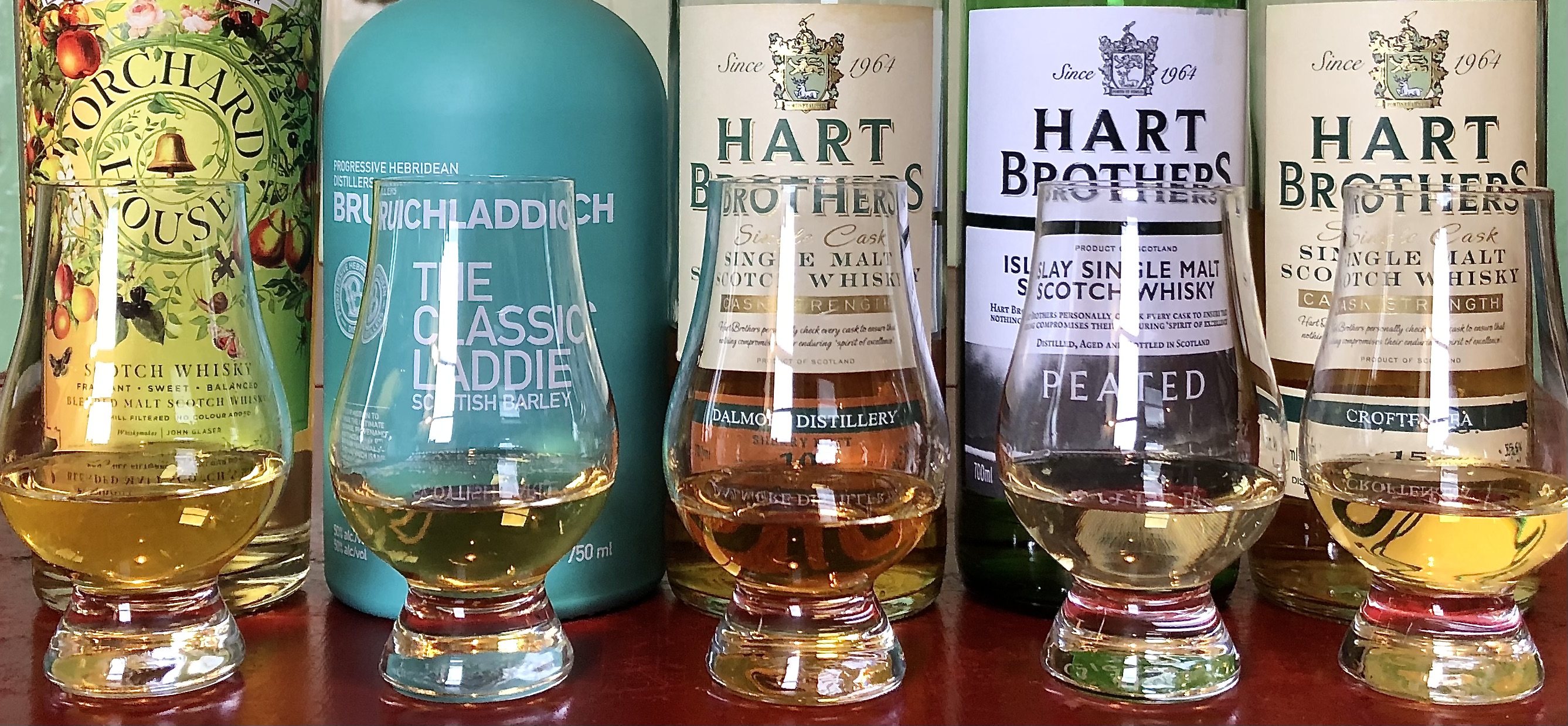

In addition to honoring our departed colleague, I wanted to choose options that would likely appeal to people new to whisky, while also providing some genuine complexity and at least a bit of adventure.
I remembered when I first went to Scotland and got my initial crash course in scotch by going from pub to pub. I’d tell the bartenders I wanted to try a whisky but didn’t know much about it, so could they please pick something out for me that they’d drink themselves. To narrow it down they’d always ask, “Smoky or sweet?” So I decided to line up three bottles under the “sweet” umbrella, and two under the more divisive “smoky.”
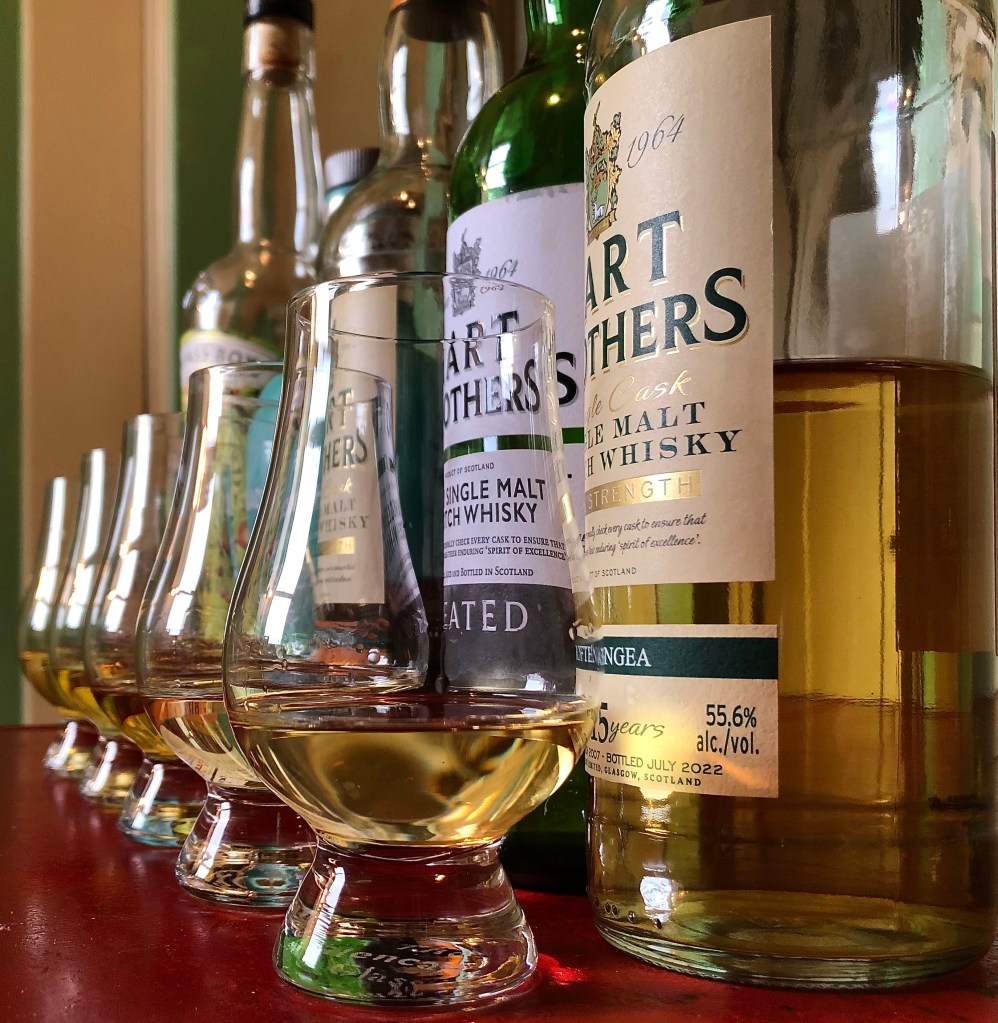
When each person sat down, I asked if they wanted to take the full flight or just sample one or two things. Most people wanted to do the flight. Some only flew the sweet arc, but most followed it up with the smoky whiskies as well.
As always, I enjoyed helping people find a language from their own existing vocabulary to talk about what they experienced, what appealed to them more or less so, whether they were responding to flavor versus intensity, etcetera. Mezcal fans, for example, were inevitably drawn to the smoky whiskies, and we could discuss those by borrowing Mezcal references. Because I work for a theater organization, with some people I discussed easygoing “Horatio” whiskies versus more complex and challenging “Hamlet” whiskies, using Shakespeare’s characters to get at the personality of an experience.
So here are some notes on these five bottles. If you have any of these or their family bottles on hand, I hope you’ll pour yourself a glass and taste along.
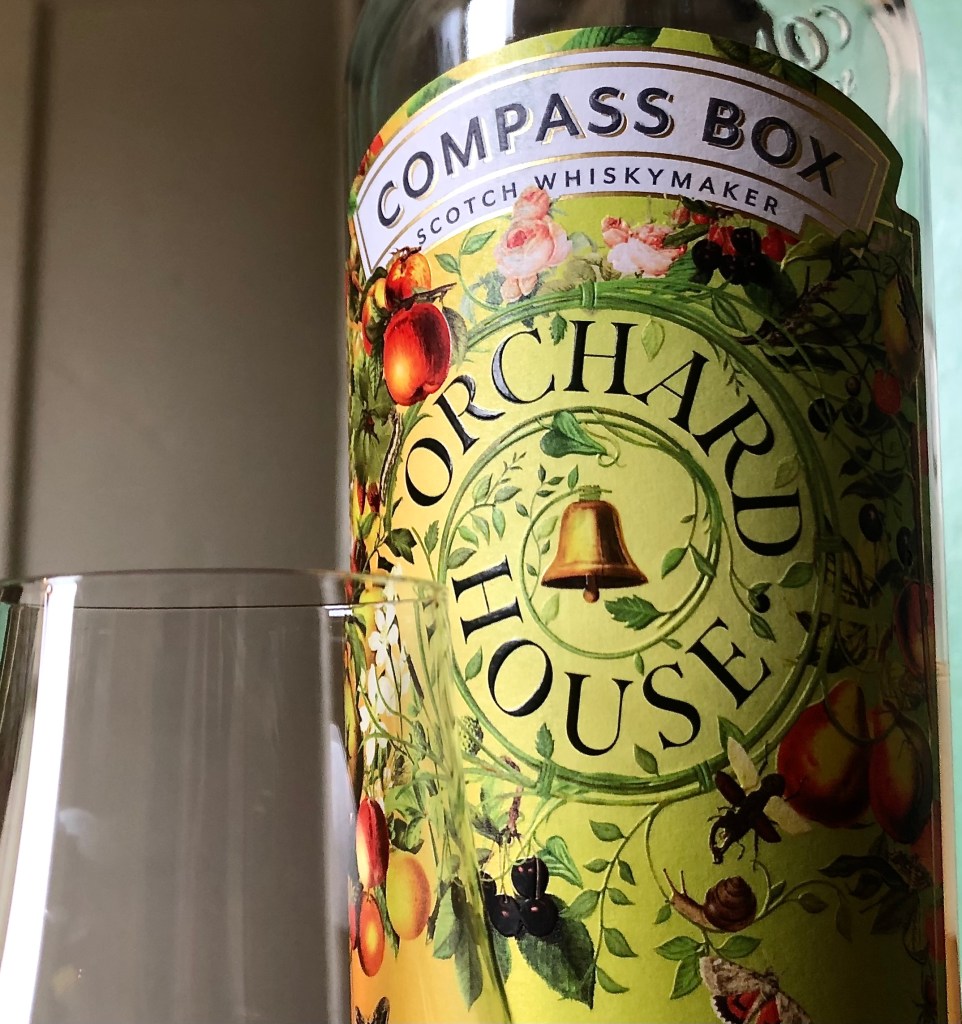
COMPASS BOX ORCHARD HOUSE
Blended Malt WhiskyMASH BILL – 100% malted barley
PROOF – 92
AGE – NAS
DISTILLERY – Blended & Bottled by Compass Box (sourcing from Linkwood, Clynelish, and others)
PRICE – $55
The stated intent of Orchard House is to provide an approachable, fruity, flexible whisky, as aptly paired with cheeses as with desserts or light meals in between. That, and the relatively easygoing proof, made me think this would make a good first stop on the flight.
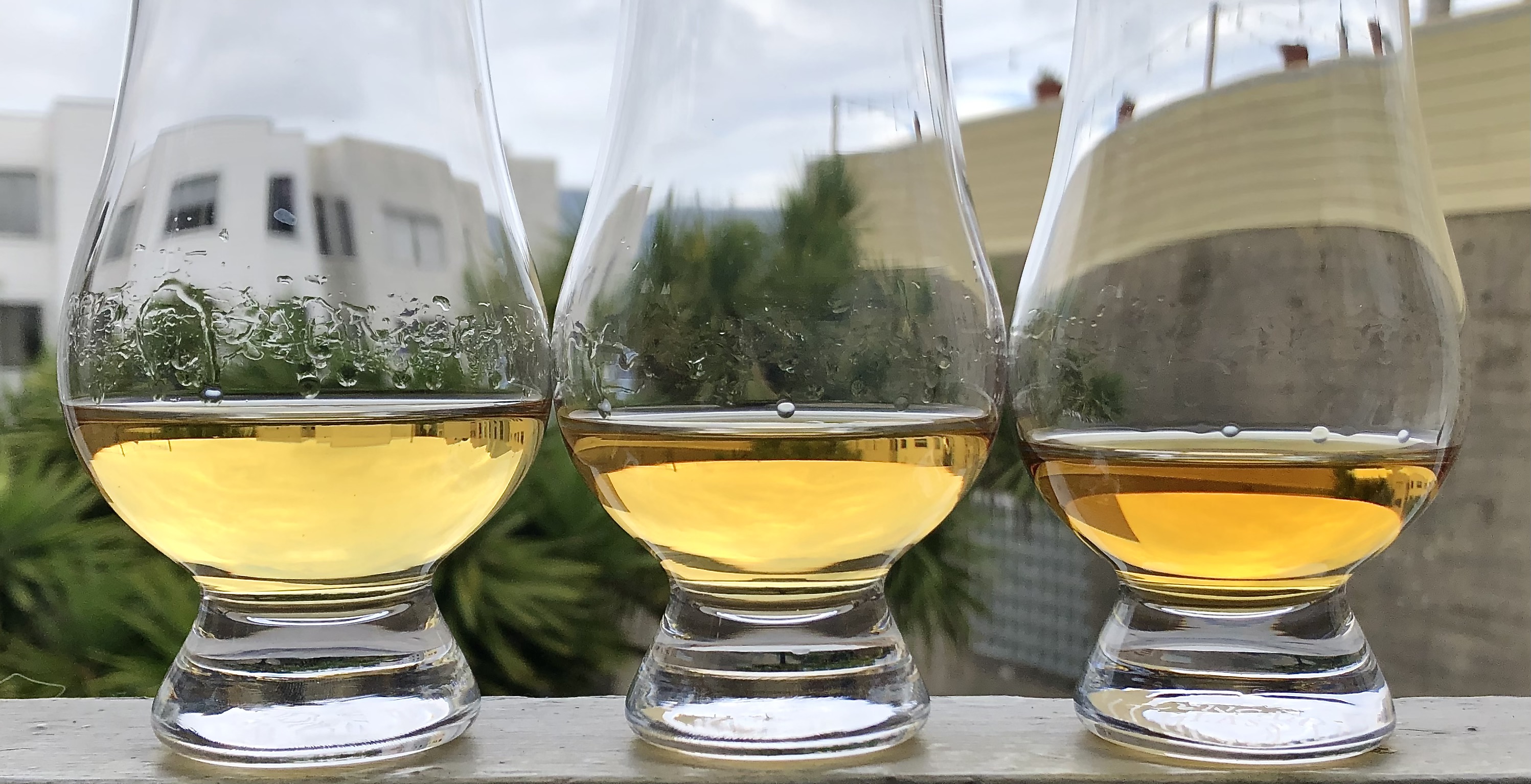
The color (all natural!) is very pale straw and lemon. On the nose I get salty sea breeze, lemon zest, light cream and custard, and a subtle papaya note.
Tasting it, the cream and custard notes move forward, their sweetness bringing out the papaya more as well. The finish lingers warmly with a nicely bitter outline of the salt and the lemon’s pith around the custard and cream notes, garnished with the fruit notes.
Indeed a refreshing way to start, with a little bit of everything—salt, dairy, candy, fruit—in balance and arriving in waves.
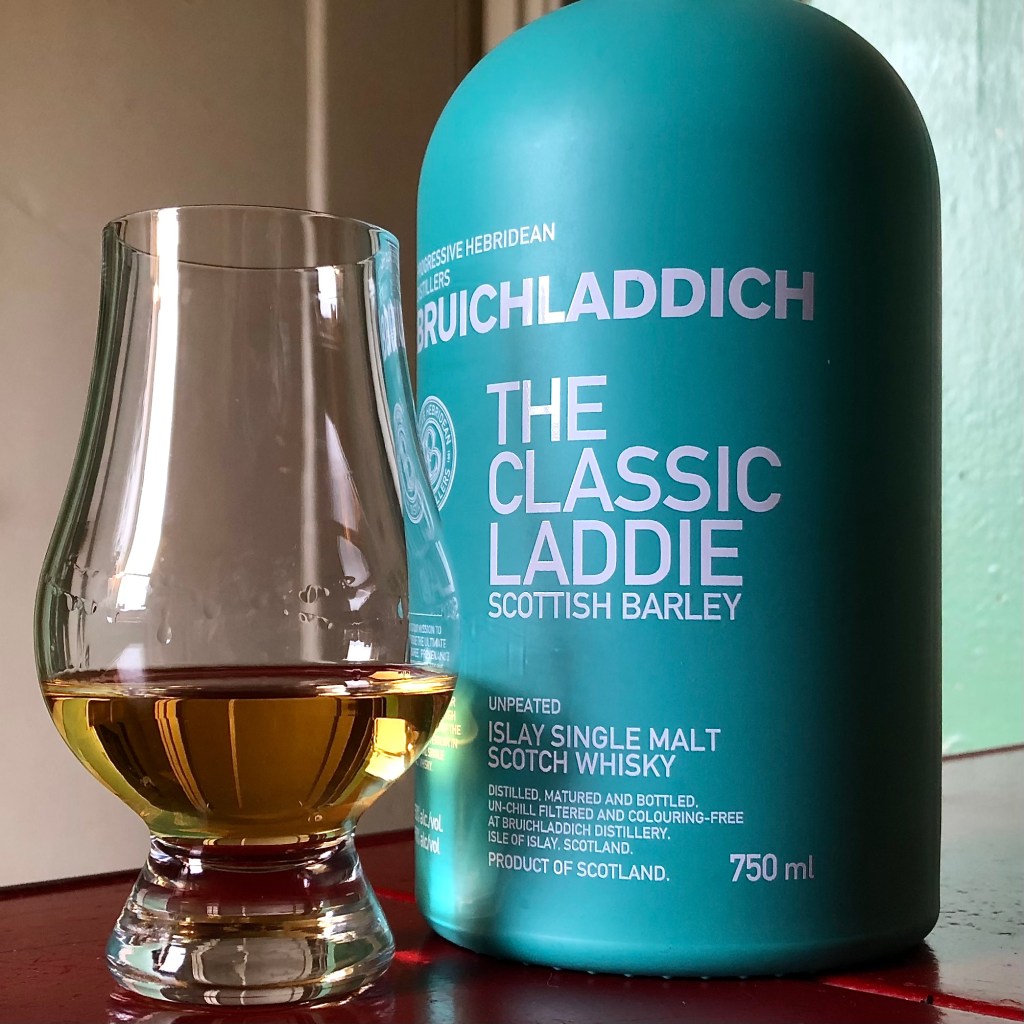
THE CLASSIC LADDIE
Unpeated Islay Single Malt WhiskyMASH BILL – 100% malted barley
PROOF – 100
AGE – NAS
DISTILLERY – Bruichladdich Distillery
PRICE – $60
Better known for their intensely peated Port Charlotte and Octomore lines, not to mention the mysterious and coveted annual Black Art release, Bruichladdich also offers this unpeated gateway drug, The Classic Laddie. Bottled without chill filtration or artificial color, and at a solid 100 proof, I placed it second in the flight for its added oomph and peat-adjacency—a faint and salty foreshadowing of the smoky whiskies to come.
The color takes the Orchard House’s straw and lemon and tints them just a notch darker, adding a bit more orange and brass to how it glints in the light. On the nose I get a vanilla-caramel note right up front, underlined by an almost stone-like salt note. Faint baked pineapple, papaya, and peach hover in the salty mist.
Then on the taste, the fruit notes seem to immediately infuse themselves into that vanilla-caramel, which darkens a notch. The finish echoes this, lingering with a bright but dry prickle.
A nice step further into a slightly darker area of that orchard previously introduced by the Compass Box.
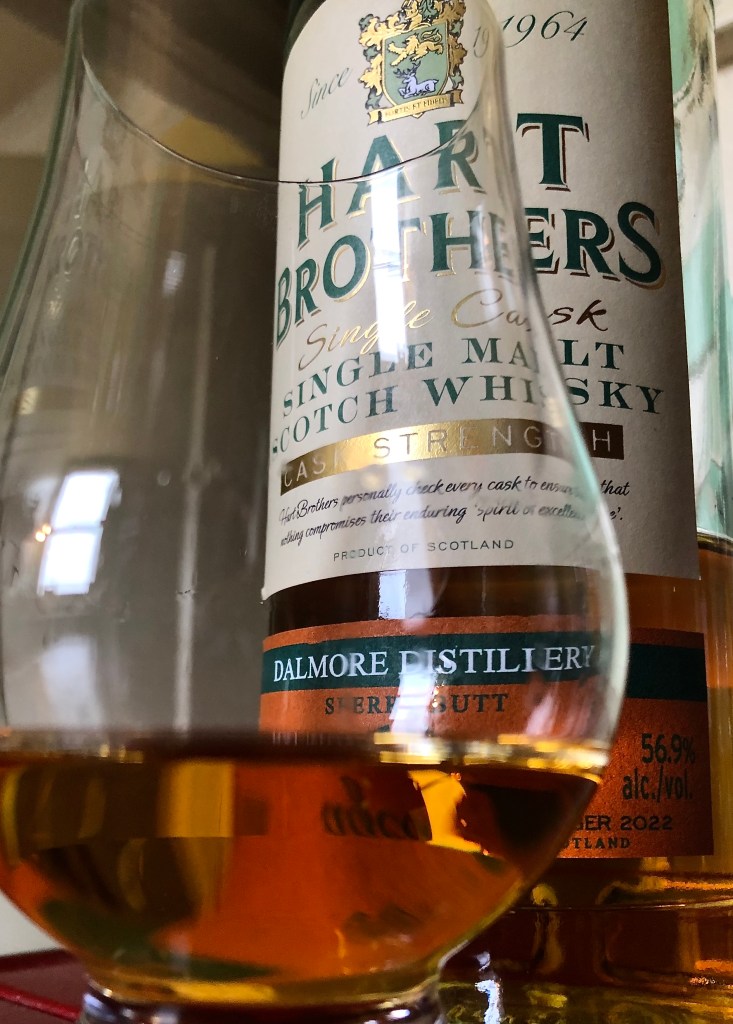
HART BROTHERS DALMORE SINGLE CASK
Aged in a first fill sherry butt caskMASH BILL – 100% malted barley
PROOF – 113.8
AGE – 10 years 4 months
DISTILLERY – Hart Brothers sourcing from Dalmore
PRICE – $60 (on sale from $80)
A standard Dalmore release always figured among our departed colleague’s offerings when he led the scotch tastings, so when I saw this cask strength, single cask Hart Brothers release available at K&L it was a no-brainer. Aged in a first fill sherry butt and bottled—unlike Dalmore’s own offerings—unfiltered and without added color, I thought this would make a sweet and warm conclusion to the flight’s first arc.
The Dalmore greets the eye with a notably orangier amber than the Laddie or Orchard House. On the nose I get milk chocolate bar, a caramel custard, a dash of salt, fluffy fresh baked bread, and some faint red fruit or berry soaking in water like it’s being rinsed for baking.
Tasting it, I get something sweetly herbal right up front, followed closely by the milk chocolate and red berries all stirred up together into some desserty sauce. The finish has a subtle bite to it that seems to chew slowly around lingering milk chocolate, baked syrupy papaya, and sea salt.
A nice final landing for the flight’s sweet whiskies, offering a richer complexity well set up by its predecessors.
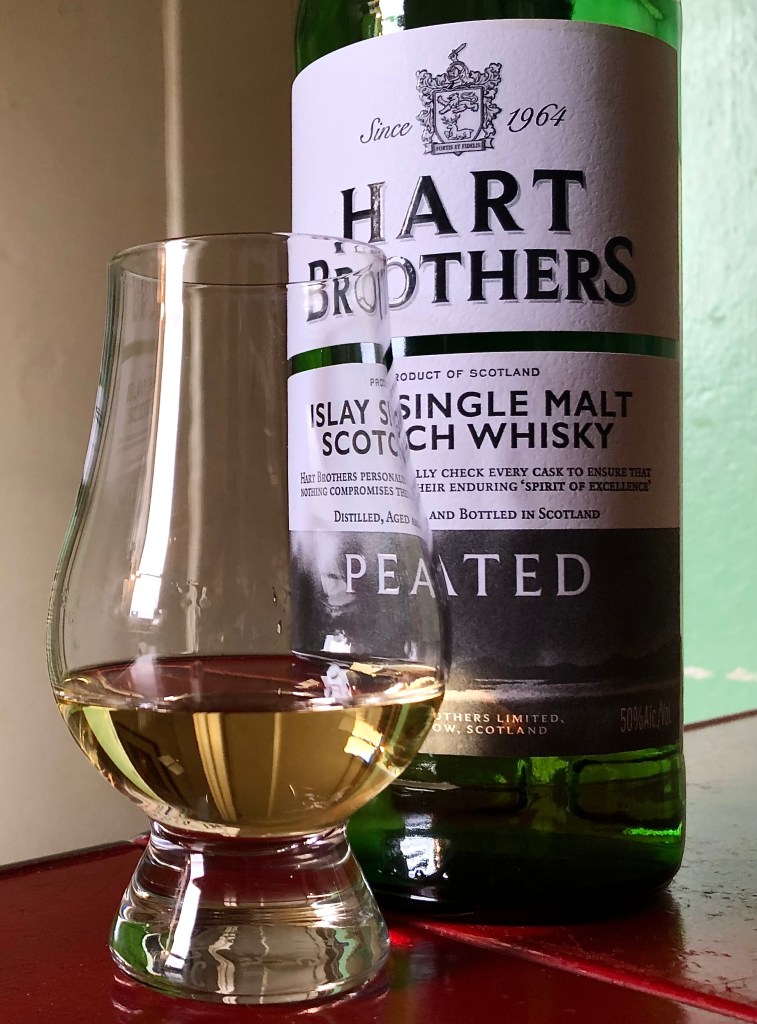
HART BROTHERS “PEATED” ISLAY SINGLE MALT
MASH BILL – 100% malted barley
PROOF – 100
AGE – NAS
DISTILLERY – Hart Brothers sourcing from Laphroaig
PRICE – $44
To kick off the smoky leg of the flight, a more obvious choice might have been Laphroaig’s own standard 10 Year release, which can still be found priced just a bit higher than this Hart Brothers sourced bottling. But the Laphroaig 10 Year gets watered down to 86 proof, filtered of its full-blown flavor, and tinted (tainted?) with artificial color. Why get that when I could get this? The unstated age of this vatting is undoubtedly much younger than 10 years. But the proof stands at a solid 100, offering oomph for which anyone who’d already crossed the sweet arc of the flight would be prepared. Here the shock would be more a matter of Laphroaig’s infamous peat, young and unbridled by filtration or false color!
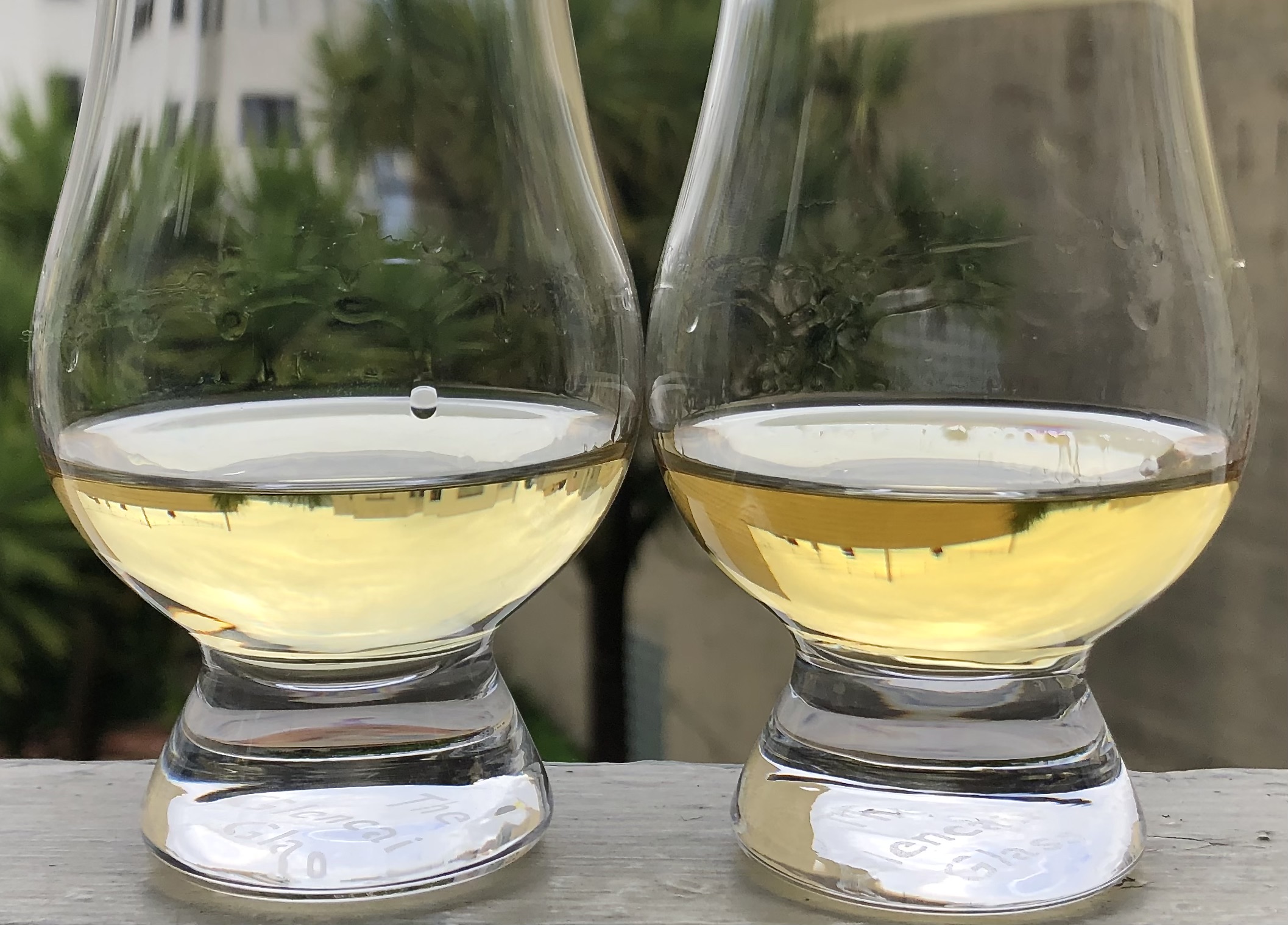
The natural color of the whisky is notably paler than the rest, almost white with only subtle straw hues to distinguish it from water. On the nose the briny peat hits immediately, yet gently, accompanied by salted caramel, vanilla, sliced white peach, thinly sliced pineapple, and a splash of fresh whole cream. Lovely.
The taste then brings soft campfire ash to the briny peat, and emphasizes the cream, caramel and vanilla notes over the fruit notes. On the finish, the fruits return as in the warm vapor coming off a fresh baked compote, with the ashy/briny peat leaning in just a bit more forwardly than the caramel and cream.
Such a bright, lively, neatly complex, welcoming entry into the smoky side of scotch.
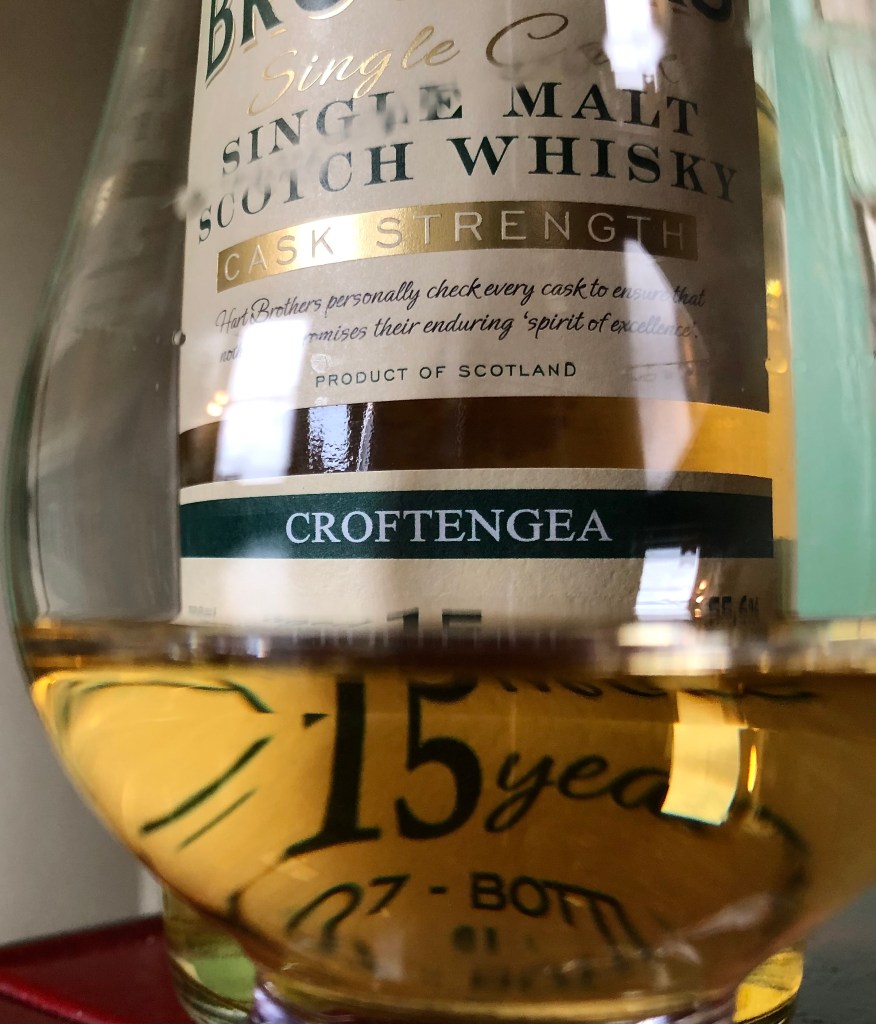
HART BROTHERS CROFTENGEA SINGLE CASK
Aged in a bourbon hogshead caskMASH BILL – 100% malted barley
PROOF – 111.2
AGE – 15 years 6 months
DISTILLERY – Hart Brothers sourcing from Loch Lomond Distillery
PRICE – $96 (on sale from $130)
Loch Lomond Distillery’s Croftengea single malt has become my favorite peated whisky of late. Typically used in their blends to add complexity, when it does show up on its own it’s usually in a single cask release from one independent bottler or another. A 12 Year A.D. Rattray release from 2017 that I recently enjoyed was superb. And my first Croftengea experience, a 2018 Hepburn’s Choice release, also 12 years, remains among my fondest peated scotch memories. Being a Highland peated scotch, Croftengea features a sweeter peat than the craggier Islay offerings tend to do. So after the sudden arrival of Laphroaig’s ashy/briny peat, the spectacle here comes more from the warmer cask strength flavor punch.
Though older than the Dalmore and bottled at a similar proof point, the color here is a return to the Orchard House’s pale straws and yellows. On the nose I get an immediate and complex yet clear blend of salt, pine, vanilla, and caramel. With time and attention, the pine note unfolds into pine notes—needle, cone, bark. Mmmaybe some peach when I really search for it. Funny that I don’t even think about the peat here. It hovers so faintly amidst the salt and pine.
On the taste, that immediate complexity and clarity of the nose continues. Pine, salt, now a smoky peat, give way in the end to a lovely burst of baked guava and papaya. The finish then carries on with the baked papaya and guava, and the peat recedes again behind the salt, leaving a subtly bitter smokiness in the air.
I love this whisky. The pine is such a surprise, and the way the peat and smoke are so nonchalant. Were it not for the higher proof, I almost think this would make a better precursor to the Laphroaig in terms of welcoming people new to peat into the bog. But the heat is definitely stronger here. My palate is very well prepared for it by the previous four whiskies, of course.
All in all this Hart Brother’s Croftengea bottling makes a great bookend to the Compass Box Orchard House. There’s the color coordination. But we began with an emphasis on fruit and here we end with that emphasis, paired now with the unmistakable complexity and peculiarity that peat brings to scotch whiskies.

Last Call
I must say I’m very pleased with this selection, the whiskies themselves but also their pairing and arrangement into a flight. I was doing a bit of guesswork in lining them up, of course. I’ve had Croftengea before, for example, but never this single cask of Croftengea. And my only previous Dalmore experiences were when my former colleague poured me a shot at our past annual work parties. A flight in tribute to this dear friend we’d lost was an honor to arrange.
And it was pleasing to see my colleagues have a good time, leaning into their curiosity, finding something they could enjoy and articulating their experience of the whiskies. Tasting through the whiskies for this post, it’s further encouraging to experience them as a flight myself, and to find the journey I mapped out indeed had shape, method, cohesion, as well as the unexpected twists and turns one always hopes for on an enjoyable journey. Maybe I have learned a thing or two over the years…!
Here’s to the journey, and to sharing it with friends past and present.
Sláinte!
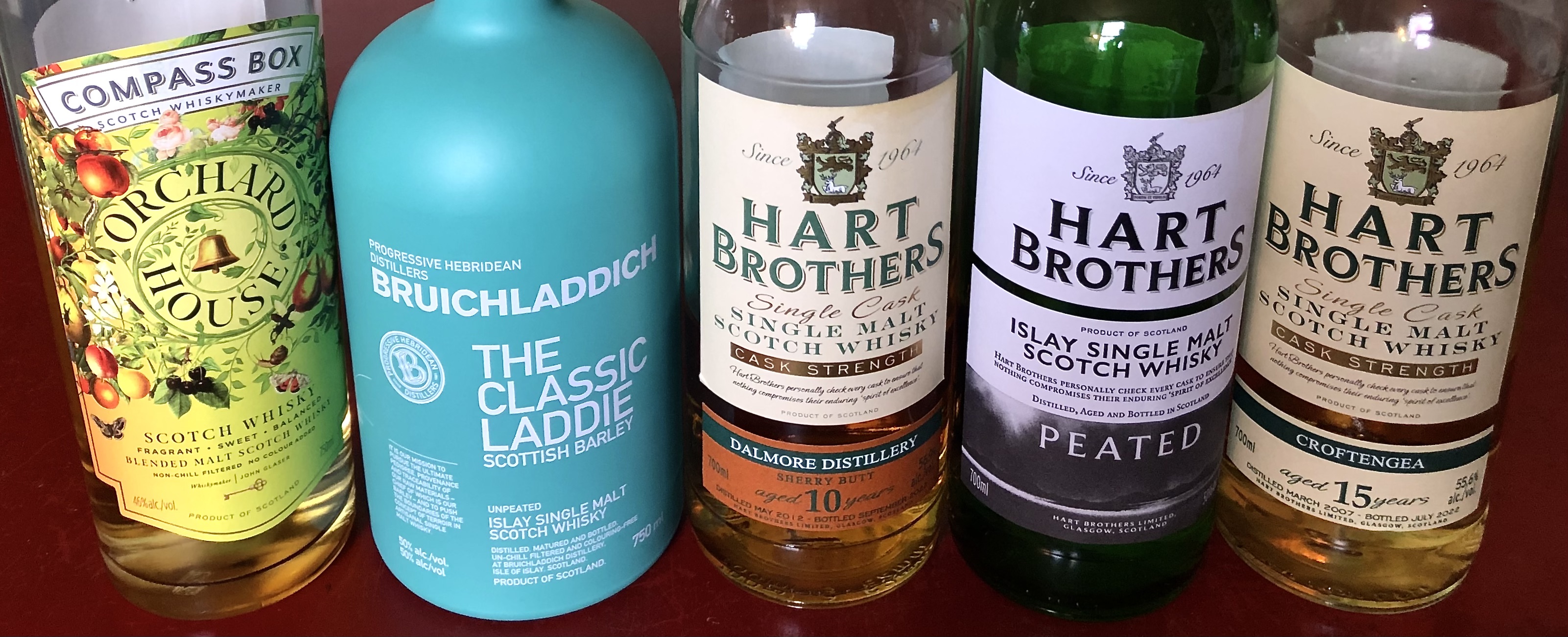
All of these bottles were uncorked and tasted in The Year of No Buying (The what? 🔗 here.) But anyway I didn’t buy them. My employer did! 🥃

 The Right Spirit
Sorry to hear about your co-worker, but nice to see you honor his memory with a Scotch tasting. How did the tasting go among the party-goers?
LikeLike
There was joy in toasting our departed colleague, and celebrating him. And everyone who sat down for the tasting was curious and lively. Fun to hear them enjoy articulating having different experiences with this and that whisky, especially when they disagreed! American society is so unaccepting now of allowing divergent POVs to coexist. Experiencing that as a joyful thing in the context of a work party whisky flight felt like a little utopian oasis!
LikeLike
Nice way to close out the year, I must say! Here’s to Absent Friends and delicious drinks!
LikeLiked by 1 person