I recently spent ten days in Japan. Naturally I visited some bars and hit some whisky shops.
This account of my Japanese whisky jaunt isn’t anything in the way of a Best Of or Top Five list. These are notes on some drinks I sipped at some places I visited—among them a scam both hilarious and not!—as well as a few whisky hunting tales. I hope you’ll pour yourself a glass of Japanese whisky, or build a classic Highball cocktail using the same, and enjoy. And if you don’t have any Japanese whisky on hand, Wild Turkey will do. (I’ll explain.)
Kanpai!
The Bars
Bar High Five Ginza Tokyo
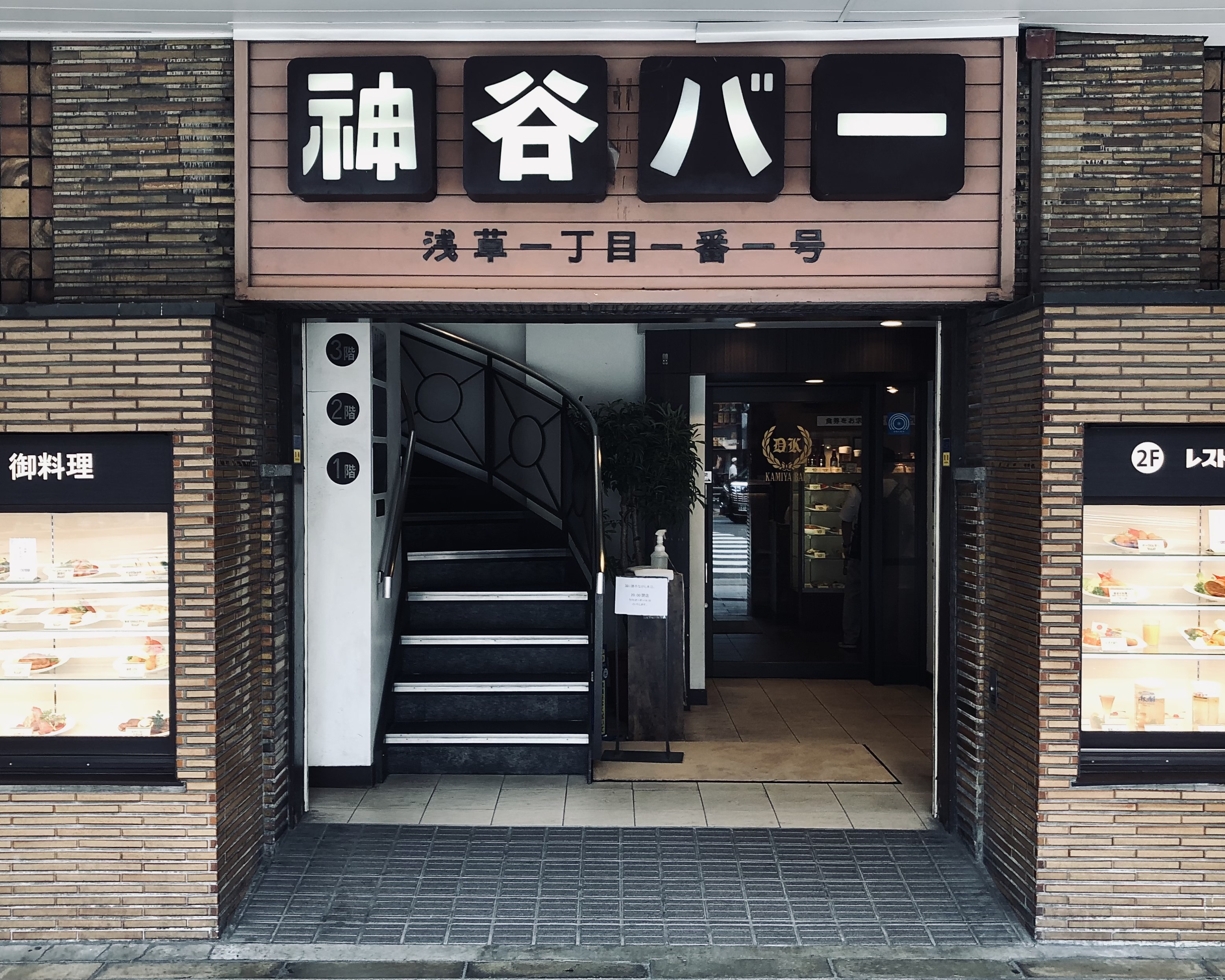
Kamiya Bar Asakusa Tokyo
SG Club The Guzzle Shinjuku Tokyo
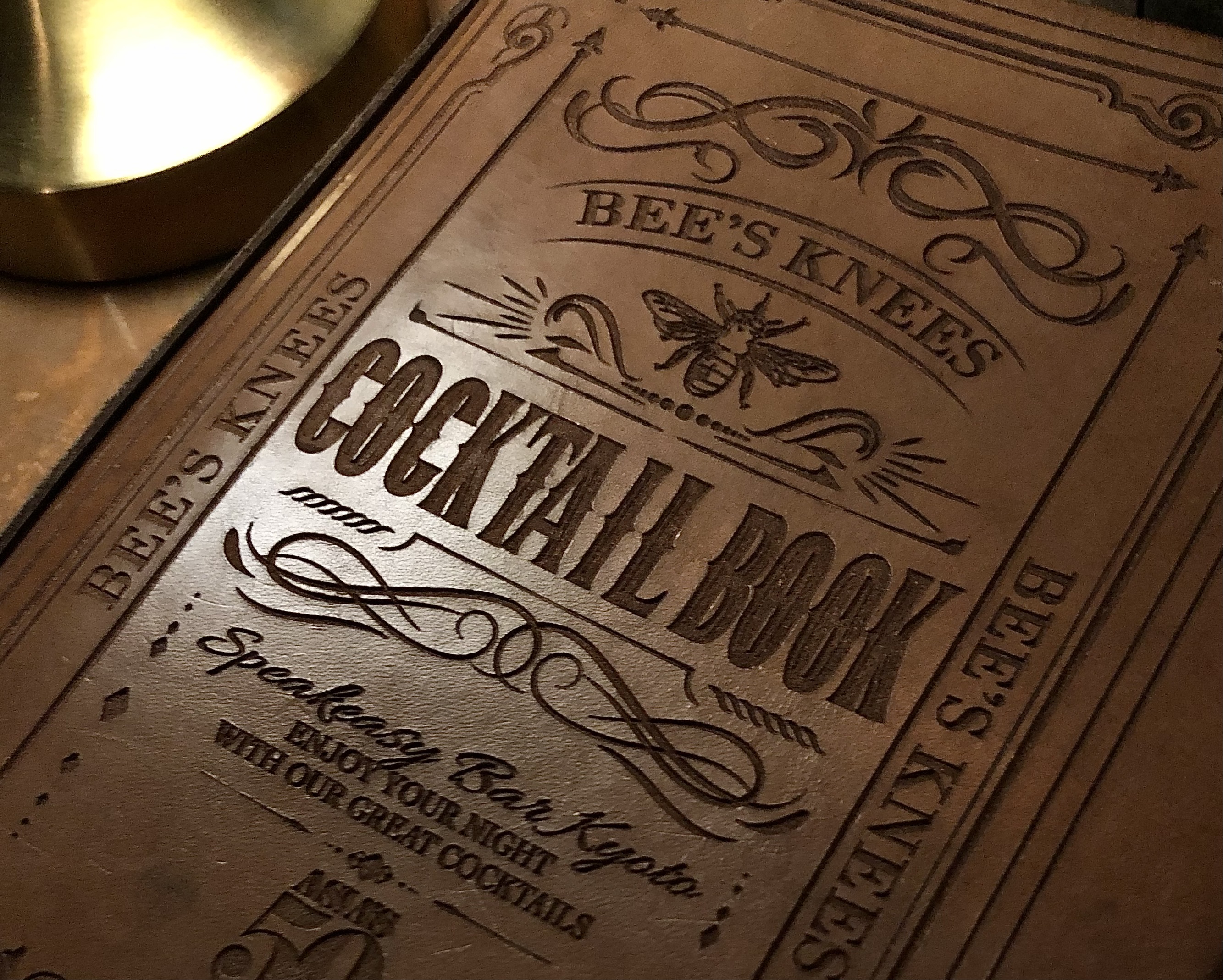
Bee’s Knees Gion Kyoto
Machiya Bar Yuri Gion Kyoto
Whisky Hunting in Tokyo and Kyoto
Last Call reflections on the hop
🥃 clink these to jump back up here
Bar High Five
🍸
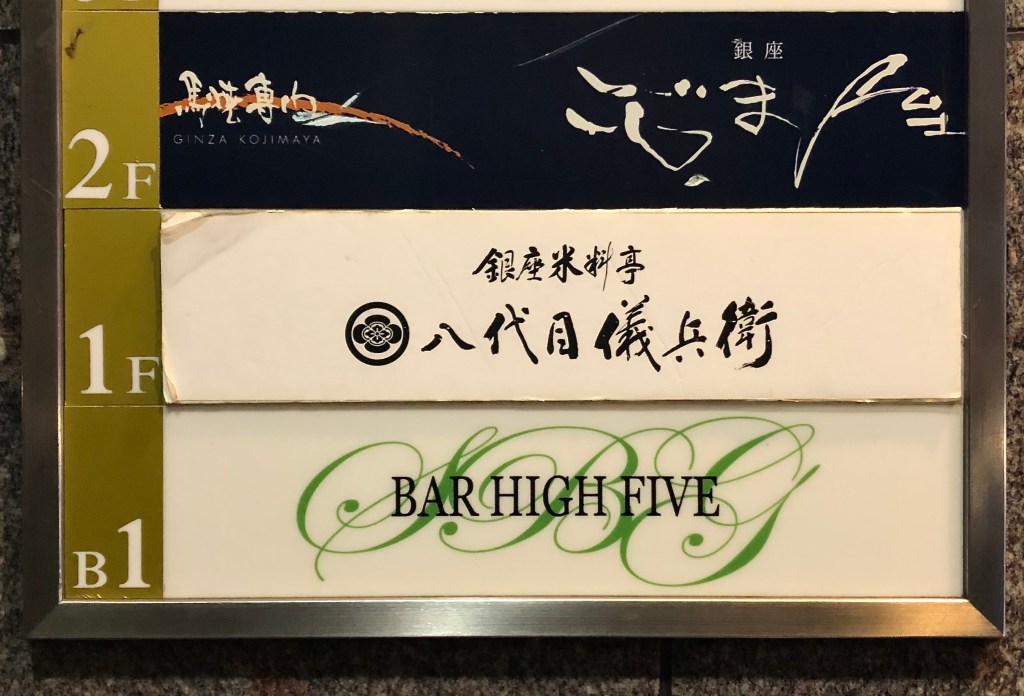
Considered among the top bars in the world, I found this Tokyo legend to be as intriguing as it was oppressive—and, for both those qualities, very worth a visit.
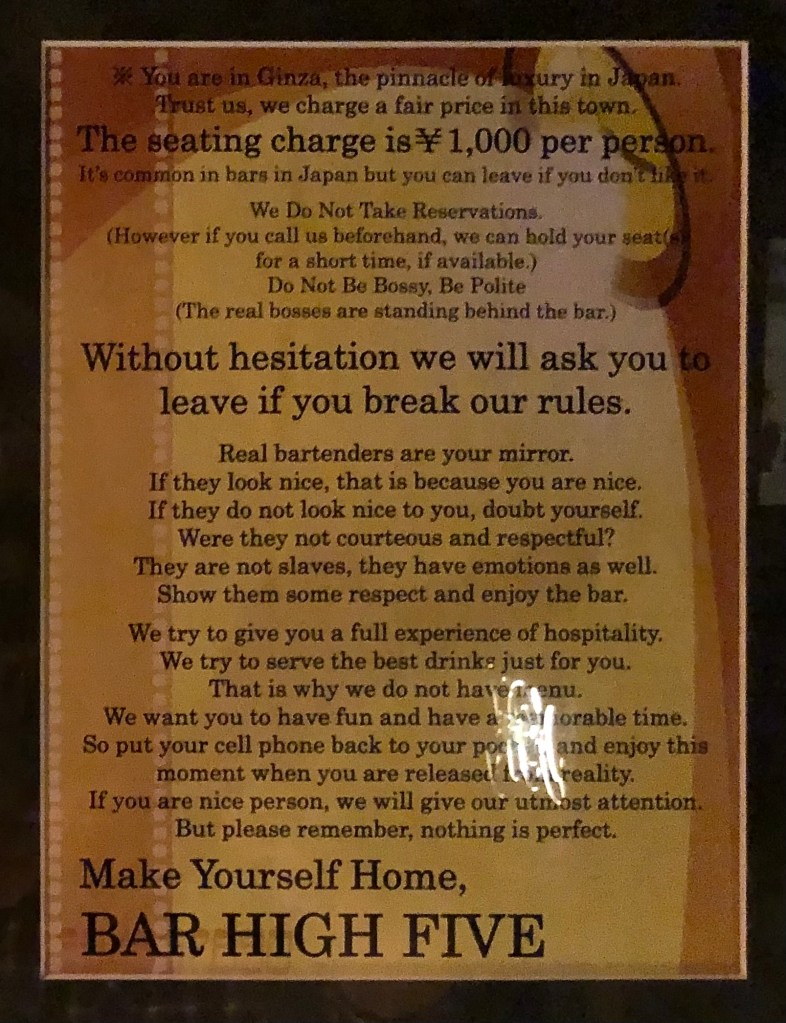
After a short, claustrophobic ride down a garishly florescent-lit elevator, one is greeted in the similarly tight yet moodily dark basement lobby. A bartender welcomes you by directing your attention to a strict house rules sheet, which you must read and agree to before entering.
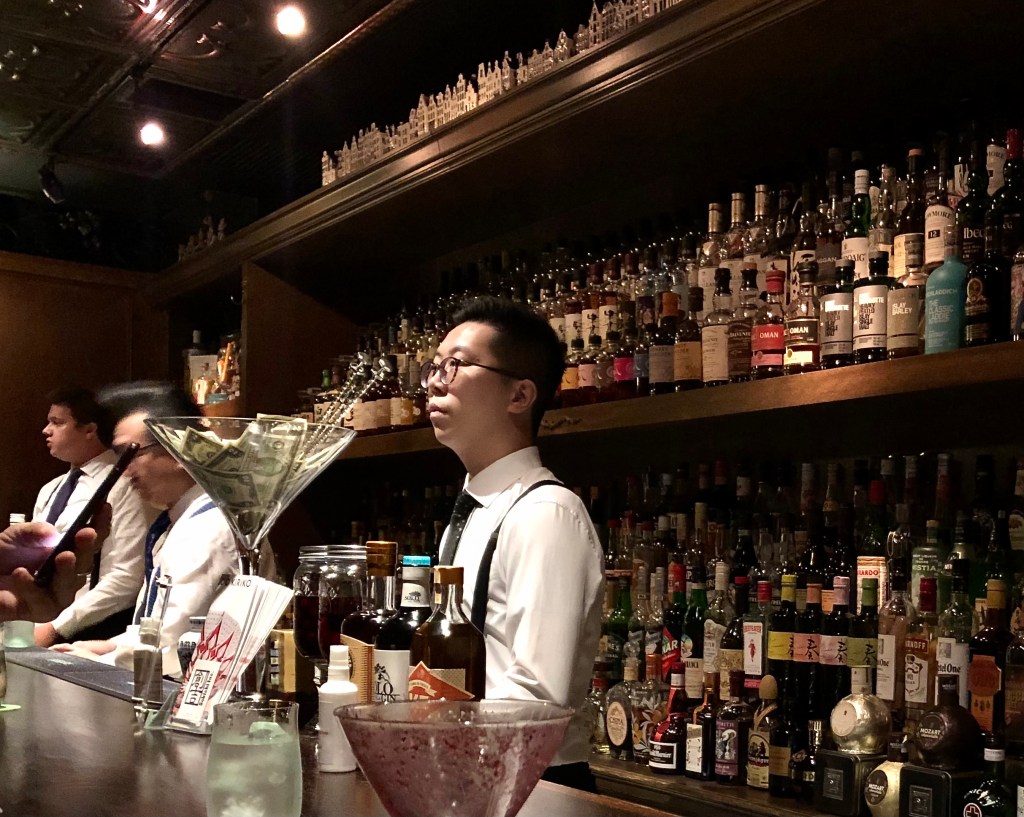
In the bar space proper, the sumptuously dark atmosphere, very early and mid 20th century in its details, is shrouded in a mist of fear emanating from the phalanx of international interns, here to study and very keen to get everything right. Their attire is impeccable yet generic—the perfect balance of elegance and unobtrusiveness. But this costume is not a sufficient container to stop their unease from escaping out from under their pressed cuffs and starched collars into the sepia-toned air. Faint 1930s jazz gives the impression that somewhere in the distance there are people relaxing and having a good time…
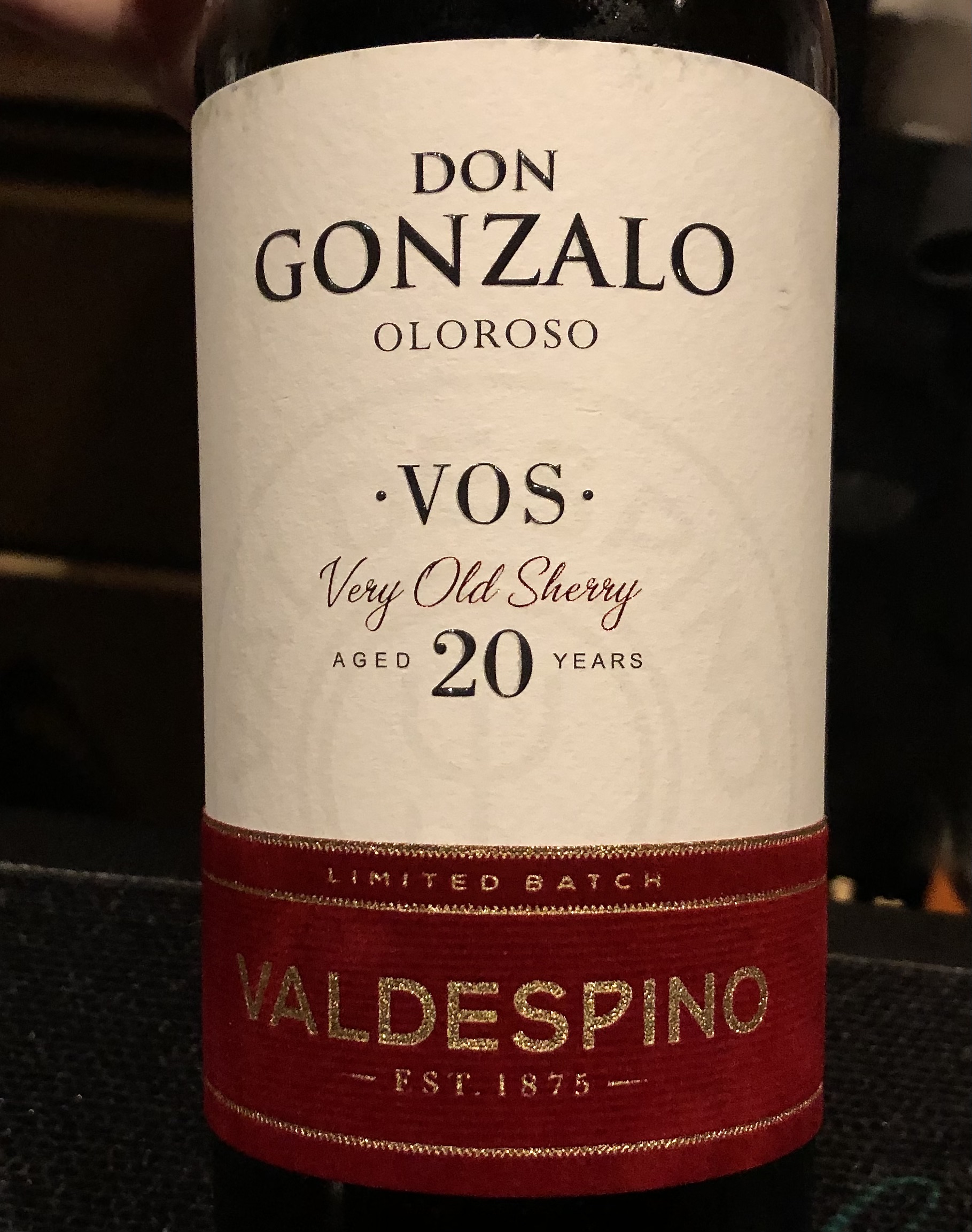
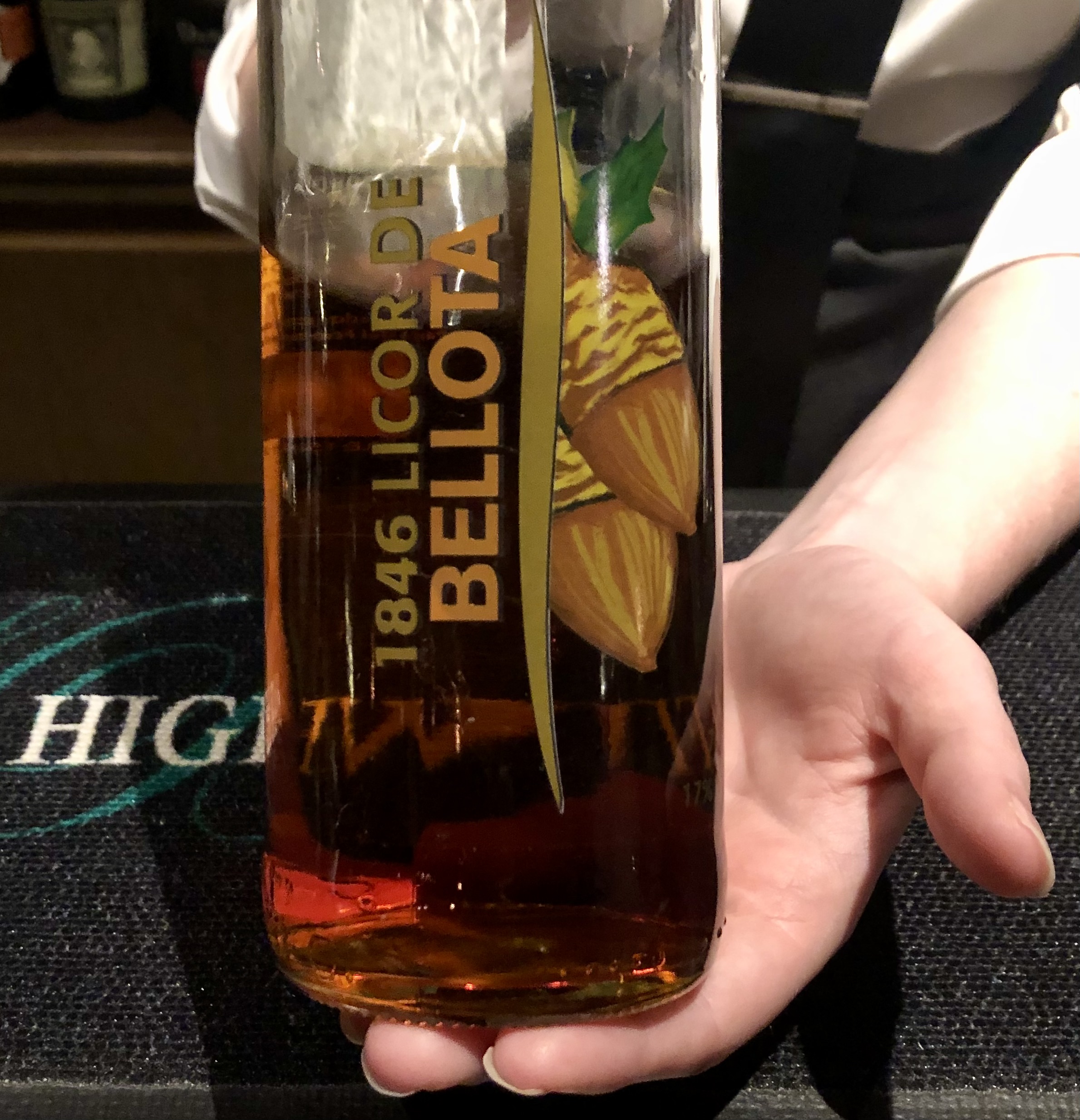
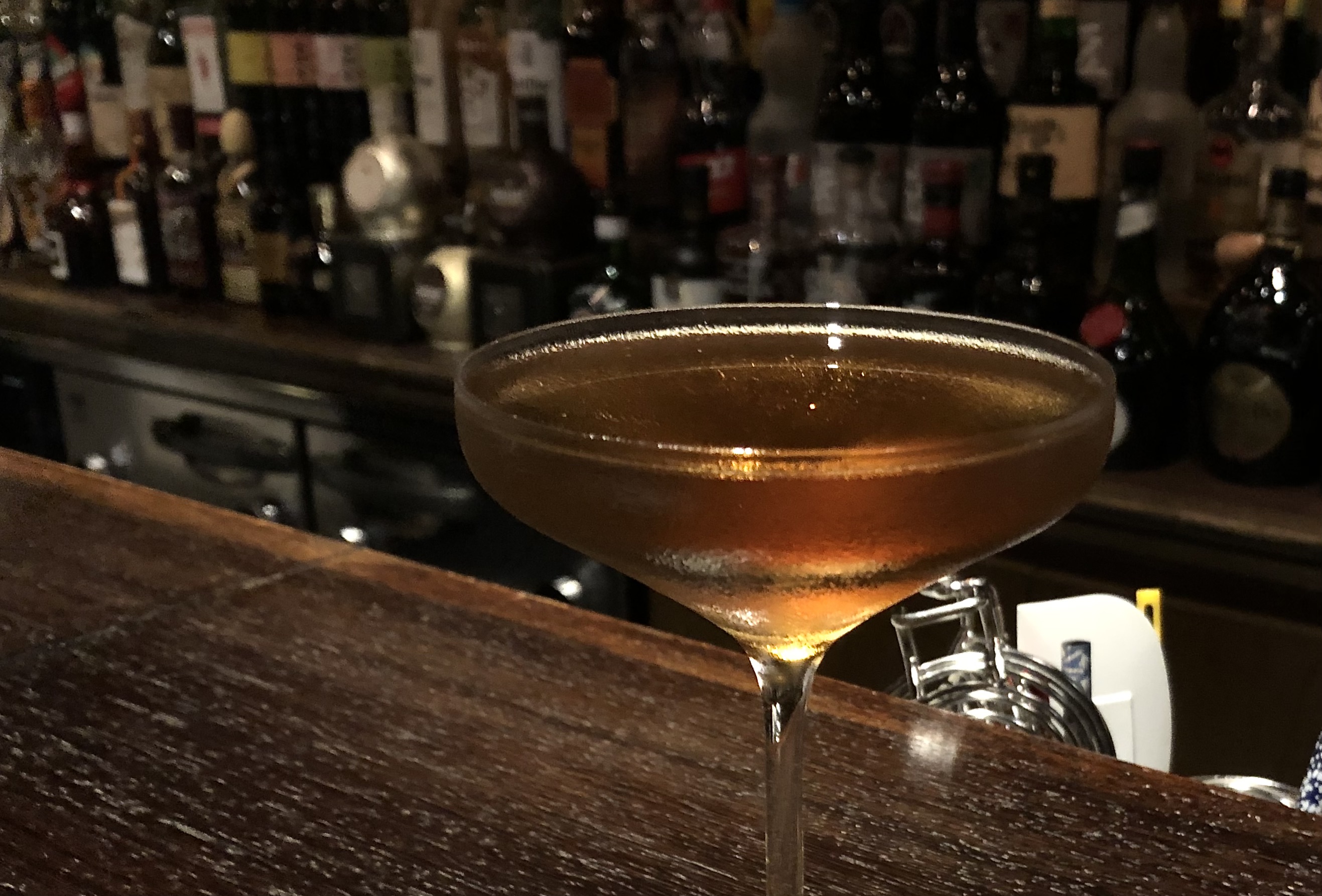
I love how the orders are taken. There is no menu of known cocktails. They ask you a series of questions—do you prefer refreshing, spirit forward, bitter, sweet, smoky—and then something original is created. My responses yielded a cocktail shaken with Fuji Gotemba Whisky that has been further aged in the bar’s own barrel, situated in the corner; 20-year Valdespino Don Gonzalo Oloroso sherry; and 1846 Licor de Bellota (acorn liqueur), served in a coupe. It was perfect—delicately yet confidently balanced, lightly sweet and smoky.
An Italian intern had taken my order, very nervously and apologetic. She won’t last long here, I thought. The lead bartender—a young Japanese woman, hair cut in a bob with long sharp corners flanking her inscrutable face, their stylish dishevel adding a touch of menace—moved silently, never seeming to speak, the interns’ eyes fixed on her attentively to catch her requests for assistance delivered via precise, one-syllable gestures.
An Australian intern had been tasked to deliver my drink. She approached very slowly, no doubt unintentionally Noh like, eyes fixed on the rim of the coupe she held between her fingertips, intent to not spill a drop. Once the drink had been successfully presented, however, she chatted with me in an easy, relaxed, still very professional way, offering the first loosening of tight formality—by then very much appreciated!
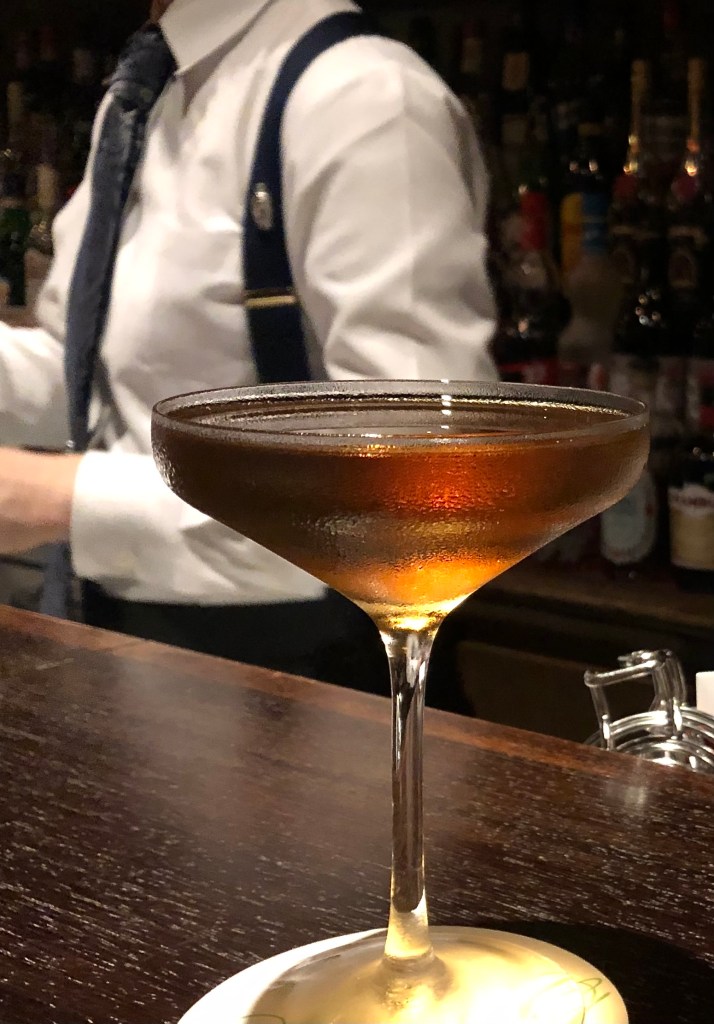
The Italian intern returned and settled in for an unending conversation, alternately enjoyable and awkward. She was still palpably nervous, and I got the sense she was seeking refuge with the American, a much more casual client than the Louise Brooks-like Japanese woman silently sipping something vaguely bruise-colored to my left. Turns out the Italian lived in Ota, a small town in Gunma Prefecture, roughly 90-minutes by train northwest of Tokyo—and the exact town where in 1995 I worked for six months at an english language school! Wha-?! She actually had no interest in bartending professionally, she said. She was an artist, and the Bar High Five internship was a job she took to support herself while studying Manga.
Suddenly the bar’s world famous owner, Hidetsugu Ueno, arrived, seeming to have materialized rather than physically entered.
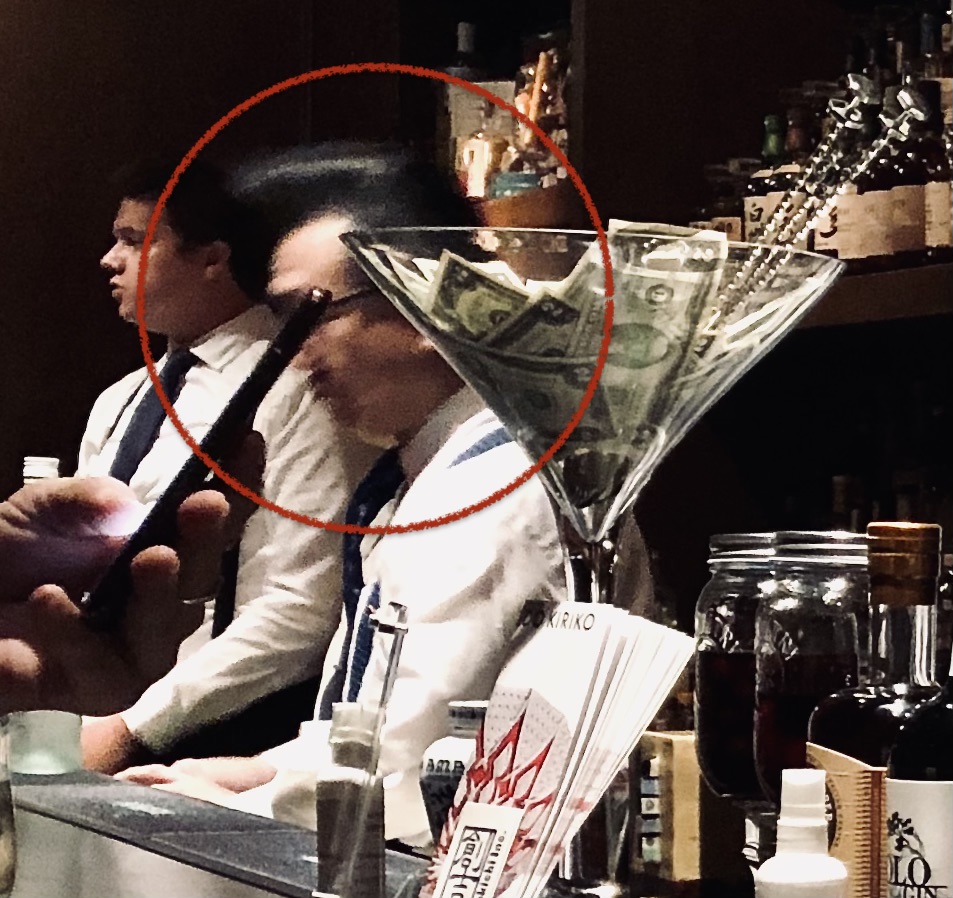
Like his lead bartender, he never spoke a word. For her part, she vanished with his arrival. The interns were abruptly even more rigid than before. As he stirred a mixing glass without a single clink between ice and spoon, he surveyed the patrons at the bar with a stink-eyed grimace true to the letter of his house rules sheet. I was done with my drink by this point, and soon left, thanking the Italian and Australian interns for their service and conversation.
In short, Bar High Five is an experience. A truly compelling atmosphere marred by a dark cloud of fear. Creative and refined cocktails that taste genuinely exquisite. Not a place to go to relax. But still a must for any cocktail fan.
Kamiya Bar
🍺
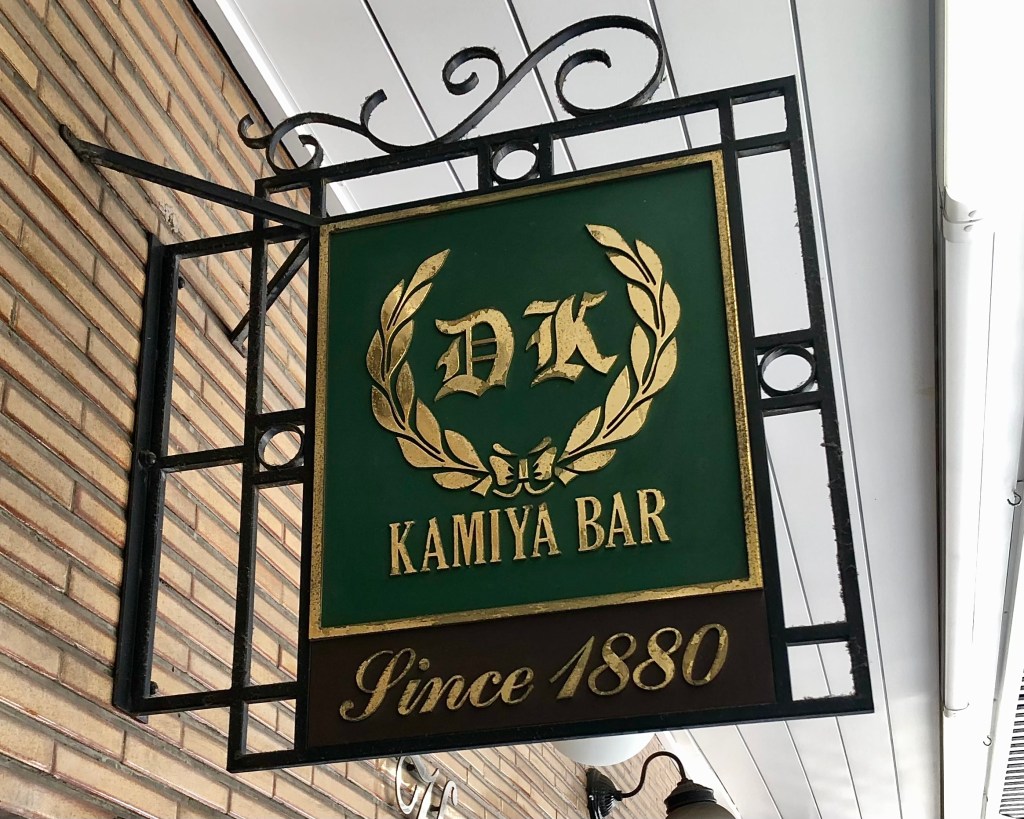
I loved this place.
Originally established in 1880 on a solid street corner in Tokyo’s older city center, the Asakusa district, Kamiya Bar was clearly last refurbished sometime around the early 1960s. It is impeccably mid-century in look and feel—not just the layout and decor but also the staff and patrons. I actually had the feeling I’d gone back in time.

Bustling, loud, devoid of foreign tourists other than my partner and myself, this was a distinct experience from nearly every other food or drink establishment in Japan. The staff were clean and efficient as everywhere. But they never seemed to go out of their way for customers beyond what was necessary to deliver the never ending stream of orders—as if a hopping upscale Denny’s Diner had been converted into a bar.
Kamiya keeps only daytime hours, and offers a roster of bar basics. You order and pay up front at the reception counter before then taking your seat. The register is overseen by a laconic older gentleman in a casual suit, no tie and his top button undone, a full head of wavy salt-and-pepper hair, any eagerness he once had long curdled to resignation. There was something of the failed novelist about him, working the Kamiya Bar register by day, and forever revising his unpublished opus on nights and weekends when not busy smoking a cigarette and staring into the distance.
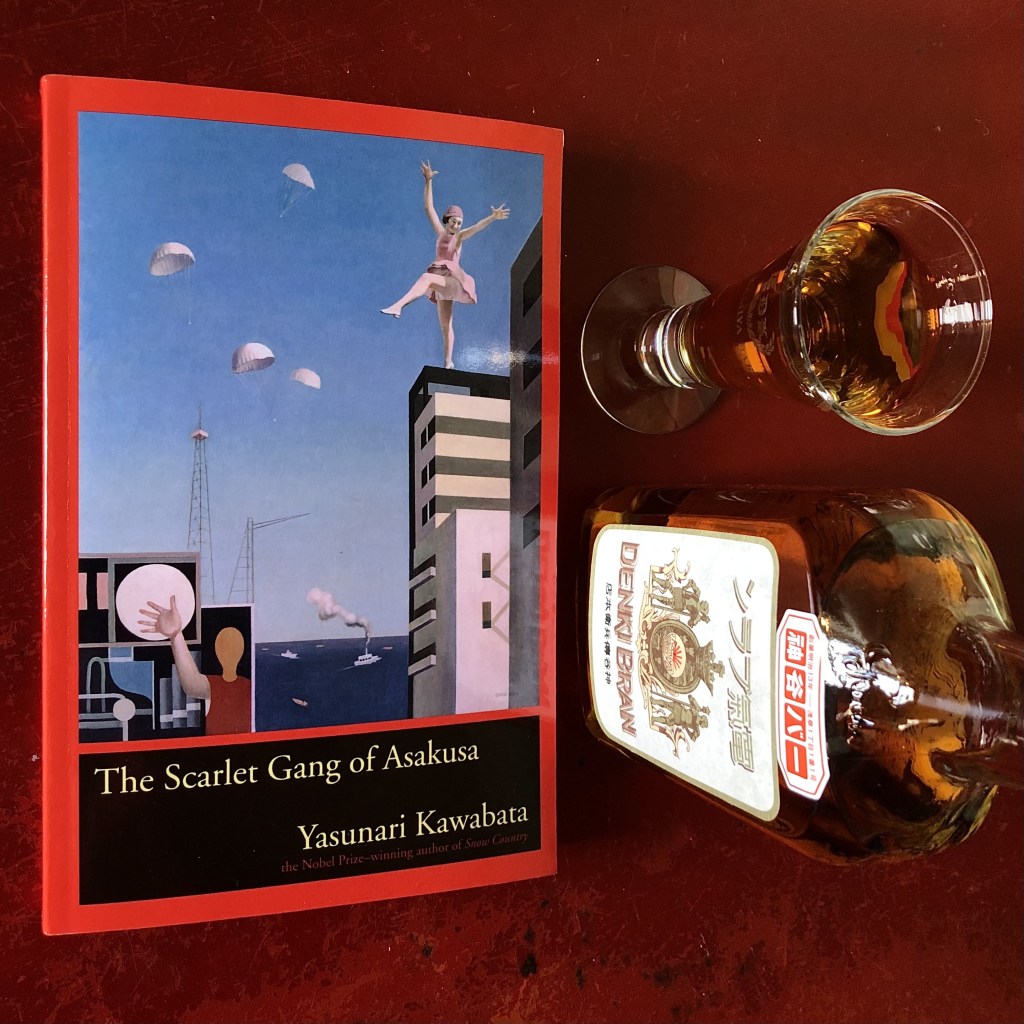
I ordered a Highball cocktail. My partner ordered the house speciality, a spirit they produce themselves called Denki Bran. It’s a blend of gin, wine, Curacao, and medicinal herbs, the proportions a century+ guarded secret. My Highball made from Nikka and club soda was refreshing. But the Denki Bran was the star attraction. Sweet, smoky, potent, and thick with a familiar spice the name of which I can’t put my finger on. An elixir that tastes somehow of joyful illegality—something the cast of Yasunari Kawabata’s 1930 novel, The Scarlet Gang of Asakusa, might drink with abandon.
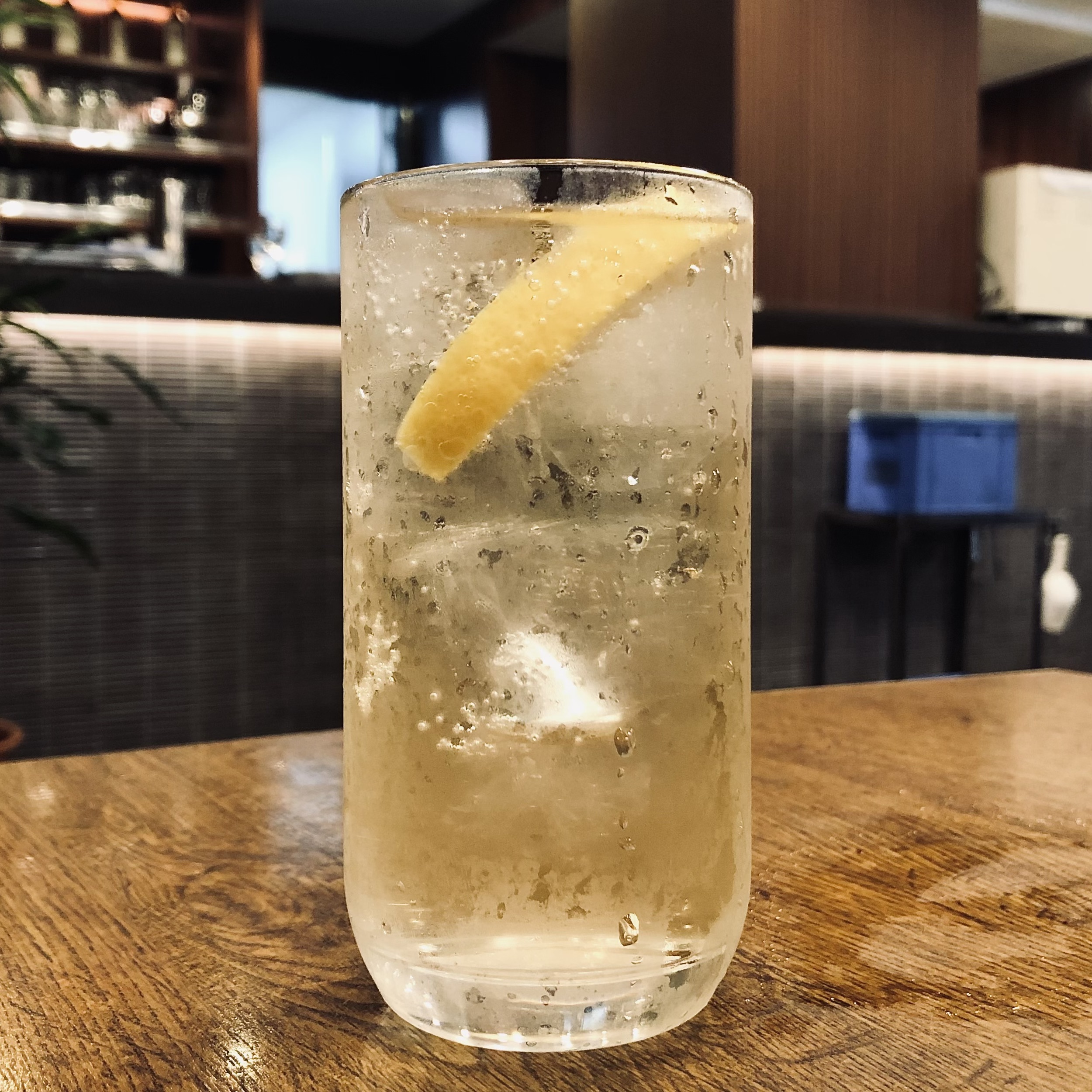
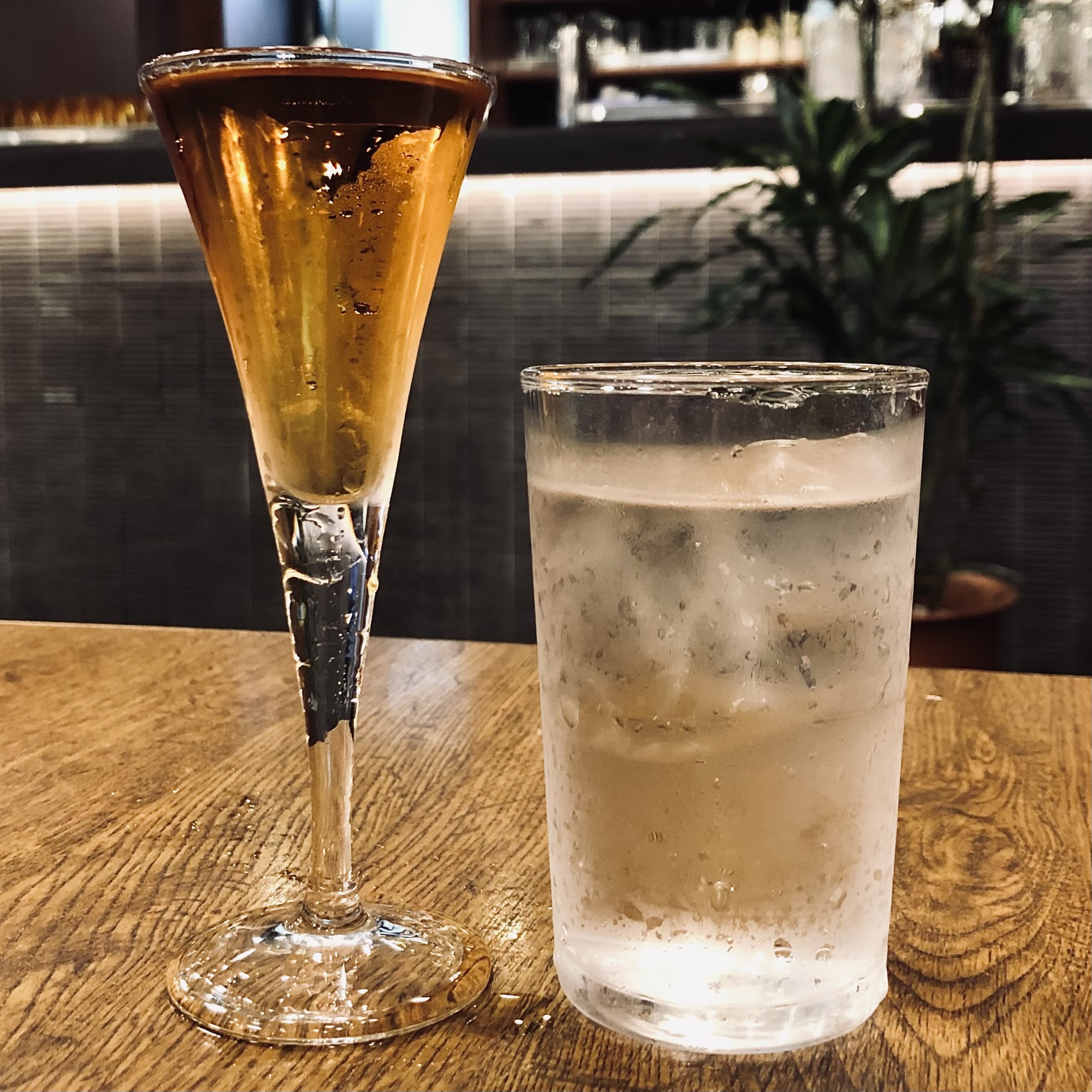
I hoped they might sell the stuff and flagged down our server to ask. I asked if I could speak English with him and he demurred, held up his index finger, and scurried away. Five minutes later he whizzed by again, gesturing toward me to a coworker. She had a tray of empty glasses in one hand, her other hand propped on her hip. “Okay, what is it you want?” she said. Her impatience was hilariously dry but also legit—Kamiya Bar is a busy hive of very social older adults who want another beer.
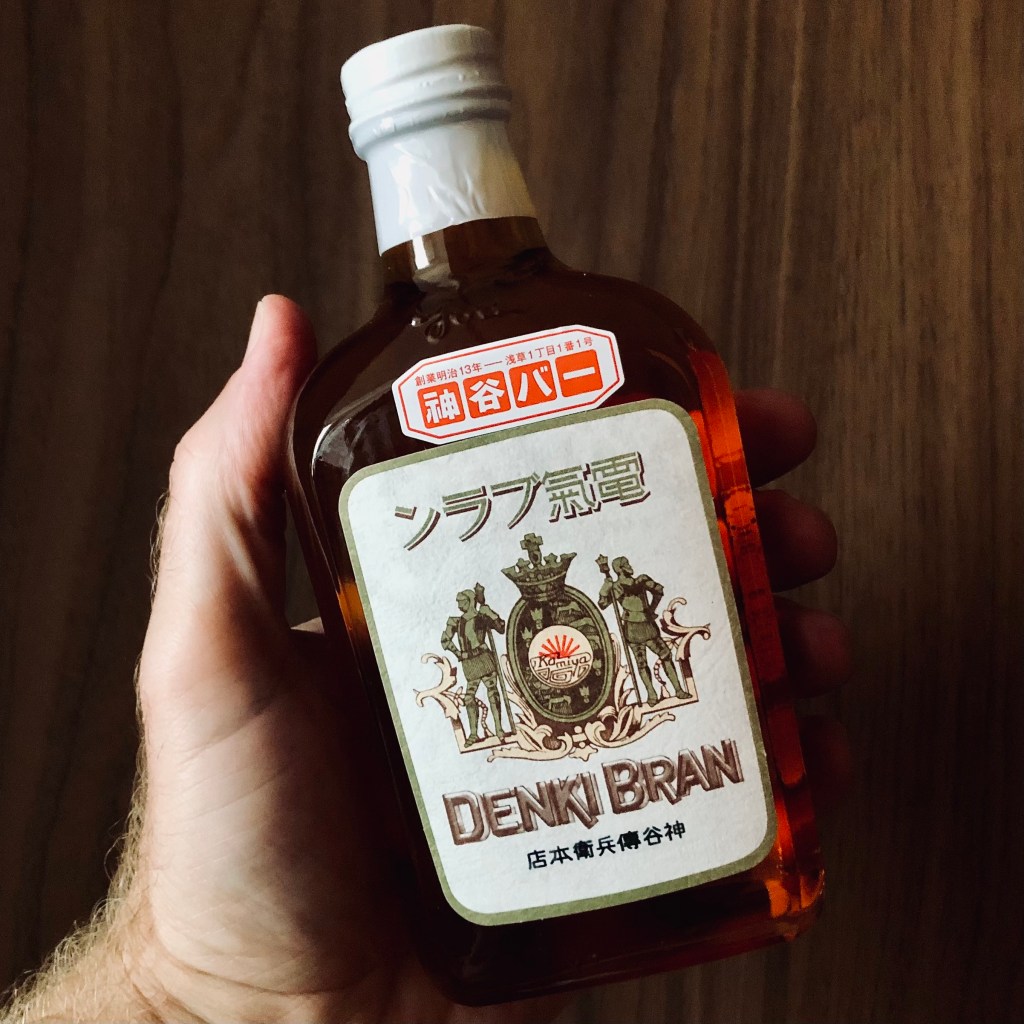
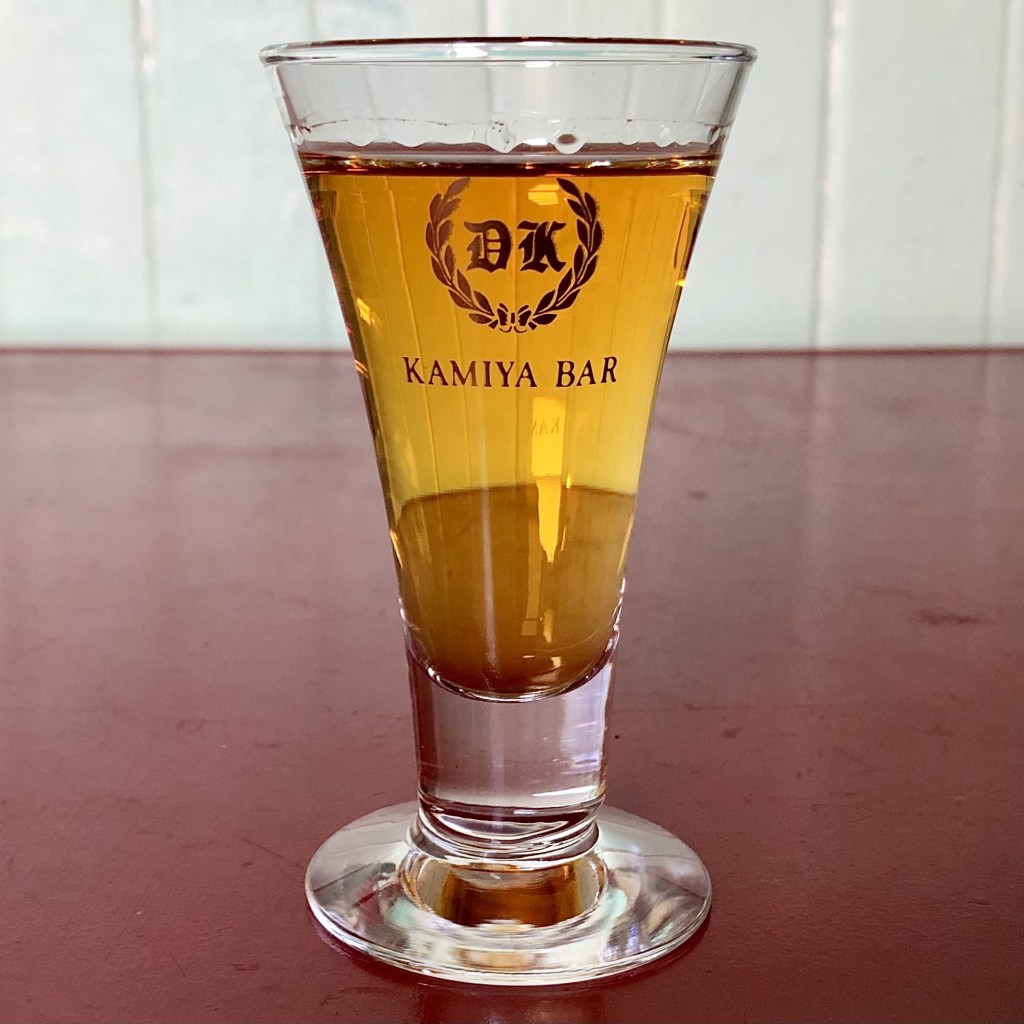
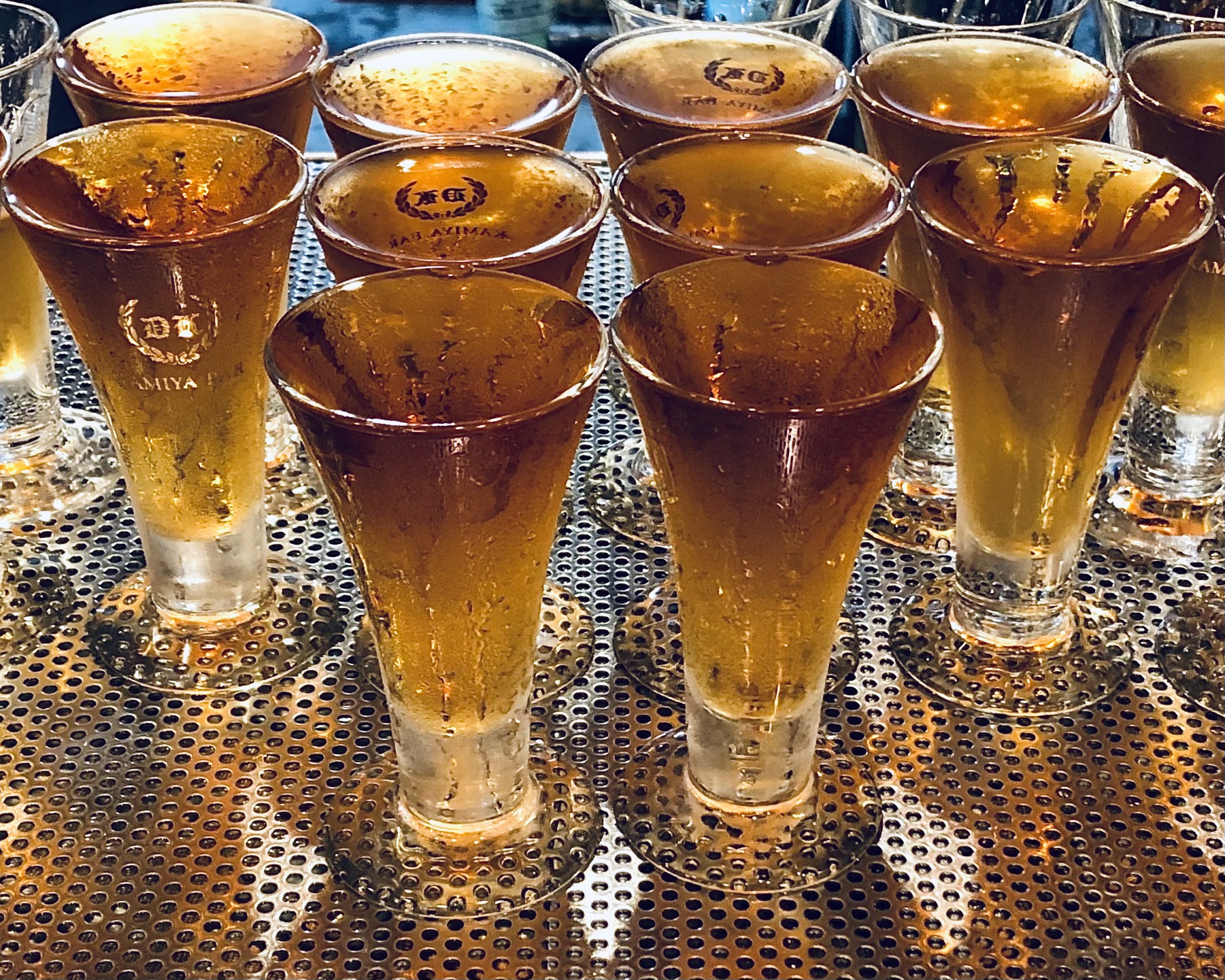
Naturally, they do sell their house specialty by the bottle, and naturally I took a bottle home, along with two souvenir Kamiya Bar glasses to sip it from.
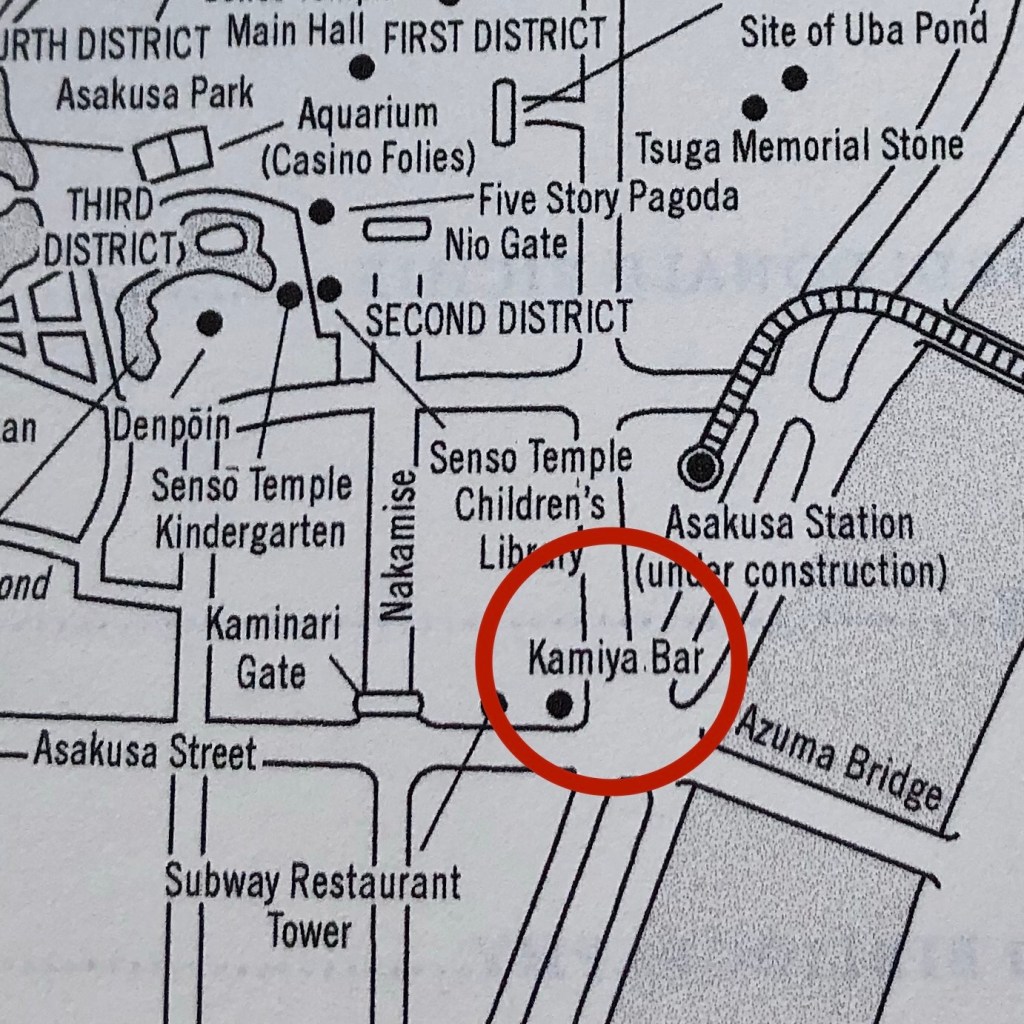
I also picked up a copy of that Kawabata novel, The Scarlet Gang of Asakusa, inspired by his time mingling with the district’s denizens. In the 1920s Asakusa was to Tokyo what Alexanderplatz was to Berlin around the same time, what Montmartre had been to Paris in the 1890s, and what Times Square would become for New York in the 1940s—a place where artists and pleasure seekers of all kinds and classes converged for food, drink, entertainment, escape, soul searching, debauchery, refinement, the illicit and the electric. On an initial inside page of Kawabata’s book there is a 1929 map of Asakusa. And there sits Kamiya Bar, anchoring the corner opposite Asakusa Station and Azuma Bridge as ever.

I will go to Kamiya Bar any time I visit Asakusa again, no question. My kind of joint.
SG Club – The Guzzle
🍸
I’d read about SG in Julia Momose’s book, The Way of the Cocktail. The SG Group was founded by award-winning bartender Shingo Gokan. It’s a cocktail bar culture company that designs and operates new concept bars, mostly in Japan but also Shanghai and New York.
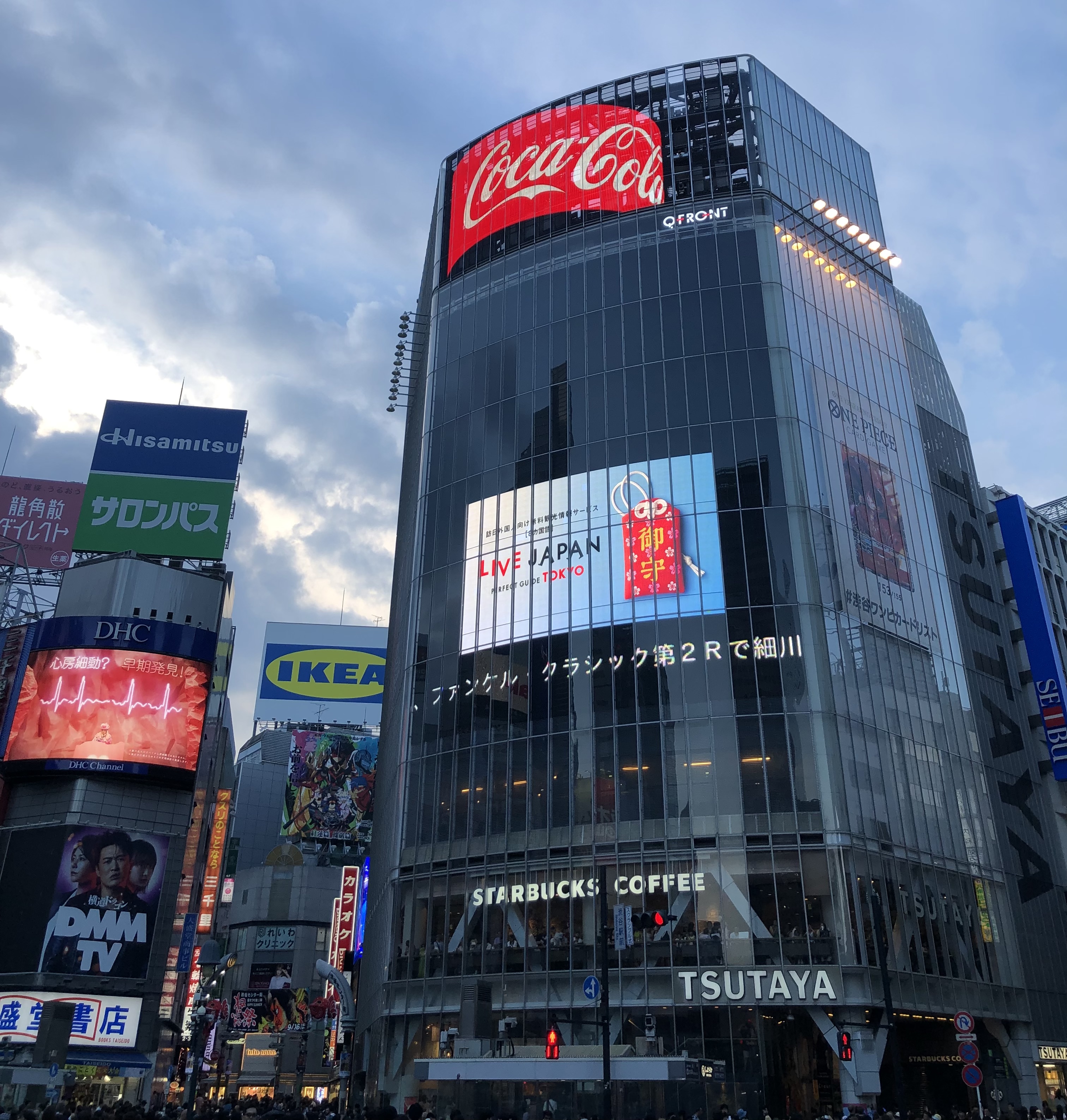
We first went to SG Low, located just outside the hyper-stimulating heart of Tokyo’s Shibuya district. A combination bar and izakaya, food is served, cocktails mixed, and reservations are required for one of three set seating times per night. I hadn’t clocked that last part in advance, and they were full. The staff suggested their sister bar, the SG Club, located not too far away, so we headed off to there.
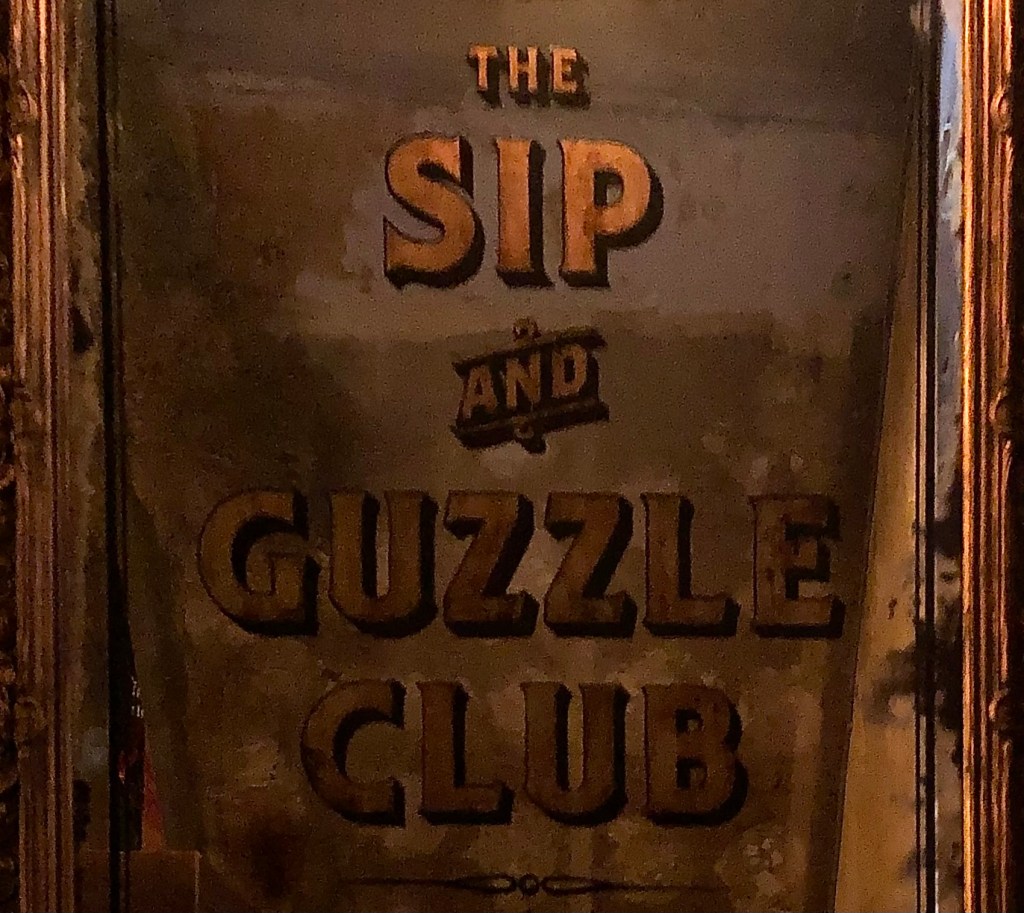
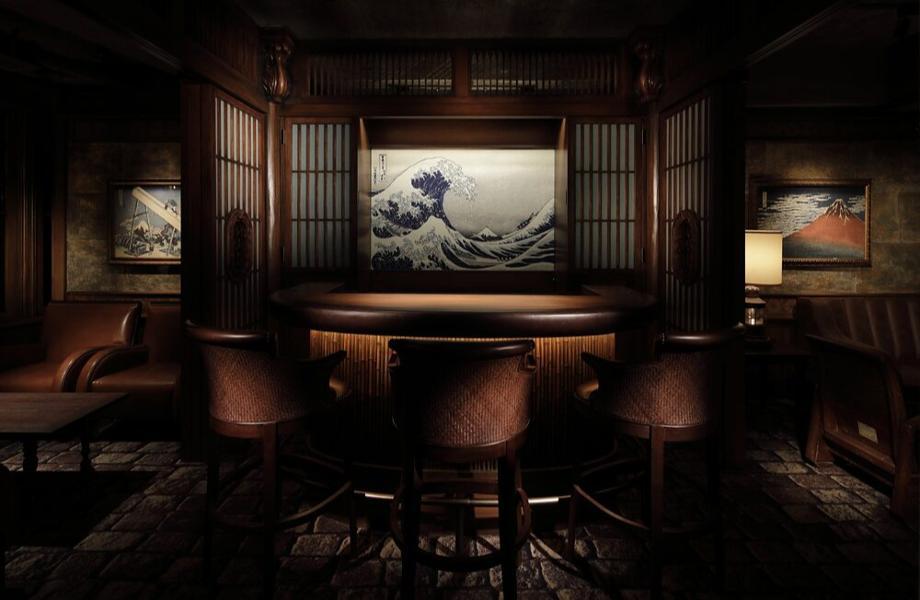
The SG Club, subtitled The Sip and Guzzle, is actually three bars in one. In the basement, through a mysterious gate-like door, is The Sip. Dimly lit, old-timey music, looking like a speakeasy from old New York decorated by a modern Samurai’s interior designer, it’s a refined place for quiet conversation while sipping cocktails that are mixed to offer complex flavors, blending light with heavy, delicate with thick.
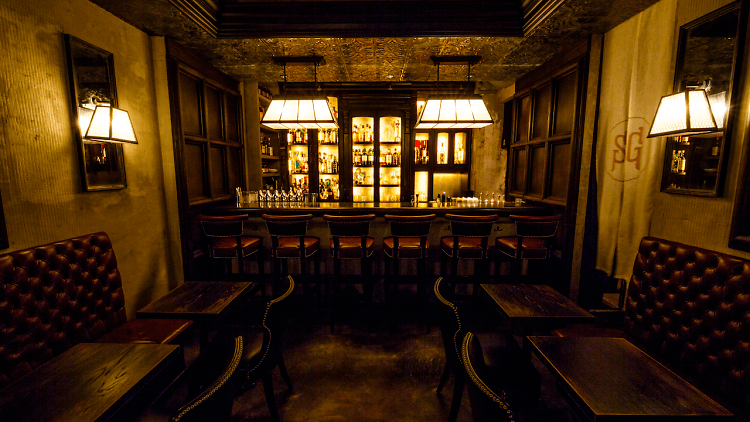
On the first floor, right off the street, is The Guzzle, an inviting bar meant for more casual cocktail enjoyment. The atmosphere is jazzy, less hushed, mellow without being sedate. The cocktails are designed to be fun and easy to guzzle.

On the second floor is Savor, the least obviously signed of the three. Savor is a “membership lounge” specializing in cigar and cocktail pairings. The cocktail menu is tailored to the taste profiles of various high-end cigars. Japanese and Cuban aesthetics influence the cozily moody decor.
Exhausted by the onslaught of Shibuya, we went for the easiest route to a seat—two at the bar, right off the street in the casual but still classy Guzzle.
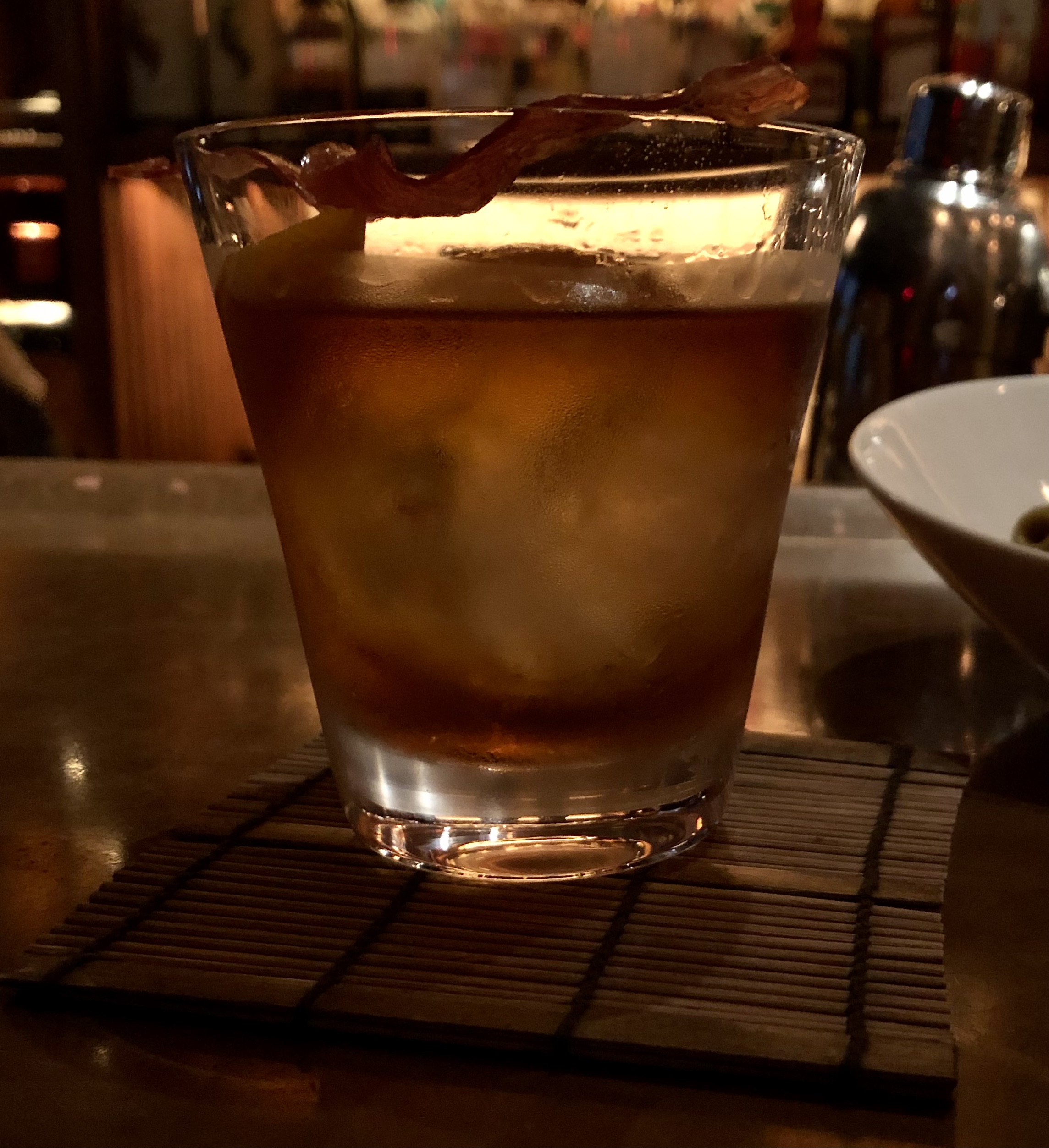
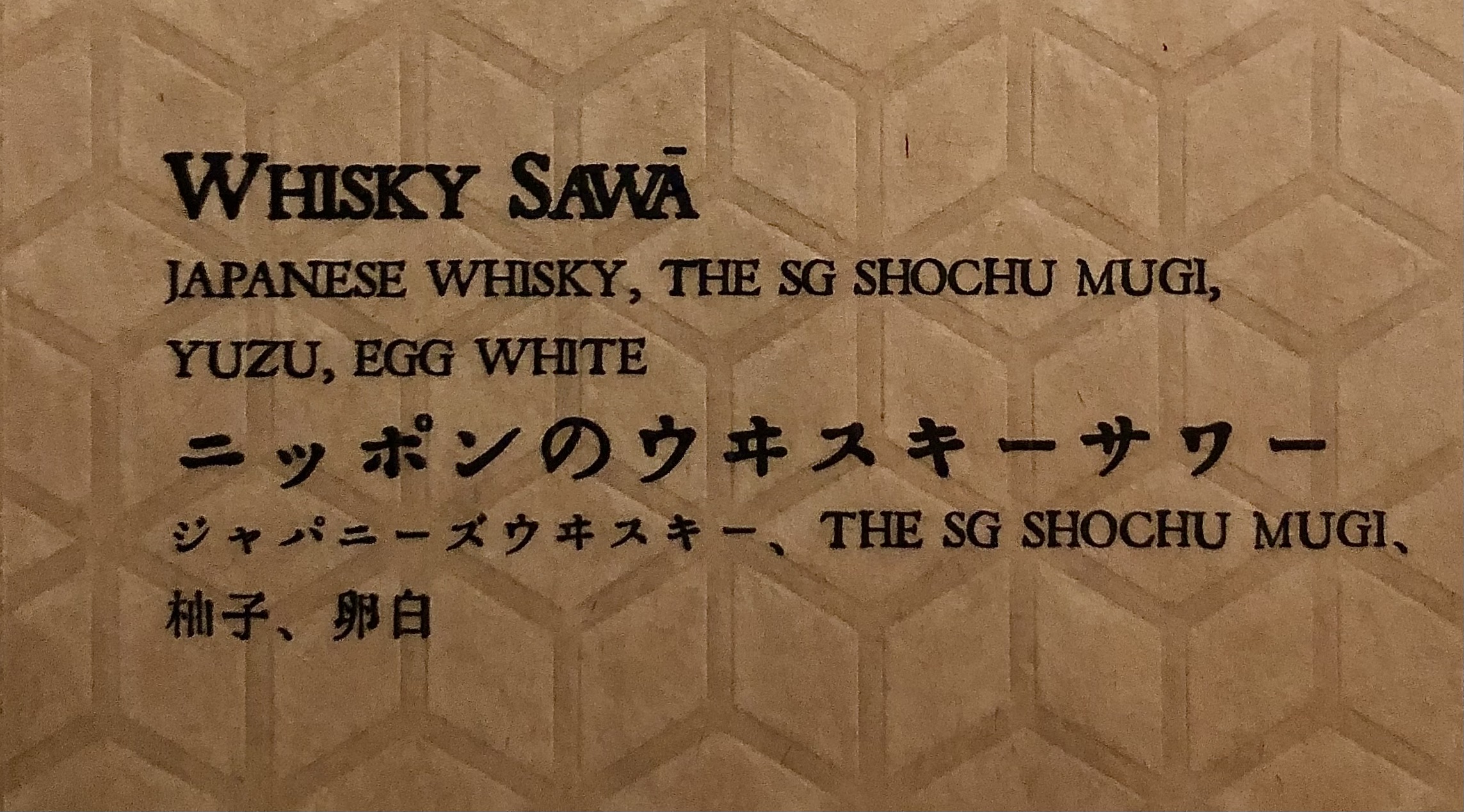
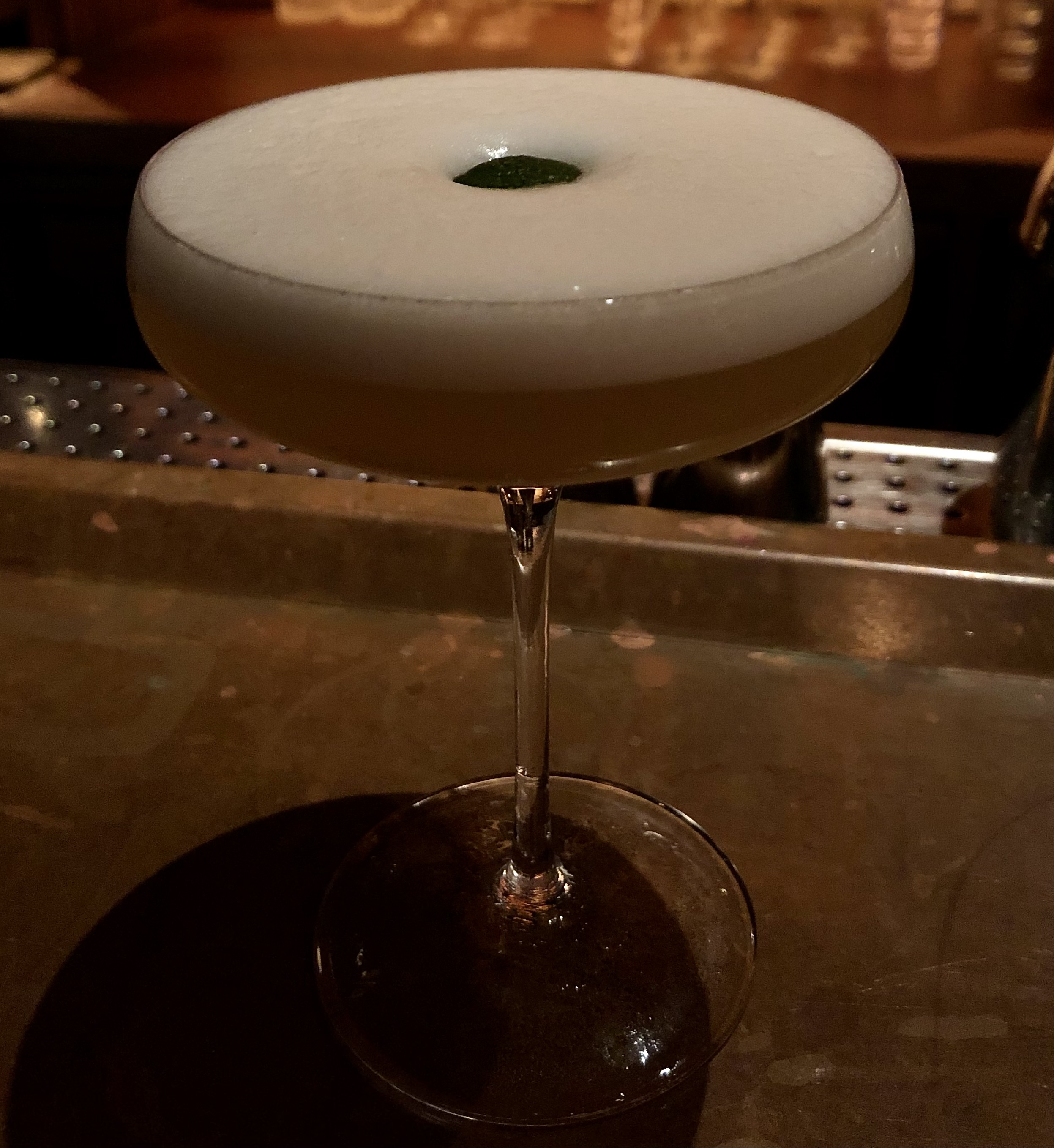
I started with a Benton’s Old Fashioned (Maker’s Mark, maple bitters, garnished with bacon). The sweet wheated Maker’s bourbon did well with the maple bitters, and of course the maple bitters did well with the bacon. Very satisfying. I could have downed two with ease. Next, a Whisky Sawa (Japanese whisky, SG’s own shochu brand Mugi, yuzu, egg whites, zested and garnished with lime). Very refreshing, and perfect for the hot muggy evening.
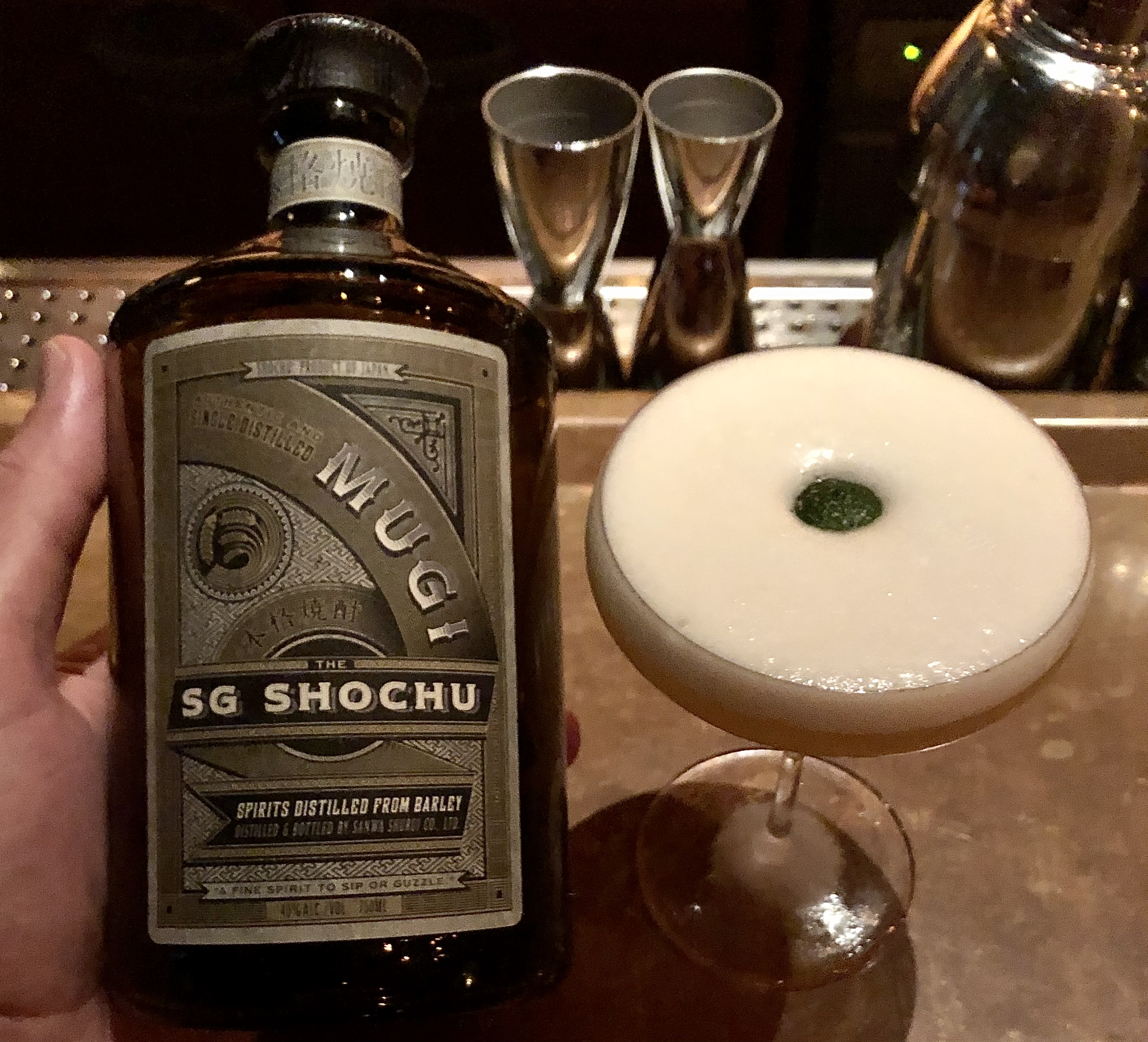
And my partner ordered The Guzzle’s rendition of a Pimm’s Cup, dubbed the No.1 Cup, using sake in lieu of Pimm’s and served in a custom capped jar. Like the Whisky Sawa, very refreshing, and great presentation.

The cocktails are perfectly great. The atmosphere is easygoing and stylish without any sense of pretension. But overall the experience didn’t make nearly the impression on me that either Kamiya or High Five had done. Those bars are each very Japanese in their distinct ways. Sitting in The Guzzle, I felt I could easily have been in San Francisco. It was all very familiar, and when I travel I’m personally much more interested in the unfamiliar.
Bee’s Knees
🐝
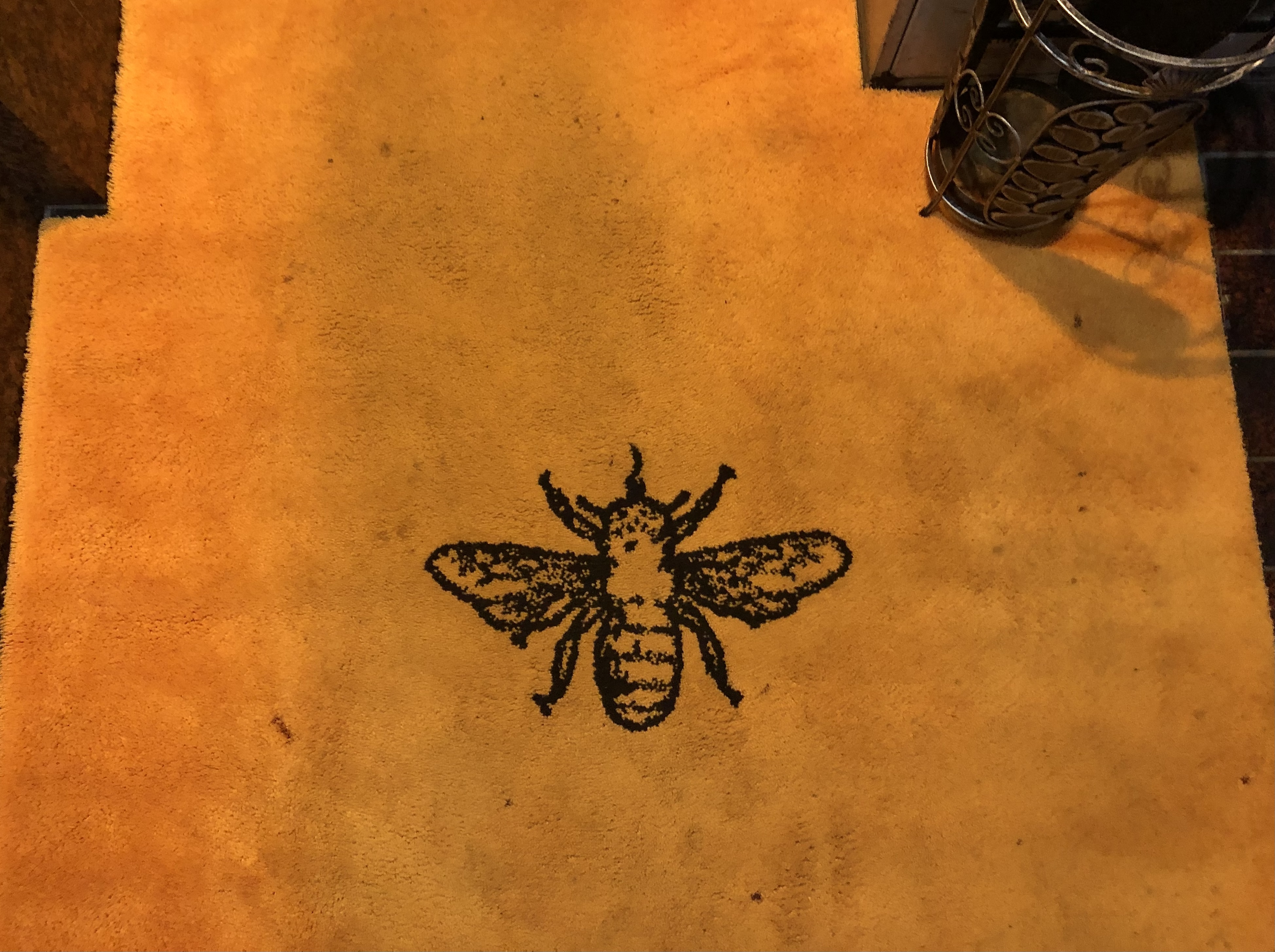
Another rec from Julia Momose’s book, Bee’s Knees is tucked away on a side street in Kyoto’s teeming Gion district. You’d never know it was there if you didn’t know it was there. We used Google maps to find it, and when we arrived there appeared to be a bookstore where the bar should be. As we stood perplexed, a woman about sixty stepped past us, opened the yellow door to the bookstore and beckoned us to follow. It was then I spotted the bee on the welcome mat.

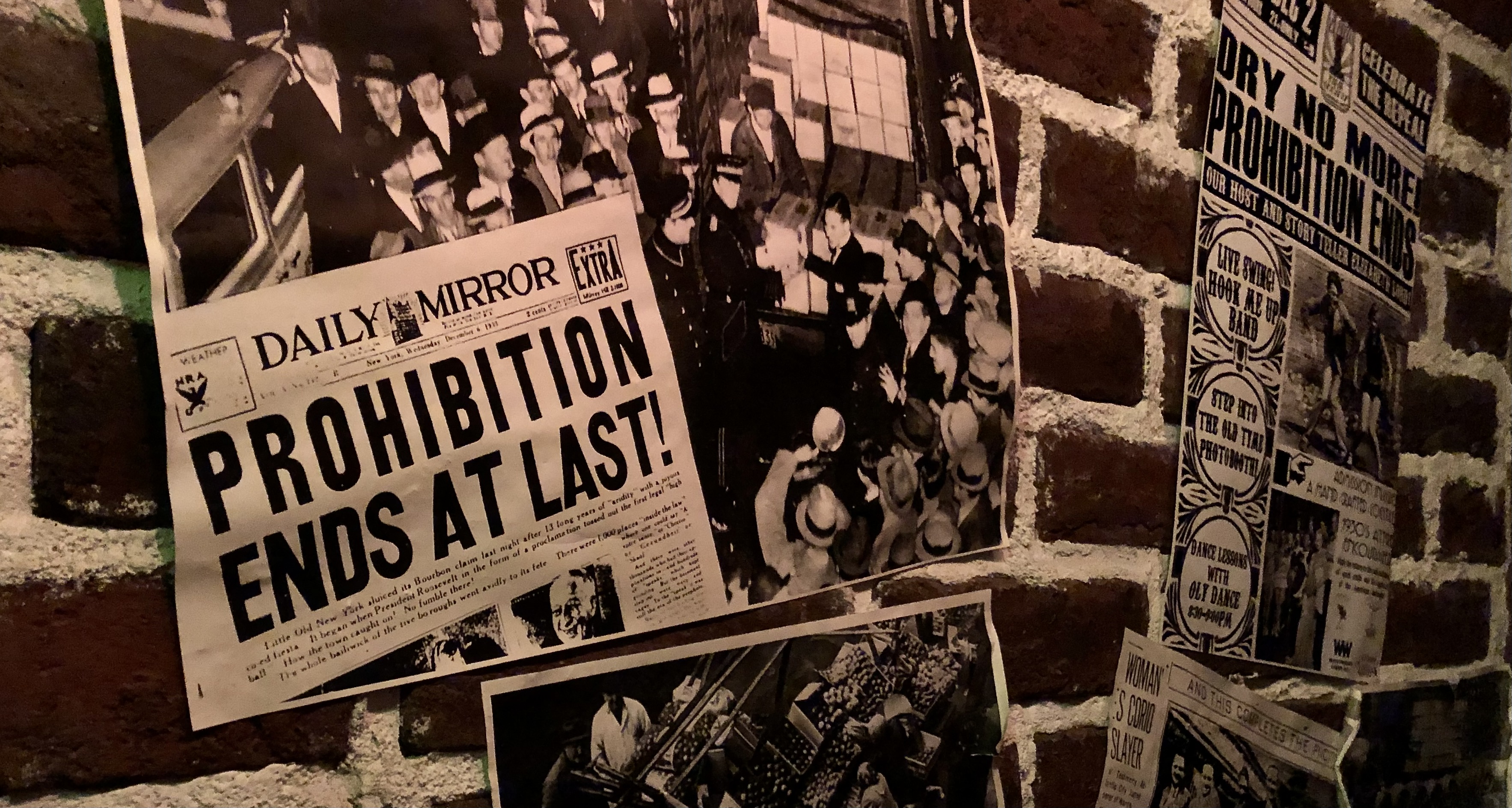
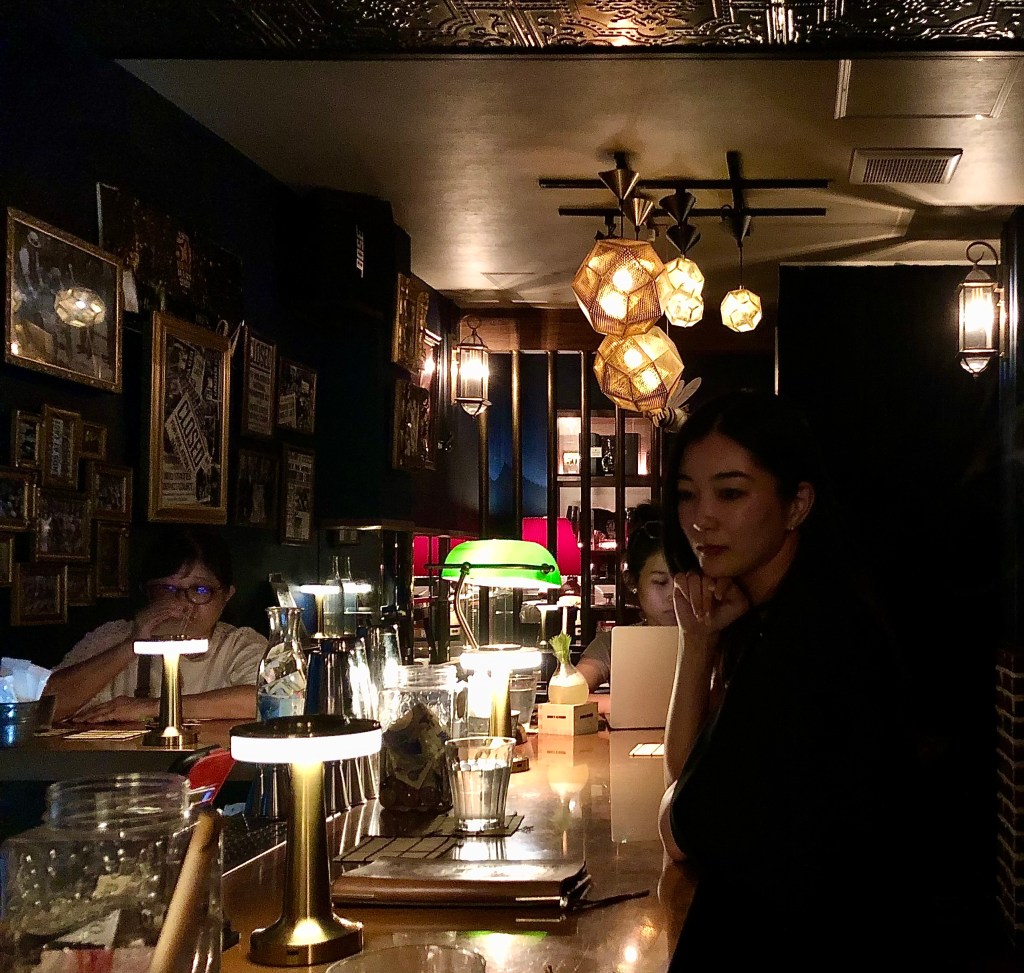
In true speakeasy fashion, this snug Kyoto bar is secreted away behind the facade of a false business. Inside, the short entry hall is papered with American Prohibition era newspaper headlines. The bar space itself is long and thin without feeling cramped. The decor blends New York speakeasy touches with contemporary pop-art kitsch. The music is cranked up 1990s hip-hop, very much in contrast with everything else.
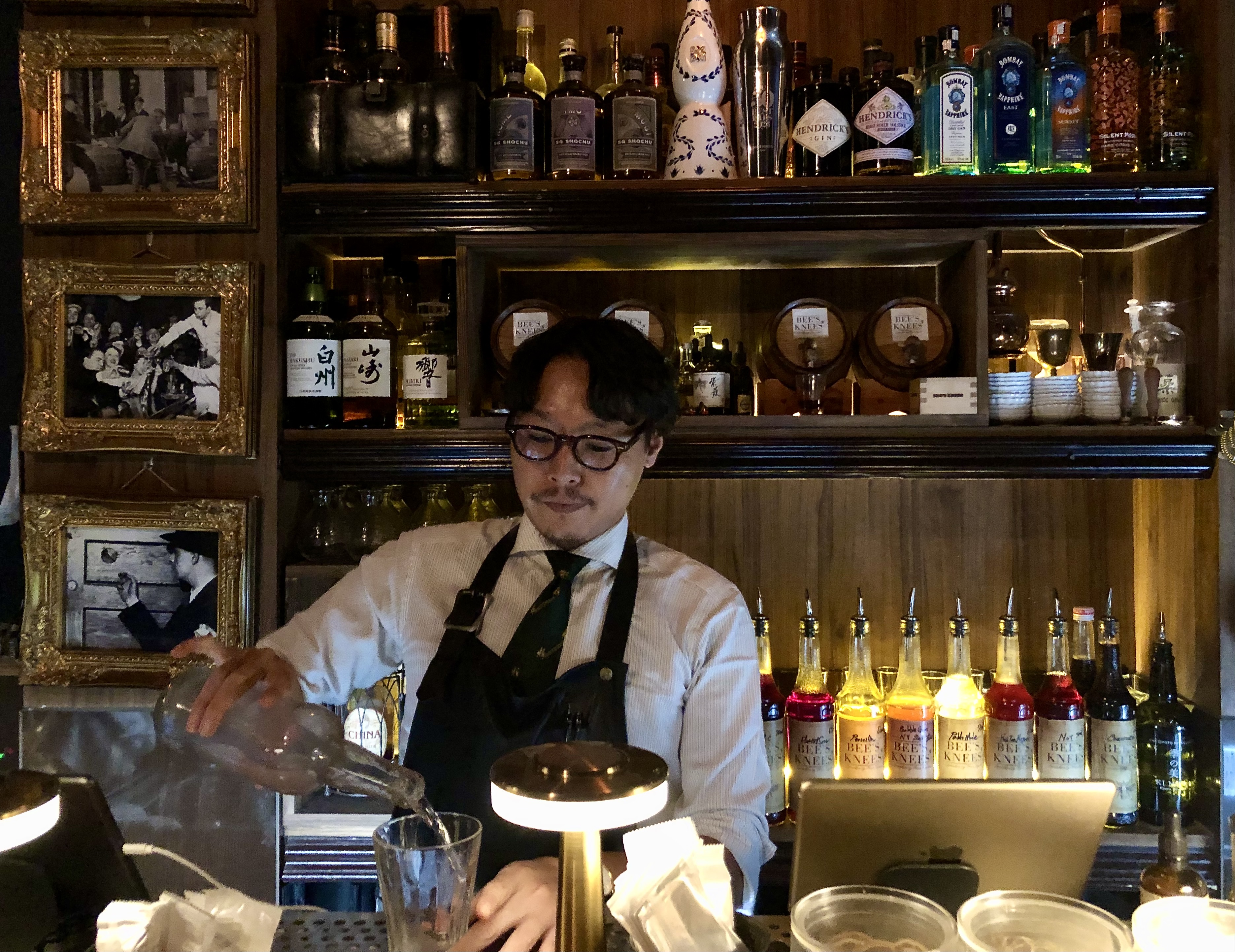
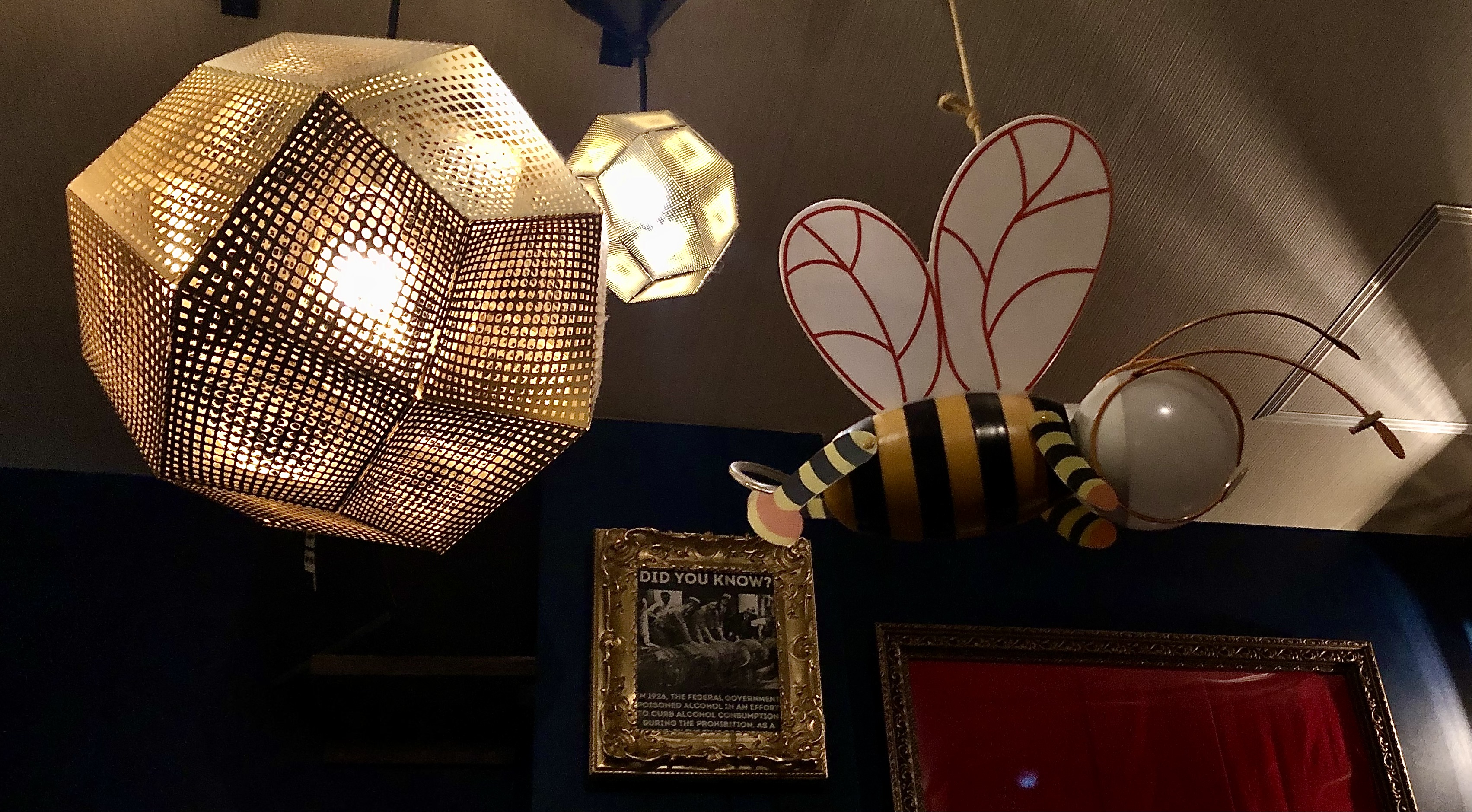
The older woman who’d waved us in seemed to be a regular. She took her seat in the far corner of the bar near the wall and commenced quietly making her way through a series of Highballs. No book or phone in hand. Just her and her drink, elbows on the bar where they belong. Two stools to her left sat a young woman in her twenties, on her laptop as she might be in a coffee cafe. And just around the bar corner from her sat another woman, perhaps in her late thirties, looking like she’d stepped out of a Wong Kar-wai film.
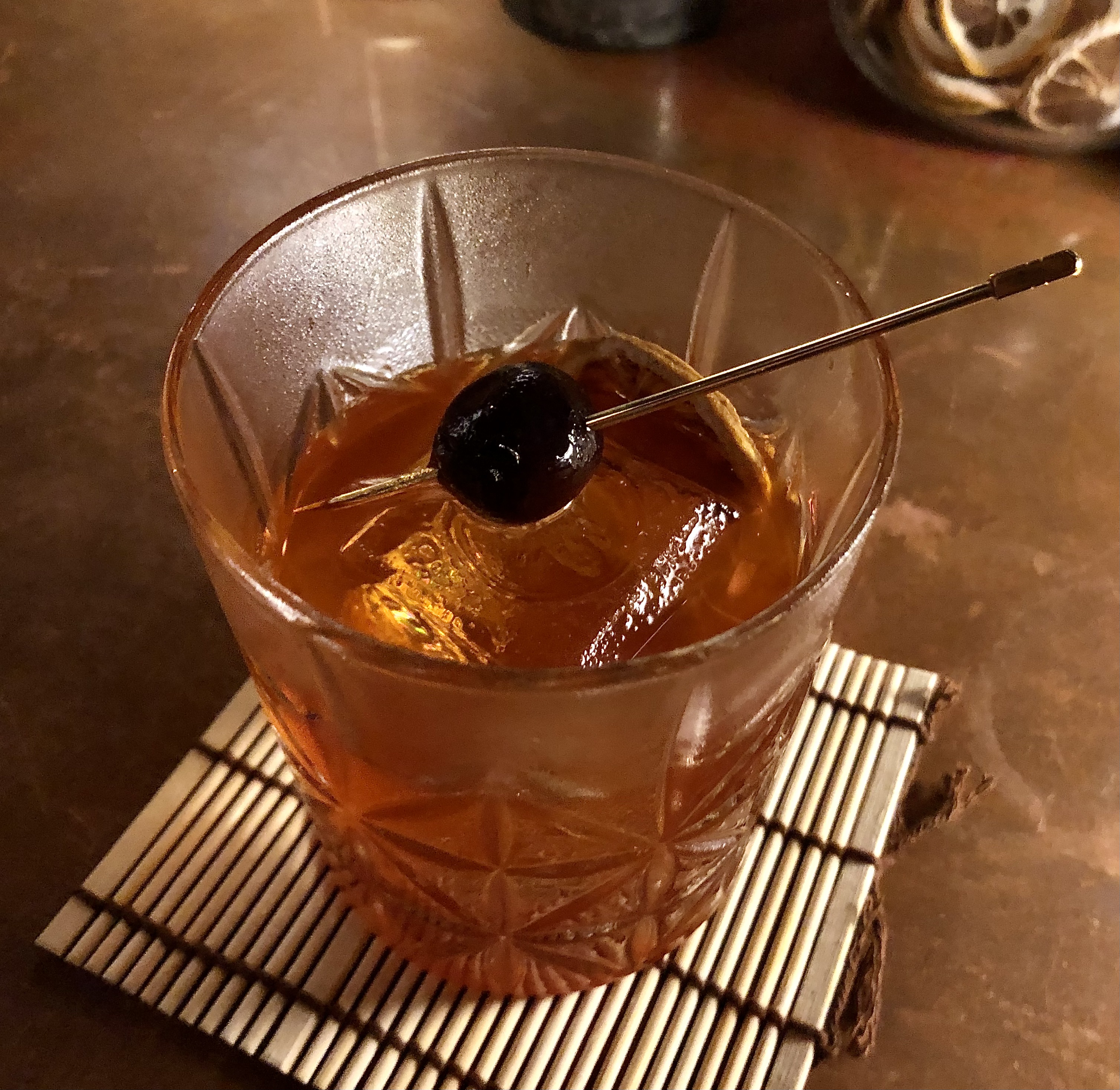
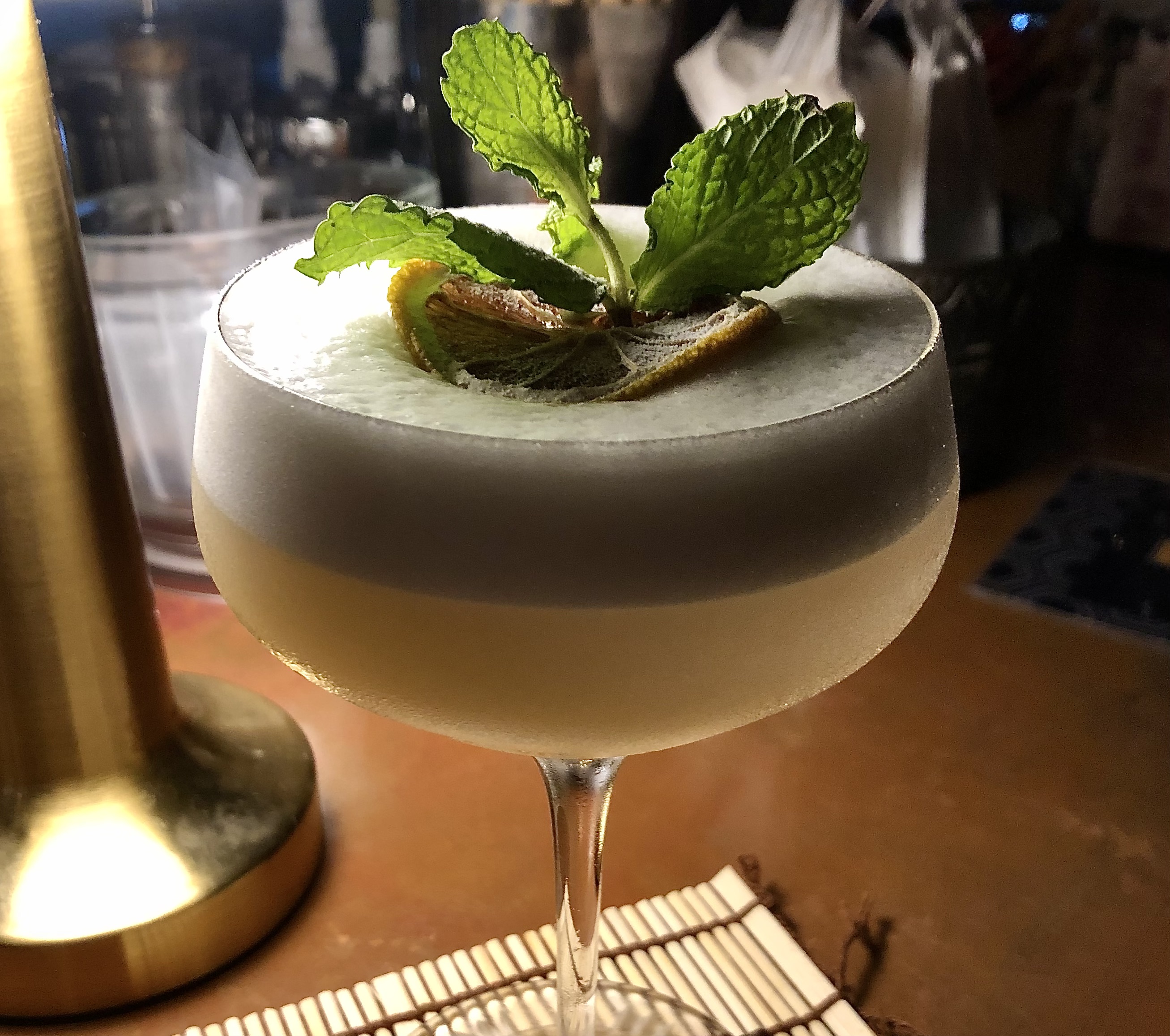
I decided to repeat my SG Guzzle pairing—two cocktails offering two kinds of basics. The Bee’s Knees Old Fashioned mixes Michter’s Rye, Angostura bitters, and honey bee wax for a soothing rendition of an old standby. Their sweetly zingy Whisky Sour is topped with mint and a dried, sugared lemon wheel, looking like a miniature tropical island in a foamy sea.
My partner picked the wild card, the Ninja Smash—KI NO BI Kyoto Dry Gin, yuzu, passionfruit, lemon, shiso leaf (an excellent touch), sparkling sake, and a green tea mist. Very tasty, though a bit too showy for its own good:
The 1990s hip-hop is their music concept, always on the repeat. It somehow works with the clash of Prohibition and pop-kitsch. Though more off-kilter and memorable as compared to SG Club’s Guzzle, nevertheless the anachronistic approach felt familiar enough to my San Francisco contemporary bar-going senses that the overall experience was not unique. The standout features for me were the clever entryway, and the clientele made up entirely of women widely varied in age, all there solo with no evident intentions to mingle. Together they added a kind of straightforward anti-meat-market vibe to the place that was very refreshing for a bar playing you will talk over me to socialize music.
Machiya Bar Yuri (I think…)
💸
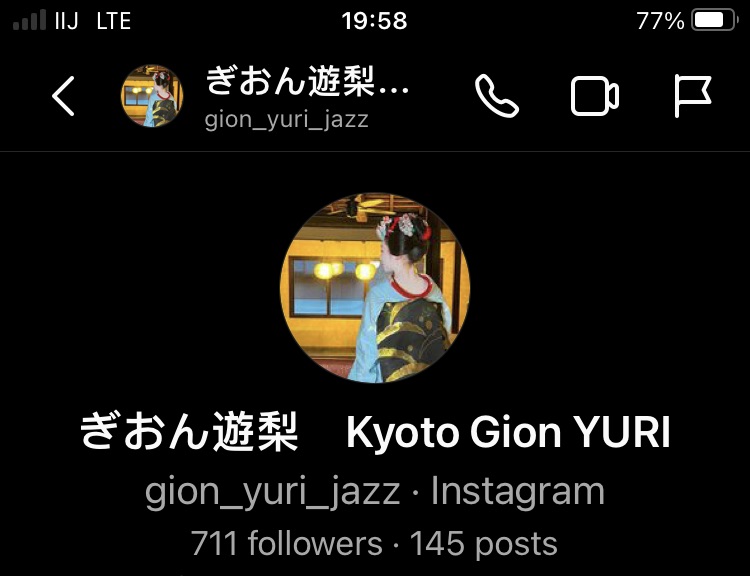
You’re gonna love this one. Or you might cringe. I certainly did. Now that some time has passed, I appreciate the experience as “a good story.” But on the night, I sure didn’t think so.
Before dinner one evening, we were having difficulty locating a particular whisky bar called Liquor Museum. Google Maps was giving us conflicting information, pointing us to radically different destinations whenever we refreshed our location. Soon we realized Liquor Museum is indeed a Japan-wide chain, with multiple bars in Kyoto and many other cities.
Not certain which one would be best to try, and frustrated from the meandering search, we decided to reverse our plans and go to dinner first. We’d chosen a well-reviewed ramen joint called Musoshin, tucked away on one of Kyoto’s many tight little streets in the Gion district. When we arrived there was a line out the door—always a good sign!
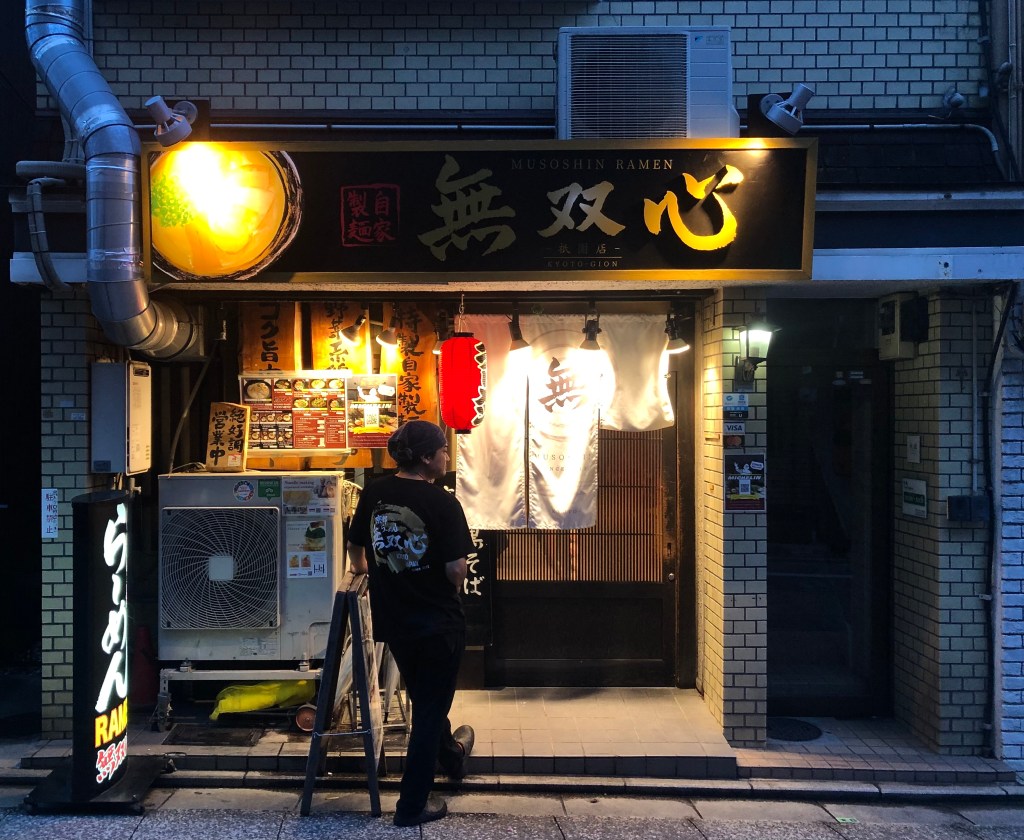
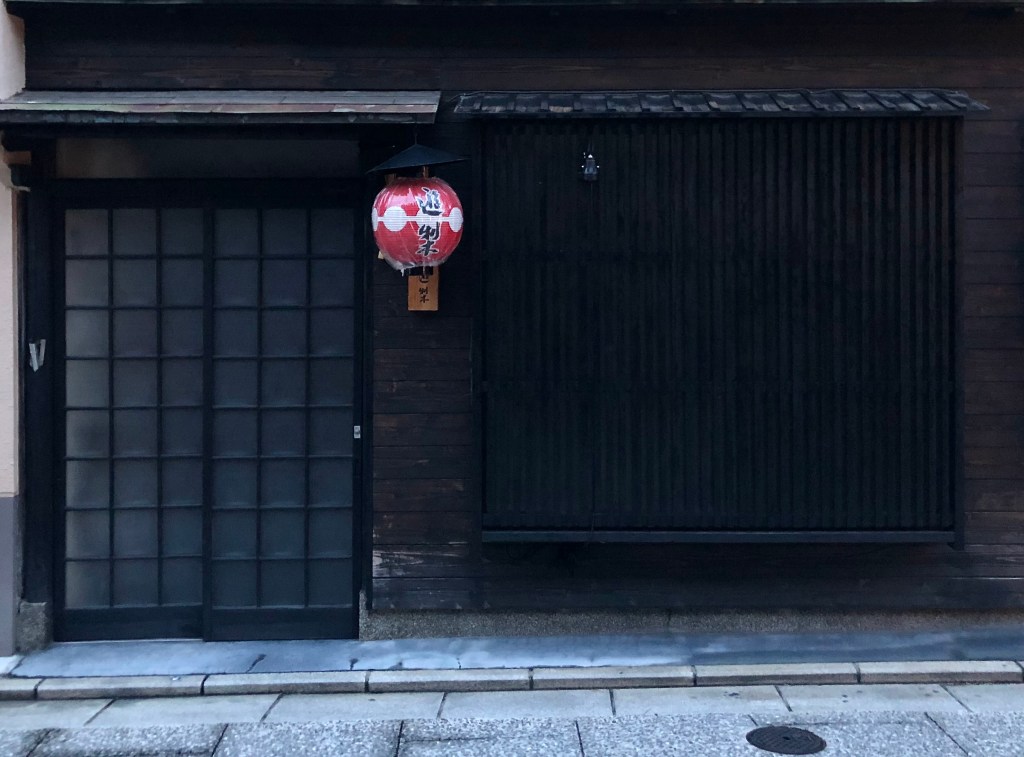
As we stood waiting, I noticed a curiously plain-looking establishment across the street. The doorway was as dimly lit and nondescript as many side-street Japanese restaurants and bars can be. But I could see in the wide second story window three spherical lamps straight out of the early 1960s—a pretty common aesthetic reference in Japan.
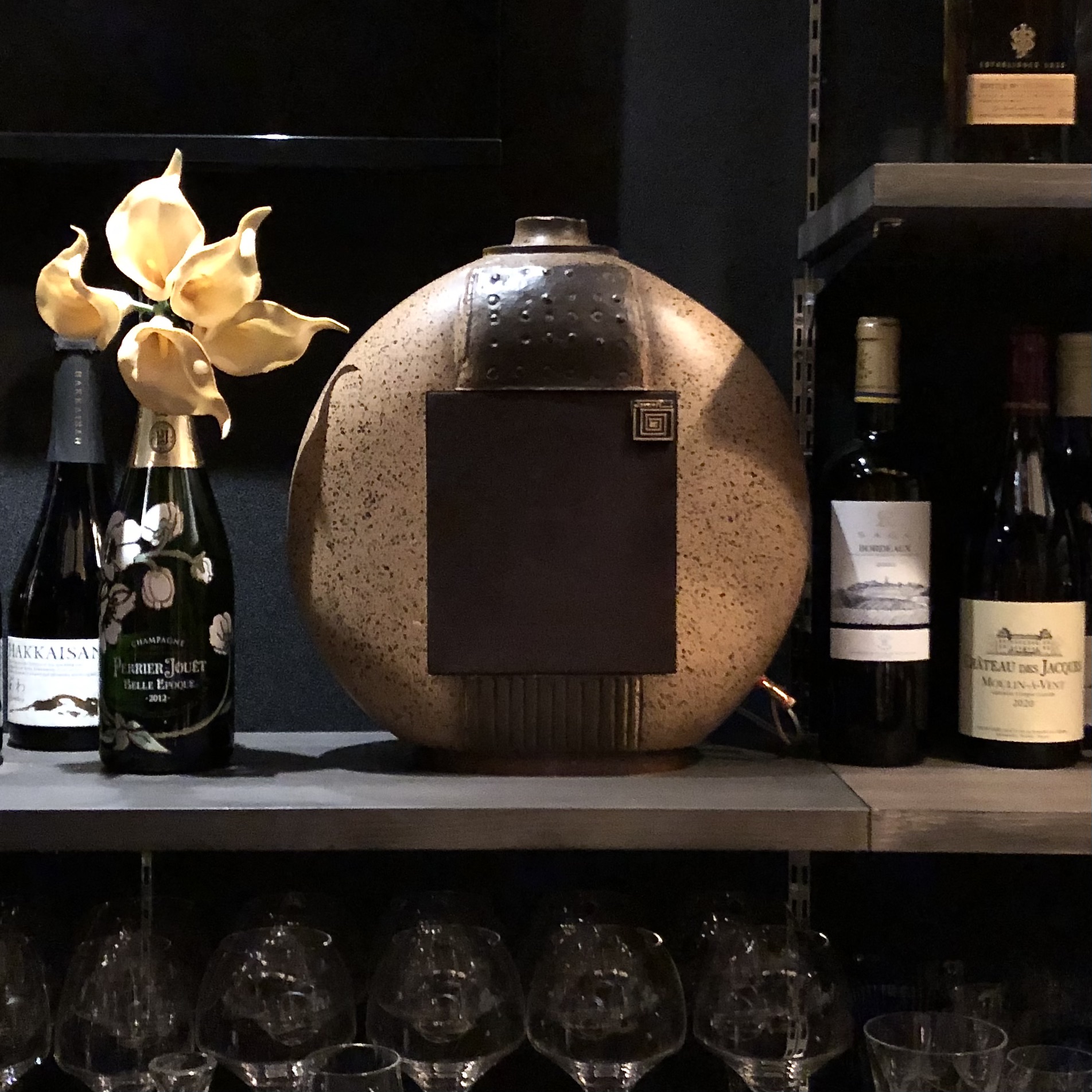
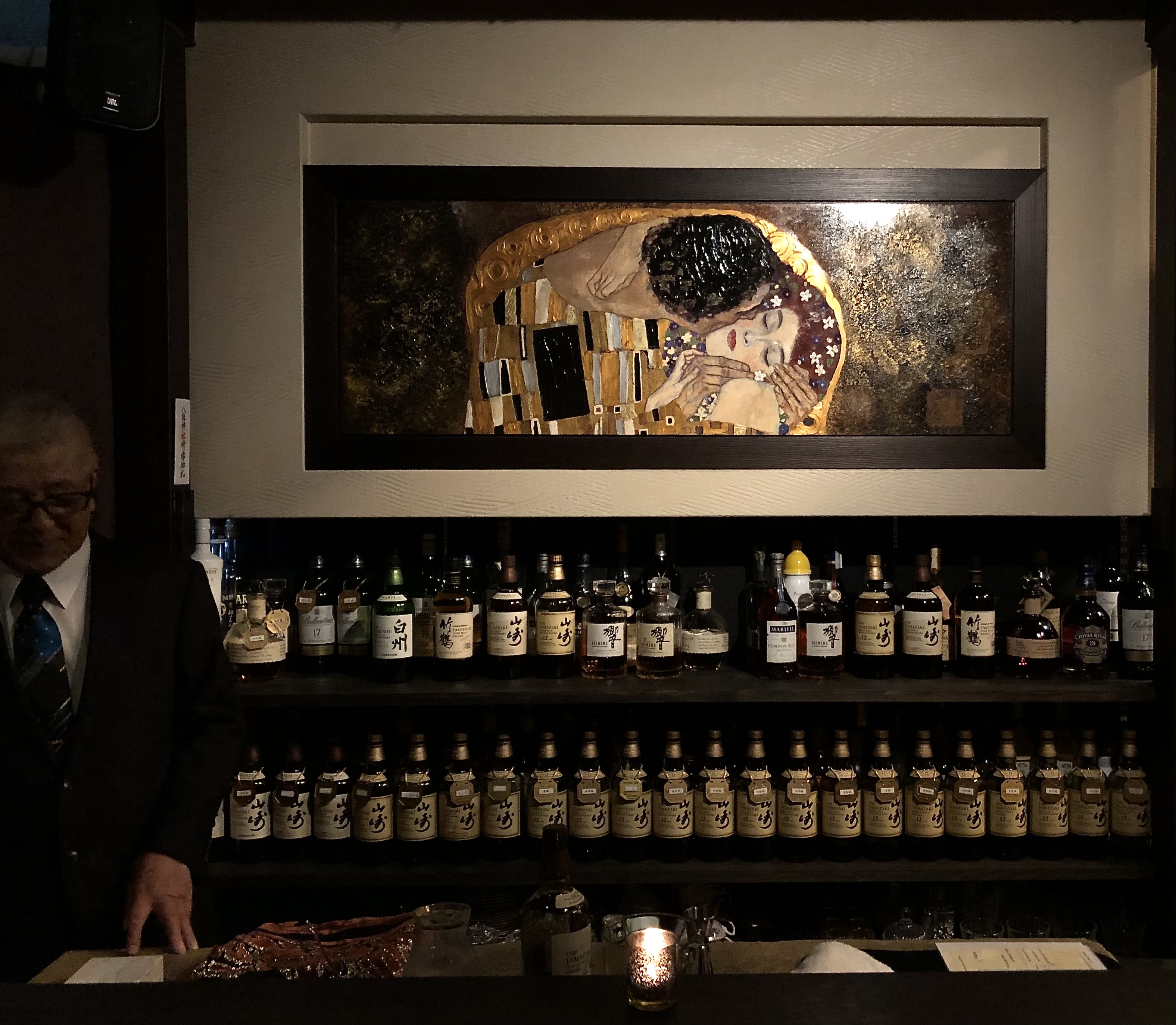
I looked at the menu posted outside. It listed drinks by type—whisky, beer, wine, champagne, etcetera—with a single price adjacent. Whisky was ¥1970, about $14. Not at all bad. I peaked in to have a look and was immediately greeted by a dapper older gentleman, all smiles and very welcoming. At first glance the place appeared to be very much a whisky bar. Its shelves were lined with endless Yamazaki bottles, also Hibiki, Hakushu, and the requisite Blanton’s. In contrast to this dazzling display of Japanese whiskies, the lighting was dull and flat. But the decor itself delivered on the promise of those second story lamps. Early 1960s jazz music was relaxing itself in the background.
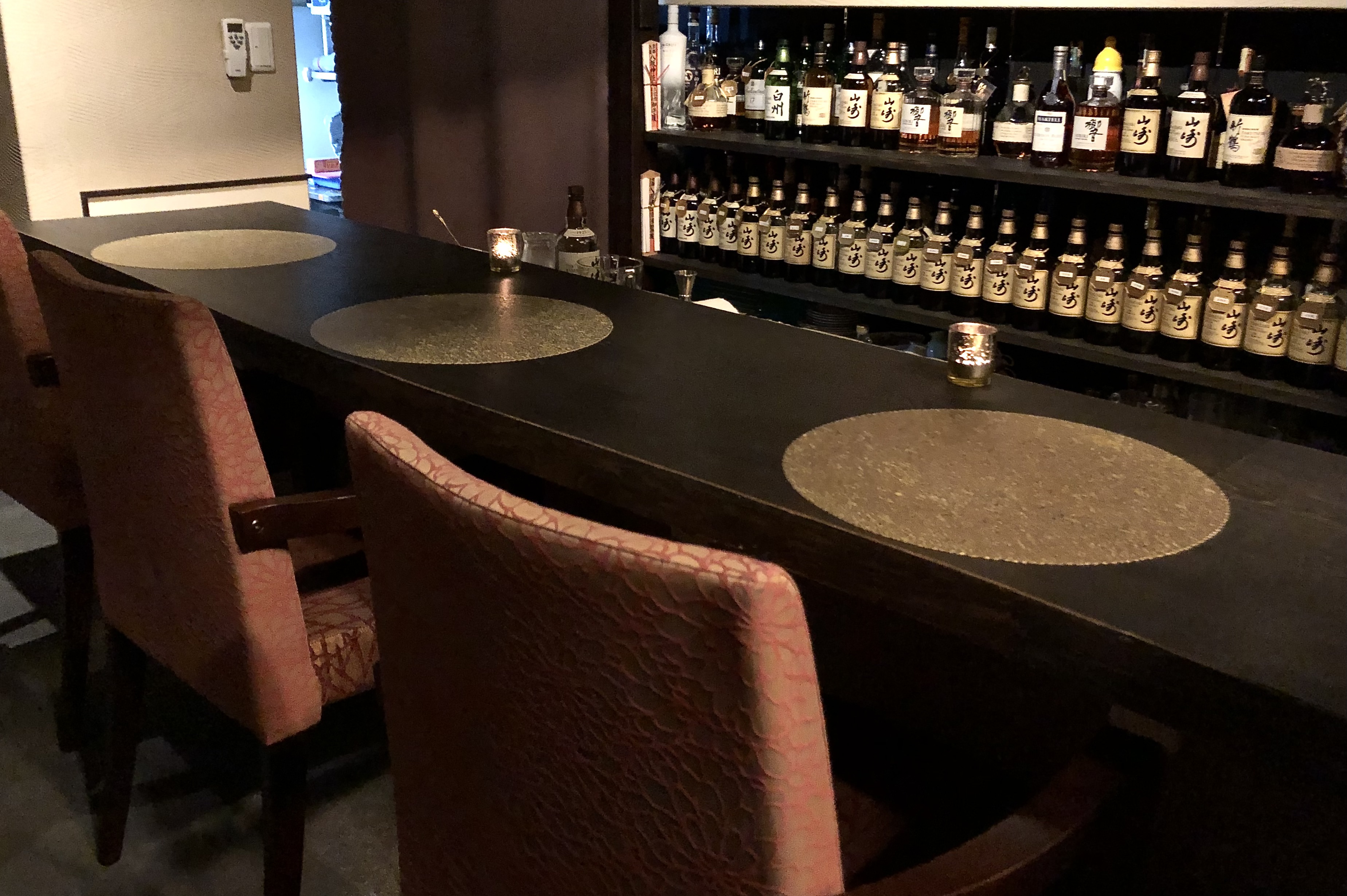
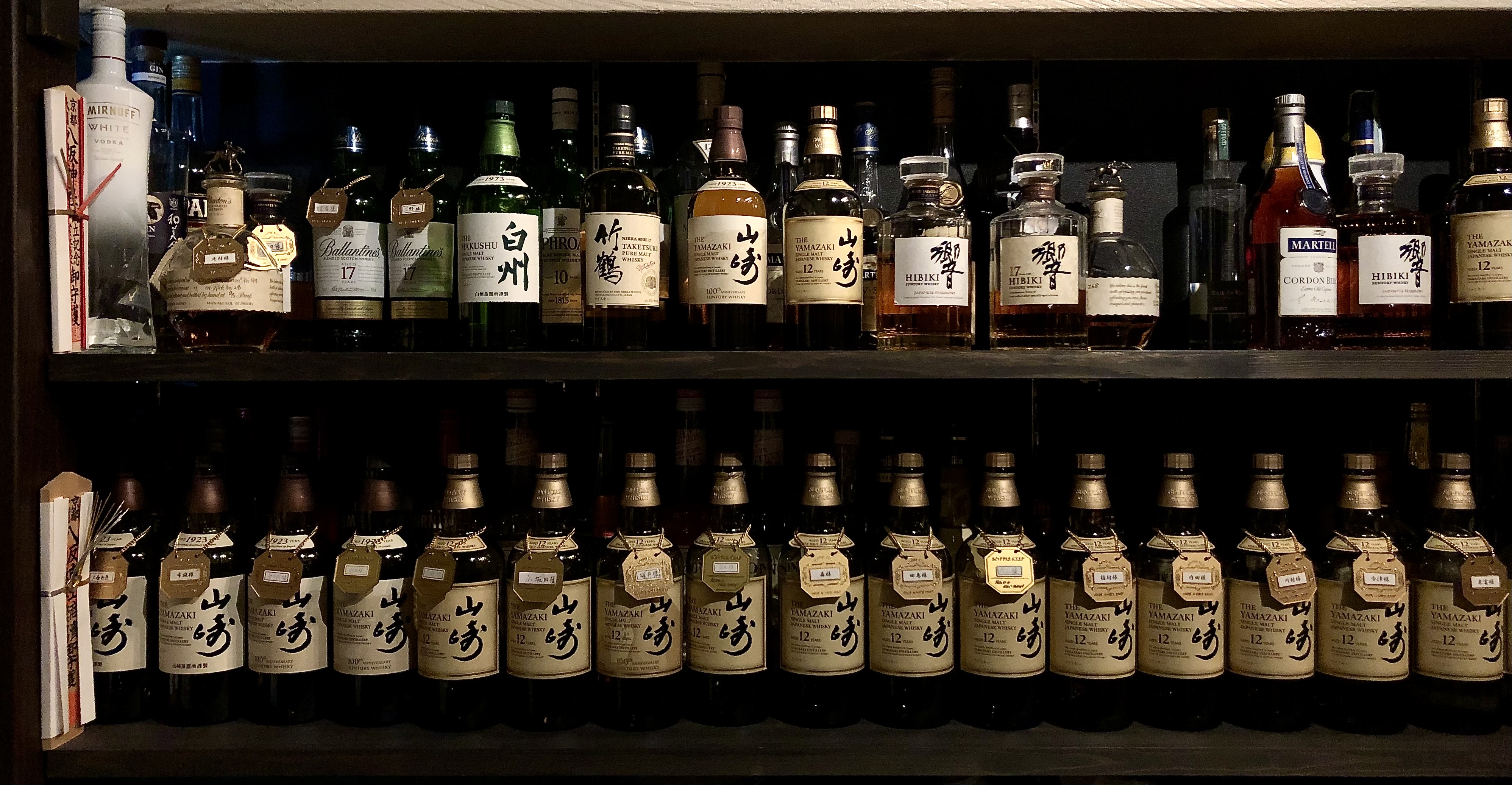
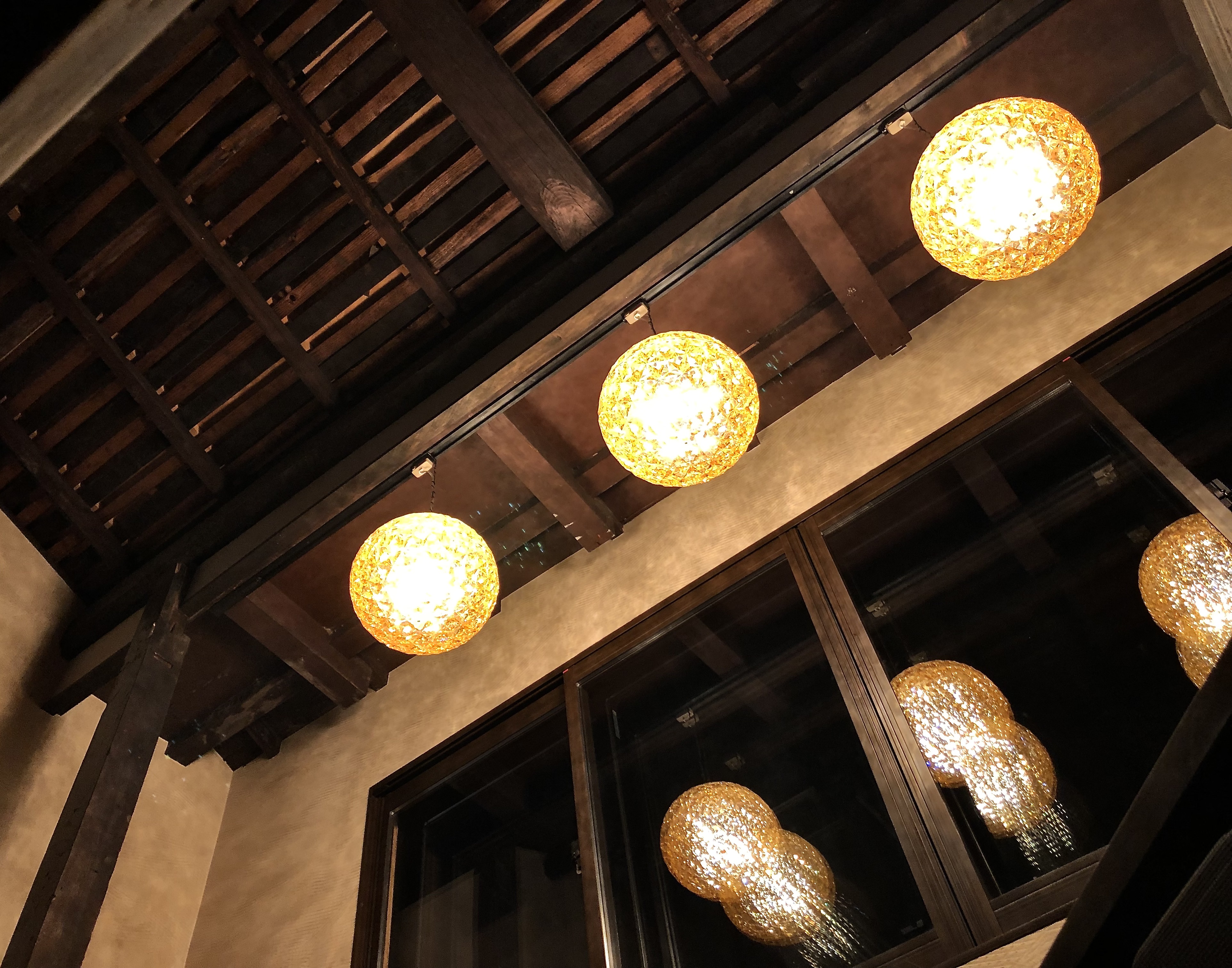
Nobody else was there yet. The gentleman enthusiastically offered me a seat. I told him I was having dinner across the street. He flagged down his younger counterpart—his son, I assumed—to translate. They were both charming in an awkwardly too-polite kind of way. The bar was relatively new, the young man said, and I was welcome to sit. They seemed to be hustling with that over-eagerness typical of new business owners. I mentioned I wrote a whiskey blog, jotted down the URL and Instagram handle for them, and said I might be back after dinner…
…The ramen at Musoshin turned out to be excellent, well worth the wait, and I highly recommend it if you’re ever in Kyoto looking for good quick comfort food in a great divey atmosphere. After we’d eaten, I checked my Instagram and the whisky bar had already followed me and sent a message:
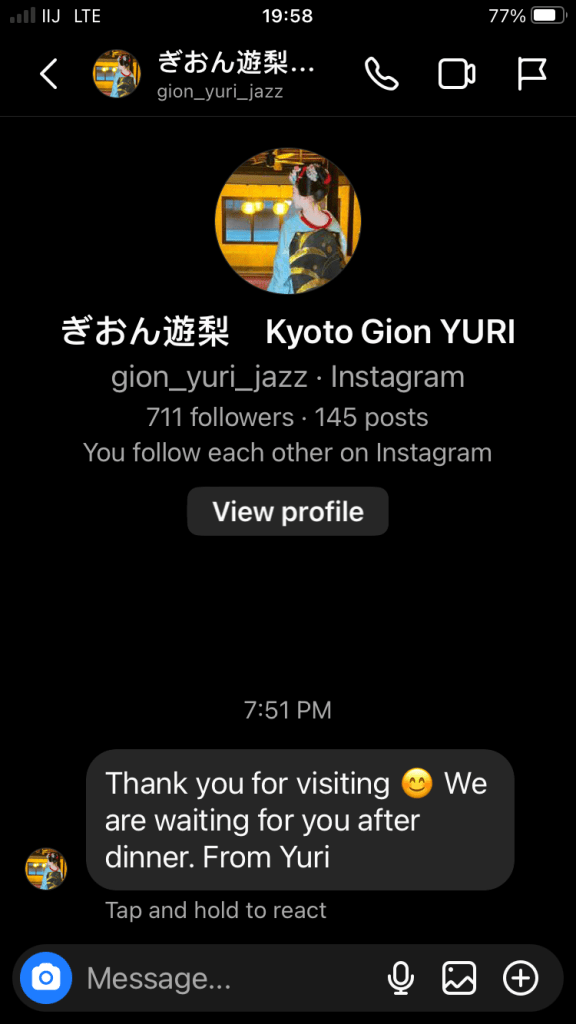
Yuri. This must be the older gentleman. My partner and I agreed this chance discovery was far more interesting than the ubiquitous Liquor Museum chain. Plus we were tired and it was right across the street. We decided to go.
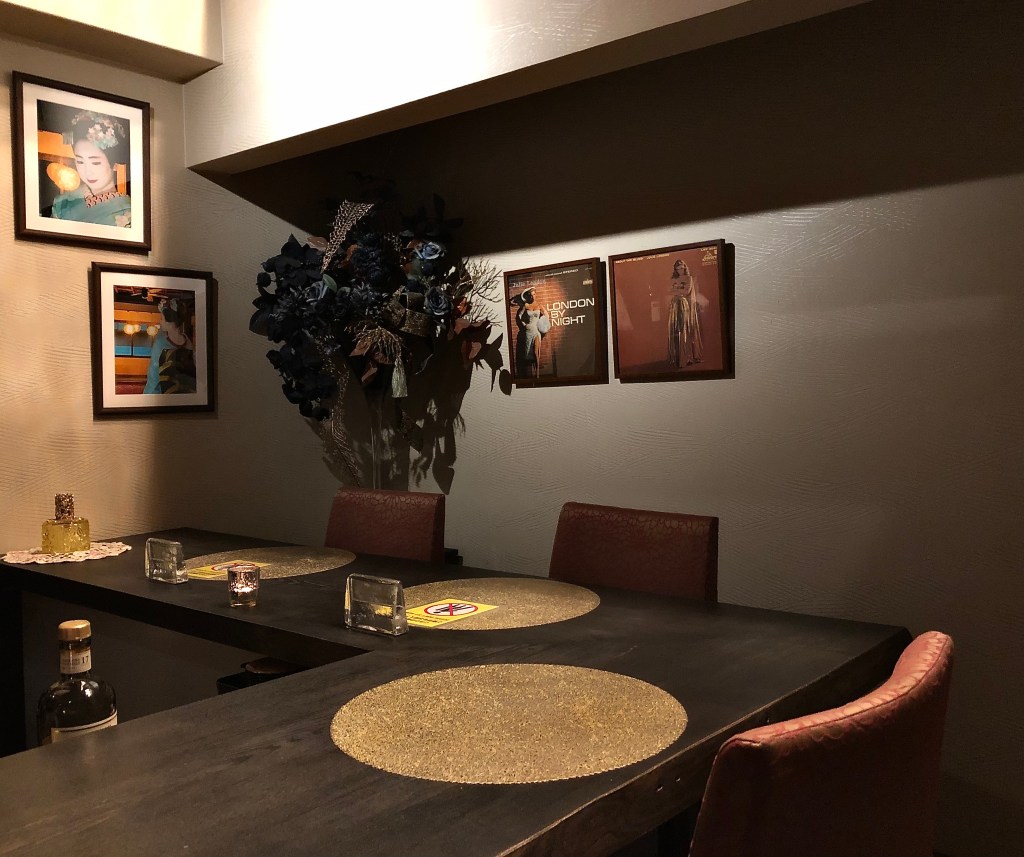
The place was still empty.
We sat down.
Now, it’s very normal in Japan for bars to have a sitting fee, often around ¥1000, about $7. This one was particularly high at ¥6700, which would be about $46.
⏸️ for 🚩
This is where I should have paused, and done some math—both the numeric kind and the sussing out a situation kind. The younger fellow explained that the reason for the high sitting fee was that they like to get to know their guests, have conversation, offer a particularly congenial hospitality. Okay… Well, it did seem like an oddly cool place, with its retro decor and library of Yamazki options…

⏸️ for 🚩🚩
In addition to that exceptionally high sitting fee, the cheaply printed menu’s list of Japanese whiskies was actually quite short in contrast to the many bottles on the shelf, and prices ranged from ¥3000 to ¥10,000 (roughly $20 to $70). But with ages like 17 and 21 on bottles of Hibiki, this price range is actually comparable to many American bars. So maybe that ¥1970 listed outside was in reference to their lowest-end bourbon or something…?
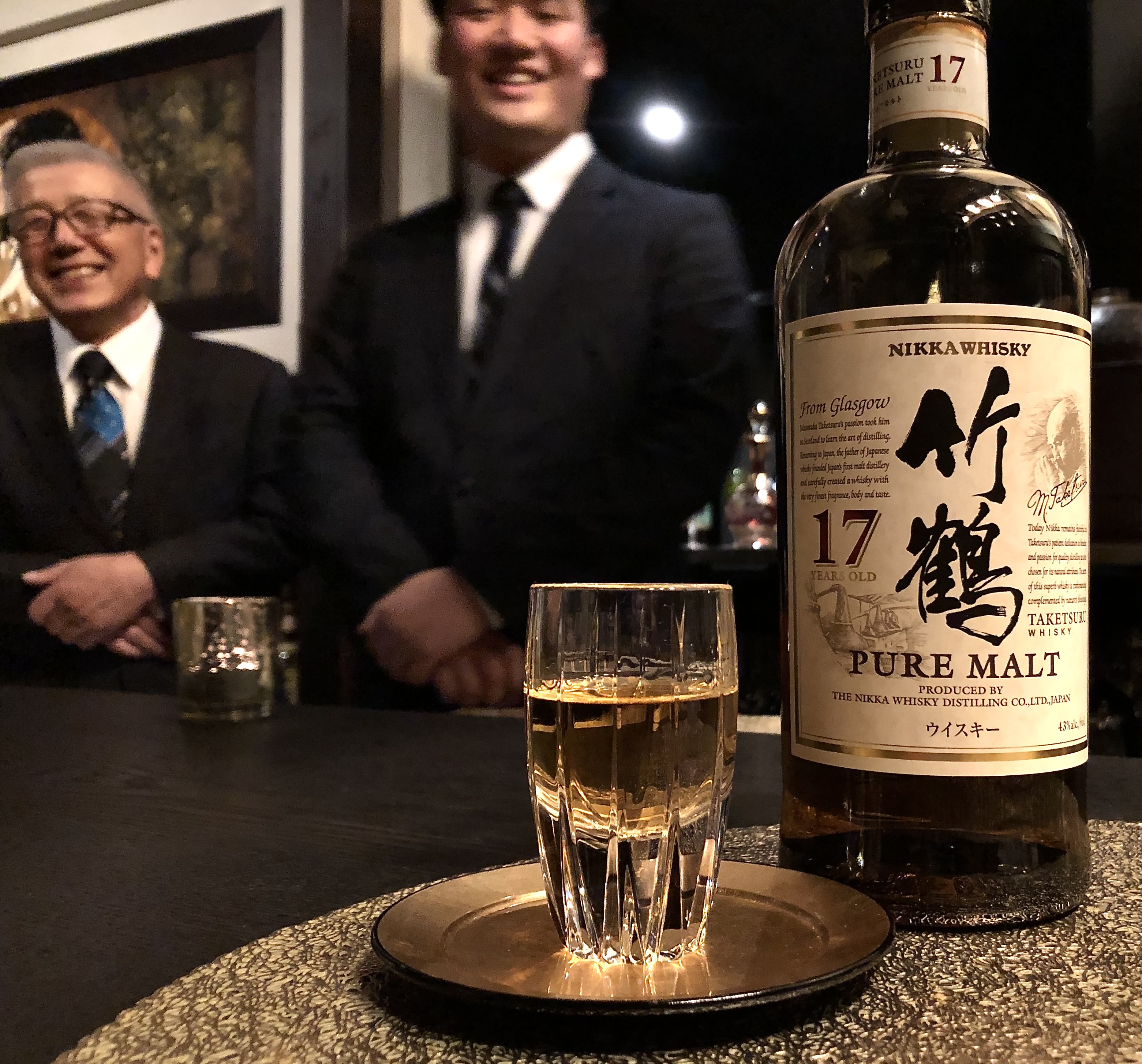
I decided to stick to one among their cheaper Japanese offerings, a brand I’d never tried before: Nikka’s standard Taketsuru Pure Malt for ¥3000 ($21) a pour, and its 17 Year elder for ¥6000 ($42). My partner ordered a Highball made with Yamazaki Whisky. I don’t know how that was priced, but the young fellow made it with no aplomb. Just some ice dropped in a gaudy tumbler, a splash of Yamazaki, and soda water.
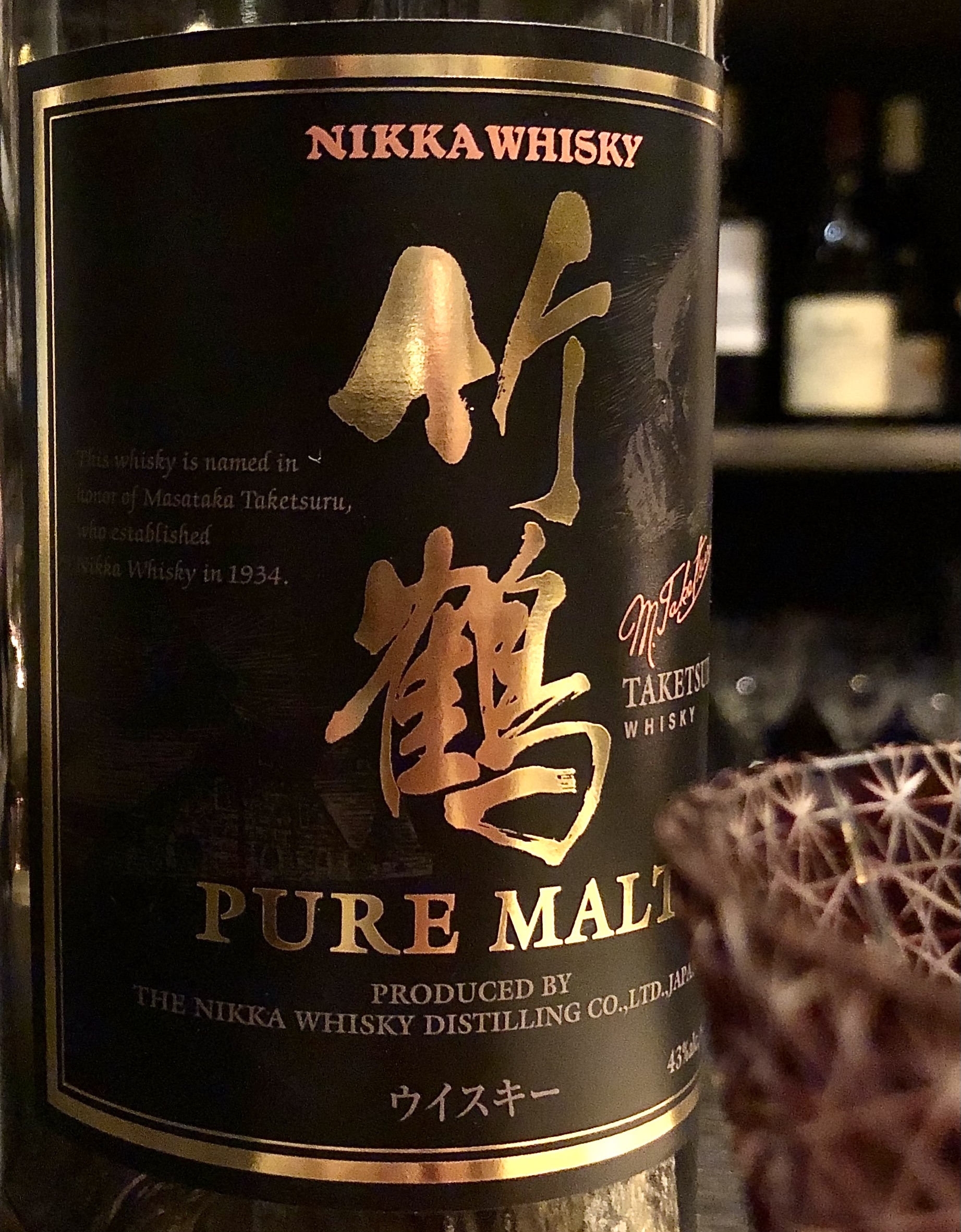
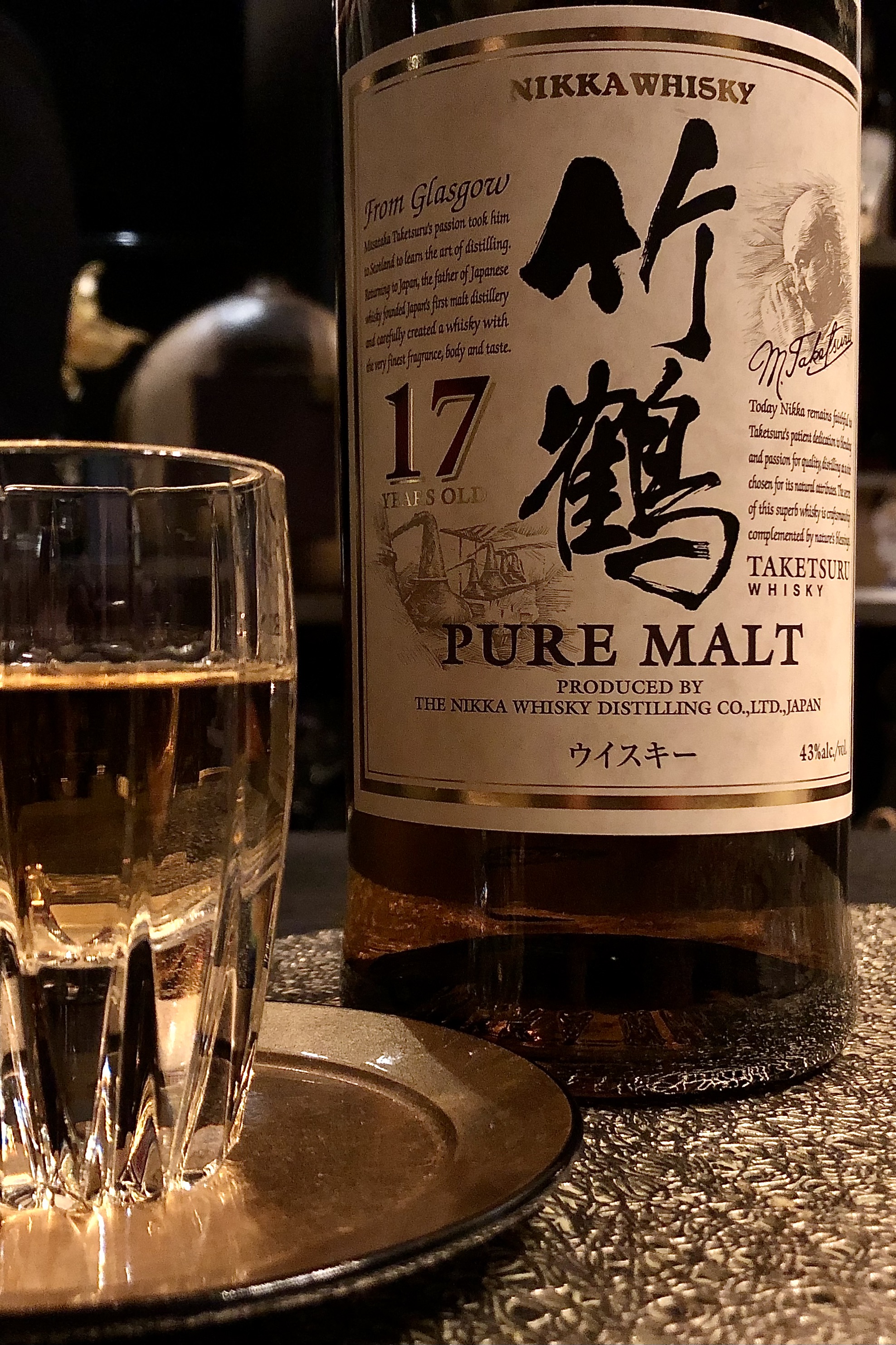
Both the Taketsuru whiskies were fine. The fellow had poured the standard Taketsuru over ice, and then after the fact asked apologetically if I’d wanted it neat. I’d have preferred that, yes. But he seemed nervous and new at this job, and I felt bad about that and him throwing out perfectly good whisky, so I said it was fine. (Turns out the standard Taketsuru does not need watering down, just fyi.) The 17 Year was then served in an elegant modern shot glass, neat, and not a full shot, likely just an ounce. It looked great, even in the flat florescent lighting, but tasted fine.
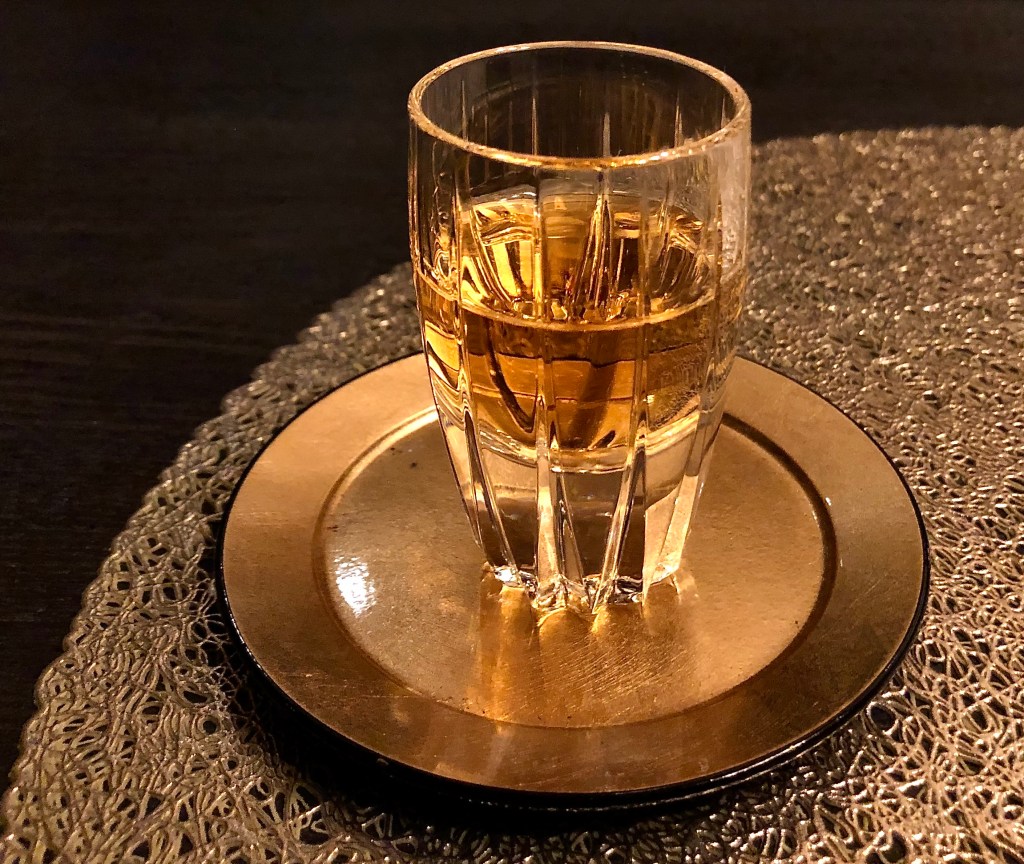
⏸️ for 🚩🚩🚩
Now, if you’re going to charge people a premium for conversation, you had better be really good at it. And these two were not. At all. Our conversation was friendly but forced and quite superficial. But we went along for the ride. Why not? We certainly were paying for it! They asked where we were from and why we’d come to Japan. They gave us generic tourist advice on what to see and do in Kyoto, producing laminated maps of the city. No special insights into where the locals go or that sort of thing, just the handful of major tourist sites any tourist who’d taken a cursory glance at their airline’s in-flight magazine would know about.
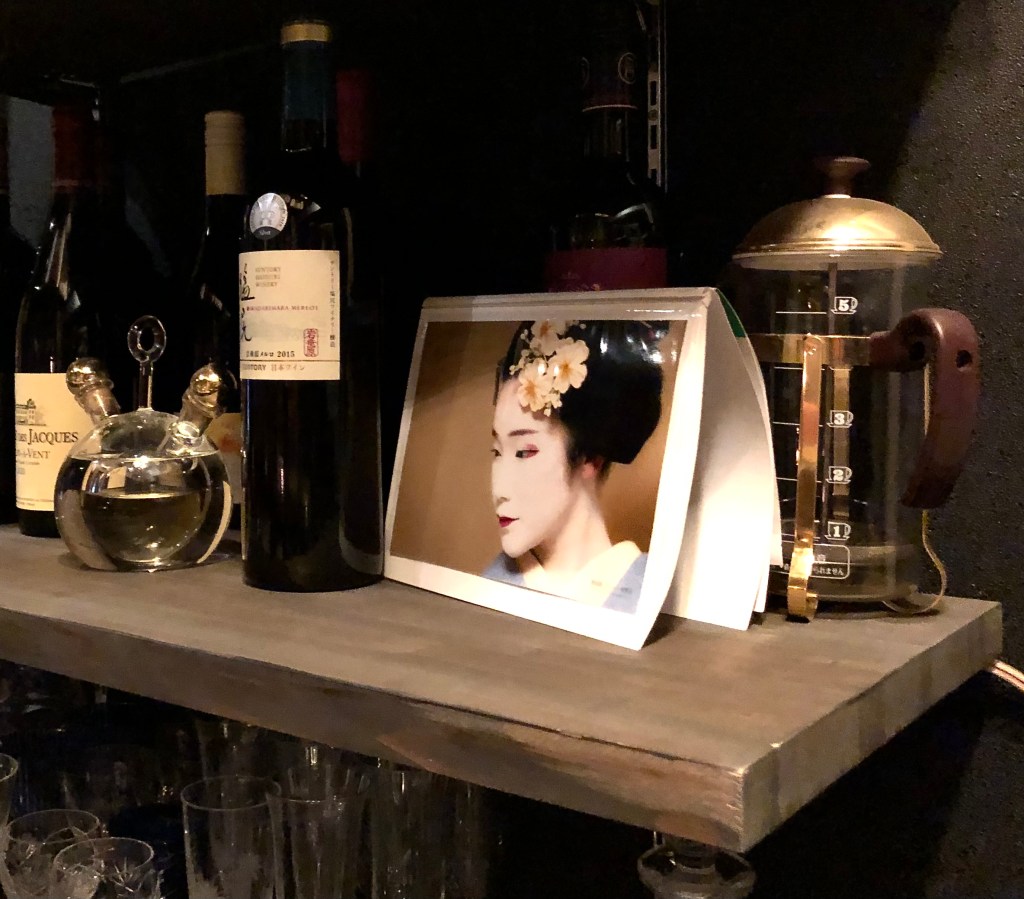
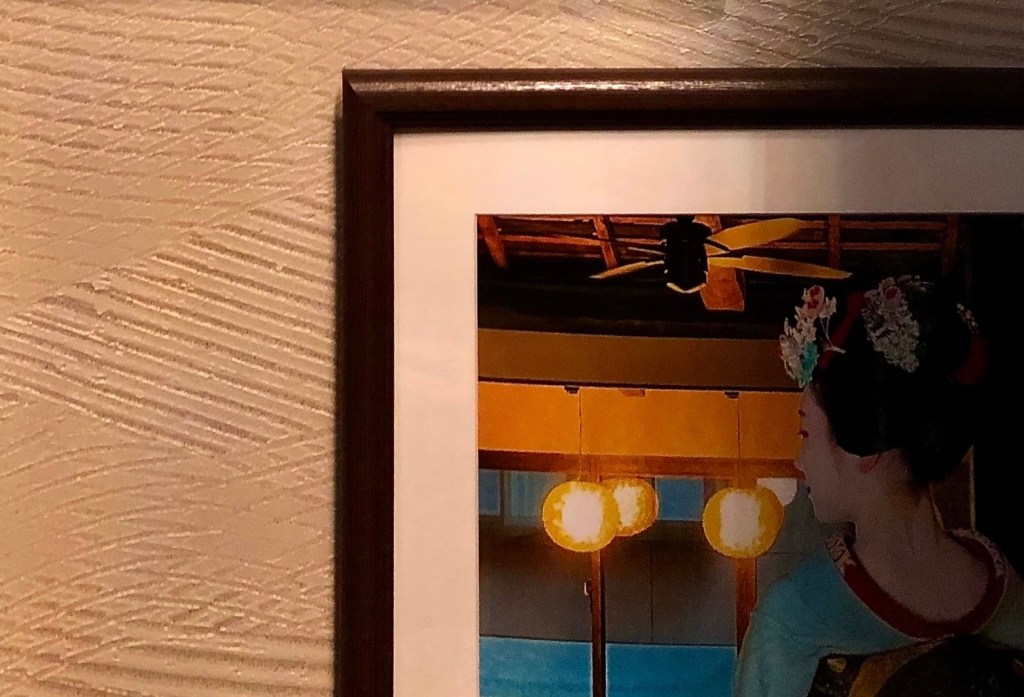
We asked about the unique retro decor. They told us the old house in which the bar was installed was a traditional style of architecture unique to Kyoto. They pointed out the pictures of a Maiko on the wall, and clarified the difference between a Maiko and a Geiko. A Geiko is a female adult professional cultural entertainer specific to the Kyoto region. A Maiko (literally “dancing girl” in Japanese) is a young girl, aged 15 to 20, apprenticing to one day be a Geiko. (Americans tend to use the term “Geisha” indiscriminately, though there are specific variations.) They said Maiko were allowed to come to their bar if a VIP brought them. My partner asked who a VIP might be. Someone with a lot of money, the young man said, with a slightly awkward half-laugh.

Then they asked if we’d like to see their VIP lounge. It was upstairs where the spherical lamps were dangling in the second story window. We followed them up the narrow staircase. The room there was sparsely furnished, with a large square table wrapped on two sides by an elegantly faded pink upholstered couch. A beautiful piano was situated oddly, out on a precarious rough wood ledge, adjacent to where they’d pulled out the flooring to create open air between the up and downstairs levels. This space was where a VIP could sit with a Maiko, they said.
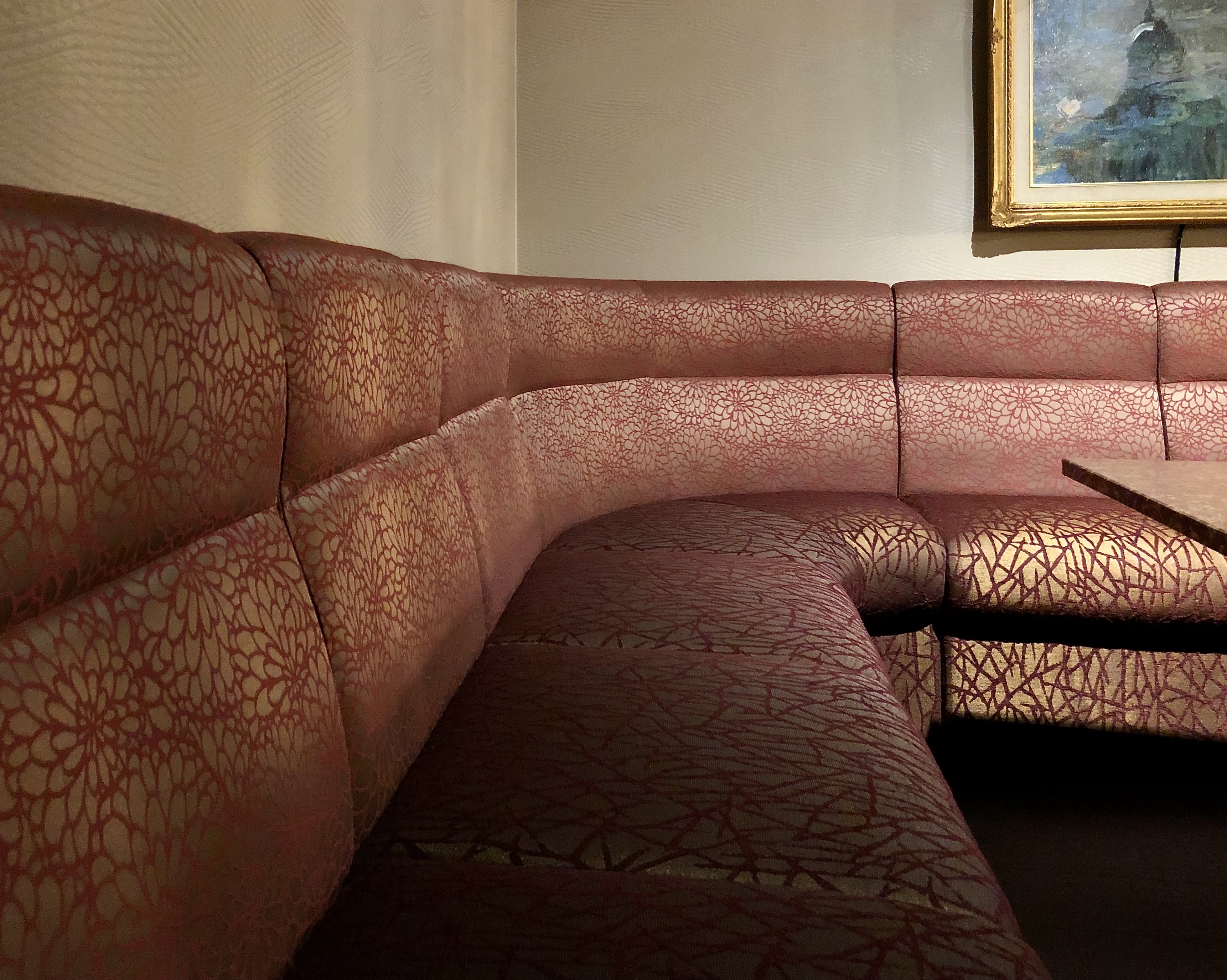
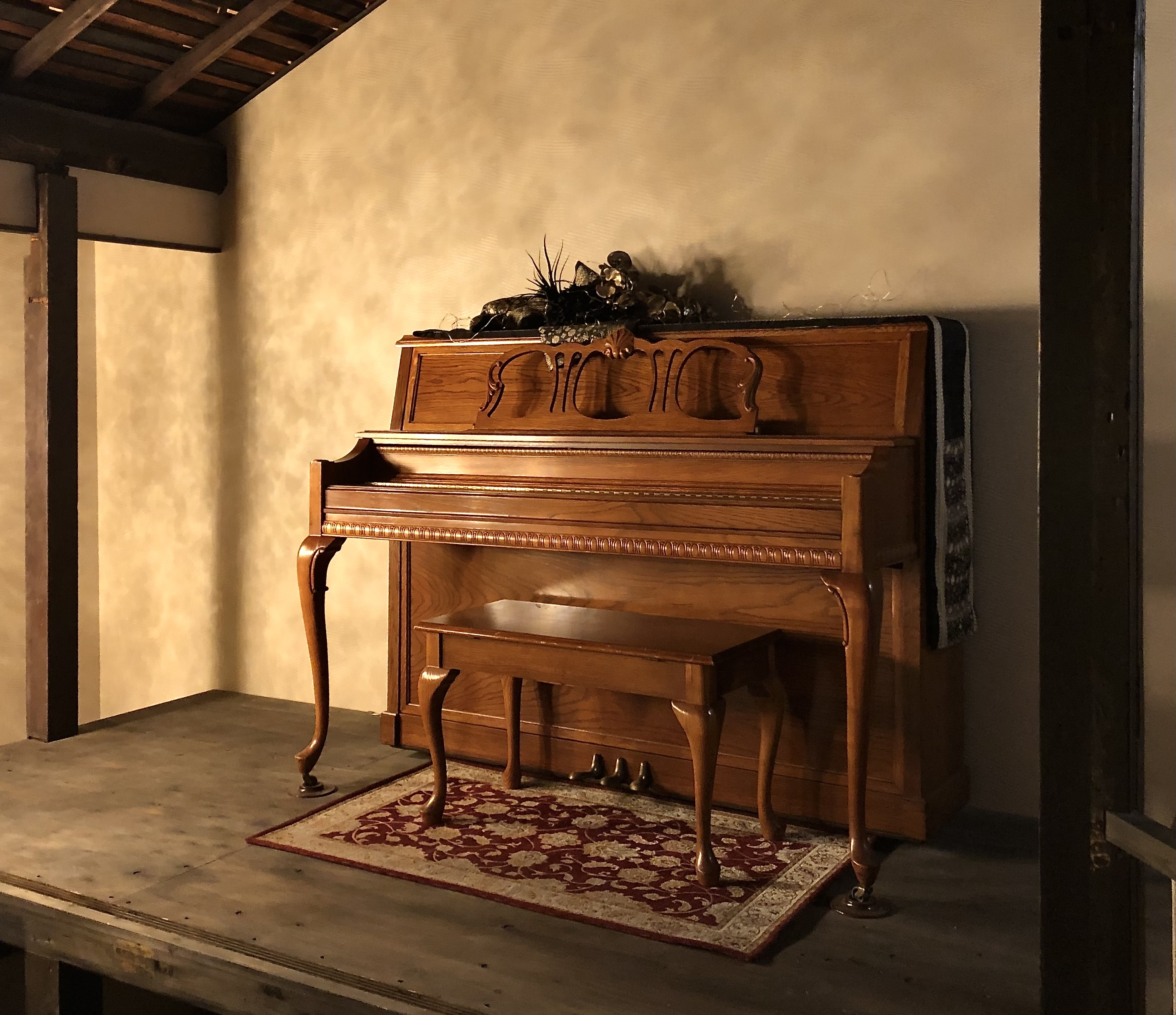
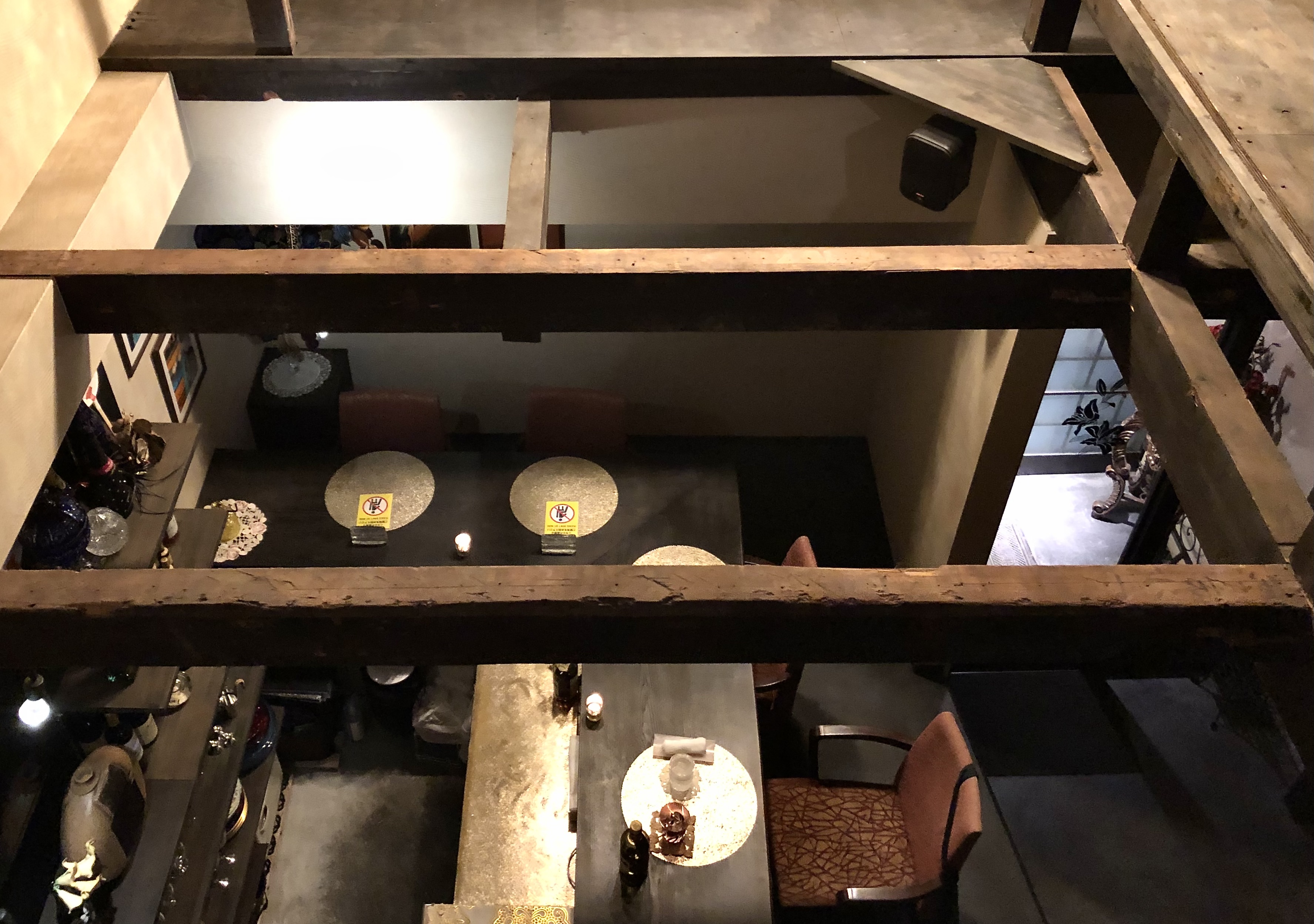
I clocked how often they mentioned Maiko and VIPs. I asked why Maiko could be brought to some establishments but not others. They answered without answering.
⏸️ for 🚩🚩🚩🚩
It was around this time that we indicated we were about ready to go. They insisted the boss, “Mama,” would be here in a few minutes and we should wait to meet her. We did. She indeed arrived in a few minutes, in full traditional regalia, face paint and all.
This was Yuri, not the older gentleman. So it was she who had sent me that Instagram message. They’d alerted her as early as then. Her full name was Yuri Nomura. The older man’s name was Masamichi Terayama. The younger fellow was Motoki Matsunaga. They were not a family business, as I’d assumed.
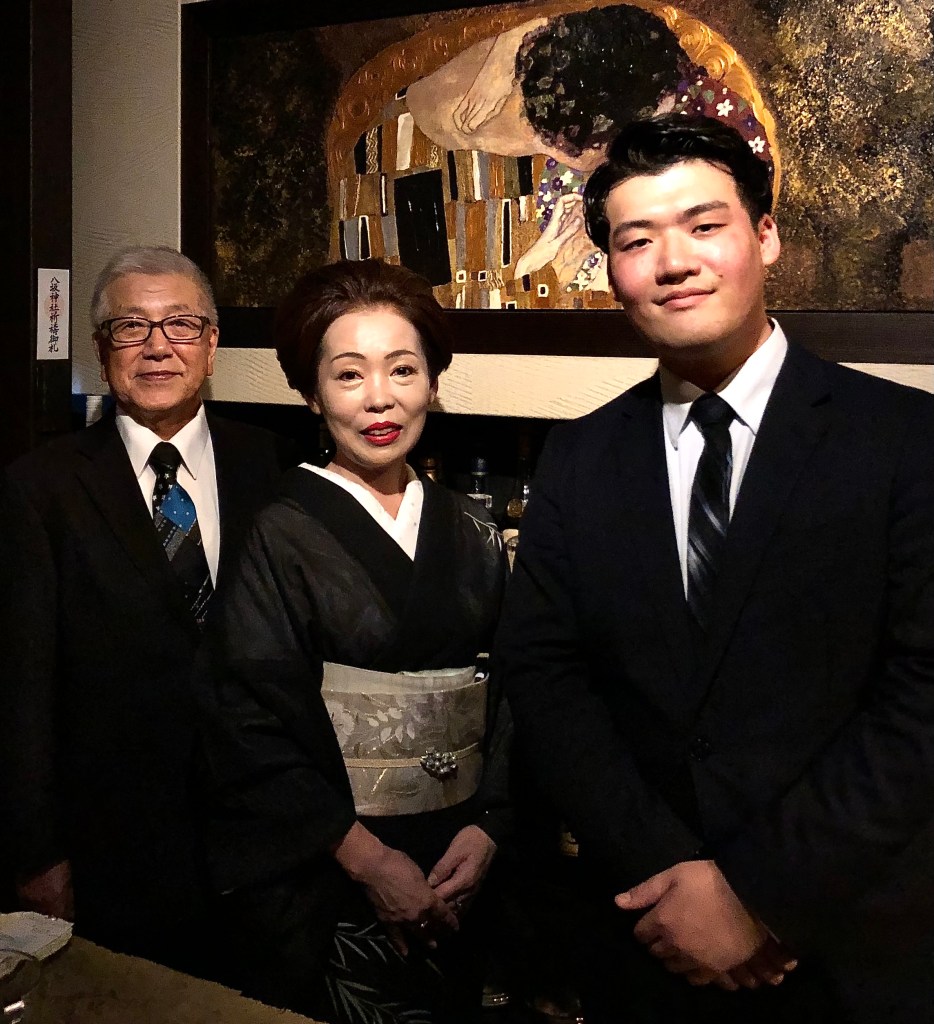
Mama Yuri had the men’s same style of forced congenial conversation, asking us about San Francisco and what whiskies were popular there. Like the men already had done, she too asked how long we’d be staying in Kyoto. Until Saturday, we said. Were we staying nearby? We told her the name of the hotel. She could arrange for a Maiko to come by for us on Friday. 😳 We had many sites to see, we said, and indicated again we needed to call it a night.
The young fellow brought the bill. It was ¥33,000.
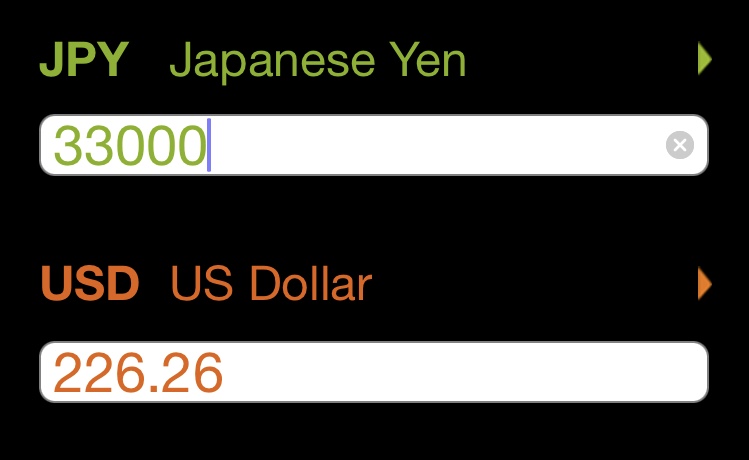
What?
I did some quick math in my head, estimating the cost of my partner’s Highball. Something was off. Multiple things, actually. But by this point my mind was spinning more than a bit, and not from the watered down whisky. My clarity had been whipped into a blur by the evening’s rapid accumulation of red flags. I paid and we got out of there.

▶️ for ‼️
We’d totally been scammed.
Going over the prices again in my head, the final bill did seem almost right, based on the quoted sitting fee and drinks we’d ordered. With some fast Googling we realized they’d likely quietly added a “conversation fee,” an hourly fee paid to female bartenders for chatting with men in Japanese “girl bars.” This might explain the men’s eagerness for us to wait for Mama Yuri to pop in for the final act.
A hidden fee also seemed somehow in keeping with their constant return to the subject of Maiko, and their clear intent to arrange what would no doubt have been a very expensive meeting in that sparsely furnished VIP lounge. We realized the entire purpose of this night was to set us up for a return, as VIPs to be entertained by Mama Yuri’s own Maiko in training.
My partner and I walked back to our hotel feeling dumb, mad, had, and queazy. It was pretty funny, too. But also not. We’d not shared our names with them, and they’d not asked. But they’d taken my credit card to charge it, and I’d signed the receipt on an iPad—the only time this happened during our entire trip. So they had my signature digitally, my name and credit card number, its expiration date and CVC code. And I’d told them the name of our hotel. They were already following me on Instagram. Would they try something shady? I mean beyond what they already had done?
By the time we got home, Mama Yuri had posted a photo of us on her Instagram and tagged this blog’s account.
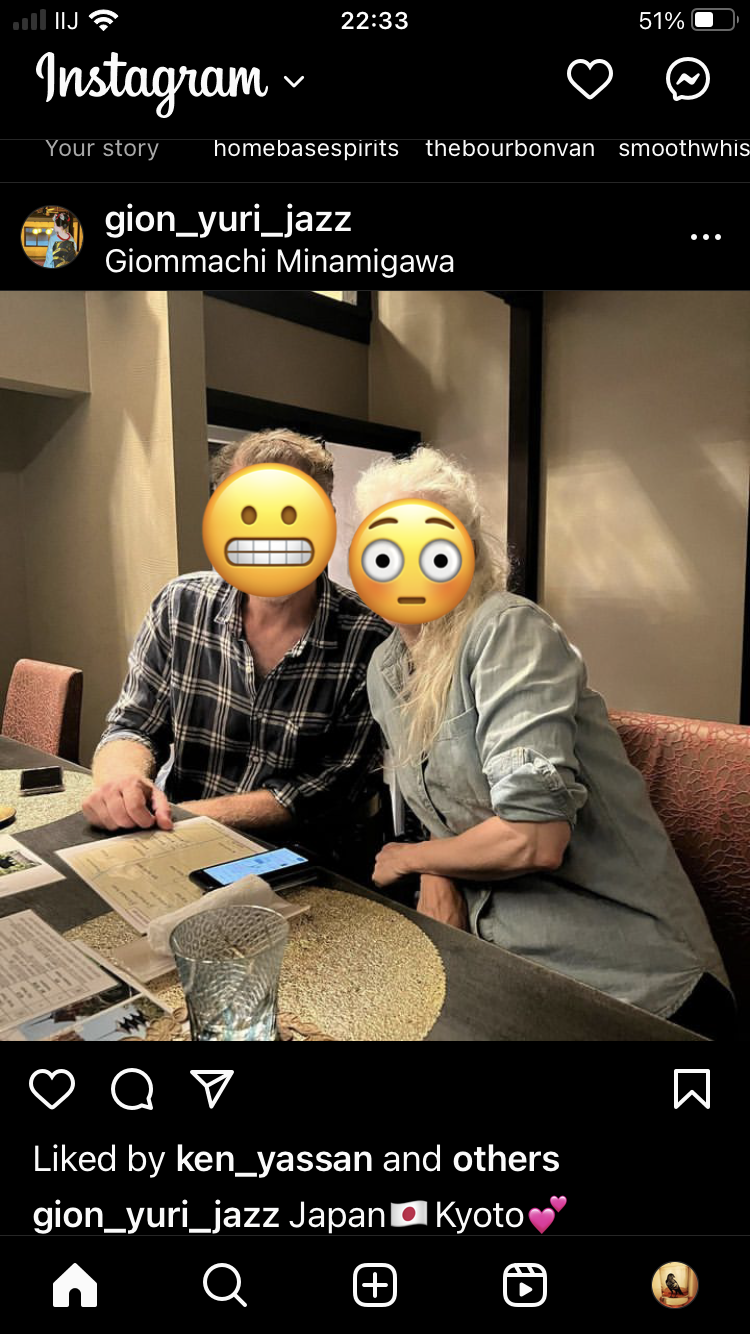
Still flush with paranoia, I restricted her account and untagged the blog from her post. I tucked away the credit card I’d used, and for the remainder of our trip used my backup card instead, to make it easier to detect any funny charges. I’m surprised I didn’t close the drapes of our hotel window and peak through them! That’s the state I’d worked myself into.
Why did I not just slow down and ask for an itemized bill? For the same essential reason that earlier I hadn’t said, Yes, indeed I would prefer my overpriced whisky neat, not on ice, thank you. For the same reason that when I was told the sitting fee was ¥6700 I didn’t leave immediately. And for the same reason that when I first peaked in to the place, clocked the bad lighting and empty seats, and was swarmed upon by the hard-selling older gentleman, I didn’t write the whole thing off at once. These blunders of sheepish politesse are entirely on me.
After further research (e.g. here, here, and elsewhere) into the Maiko/Geiko tradition, I no longer believed the Mama Yuri crew would try anything further. The seedy stereotype of the Geisha as upscale prostitute originated in assumptions made by American soldiers in WW2, and was further popularized in American and other western entertainment media. But the Maiko and Geiko profession has a long and respected tradition in Kyoto. There are laws against approaching or taking photos of Maiko when they are in public, and many legit ways for Japanese and foreign tourists alike—whether individuals, couples, families, people traveling on business—to attend private and public performances. It’s normal. Reading up on various people’s accounts of their experiences with it, some report it was boring and overpriced, while others say it was a beautiful cultural experience.
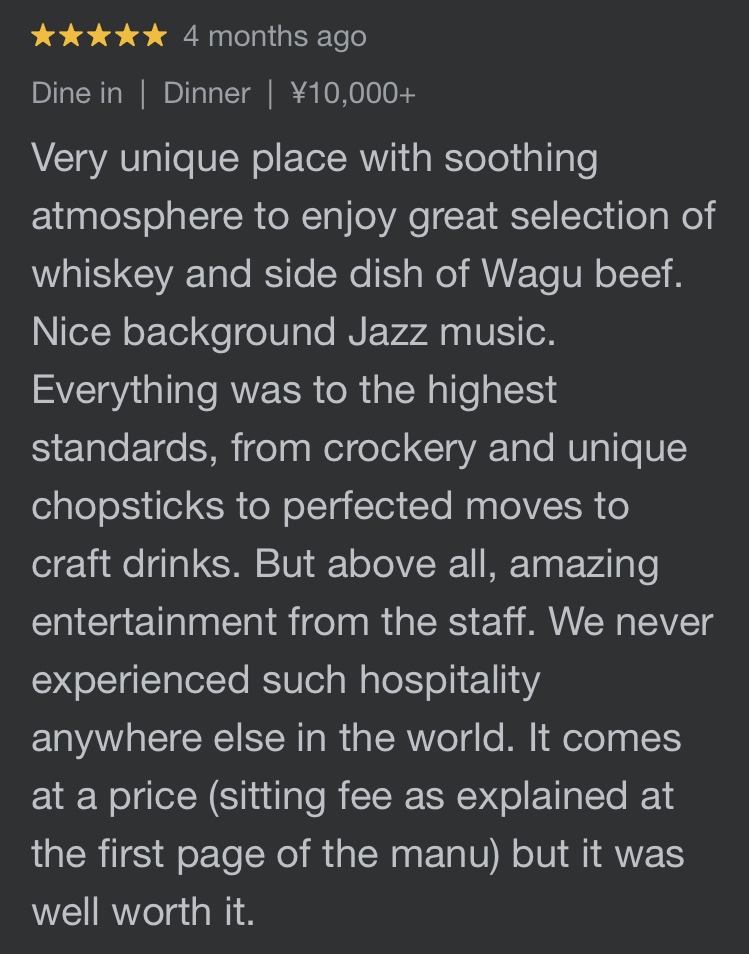
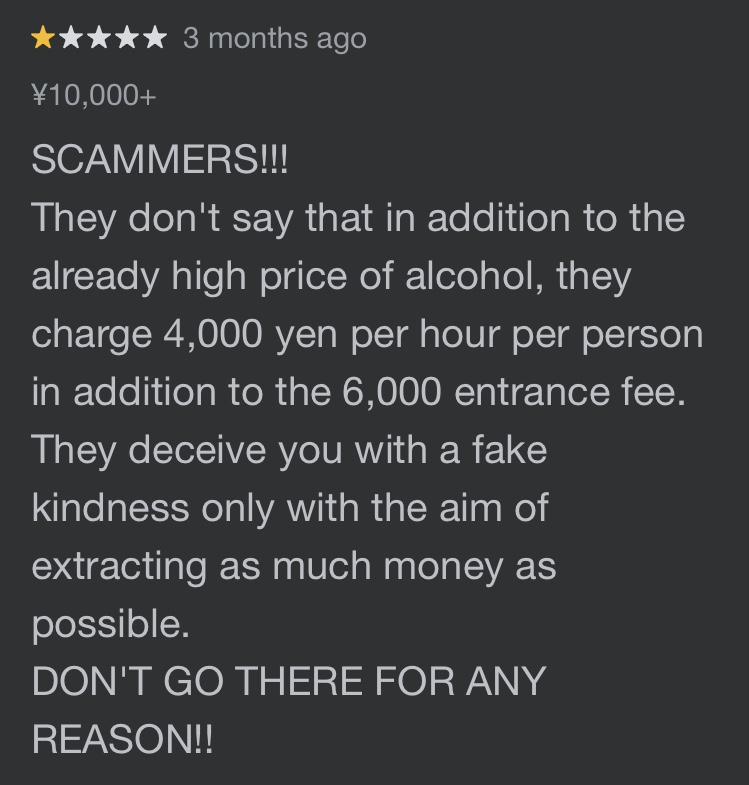
Irregardless, Mama Yuri and her glad-handing dandies were shysters. We looked up their Google reviews, which ranged from ⭐️⭐️⭐️⭐️⭐️ raves (often from various Russian and Asian accounts subtitled with “local guide”) to ⭐️ ratings with stark warnings.
My psychological reaction throughout and in the wake of the experience fascinates me:
On the one hand, our guts are there to be trusted. And, really, my gut knew as early as when that older gentleman first too-enthusiastically ushered me in that something a bit much was at work. My gut knew when the place was empty and badly lit. When the menu layout was so lacking in design and cheaply printed. When the Mama boss had been summoned by her dual-generational front men. When I’d put together that it was she who’d Insta-messaged me with such a positive assumption of my arrival. When she then arrived herself in full formal attire, make-up looking just a bit hastily applied. And as the full crew repeatedly pushed on us a meeting with a Maiko—a teenaged girl.
But I was too embarrassed and eager to not offend, so I allowed myself to be swept along. More so, I believe, I’d gone into it thinking—and very much wanting—the situation to be something else: A new father and son whisky bar operation, just getting off the ground after the pandemic and still finding its legs, fitted into a cool little converted retro home on a thin side street of Kyoto. How fun! I’d been frustrated earlier that evening, lost in Google Map’s erratic flitting between the ubiquitous Liquor Museum outlets, and I really wanted to have a unique experience. And so as the red flags began to run up their poles in succession, my desire obscured them like a fog, stymieing my reflexes substantially from the immediacy with which I might normally have responded, and pretty soon I was too deep into it and there was the ¥33,000 tab.
On the other hand, I was also subject to my own cultural ignorance and racial stereotyping—the Asian hustler scamming tourists, the Geisha as prostitute. Mama Yuri’s small scale operation, conducted with the same hard-sell approach as any number of kitschy shops I entered in the tourist-dense Gion or Higashiyama districts, fed my ignorance and my imagination began to embroider quickly.
So, aside from the price gouging and patently scammy billing, what this trio are doing is otherwise perfectly legit in Japan. And yet despite understanding better now the tradition of the Maiko and Gaiko in Kyoto, I can’t help but find the Maiko concept itself very uncomfortable. As refined as the tradition is, still they are teenaged girls paid to entertain with music, dancing, conversation, and party games. And they don’t actually get any of the money themselves, it goes to their Okaasan—the Mama boss who houses, feeds, and trains them. They are allowed one day off per month, can see their parents only twice a year, and can’t have smartphones or boyfriends. Just that much gives off a faintly sour musk of forced prostitution to my American senses, no matter how aware I am that I’m responding to a tradition belonging to a culture I have admired since childhood, yet is not and never will be mine. I’m not in a position to draw ultimate conclusions or make moral judgements. Yet my mind keeps going there. That’s something for me to pause and consider. The vast majority of what there is to know about Japan and its rich culture I don’t and won’t ever know, for the simple reason that I’m not Japanese.
But I do know I was swindled out of $226.26. Legally, perhaps, and at the additional cost of some embarrassment. But swindled nonetheless. I reluctantly decided this evening’s unexpected expense would replace the rare bottle of Japanese whisky I’d hoped to buy on my trip. Not a trade-off I’d expected or am pleased to have made.
Kanpai? Or c’est la vie…?
Whisky Hunting
🦃
In the wake of that (mis)adventure, let’s end things on a more positive note!
Regular readers of this blog may recall that back in early June 2023, I committed to a full year of not buying whiskey. One exception I allowed myself was this trip to Japan. So here we are. 😉🥃
One might assume my whisky hunting aims would have been set on something high-end from Hibiki, Yamazaki, Hakushu, or some brand not available in America. But the Japanese whiskies I’ve experienced to date have never wowed my palate. I’ve certainly appreciated their penchant for delicacy and subtle nuance. I’ve especially enjoyed the oddballs from Fukano and Hakata that use koji in their process, which adds a unique earthy funk. But generally Japanese whiskies don’t tend to offer the sort of flavor profile I want to invest in too heavily.
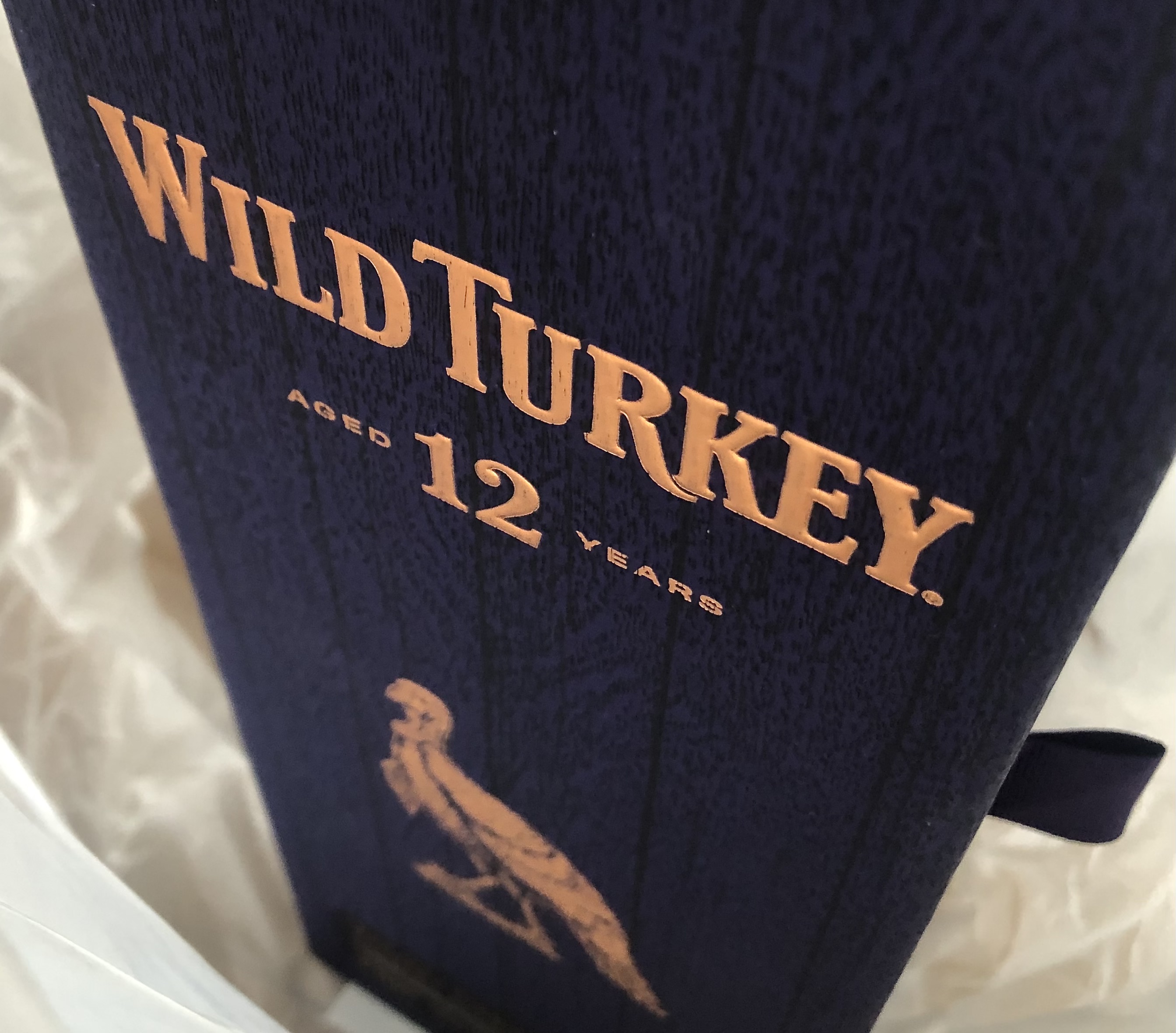
Thus my top prize was the Japanese export bourbon, Wild Turkey Distiller’s Reserve 12 Year. My initial plan was to also indulge in some special high-end Japanese bottle only found in Japan, despite my middling response to the genre. Might as well! How often am I in Japan, after all? But I didn’t have any specific ideas of what that might be.
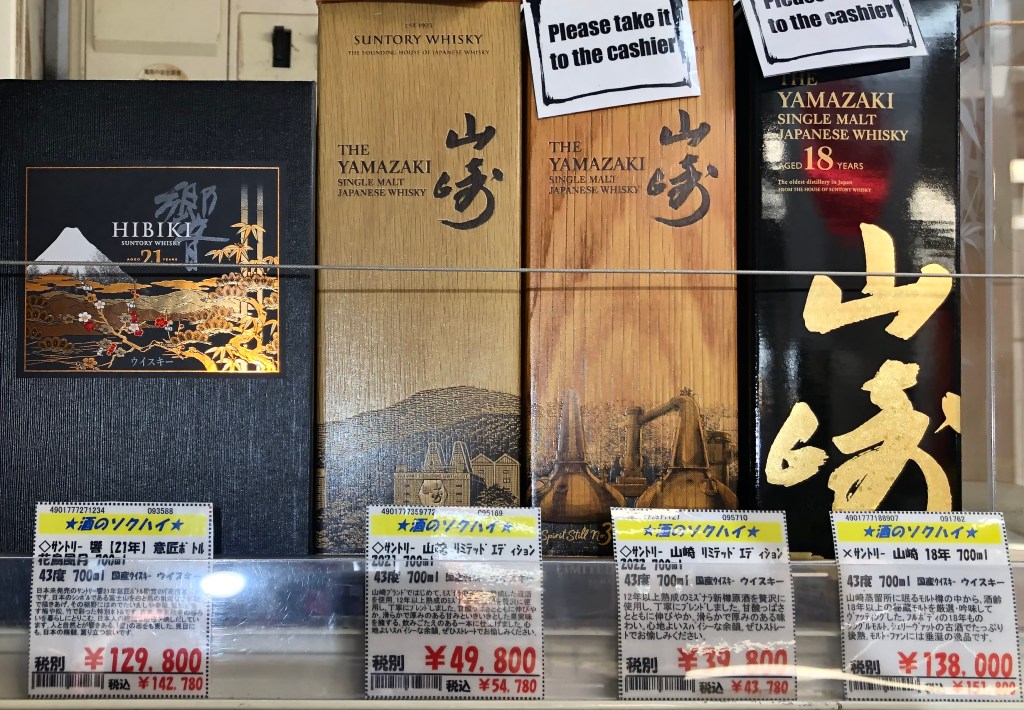
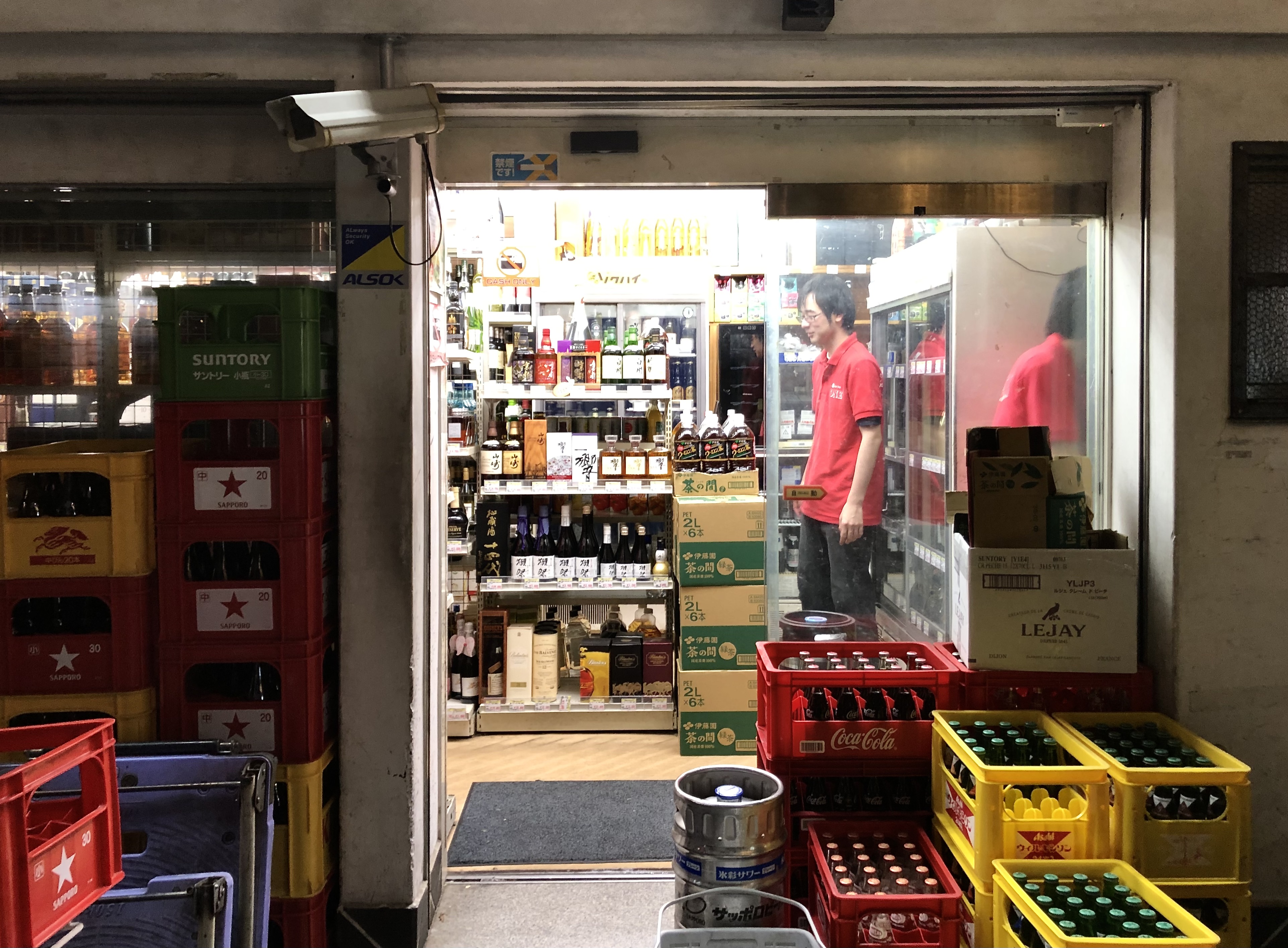
Perusing various Tokyo liquor stores, I soon realized two things: most any of the rarer Japanese whiskies are just as expensive in Japan as in America, and the Wild Turkey 12 Year is not nearly as ubiquitous as I’d assumed and hoped. I went to eight different places, ranging from the grubbiest cramped corner kiosk to the highest-end Ginza and Shibuya district shops. Nobody had it. Ironically, I did find an empty box for it at the grubbiest joint. The clerk seemed as surprised by it as I was. Maybe there was a bottle in it once, but now it only served as incidental decor above the beer.
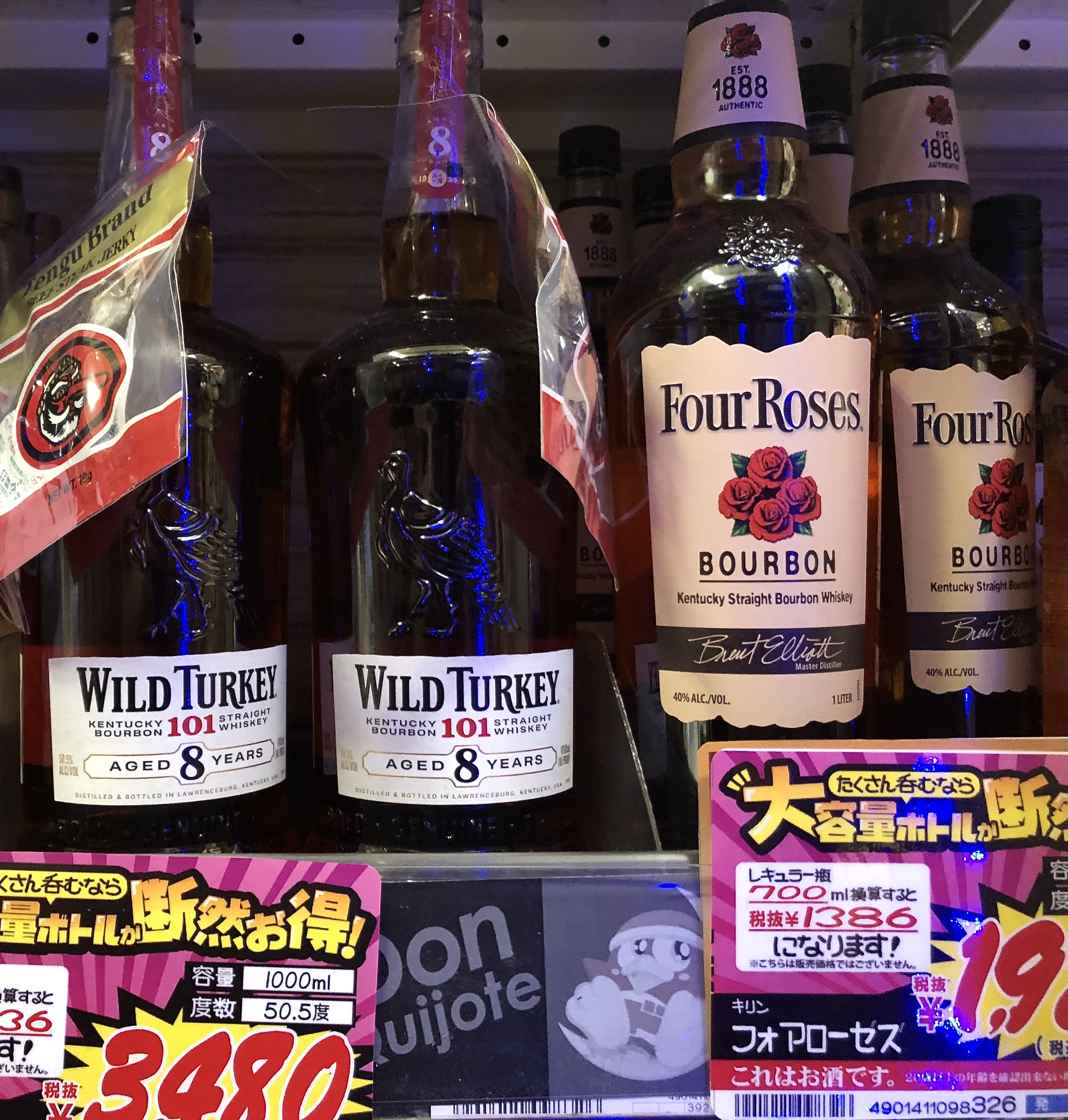
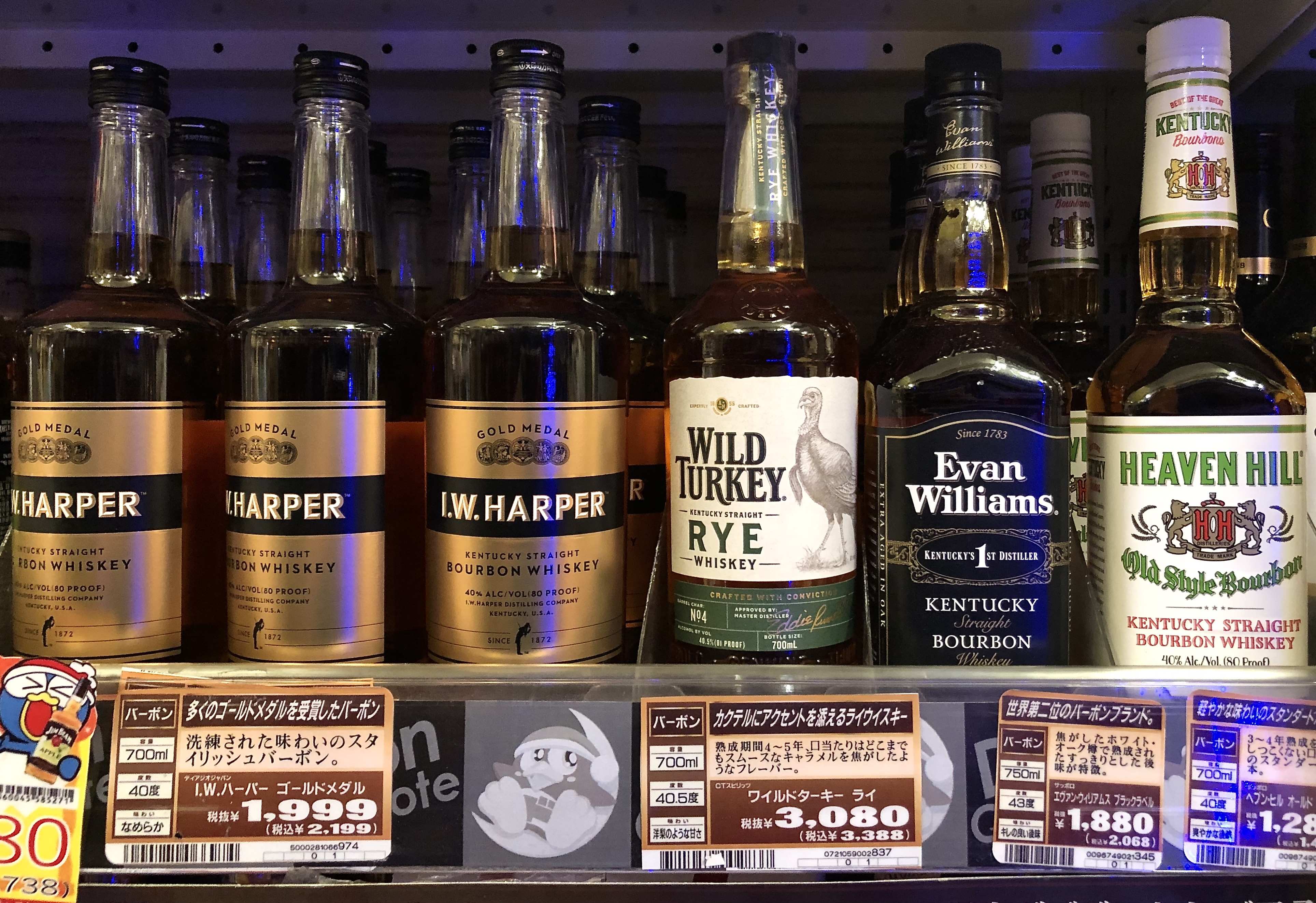
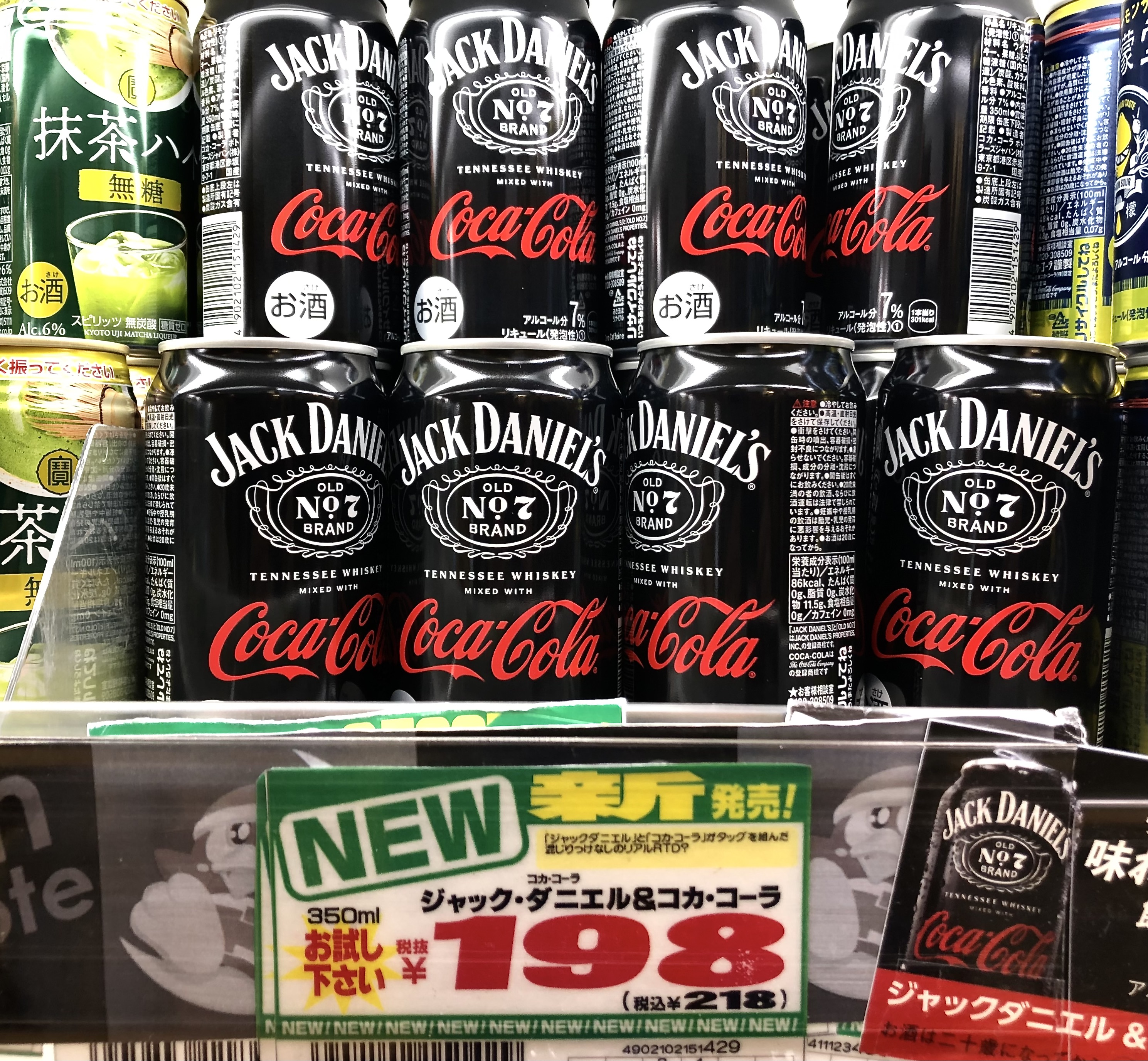
I did find many bottles of Wild Turkey 8 Year (also a Japanese export), Four Roses, I.W. Harper, Evan Williams, Heaven Hill, and canned Jack & Coke. Evan Williams 12 Year showed up once. And one Ginza shop, Liquor Mountain, was selling open bottles of recent and vintage things Like Johnny Drum Black Label and various Four Roses SiBs. Priced at minor premiums, these must have come from bars and private collections.
Liquor Mountain, Aoyama Whisky, the famed Jule’s Whisky Collection, these were all fine shops with a wide selection of whiskies. Whisky Kingdom in Shinjuku even had their own private barrel of Wild Turkey Kentucky Spirit. But no Wild Turkey 12 Year…
Sadness. I left Tokyo on the Shinkansen bound for Kyoto with fingers crossed.

On our first evening in Kyoto we visited Bee’s Knees. En route to home afterwards, along a thin street near a creek with a crane so perfectly poised I suspected the city might have employed it to stand there, I saw a very common looking liquor shop—beer and sake stacked up, kegs discarded on the ground, junky ads on the walls. I ducked in without even low hopes. I spotted a Wild Turkey 8 Year. I asked the clerk if he had the 12 Year. His brow scrunched and he grunted in thought, then suddenly a memory—and he turned to his right and bent down. There stood a single bottle, on the bottom shelf next to a trio of Blanton’s boxes!

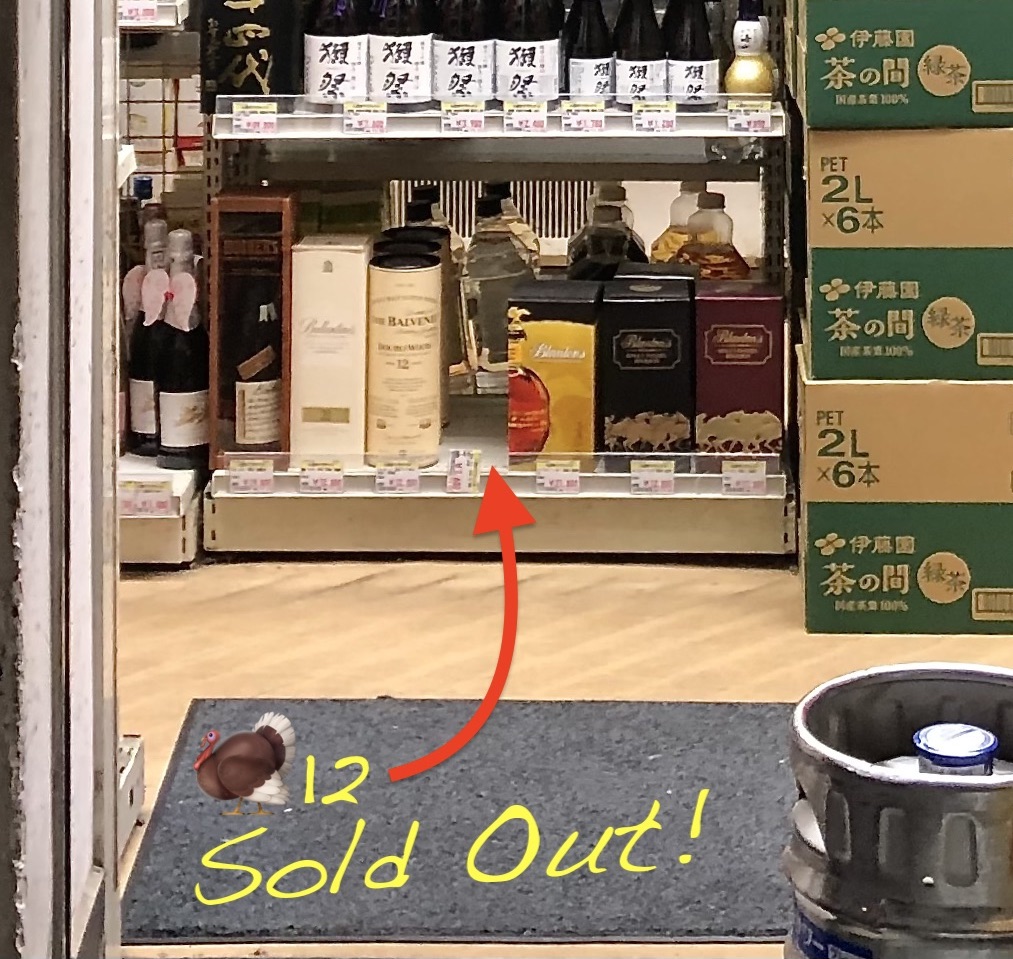
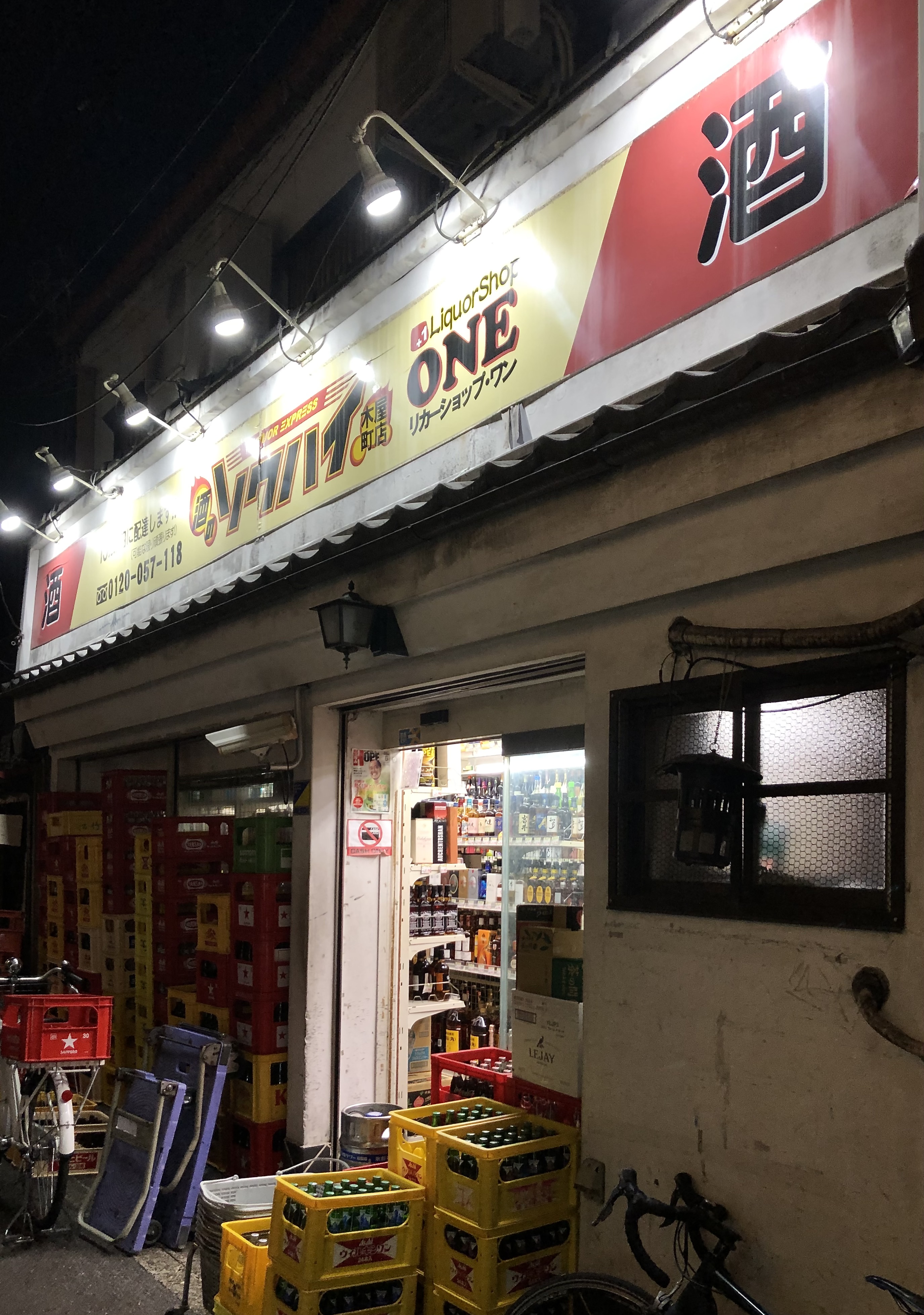
My partner had been standing outside, watching the whole thing transpire in mime. She said she actually got teary eyed on my behalf, and snapped a photo when I emerged triumphant with my prize catch.
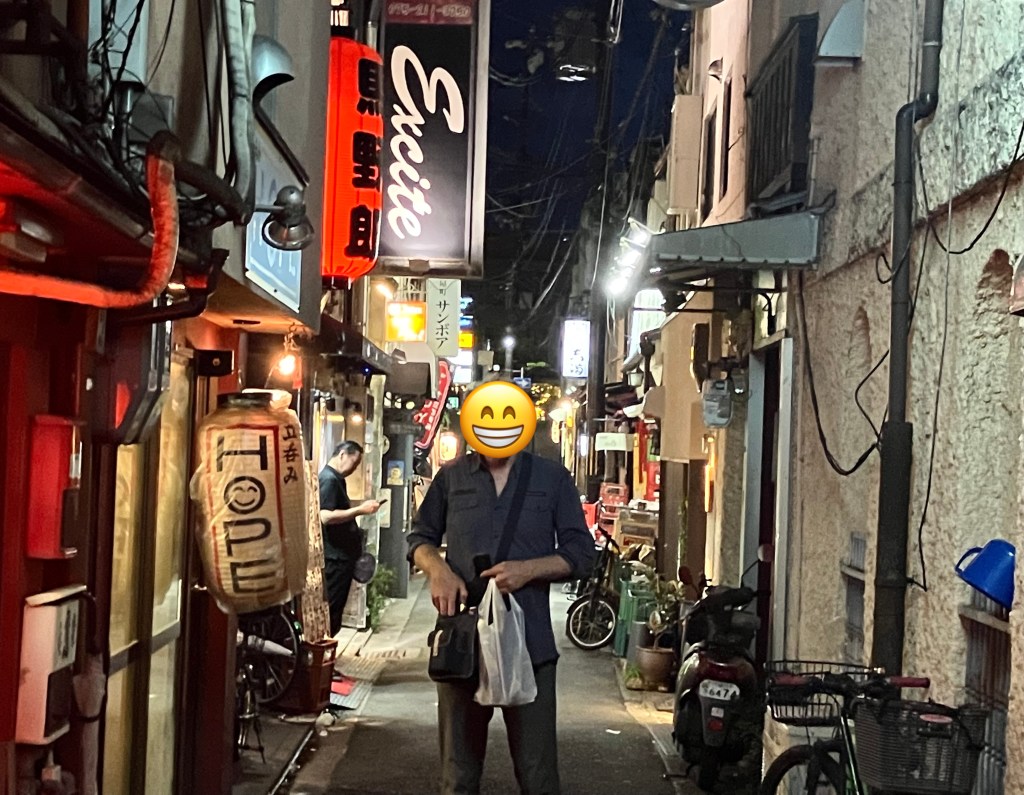
Now I could relax. From here on out it was window shopping and maybe another bottle of something Japanese. I’d only brought one small suitcase and didn’t want to overpack. And then came that epi$ode with Mama Yuri, at which point I basically ended my search for anything high-end.
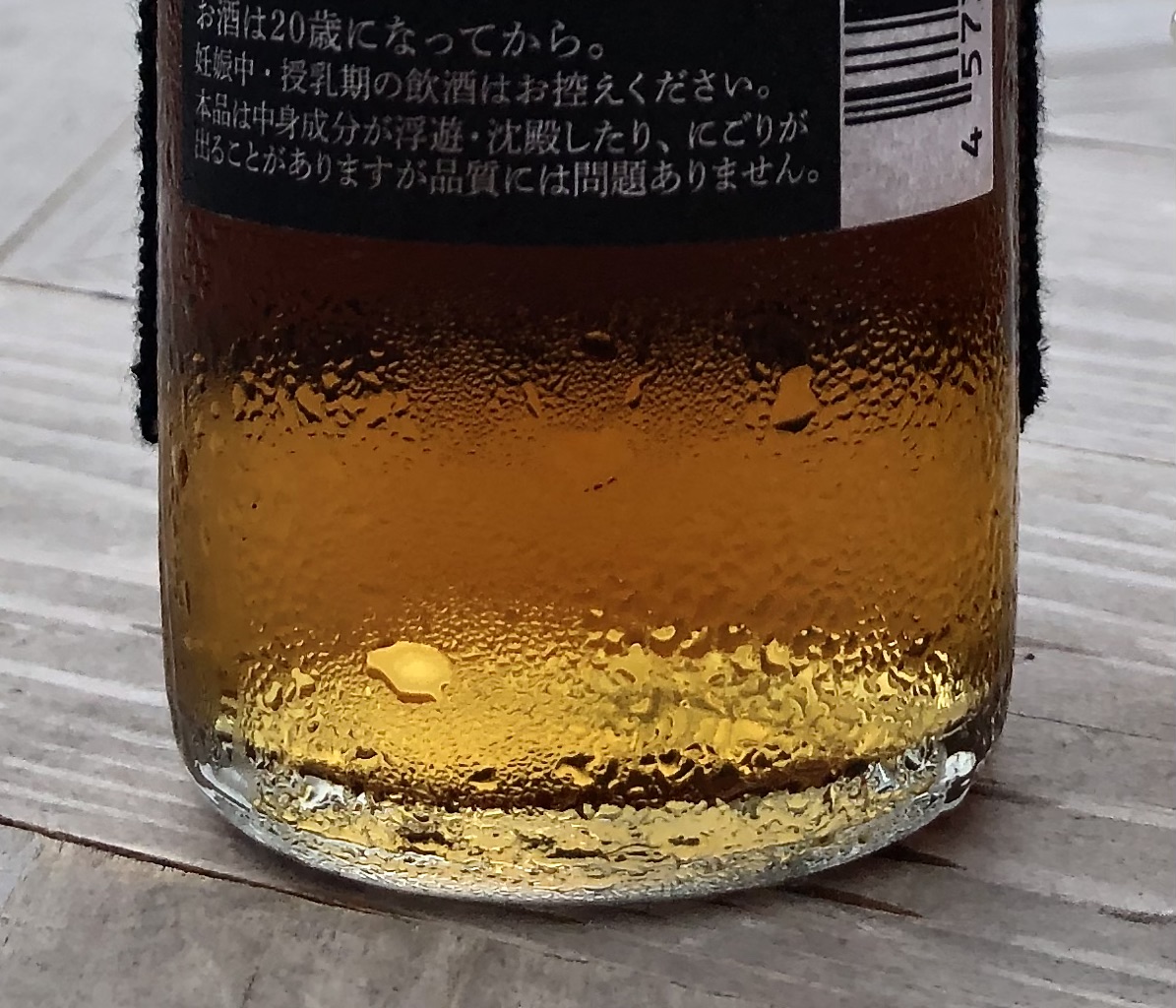
For sipping at my hotel, I tried a relatively new local brand, Kyoto Whisky, blending sourced and house-distilled whiskies. No filtration but definitely added color. And if I didn’t know better I’d assume they’d added artificial vanilla flavoring as well. The woven cloth label is nice but does give the feeling of trying too hard. This whisky would be perfectly fine lost in a Highball or other cocktail. But cheaper whiskies also serve that purpose just as well. I was glad to have tried it, in any case. I’d chilled it in consideration of the sultry hot weather, even near sunset! Look how the bottle is sweating in the humid evening air. And that view! A good view makes any mediocre whisky just a bit better.
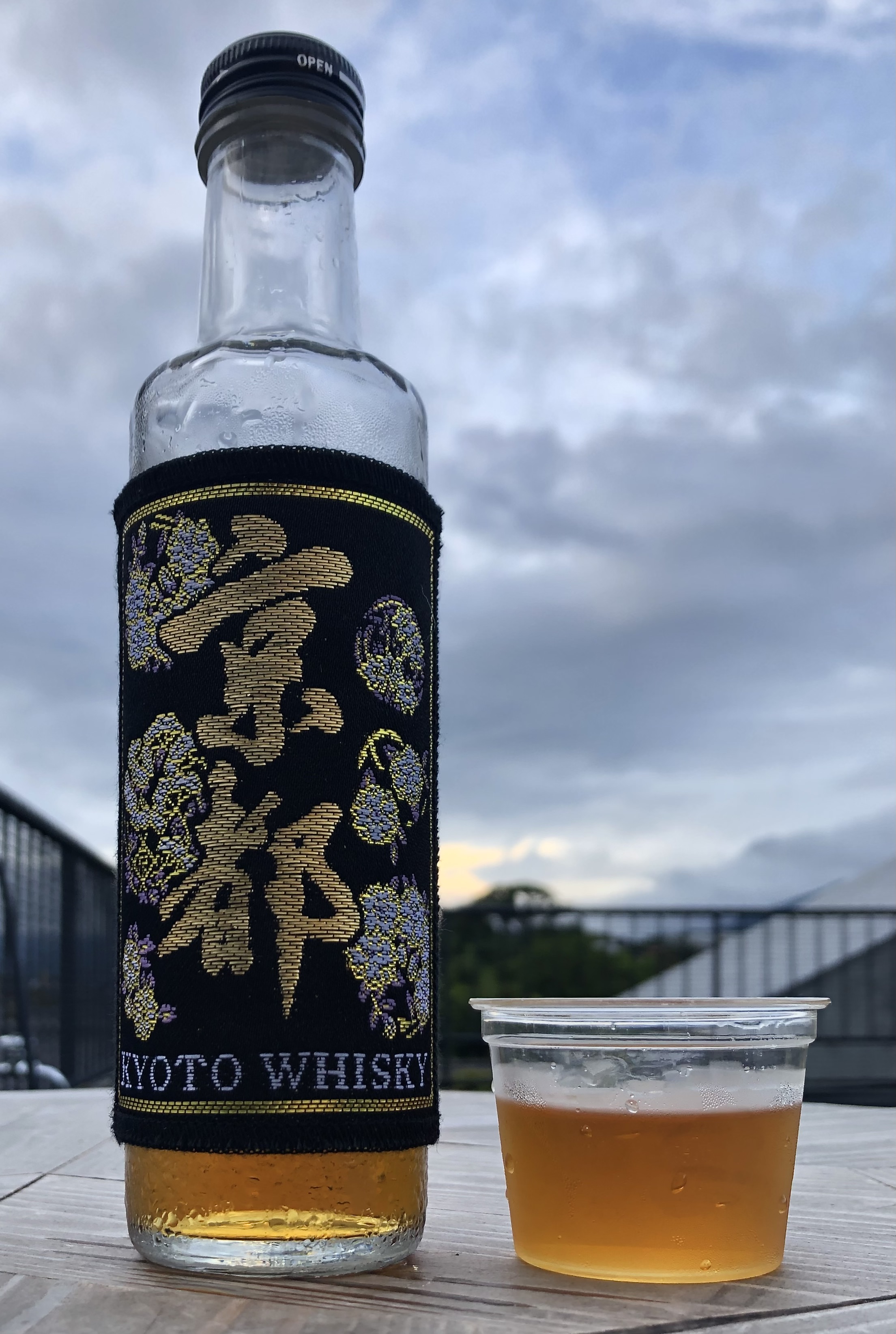
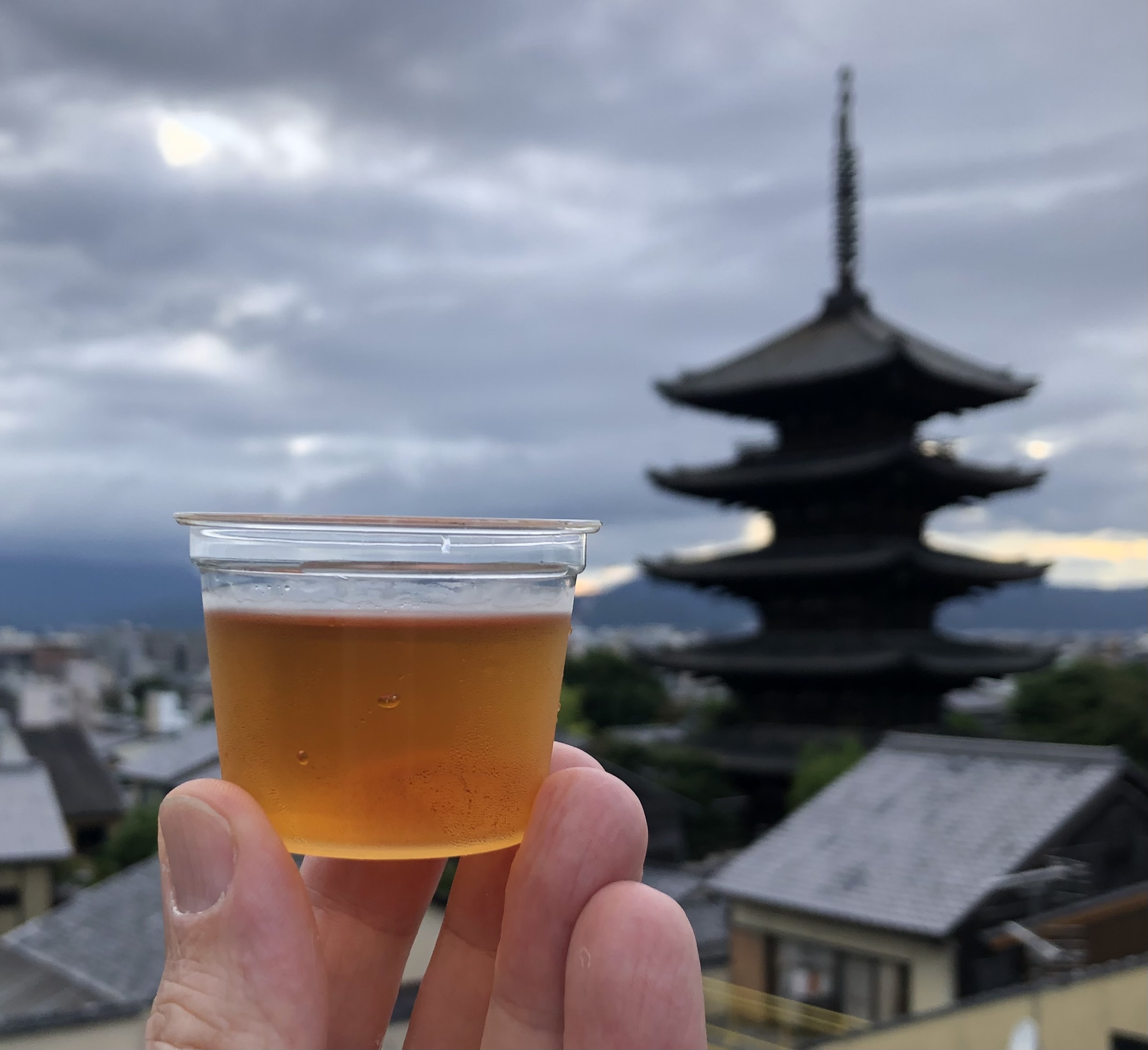
While still in Kyoto, I also picked up a 180ml bottle of non-aged-stated Yamazaki—surprisingly rare on shelves. I’d never seen a single bottle in the various Tokyo shops I’d visited. Once again it was a grubby little joint in Kyoto that had the “good stuff” rather than some high-end shop. Never underestimate your local corner store, wherever you live! It was in just such a shop in tiny Placerville, California, that I once found a bottle of Wild Turkey Forgiven Batch 302, no doubt sitting there since it had arrived in 2013!
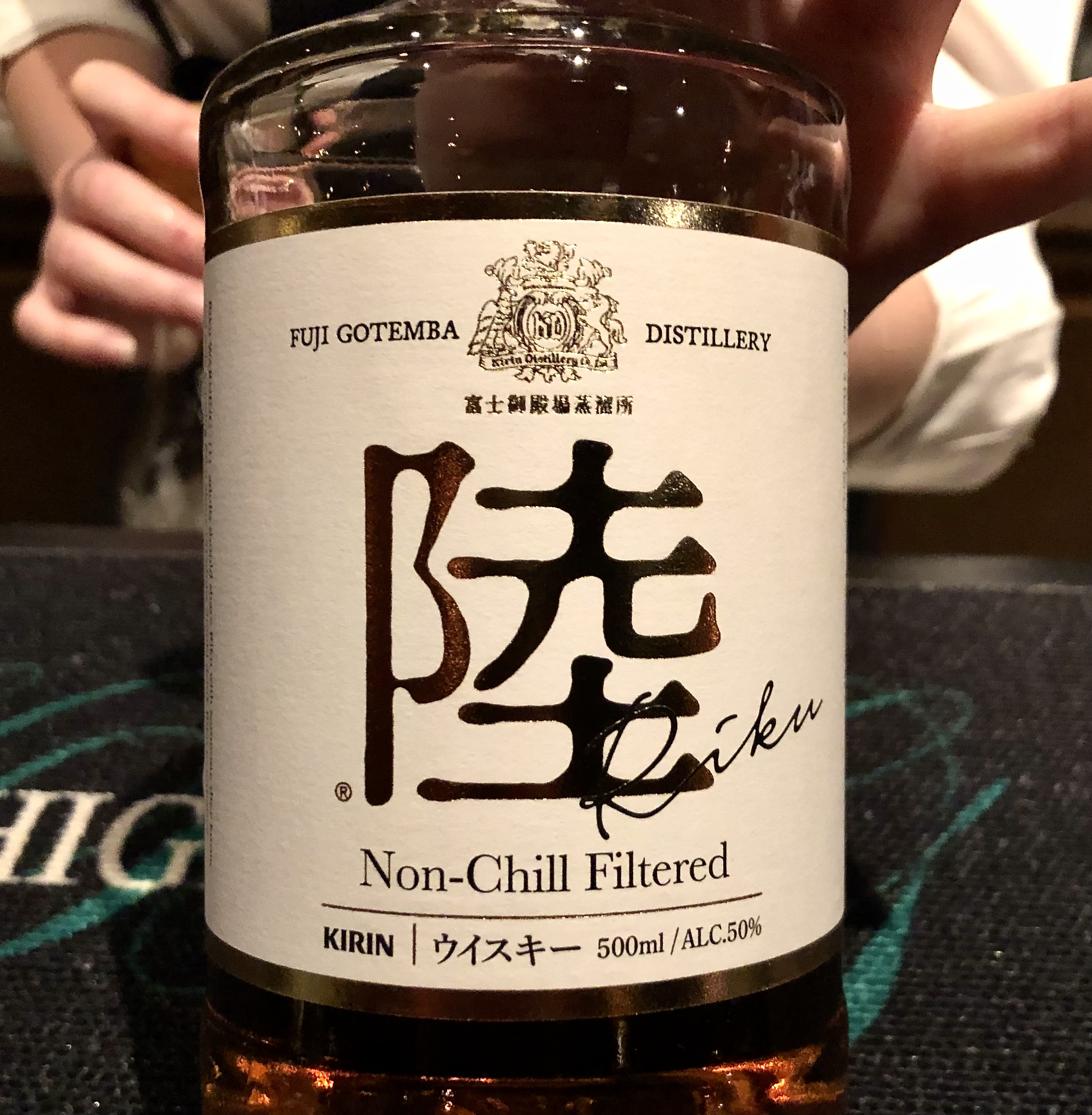
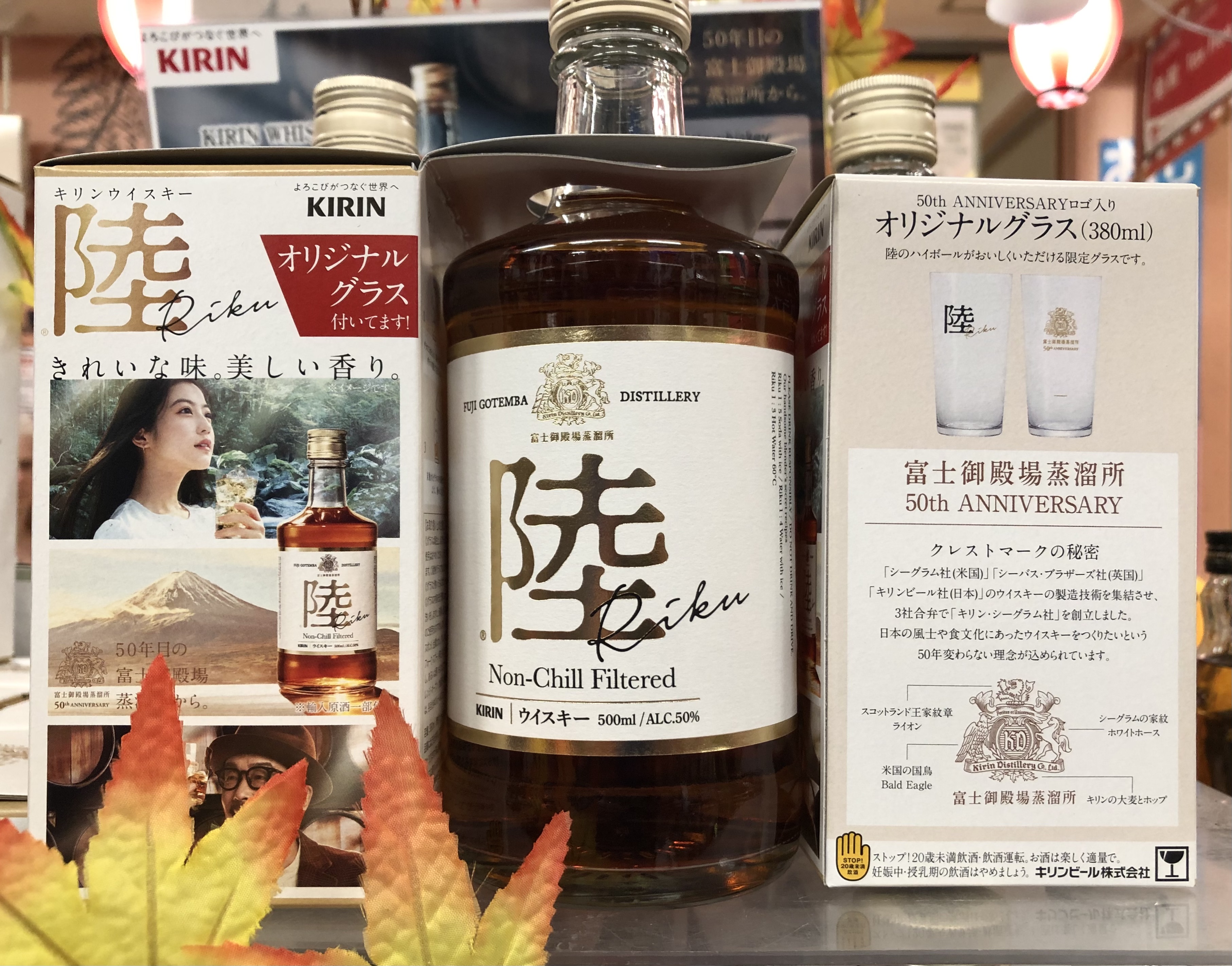
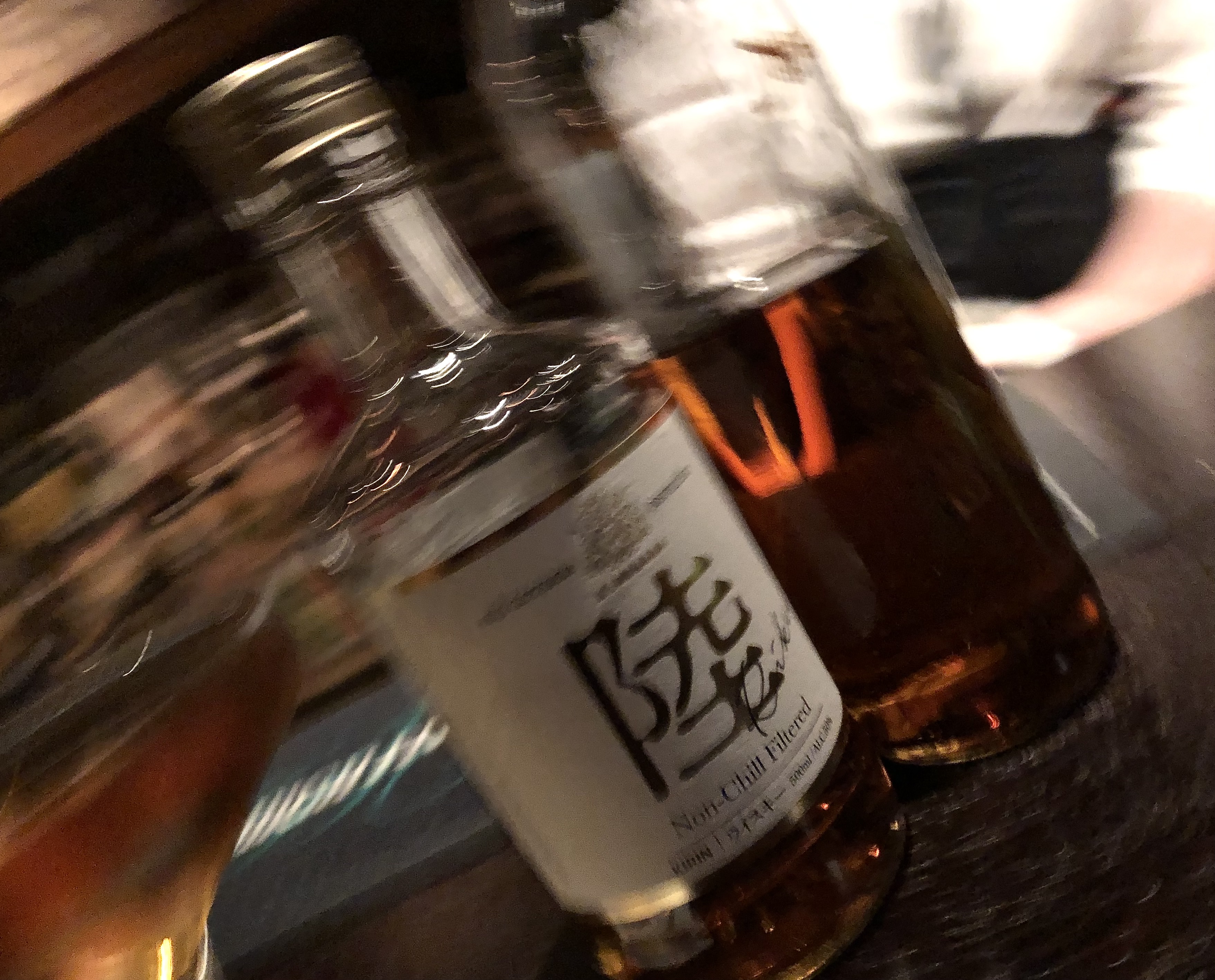
Back in Tokyo, I decided to pick up a bottle of Wild Turkey 8 Year. And for my full-sized bottle of Japanese whisky I chose the quite common Fuji Gotemba. It had been used in my custom cocktail at Bar High Five. Apparently the brand was originally made for bars only, then eventually released in stores. It’s non-chill filtered, bottled at 50% ABV, and costs about ¥1300 ($9) on average for a 500ml bottle. I’d only had it in a cocktail, so I didn’t know what it tasted like neat. But this workhorse bottle was actually more appealing to me than some $$$ or $$$$ Hibiki.

Finally, at Narita Airport waiting for my flight home, the Duty Free shops beckoned. Slim pickings, actually. Still no Wild Turkey 12, nor anything in the way of a rare Hibiki, Yamazaki, or the like. But many 1L bottles of Wild Turkey 8 Year. What the heck, I love Wild Turkey, I picked up another couple of bottles.
So in the end, my haul was this:
- Wild Turkey 8 Year (700ml; 1000ml) x1; x2
- Wild Turkey 12 Year (700ml) x1
- Fuji Gotemba Non-Chill Filtered (500ml) x1
- Yamazaki (NAS release; 200ml) x1
Plus one 360ml bottle of Denki Bran from Kamiya Bar, if that can count as whisky adjacent.
And to drink all these elixirs, I gathered a handful of glasses. In addition to Kamiya Bar’s signature Denki Bran glassware, in a nearby Asakusa shop I found an ornate and angled Nick & Nora styled coupe, and in Kyoto a small antique shot glass.
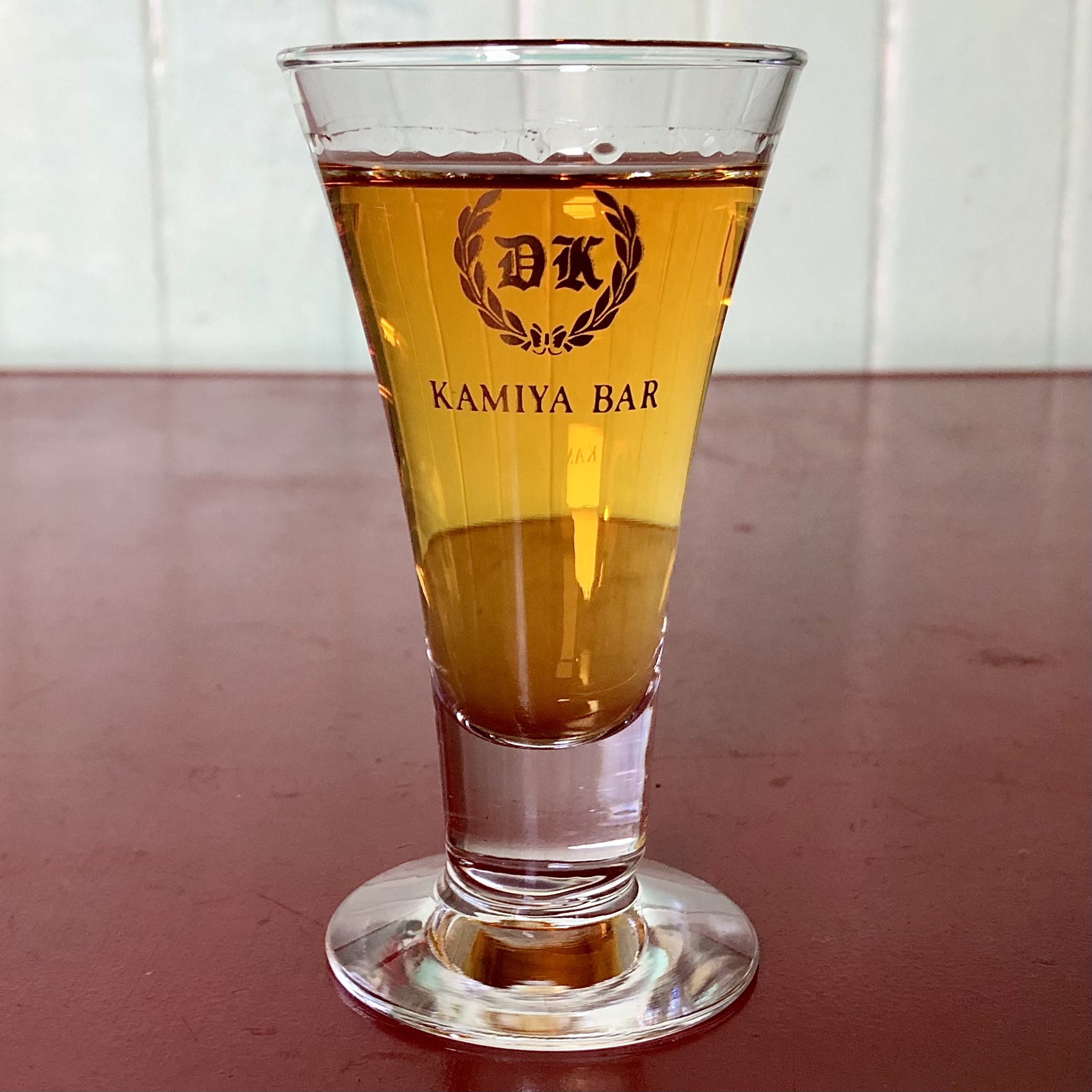
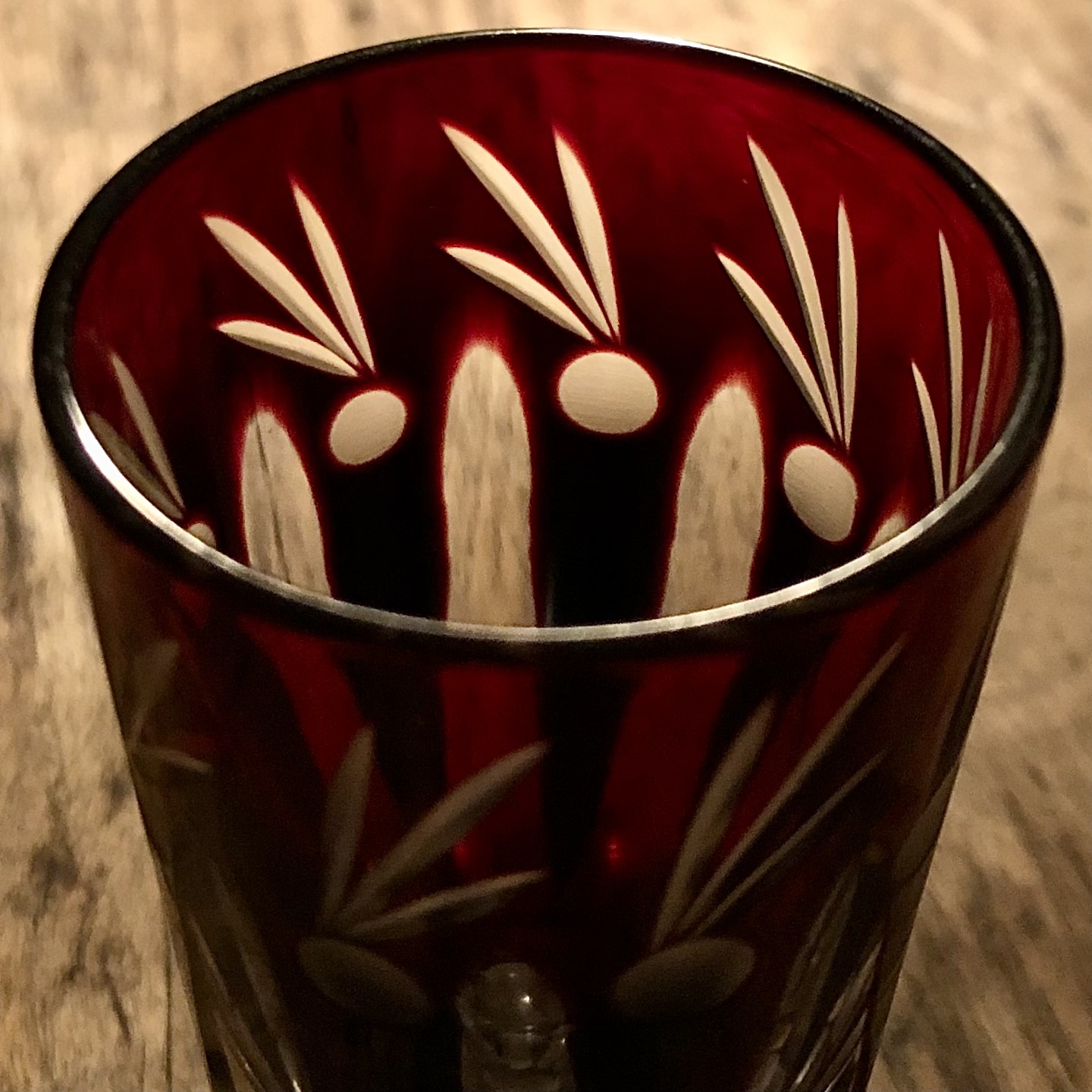


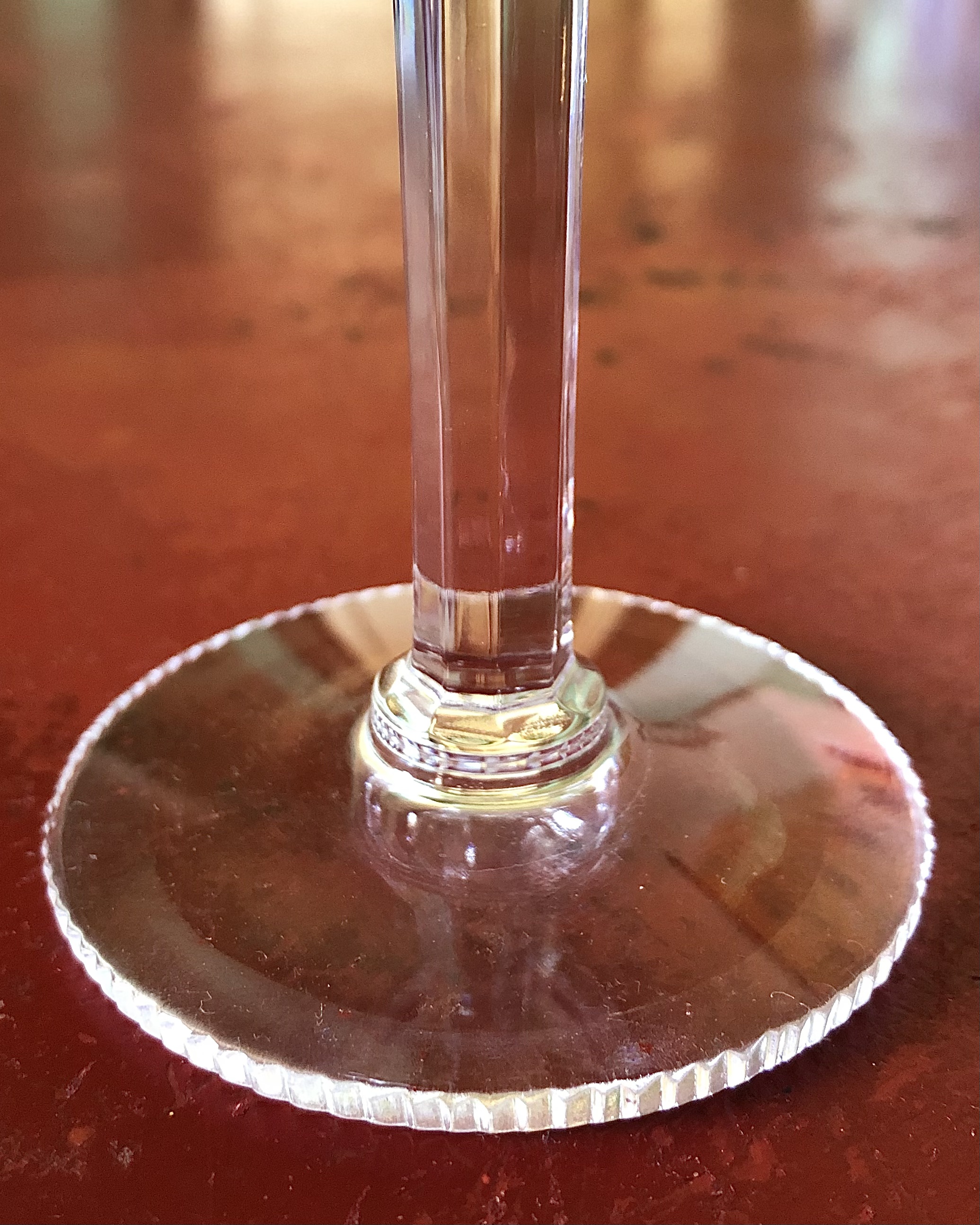
The petit coupe is clear crystal with a very resonant ring to it. I don’t know its maker, origin, or era. But I suspect its base suffered a bite at some point, and that this accounts for the offbeat teeth etched into its rim. Or maybe that’s by design, contemporary Japan being the land of pleasing aesthetic clash.
The antique shot glass was made in the early 1940s, a tumultuous era, and it has survived war, earthquakes, and time to eventually end up on my table. When I use it I’ll be sipping more than brandy, wine, or whisky. There’s a whole history in this little glass.
Not bad for a whisky hunt!
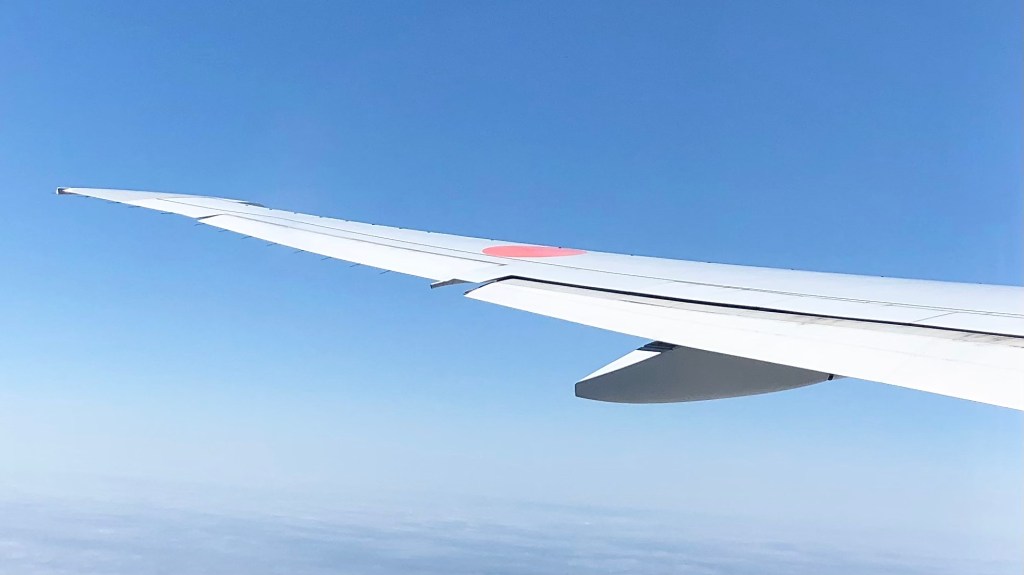
Last Call
🕑
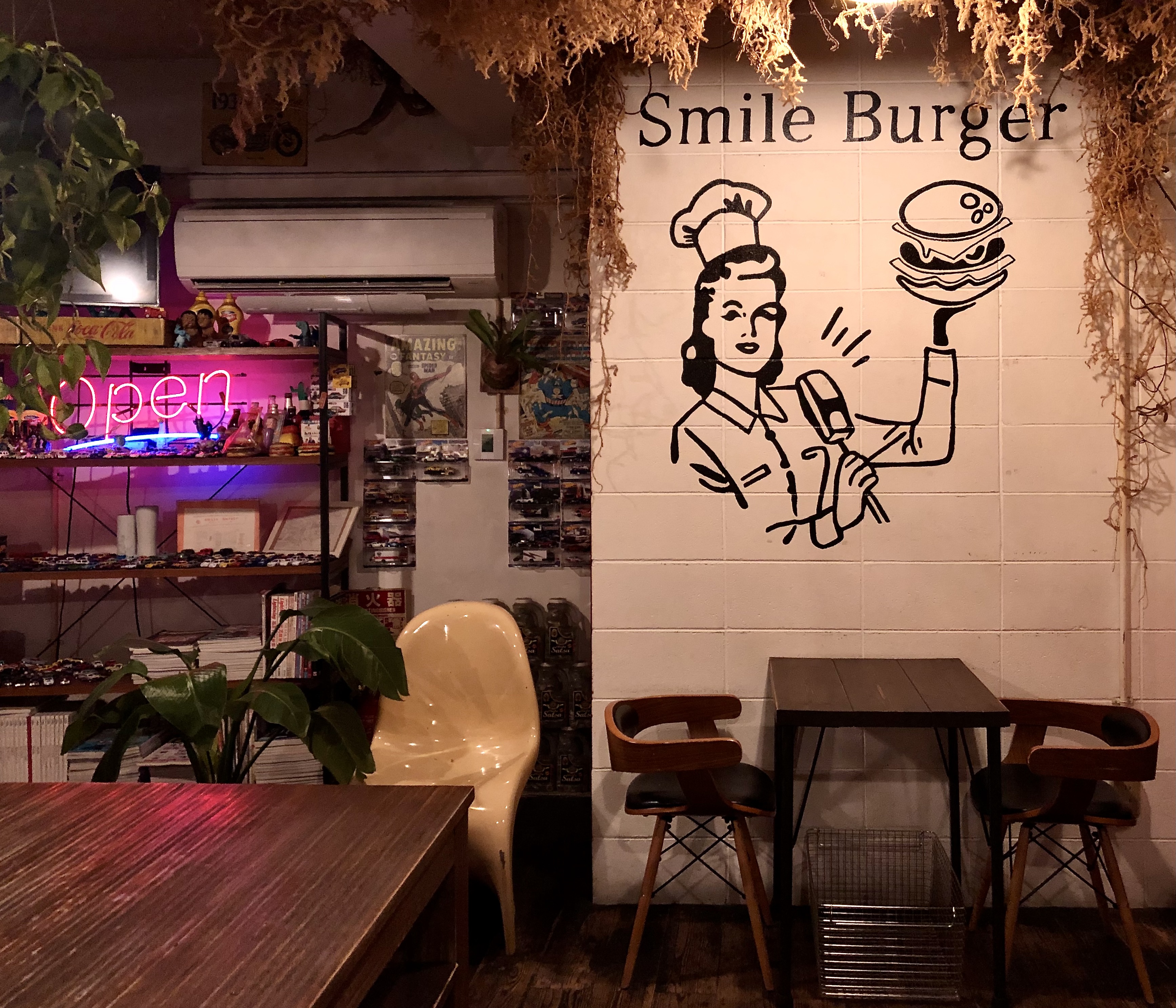
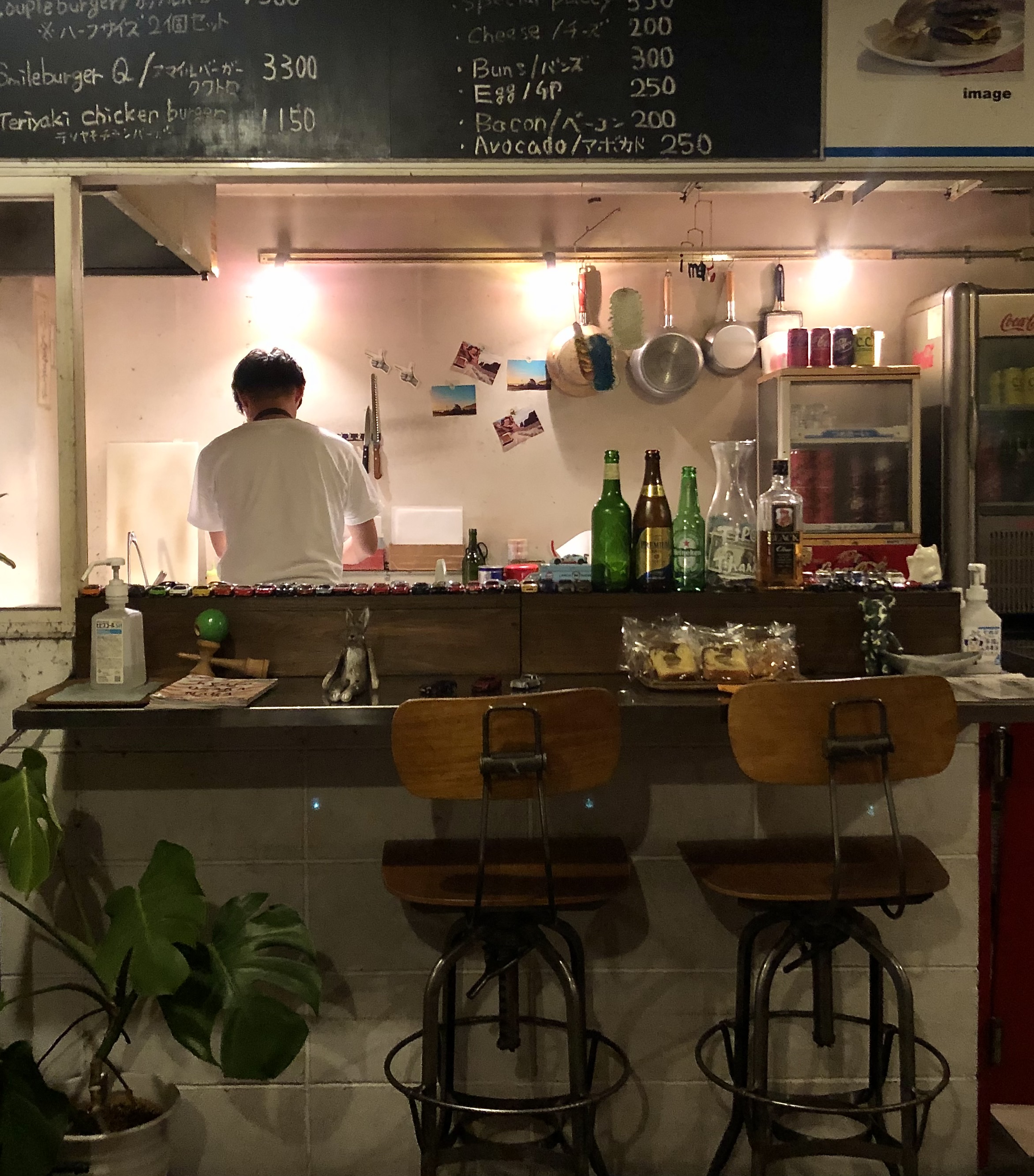
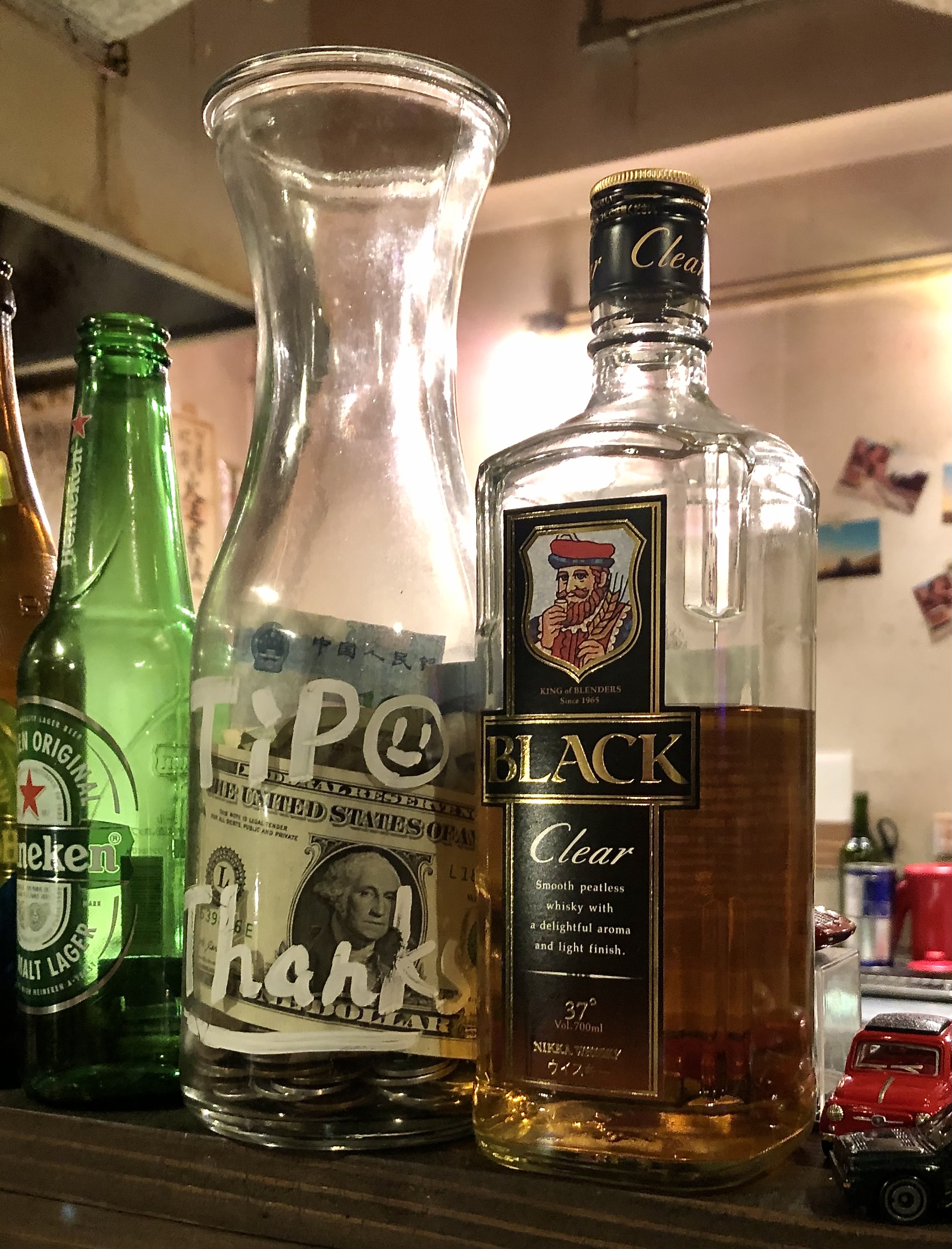
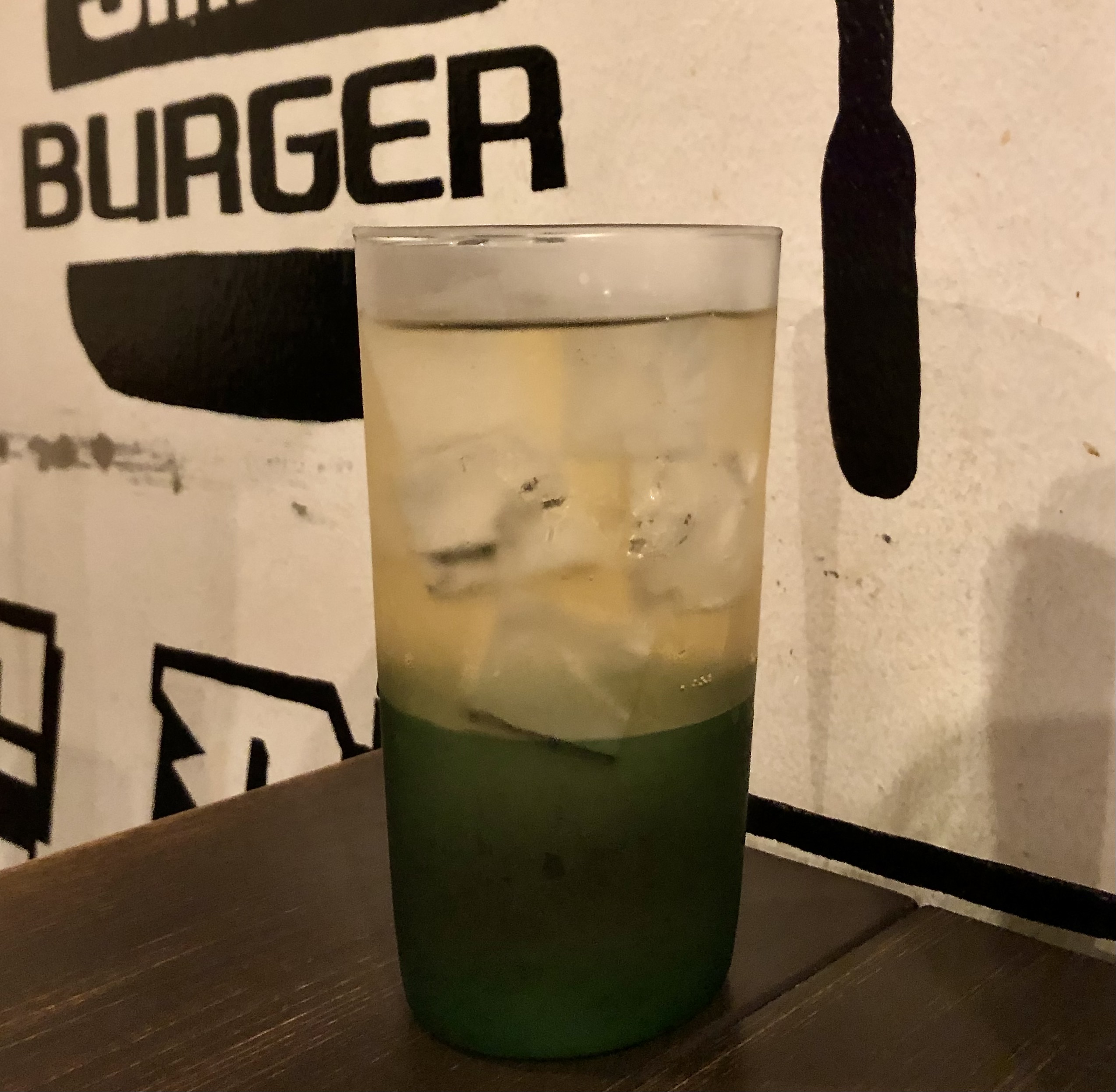
Some indirectly whisky-related honorable mentions not detailed above include Smile Burger, a cluttered divey burger joint on one of Kyoto’s Gion district central traffic drags. It’s filled with potted plants, toy matchbox race cars, and American 1950s diner kitsch. They make great burgers served on unique buns I believe were made from rice flour. And their house Highball is a thrown together mix of Nikka’s dirt-cheap Black Label Clear Whisky, soda water, and ice, served in the same tall plastic cup your Coke might come in. A perfect pairing with a sloppy burger!
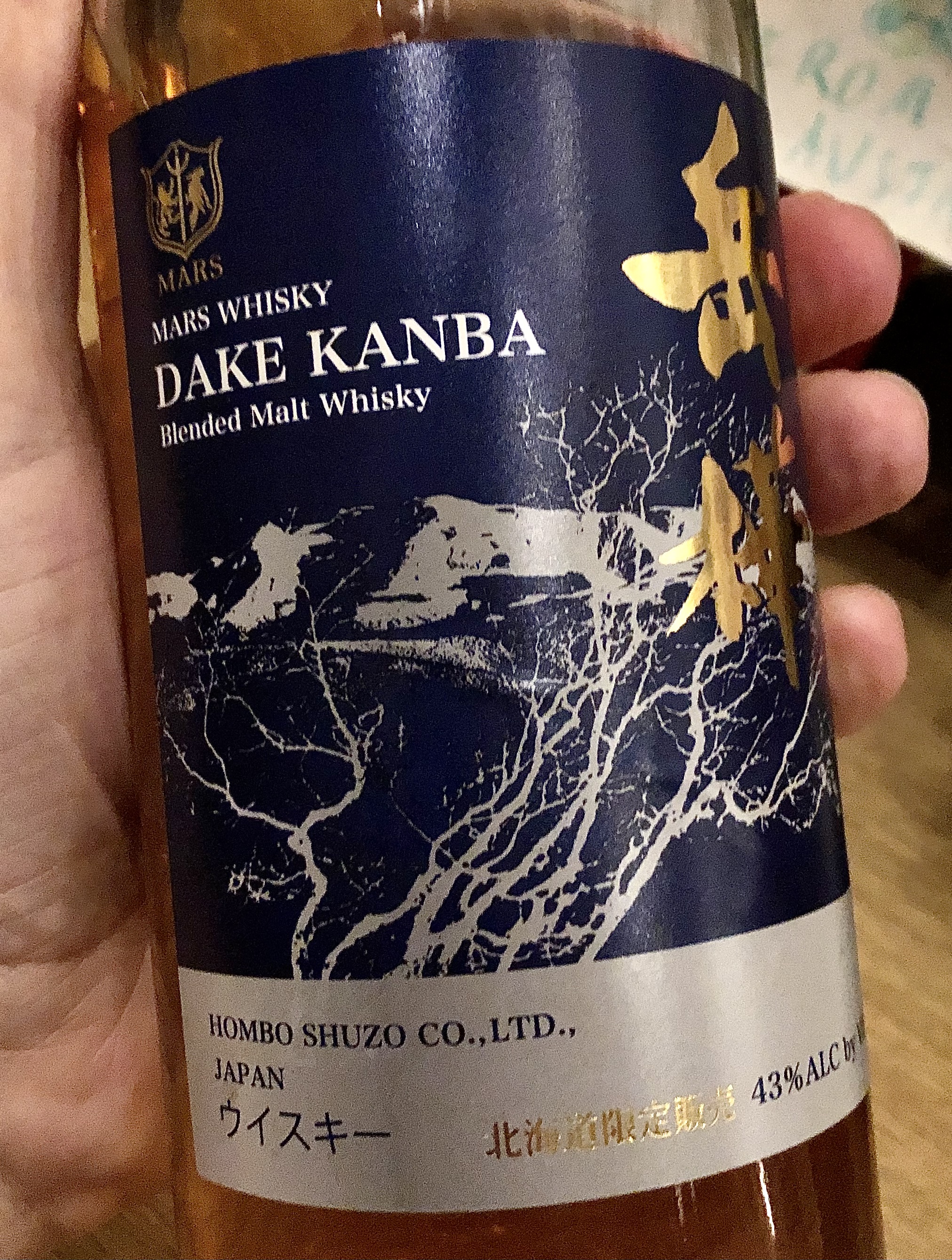
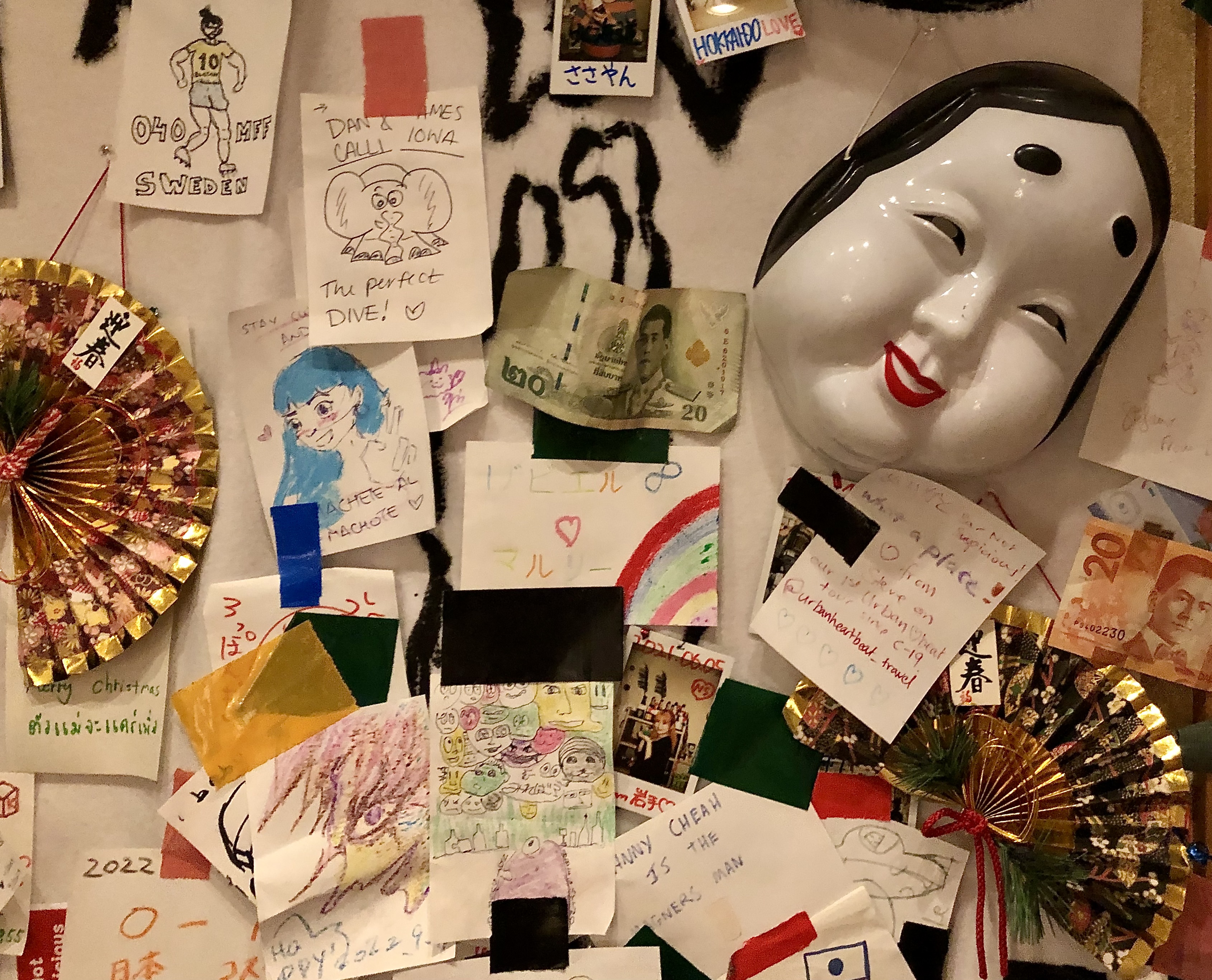
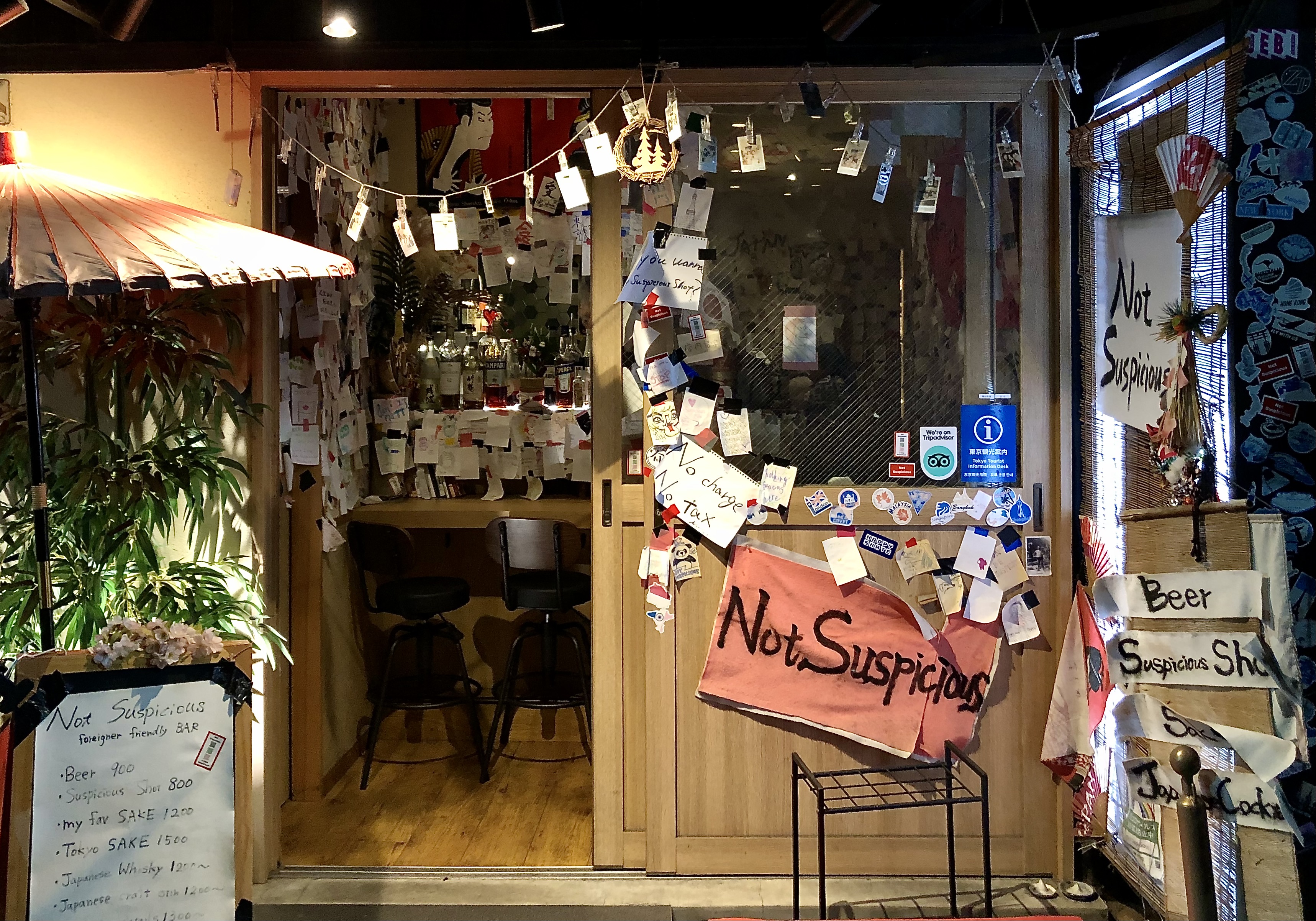
Not Suspicious is a slim hallway of a bar near Asakusa’s Hoppy Dori gastro-nightlife area. It’s wallpapered in knickknacks and hand-drawn notes from customers. The owner tends bar and strikes a bubbly, friendly tone, encouraging an intimate party atmosphere, like a small gathering of boisterous friends. I enjoyed a neat pour of Hombo Shuzo Mars Dake Kanba Blended Malt Whisky—smooth, rich, and oh so comfortingly smoky. Apparently it’s sold mostly on Hokkaido, the northern most of the Japanese islands, with a limited number of bottles released to mainland Japan. Had I not experienced it on my last night, I’d likely have put in some effort to track a bottle down! [Turns out I did find a bottle in Tokyo though not in time to go get it. But they’re shipping it to me!]
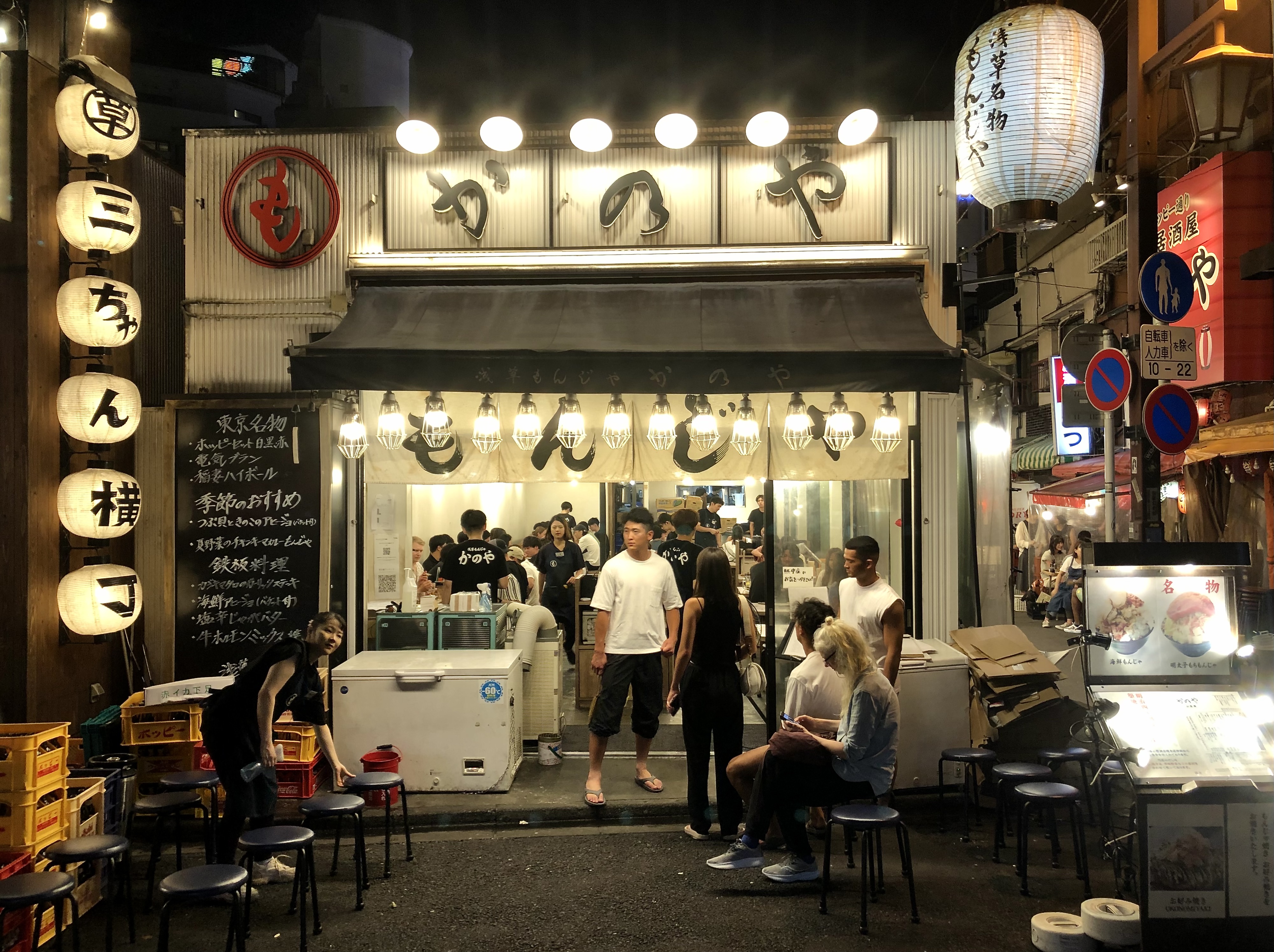
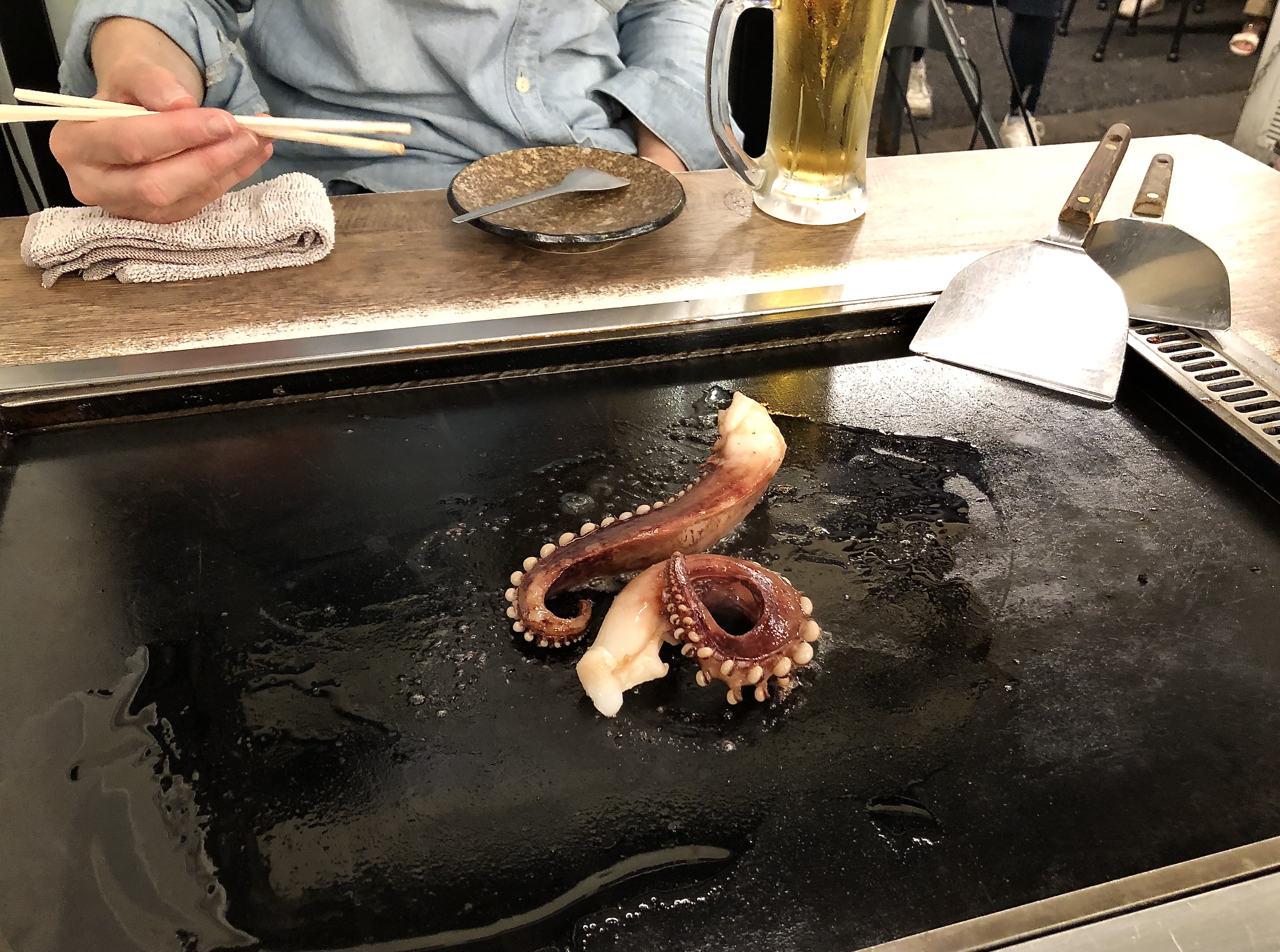
Smack dab in the beating heart of Hoppy Dori, the lively and loud Kanoya serves up a range of seafood, meat, and veggies fried on a flat grill embedded in your table. Their speciality dish is monjayaki, a batter fried pile of finely chopped veggies and meats, served very runny, not solid like its cousin dish, okonomiyaki. We skipped that in favor of octopus, a slab of bacon, and some sword fish. As at Smile Burger, Kanoya’s Grapefruit Highball was hastily assembled, in a tall beer glass topped with a spattering of grapefruit pulp. And as with Smile Burger’s burger, this no frills approach paired perfectly with the fast, excellent food.
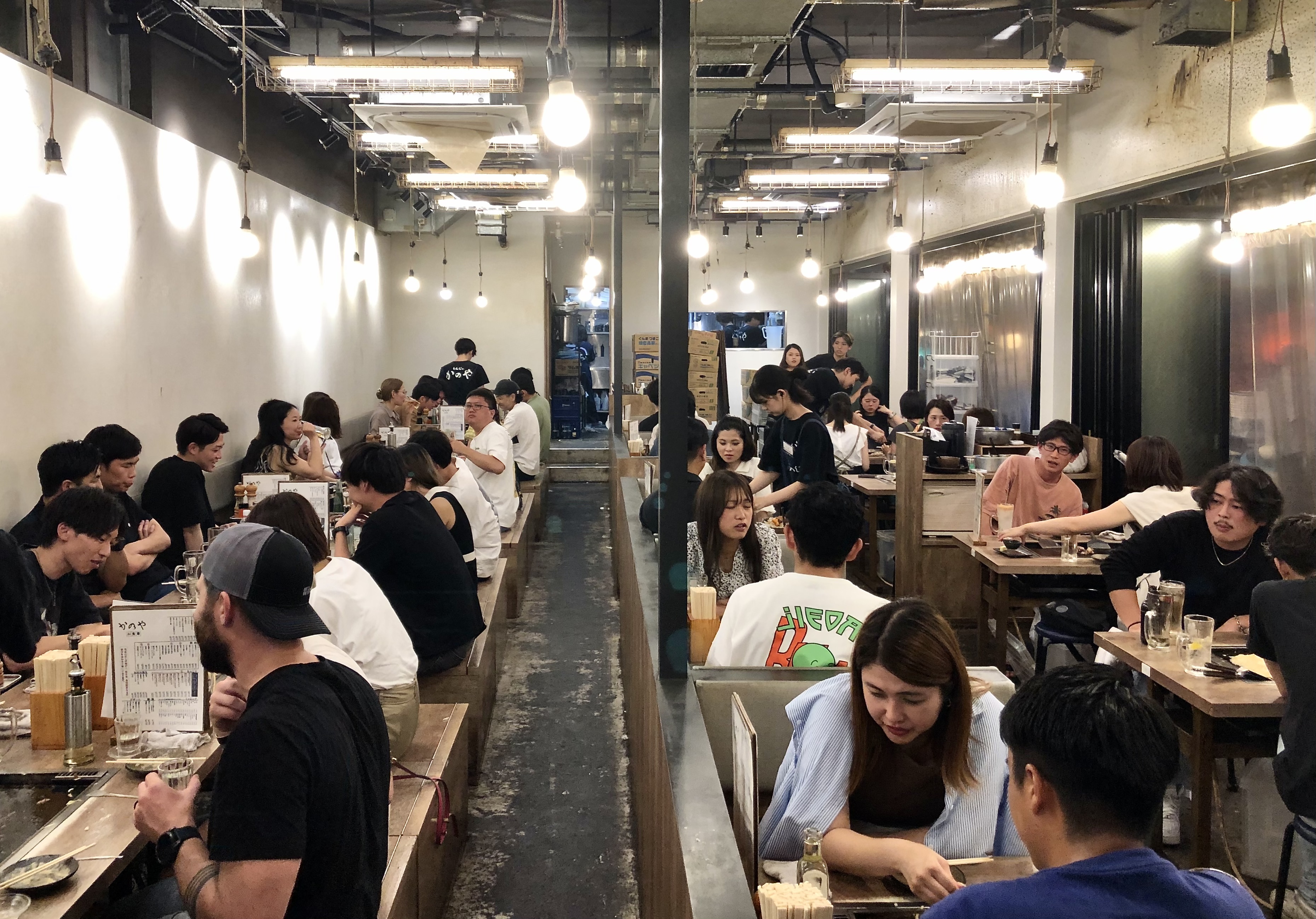
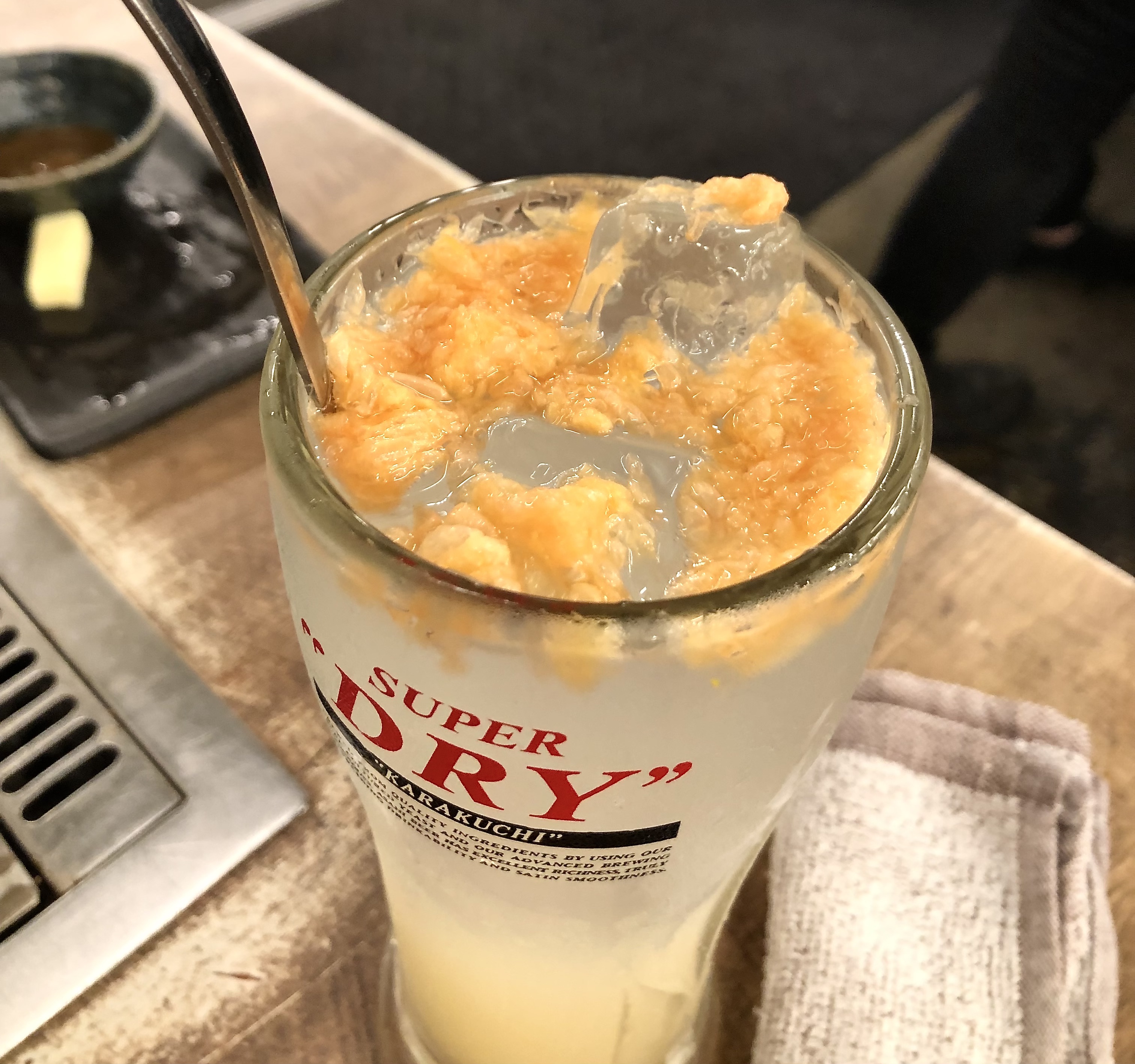
None of these honorable mentions need be particular destinations for hardcore whisky fans in the usual sense. But they each demonstrate exceptionally well the casual fun of whisky—less the appreciation of it and more the pure pleasure of downing it alongside good food and good friends. And that’s as legit a whisky experience as any cocktail bar or formal tasting.
All in all a great trip. I did many other things while in Japan besides hunt whisky and go to cocktail bars, of course. But all of that I can share with you if we’re ever together in person enjoying a nice pour and reminiscing about our travels.
In short, I highly recommend visiting Japan if you have not already. It’s so rich in culture. Between Tokyo and Kyoto alone, the range of architecture, art, and interesting neighborhoods to explore is overwhelming in scope. The people are among the kindest and most hospitable I’ve encountered, Mama Yuri and her lackies aside. Both cities are impeccably clean and safe, something I cannot say about the city I myself call home. And the whisky, cocktail bar, and food scenes are as staggering in their eclecticism as Tokyo itself.
Kanpai!


 The Right Spirit
Boy, Mark, do I ever have tales from Japan to trade with you!
To get you a head start on the whiskey side of things, look into Bar Anki in Nagoya and Gemor in Toyohashi. They are Cathedrals of bourbon, the likes of which will absolutely blow your mind! It’s been nearly a year since I visited them both and I still don’t think I have my head on straight…
LikeLiked by 1 person
I don’t know when I’ll have a chance to get back to Japan soon. (We’re hoping for a a return in the winter months for a contrast of weather.) But when I do I’ll put these recs to use. Thanks so much! 🥃
LikeLike