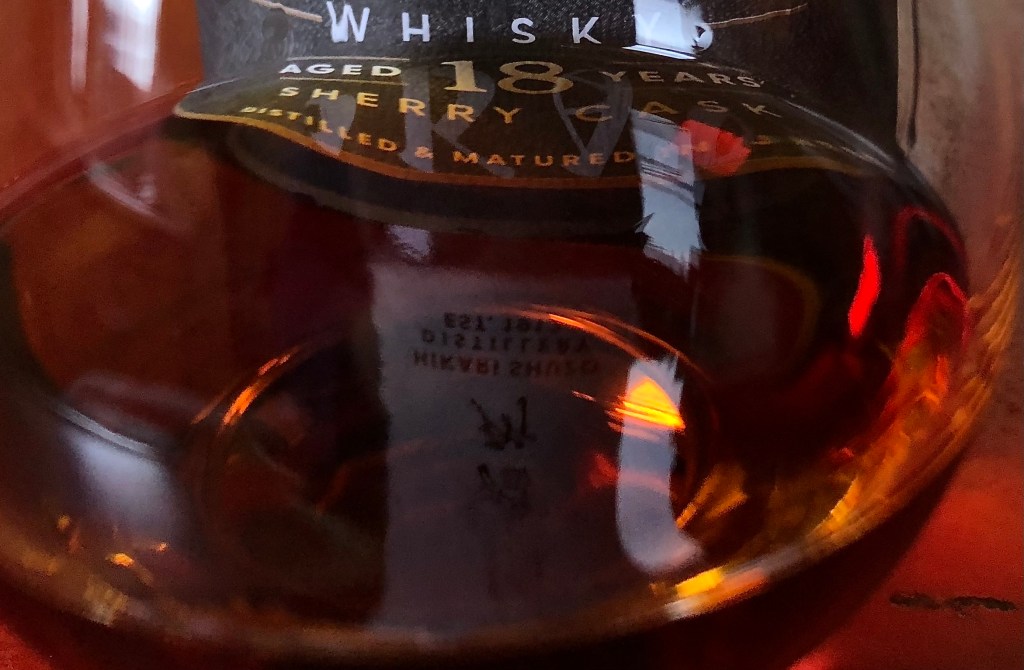
HAKATA WHISKY AGED 18 YEARS
Aged in a sherry cask (2023)MASH BILL – 100% barley, using koji for fermentation rather than a malting process
PROOF – 84
AGE – 18 years
DISTILLERY – Hikari Shuzo Distillery
PRICE – $167 (more commonly ~$180)
WORTH BUYING? – Yes
Tasted in The Year of No Buying (The what? 🔗 here.)

Hakata is a relatively new brand on the market, making few waves as of yet that I’m aware of. It is a 100% Japanese whisky (an attribute infamously less common than one might think in “Japanese” whisky) made not from rice but barley, and priced incredibly well considering other Japanese brands aged similarly that cost even five times Hakata’s price!
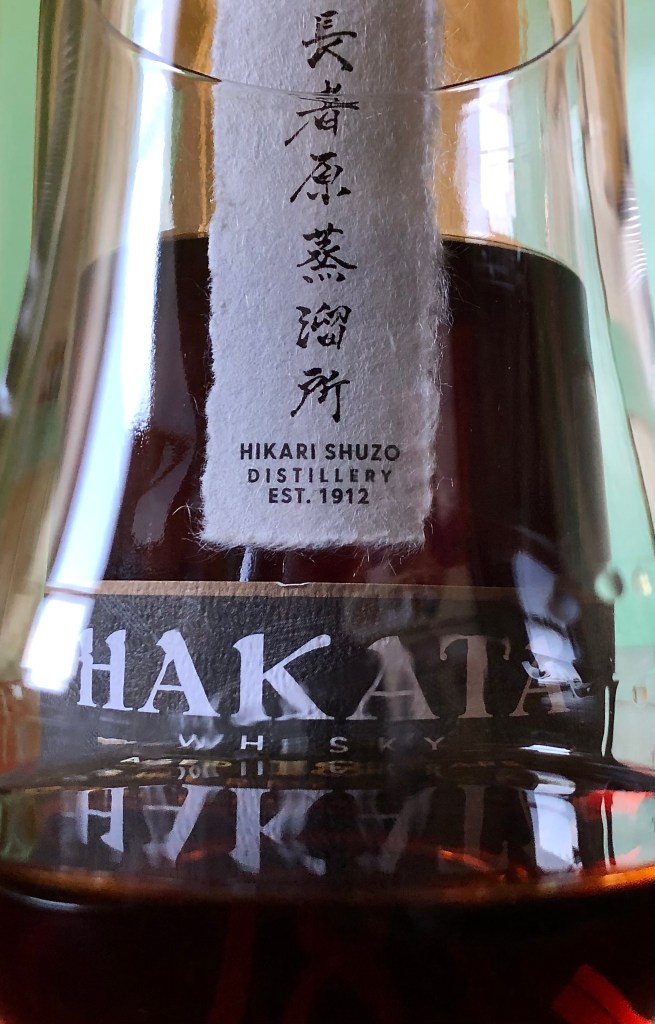
Very little information is shared on the Hakata website, and even less on the Hikari Shuzo website. This lack doesn’t exactly compel faith in the brand given the region’s longstanding reputation for bottling scotch and calling it “Japanese.” But between scrutinizing the bottle and poking about on their websites and elsewhere online, one can verify a few salient details:
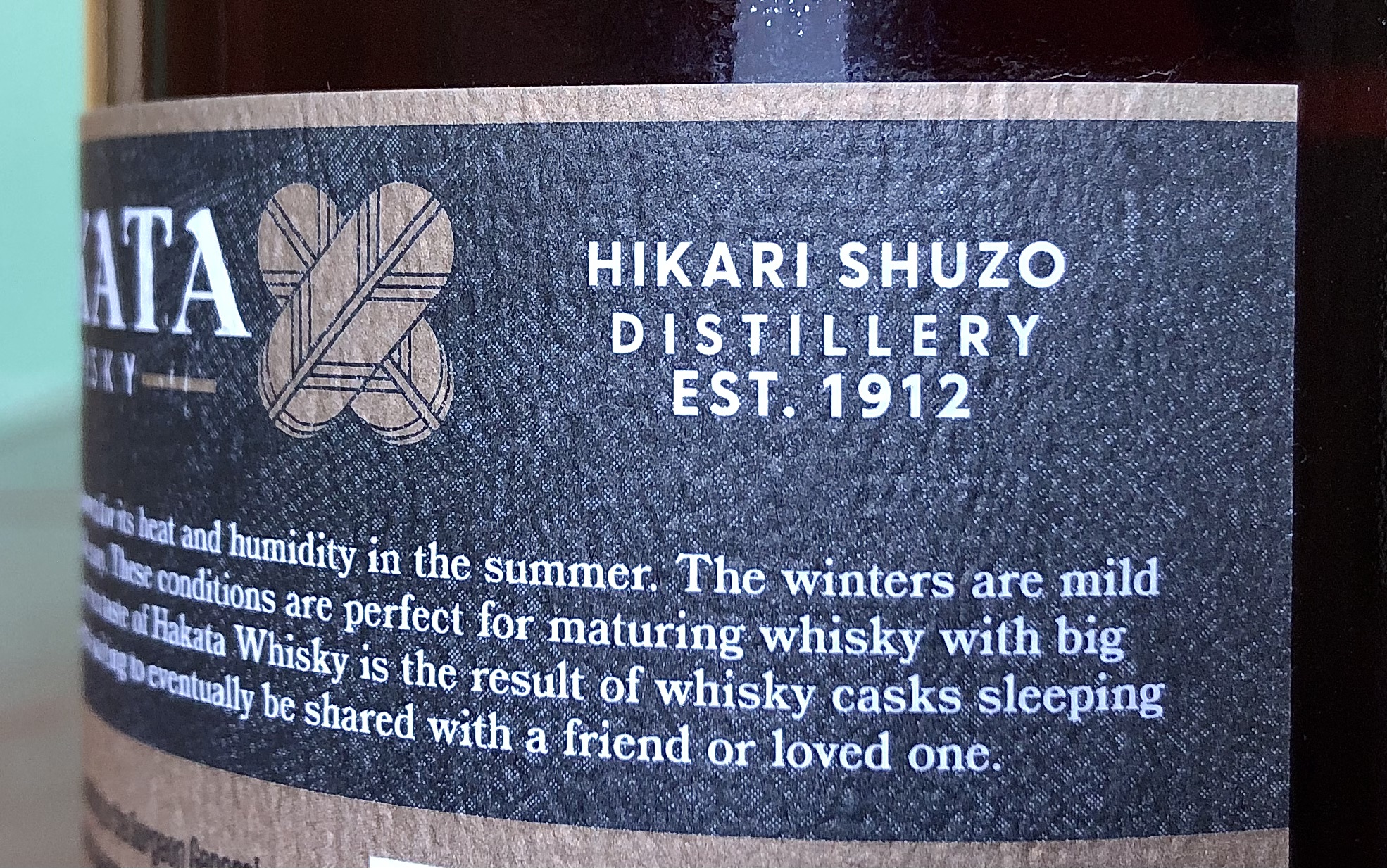
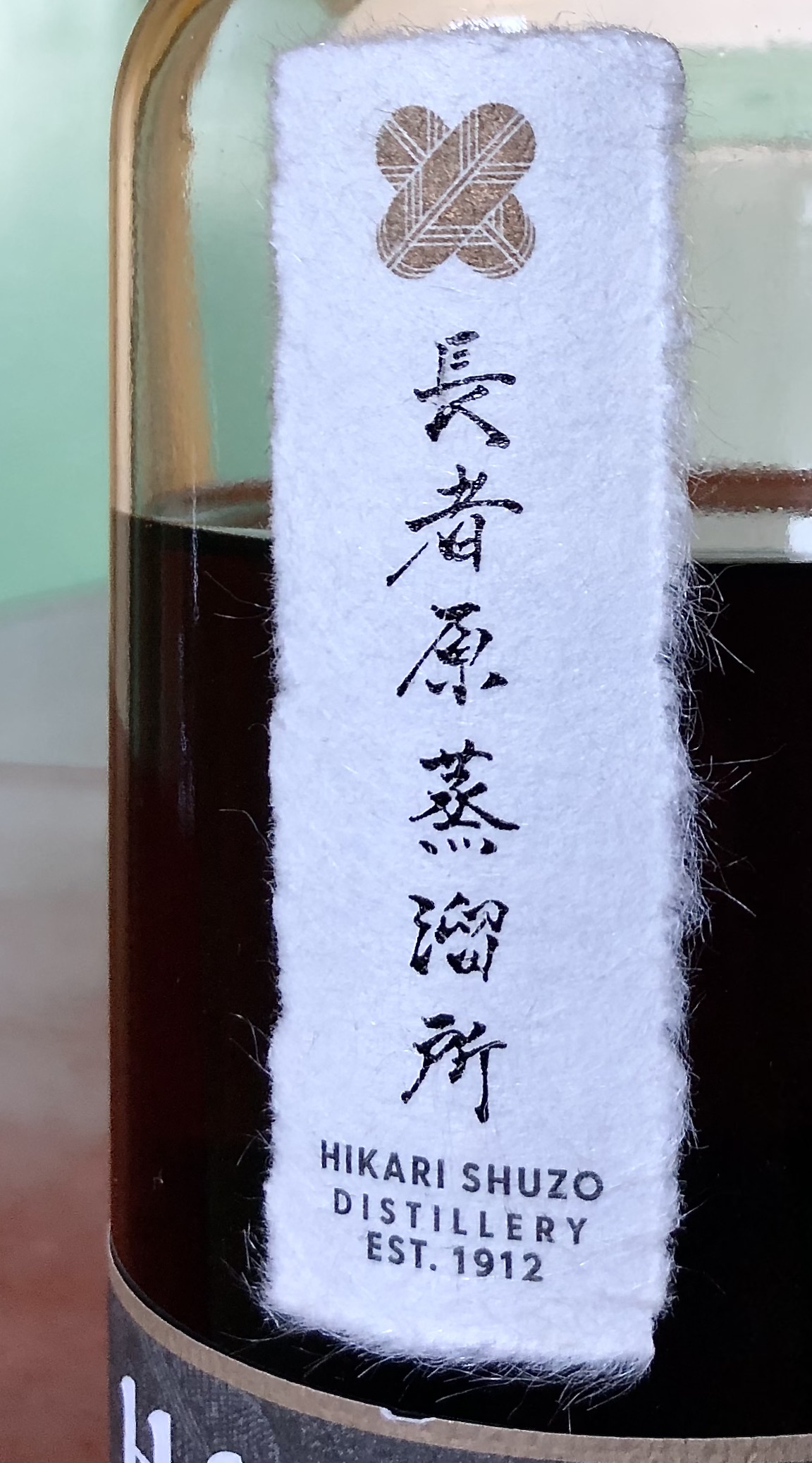
Hakata is distilled by Hikari Shuzo Distillery, founded in 1912, and located in Fukuoka, in southern Japan where the weather is often warm and humid, and/or Saitama, nearer Tokyo, depending on which website you’re reading.
Rather than malting the 100% barley mash, Hikari uses the Japanese flavoring mold, Koji, to boost fermentation and lend its signature earthy flavor.
Hakata whiskies began as shōchu, a traditional Japanese liqueur, and were aged entirely in used sherry casks. This accounts for the use of Koji rather than malting, and for why the brand is being sold only in the US…
…The US importer, ImpEx Beverages, established a similar relationship with Fukano, which also made shōchu that became whisky. The barrel aging process impacts the shōchu such that by Japanese regulations it is no longer shōchu, and yet due to its origins as shōchu it cannot be considered whisky in Japan. But in the US, Fukano and Hakata’s products are lawfully and fully considered whisky, so here they are.
Hikari owner, Eric Chhoa, is a UK resident who spent time in Scotland apprenticing at various distilleries. (A slight eyebrow raiser, considering the Kaiyō Whisky situation.)
That’s all very interesting to the interested, like myself and I imagine many who have found their way to a whiskey blog. But the ultimate question remains: How does it taste?
I agree this question is indeed the ultimate consideration. Who wants to spend money on whisky they don’t care for? However, I also recognize the legitimate role of story in the experience of a whisky. In this regard, I do not share the prevalent point of view that blind tastings are the true arbiter of one’s preferences. My reasoning is that it is so seldom the case that anyone drinks whisky without knowing at least the brand and cost, if not also the region of origin, and possibly a bit of the origin story. All these factors contribute to the experience of a whisky.
I’ve gone on about that point in other posts, and won’t dwell on it here. I mention it again because Hakata is indeed downright cheap as compared to, say, an 18 Year Yamazaki or Nikka. Hakata’s reasonable pricing got this bottle onto my shelf, and I can’t un-know how much I paid. That knowledge may not compel my tastebuds physiologically, of course. But it certainly could compel my psychological and emotional openness to the whisky. It’s easier to be open and willing when one hasn’t spent a huge amount of money. In theater, for example, one explanation for why Broadway musicals seem to inevitably get standing ovations no matter what the show, is because people paid hundreds of dollars for their tickets, so by God they’re going to stand up! In this sense, big Broadway musicals are the Pappy Van Winkles and Yamazaki 18’s of theater—well made, yet often overrated and certainly overpriced.
So back to the key question, How is it?
Here we are, three and a half weeks after uncorking and a third of the way into the bottle. These brief notes were taken using a traditional Glencairn.
COLOR – very dark, almost like coffee, with deep and smoldering cherry and plum reds
NOSE – tart dark red fruits and the koji influence take the lead, with nutty and fruity barley, earthy and mossy notes, dried maple syrup, and something akin to sulfur coming from the sherry influence
TASTE – syrupy, nutty, earthy, baked black cherry, red berry jam, dark multi-grain bread, the sulfur and koji notes wafting around it all
FINISH – baked cherry, koji, mild sulfur, dark but goopy chocolate
OVERALL – an earthy “sherry bomb” of a whisky
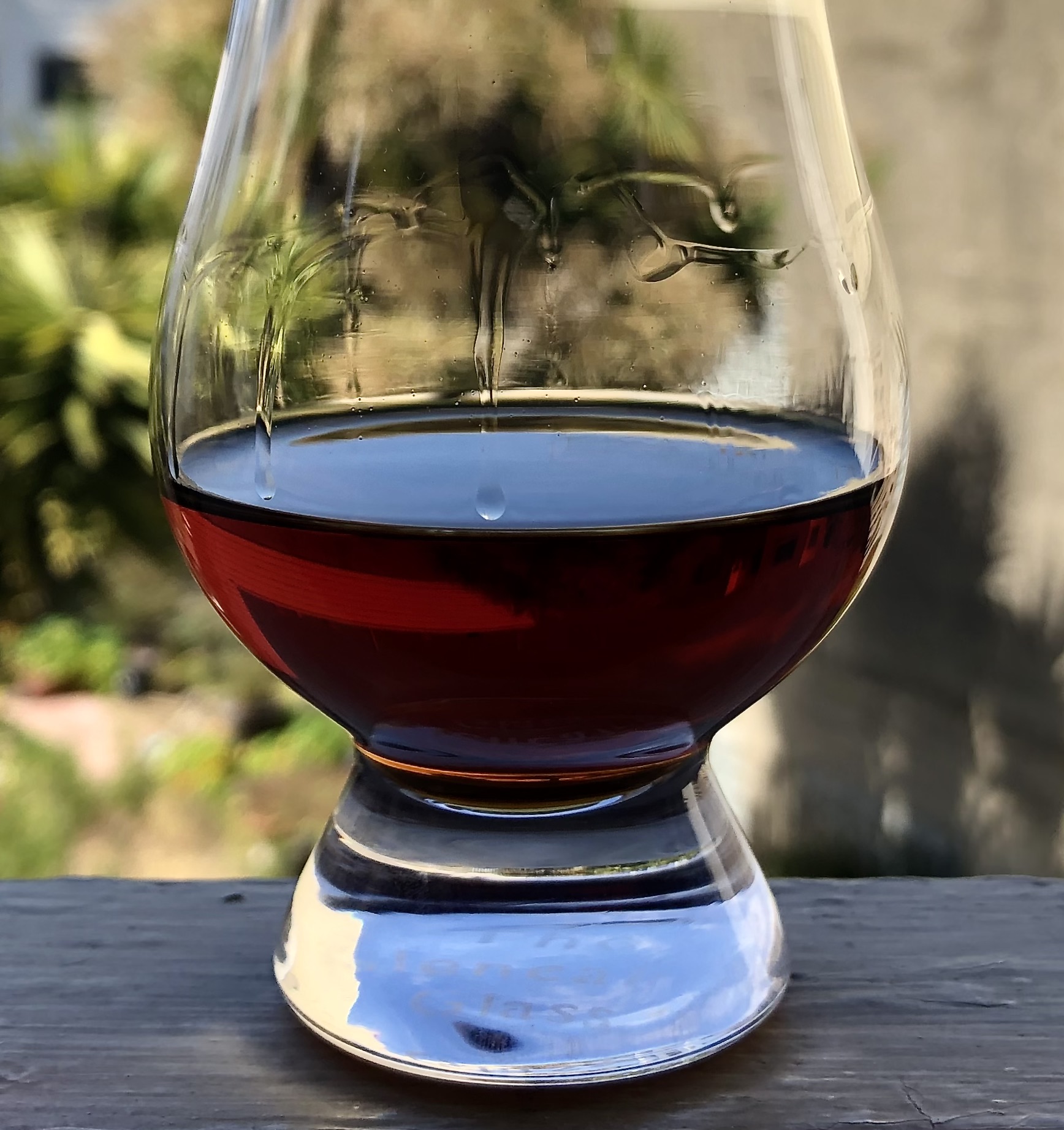
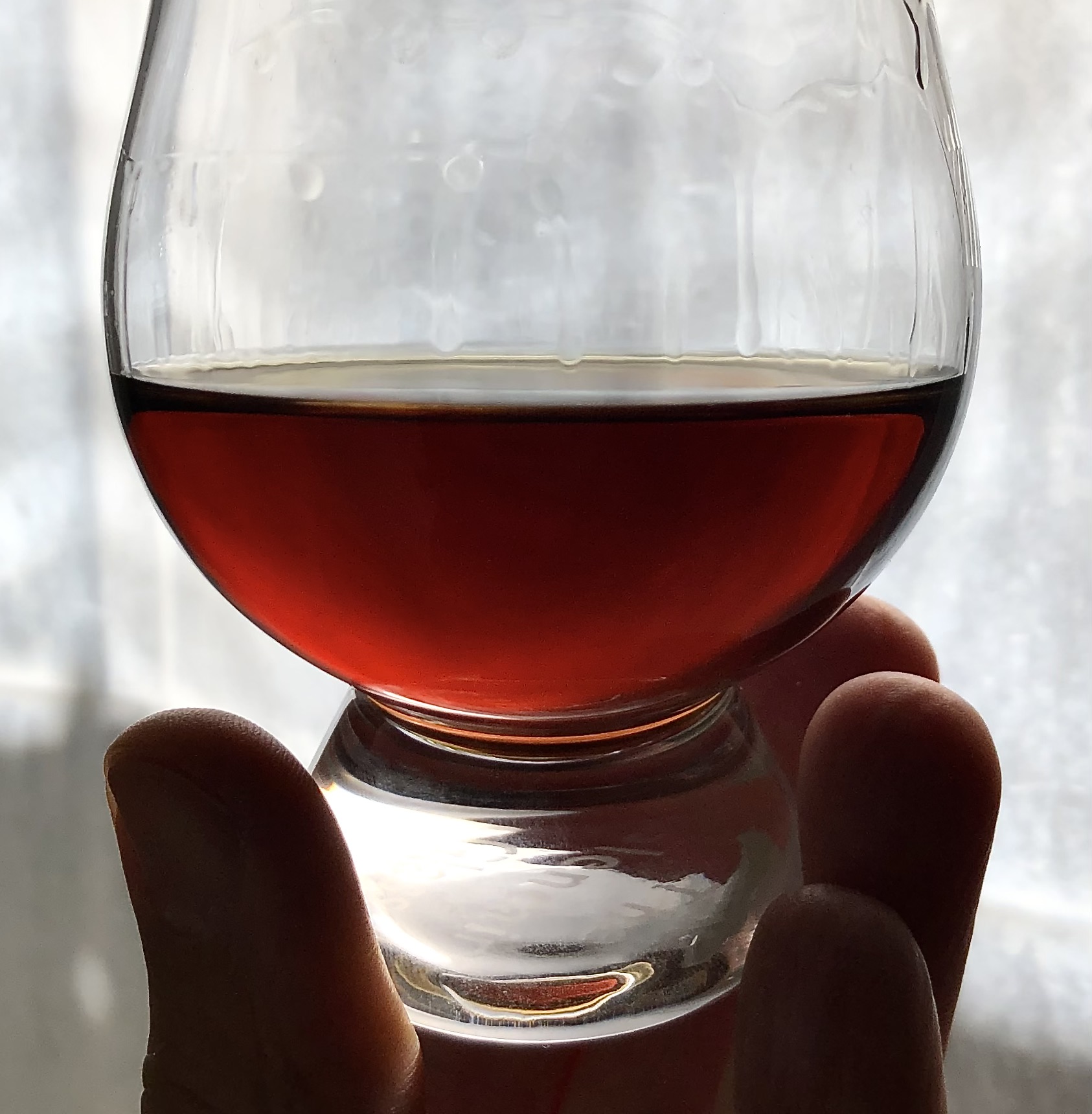
This is a unique experience. First, it might be the darkest whisky I have ever seen. At some angles it is a smoldering red, at others a reddish black.
The nose then surprises with its prominent koji and sulfuric sherry influences. They do not add an entirely appealing element, I will admit, and take some getting used to. They swirl in circles with the fruit and nutty notes, which reveal themselves more with time and patience.
The taste brightens things up with more forward fruit and sweet elements, adding complexity to the overall earthiness at work. Like the nose, the taste also takes time and patience to sort around the strong koji and sherry-sulfur in order to get at the other notes. But the rich cherry aspects are strong enough to reward the effort.
The relatively low proof allows the finish to fade quickly, though the strong flavors linger—subtly, but at length. This prolonged yet faint lingering adds to the mysteriousness of the experience. Do I like it? Do I not? I do keep reaching back for more, and that’s a good sign.
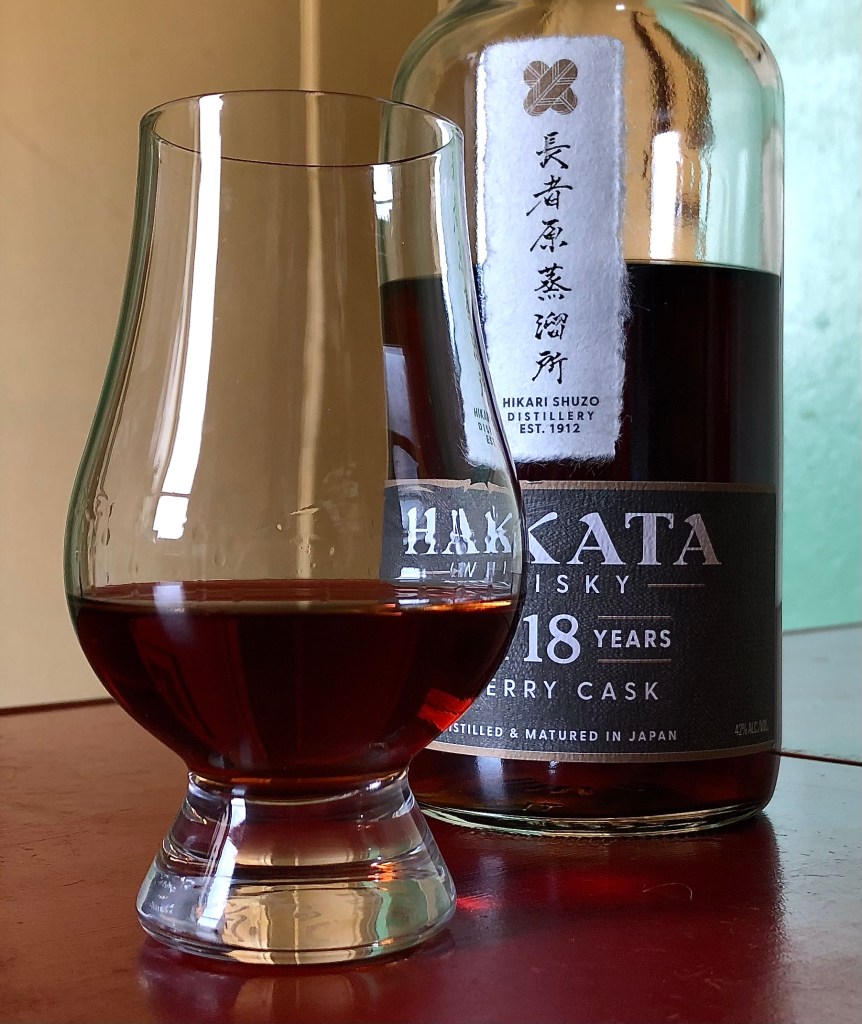
Despite its lower price, I don’t imagine Hakata will lure Yamazaki and Hakushu fans away from those bloated brands. It’s too weird, and the Suntory brands too mainstream, for there to be any David-and-Goliath style upset on the horizon. Hakata 18 Year is a whisky for fans of the unbeaten path. It offers complexity that’s unconcerned with being “likable.” This makes it fascinating, but challenging. It’s no background sipper. It’s for when I feel like digging into the details, or wrestling with a maddeningly subjective question that defies finality. There is a true pleasure to be had with that sort of thing.
That said, these very qualities that I find intriguing I can imagine someone else finding to be a deal-breaker. We could have a great conversation!
Kanpai!

 The Right Spirit
Well done! This review corresponds closely to my experience trying Hakata 18 (and 10). I didn’t know if I loved it but did know that (a) I hadn’t tasted anything like it before, and (b) it certainly wasn’t bad. I went back to the store and bought 4 more bottles (10, 16, 18×2).
LikeLike
Hey there! Thank you for sharing. I still need to explore the younger entries in the Hakata line up. Sounds like the 10 Year maybe should be next. Kanpai!
LikeLike