SILVER SPRINGS SWEET RYE
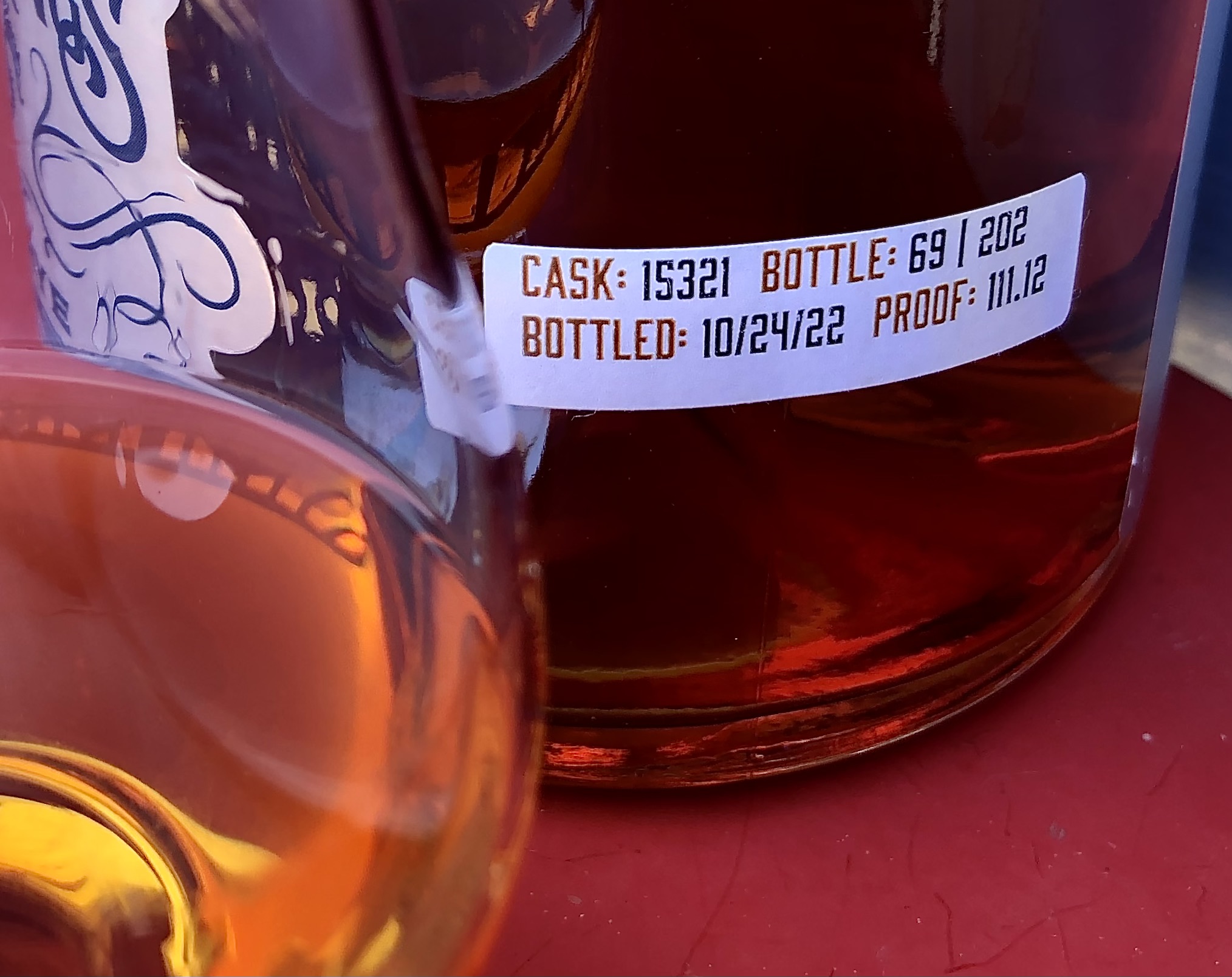
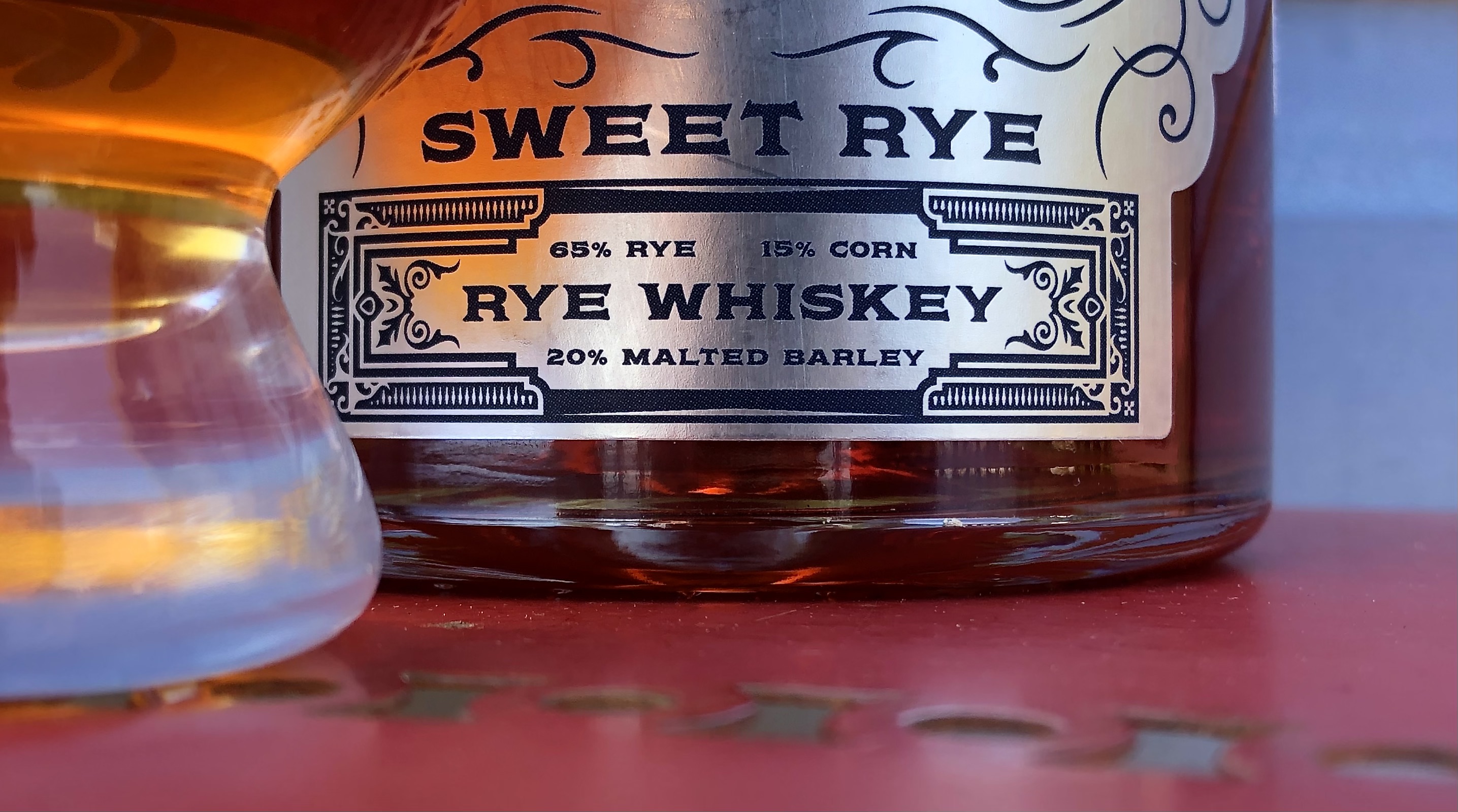
Single cask #15321 bottled October 24, 2022MASH BILL – 65% rye, 15% corn, 20% malted barley
PROOF – 111.12
AGE – NAS (4+ years)
DISTILLERY – Keeper’s Quest Brands (sourcing from Kentucky)
PRICE – $43
WORTH BUYING? – Oh yes
Uncorked and tasted in The Year of No Buying (The what? 🔗 here.)
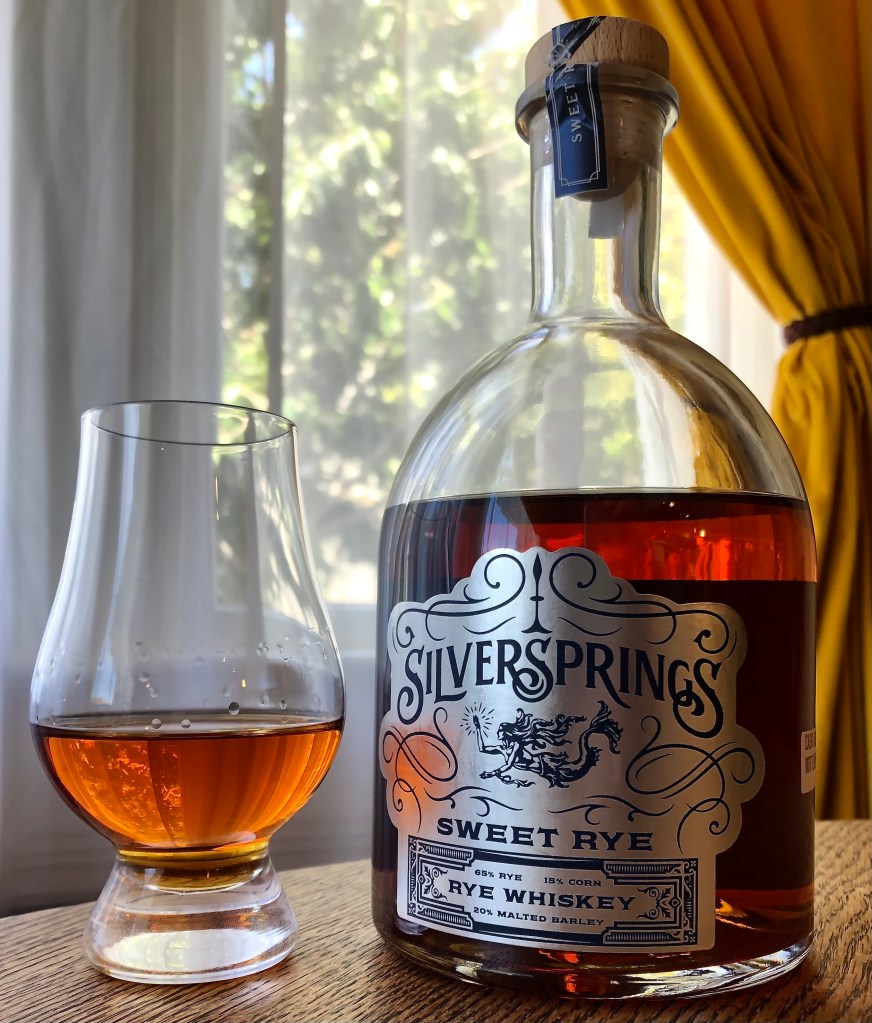
A single barrel of Kentucky rye whiskey, bottled at cask strength and without chill filtration, for this price? These specs regularly go for double what I paid for this bottle. Even $200+ isn’t unheard of these days. So what’s the deal? Or the catch?
The producer, Keeper’s Quest Brands, sounds like a fantasy role-playing game operation. But it’s a Tennessee spirits importer / exporter/ producer dealing with an eclectic range of products, among them American bourbons and ryes, scotch whiskies, and British gin. Keeper’s Quest does not distill Silver Springs Sweet Rye. They bottle and sell it. And it’s a true curiosity.
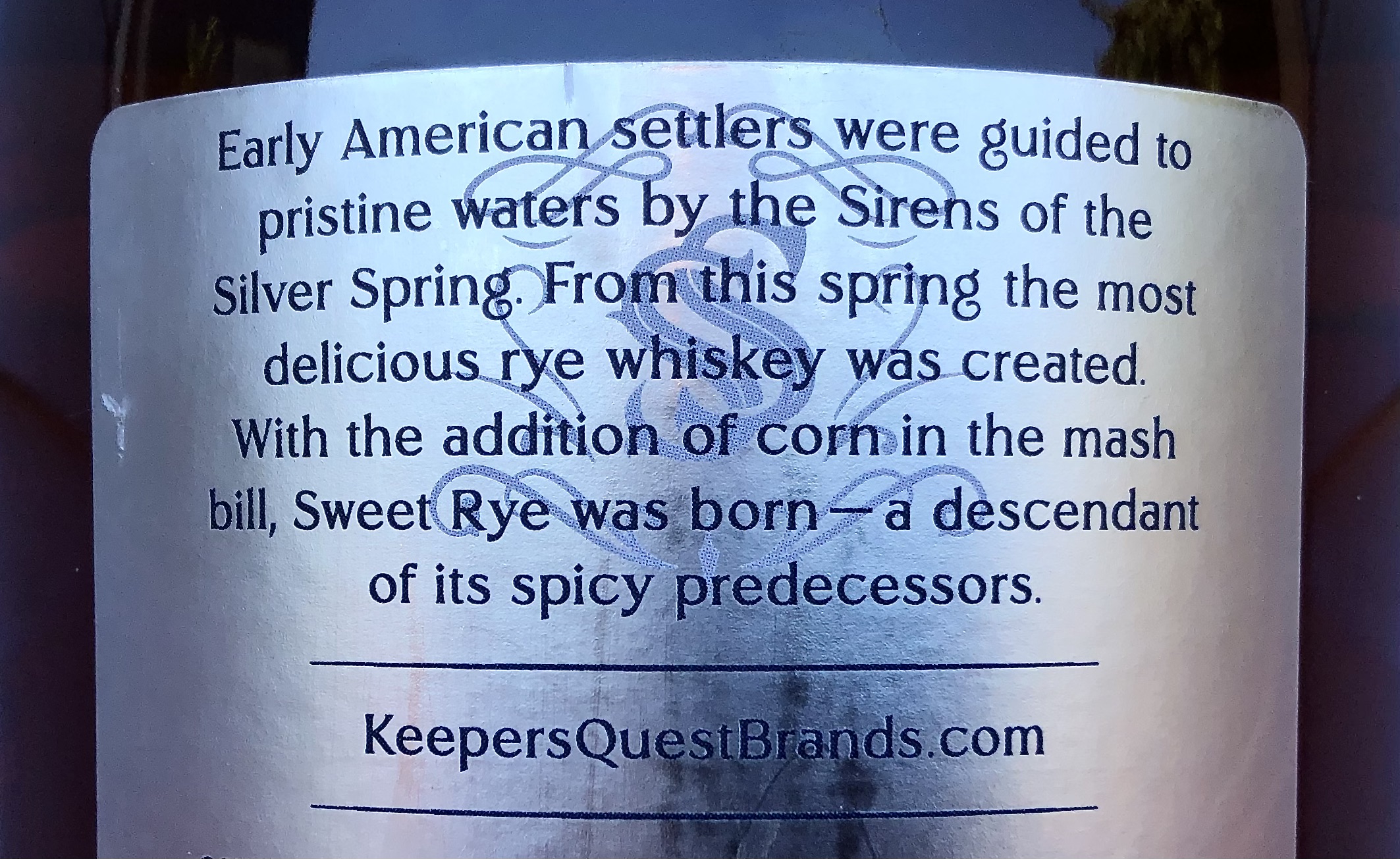
The original Silver Springs Rye was produced in Chattanooga, TN, from about 1906 until 1919. Keeper’s Quest sources this rye from Kentucky, and the mash bill points most readily to Old Forester. However, the spirits buyer at K&L let slip on an Instagram Live video that the source is actually New Riff, even though New Riff itself doesn’t sell a rye made with this mash bill.
Like Keeper’s Quest, K&L also cannot reveal the source. But from their website we do get this intel:
While the contract prohibits the disclosure of its source and it is from one of the new distillers in the state, there are few out there who would argue that it’s not making some of Kentucky’s best rye whisky. This special mashbill was developed by the illustrious Ed Kohl, industry veteran and Keeper of the Quiach, a totally original take on the old recipe. Distilled on the traditional Kentucky bourbon column still with a traditional doubler. Ed envisioned a “sweet rye” with a higher-than-normal malt and corn content. This might give you some clues to the source as the great rye recipe he’s referring to when telling this story is from across the river and has migrated to Kentucky at certain choice establishments.
Though we know already this rye is from New Riff, still I do enjoy a good rabbit hole. 🕳️🐇 Had I not caught that Instagram Live reveal, how might I have gone about sourcing the source? The K&L blurb offers clues, but also confusion:
Clue: “It is from one of the new distillers in the sate.” There are a lot of those, and “new” is a relative term. Kentucky Artisan Distillery is “new” compared to many, and is known to contract distill. Peerless is new, not known for contract distilling but one can never be sure about these things. New Riff is new and also not known for contract distilling. But from this comment at least we might rule out Old Forester and other of the big boys.
Clue: “Few out there who would argue that it’s not making some of Kentucky’s best rye whisky.” This suggests a particularly popular and respected brand.
Clue: “This special mashbill was developed by the illustrious Ed Kohl.” This suggests it was contract distilled by Kohl, a longstanding mover and shaker in the spirits industry. This is also another point against the Old Forester option.
Confusion: “A totally original take on the old recipe.” The mash bill is not original at all. Old Forester uses it. 🤔
Clue: “Distilled on the traditional Kentucky bourbon column still with a traditional doubler.” One could track down the equipment at various distilleries, but that’s a leg of the rabbit hole I forwent.
Confusion: “…a higher-than-normal malt and corn content. This might give you some clues to the source as the great rye recipe he’s referring to when telling this story is from across the river and has migrated to Kentucky at certain choice establishments.” Here’s where I pause. The mash bill has already been addressed. But starting at the end, “certain choice establishments” suggests this mash bill is used by some small number of outfits. My Googling only turns up Old Forester and Woodford Reserve (also produced by Old Forester’s parent company, Brown-Forman), neither of which could be considered new. “From across the river and has migrated to Kentucky,” assuming it’s the Ohio River, suggests a mash bill from Indiana, which almost inevitably means MGP. MGP is known to make a 95% and 51% rye, not a 65%. MGP does contract distill, however… All of this points away from New Riff or any other “new” distiller as the source. So… 🤷🏼♂️
This could be either sloppiness on the part of K&L’s marketing copy, or an intentional red herring thrown out by them to help ensure the contractually-obliged obscurity of this rare and uncommonly affordable rye whiskey’s origins.
In any case, we know it’s New Riff because of that unexpected Instagram Live reveal. And that’s good news because New Riff makes great stuff! The chance to try a cask strength outing of a rye mash bill they made but don’t themselves sell is rare indeed. And the price is arguably wackadoodle—in the best way.
So how is the whiskey itself?
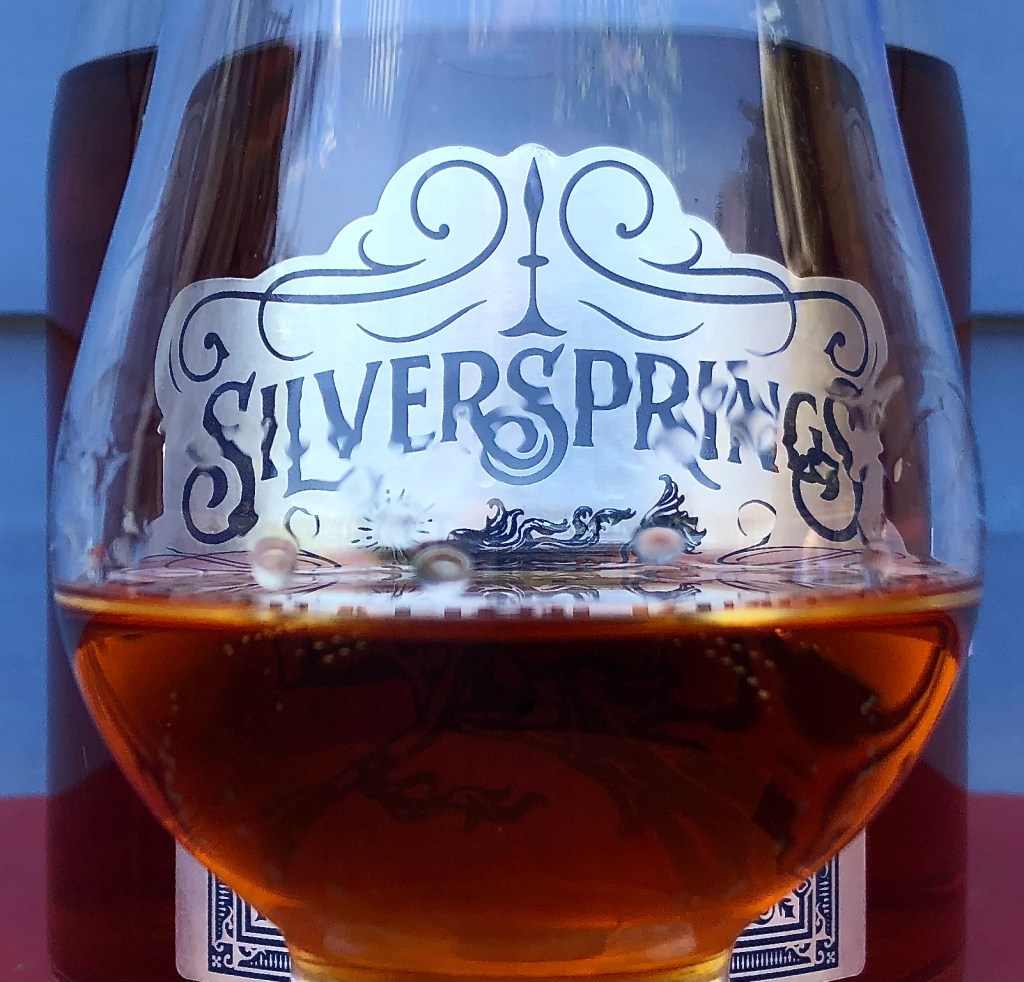
Here we are, two weeks after uncorking and four pours into the bottle. These brief notes were taken using a traditional Glencairn.
COLOR – an incredible range from dusty oranges to fiery reds
NOSE – classic Kentucky rye spice, coarsely ground black pepper, crystal sugars on cookies, cola and sarsaparilla, rough cut oak wood, subdued cherry and caramel, unbaked pastry dough, a passing whiff of mint
TASTE – the rye, baking, and wood spices right up front, with thick oozing caramel, milk chocolate leaning dark, black pepper and oak wood, the cola and sarsaparilla
FINISH – very like the taste, the flavors lingering in a deep and easygoing warmth
OVERALL – like some kind of sweet, chewy, homemade cookies or craft cola drink

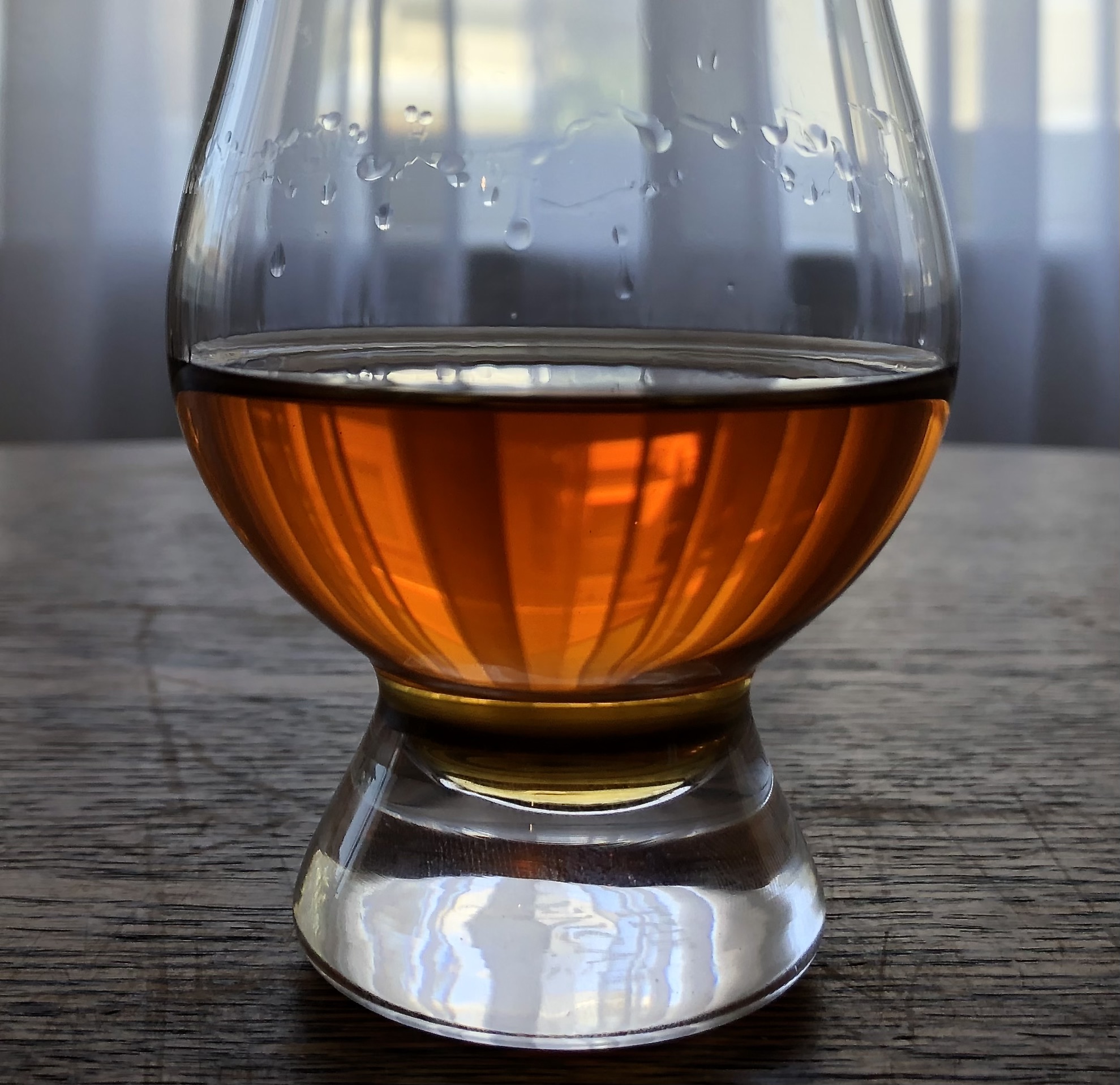
This is good Kentucky rye. It tastes real, meaning not churned through a big factory. The aromas, the flavors, the texture, the warmth, everything conjures homemade.
For a “sweet” rye this is rather reserved in that regard, and that isn’t at all a bad thing. The whiskey is very balanced between its dry and sweet aspects. The various grain, wood, baking, candy, and fleeting fruit notes all work like a bluegrass choir that’s been singing together for a long long time and know how to blend, when to pull back, when to lean forward.
Balance is the word that keeps coming to me. It’s just rough enough, just smooth enough, just dry enough, just sweet enough. Clear without being light. Dark and rich without slipping into decadence. It makes me think of Springbank scotch whiskies in this regard—perfect in a way that’s absolutely enjoyable and yet risks slipping from memory for lack of attention-grabbing aberrations.
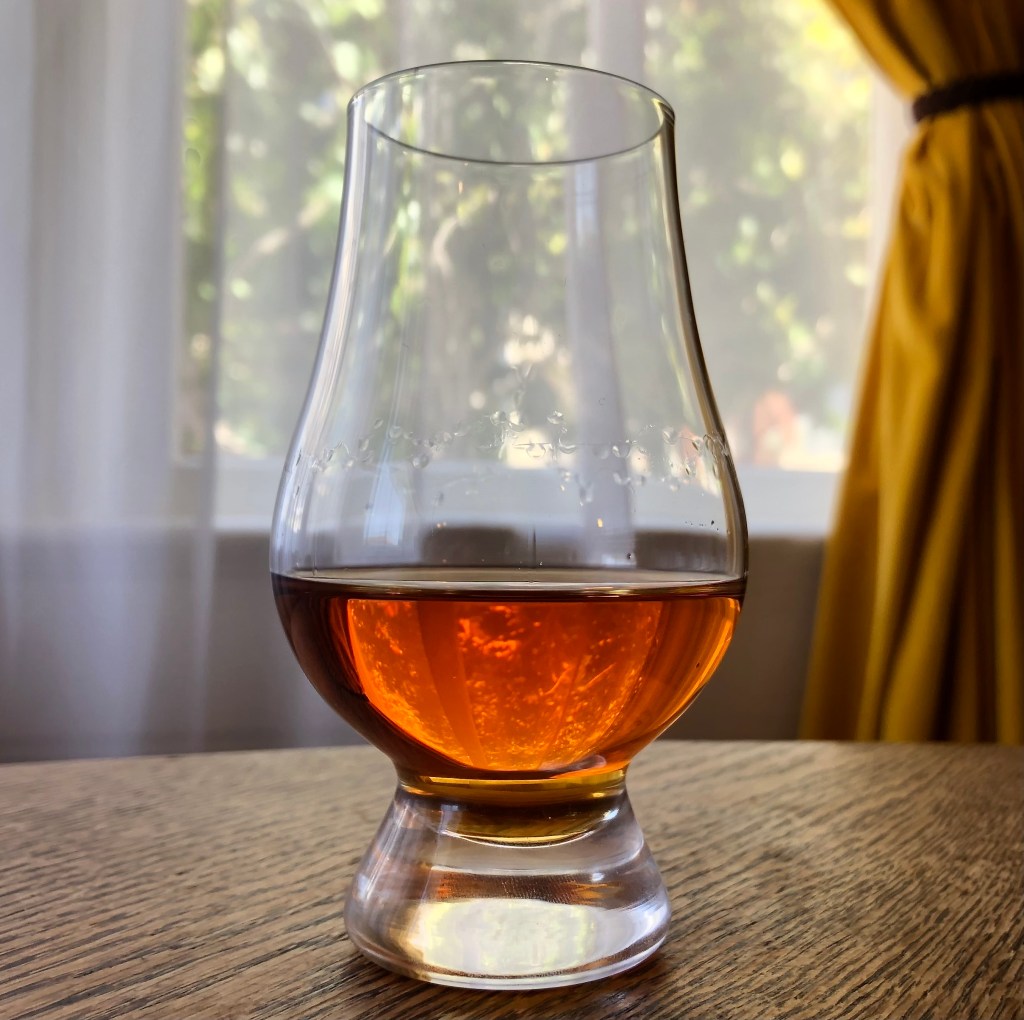
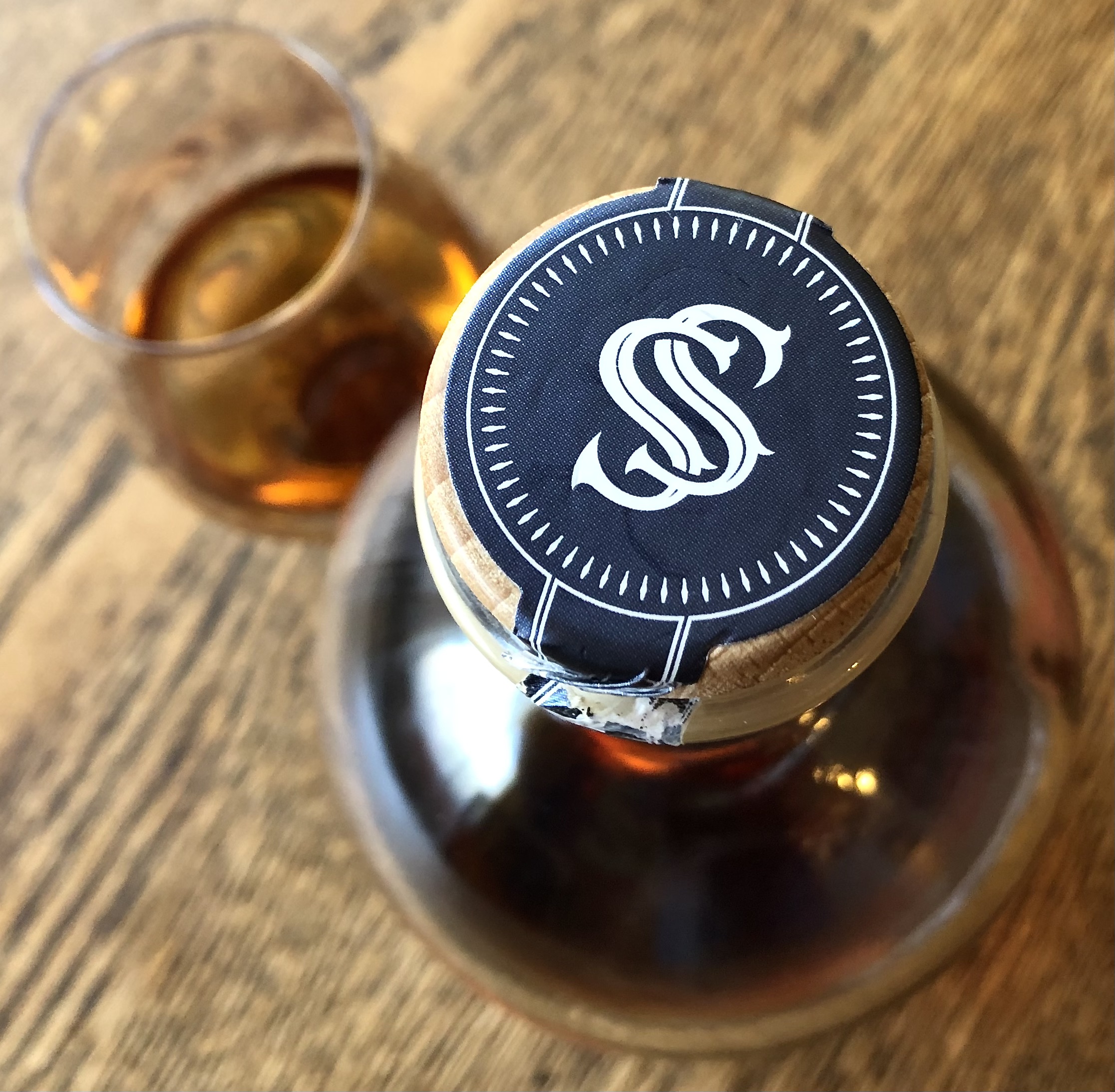
Maybe someone wanting something even sweeter might find this sweet rye lacking. I could understand that. The proof is substantial yet the heat never bites—though for someone less accustomed to cask strength whiskeys perhaps it might indeed come across too hot. But if ever a rye whiskey deserved to be a mainstay on one’s home bar shelf, Silver Springs is it. Humble but attractive packaging, tastes great neat, I look forward to putting it toward some classic cocktails, and that price!
Cheers!

 The Right Spirit