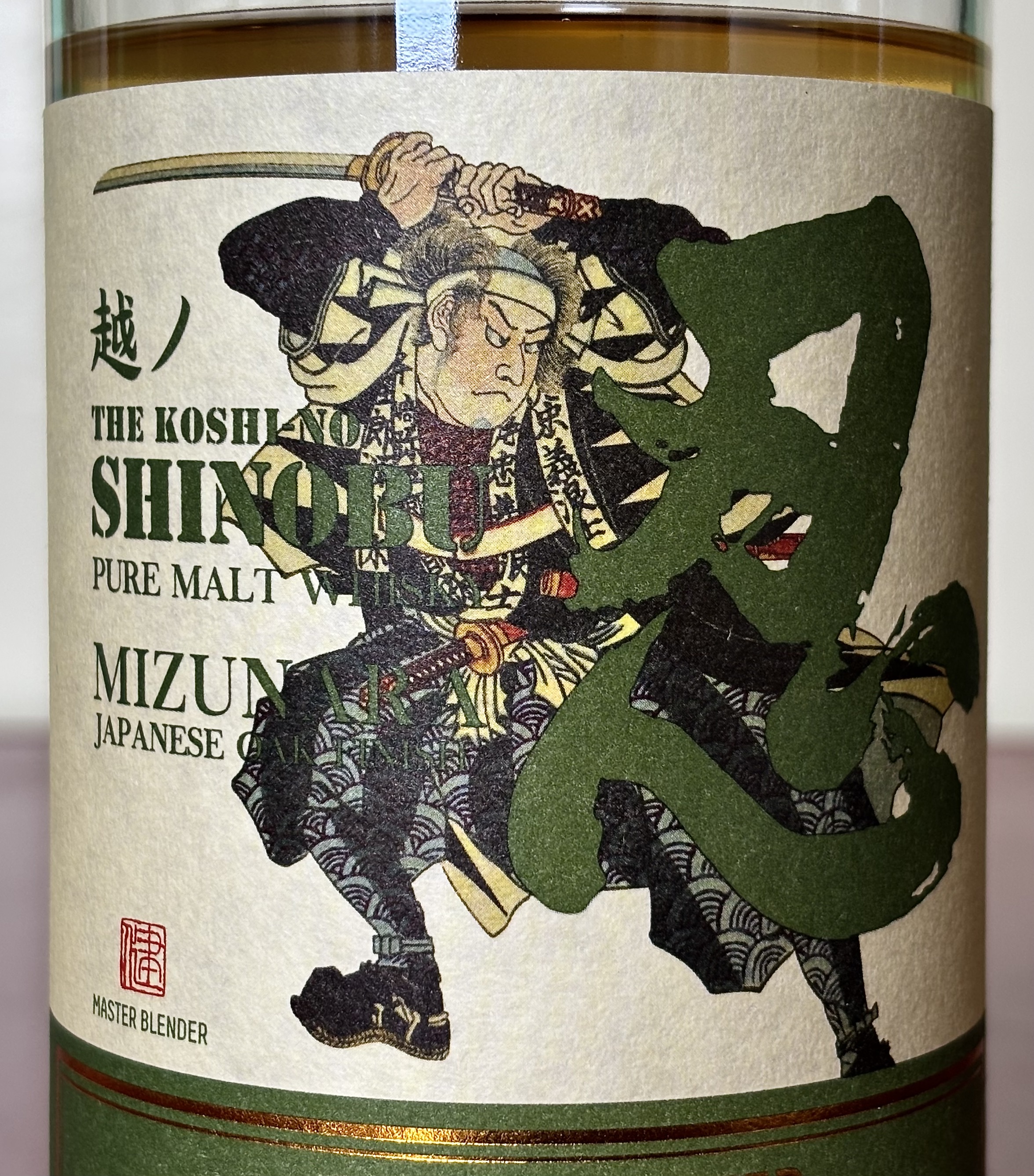
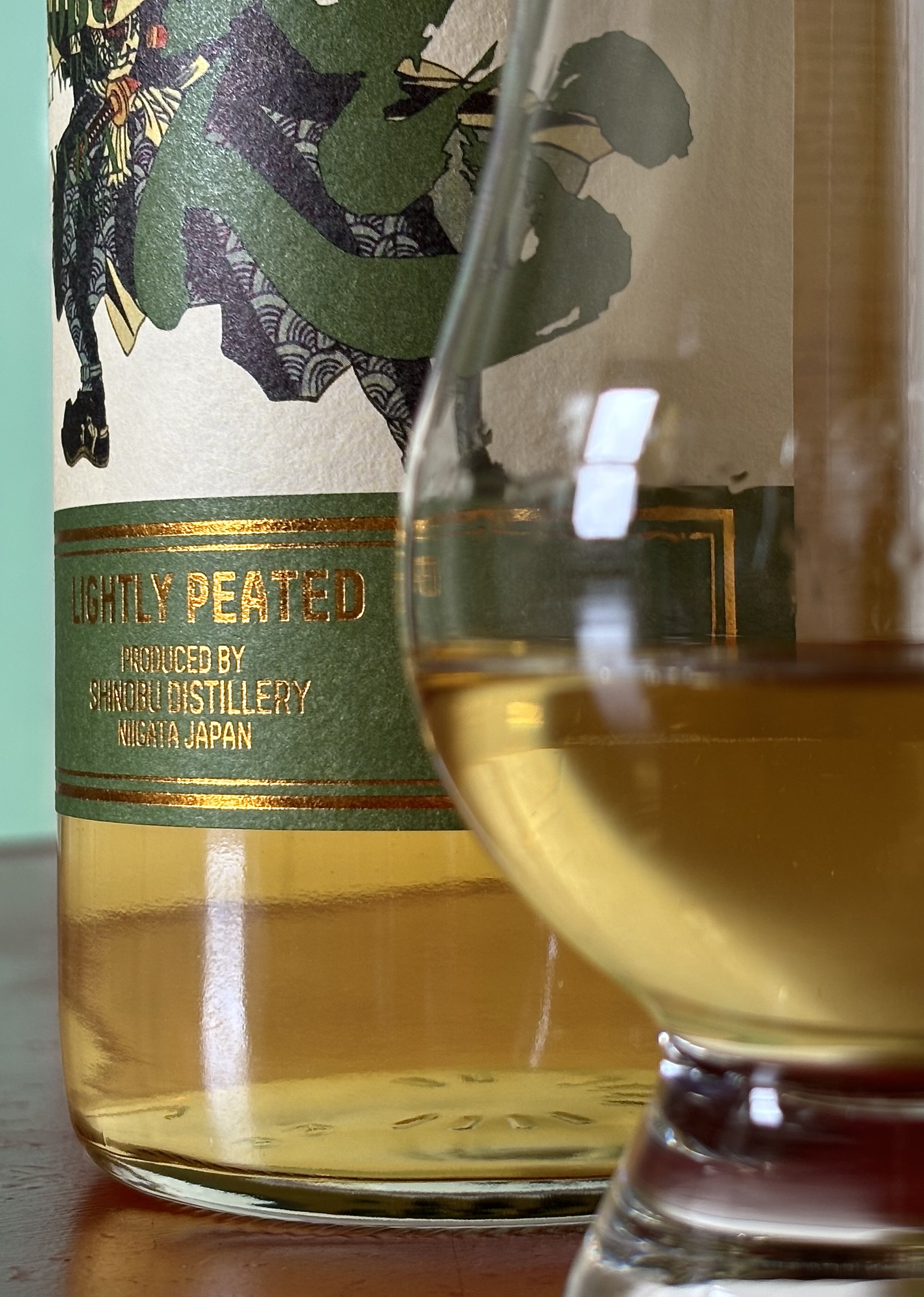
PURE MALT LIGHTLY PEATED
MASH BILL – unstated blend of malt whiskies
PROOF – 86
AGE – NAS
DISTILLERY – Shinobu (blending sourced whiskies)
PRICE – $51 (on sale; more commonly ~$70)
WORTH BUYING? – Yes
NEWBORN
1st US Release 2024MASH BILL – 100% malted barley
PROOF – 100
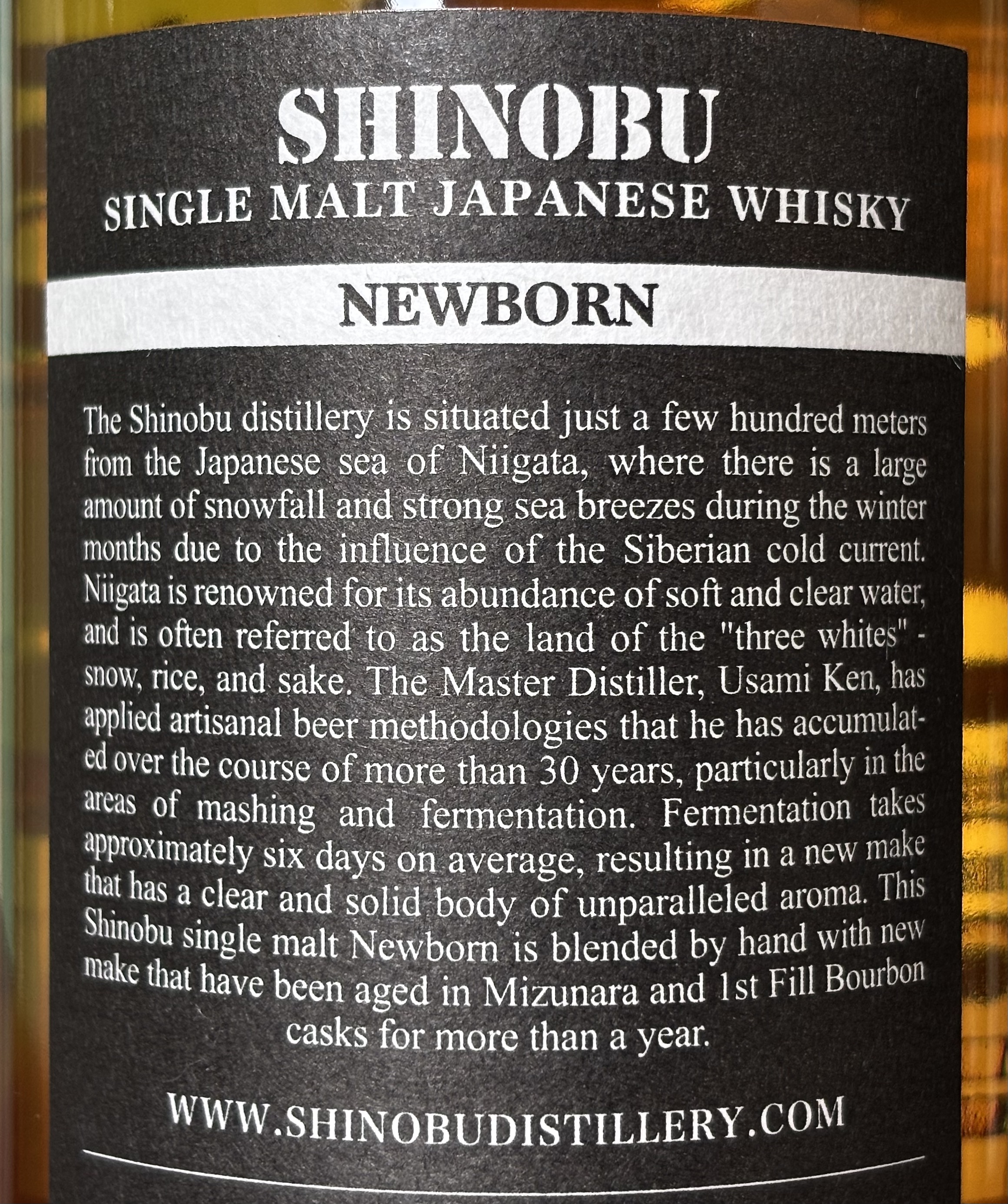
AGE – NAS (“more than one year” according to the fine print)
DISTILLERY – Shinobu
PRICE – $40
WORTH BUYING? – Yes
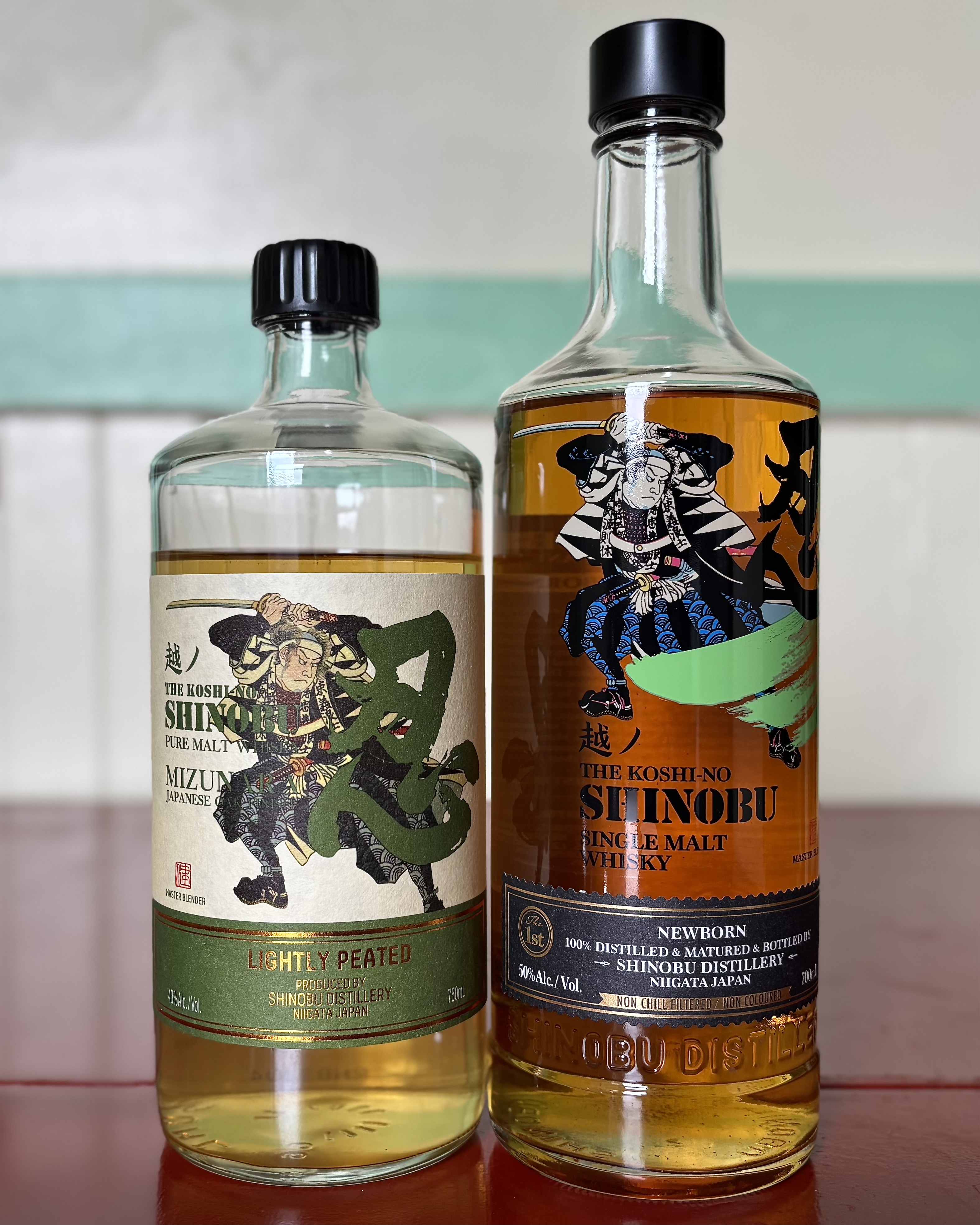
My curiosity about Shinobu began when I was perusing the Japanese section at one of my local whisky shops, and the clerk said, for his money, as a daily Japanese go-to whisky the Shinobu Lightly Peated beat out Suntory’s Toki any day.
Later that evening I poked around on the www to learn more about the brand. Founded by Niigata Beer and distributed by the Shin Group, which handles a half-dozen+ Japanese and Scottish distilleries and breweries, Shinobu Distillery began operations in 2018. While their own new distillate was being developed and then aging, they put out blends of scotch and Japanese whisky sourced from other distilleries—one might assume those Shin Group handles, e.g. Akashi, Wolfburn, Glasgow—finishing them in Japanese Mizunara oak casks. They currently still produce these sourced blends, and their first fully in-house release, Shinobu Newborn, came out in 2024.
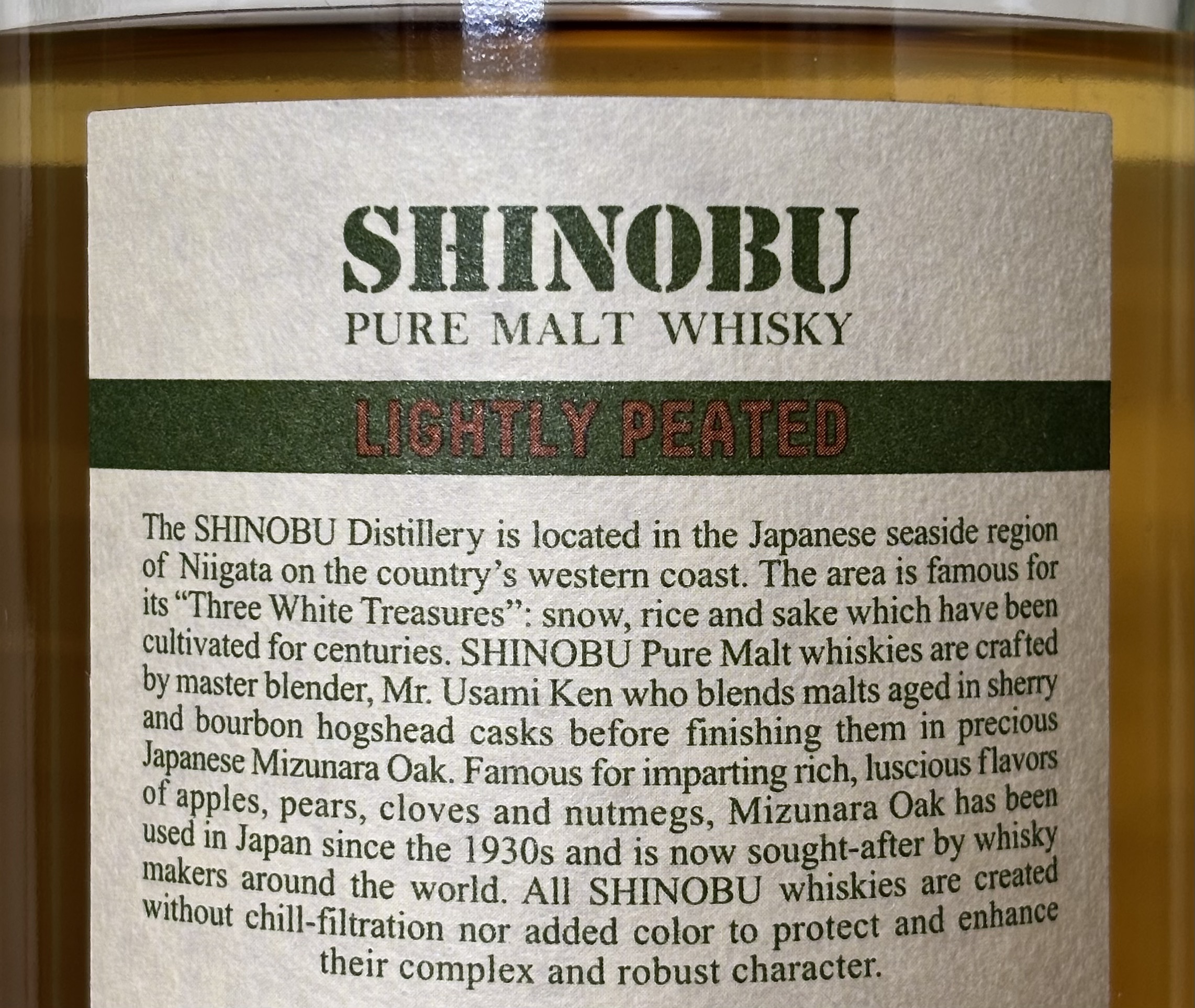
The Shinobu Lightly Peated label notes the whisky is non-chill filtered, with no added color. But it doesn’t make an explicit point that it’s a blend of sourced whiskies rather than Shinobu’s own. This can irritate whisky enthusiasts, who value transparency and tend to regard its lack with disdain. (Longtime followers of this blog may recall my own raised eyebrow over the “Japanese” brand Kaiyō, for example.) But in interviews, Shinobu’s master blender, Usami Ken, though he doesn’t emphasize the point, has nevertheless acknowledged the use of sourced whisky.
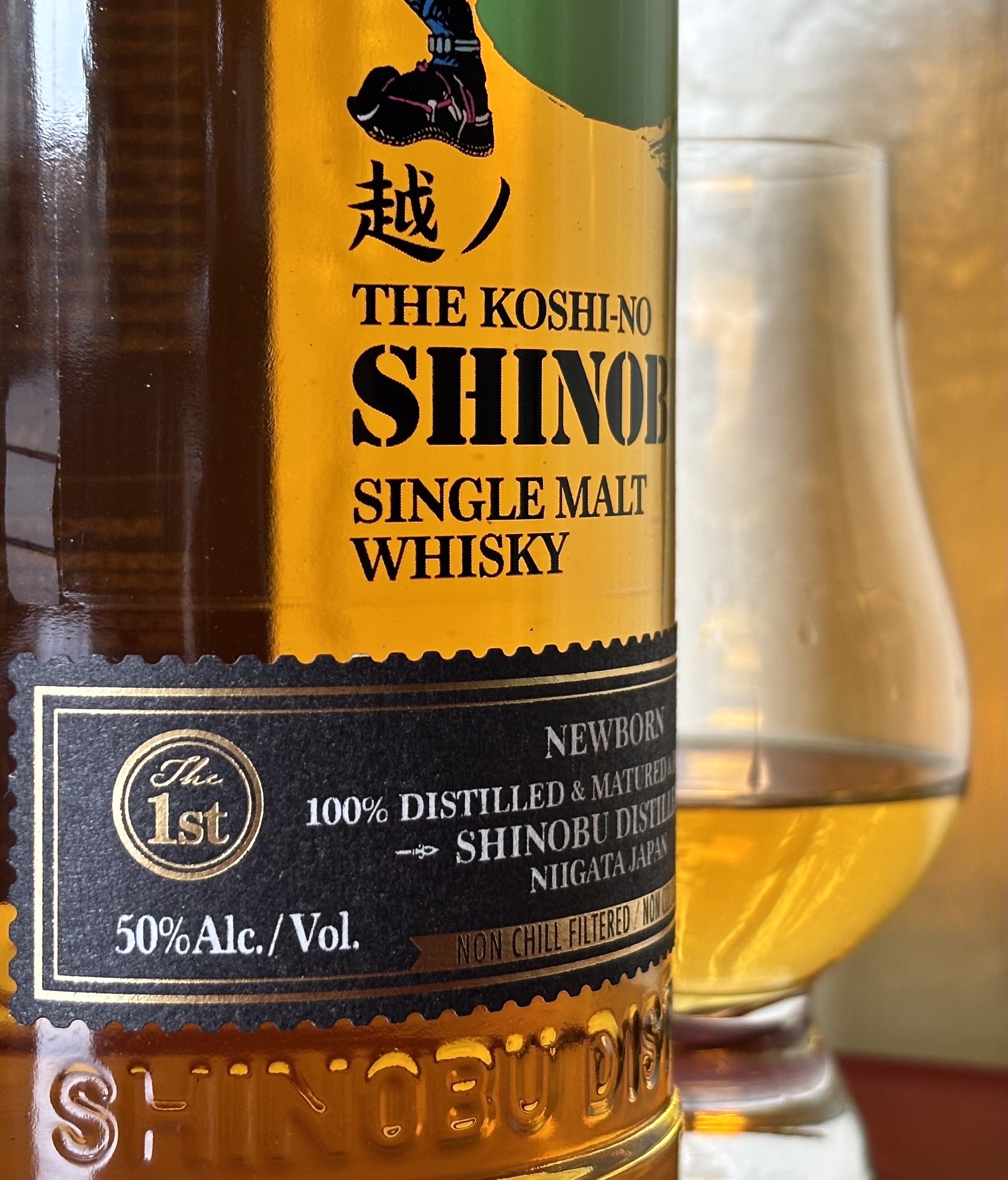
The Newborn label notes non-chill filtered status, no added color, and states explicitly that the whisky is “100% Distilled, Matured & Bottled by Shinobu Distillery.” But it does not indicate the age. As close as they get is stating on the back label that the whisky is “aged in Mizunara and 1st fill Bourbon casks for more than one year.” We can guess that means it’s aged something less than two years total. With just one more detail—naming the exact age—they could have checked off all the boxes! Maybe they didn’t because one year is not terribly impressive—arguably even the opposite of impressive!
As a relatively new brand, and one the distributer of which makes a point in their marketing of valuing integrity and honesty, it’s surprising Shinobu hasn’t fully embraced the 2021 Japan Spirits & Liqueurs Makers Association agreements around transparency and label standards for Japanese whisky. If they hope to stand out, why not share their full stats and intentions up front on the label? Most whisky drinkers aren’t digging online to research brands new to them. A fully transparent label can be a selling point for casual and fanatical drinkers alike.
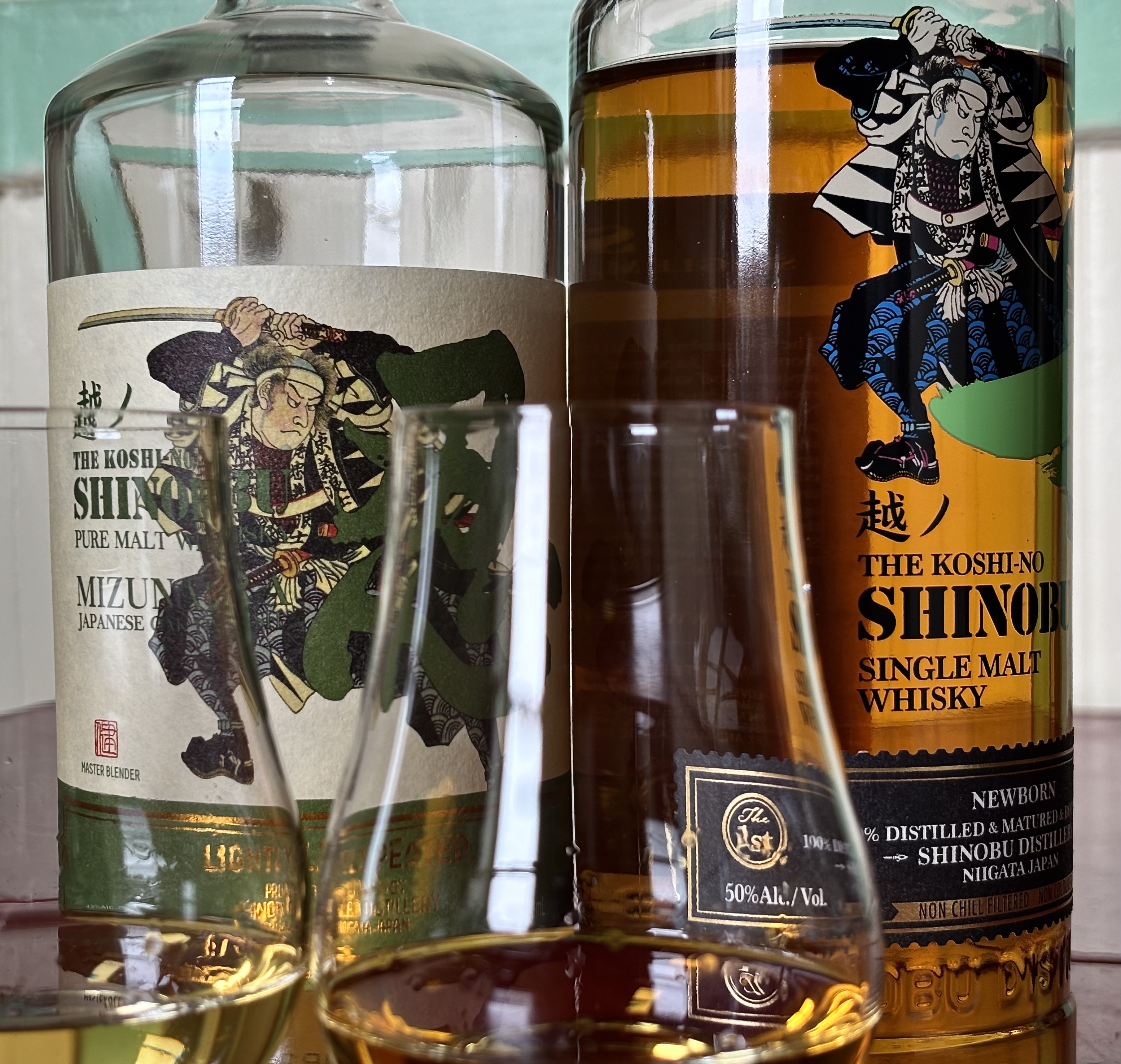
A couple weeks after my online deep dive into Shinobu, that shop I’d visited put the Lightly Peated release on sale. I picked up a bottle. Very much looking forward to trying it, I posted about my purchase and anticipation on the blog’s social media accounts. As if to demonstrate the fervor Japanese whisky fans have for the matters noted above, the following exchange ensued on the Right Spirit Threads account:


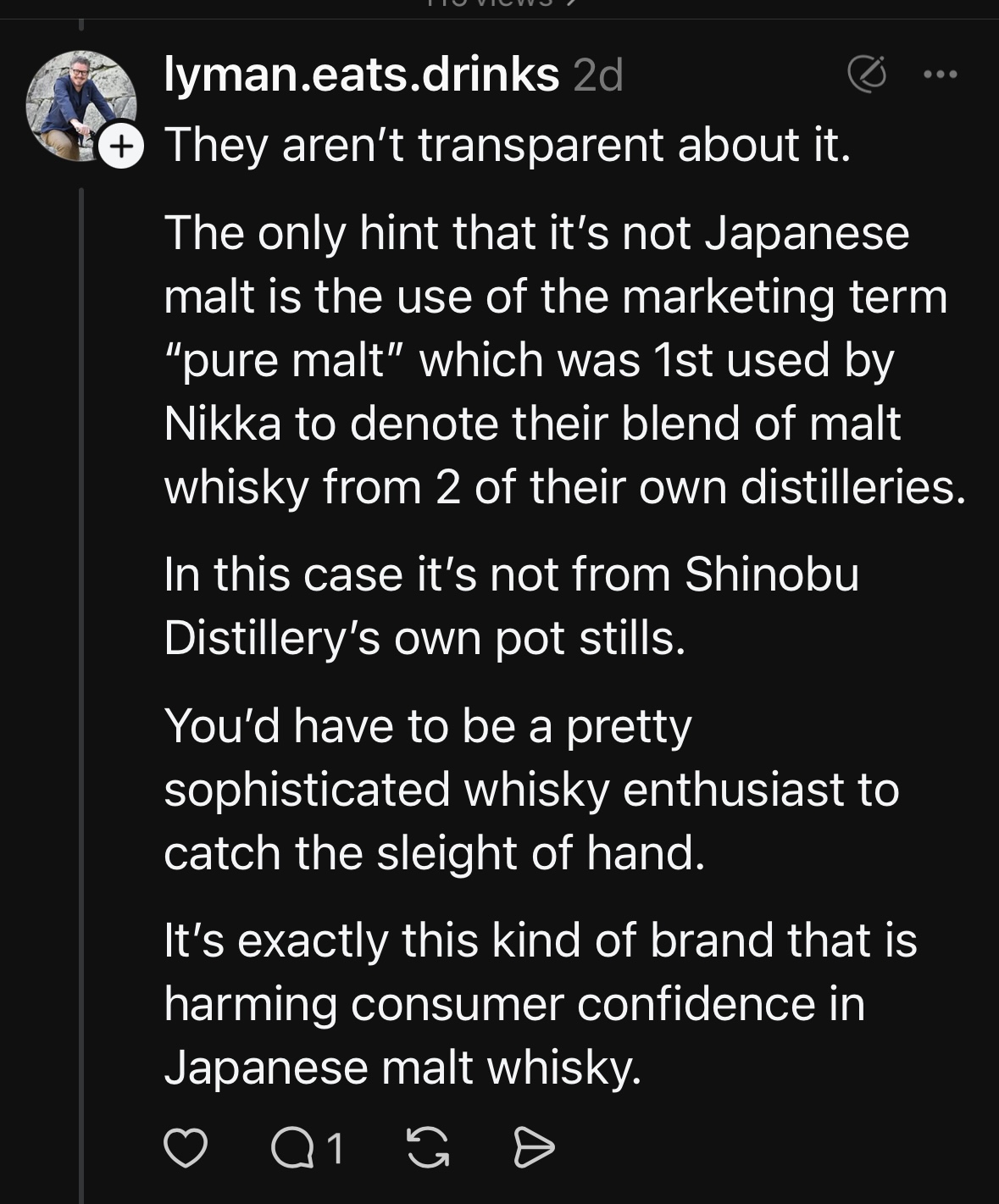

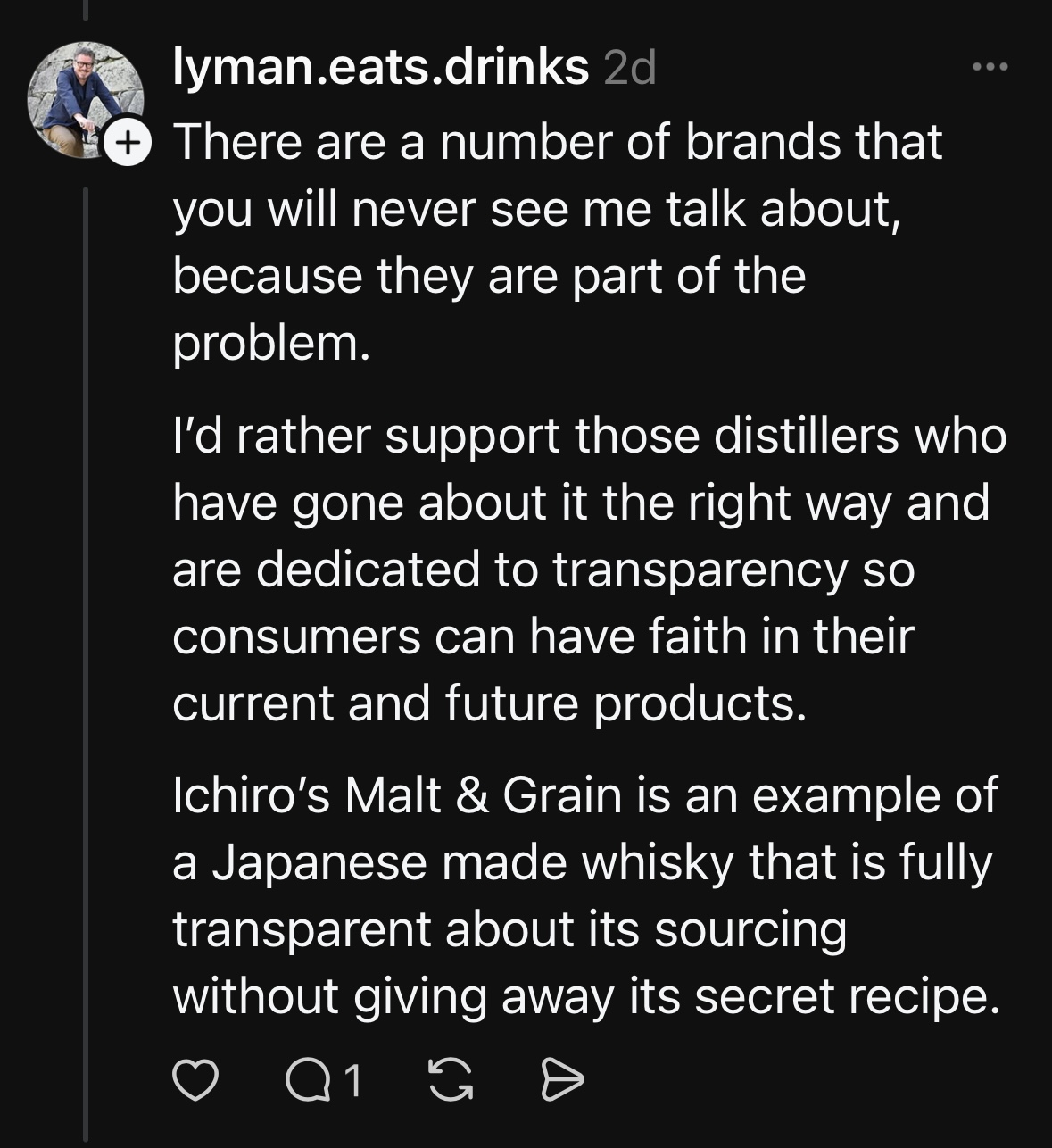
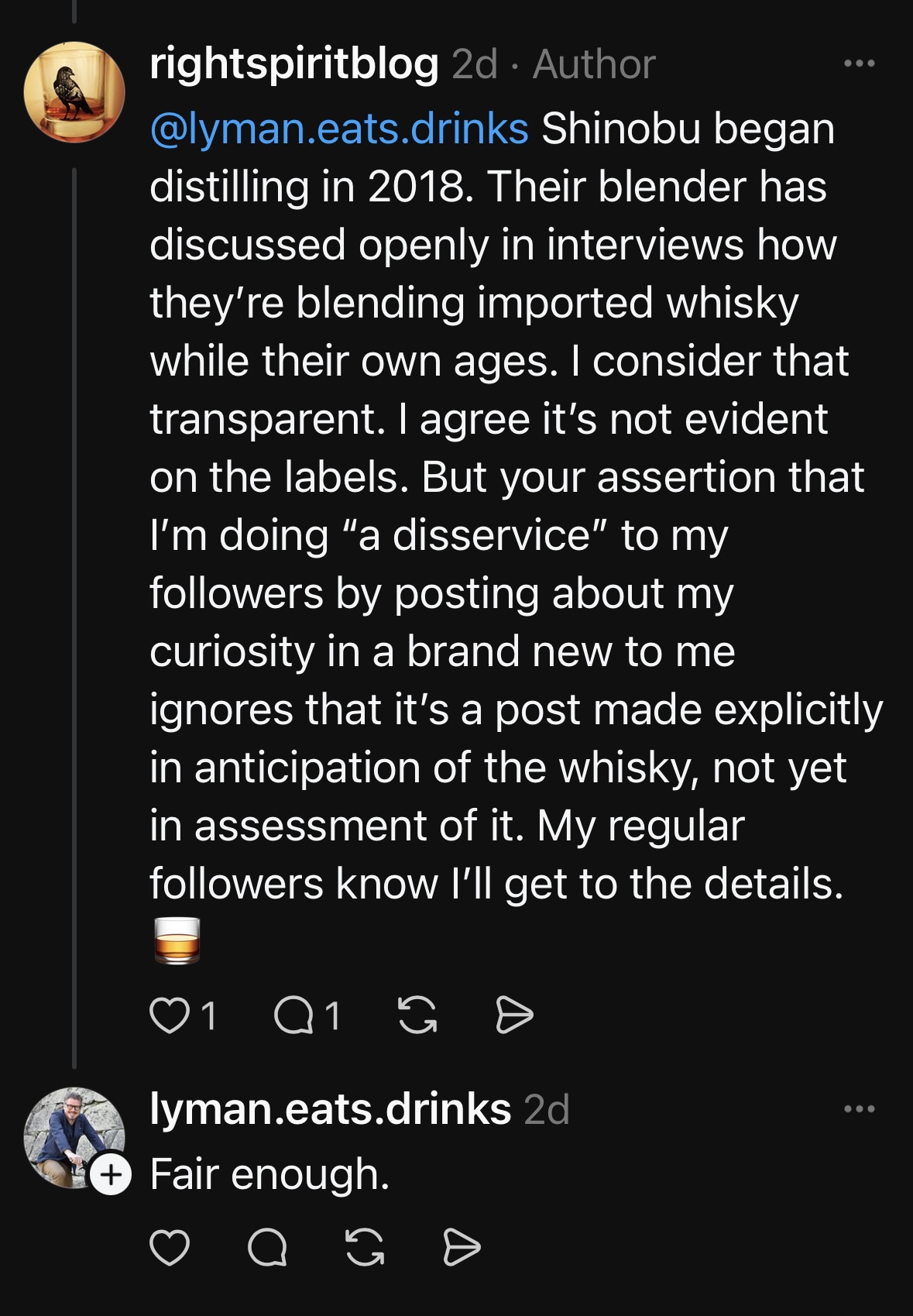
Despite, I will admit, my annoyance at what I took to be the commenter’s knee-jerk assumptions about me, and especially his unsubtle finger wagging and “those who know better” attitude, I nevertheless recognized his passionate crusade. And I respect it. I’ve rallied many times here in favor of transparency. It’s not only Japanese whisky producers who conceal their doings. Many an American non-distiller producer has fabricated their origin story, or purposely obscured their product’s source beyond the necessary conscriptions of any non-disclosure agreement. Casual drinkers could care less. But hardcore whisk(e)y fans do not respect this.
But more importantly than any of that, how are the whiskies?
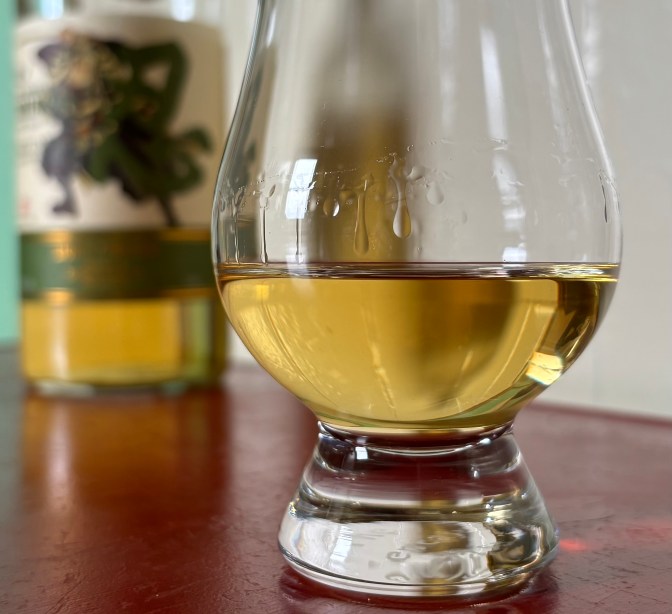
I’ll start with the lower-proof sourced offering, Pure Malt Lightly Peated. Here we are, nearing six weeks after uncorking and three pours into the bottle. These brief notes were taken using a traditional Glencairn.
COLOR – pale straw yellows
NOSE – forthcoming, with rich sweet tropical fruit, stewed peach, vanilla, light peat and smoke, salty sea breeze
TASTE – salty, sweet, lightly smoky, vanilla sauce
FINISH – light smoke and salty sea air, a mild oak bitterness, very light prickle from the ABV
OVERALL – an easygoing, easy to like maritime scotch. I mean Japanese whisky!
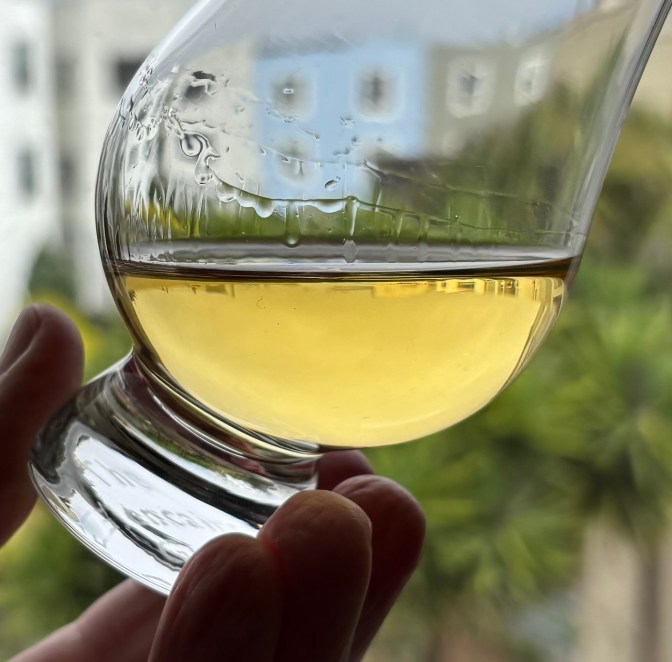
I like this. Though not particularly complex, it’s certainly not boring. The subtle peat smoke adds just the right earthiness to balance the sweeter fruit and vanilla notes. It’s bright, fun, and relaxed. I can imagine enjoying this at the beach, on a sunny day, in the garden, before dinner with friends, any number of scenarios. I already know it makes a nice Godfather cocktail (2oz whisky, 0.5oz amaretto). But I’ll likely enjoy most of this bottle neat.
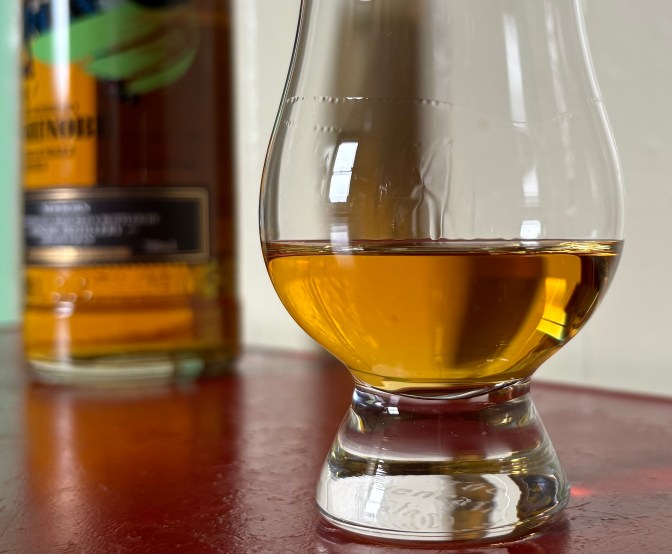
And now the younger, higher-proof in-house Newborn. It’s been five days since uncorking and I’m two pours into the bottle. These brief notes were taken using a traditional Glencairn.
COLOR – toasted sienna yellows
NOSE – reserved, earthy, herbaceous, with vanilla, whole cream, bitter red stone fruit skins and subtle oak tannin, a subtle smokiness
TASTE – sweet and bitter, a creamy texture, some kind of tart fruit syrup, bitter oak tannin
FINISH – a plume of oak spices up front, then vanilla, thick peach syrup, pear, a fine numbing warmth
OVERALL – edgy and aloof, but strong
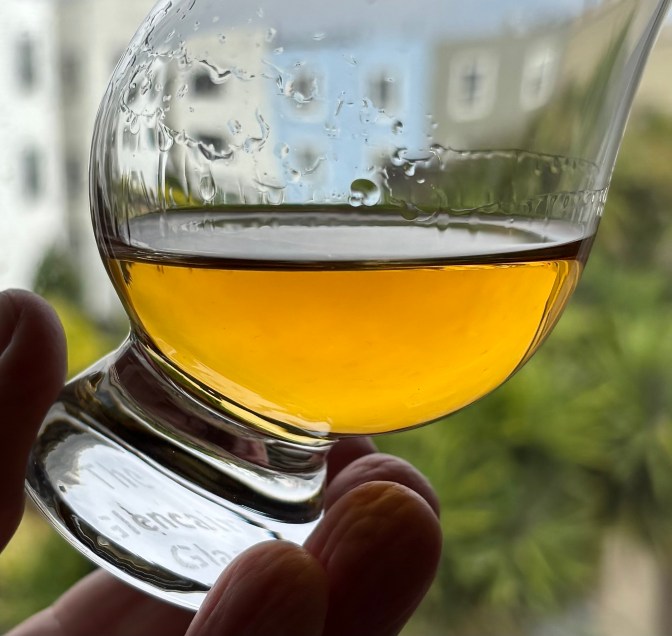
Interesting. For being one year and some weeks or months old, this is not the splintery raw wood fest I would have expected. And though I’m usually a 100-proof fan, here I actually wonder if something in the 90s or even high 80s might be better? There is an edginess from the combination of ABV and oak tannin that I find distracting, like a small bee buzzing and flittering about aggressively in the corner of your eye. Otherwise the flavors are quite nice, even rich. This whisky doesn’t share itself with your senses as readily as the Pure Malt does. But on the palate it does deliver some very nice vanilla and syrupy fruit notes.
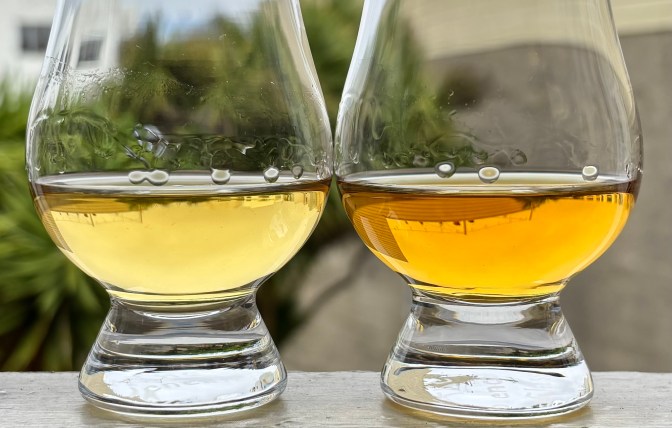
I must say I prefer the sourced Pure Malt Lightly Peated. It’s more up front and upbeat. That’s not to say I don’t like the Newborn. It’s a more enigmatic whisky than the Pure Malt. But it’s neither complex nor especially pleasing. It’s not boring or bad. Just somehow… I’m not sure how to express it. If it were a person I’d want to shake it by the shoulder and say Stop being so broody and loosen up why don’t yuh.
I will also say that I am legitimately intrigued by the Newborn. This first release shows Shinobu’s high quality and seriousness. And the price is excellent. But overall it feels not yet adequately matured to make a solid impression.
I look forward to future in-house Shinobu releases, at older ages and maybe more overtly peated. Whereas the sourced Pure Malt, especially at the sale price I picked it up for, feels fully formed and ready to entertain. If they keep making it, I’d never turn down a glass!
Kanpai!

 The Right Spirit