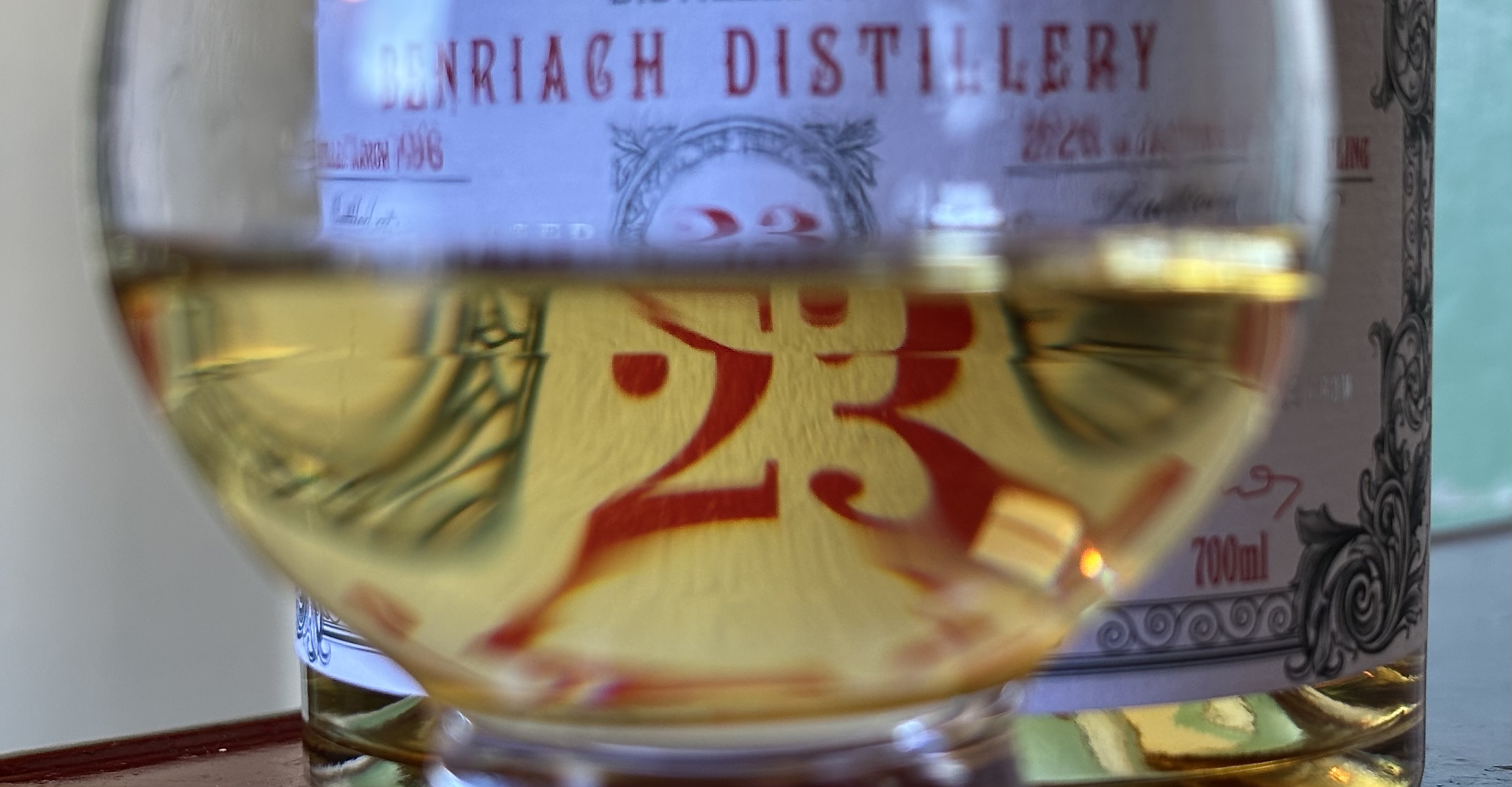
BENRIACH CASK STRENGH SINGLE CASK
Old & Rare Release (2020)MASH BILL – 100% malted barley
PROOF – 96.4
AGE – 23 years 10 months
DISTILLERY – BenRiach (bottled by Hunter Laing & Co.)
PRICE – $163 (discounted from $272)
WORTH BUYING? – Almost, but…
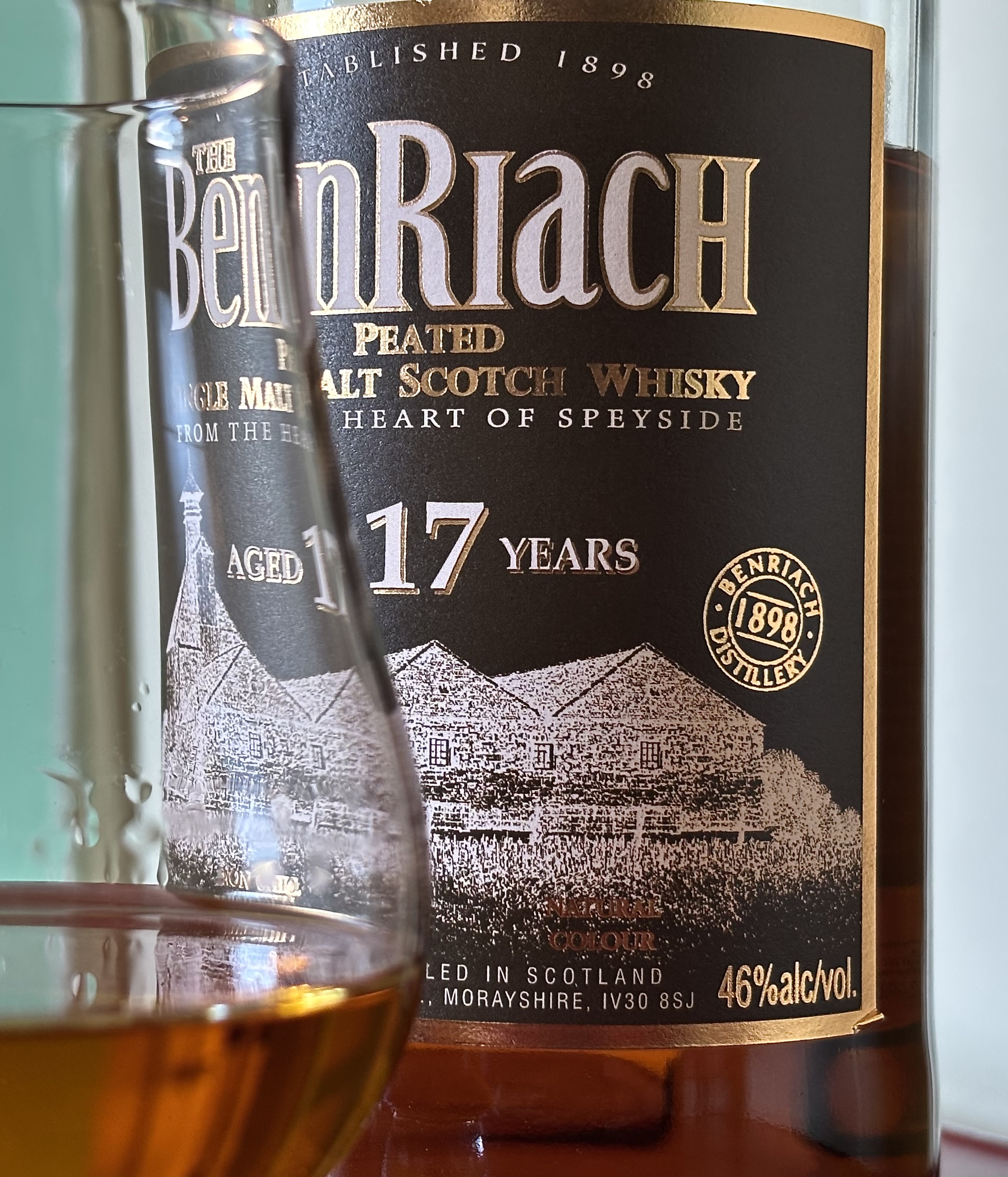
BENRIACH SEPTENDECIM
Peated Release (2015)MASH BILL – 100% malted barley
PROOF – 92
AGE – 17 years
DISTILLERY – BenRiach
PRICE – $122 (discounted from $174)
WORTH BUYING? – Ultimately no, but…
My first experience with BenRiach was their 2018 Cask Strength Batch 2 release. It was a rich and warming whisky, great for brightening a drizzly day. It was also my first conscious introduction to the Speyside region. I was curious what the Speyside flavor profile might be, in the way that Islay whiskies can generally be depended upon to have a peaty maritime profile.
Since then I’ve come to understand that scotch regions are of course just lines on a map, drawn for political and tax reasons and having nothing to do with whisky. Terroir and place are of decisive importance, for sure. But one can find Islay whiskies without peat, Speyside whiskies drenched in peat, sweet whiskies from industrial Campbeltown, industrial whiskies from the sweet Highland hills, you name it.
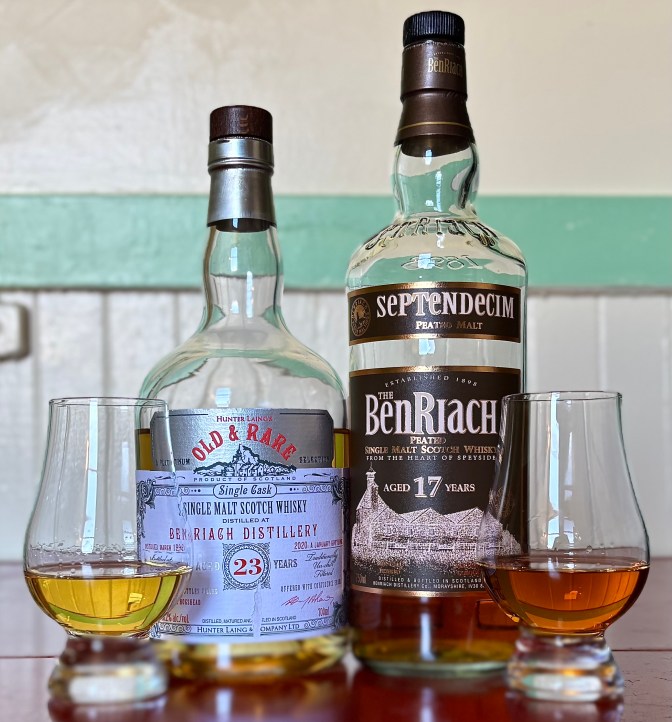
This variance is perfectly demonstrated by these two BenRiach bottlings. The well-aged 2020 release from Hunter Laing’s Old & Rare series highlights the sweeter sides of scotch, while the teenaged 2015 distillery-direct Septendecim (latin for 17) provides as industrial a peat note as one could imagine. As examples of the range possible within a single distillery—BenRiach—as well as a single region—Speyside—I thought they’d make an interesting comparison.
Using traditional Glencairns, I’ll taste the older, sweeter release first, before then stepping into the sooty smoke of the younger release.
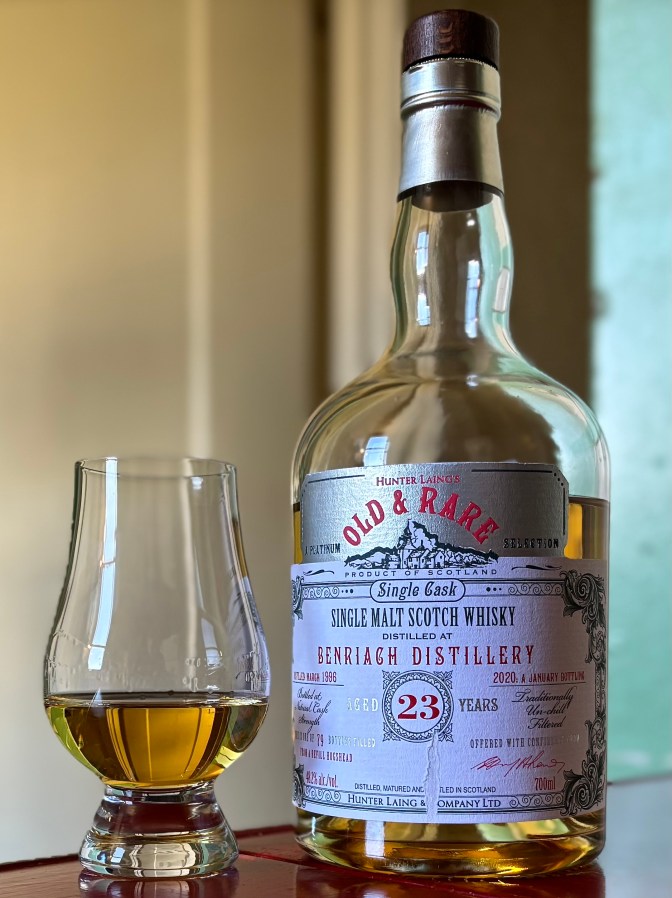
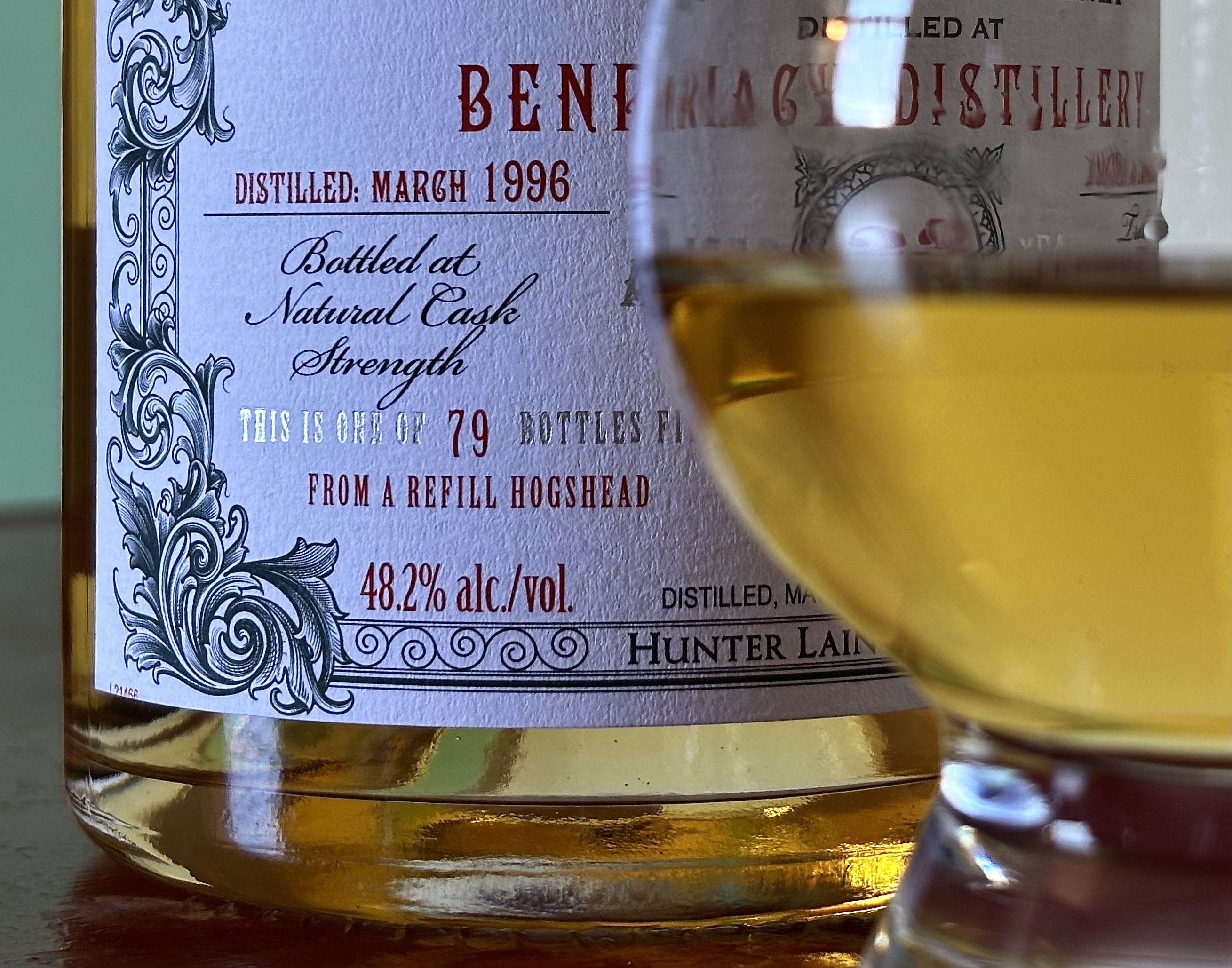
So here we are with the Old & Rare, aged 23 years and bottled at a modest cask strength of 48.2 ABV. After 2+ decades, only 79 bottles worth of whisky remained in the cask. That tends to mean very concentrated flavors—an interesting prospect with such a surprisingly low ABV. As of this tasting we’re five weeks after uncorking and a handful of pours into the bottle.
OLD & RARE
COLOR – variations on pale straw, with lemon sherbet highlightsNOSE – crisp like a cold dry white wine, with cream, vanilla, white chocolate, lemon zest, honeydew melon, papaya, subtle oak tannin and pie crust
TASTE – a nice creamy texture, lots of vanilla and cream notes, also the tropical fruits, some white peach, the subtle oak tannin
FINISH – the oak tannins lean in just a bit more here, but still the emphasis on cream, vanilla, tropical and orchard fruit
OVERALL – delightful and bright without coming across young or light
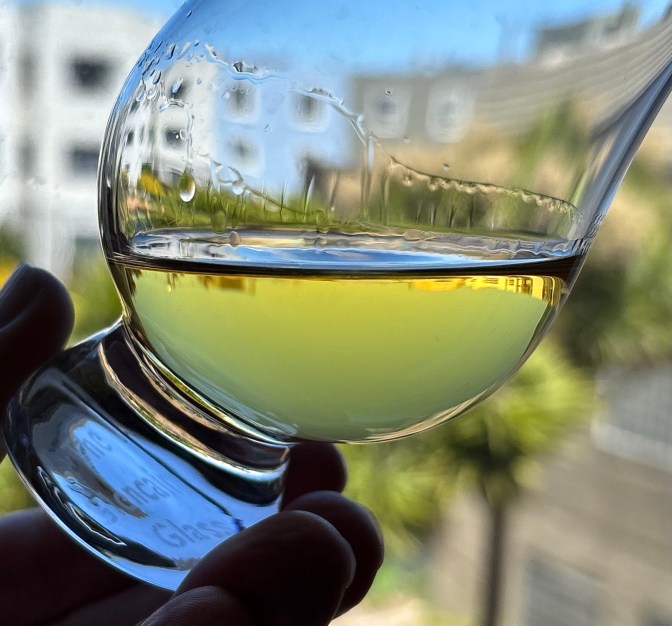
I’ve come to really appreciate this whisky. At uncorking it struck me as a solid, very typical and mainstream single malt profile. Everything very familiar. I was glad I’d picked it up for 40% off the original price. It was good. But even at what I paid, not that good. Neither boring nor exciting, it scratched the scotch itch well and made for the base of some excellent Penicillin cocktails. Over a month later, I still don’t find it quite worth the discount price I paid. But I have come to appreciate the complexity it offers within its decidedly bright, spring-into-summer profile. It’s a great match for a warm, flowery afternoon like the one I’m tasting it on today.
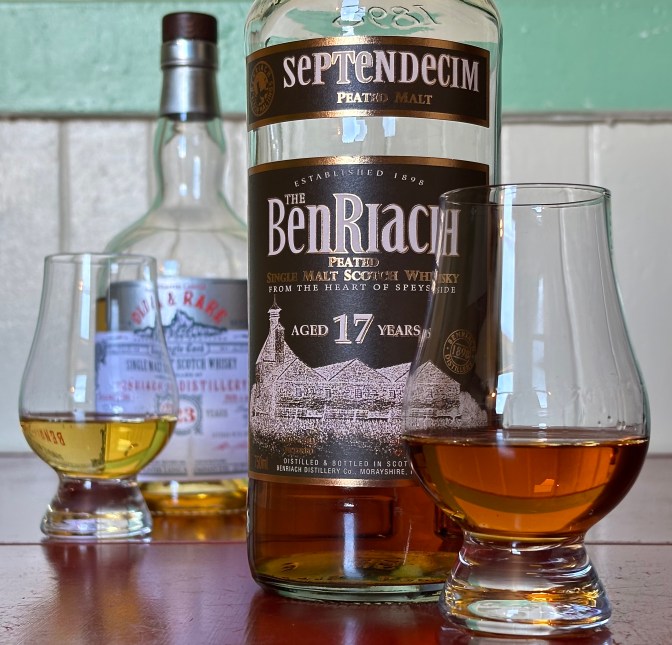
And now for the Septendecim. We’re nearing six months after uncorking and almost halfway into the bottle.
SEPTENDECIM
COLOR – medium rusty and russet oranges, with tarnished copper and brass highlightsNOSE – dry peat smoke conjuring something between charcoal and petrol exhaust, smooth river stone, time-worn granite, sand, and behind all that a breeze carrying tart apricot, nectarine, and a bit of caramel fudge and milk chocolate
TASTE – a decently creamy texture for the lower ABV, and here the fruit notes step forward closer in line with the drier earth and industrial notes
FINISH – The creams and caramels remain, now with a solid rubber note plopped into them, some dry smoke and peat, only the memory of the fruit notes flitting in and out
OVERALL – at once congenial and challenging, like a complex person you’re both drawn to and wary of…
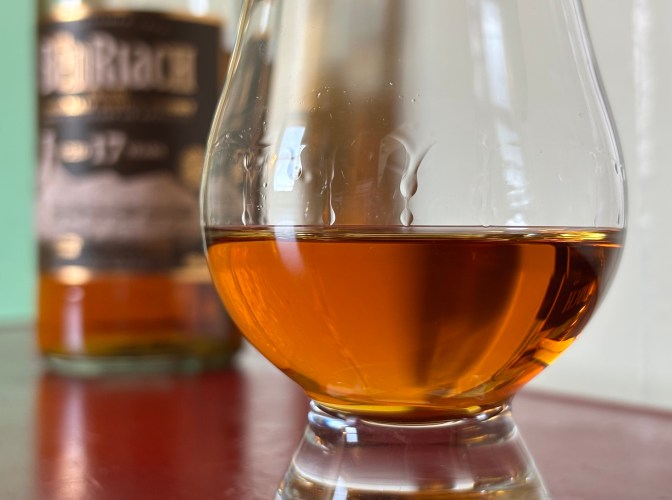
This whisky has been a conundrum from the start. Its peat influence is decidedly industrial and stony in nature, verging on unpleasant—especially once that rubber note emerges on the finish. But the fruit notes, as subdued as they are, have genuine appeal, and the creamy texture does a surprising lot to keep me open to the experience. Unlike the Old & Rare, the Septendecim has not contributed well to Penicillin cocktails, its industrial qualities upsetting the balance of the drink.
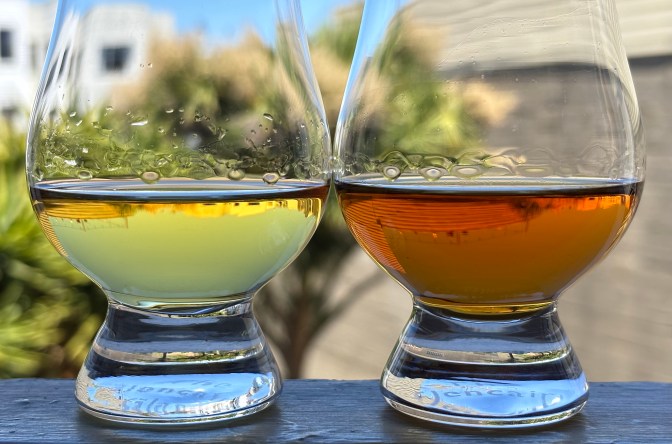
Were I not comparing them directly, tasted separately and without knowledge of what had been poured, I don’t imagine I’d guess these hailed from the same source. They are distinct. But knowing they are both BenRiach, and looking for the family connection, I do find it in the texture and cream aspects. Even nosing them side by side, the particular creaminess is immediately evident.
In a blind tasting I might have pegged the peated Septendecim as some errant Longrow effort. Whereas the Old & Rare comes across a bit more generally, and could hail from any number of mainland distilleries. Overall, I appreciate them more than I enjoy them. But together they do make an interesting stop on the journey.
Priced at two-digits, both of these would rank higher for me—particularly the more readily appealing Old & Rare. But the whisky boom has whisky fans spoiled these days. There’s simply too much product on the market to justify paying north of $100 based on specs alone. The tasting experience has really got to be up there…!
Cheers!

 The Right Spirit