WOODINVILLE RYE
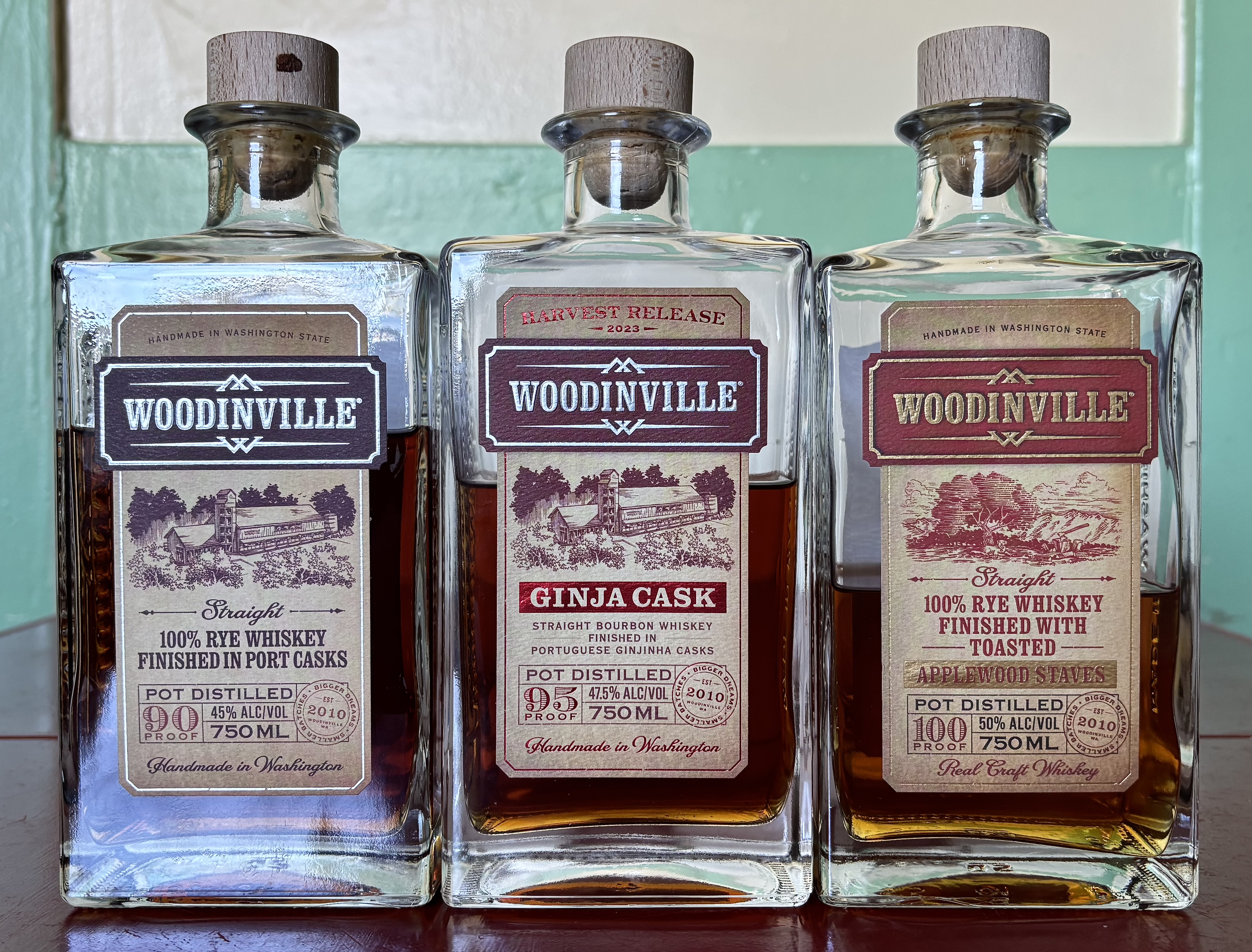
Finished in Port casks (2023)MASH BILL – 100% rye
PROOF – 90
AGE – ~5 years plus some months finishing
PRICE – $81 (includes tax and shipping)
WOODINVILLE BOURBON
Finished in Portuguese Ginjinha casks (2023)MASH BILL – 72% Corn, 22% Rye, 6% Malted Barley
PROOF – 95
AGE – ~5 years plus some months finishing
PRICE – $81 (includes tax and shipping)
WOODINVILLE RYE
Finished with toasted applewood staves (2024)MASH BILL – 100% rye
PROOF – 100
AGE – ~5 years plus some months finishing
PRICE – free sample (normally $70 before tax)

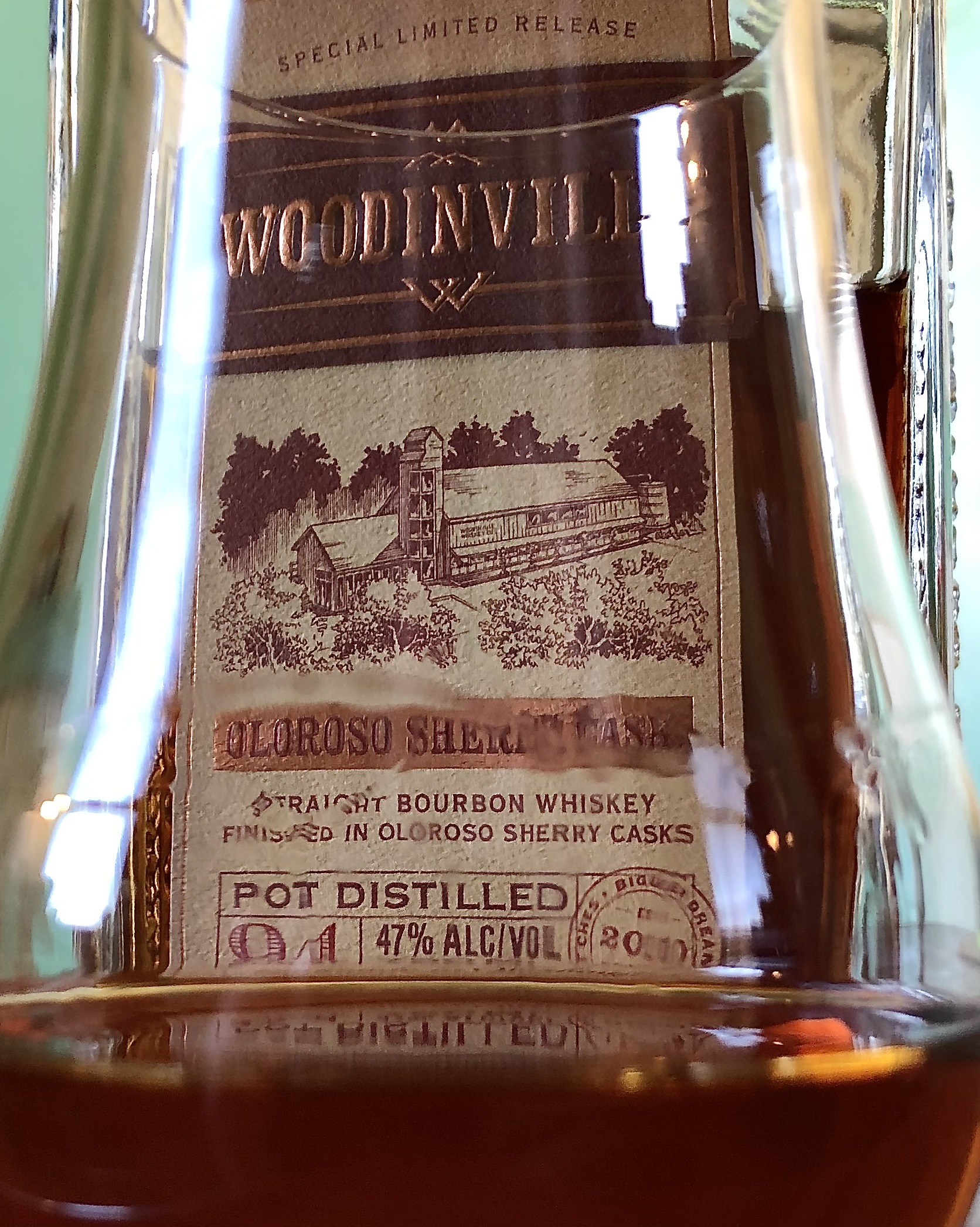
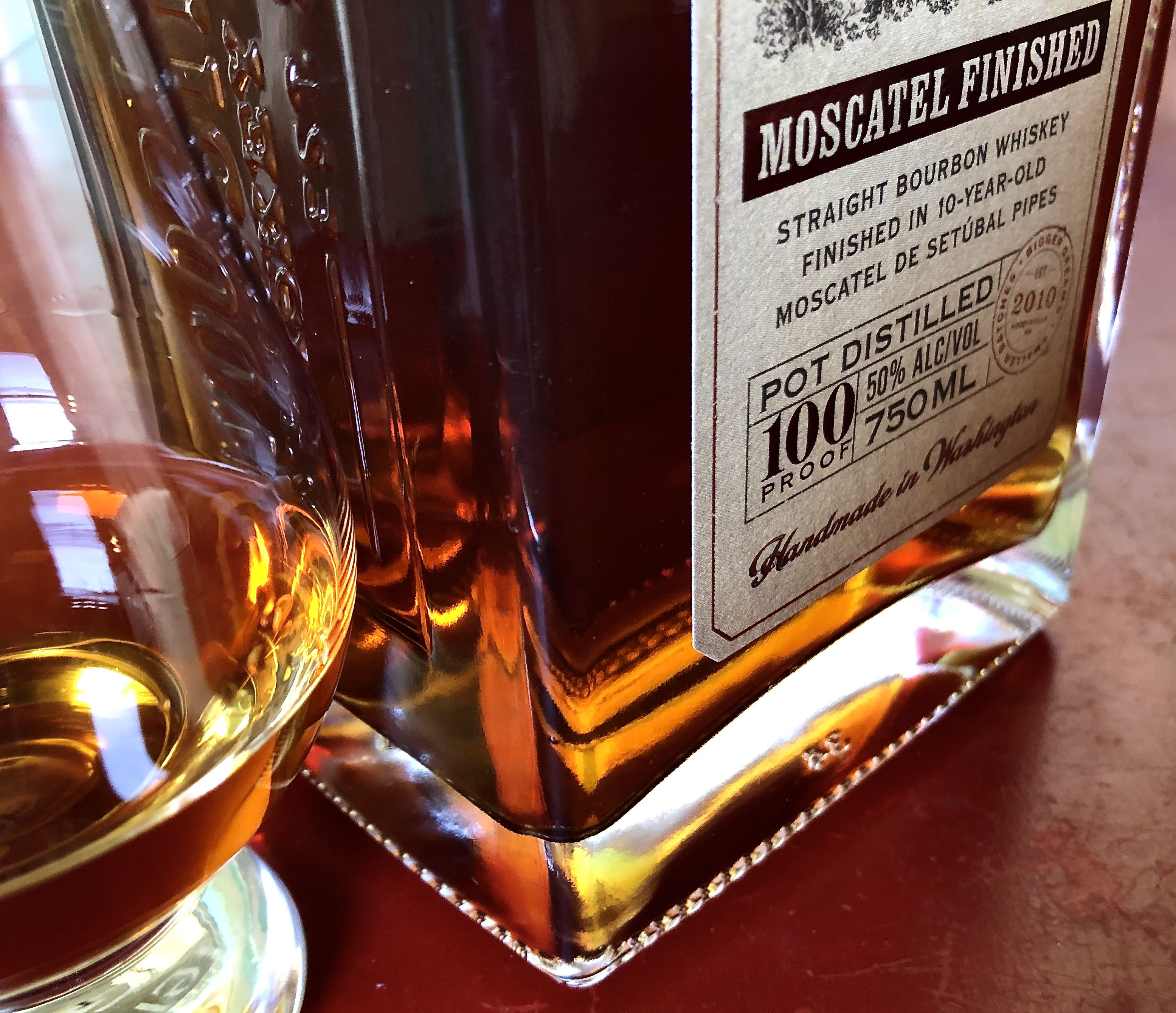
I’m a longtime fan of Woodinville’s bourbon. Their extended barrel seasoning adds lovely weathered oak notes alongside the whiskey’s dependable apricot and orange zest. Their distillery’s location, surrounded by forests and wineries, allows the fragrant local air to waft its way into their open fermenting vats and work its rustic magic. Their standard release bourbon is solid. Their Port Cask Bourbon is a perennial fave of mine. The 2021 Oloroso Sherry bourbon was similarly sumptuous. And the 2021 Moscatel bourbon release counted among my high points of that year.

Their rye whiskeys, however, have been a bumpier journey for me. When I tried the standard release I thought it was good, and I put it to great use in cocktails. But I’ve not been compelled to return to it. I was very excited for my first encounter with their cask strength rye. I really wanted to like it more than I did. But a tannic bitterness on the taste, followed by a distinct whiff of creosote on the finish, held it back for me from the promise of its nice fruit, oak and caramel notes.
Regular readers of this blog know that creosote is a note I can’t get around. I just don’t like it. Creosote is a molecular compound common in rye grain. Its flavor comes across as variations of rubber, tar, gasoline, or paint. When only subtly present, it can get lost among sweeter baked fruit or darker candy notes and add a savory complexity. But at a certain even fairly low level, all I can taste is rubber, and any other more positive notes suffer by the distraction.
So when Woodinville sent me a trio of rye samples late last Fall—the standard release, a cask strength SiB, and the Applewood Stave finished—I was glad for the opportunity to try the Applewood Stave release in particular. Might a finishing process crowd out the creosote?
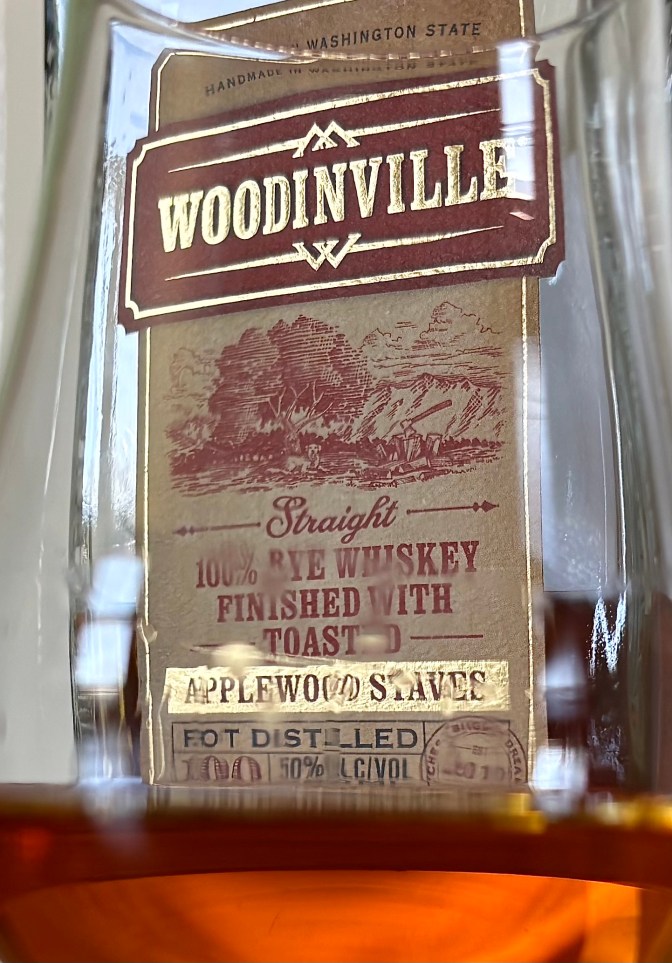
At uncorking, and through several pours into the bottle, the answer was no. A discernible undercurrent of creosote was always present. Remembering my journeys with past Woodinville cask strength ryes, however, and how they evolved over time, I kept at it. Eventually the creosote did indeed start to dissipate, blending somewhat into the fruit notes. Of course one doesn’t want to have to wait halfway through a $70 bottle of whiskey to enjoy it. So I still consider it to be an issue.
Insatiably curious, and with my fondness for the Port Cask Bourbon in mind, I ordered a bottle of the Port Cask Rye from Woodinville’s online shop. I threw in a bottle of the very intriguing Ginja Finished bourbon as well. Then, a little over a week after my purchase arrived, an unexpected package from Woodinville showed up at my door with a complimentary sample bottle of the Port Cask Rye. 🙄 It seemed the whiskey gods really wanted me to try this one.
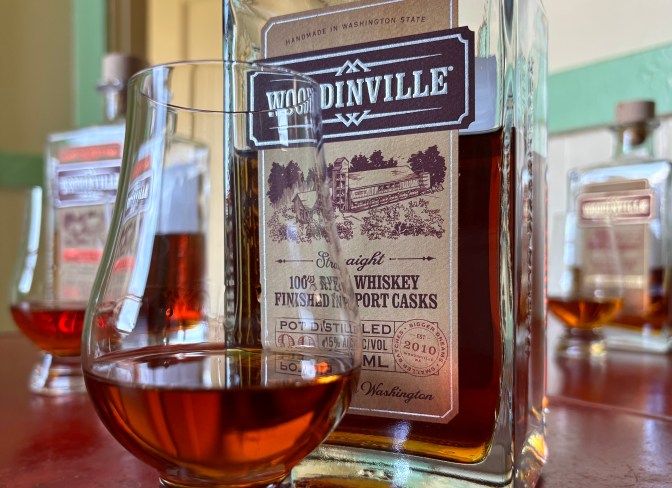
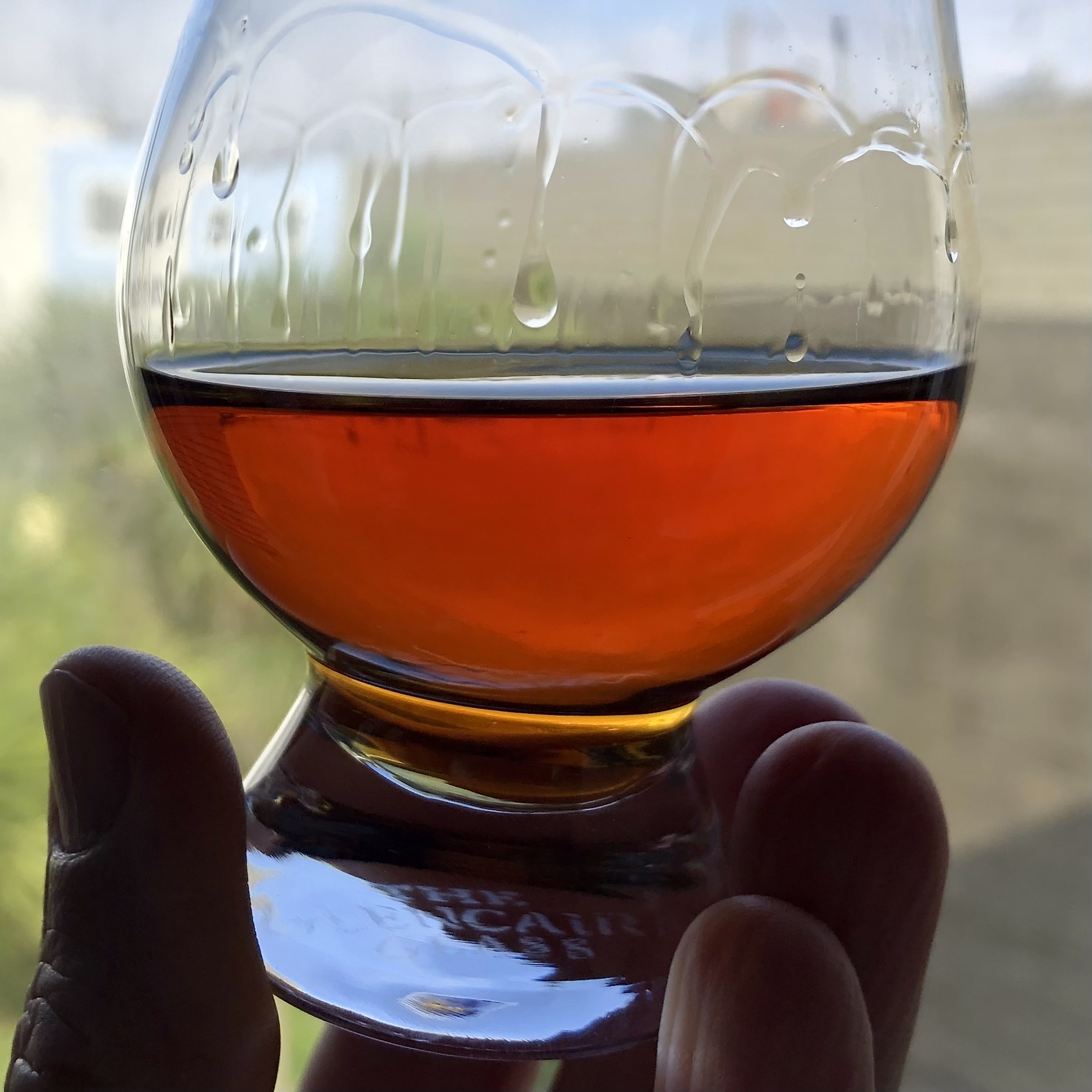
So here we are. I’ve also cracked the Ginja bourbon. This won’t be a comparison aimed at determining which of these three whiskeys I like “best.” Rather, it’s an exploration of Woodinville’s knack for finishing, with a particular emphasis on rye. I’ll taste each whiskey in turn, going in order of ascending proof, before then noting comparisons and discoveries. All notes were taken using a traditional Glencairn.
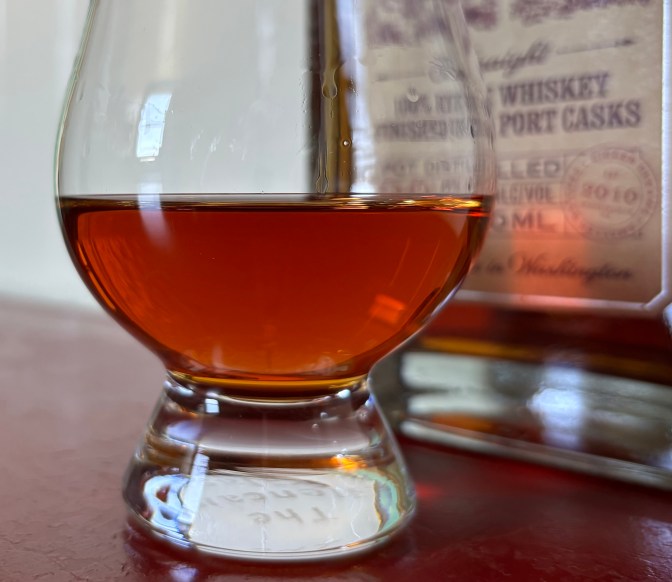
First up, the Port Cask Rye. I’m tasting this three weeks after uncorking and handful of pours into the bottle.
PORT CASK RYE
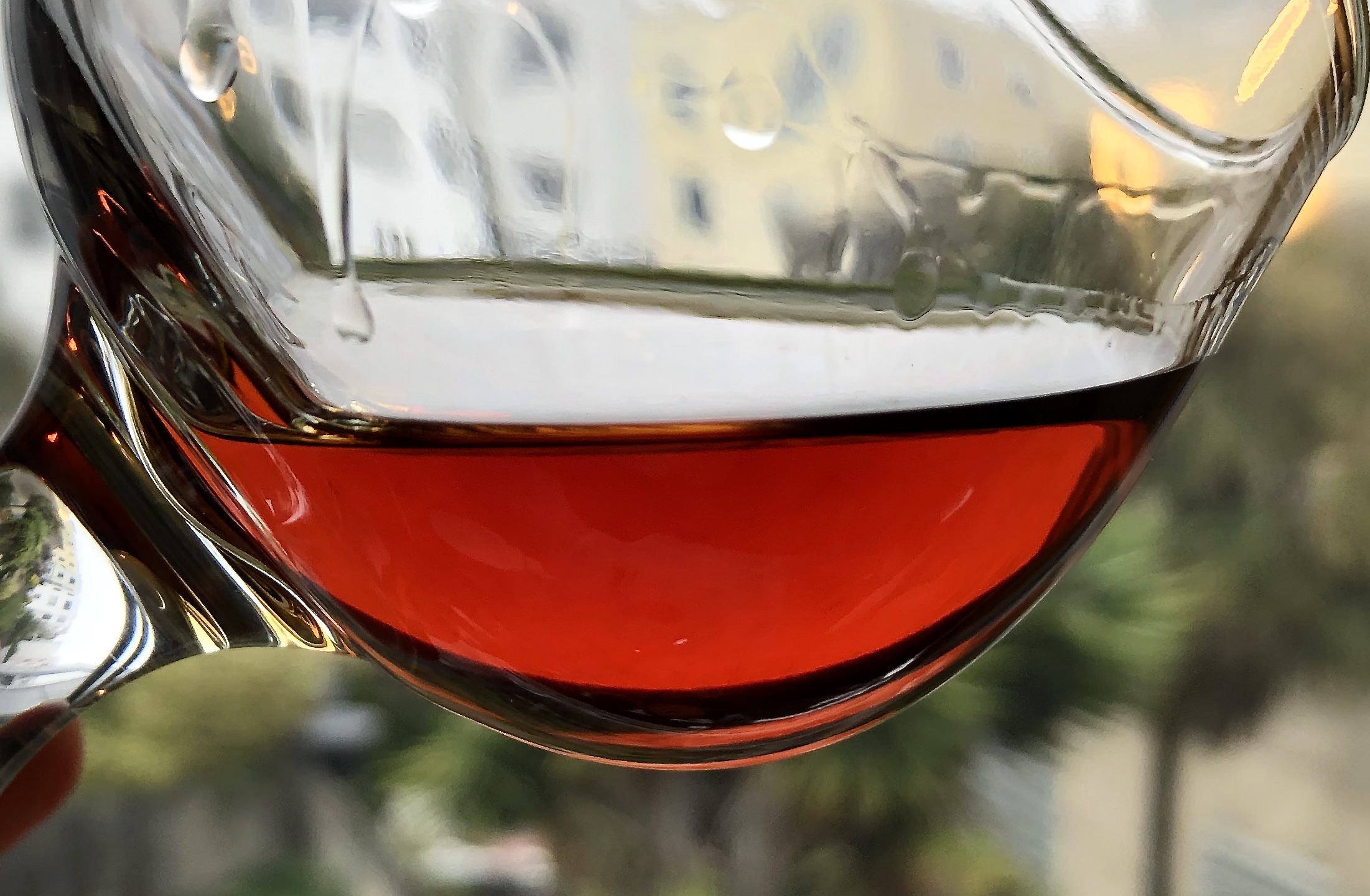
COLOR – burning-coal orange and cherry redsNOSE – dark and subdued baked cherry, subtle creosote merging into the cherry and a kind of fruit pie crustiness, pleasantly rustic
TASTE – both syrupy and gritty, with the fruit notes surrounded by a dark chocolate note, some oak providing that subtle texture I’m calling “gritty”
FINISH – very like the nose, gently warm, with a touch more rubberiness discernible but not yet distracting for me
OVERALL – a dark cherry pie of a rye
I’m struck most by the baked pie quality of this whiskey today. I can pick out that darned creosote. But today it’s fairly neatly tucked beneath the flaky, buttery crust of that dark cherry pie. The smooth dark chocolate note that comes forward on the taste further helps to dissipate the creosote into the whole. The oak also helps, pushing the creosote toward a kind of fruit skin note—something slightly bitter around the sweet meat of the cherries.
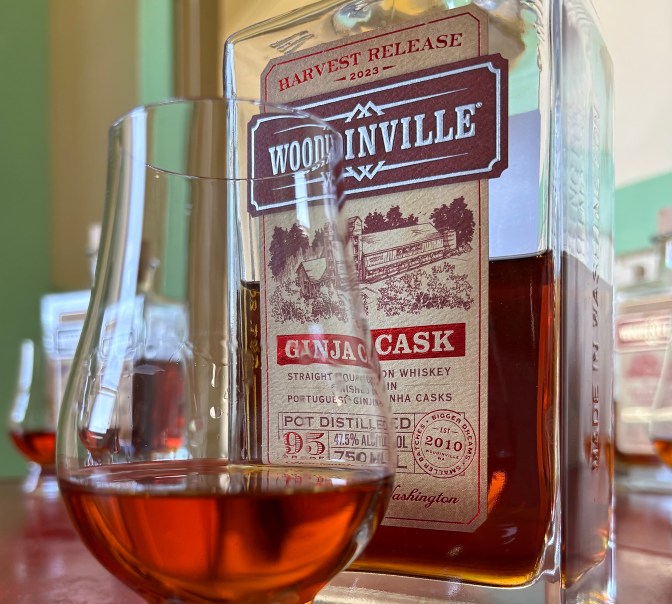
Now for the Ginja Cask. I’m tasting this three and a half weeks after uncorking and nearing halfway through the bottle.
GINJA CASK BOURBON
COLOR – vibrant oranges ranging from rusty to fieryNOSE – very dry right up front in a way that reads copper wiring one moment and dried sour cherry skins the next; then comes bright pine, subtle dark chocolate, and coffee
TASTE – syrupy, sour cherry outlined by the copper wire note, pine, tannic oak
FINISH – copper wire drenched in dark sour cherry syrup, bright bing cherry, cherry turnover filling
OVERALL – a bright, acidic cherry pie of a bourbon
A very interesting follow-up to the Port Cask. This Ginja Cask also features core cherry notes. But here they’re brighter. And once I get to the taste, that sharp copper wiring note blends in and out of the pine note so fluidly I could imagine someone going straight to pine and never naming copper. This is a very unusual bourbon experience, I’m guessing due to the uniquely bright, acidic effect of the Ginja casks. Creosote doesn’t figure in here, given it’s a bourbon. The oddball note in this instance is that copper wire thing. At uncorking I couldn’t get past it. But with air the whiskey has mellowed a bit, without losing its uniquely bright metallic edge. The copper is most notable on the nose, but then on the taste and finish the rich and varied cherry notes swirl in to take the lead. Wild.
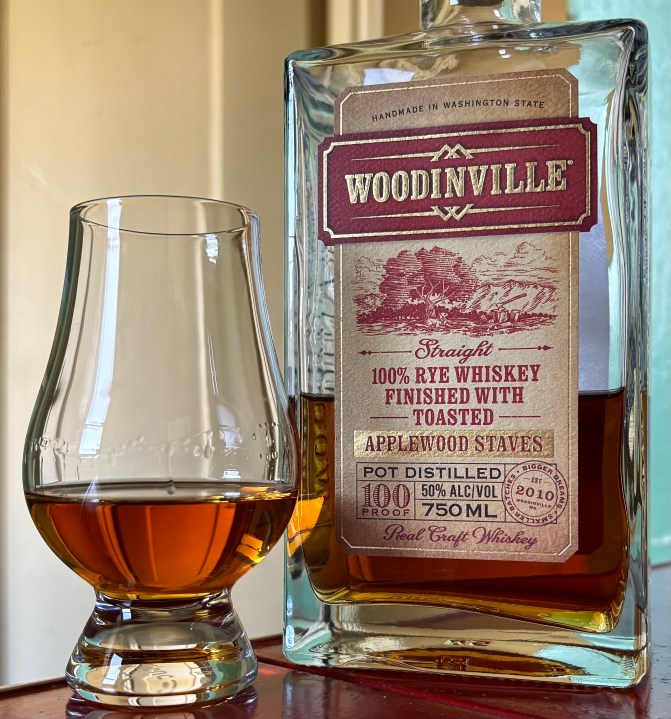
Now on to the Applewood Stave Rye. I’m tasting this well over three and a half months after uncorking, and nearing two-thirds of the way into the bottle.
APPLEWOOD STAVE RYE
COLOR – pale dusty amber and murky honeyNOSE – sweet doughy pastry bread both baked and unbaked, very subtle creosote, baked apricot, sugar crystals like on a fruit turnover crust, something faint like a syrupy white dessert wine, oak dust
TASTE – baked apricot and dark caramel, the creosote / pie crust combo, syrupy but with oak tannin offering an effervescent sparkle
FINISH – warm and tingly, with milk chocolate verging into dark chocolate, creosote submerged in fruit pie crust, faint baked apricot, and now some apple slices emerge
OVERALL – a caramel apricot pie of a rye
Interesting that the fruit note here is so distinctly apricot, as opposed to the cherry of the Port and Ginja casks—or the apple my knowledge of the applewood staves might conjure by association. As with the Port Cask Rye, here too the creosote note hides out in the pie crust, almost getting lost there. Though syrupy like the other two, the Applewood Stave Rye comes across thinner by comparison. I suspect this is a result of its brighter apricot fruit notes influencing my sense of the whiskey’s texture. There is also a raw doughiness unique to this rye, distinct from the baked notes of the Port and Ginja.
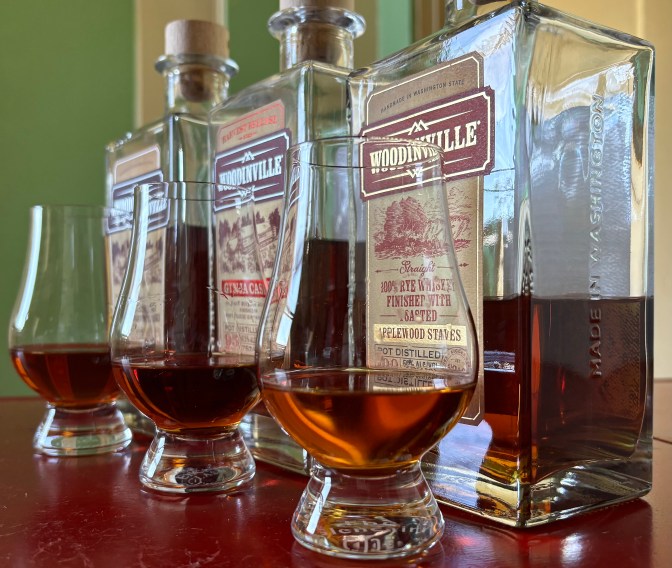
Nosing them in quick succession side by side, the Ginja Cask really stands apart with that bright copper wire aspect. Strangely, it’s now taking on an almost vegetal quality, something akin to raw cauliflower or even asparagus. The Port Cask pops with baking spices now and a faint rosé wine note. And the Applewood highlights its raw doughy quality.
Tasting them quickly back to back, and without water in between, they retain their key distinctions. And yet they are clearly family, united by the baked pie aspects. There is a rustic quality to these whiskeys that smacks both of bakeries and forests—maybe fruit pies cooling on the window ledge of a mountain cabin.
I’m also surprised by how not offended I am by the creosote and copper wiring now. They’re definitely there. And they’re definitely not my favorite notes. Maybe it’s the analytical mode of the tasting comparison, but I find myself very forgiving of these distracting notes given my decades-old love of fresh fruit pies. I grew up in an area of Northern California nicknamed “Apple Hill” for its plethora of apple orchards. Autumn was always filled with pies and fritters and doughnuts. All year we had access to fresh fruits and baked goods from Boa Vista Orchards, which almost never closes.
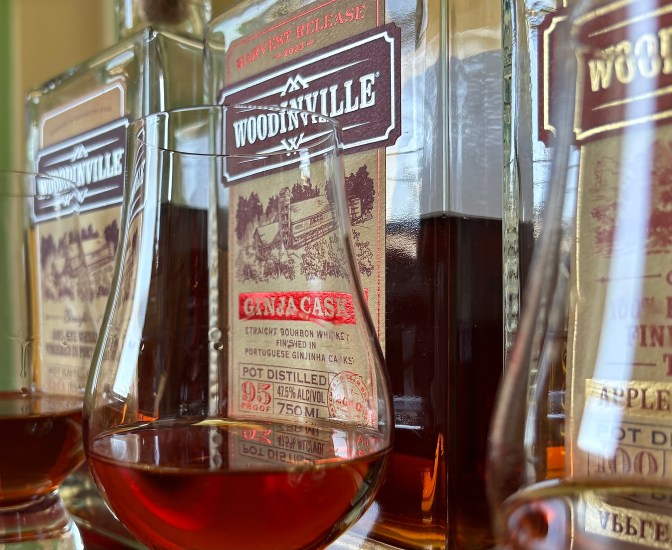
Whiskey can be expensive. If I had to pick one of these, for uniqueness I’d go with the Ginja Cask Bourbon. The whole copper wire thing took some airing out and getting used to. But for me it’s a truly unique experience, and in our 21st Century world of insistent mainstream blandness I value unique experiences—even when they furrow my brow. Between the Port Cask and Applewood, the latter is a bit light-weight by comparison, so I might leave that one on the shelf. The Port Cask Rye is darker and richer. But frankly I’d rather pick up another bottle of the Port Cask Bourbon.
Well, this comparison hasn’t yet sold me on Woodinville’s rye lineup. But it has been a legitimately interesting leg of my whiskey journey. If you’re here with consumer questions, stick to Woodinville’s bourbons. They’re excellent imo. And if you’re looking for something out of the ordinary to try, go for the Ginja Cask Bourbon. It will definitely scratch that itch.
Cheers!

Five O’clock Somewhere
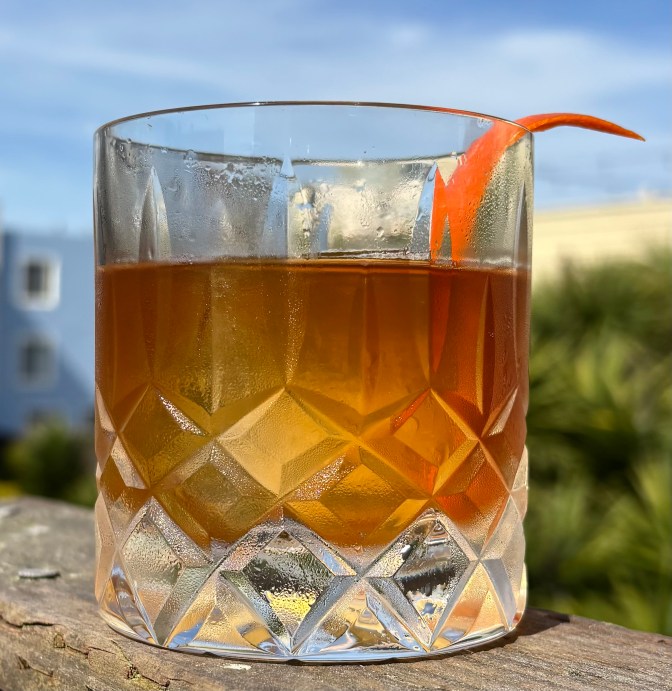
I used the Ginja Cask Bourbon to make an Old-Fashioned cocktail and it was superb. Sweet, rustic, and bright. Here’s the specific recipe I used:
- 2oz Woodinville Ginja Cask Bourbon
- 0.25oz sage honey syrup
- 3 dashes Miracle Mile Toasted Pecan Bitters
- 1 dash Regan’s Orange Bitters
- Built in a chilled glass with a single large ice cube and garnished with a Minneola orange peel

 The Right Spirit