SUTHERLAND
Limited release bottled by Thompson Bros. (2024)MASH BILL – 100% malted barley
PROOF – 97%
AGE – 5 years (wink wink)
DISTILLERY – Dornoch Distillery (blending their own distillate with Clynelish and a touch of Brora)
PRICE – $109
WORTH BUYING? – Yes!
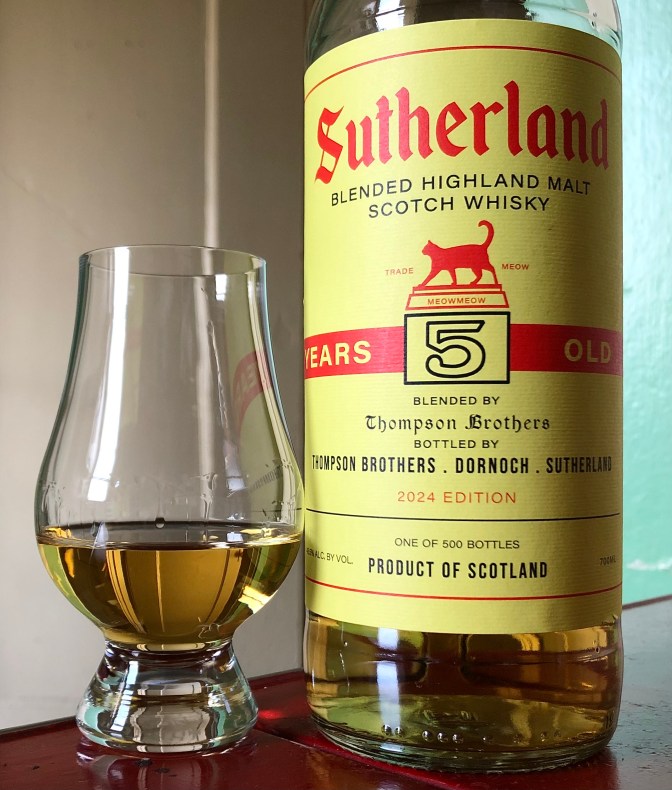
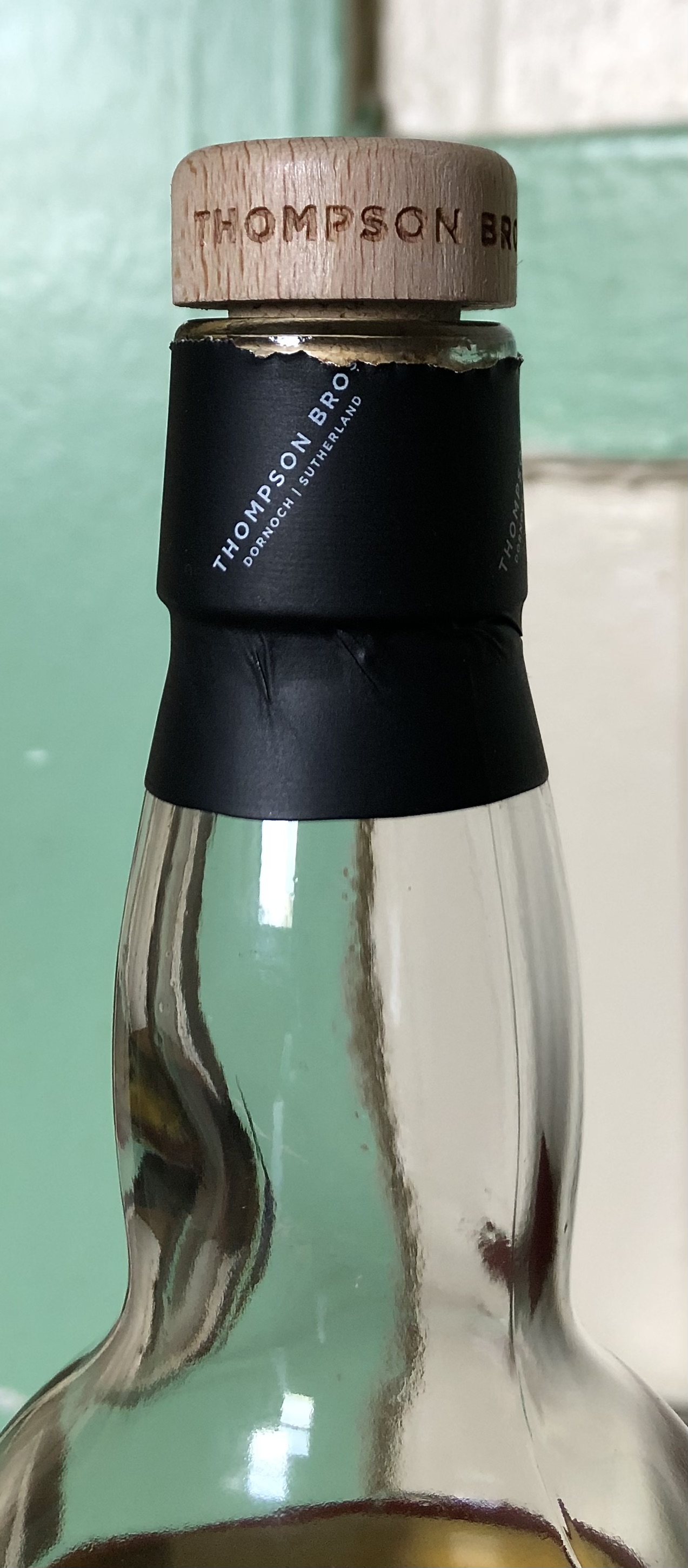
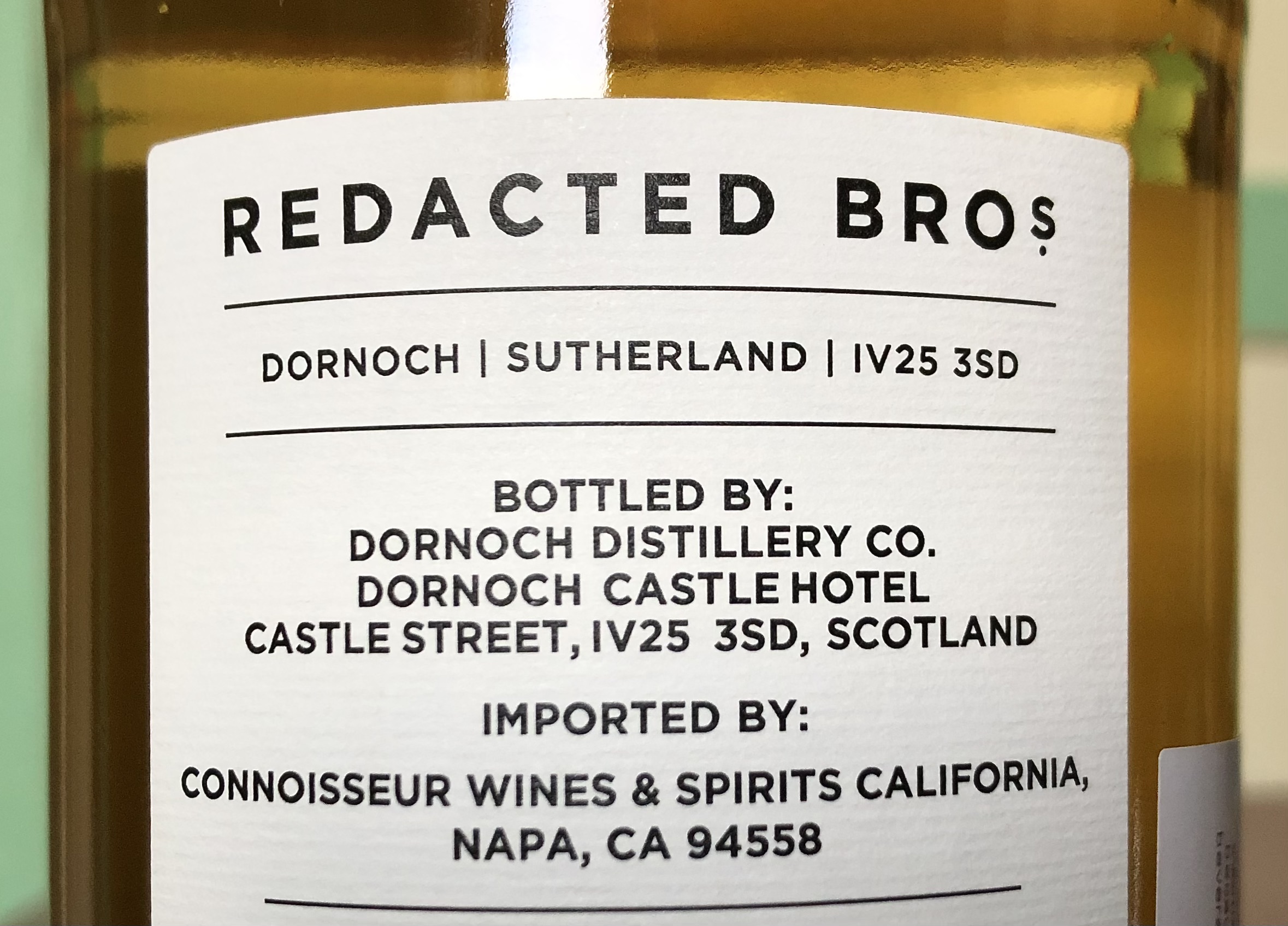
When K&L announced they’d secured a good number of cases of this blended Highland malt scotch whisky, I jumped on it. Phil and Simon Thompson, the eponymous brothers named on many of Dornoch’s releases, have demonstrated their knack for obtaining and blending exceptional stock from other distilleries while also distilling very small amounts of their own. With subtle wit, they often take sly steps around contractual non-disclosure agreements to let their customers know what a given bottle contains.
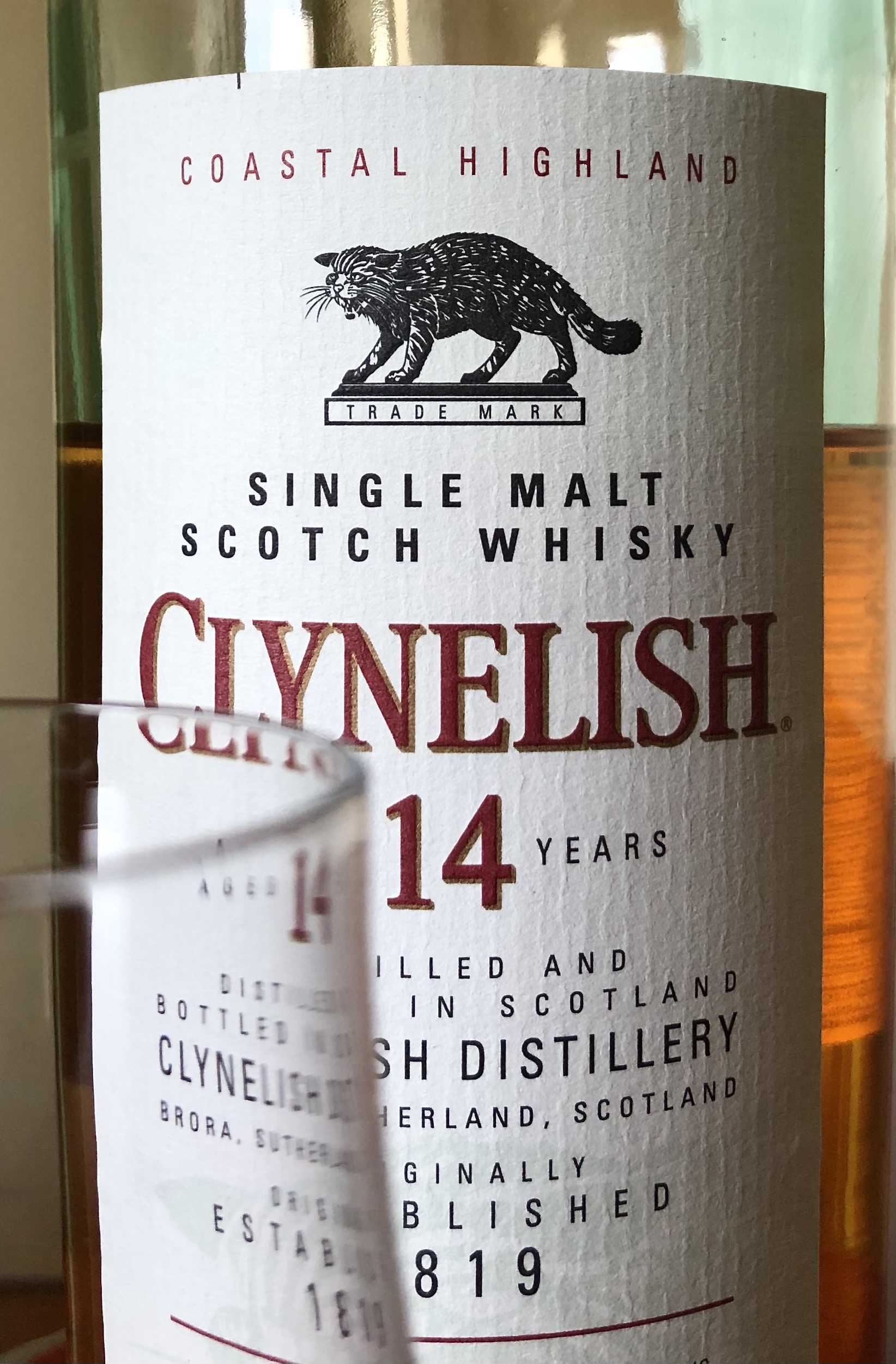
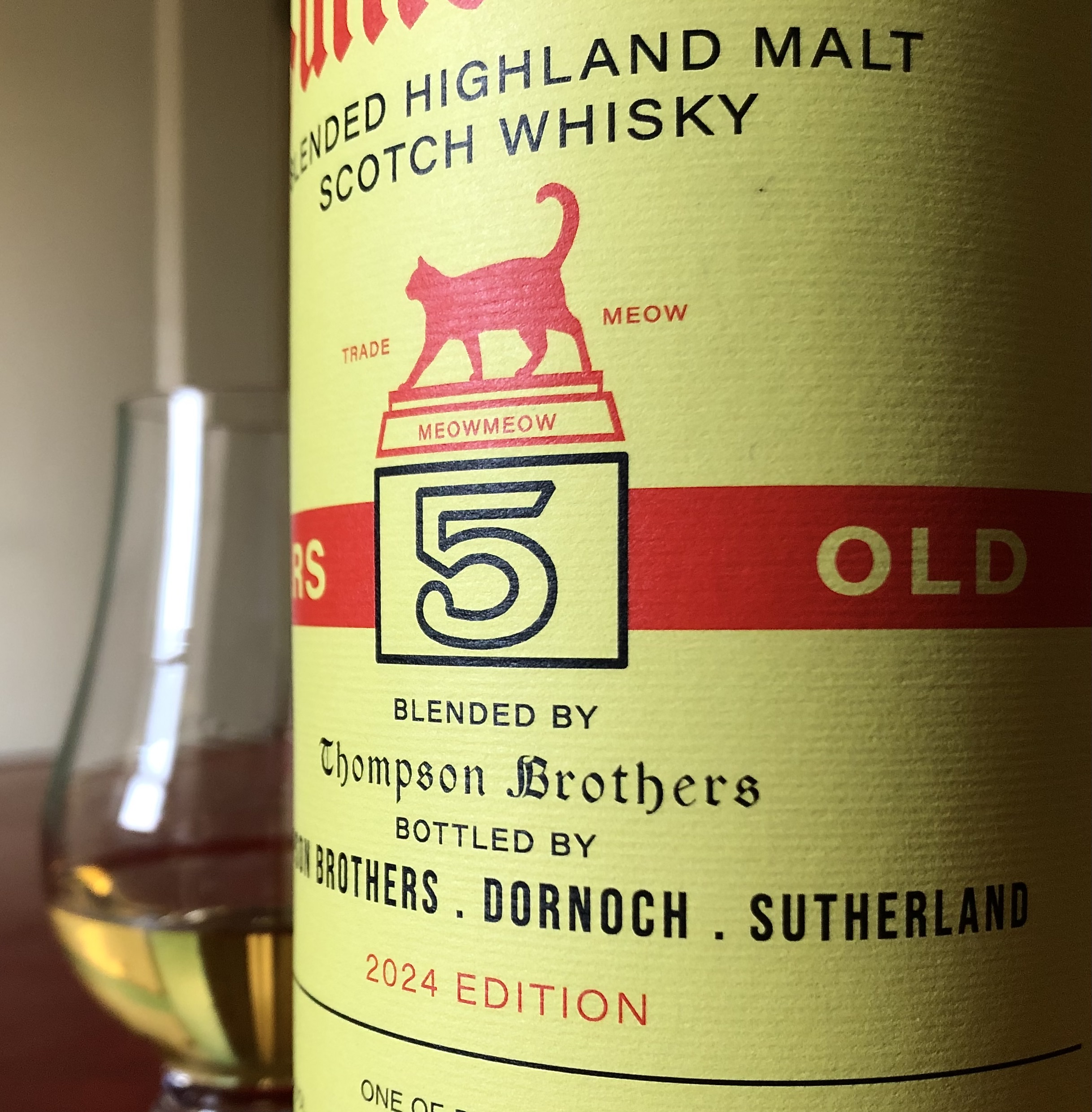
For example, you’ll notice Sutherland’s distinctly old-fashioned label, prominently featuring a cat in mid-stride. If that cat reminds you of the Clynelish / Brora cat, it’s no accident.
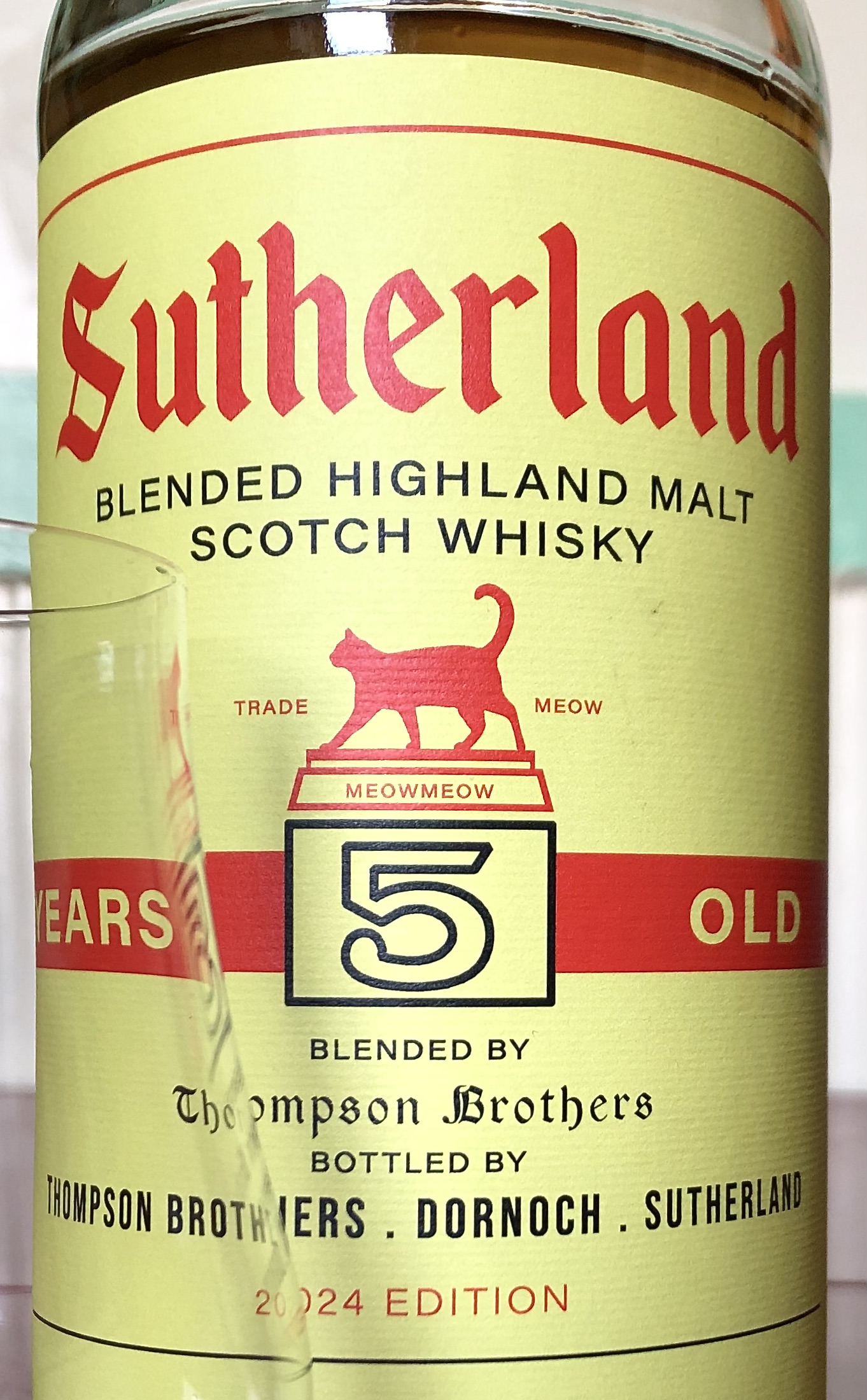
Sutherland’s prominently displayed age statement is another clue that things are not what they seem. There’s no reason to name such a young age on a blended malt. It’s not impressive. Some might even consider it a negative, if they’re inclined toward the assumption that older is better. Distilleries generally don’t state the age of their blended whiskies until they get up into the teens. Boldly stating 5 years on a ~$100 bottle, then, is an ironic wink hinting that there is some amount of much older distillate in the bottle.
According to K&L, about 70% of Sutherland is Dornoch’s own 5-year single malt whisky. Another 29% is much older Clynelish. And a wee yet eyebrow raising 1% comes from Brora, the fabled sister distillery of Clynelish that closed in 1983 and in 2021 was finally and painstakingly restored.
Lingering bottles of pre-1983 Brora distillate command top prices among diehard scotch fans. To have even 1% of it in the Sutherland blend is a bit of a stunt—how much of an impact can 1% possibly have? But it’s the kind of extravagant gesture the Thompson’s make with humor. The more practical appeal, of course, is the substantial amount of older Clynelish, as well as the opportunity to try Dornoch’s own whisky, which makes its US debut in this release.
Indeed, when I cracked open the bottle late one winter night, the nose already took me to Clynelish. Classic, bright tropical and orchard fruit notes amidst creamy vanilla. The palate had a delicious tang to it and a very waxy texture. On the finish, the tropical fruits bloomed up front, then faded into the tangy orchard fruit and cream notes. A delicious, lively whisky. Excellent sipping stuff. I was delighted.

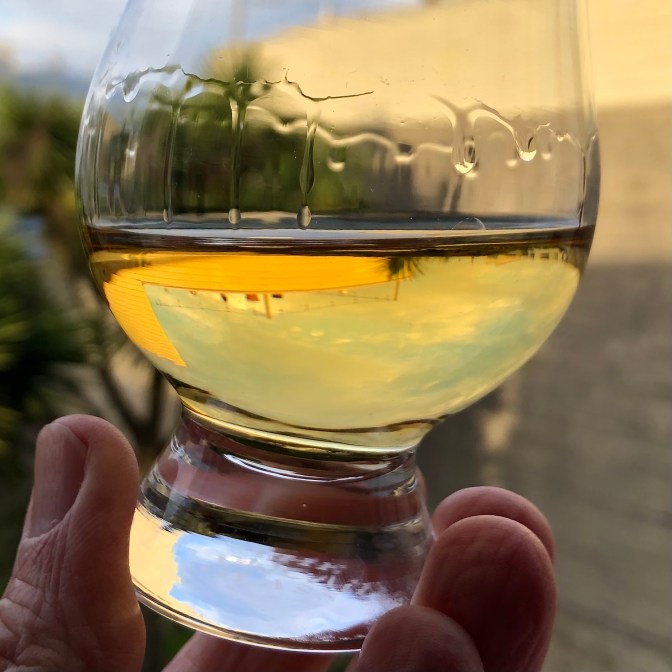
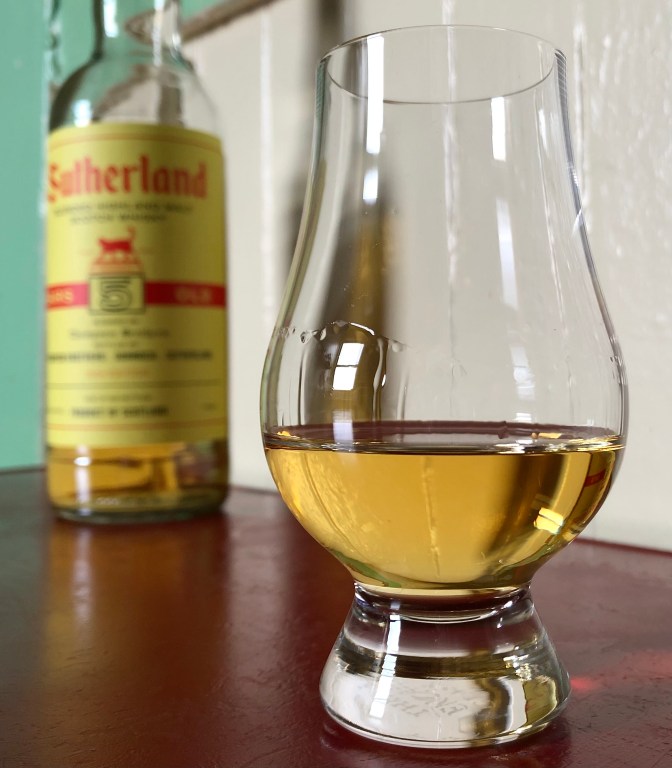
So here we are, four days after uncorking and three pours into the bottle. These brief notes were taken using a traditional Glencairn.
COLOR – very pale straw and lemon yellows
NOSE – a medley of fresh tropical and orchard fruits right up front, then salt, beach sand and air, a tart vanilla-caramel, faint red fruit notes as from a sherry cask
TASTE – immediately that viscous texture, carrying a richer and notch-darker variation on all the notes from the nose, plus a sweet honey note
FINISH – lingering fruit and candy notes, that sweet honey, all outlined by a thin bitter etching of oak tannin and coarse sea salt
OVERALL – Uhm… yum.
Maybe a generally subdued person might not like the bright personality of this whisky. Or maybe a devotee of rounded whiskies devoid of edge might object to the tannic and maritime aspects. But I thoroughly enjoy this whisky in every respect.
Is it perfect? I really don’t know what that word means. The Springbank 10 Year did conjure this debatable descriptor for me. And my sense memory says Springbank 10 lacks the edginess I get from this Sutherland blend, nor any other thorn that might disrupt its exceptionally smooth character. But here the edginess only adds life to the vibrant fruit and candy notes.
And that texture! Waxy, creamy, viscous—whatever synonym works for you would seem to apply here. I can feel the whisky still coating my mouth even as the finish continues its lingering fade…
My only complaint—I think—is the price. I have the same complaint about the Springbank 10. I find myself questioning this complaint, though, given the fact is I’m thoroughly enjoying this. It’s making me realize I share a common bias found in other objects of leisure and entertainment. At the Oscar Awards, for example, comic acting is never valued as much as dramatic acting—even though any actor will tell you that good comic acting is really challenging. In comedy you either get the laugh or you don’t. It’s pretty clear. With drama, there’s no distinct audible signal to define your success or failure. An actor can get away with mediocre dramatic acting in a way actors in comedies cannot. And yet the bias toward awarding drama persists.
So am I questioning the value of Sutherland because it’s just so much fun? I’m having such a good time with it. It’s not a “serious” whisky. It doesn’t compel my philosophical or broody side. Rather, it infuses me with energy and slaps a big fat grin on my face when I sip it. Isn’t that an experience worth paying for? Certainly.
Of course, I can’t drop $100 every day. But in the land where I live we’re looking down the barrel of a dark four years ahead, possibly well beyond. I have a feeling I should take what fun and joy I can where and when I can find it.
Cheers!

 The Right Spirit