I hadn’t planned on writing about my Montreal bar hopping. But things don’t always go as planned…
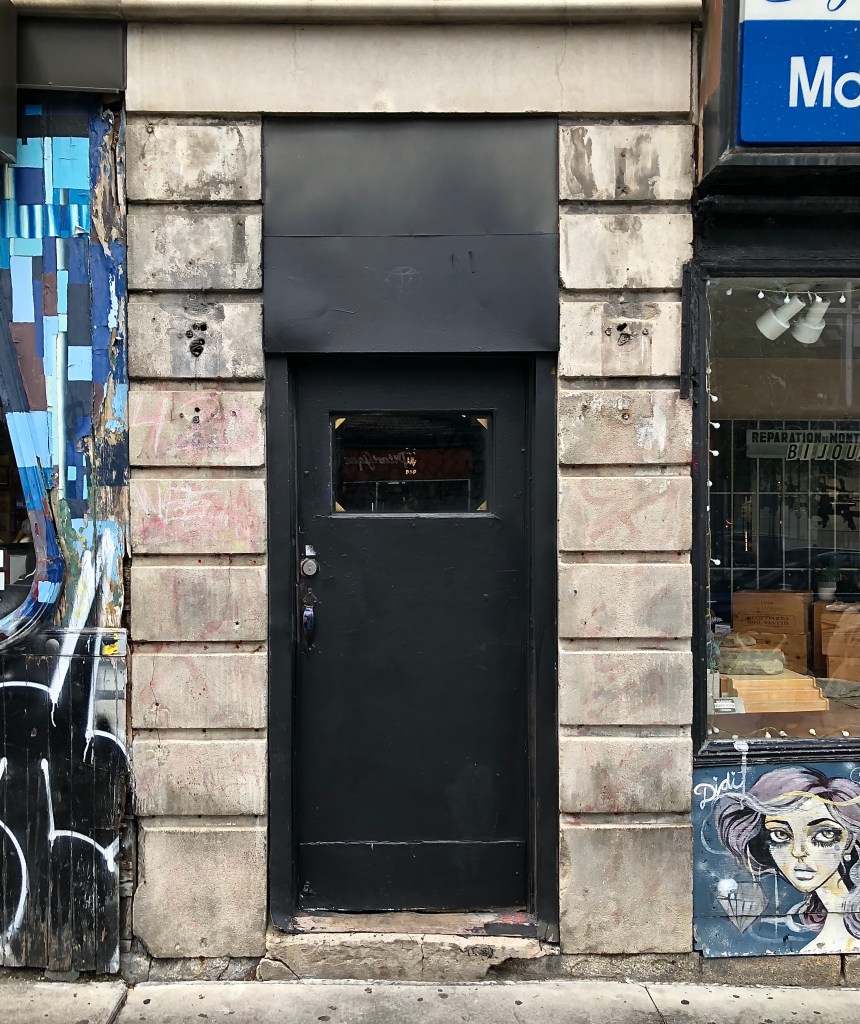
For example, every night of my stay I tried to visit the elusive Big In Japan, a speakeasy highly recommended by many lists and fellow whiskey / cocktail travelers. It was always closed, despite the hours of operation indicated on various online sources—none of them the bar’s own website, which it does not have.
The first night I tried, the bar’s signature black door—locked—was scrawled with white graffiti. On the second night it had been painted over with a new coat of black. Still locked. On the third night I asked a man behind the counter of the neighboring late-night diner if the bar was still in business, noting the graffiti present two days before had been freshly painted over. “Oh they do that, ” he said. “They’ll put graffiti on it again soon. It’s a speakeasy, so they open when they want. Sometimes late, sometimes never.”
Trying early and late each night of my stay, no dice.
But I did go to a handful of other bars. In a large city boasting a long and strong history of nightlife, going to a handful of bars only scratches the surface of what’s on offer. Still I came away with a sense of the city’s personality as expressed through its hospitality.
I first visited Montreal in 2001, and again a few years later. I was there for the annual Festival TransAmériques, one of the great North American theater and dance festivals. I was not at all into whiskey or cocktails then, so my sense of the city came from everything else—its streets, architecture, public transit system, cafes, theaters, shops, and people. I found Montreal to be a welcoming, relaxed, playful, creative, thoughtful city. If I had to compare it to other cities, it might be some combination of Brooklyn, Berkeley, 1990s San Francisco, and Paris. But Montreal has its own unique style and character, featuring a seeming dearth of snark, an abundance of friendliness, and a healthy sense of humor.
So pour yourself any whiskey in the world, or mix yourself a cocktail made of a handful of ingredients you might not normally reach for, and let’s get hoppin’. Santé!
The Bars
Pub L’ile Noire Quartier Des Spectacles
Le Bar Darling Plateau Mont-Royal
Resto Bar Le Majestique Plateau Mont-Royal
The Bootlegger L’Authentique Quartier Des Spectacles
The Coldroom Old Town
Cloakroom Bar Golden Square Mile Ville-Marie
Last Call reflections on the hop
🥃 ☜ clink these to jump back up here
Pub L’ile Noire
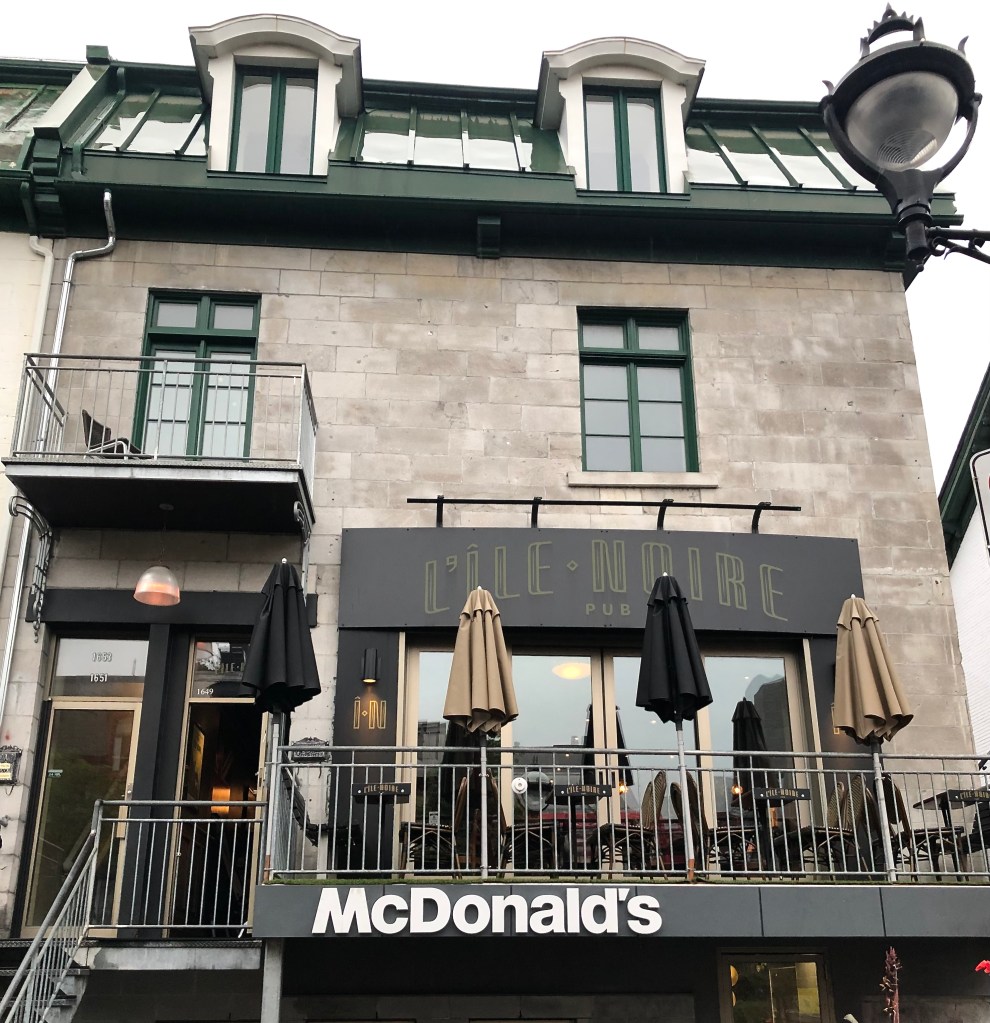
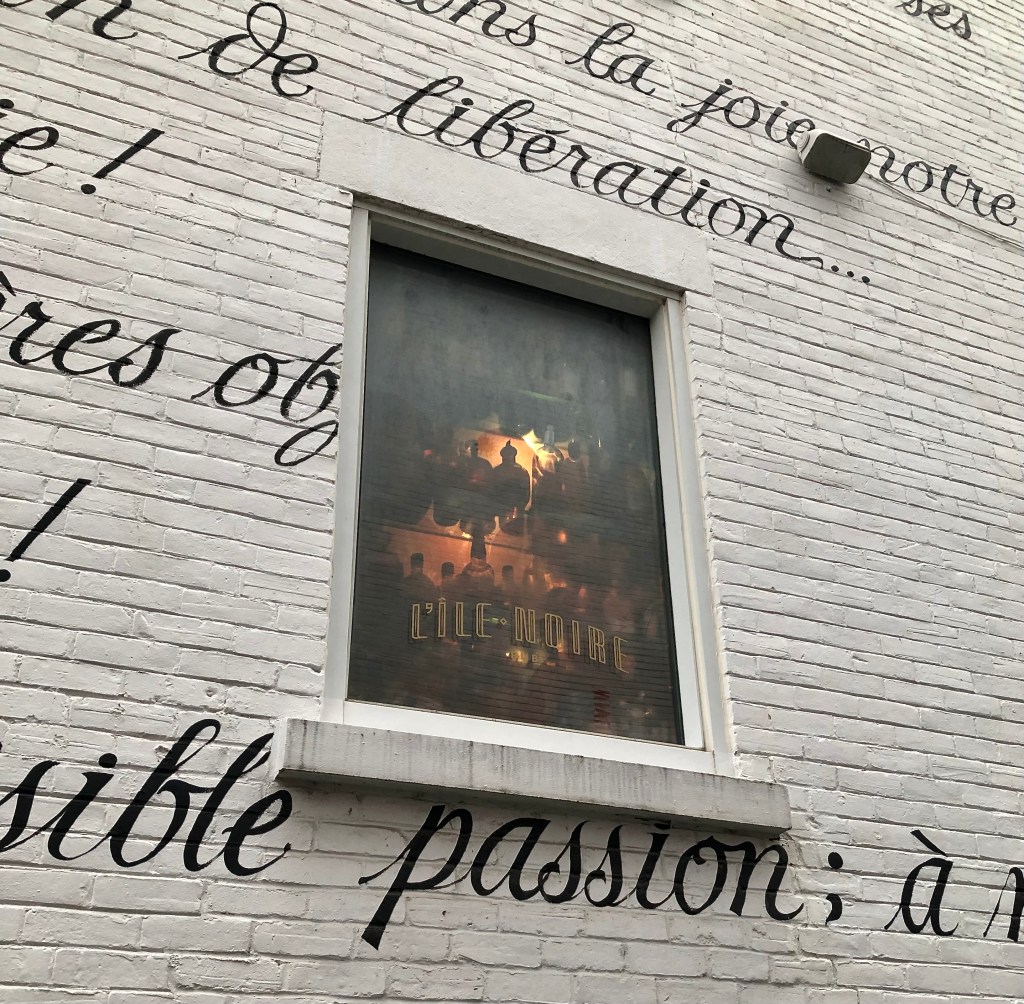
Located incongruously above a McDonald’s, the incredible L’ile Noire is at once a casual Brit-style pub and 1930s speakeasy. It’s not exactly hiding, rather hiding in plain sight. The exterior is very unassuming. One is more likely to notice it when approaching by the side alley, where the building’s brick wall has been covered in a poetic mural that neatly frames up the pub’s foggy windows. One can discern an enticing array of liquor bottles through the murky haze, and just make out the pub’s name stenciled in thin gold font.
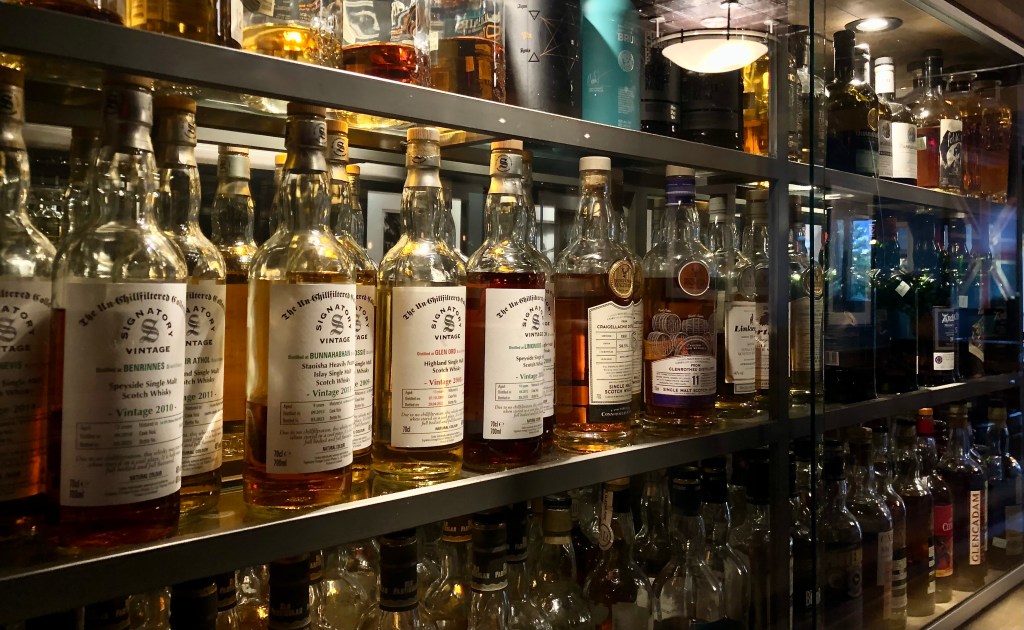
Inside, the decor and staff lean more casual pub. With a 500+ whiskey list, the bottles lovingly displayed on various glass encased shelves, it’s a whiskey geek’s paradise. Daily specials cover all categories of booze, including pre-arranged whiskey flights and excellent cocktails.
When I asked for a Blood & Sand, the bartender told me that in Canada they don’t have much in the way of Cherry Heering or the like. At his kind suggestion, we brainstormed together on an alternative ingredient. But eventually I ordered a Penicillin. It was perfectly built, balanced, and very refreshing.
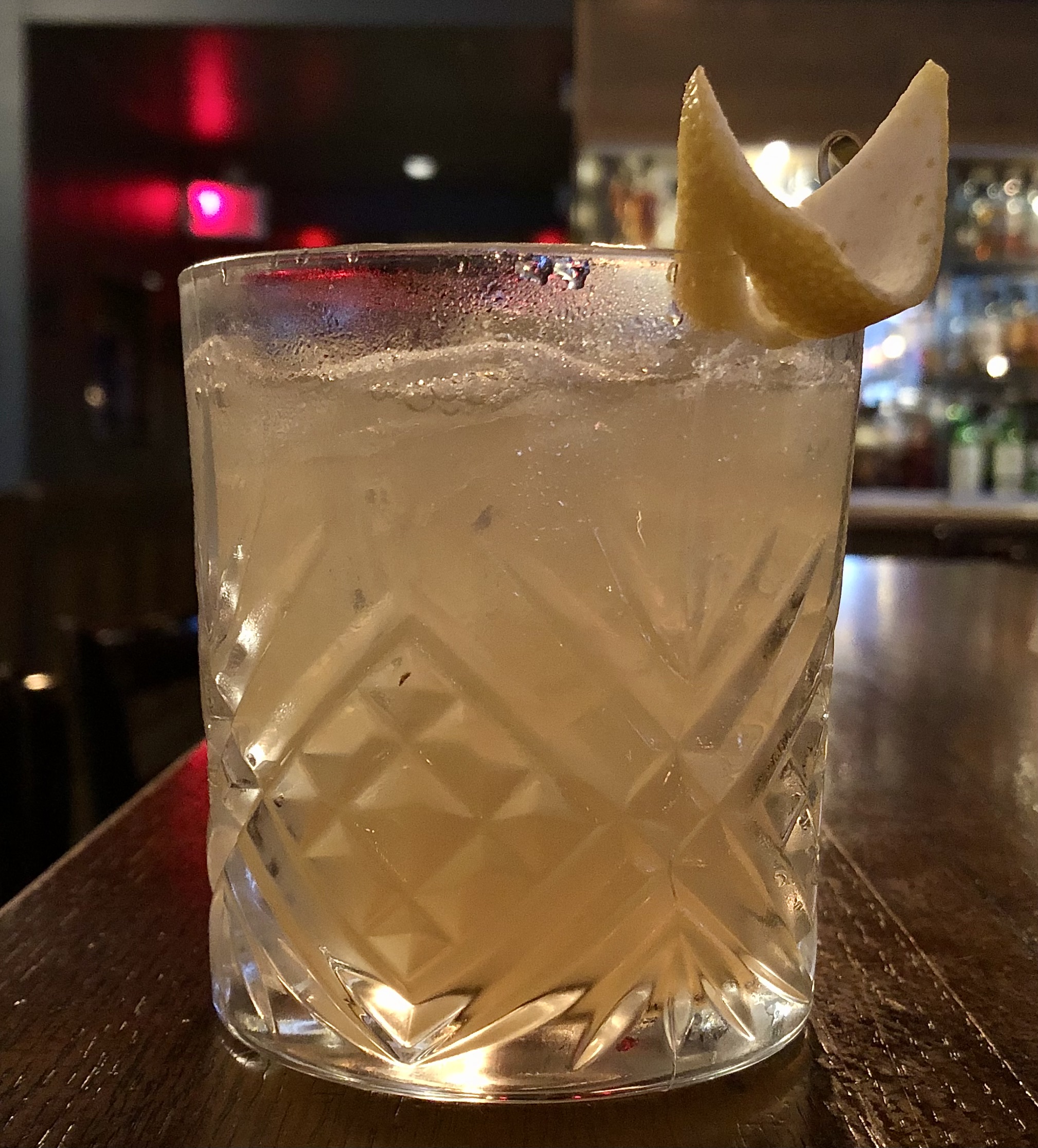
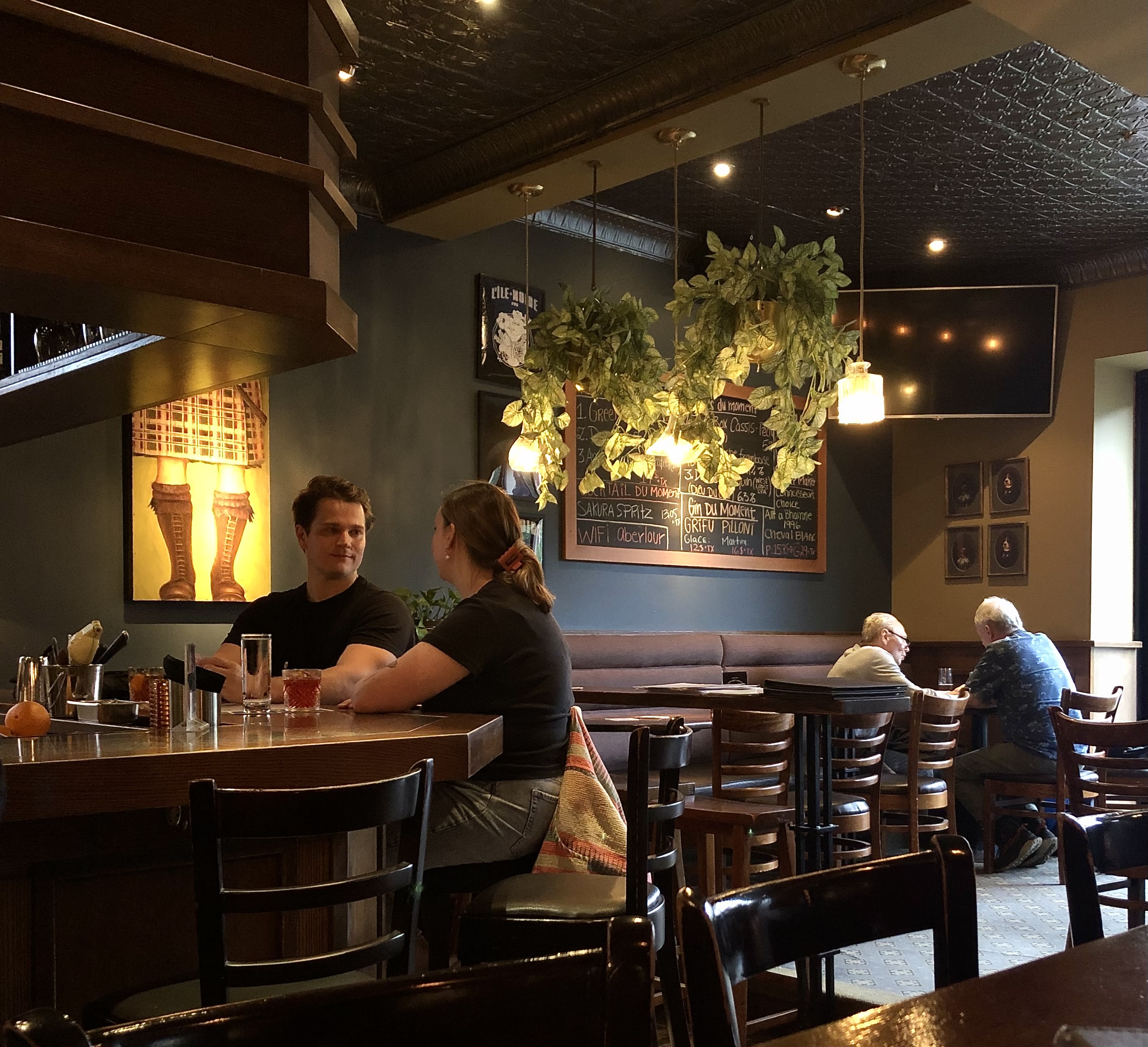
Altogether, L’ile Noire ranks right up there with San Francisco’s Elixir for most unpretentious whiskey fan destination. I loved the casual vibe, and that younger people were there alongside older folks, all engaged in conversation. There were no televisions, or even music that I can now recall. If that’s a false memory perhaps it speaks to the communal nature of the place. A true pub in the traditional sense of a public house. And a speakeasy variant, where people go not to sneak illegal booze but to speak together with ease. L’ile Noire made a great start to my bar hop.
Le Bar Darling
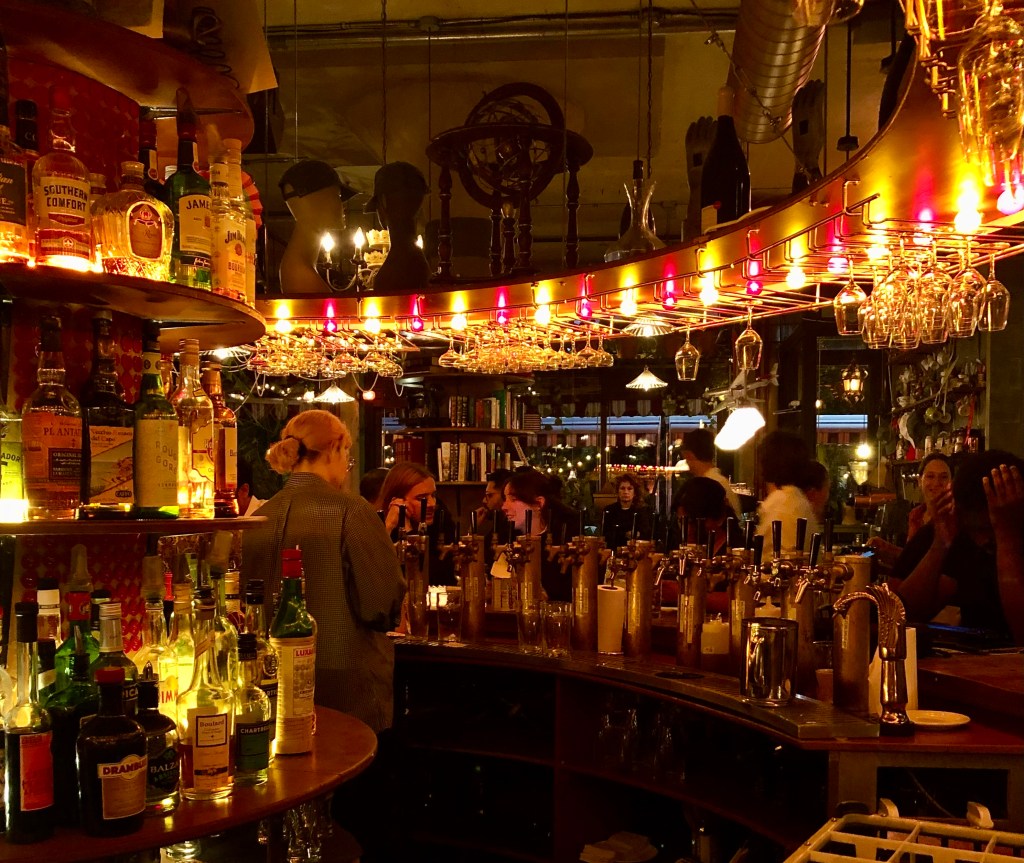
Le Bar Darling makes an interesting combination of contrast and compliment to L’ile Noire. Visually electric, Darling looks much more thrift-store Moulin Rouge than its cute name might suggest. There’s nothing of L’ile Noire’s lazy Sunday pub feeling. Yet somehow Darling manages to be both overwhelming and easygoing at once, I think because the thousand gaudy details are all of a singular piece.
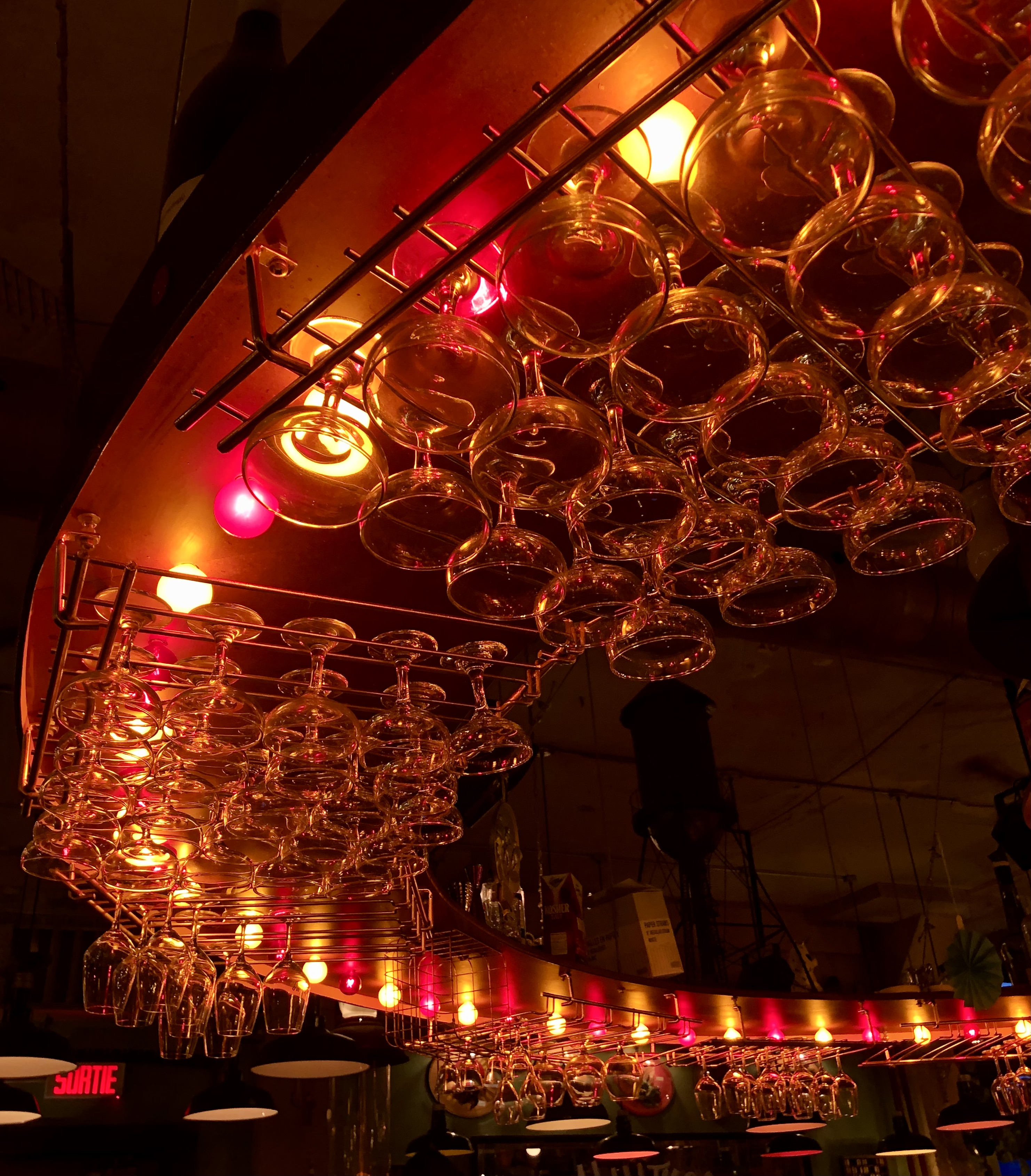
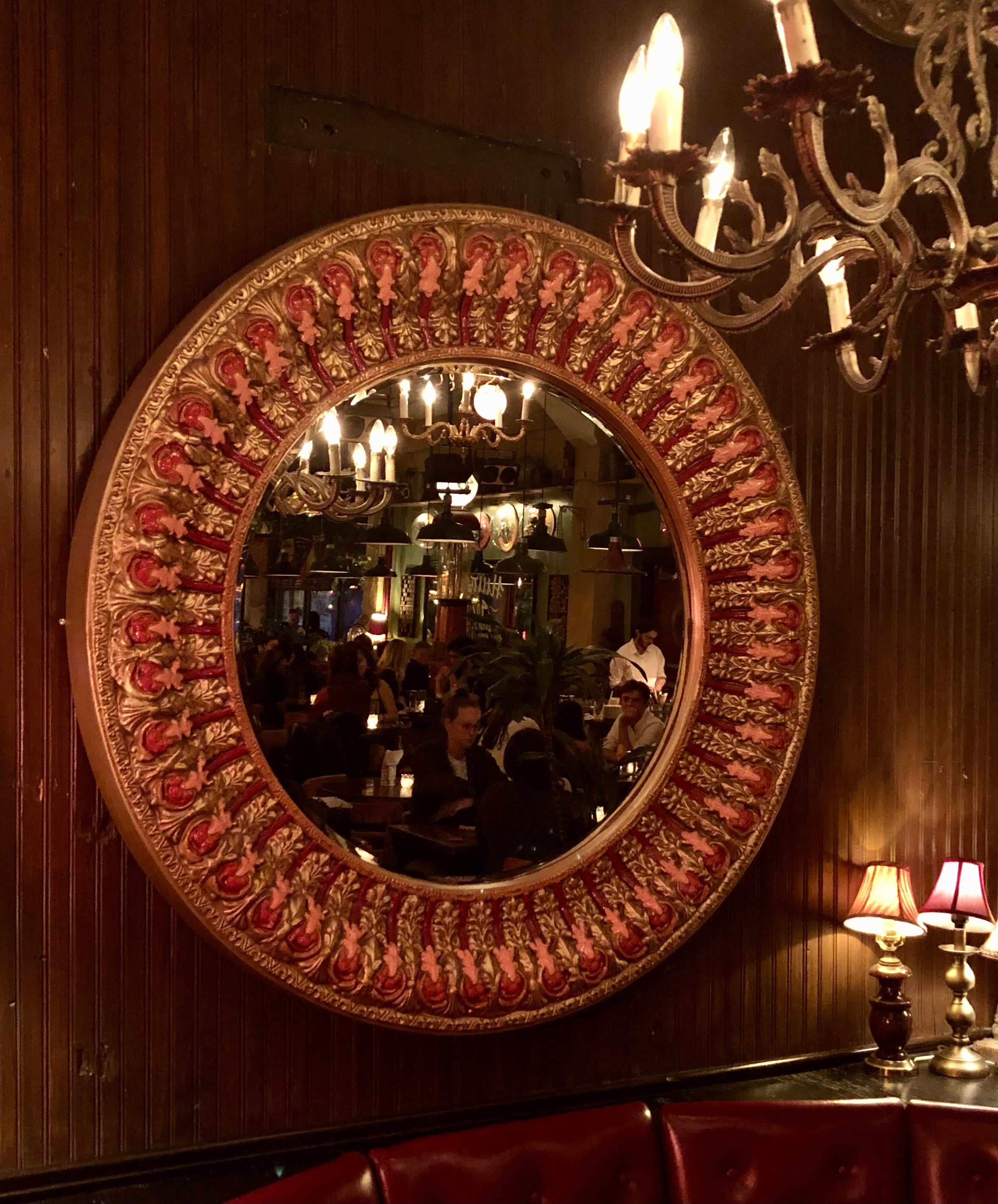
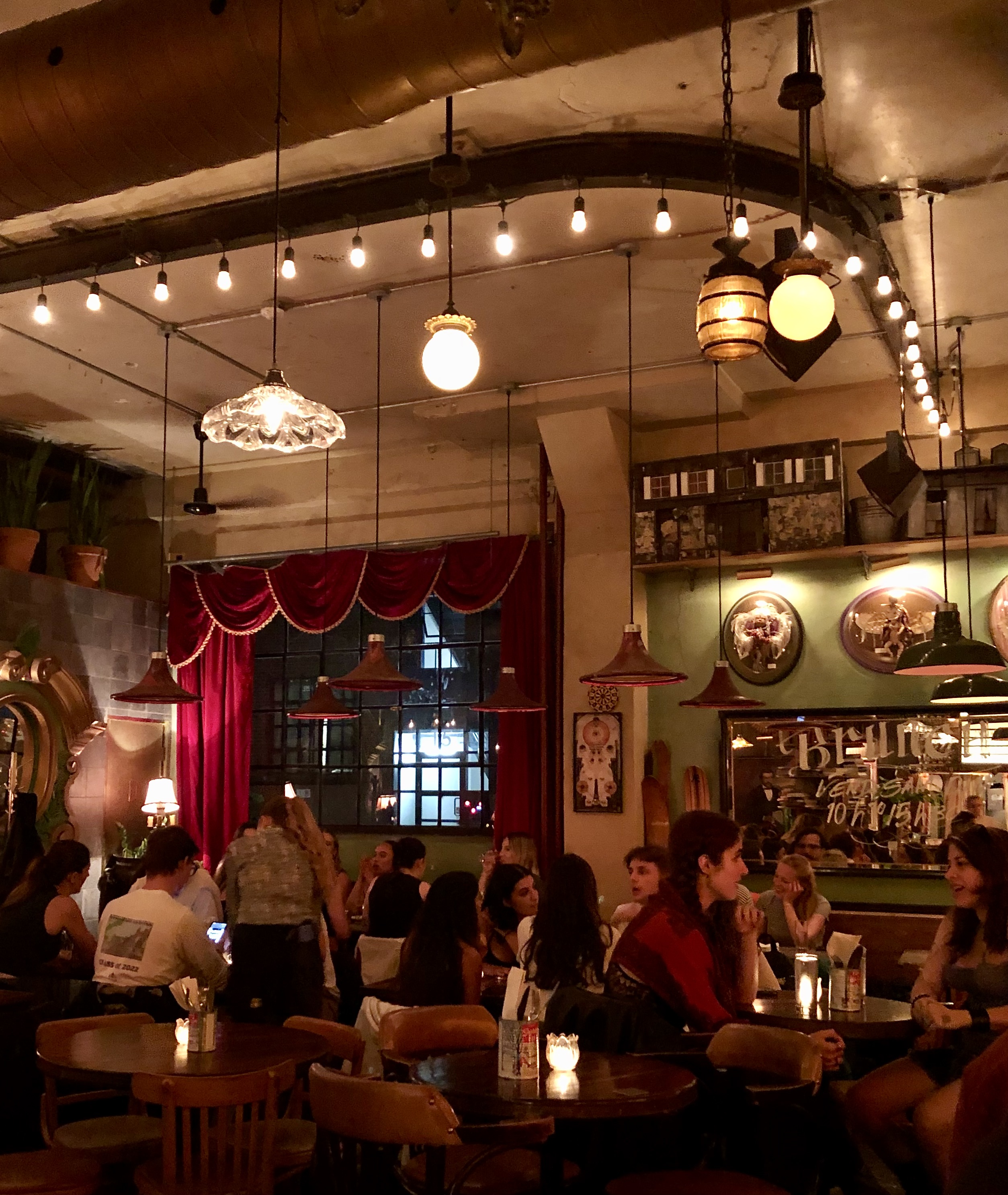
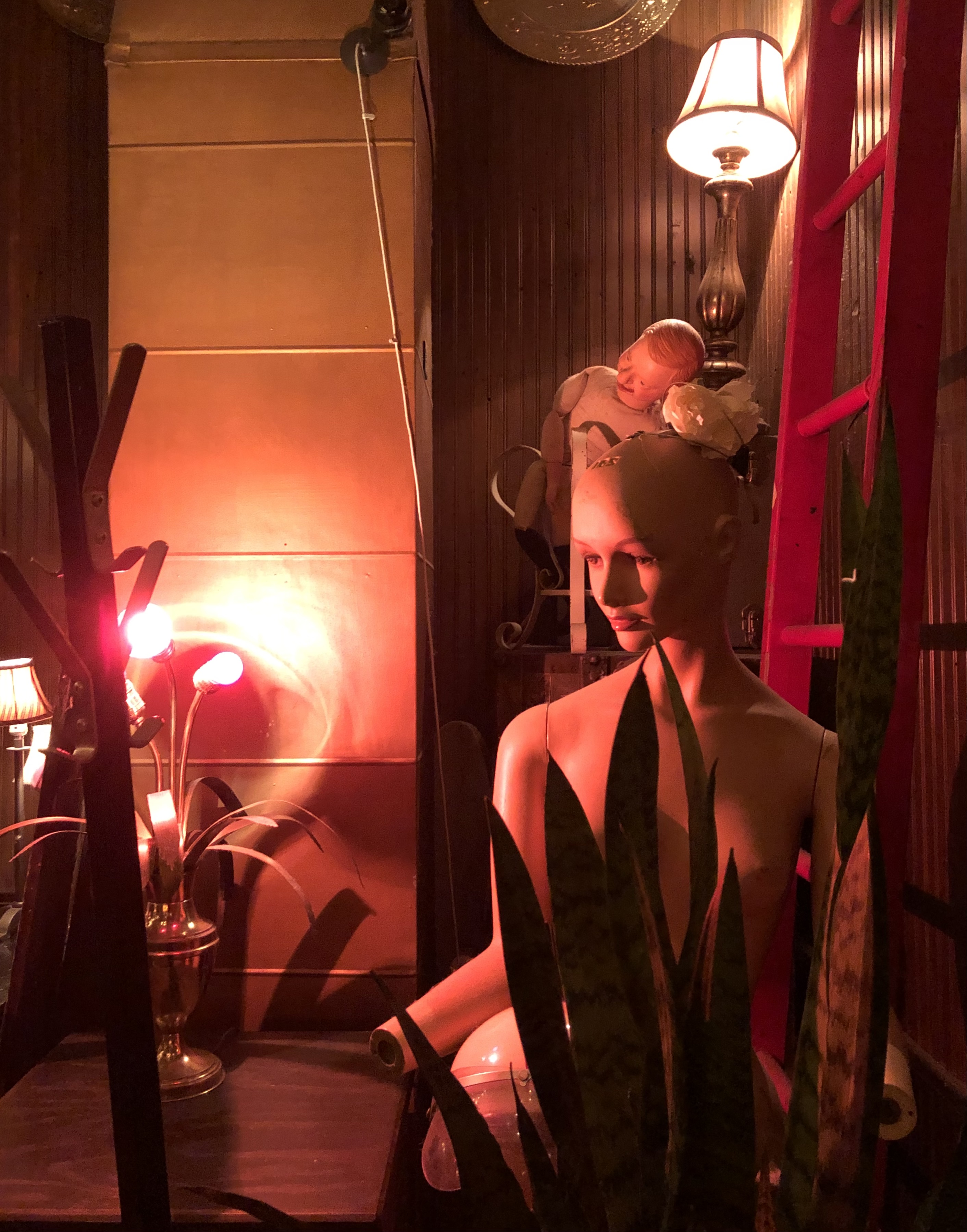
I was seated at the central circular bar, a prime spot to take in the surrounding circus. Like L’ile Noire, Darling appeals to all ages. No televisions. There is music, though it’s drowned out by energetic voices filling the air. A middle-aged couple over my left shoulder were engaged in unhurried conversation. A pair of young girl friends seated at the bar to my left were chattily searching their phones for their next destination. An older man to my right, an artist with a sketchbook, was evidently such a regular that two different bartenders brought him his requisite pint of cider without him having to ask. When the second bartender arrived with an “Oops!” the man said, “You all know me too well. Leave it. I’d have asked for a second eventually.”
I ordered a Waterloo—scotch, Napoléon Liqueur, St-Raphaël Vermouth. It was just right, sweet and smoky. I sipped it slowly. Le Bar Darling feels like a place to sit for hours. The staff doesn’t rush you, though they are themselves in a constant rush to keep the large packed room satiated. They move about nimbly and with ease, not at all disturbing the joyful mood.
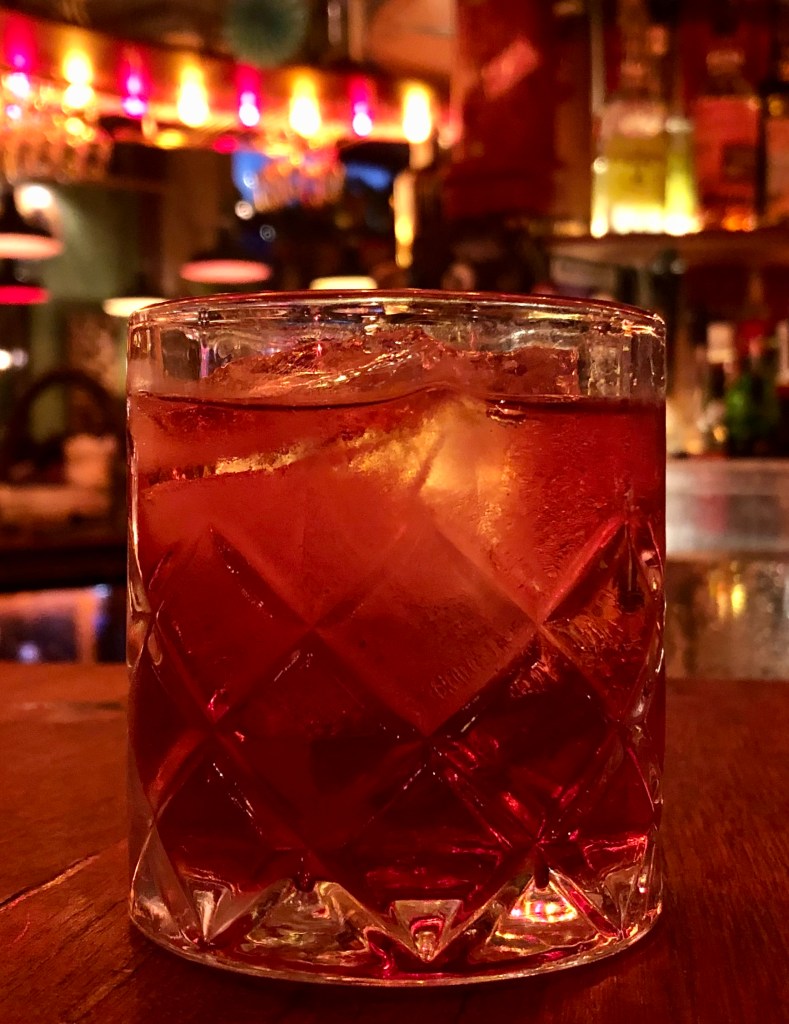
Great place. I understand why that old guy is a regular. That he can concentrate on his silent sketching while surrounded by the visual and aural cacophony of the place speaks to its achievement as an all-purpose, all-welcome destination.
Resto Bar Le Majestique
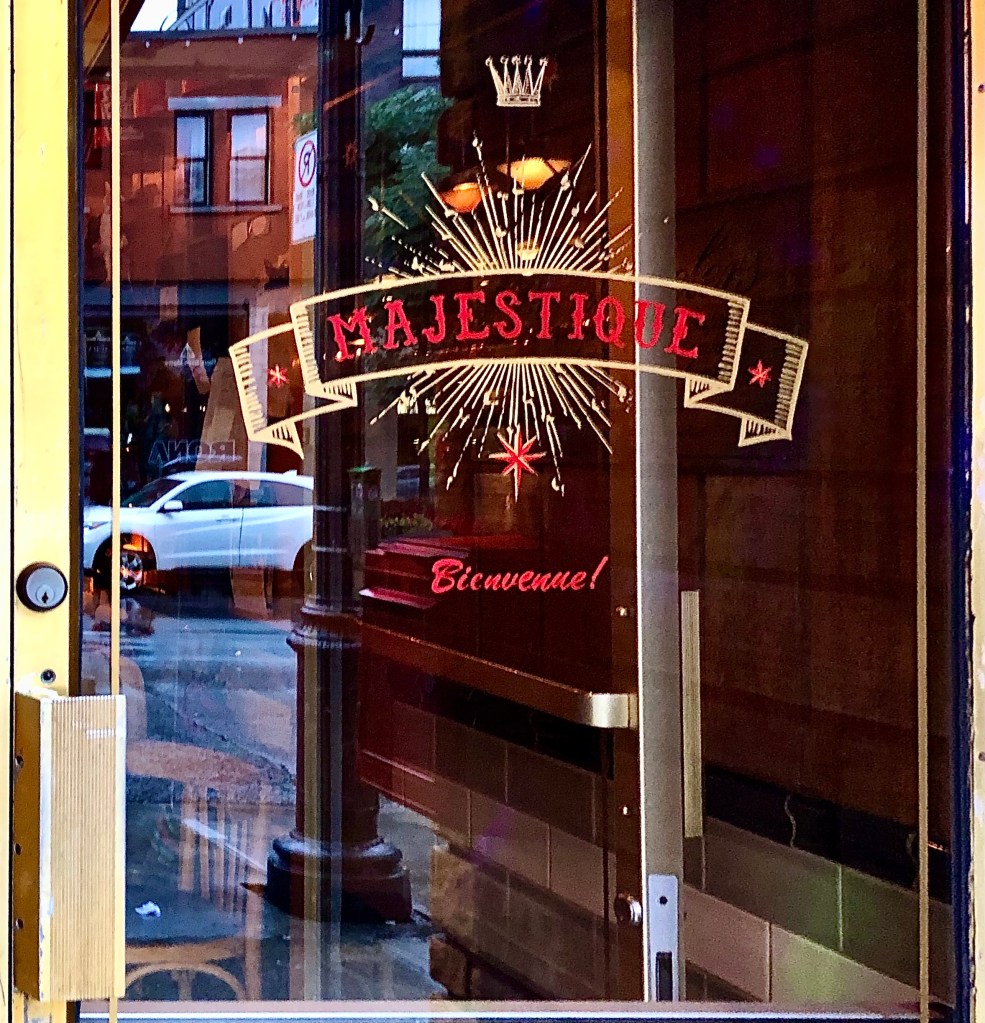
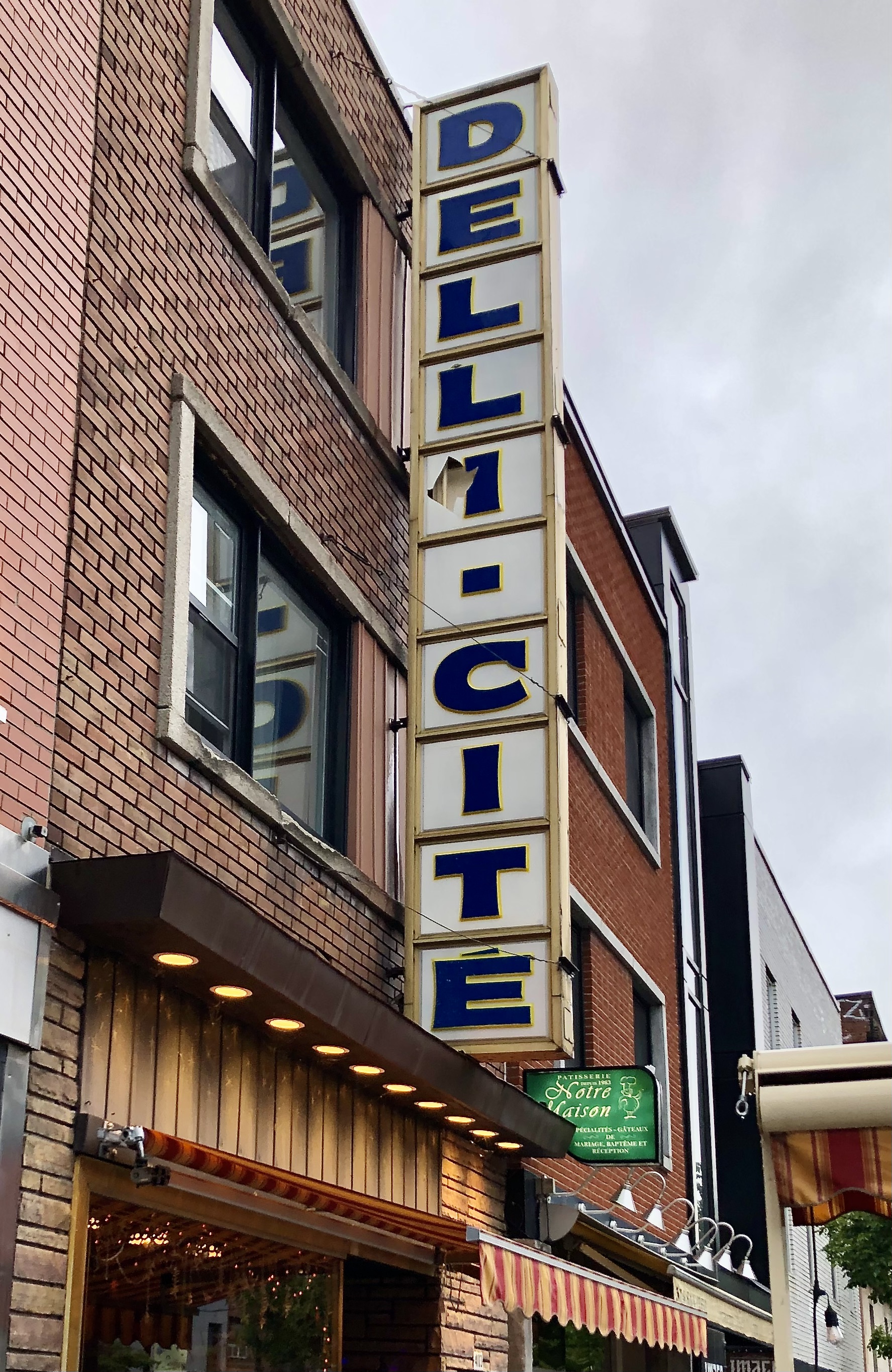
Located in a former bakery and deli, Le Majestique is colorful, fun, and loud. It reminded me instantly of Le Bar Darling. But whereas Darling looks thrift-store Moulin Rouge, Majestique comes across straight thrift-store, more relaxed and less bursting with design. That they left the old deli sign on the outside of the building jives perfectly with the many found objects lined up on shelves and behind glass cupboards.
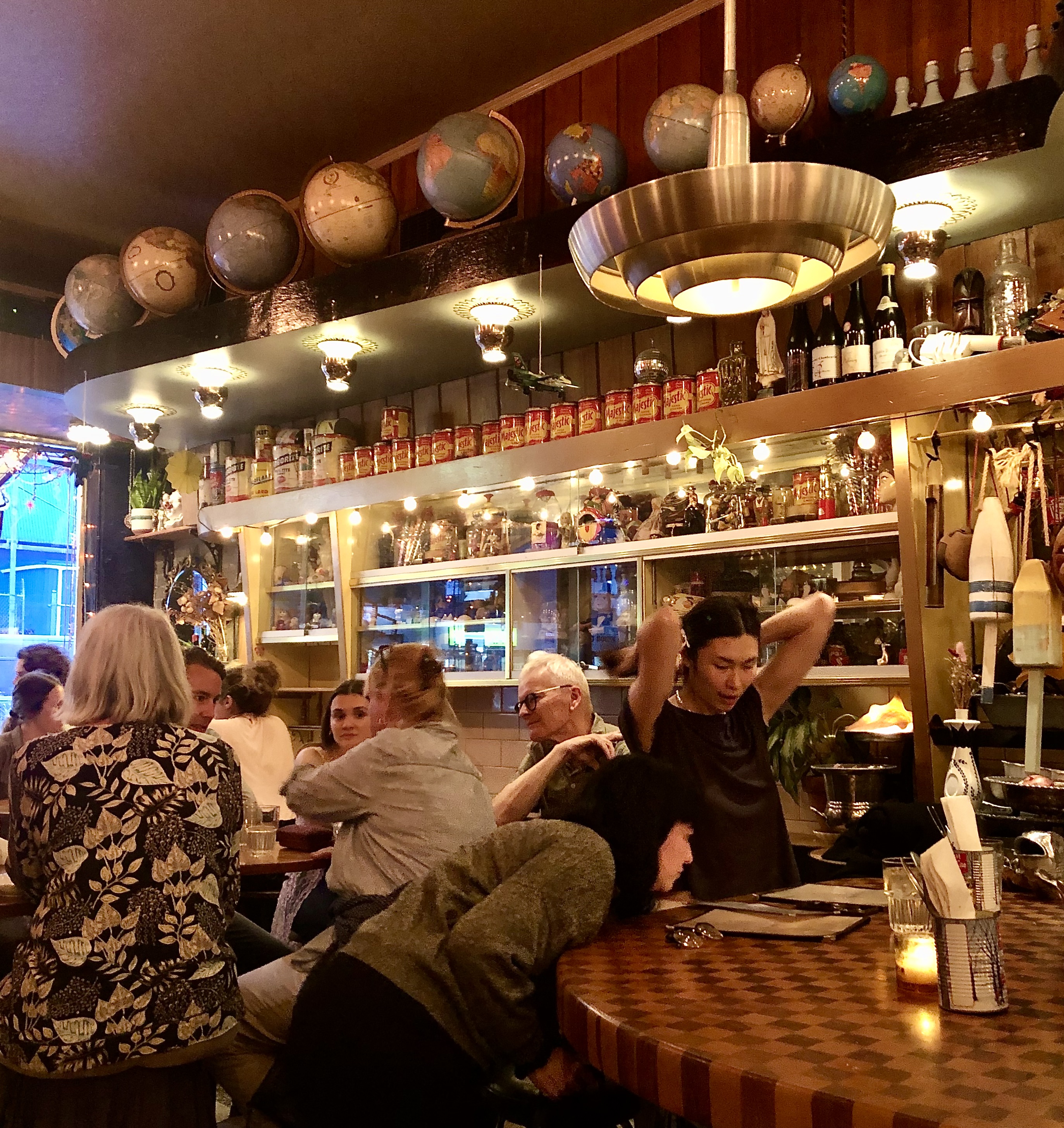
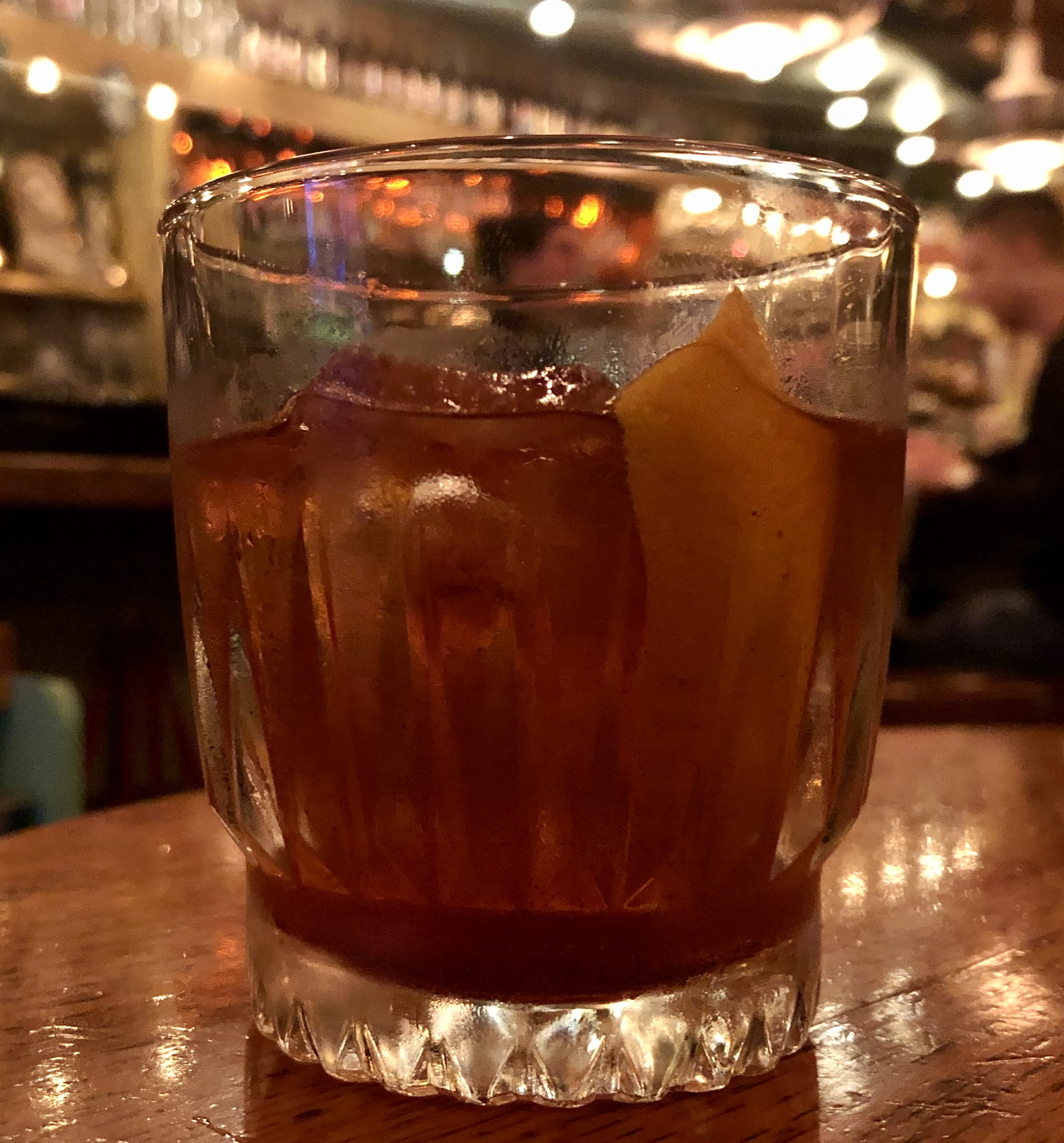
When I arrived the room was fairly empty. But very soon it was packed and lively. To wash down a plate of excellent oysters I ordered a Gigi L’Amaro-So cocktail—Maker’s Mark, St Hubertus Amaro, cinnamon liqueur, chocolate bitters. Nothing fancy or commanding about it. Just a perfectly delightful, sweet and spicy cocktail, like a light Old-Fashioned / Manhattan hybrid concocted in a bakery.
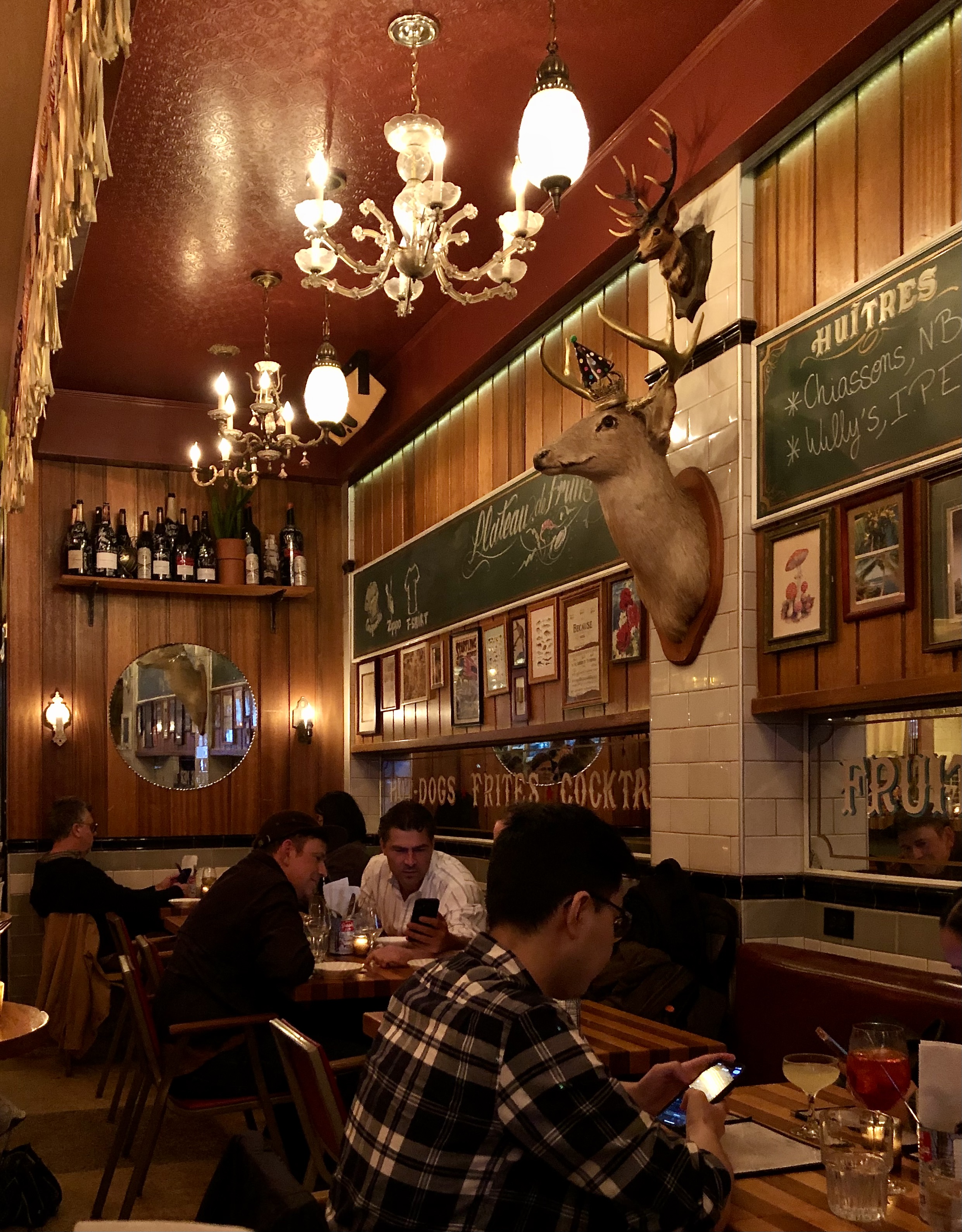
The crowd Le Majestique draws skews older than Le Bar Darling on average. Twenty-somethings are notably absent. It seems to be a primarily thirties / forties crowd. But they’re just as boisterous and fully engaged in good-time mode. I was not surprised when after the fact I learned that Le Majestique and Le Bar Darling are actually owned by the same people! (They have a third establishment as well, Miracolo.) They’ve created two variations on a theme. Both are lively, one like a circus, the other like the after party.
The Bootlegger L’Authentique
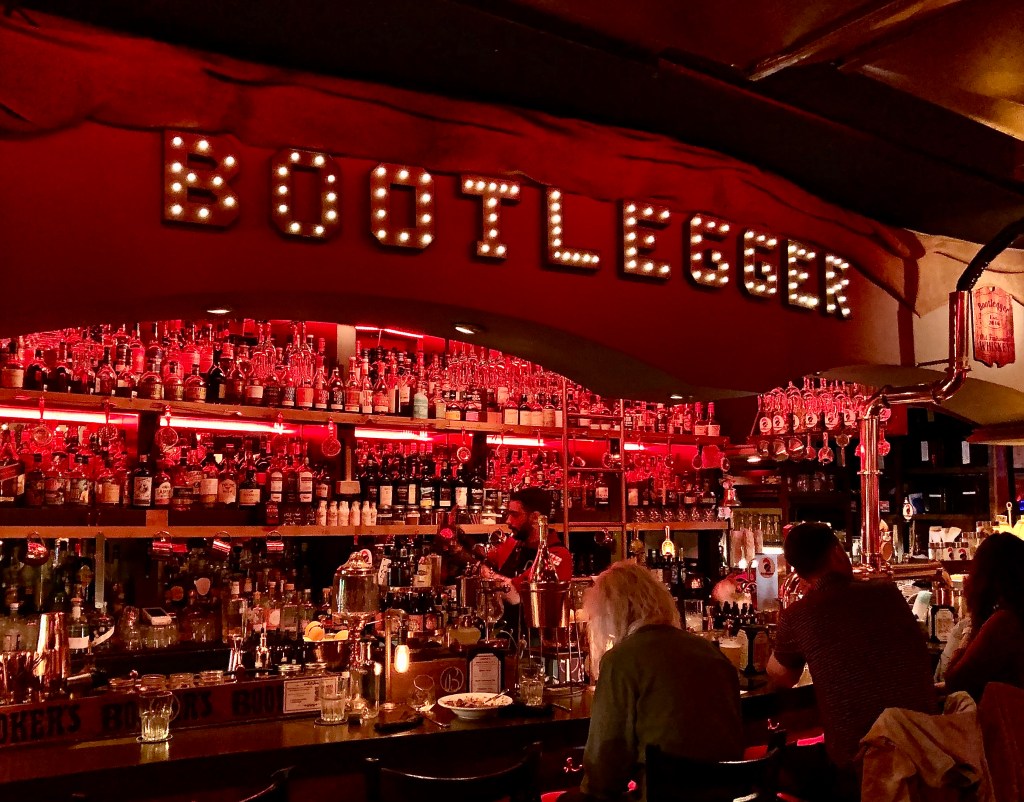
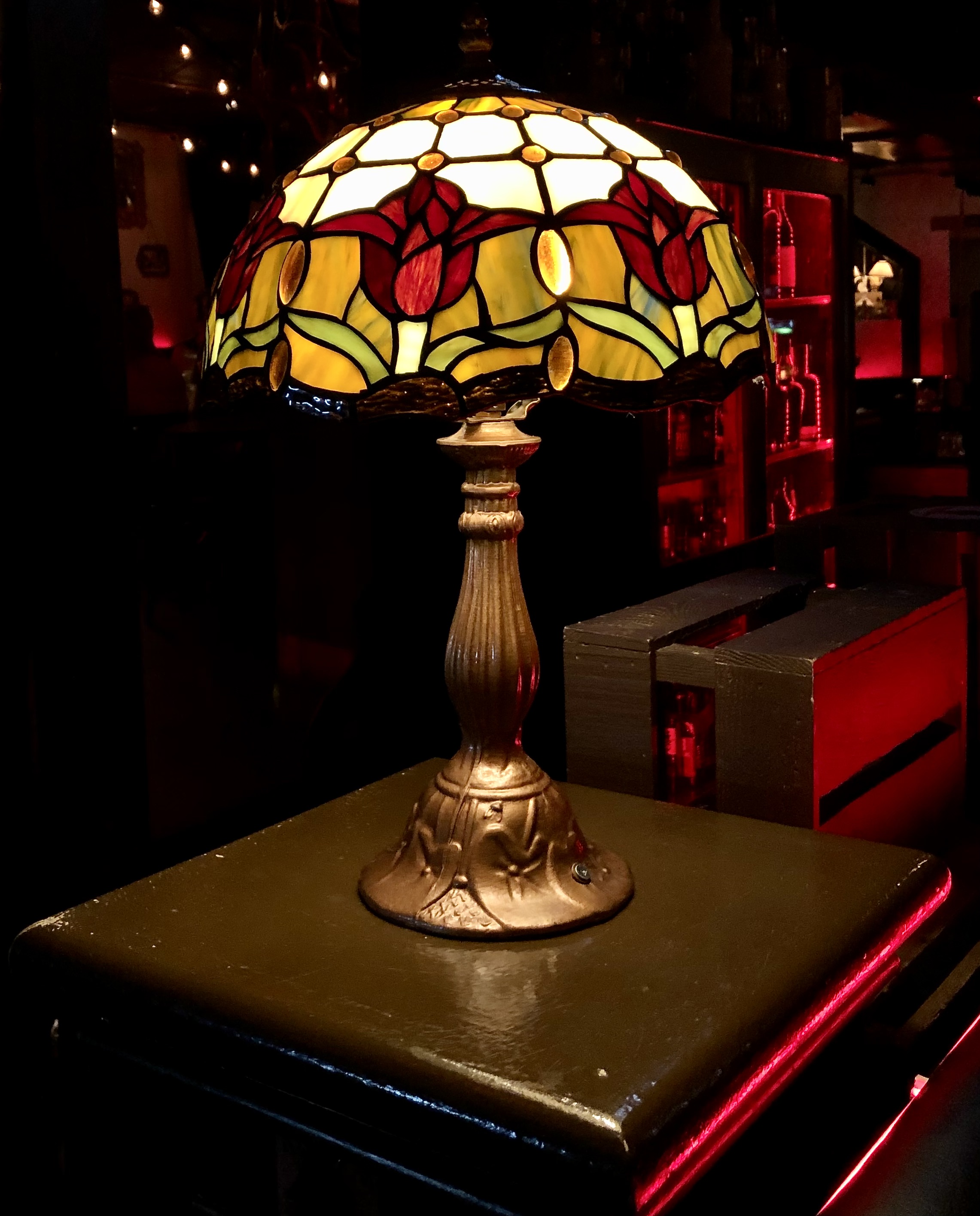
Situated in the Quartier Des Spectacles, The Bootlegger L’Authentique indeed leans into the “spectacle” aspect of the neighborhood’s name. It seems to take its razzly dazzly visual panache less from the city of New Orleans, from which it claims its inspiration, than from the Broadway musical Chicago. I half expected Velma Kelly to show up and do a number!

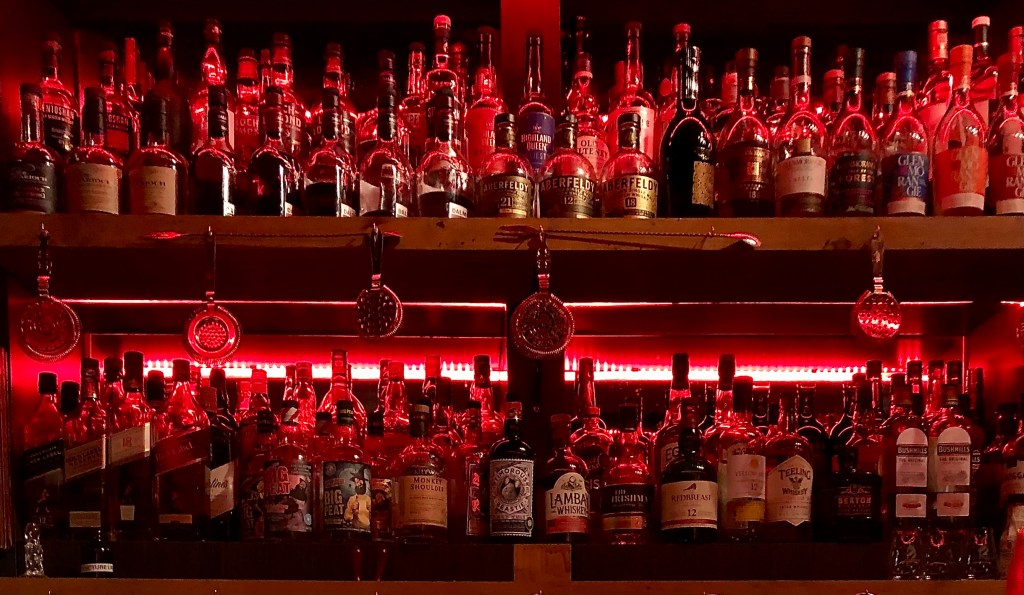
Despite the showy red-drenched interior design, Bootlegger combines a very serious whiskey interest (the extensive list is quite impressive) with creative cocktails, Cajun-inspired food, varied contemporary music and occasional live entertainment. The effect is of a contemporary bar vibe wrapped in American speakeasiness. At once effortful and easygoing, though it doesn’t quite live up to the “authentique” in its name, still it’s a legitimately fun joint.
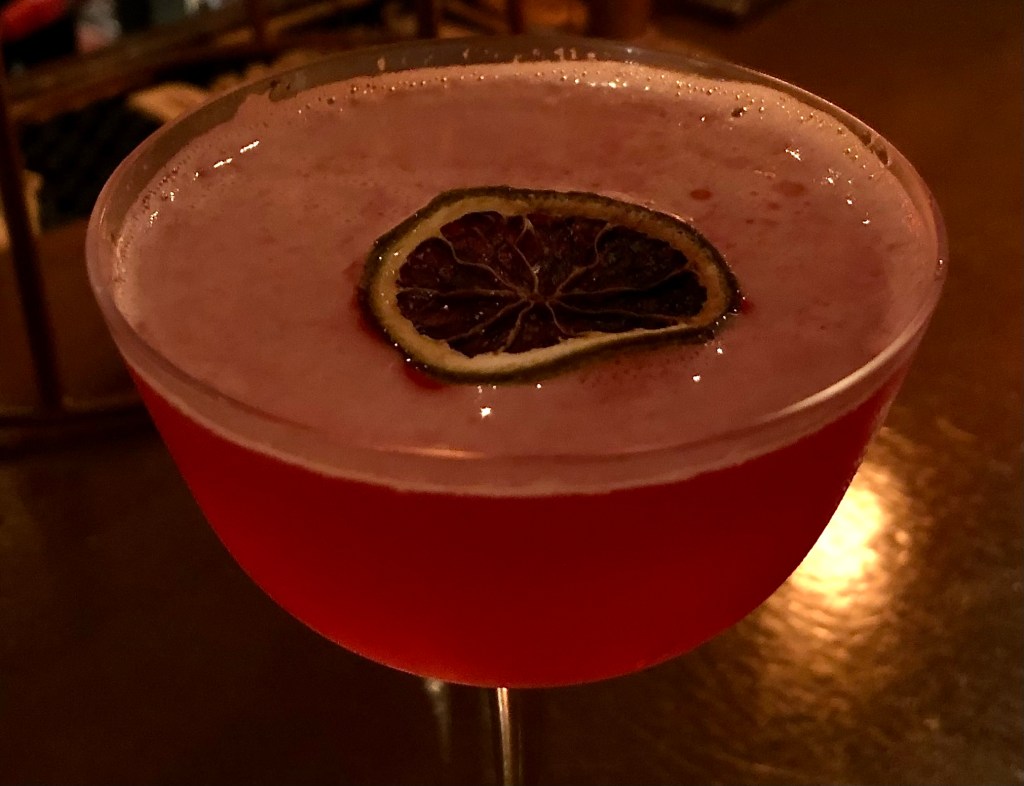
I ordered a Blood & Sand—on the menu despite the L’ile Noire bartender’s claim to a national lack of cherry liqueurs. Sure enough, in appearance at least, it looked much more sand than blood. The ingredients included scotch, Italian sweet vermouth, orange juice, Angostura bitters, saline, and orange zest. So, actually, with the bitters added and the Cherry Heering subtracted, not a true Blood & Sand. More of a Rob Roy Sour, if that’s a thing. But quite good.
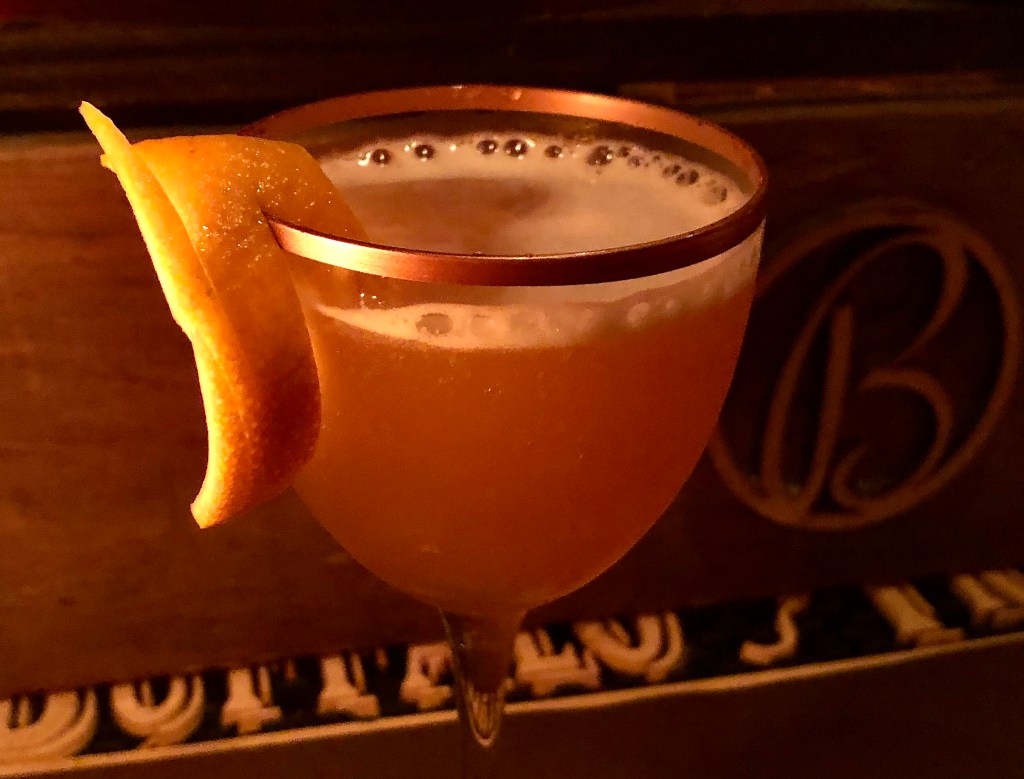
Next I ordered a Smoking Lisa. Bourbon, amaretto, Bittercube Bolivar Bitters, Bittered Sling Pecan Bitters, garnished with a roasted almond and then smoked with applewood. (One can pay an extra $2 to switch out the applewood for a cigar.) It’s a bit of a stunt-cocktail. But the results are a tasty blend of smoky and nutty flavors, balanced with subtle spice and sweet candy notes. It tastes like camping in the woods. Actually maybe a bit more like glamping in the woods. But very relaxing anyway.
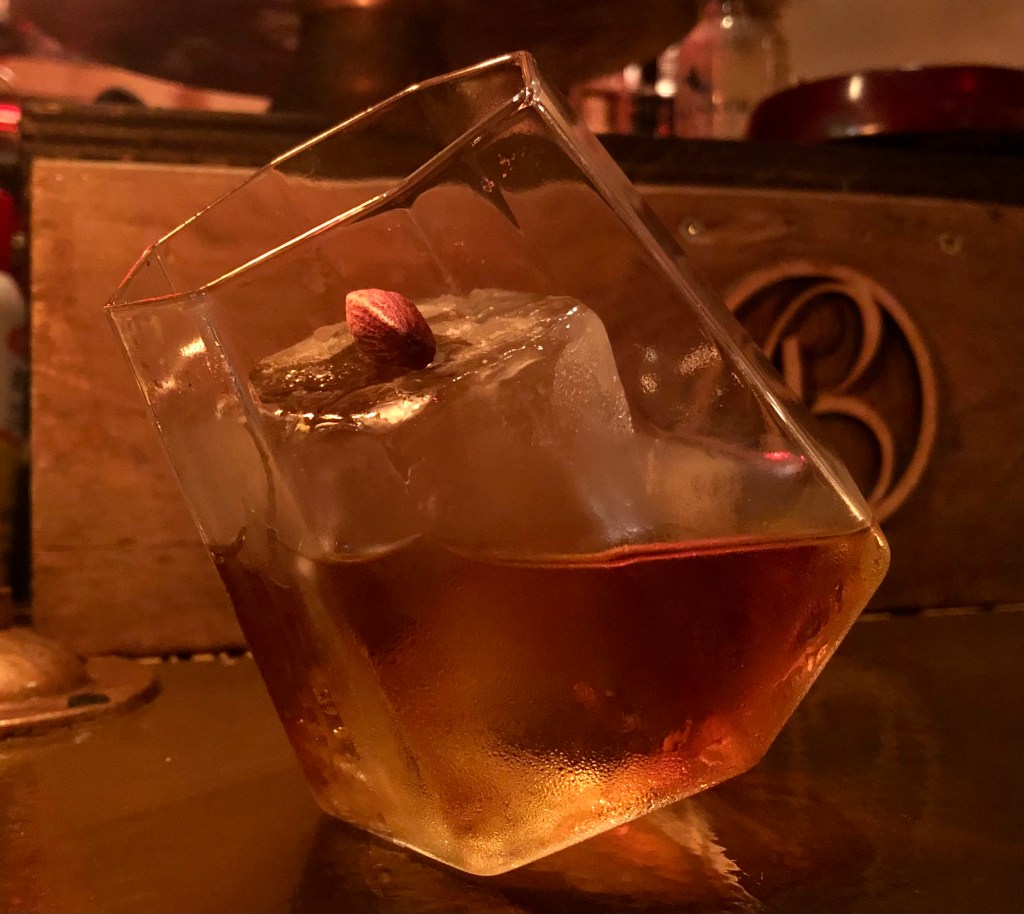
I liked Bootlegger, despite a certain unevenness. Montreal played a big role in the Prohibition era, providing thirsty Americans with a lively oasis of free-flowing liquor. So the speakeasy theme is prevalent throughout the city and takes on many variations. Bootlegger’s approach is pretty direct, and more than a bit pastiche.
The service is forthcoming. The friendly bartender adjusted his language according to his perception of the given patron. With me he spoke with the boyant politesse of a maître d’. With a quartet of boisterous early thirty-something bros to my right, his language was generously spattered with “bro” and “f*cking.” So, in fitting with the Chicago sheen of the place, he was a showman. I did notice he often spilled and splattered while mixing drinks, and would briefly admonish himself—or rather blame the shaker or strainer for “giving me a hard time.” Perhaps he was distracted by his continual engagement with his patrons. But the drinks themselves came out well regardless.
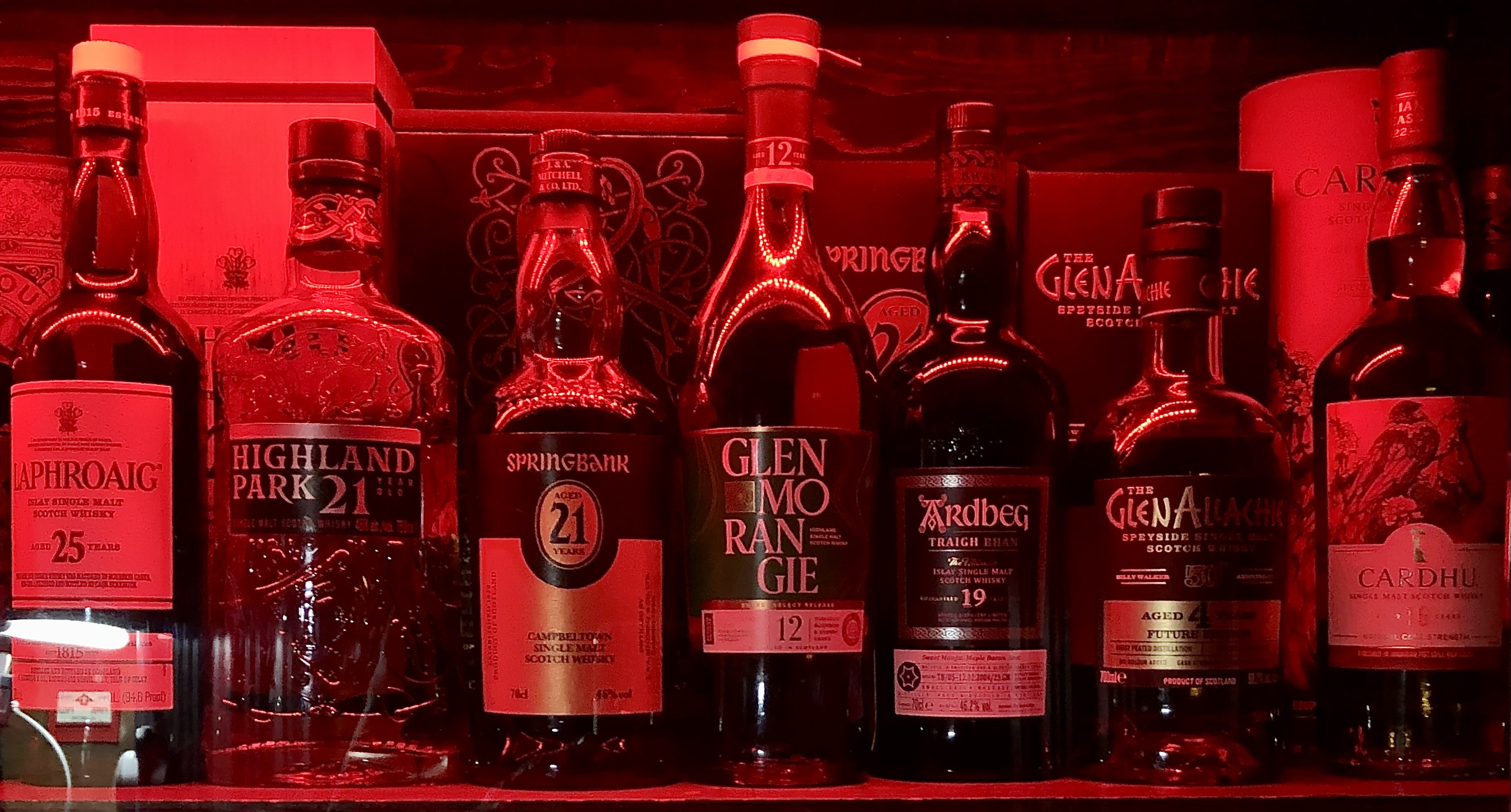
Despite the pretentious aspects—the stated New Orleans speakeasy theme coming off more showy Broadway musical; calling a Rob Roy variant a Blood & Sand; stark shifts of performative vernacular to match a perception of the audience—still I’d gladly come back. Great whiskey list. Good cocktails and food. I’d opt to sit at a table rather than the bar, away from the show. But The Bootlegger L’Authentique is a worthwhile drinking destination, for sure.
The Coldroom
At this point in my bar hopping, I was starting to get a sense of a consistent Montreal impulse to marry artistic panache with substantive pleasure. And in that regard, just as Le Bar Darling did with L’ile Noire, The Coldroom likewise makes a useful contrast and complement to The Bootlegger L’Authentique.
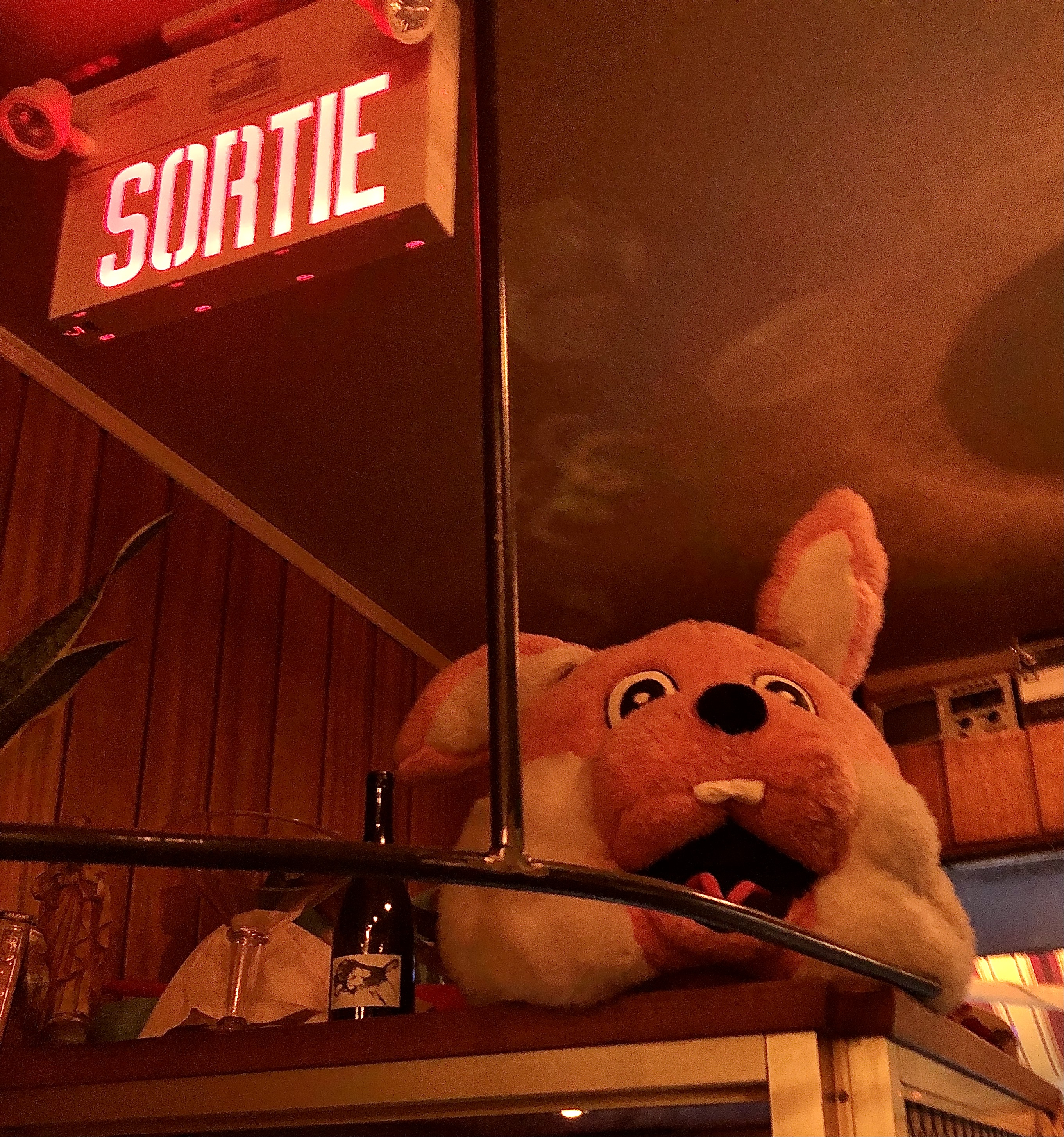
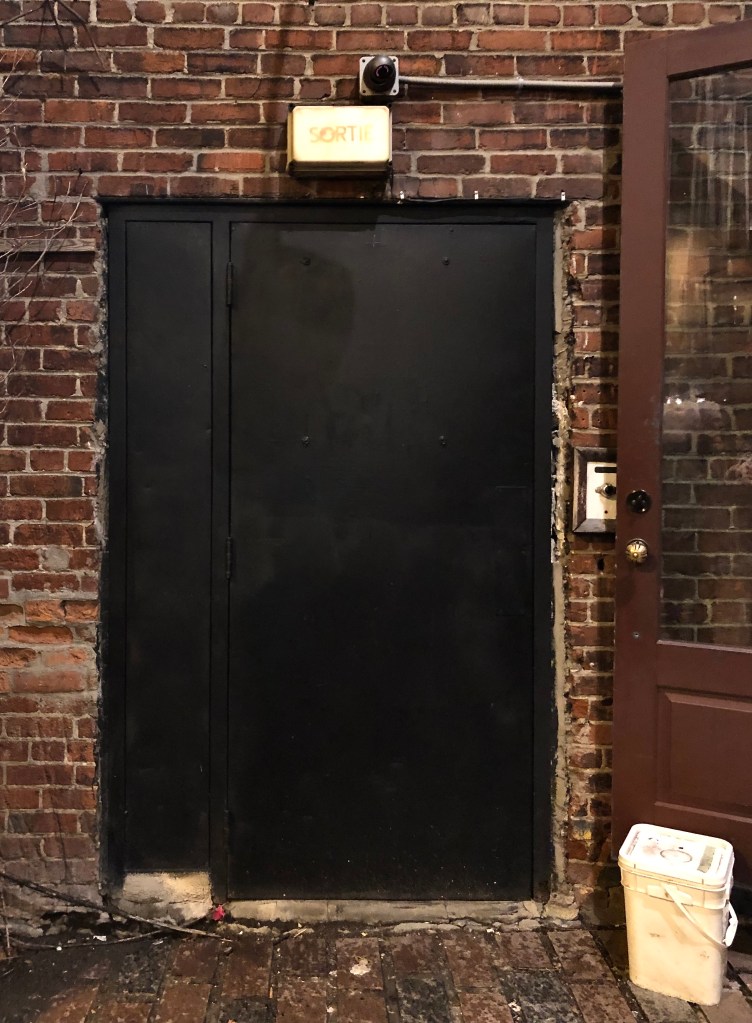
Press the industrial looking button next to a plain black door on the corner of Rue Saint-Vincent and Rue Saint-Amable, smack in the middle of the hyper-touristic Old Town Montreal, and a little “sortie” sign above the door lights up, revealing the silhouette of a rubber ducky with its eye X’d out. After a minute or two, the door will open and you’ll be led down a flight of stairs to a surprisingly un-touristic speakeasy.
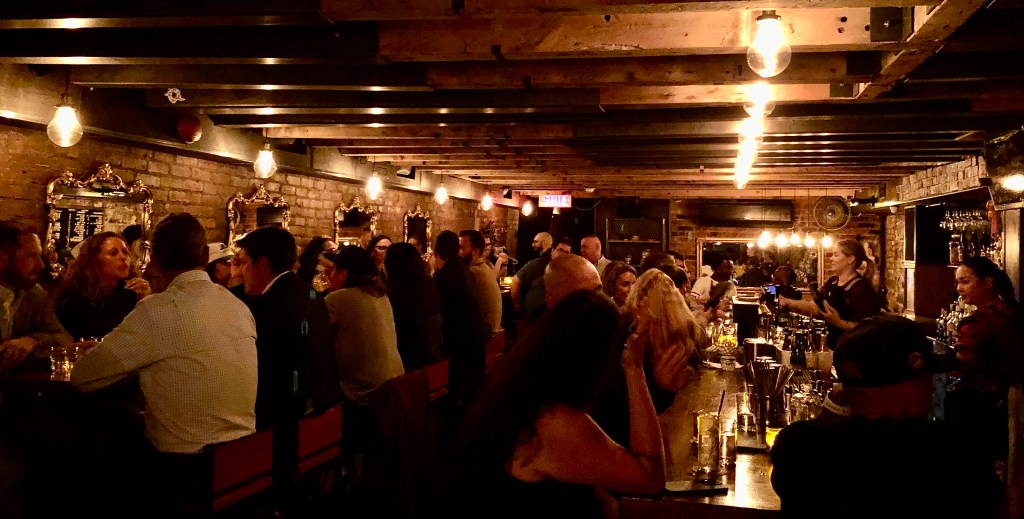
Dominated by a low ceiling of thick wood planks, the room feels tucked beneath a seaside boardwalk. Knowing that Old Town flanks Montreal’s St. Lawrence River port no doubt adds to this feeling. But down in this dark black and wood-colored basement there is little sense of the cheap souvenir shops above.
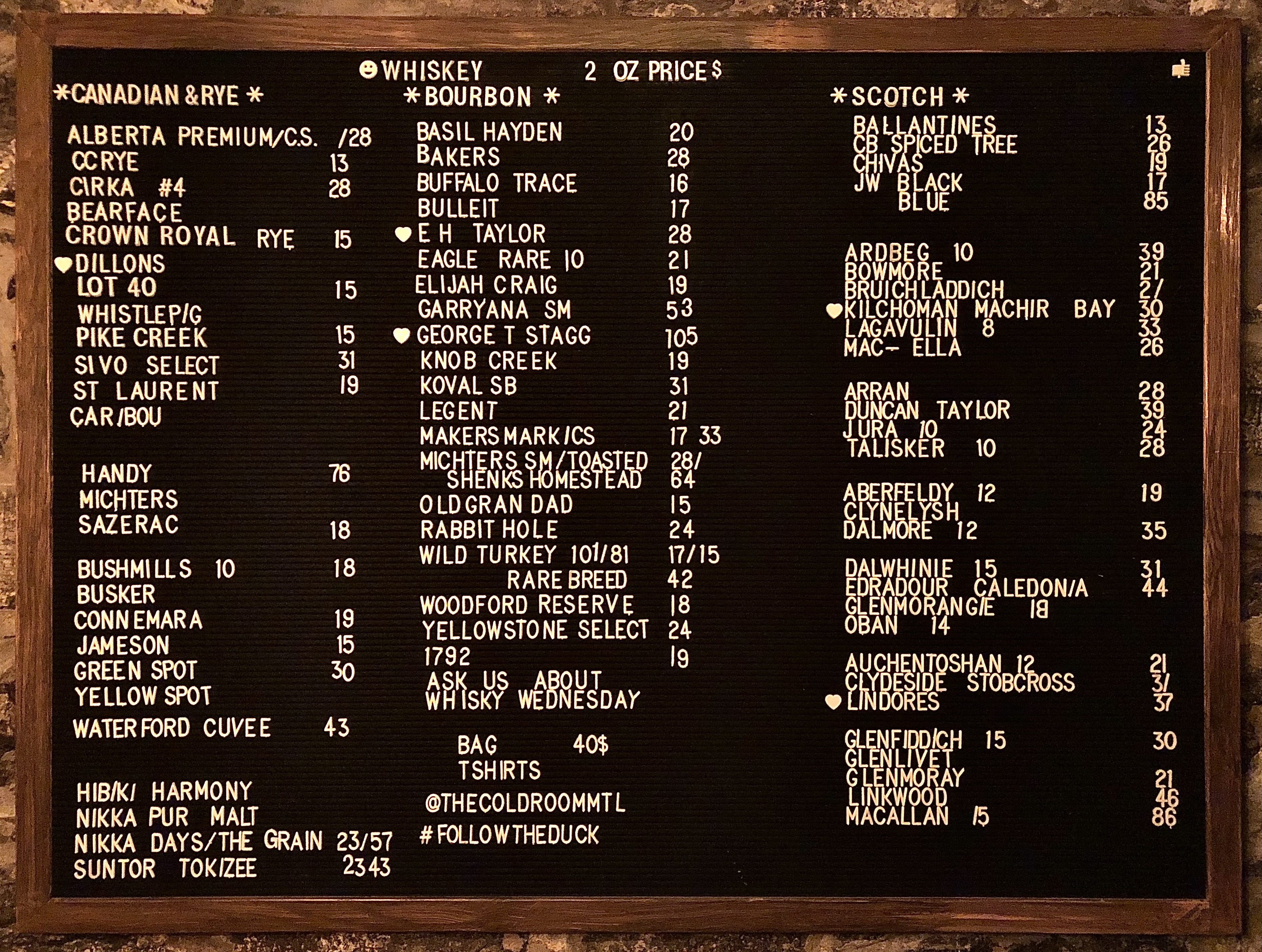
That’s not at all to say Coldroom is without its kitsch. Alongside a solid whiskey list, a dual crime and rubber ducky theme guides the cocktail menu.

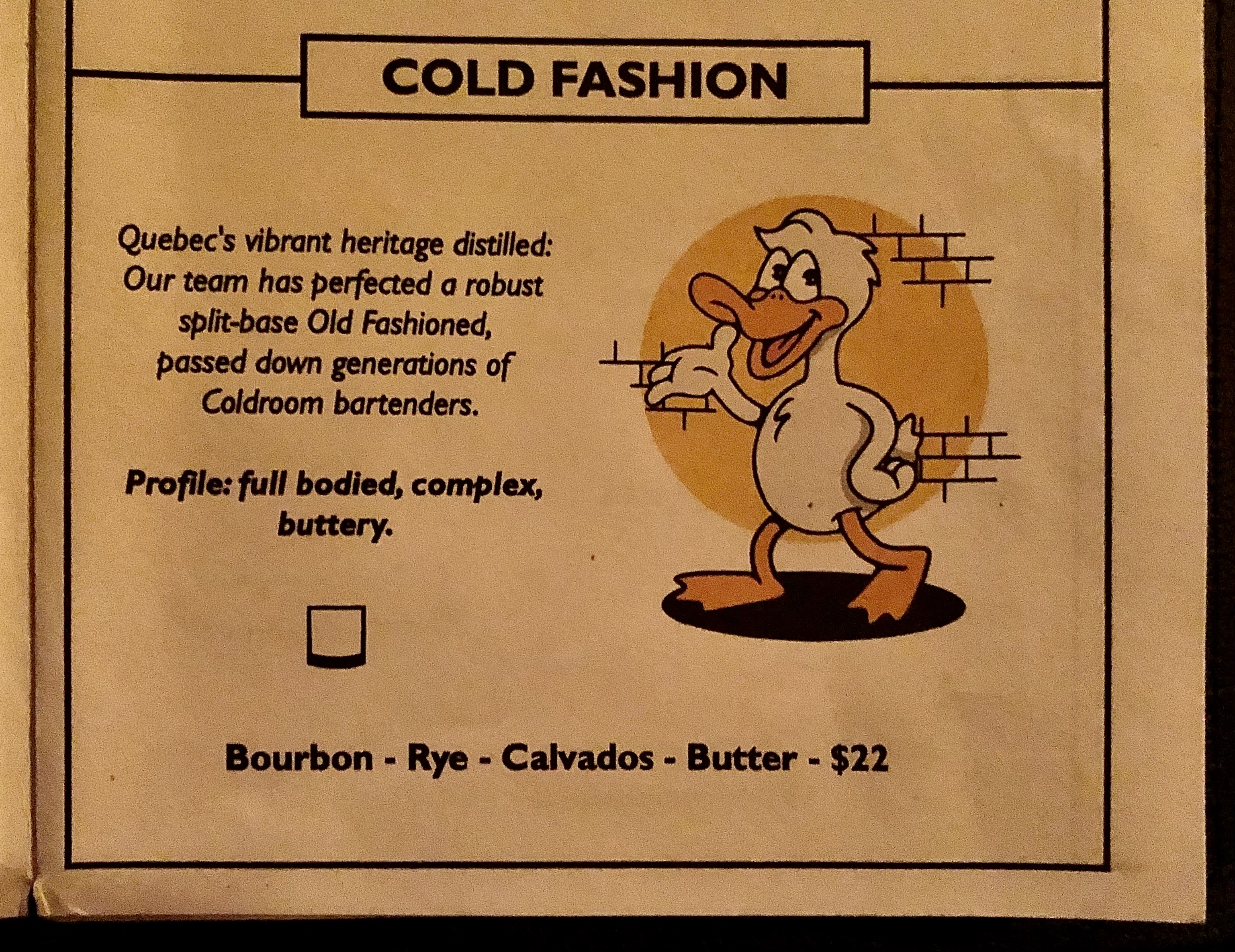
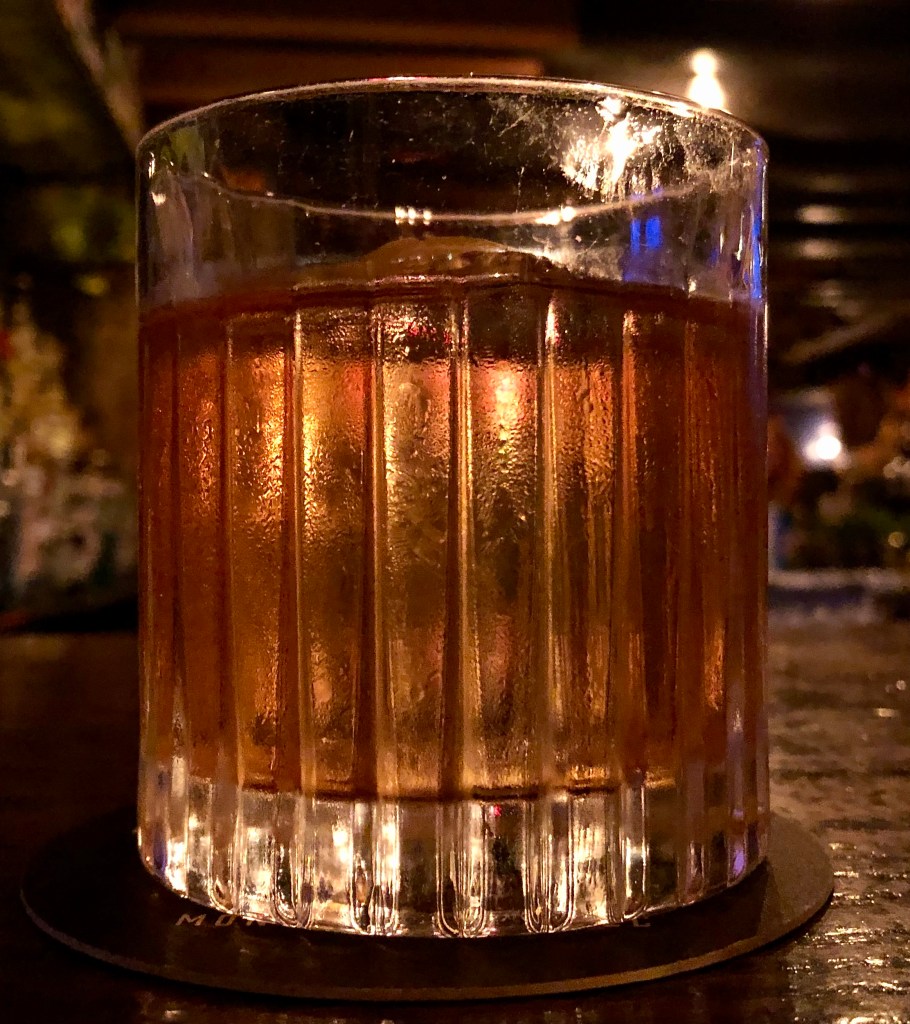
I started with a Cold Fashioned—bourbon, rye, calvados, and butter. Perfection. The bourbon and rye blend seamlessly. (I’d have guessed a high-rye bourbon had been used.) The calvados brings a subtle apple undercurrent to brighten the whiskey. The butter is not added directly but done as a fat wash to the bourbon. Its influence is both tasted and felt—a subtle butteriness to the flavor and texture, adding a richness to ground the brightness of the calvados with the darker whiskey notes. Loved it.
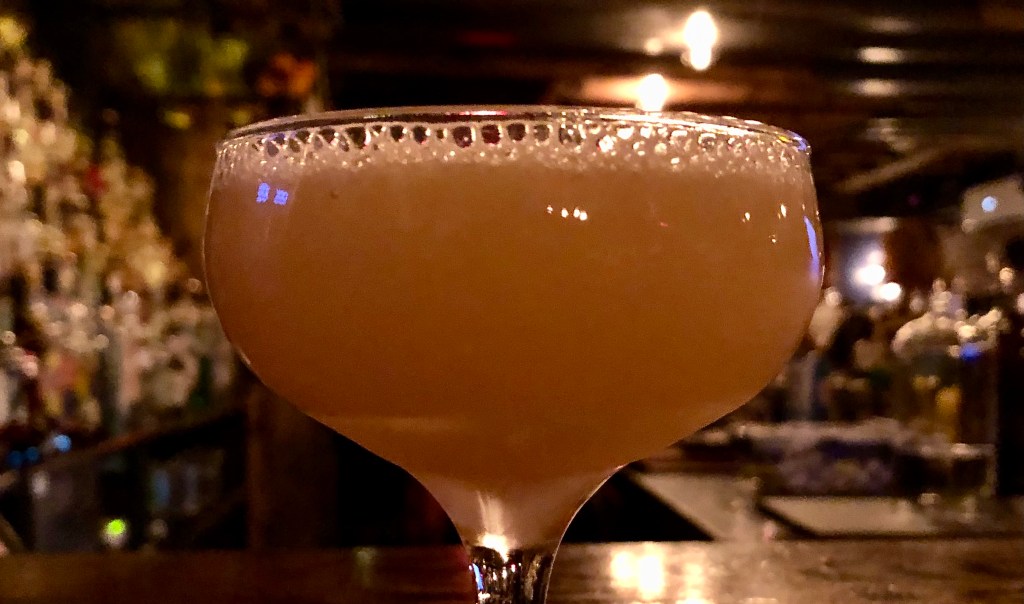
Next I ordered a Cameron’s Kick—Irish whiskey, blended scotch, lemon juice, orgeat syrup. Also perfection. The Irish whiskey’s bright copper zing outlined the blended scotch’s sweetness. The whiskeys were perfectly discernible amidst the tart and sour lemon. The orgeat seemed to be the subtle bridge joining the lemon and whiskeys together. This cocktail really demonstrated to me the impact a choice few ingredients can have toward achieving balance, where both the individual parts and their sum can be enjoyed.
Loud, crowded, friendly, and fun, the Coldroom manages to escape the minefield of tourist traps sprawling just above it. Whereas The Bootlegger L’Authentique suffers a bit from its disjointed pretenses, here the various theatrical gestures, offered within a more visually streamlined interior design, manage to support the whole rather than distract from it. It’s impressive.
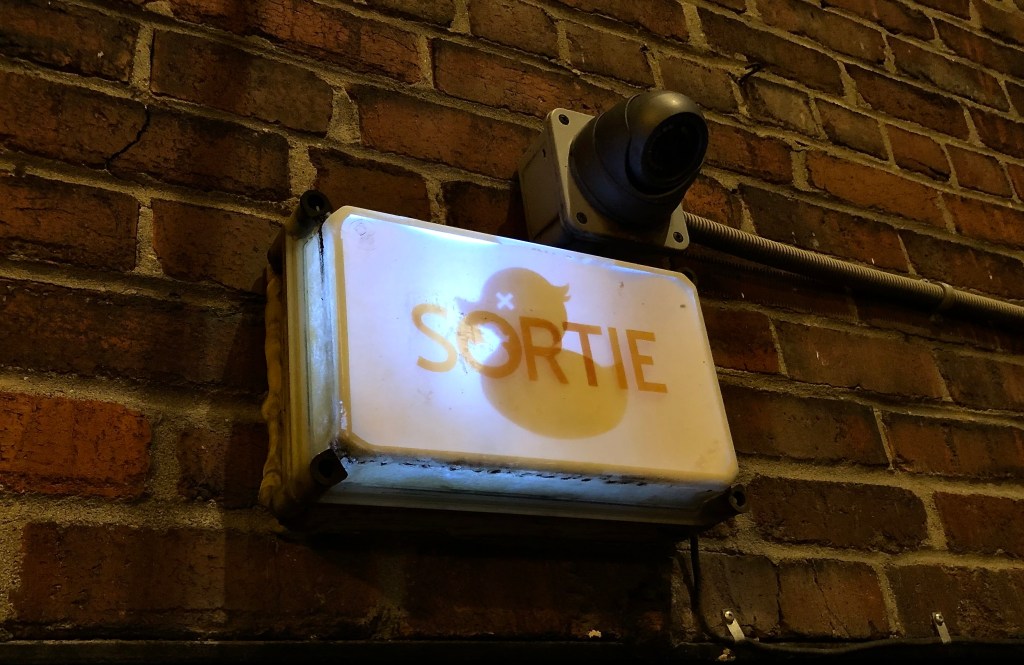
There is indeed a kind of immersive performance aspect to gaining access, like an escape room inverted. No sign on the street guides you. There’s no address. More than one anonymous black door stands in the vicinity. I eventually had to ask a nearby shopkeeper for help and still ended up at the wrong door. A second shopkeeper pointed me the right way. Then there’s the silent door buzzer leaving only the hum of mystery. The little “sortie” sign lighting up to reveal the ghost of a dead rubber ducky. The door opening and an entirely untheatrical host—her demeanor like any you might expect to greet you at a normal bar—leading you down the black iron staircase into the loud, low-ceilinged room. By the time I was seated at the bar and had cracked open the cartoony menu I was fully on board for the ride. Had the bartender not been so genuinely congenial, and the cocktails not so expertly made, maybe the kitsch and theatricality would not have been transcended. It really seems like it shouldn’t work. But it does. Santé to that!

Cloakroom Bar
Continuing with the speakeasy theme, we have Cloakroom Bar—easily the most elegant and refined of the bars I visited, and yet no less welcoming and congenial. Cloakroom has been voted among the top fifty bars in North America, and the top five in Canada. It could easily preen on its laurels. But I felt as welcomed here as at any other bar, restaurant, or cafe I visited while in Montreal.
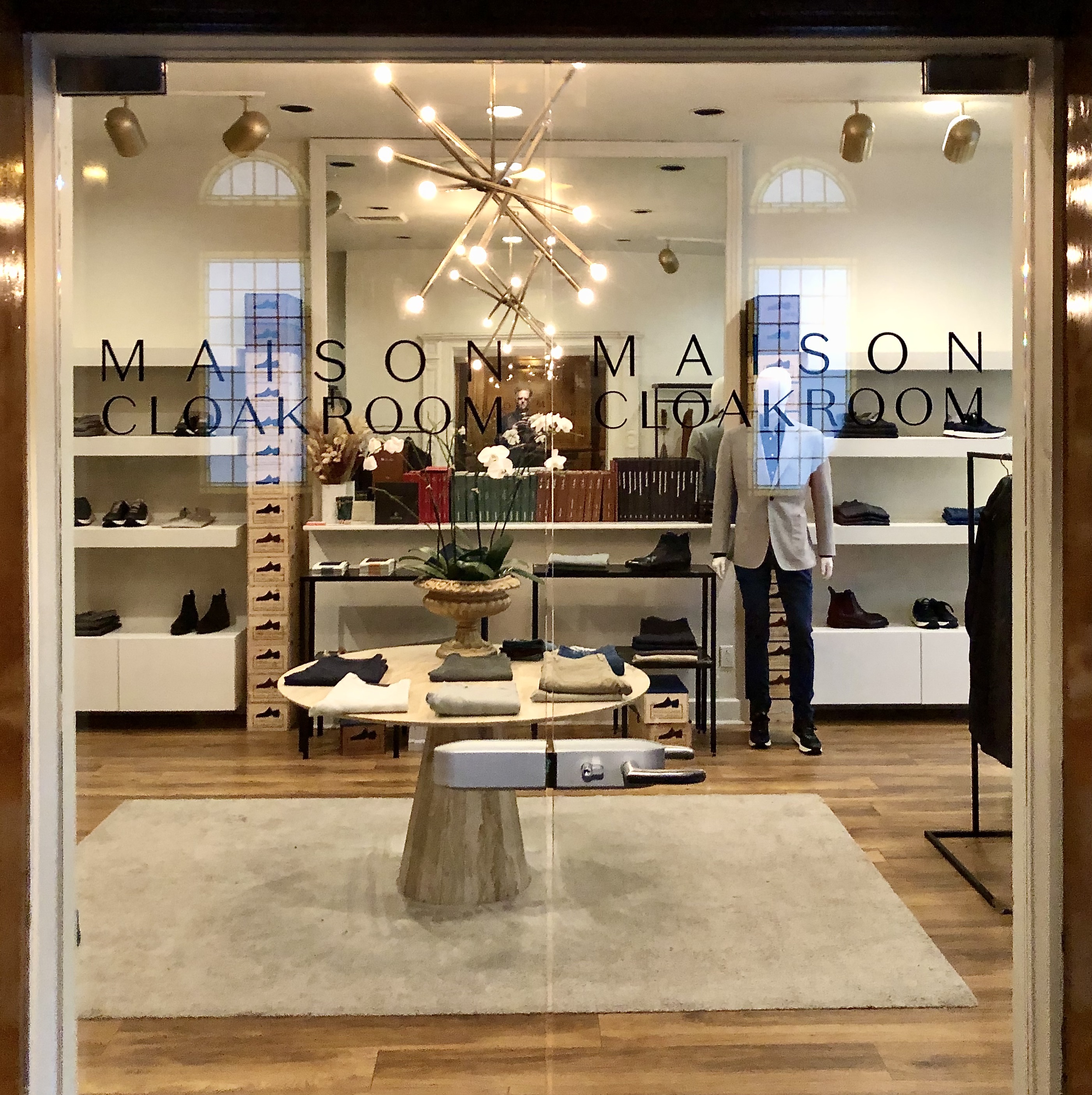
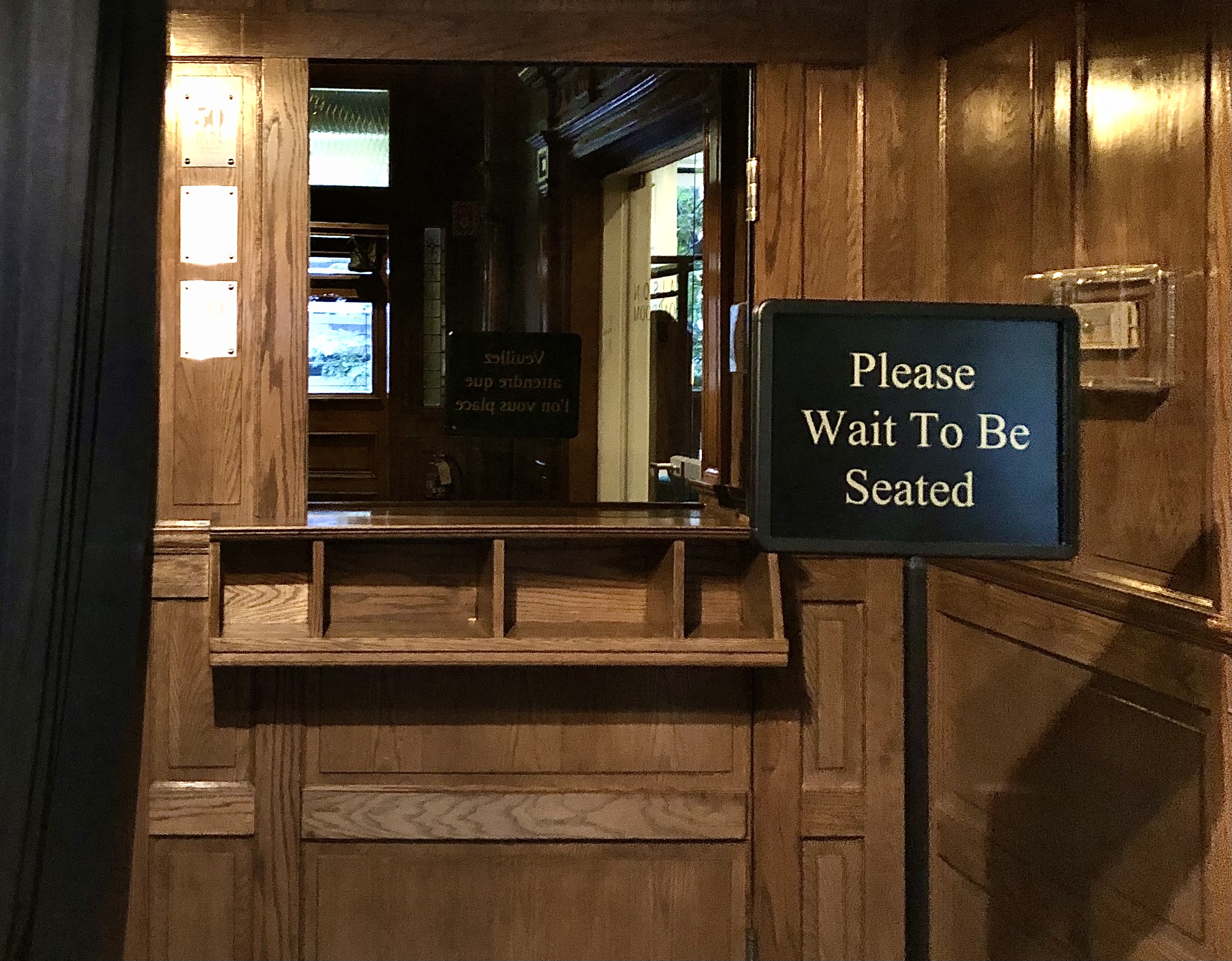
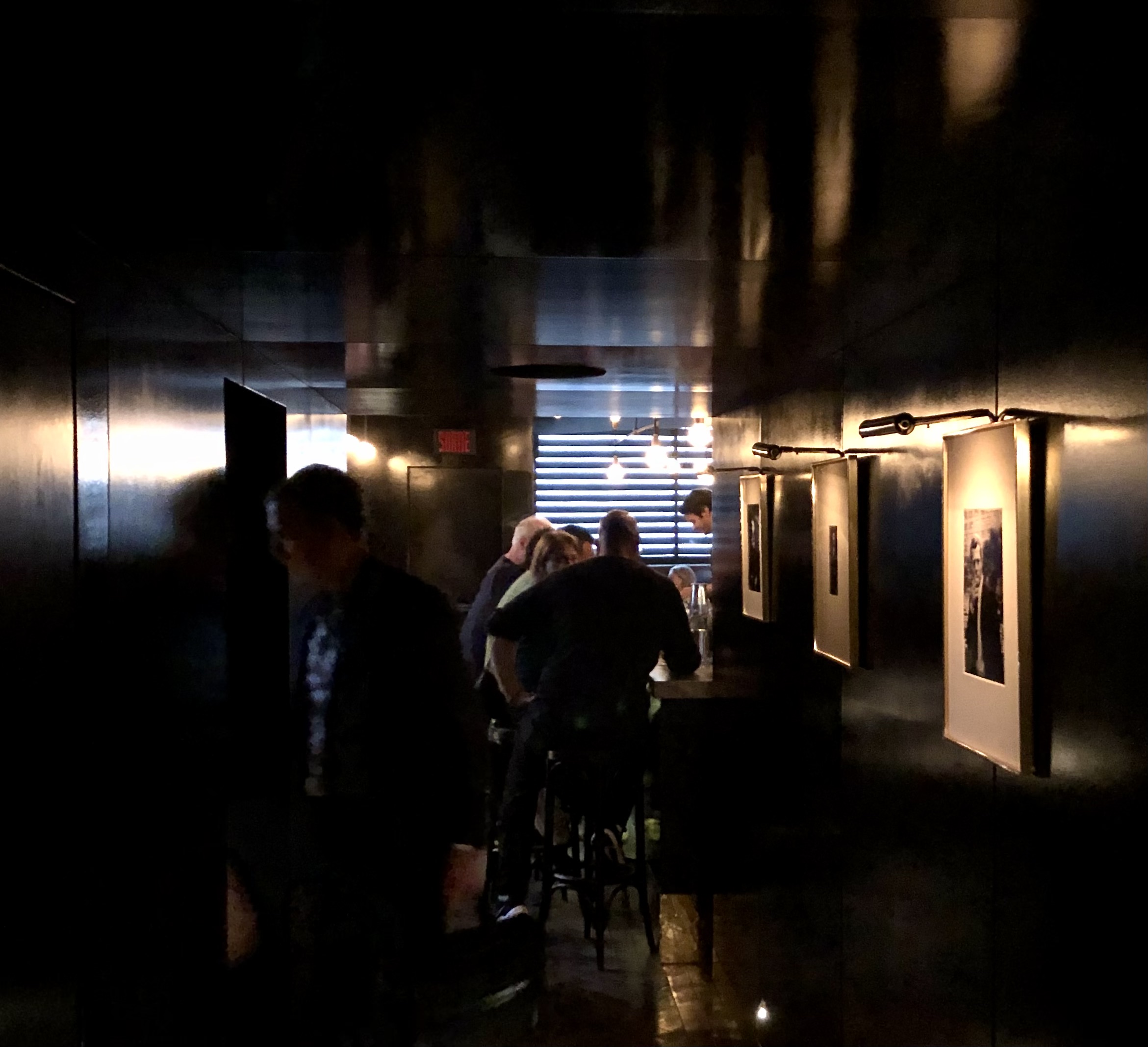
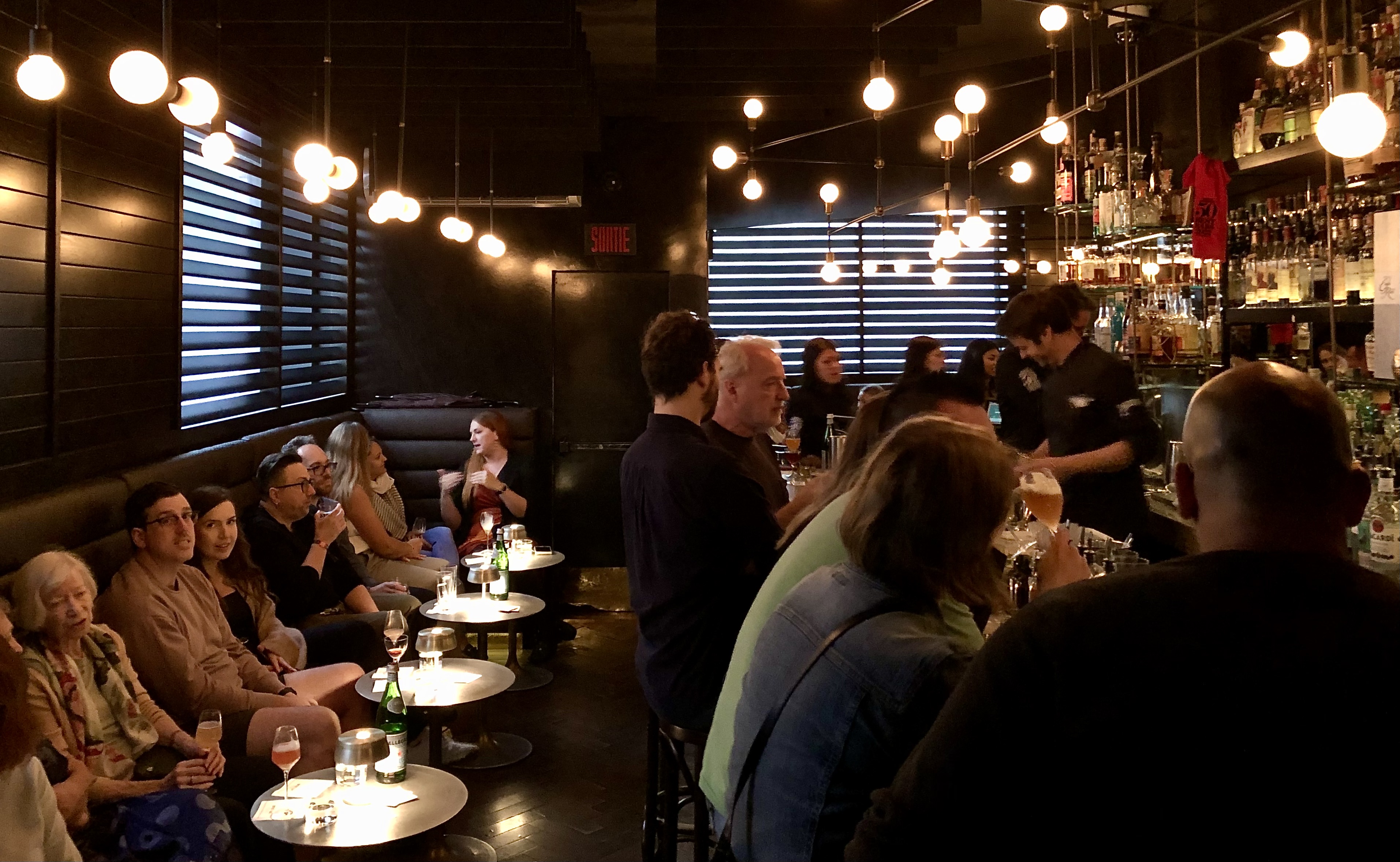
Like the Coldroom, the Cloakroom also must be tracked down. It’s a bit easier, however, and there’s less theatricality to it. Inside the lobby of a high-end men’s clothing store there is a mirrored wall panel. The “Please Wait To Be Seated” sign next to it leaves no doubt you’ve found the right place. There’s no buzzer. Just do what the sign says and wait. Soon the mirror swings open and a dapper, friendly host greets you. Halfway down a thin dark hall he takes your coat. A couple yards on is the tiny Cloakroom Bar, a snug room seating twenty-five, with a row of stools at the bar and another row of two-tops along a wall-length couch adjacent.
There’s no menu. They ask you a few questions and then create something original for you. I was immediately reminded of Bar High Five in Tokyo, itself named one of the top bars in the world. Though I loved the exquisite cocktails there (and have failed repeatedly to recreate them at home ever since) the atmosphere of Bar High Five suffers from a palpable sense of fear among the young staff—a clutch of international interns there to learn from master mixologist Hidetsugu Ueno. The Bar High Five clientele likewise sit in hushed stillness, honoring the cocktails with silent sips.
The Cloakroom’s atmosphere is quite opposite. Casual despite its classiness. Chatty and free-flowing, not reverent or stiff. Designed entirely in black, chrome, and mirrored surfaces, with only sparse pale amber bulbs and candles to add warmth, the room does risk a certain chill. But the bartenders are chill, in the good way, and this alone warms the room substantially.
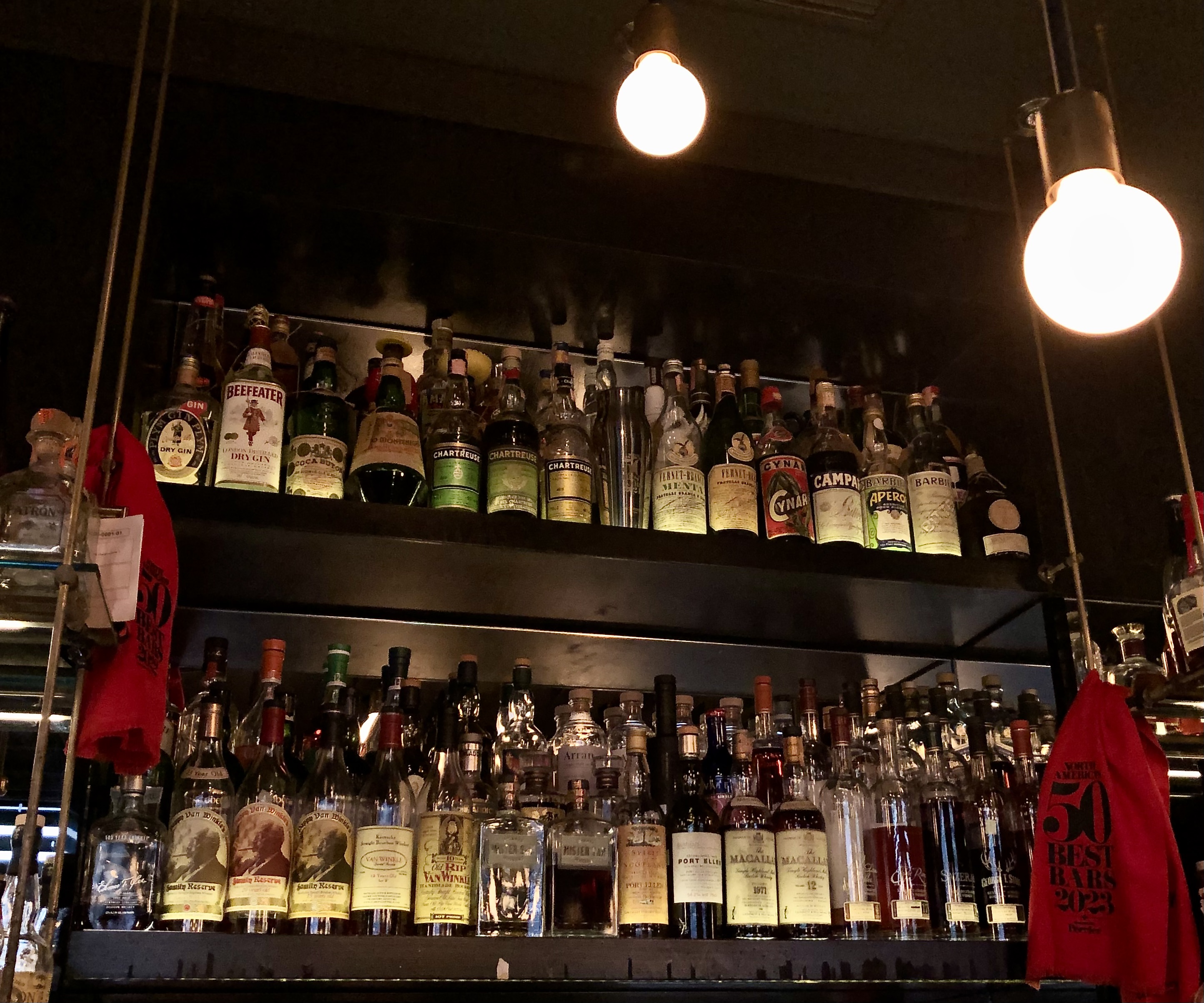
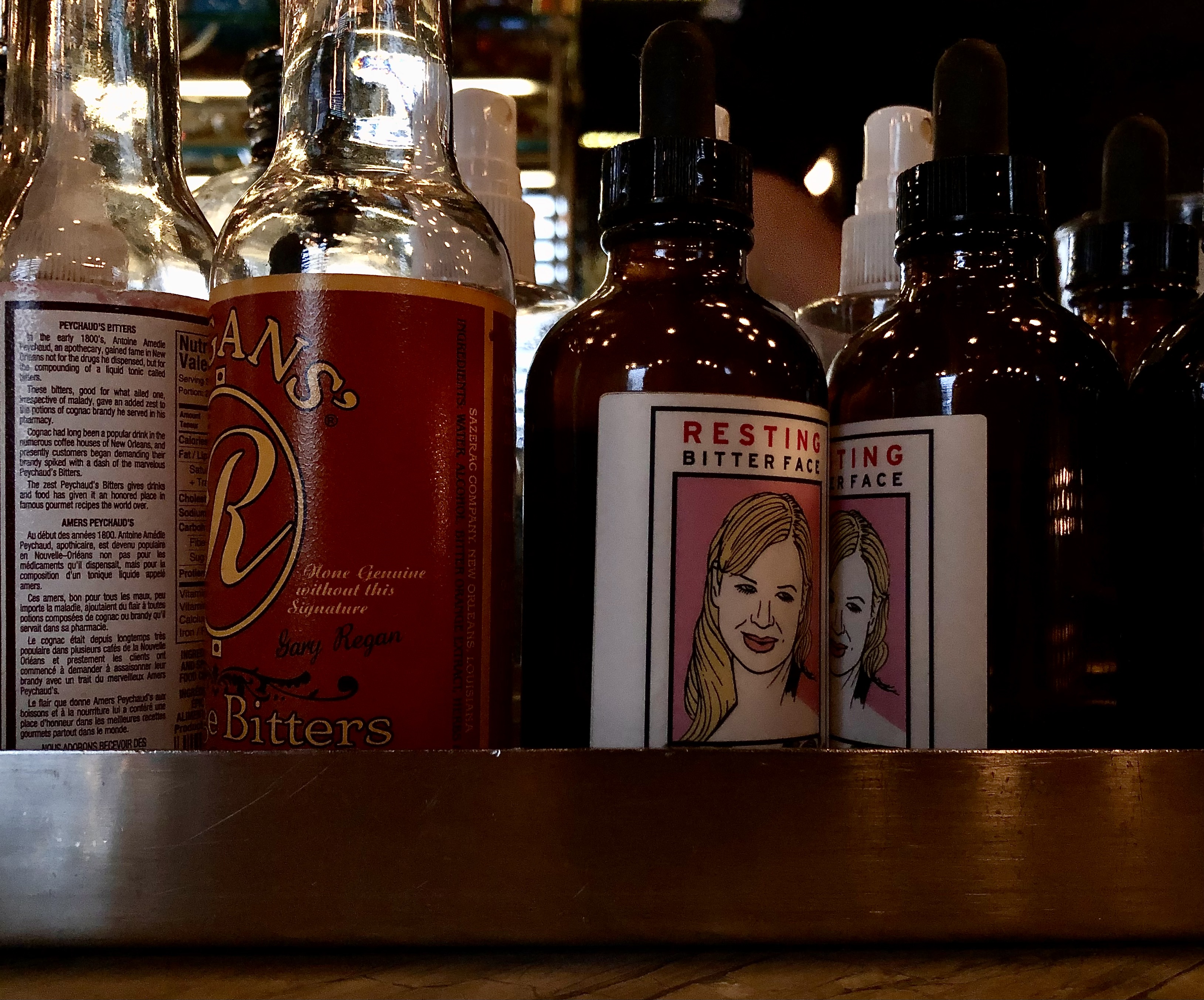
I can’t tell you what I had, since it had no name. Based on my answers to his questions, the bartender combined Bowmore 12 Year with a handful of bitters, house-made tinctures, and liqueurs. It was exquisite, with aromas and flavors like a tranquil and fragrant woodland. Excellent. I could have had two.
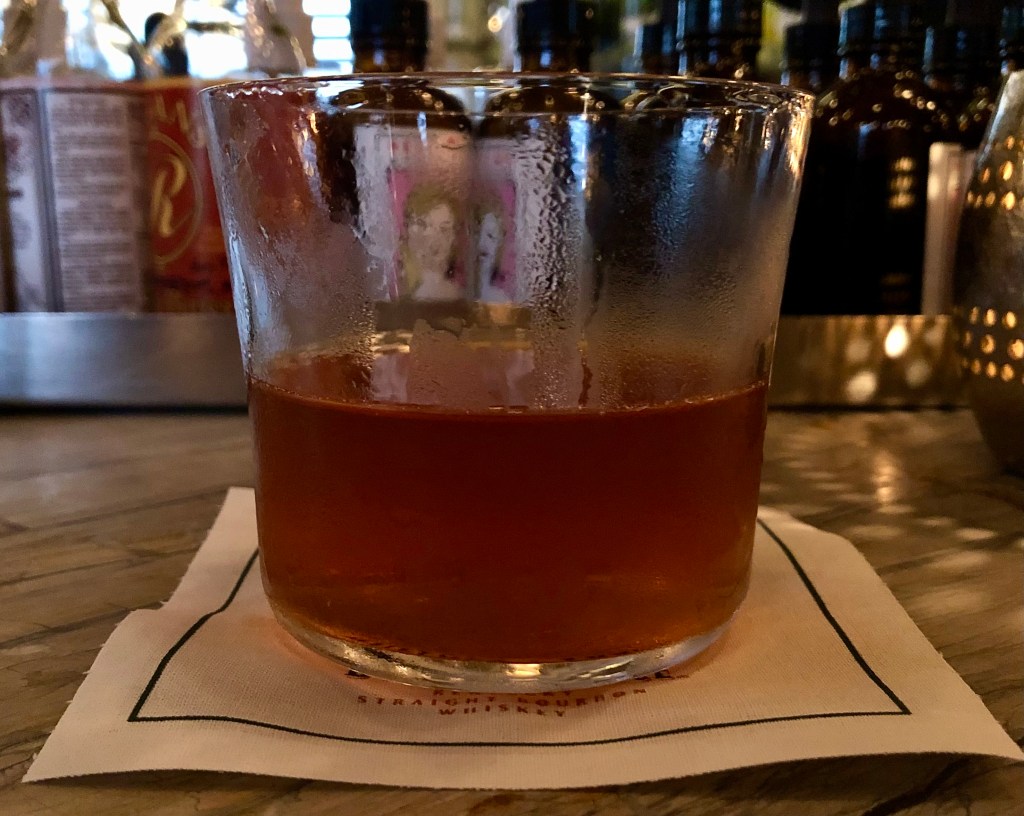
Of the six bars I visited, the Cloakroom is the one I regret not returning to during my short week in Montreal. Nor did I order a second drink, as I was saving room in my bloodstream for Big in Japan! 🙄 The chilly decor isn’t my preference. But the warmth of the staff, and their practice of creating bespoke cocktails based on questions, an approach that taps into the gift-giving impulse, and the perfection of the results, this is the draw for me. A genuine personal touch combined with utterly unpretentious high-end hospitality makes Cloakroom Bar an easy fave among my experiences with Montreal’s bar scene.
Last Call
Perhaps it’s not a coincidence that on my last afternoon in Montreal, biding time in the Plateau Mont-Royal neighborhood before heading off to the airport, I picked up a book by Danish designer Per Mollerp called Pretense Design, in which he articulates both the positive use and negative abuse of pretense in industrial design. Synchronistically, a prominent theme that emerged in my weeklong hop was the dichotomy between pretense and authenticity.
This is a motif I’d also noticed on my San Francisco and New York bar hops. Authenticity can make or break a bar. And pretense, when used well and as an expression of genuine intensions, can add panache. But pretense can also sink a bar, when the promise of the surface is not honored in the actual experience. The same can be said for any of us as people.
We often conflate snobbery with pretense. Snobbery is something else, I believe—though one might argue that to hold oneself above others is itself a pretense, if we agree that no human being is above any other human being. We are all human. Arguably, however, some people are effectively above others, whether due to money, social class, education, identity, or other forms of power and privilege. Our social systems are built around this.
But the relevant point here is that to increase the odds of achieving a welcoming and enjoyable atmosphere, a bar must be authentic to its intentions. There’s of course the matter of taste—someone might simply not like pubs, or speakeasies, or artisanal tinctures, or televisions playing sports, or this or that type of music… But if a bar intends to be a casual pub that caters to whiskey lovers, like L’ile Noir, it can approach that intention authentically or not. If a bar intends to hark back to the speakeasy concept of the secret hideaway, it might go about it with forced panache like Bootlegger, with sincere class like Cloakroom Bar, or teeter giddily on the balance between authenticity and pretense like The Coldroom. The difference between pretense and authenticity, then, has less to do with what a bar intends but rather how it goes about it in practice. It is a question of integrity. Are our claims and our actions integrated?
Montreal itself strikes me as a city of great integrity and authenticity. Of course, I’ve only visited three times over the course of twenty+ years, for a handful of days in each instance. My insights into the local culture can only go so deep. But I’ll gladly return again, to visit some new favorite bars and discover still more!
Santé!

 The Right Spirit