I’ve posted here on hopping from bar to bar in Tokyo, Kyoto, and New York. How about my own city, San Francisco?
San Francisco has long been known as a restaurant town, boasting more restaurants per capita than any other city in America. But it’s also a pretty varied bar town, known from its founding as a city that embraces hedonism in all its forms, imbibing key among them. So the prospects of a San Francisco bar hop being enjoyable are good.
A problem I found when doing research in prep for my bar hopping in Japan and New York was that so many “Best Of” articles and videos name a lot of the same destinations, and most of them are the flashiest, snazziest bars. No doubt they’re good. They made the lists after all. But the tendency toward recycling the same recs from list to list left me wondering what great bars don’t make it on the list, because they’re not in plain sight or lack other obvious touristic appeal. What are the idiosyncratic bars that have something to offer, and yet, whether for reasons of fashion or geography or lack of iEra effort, don’t summon recognition?
I took my time with this post. The bars I eventually included here do not comprise a definitive, nor exhaustive, certainly not authoritative list. It’s my list, made after going to a lot of bars—just a fraction of the total number within the city’s snug 7×7 miles—on main streets, side streets, downtown, and the city’s outskirts. Those I chose to write up, presented here in the order I happened to go to them, met my own idiosyncratic criteria for a “good San Francisco bar.” What makes it good? And what makes it San Francisco? Some bars are noted here as examples of what I consider not good, or not San Francisco, because opposites can help us articulate a thing. What I didn’t expect, but in hindsight am not surprised about, is how much I also learned about San Francisco.
So mix yourself a Cable Car cocktail or pour a shot of San Francisco’s own Old Potrero Rye Whiskey. We’ll hop to ten bars in all, and then pour one final round to put a cap on the journey. Enjoy the hop!
The Bars
Li Po Cocktail Lounge Chinatown
Cold Drinks Bar Chinatown / North Beach
Rock Bar Mission District
Zam Zam The Haight
Iron Horse Union Square
Stookey’s Club Moderne Union Square / Nob Hill
Durty Nelly’s The Sunset
Blackbird Bar The Castro
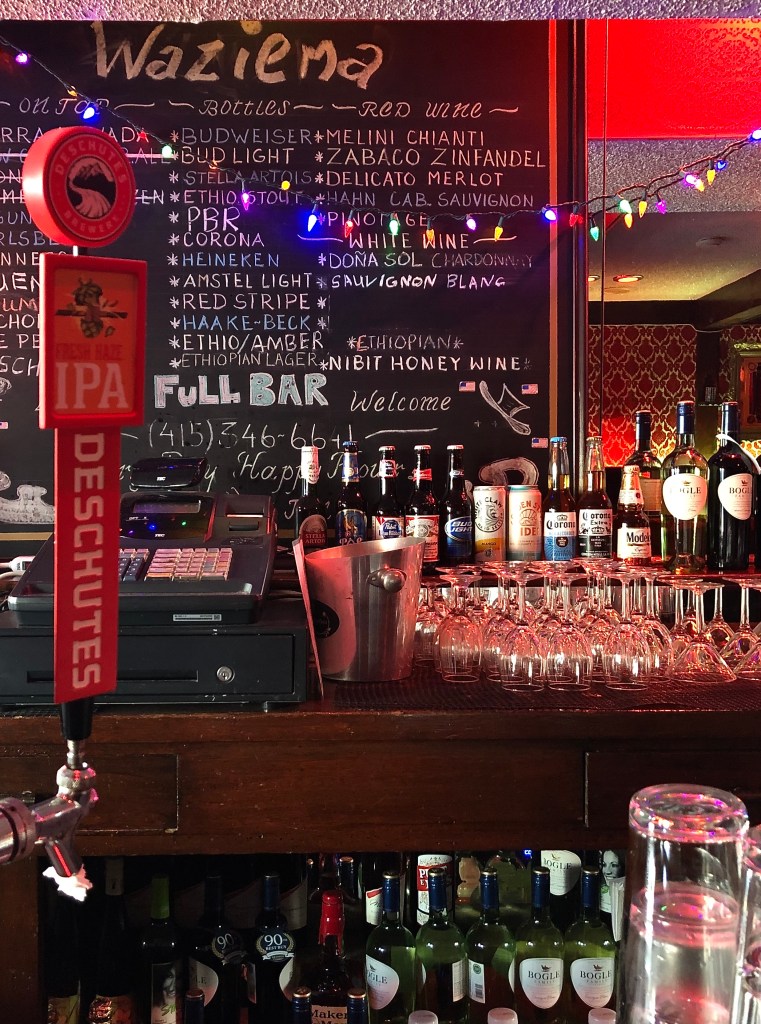
Club Waziema NoPa (formerly Western Addition)
Elixir Mission District
Last Call reflections on the hop
🥃 ☜ clink these to jump back up here
Li Po Cocktail Lounge
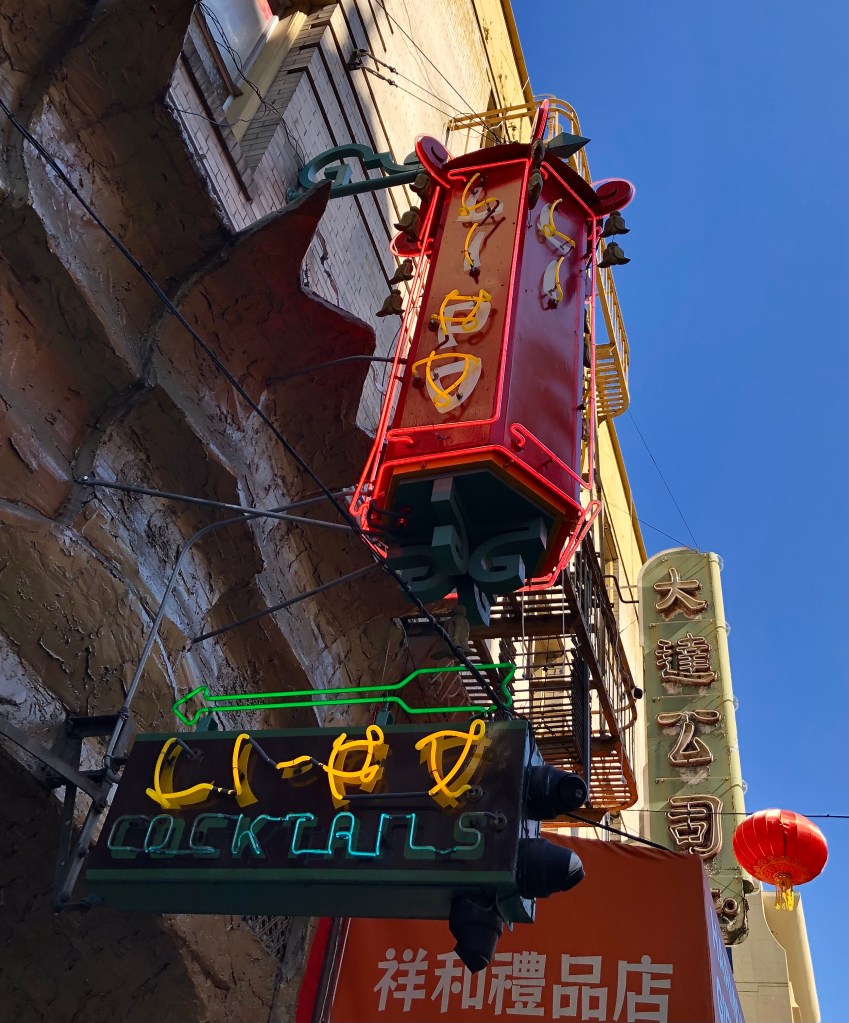
Located at 916 Grant Street, Chinatown’s main tourist drag, Li Po Cocktail Lounge has been pouring practical get-you-buzzed drinks since 1937. The joint holds official Legacy status with the city, ensuring its continued place in the local business ecosystem. But just looking at it, one would never think Li Po a tourist trap, much less a tourist destination!
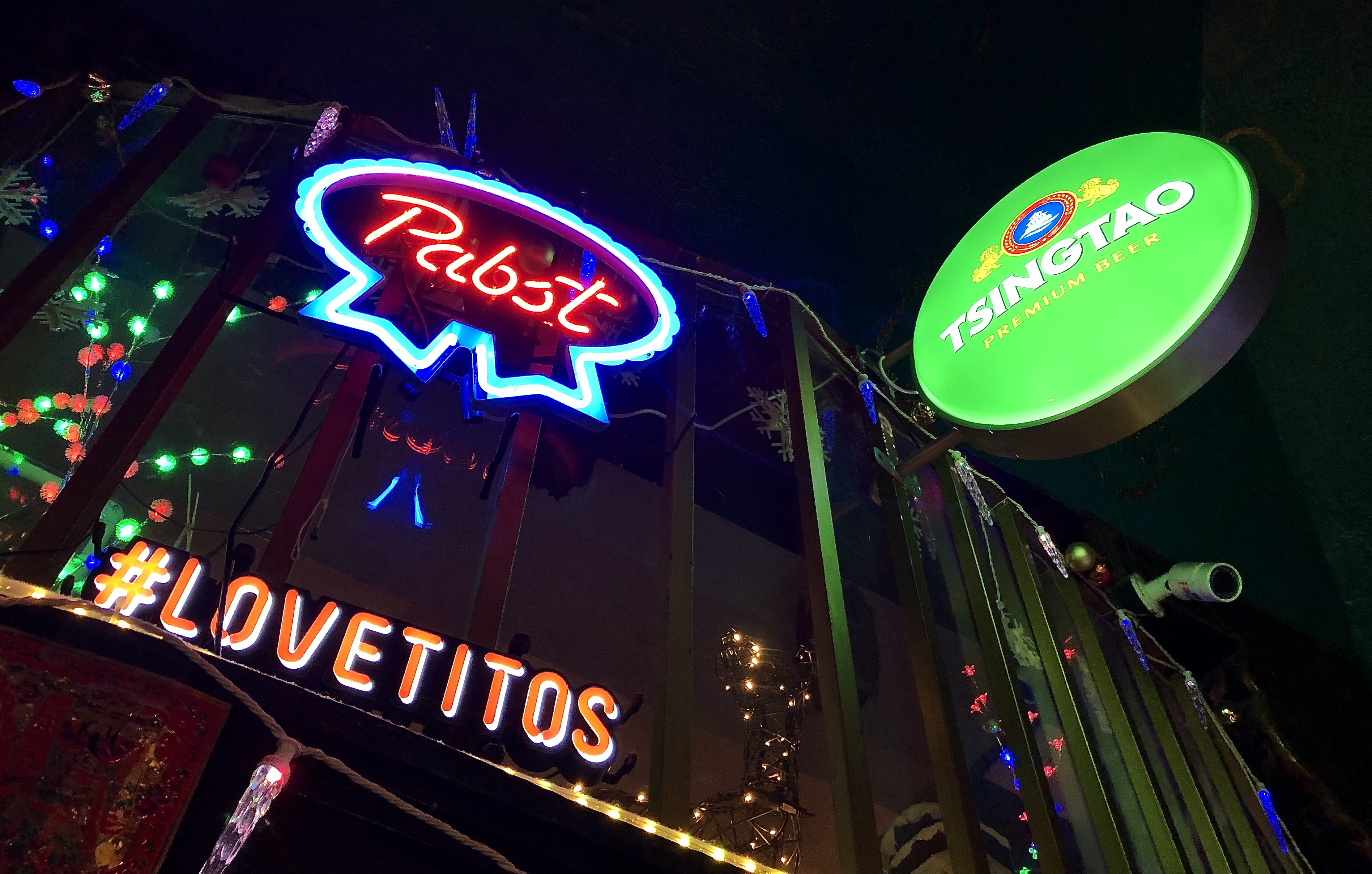
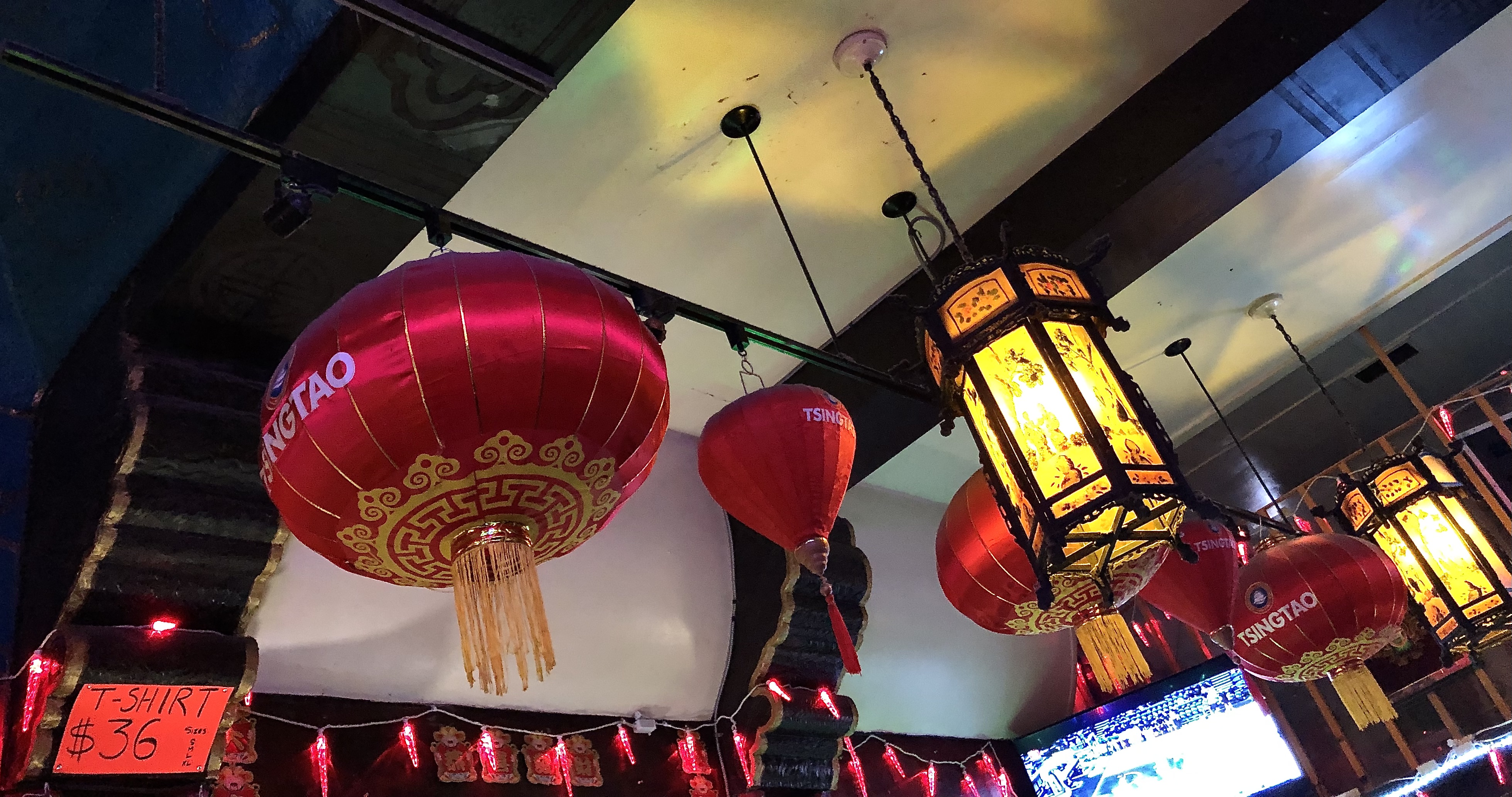
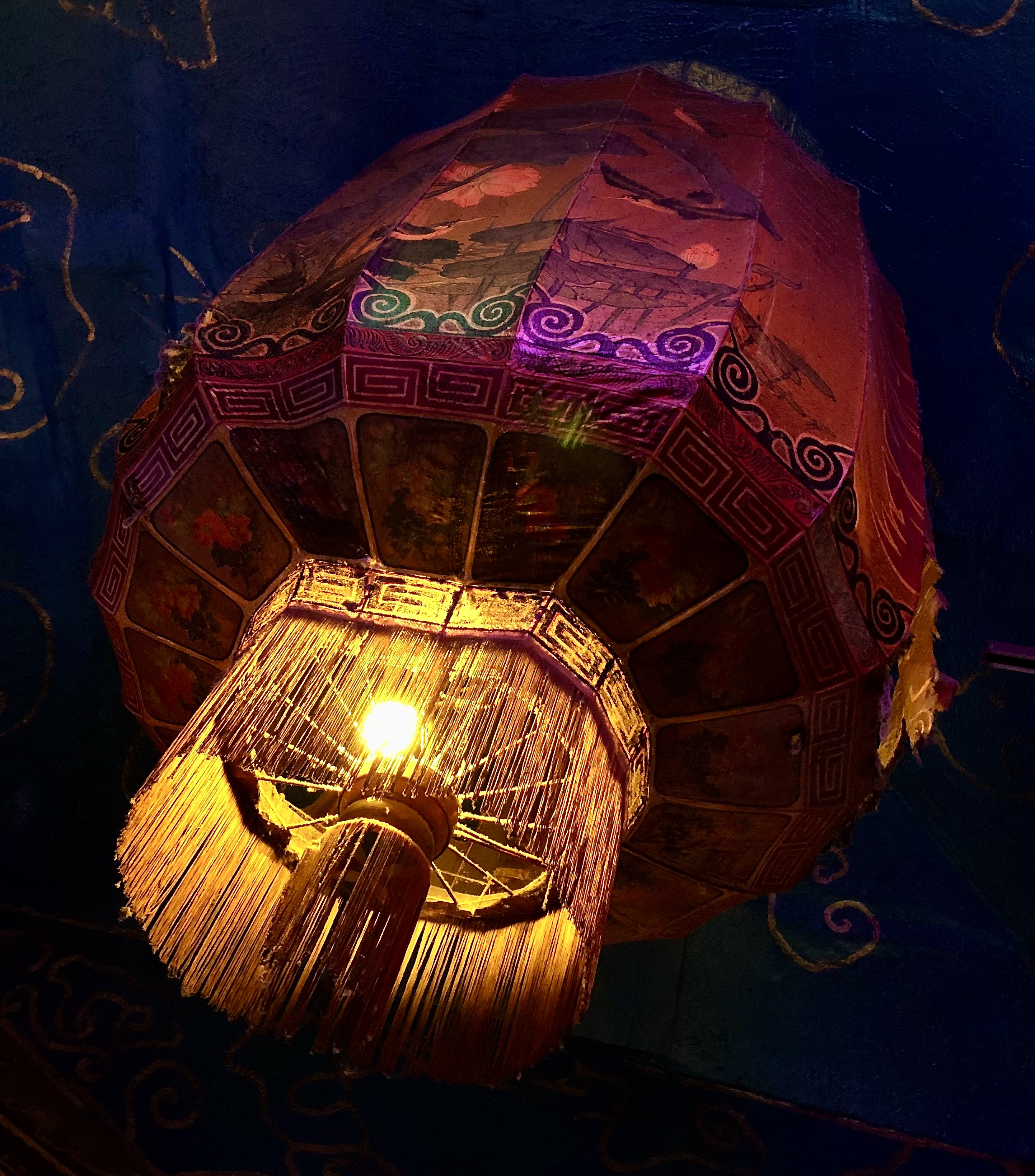
The facade out front does have a strong kitsch factor, and the interior is rife with Chinese knickknacks—something one could say about most any business on Grant Street. But the I don’t care just tell me what you want to drink dive bar vibe hits you immediately upon entry.
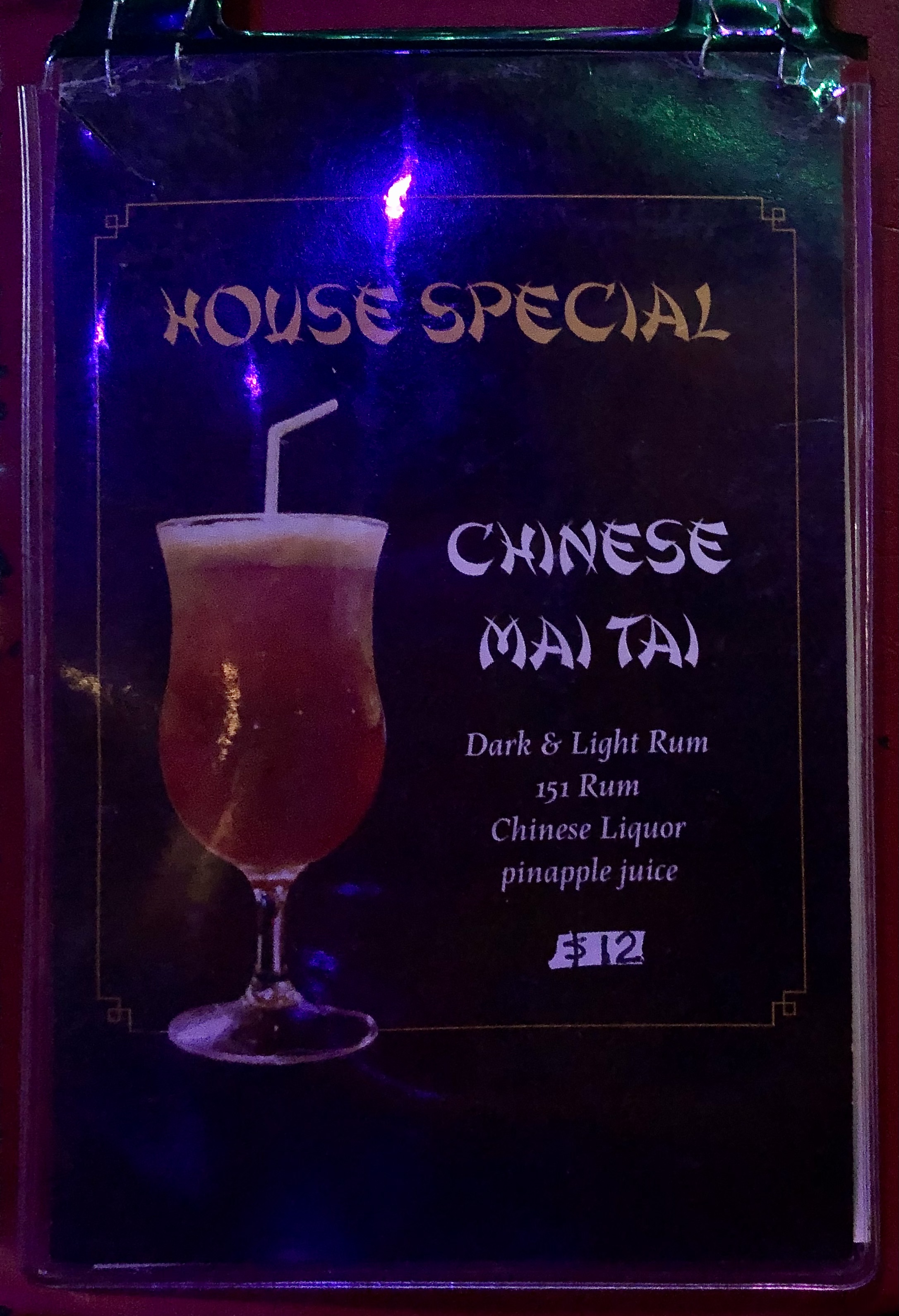
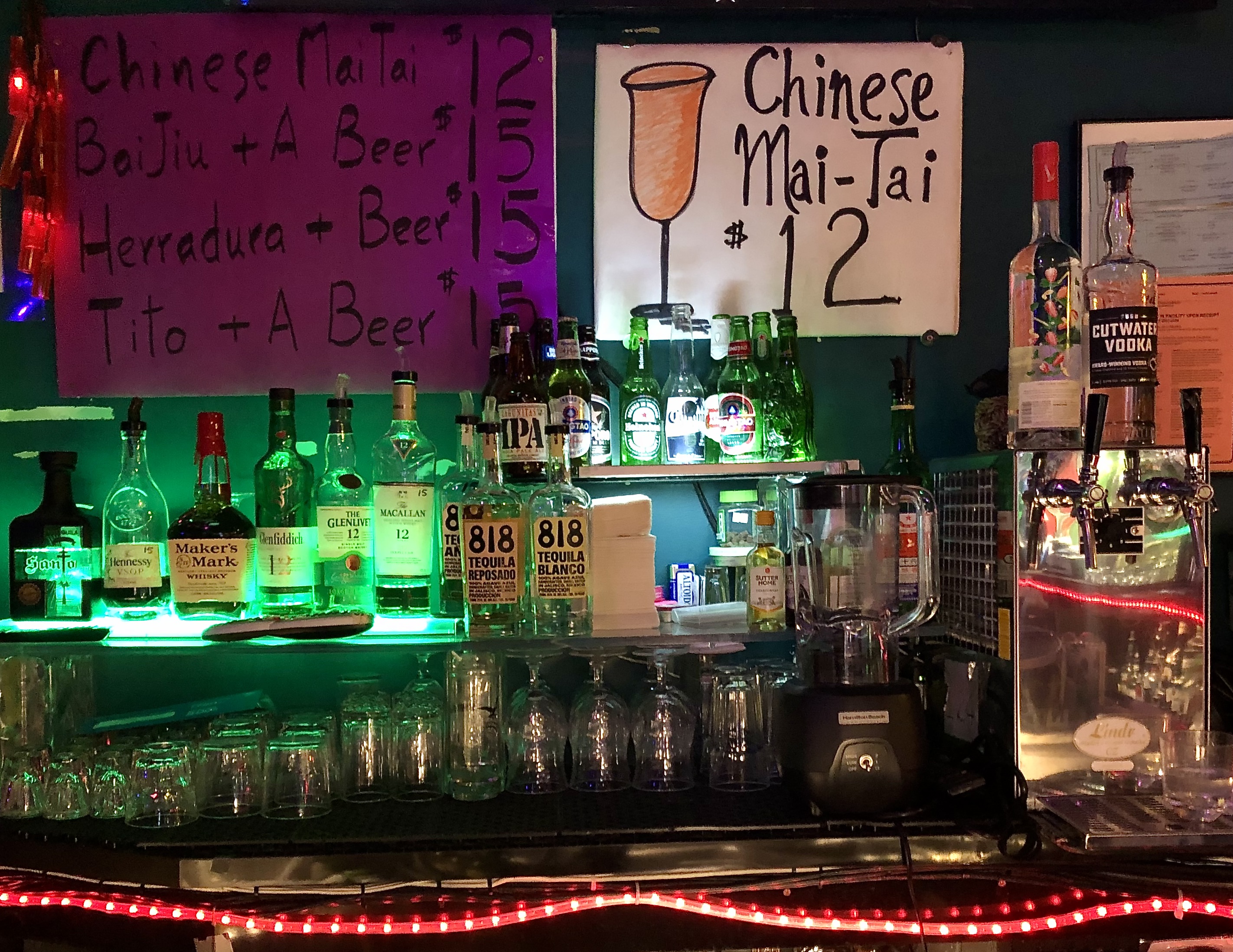
The bartender—an older Chinese woman wearing baggy jeans, owl glasses, short rough-cropped hair, and a refreshingly unapologetic care-less demeanor—greeted me with, “Chinese Mai Tai famous drink?” I knew I didn’t want that. I’m a whiskey geek, not a rum head. So I asked for an Old Fashioned, my baseline test for any bar. It’s like ordering vanilla at an ice cream parlor—if they can’t make that, how good can they possibly be? But the bartender waved her hand: “No. I haven’t made Old Fashioned in long time. How about Manhattan?”
That’s a direct quote. Between her look and her manner of speaking and her attitude, was she for real?
Totally.
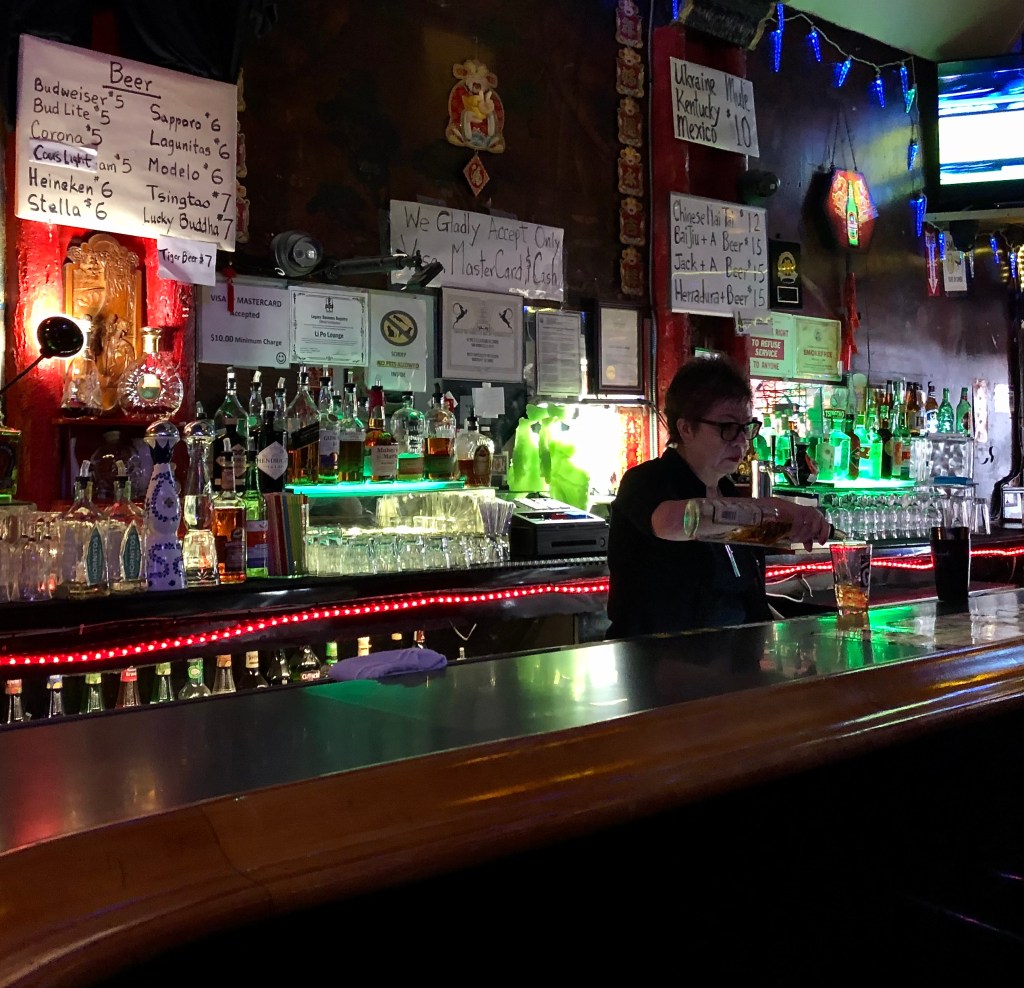
When she poured the Manhattan out in front of me, in the dim red neon lighting the cocktail looked like artificial cherry juice. She filled the thin coupe to the brim. “Take a sip, I give you the rest.” I took a slurp off the drink and she filled it to the brim again. I like this place.
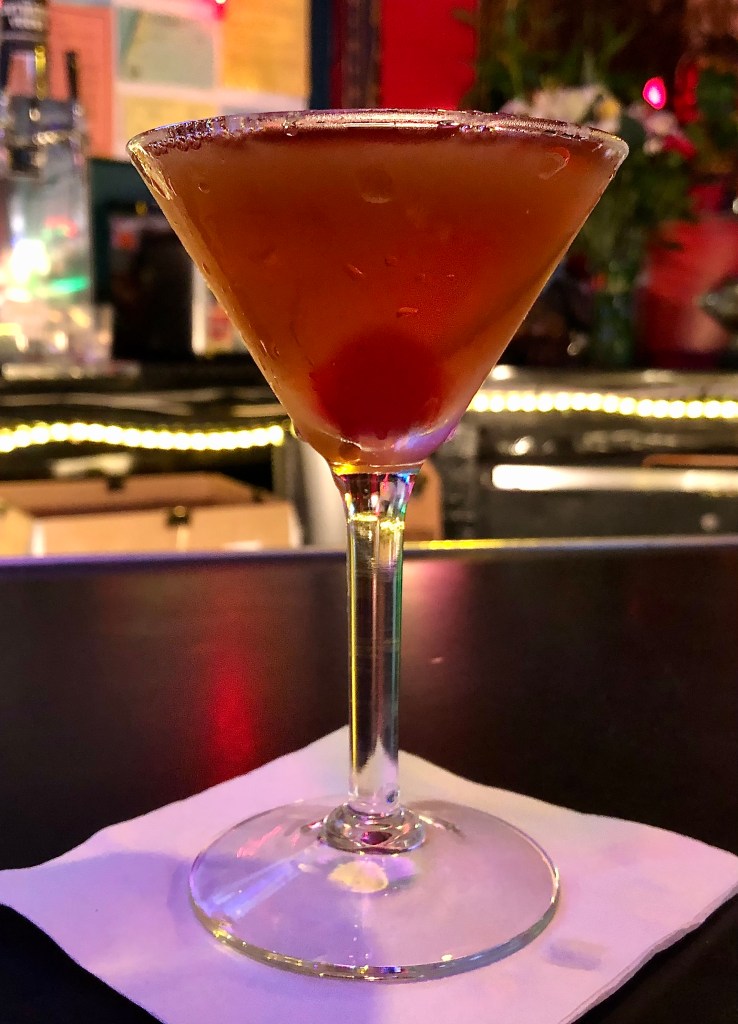
I asked what type of whiskey she’d used. “Well Whiskey.” Yes, but what brand? Maker’s Mark? “No. Well Whiskey,” and she lifted a bottle from the bar well and plunked it on the counter—a liter bottle of High Ten Bourbon. “Nobody asks what whiskey, why you care?” I make Manhattans at home, so I’m always curious what bartenders use. “Ah. Be sure to shake a long time. Make it colder. Better.”
A young Chinese woman and white man entered. “Chinese Mai Tai famous drink?” chimed the bartender. The young woman asked if they could just look around. “If you buy something!” They left. The bartender moseyed back to lean on the counter across from me. “That cheap Chinese girl and her white boy. ‘Can I look?’ You go to a hotel restaurant or China Live and say, ‘I’m not hungry, can I look?’ No. Why here? Buy a beer or juice or something. One seat, one drink.” I asked her how many tourists come in verses locals. “Mostly tourists. We’re famous. Some local Chinese. But the Chinese are cheap, right? That Chinese girl with her white boy?” White boy that I am, I wasn’t sure the best way to respond to that one and just let it hang in the air. But she didn’t seem to expect a response.
All this time, contemporary country music was playing on the loudspeakers. The silent televisions seemed to be in endless advertisement loops, never getting to the main program. The neon and string-lights and fluorescents and LEDs all blended into a kind of dark gaudy magic murk, bouncing off the copious kitsch tacked to the walls and ceiling.
A few more people arrived and the bartender turned her attention toward them with her standard welcome, “Chinese Mai Tai famous drink?” As I was gathering my things to leave, a young Asian couple sat down to my left and the bartender greeted them without her jingle. Instead, “You’re back! I haven’t seen you in long long time.” They were evidently regulars and had been out of town. As they began to chattily catch up I waved a thank you and slipped out.
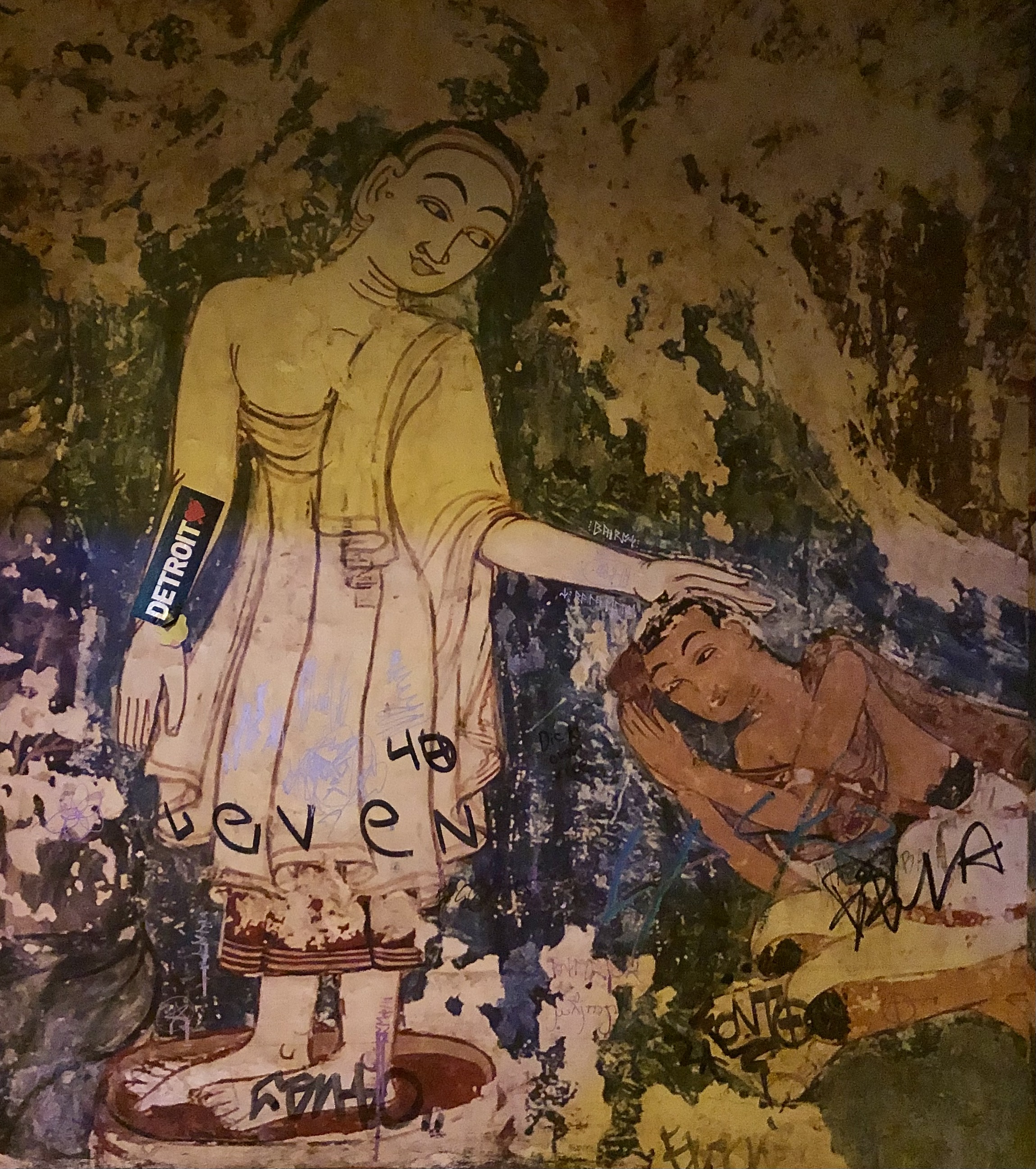
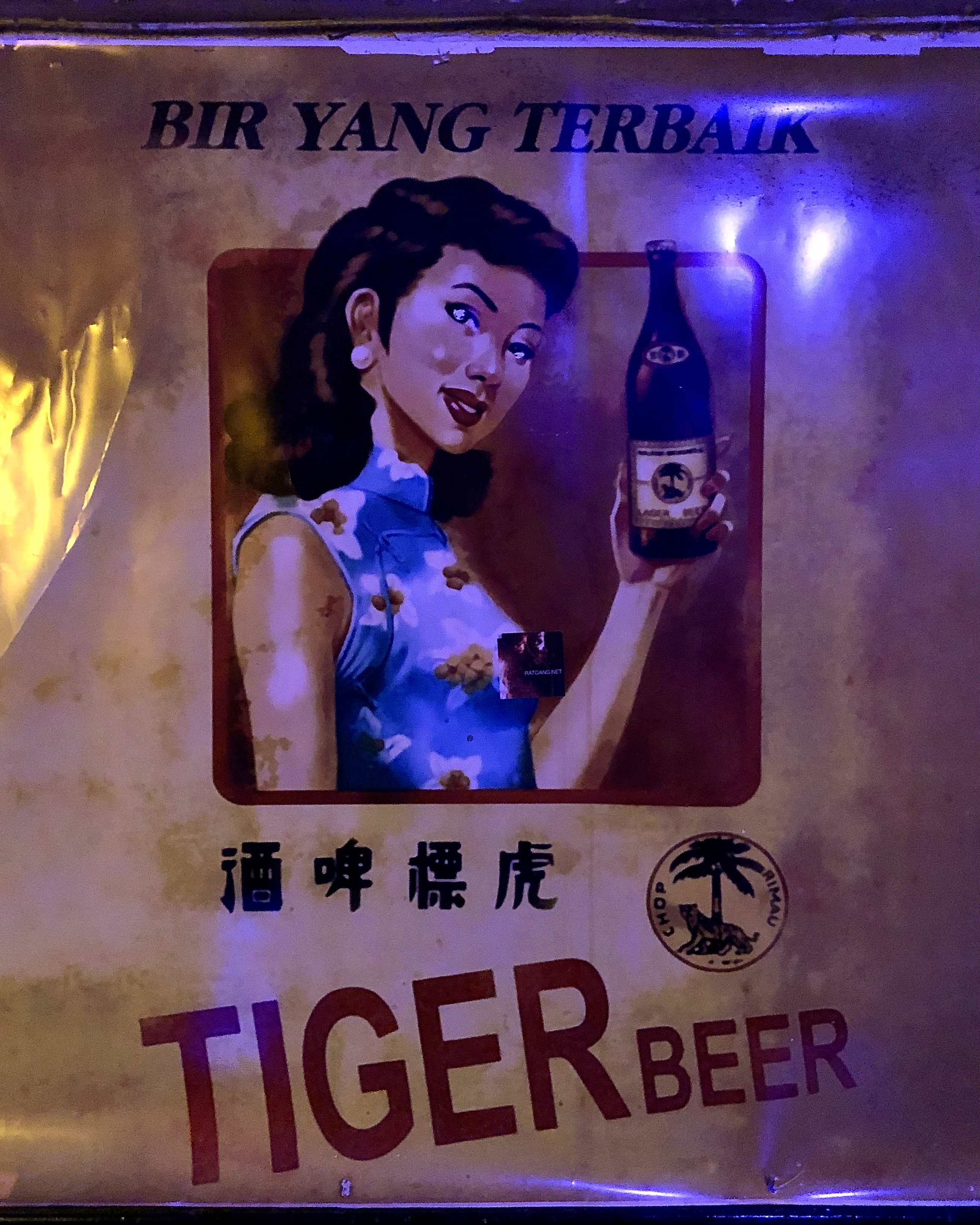
The Manhattan wasn’t good. It tasted like cheap, sweet cherry water. And I don’t doubt the Chinese Mai Tai, famous drink though it may be, is no good. I recommend ordering a bottle of Tsingtao or Tiger, or a shot of Maker’s or Jack or Glenlivet, asking the bartender about San Francisco, and settling in to listen. Go with some local friends if you’re a local, and go a few times. If you’re a tourist, same. Li Po is the kind of dive bar best enjoyed repeatedly, and with no hopes for a “destination bar.” Yet through pure force of longevity, it has become just that. But one quickly realizes the owners and staff have done nothing to embrace the fact, other than the mantra “Chinese Mai Tai famous drink?” delivered with the habitual indifference of “What’ll yuh have?”
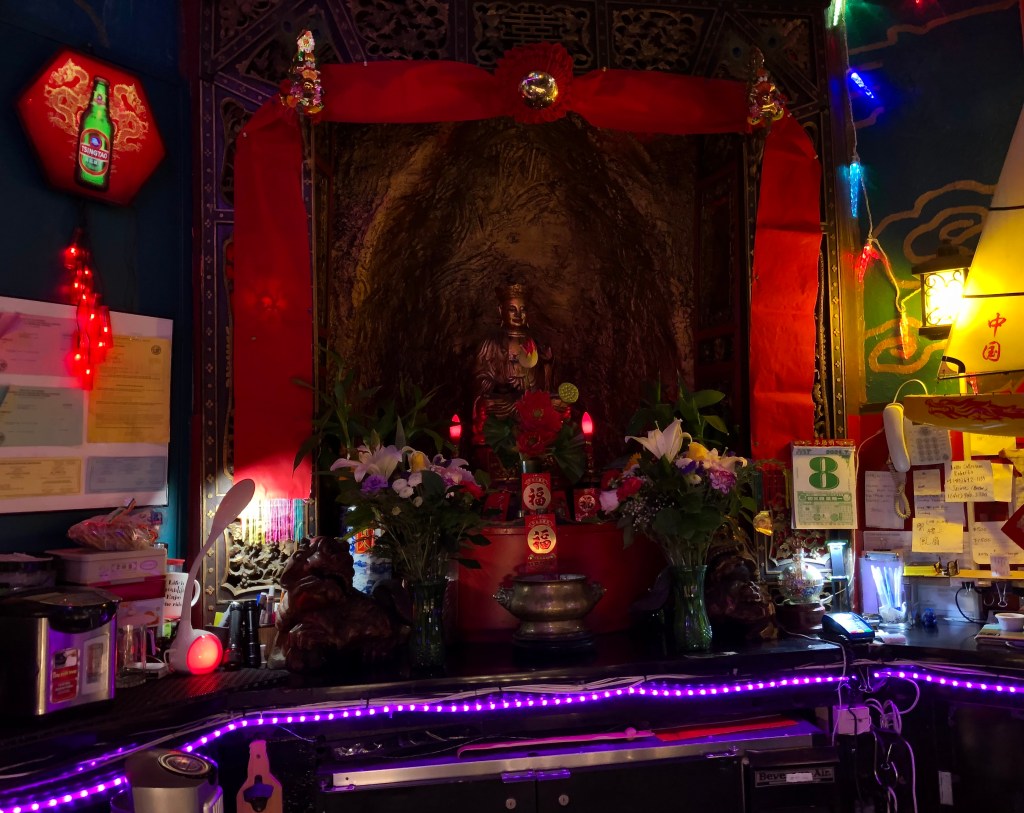
Now, earlier, the bartender made reference to China Live. This caught my ear, because in my research I’d made note of that place. It was only a few minutes away, and promised to be of a much higher caliber than Li Po. Hoping the contrast might be fun, I decided to go…
Cold Drinks Bar
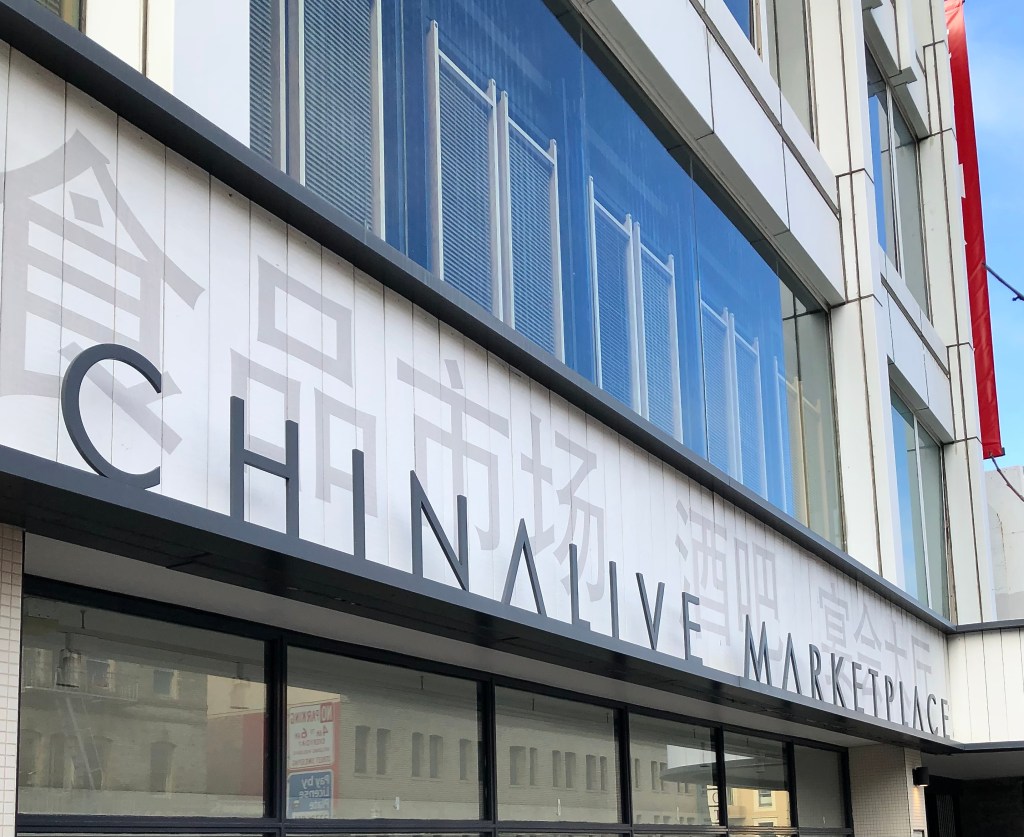
About a five minute walk from Li Po, taking up sizable real estate at 644 Broadway, China Live is a modern, street-level restaurant with contemporary decor and a lot of tables. The kind of place designed for high volume traffic. Just above it on the second floor, if one knows to follow the bats on the wall, is an only semi-secret bar called Cold Drinks. Now, that might sound no-nonsense. But the bar’s concept is high-end modern Shanghai speakeasy circa The Dark Knight.
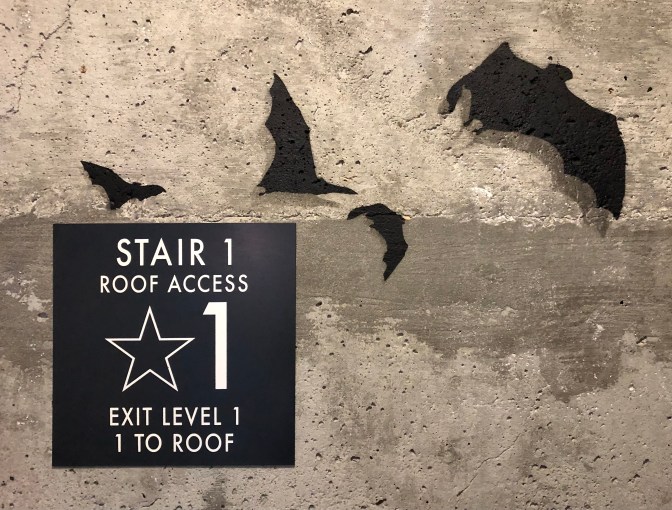
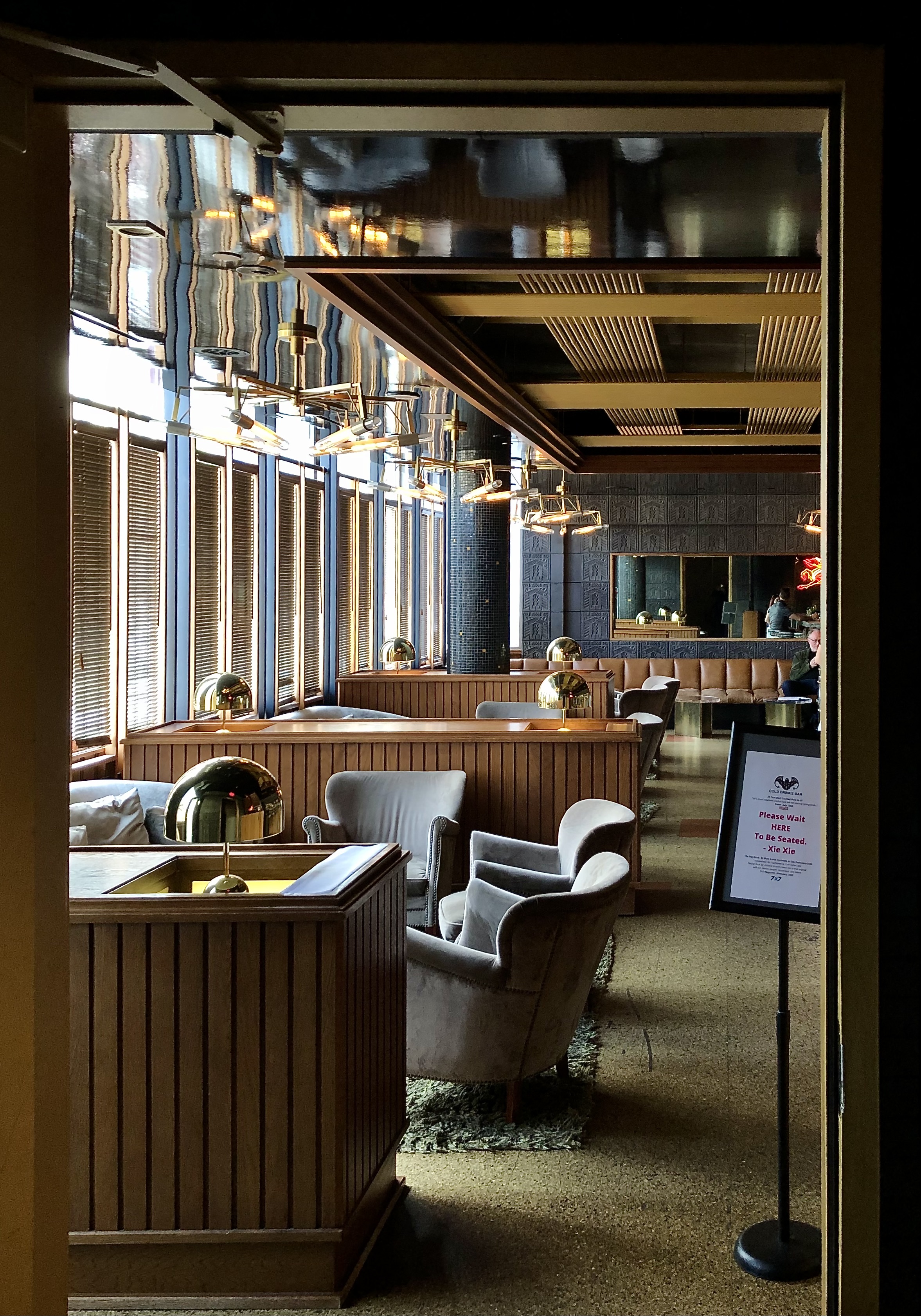
I followed the bats upstairs. Immediately I recognized I’d come at the wrong time. It was shortly after 5:00 p.m. and the summer sun was still pouring through the slatted windows. This was clearly the kind of sleek high-roller atmosphere that benefited from dark lighting. But here I was.
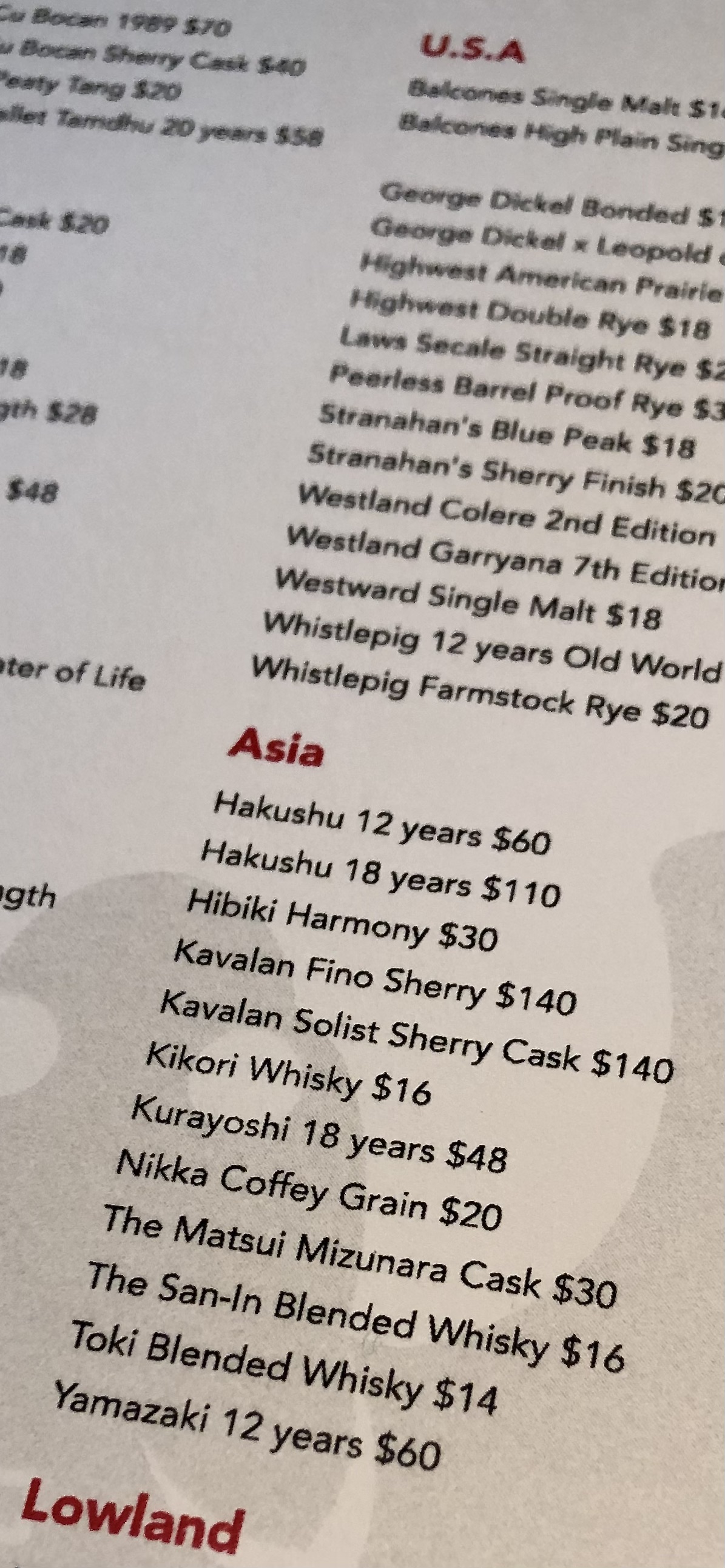
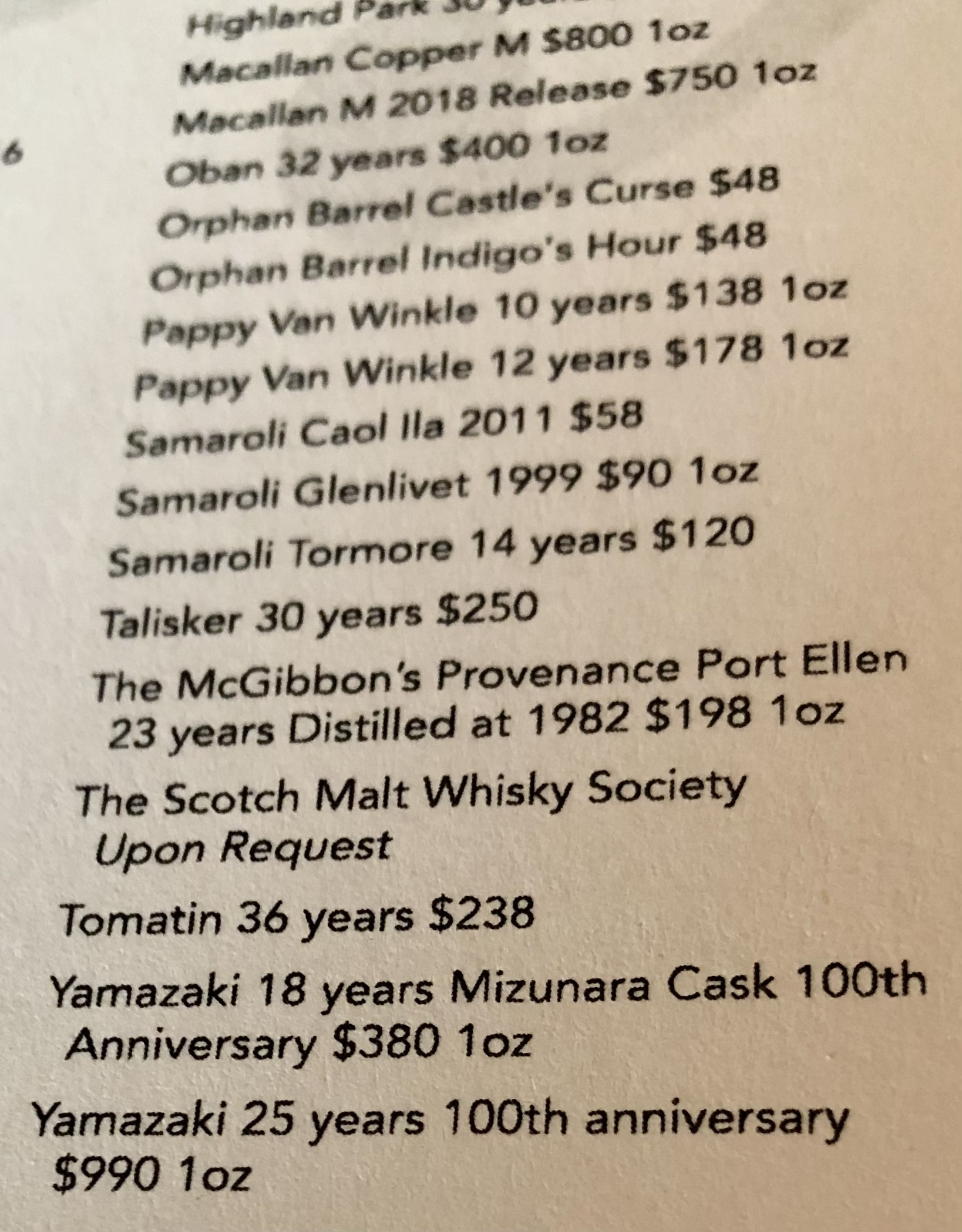
I ordered the very intriguing “Sometimes Old Fashioned,” made with duck fat washed Glenmorangie X, George Dickel Rye, black pepper, mushroom, Angostura and lemon bitters. I mean right?! While I waited for the bartender to mix the drink, I perused the extensive whiskey list. It was genuinely impressive, with prices ranging from $18 up to $990 per ounce. Anything I might have wanted to try was $55 or up, so I stuck to the Sometimes Old Fashioned.
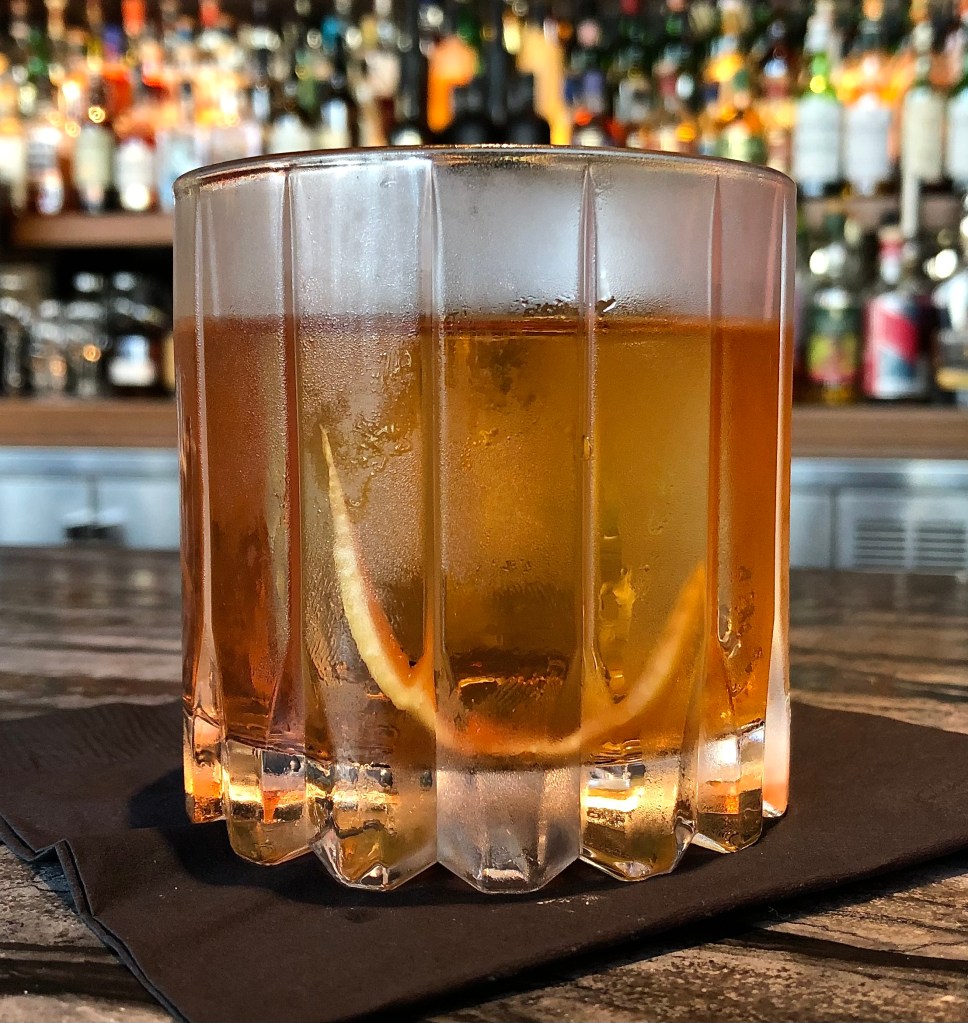
Despite the intriguing range of ingredients, I found the sum total effect to be surprisingly lackluster. It certainly didn’t glare with the tourist-trap cheapness of Li Po’s make-shift Manhattan. There was a sense of quality about it, from the requisite large bubble-free ice cube to the subtle flavors at work. But for such an upscale establishment with such an extensive whiskey menu, I would expect much more of a flavor impact than this rather watery Sometimes Old Fashioned offered.
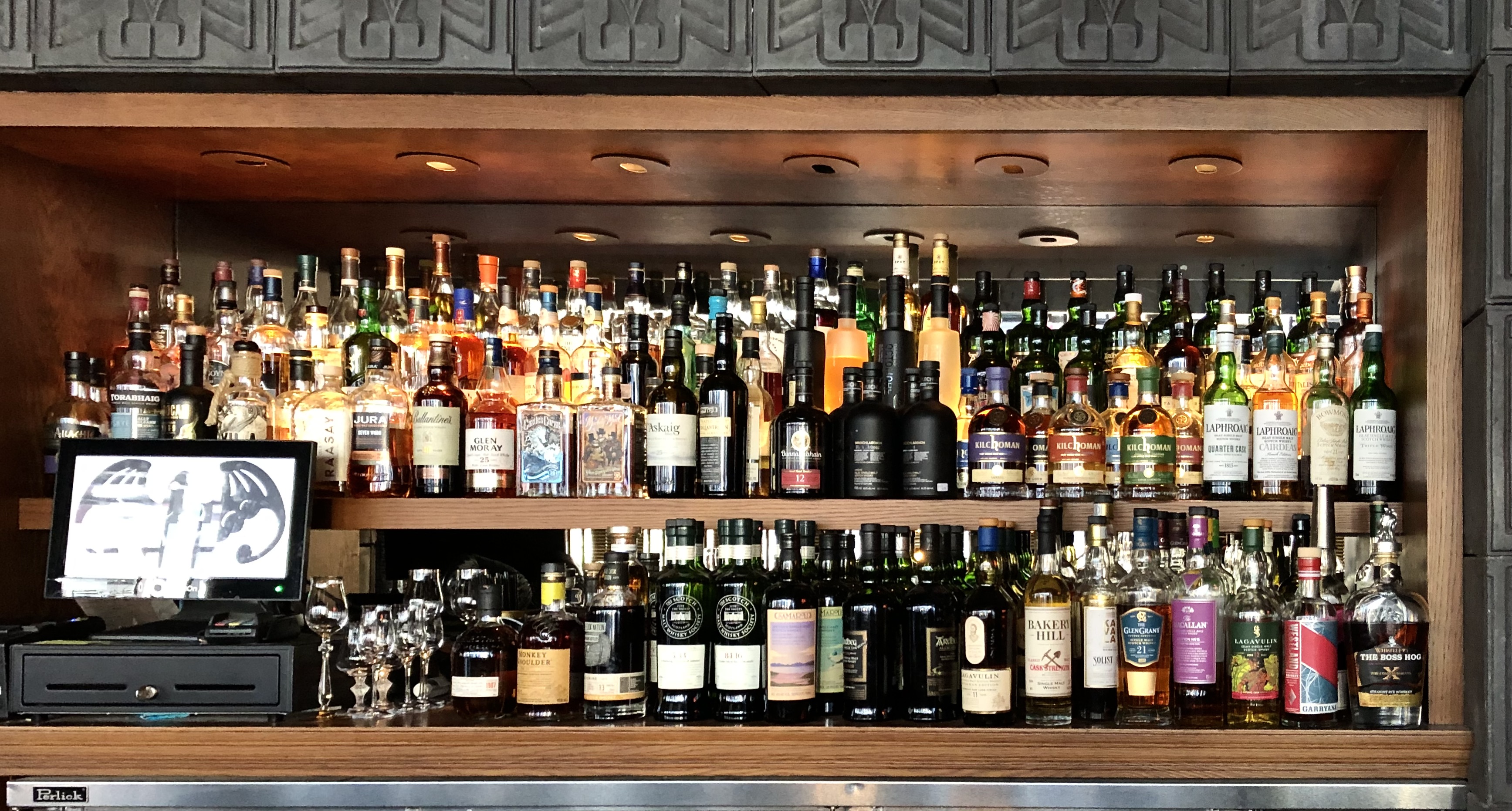
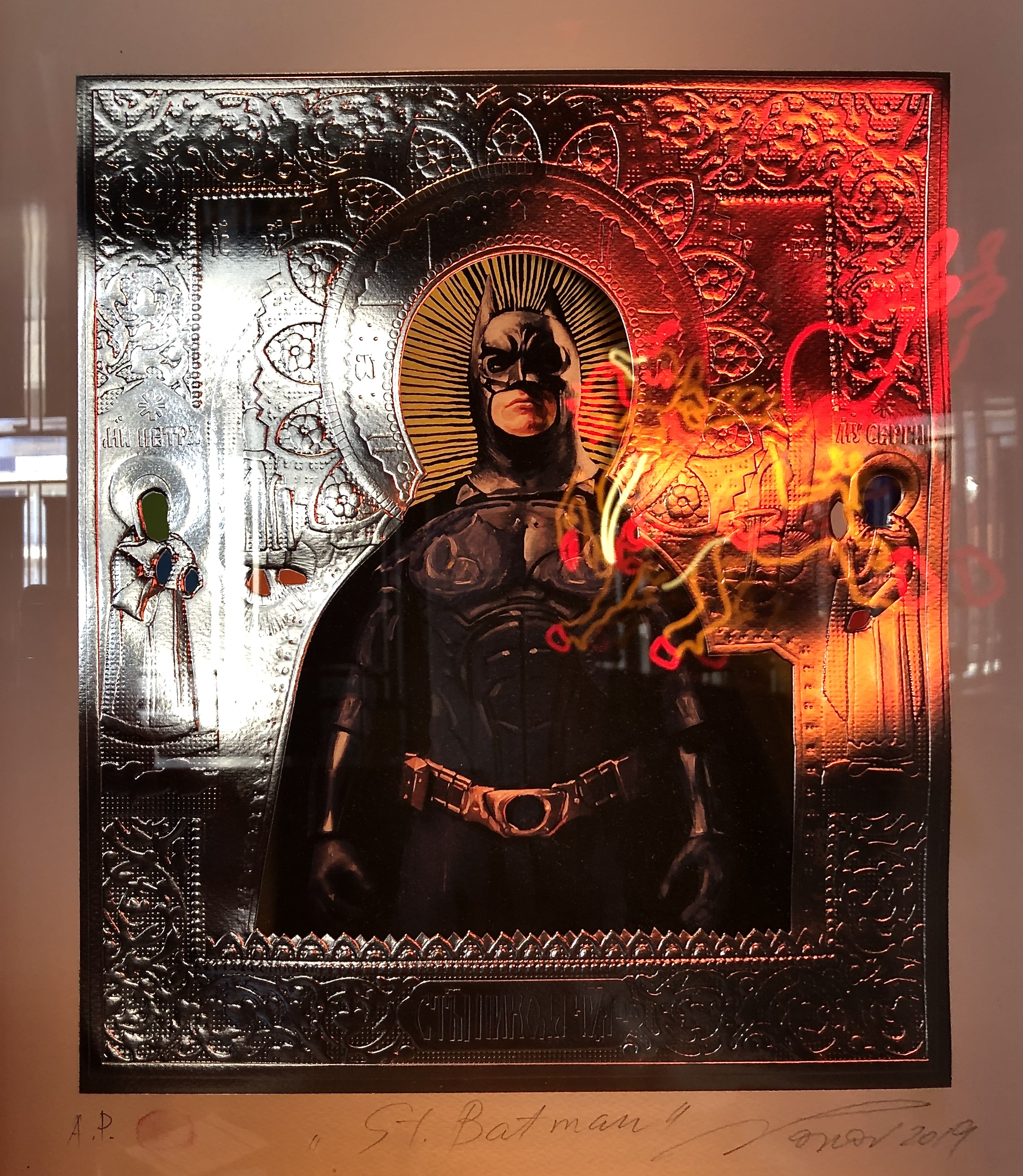
A few seats down the bar to my left, a young man was grilling the bartender about whiskeys, interrupting often to brand-drop the bottles he himself owned—mostly various Orphan Barrel and Laphroaig releases, it seemed. His silent girlfriend did not appear to share his eager whiskey geekdom. As a whiskey geek myself, I felt vicarious embarrassment. Never would I dare to so loudly engage a bartender with whiskey talk in such a sparsely populated bar, whether high-end tourist trap or otherwise. As I listened to him go on I felt a dirty residue, blending equal parts snobbery and shame, coat me like sticky humidity. It was time to leave.
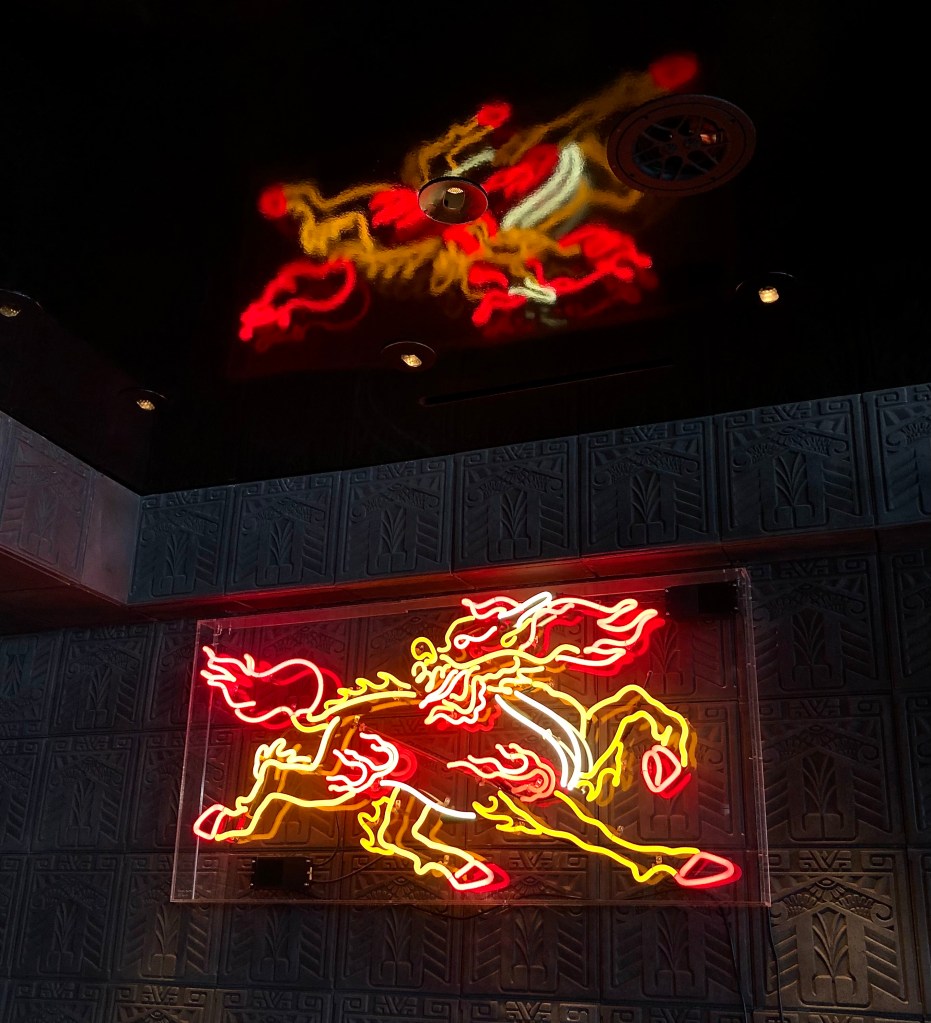
Cold Drinks Bar feels like a tourist trap. But Li Po Cocktail Lounge, which gleams with all the tinsel and spangles of Chinatown touristic trappness, somehow does not. Li Po feels like a local dive bar that’s incongruously, and much to the irritation of its hilarious bartender, plunked down on a main tourist drag, flanked by cheap souvenir shops and bad restaurants with their overeager kitschy facades—not unlike Li Po’s own!
The difference is that Li Po Cocktail Lounge is 100% genuinely what it is. It’s lived-in. Dirty. Mercifully dark. Its atmosphere has been earned over time and accumulation. China Live’s Cold Drinks Bar, on the other hand, feels like something that someone with money and a concept conceived and executed. Cold Drinks Bar looks just right, and I don’t need to go there again. Li Po Cocktail Lounge looks like a cheap mess, and I can’t wait to take my friends!
Rock Bar
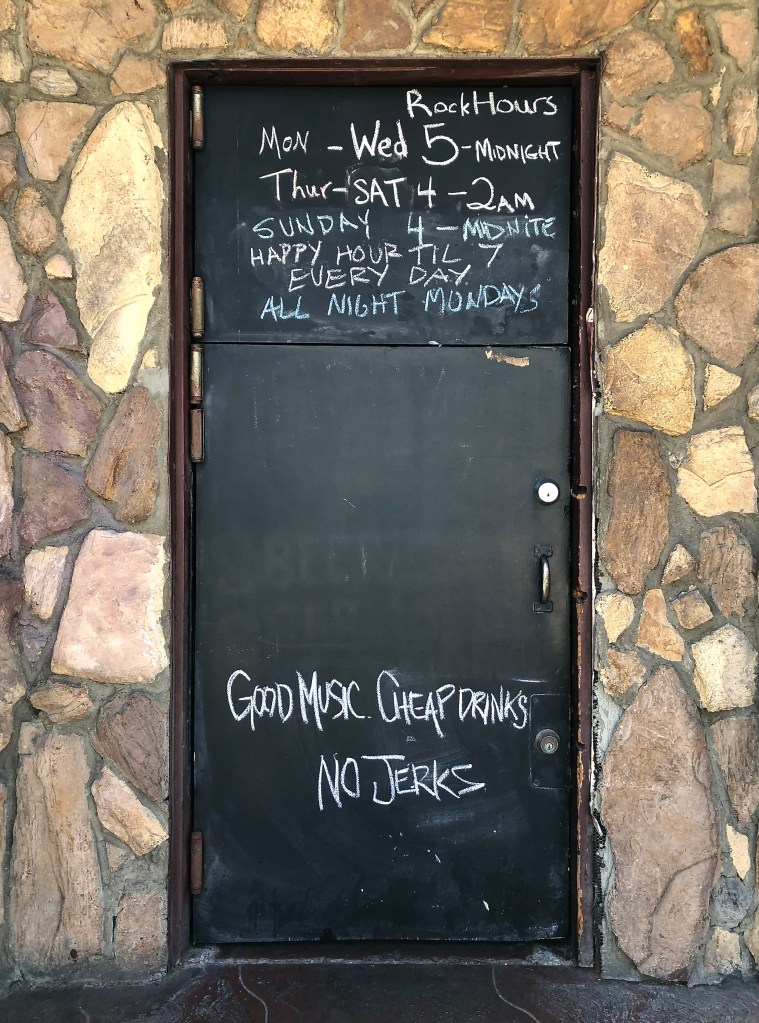
Tucked inside the flagstone facade of 80 29th Street, at the slanted corner of 29th and block-long Tiffany Avenue, directly across the street from its sister restaurant The Front Porch, the unassuming Rock Bar could rightfully be called an oasis.
“Oasis” typically conjures relaxing palms and cool blue pools of water offsetting hot desert sands. A refreshing and relaxing plot of land. In this instance, Rock Bar is an oasis from the hyperactive eclecticism of Mission Street’s main drag—roughly from 16th to 24th Streets, where the dirt poor and tragically addicted collide with the legitimately working class and the wealthy hipsters drawn to the Mission District’s ample poverty porn.
These class clashes are very San Francisco. I do sometimes feel a bit cynical about it. I once lived in the Mission, just off Valencia on an alley named Brosnan. I was fairly fresh out of undergrad and working in a box office for a wage people who make minimum today would scoff at. In just my first week living on Brosnan, I heard a drive-by shooting, an outright murder, and saw a gang of kids hands up against the wall under the watchful eyes and frisking hands of three patrol cars worth of police officers. Today my former apartment building is adjacent to an expensive private elementary school, a well-appointed Greek church, and the thoroughly gentrified Valencia Street with its fashion boutiques, hyper-metro-masculine barber shops, and $5 slow drip coffees.
To be clear, I don’t miss crime, and I have no romantic notions about the conditions that compel it. For me back then, living amidst those things was the trade off for affordable rent. But I do miss neighborhoods in San Francisco where students and artists can afford to live, work, make some art when they can scrape together the materials and wherewithal, and get a drink they can afford. I’m not aware of such a neighborhood today. And I will admit to holding a certain amount of resentment toward the twin tech booms for obliterating the city’s ecosystem. But times change and that’s okay. San Francisco has changed many times over and I trust it will again. I myself am still able to live here thanks to the rent-controlled golden handcuff I slipped into back in 1996!
Rock Bar harks right back to that time, and a range of other eras as well. The loudspeakers deliver the front door’s promise of good music, drawing from every late 20th century decade and into the post-Y2K years. In my short hour there I heard The Smiths, U2, Bob Dylan, some kind of grungy 1970s folk rock, early techno I couldn’t place… All of it good.
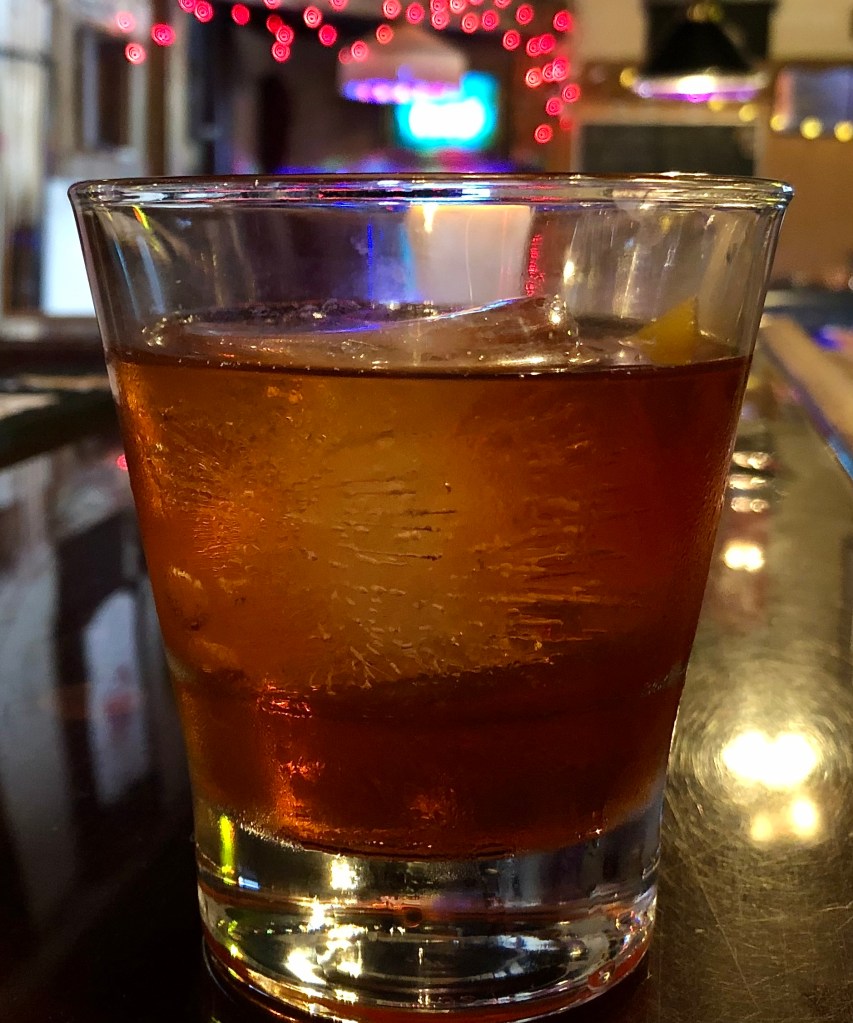
I ordered my test cocktail, an Old Fashioned—only $9 during happy hour. Made with sugar, Angostura bitters, standard Evan Williams, and a wedge of muddled orange rind, it gets the job done well and without fuss.
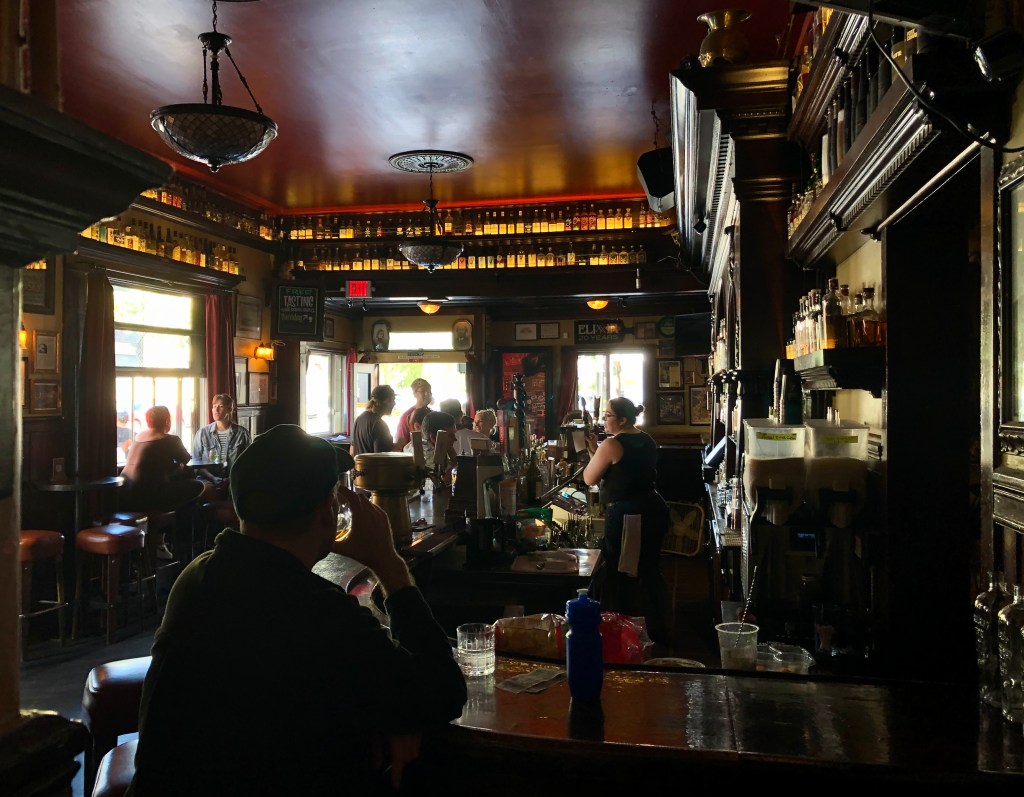
Like all the best bars, the walls are decked with accumulated knickknacks. A banjo. Shovels and picks. Various lanterns. A yellow bull crossing sign. Books. Boots. Jugs. Skulls. Framed photos of Gold Rush miners and 1920s ladies. A working 1980s arcade game. A pool table in use. Sports on the two discreet TV screens, their sound off in deference to the music. A packed wall of liquor bottles. An antique cash register no longer in use but still enjoying its central position of honor.
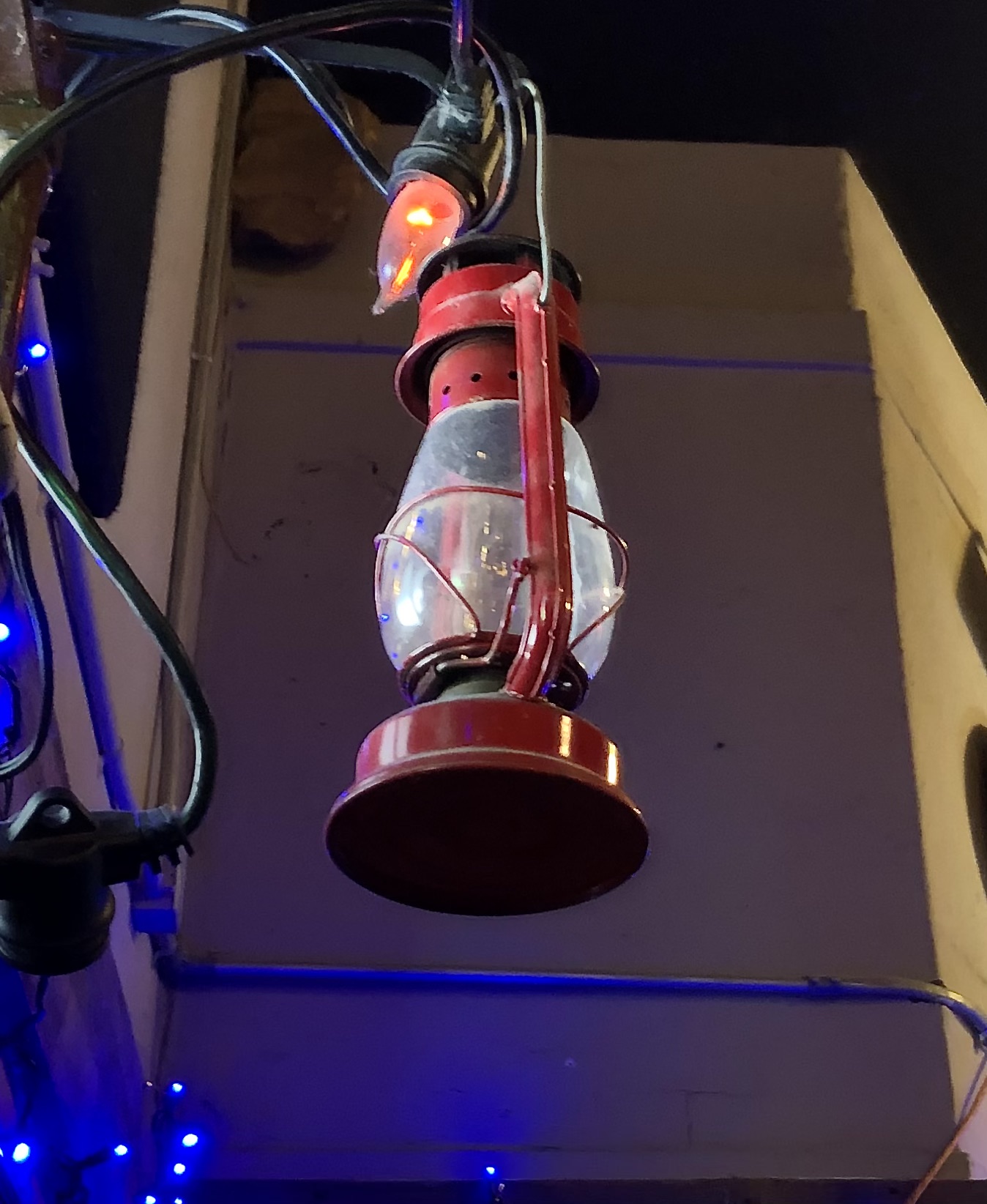
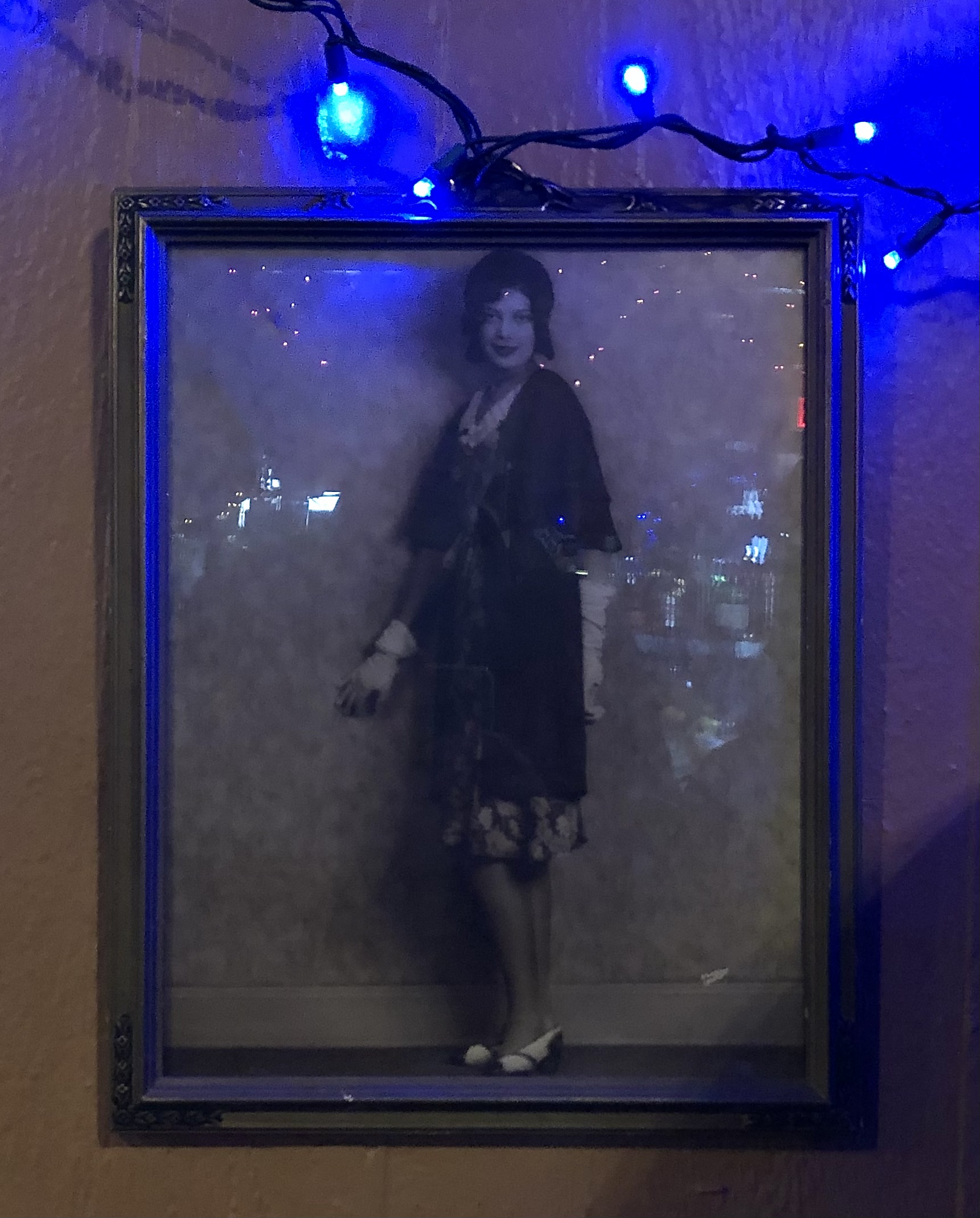
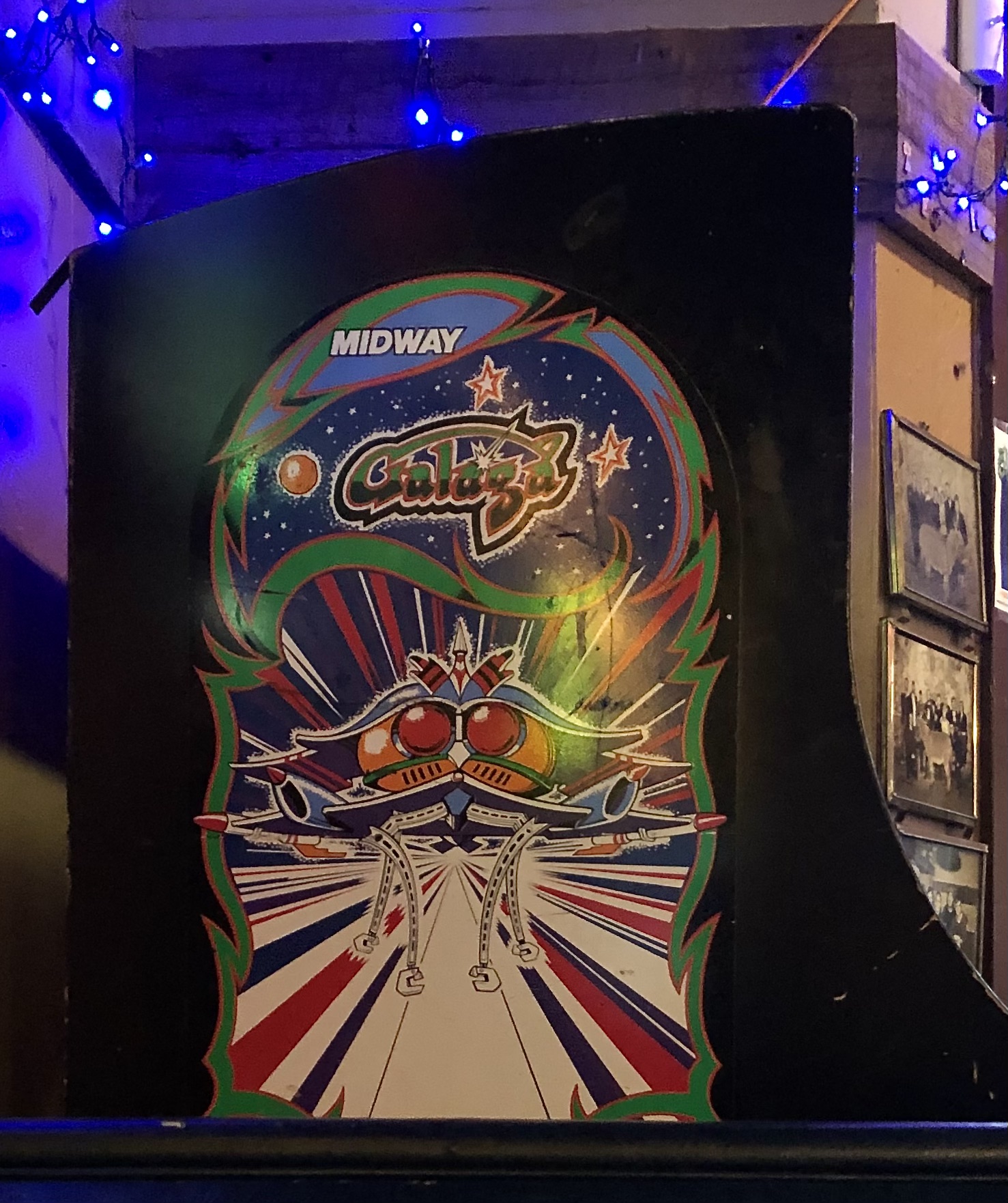
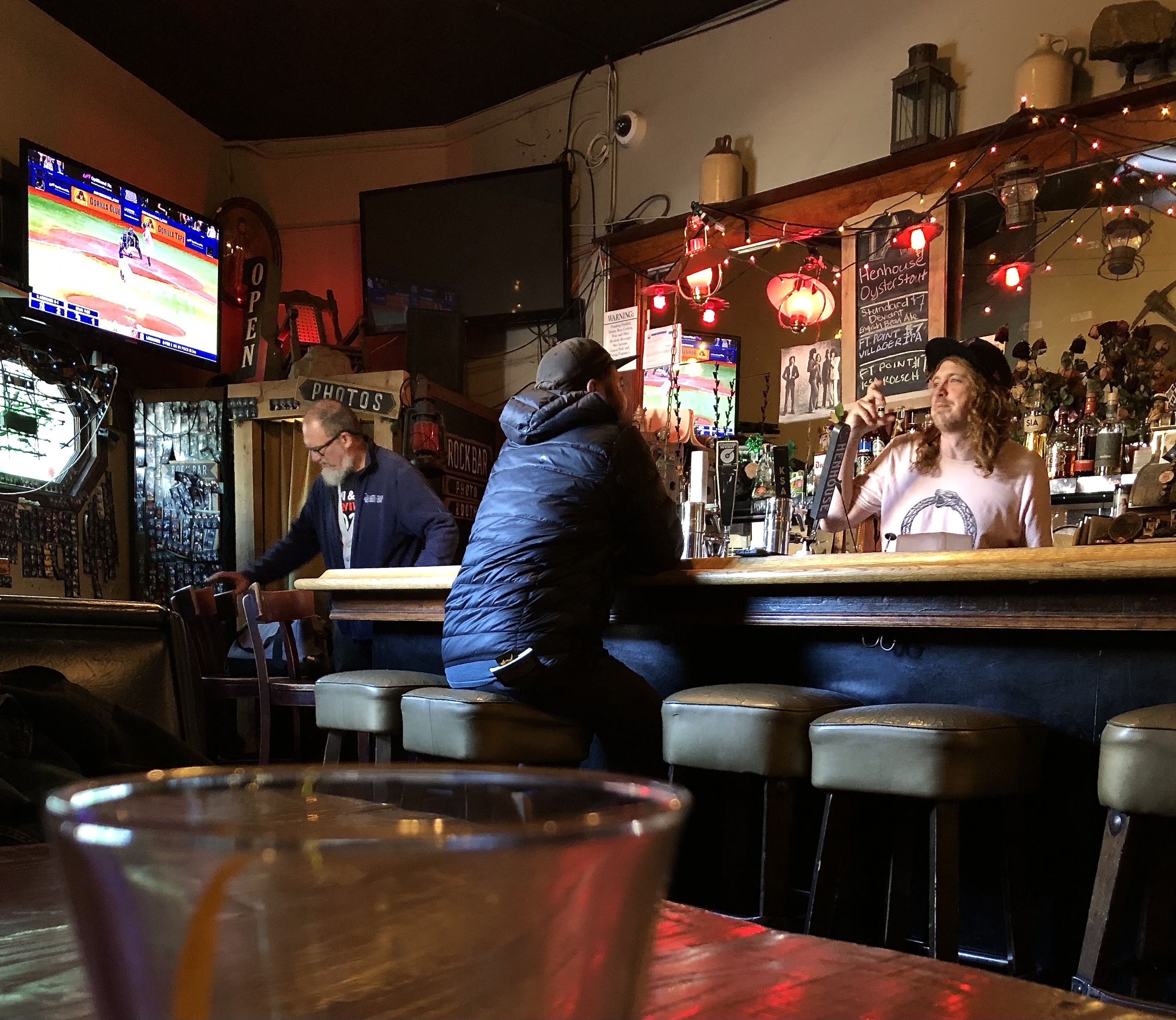
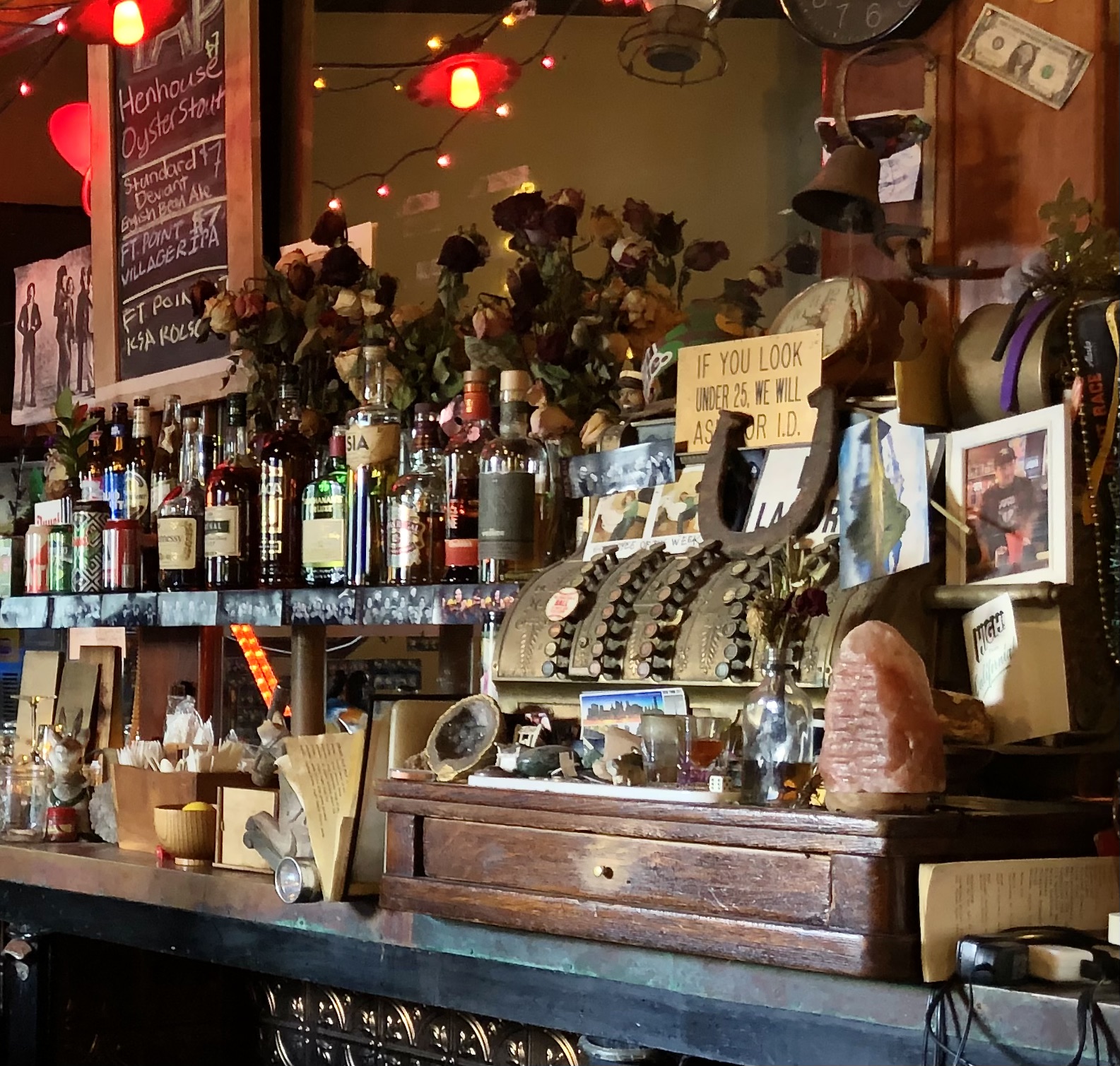
The three people sitting at the bar were all regulars, chatting familiarly with the bartender—himself looking like an Amoeba Records employee. (Don’t know it? Get your Google on and get over there before it too is gone!) The two guys playing pool appeared unfamiliar to the bartender but they settled right in and made themselves entirely at home. Rock Bar effortlessly gives permission for even a newbie to feel like a regular.
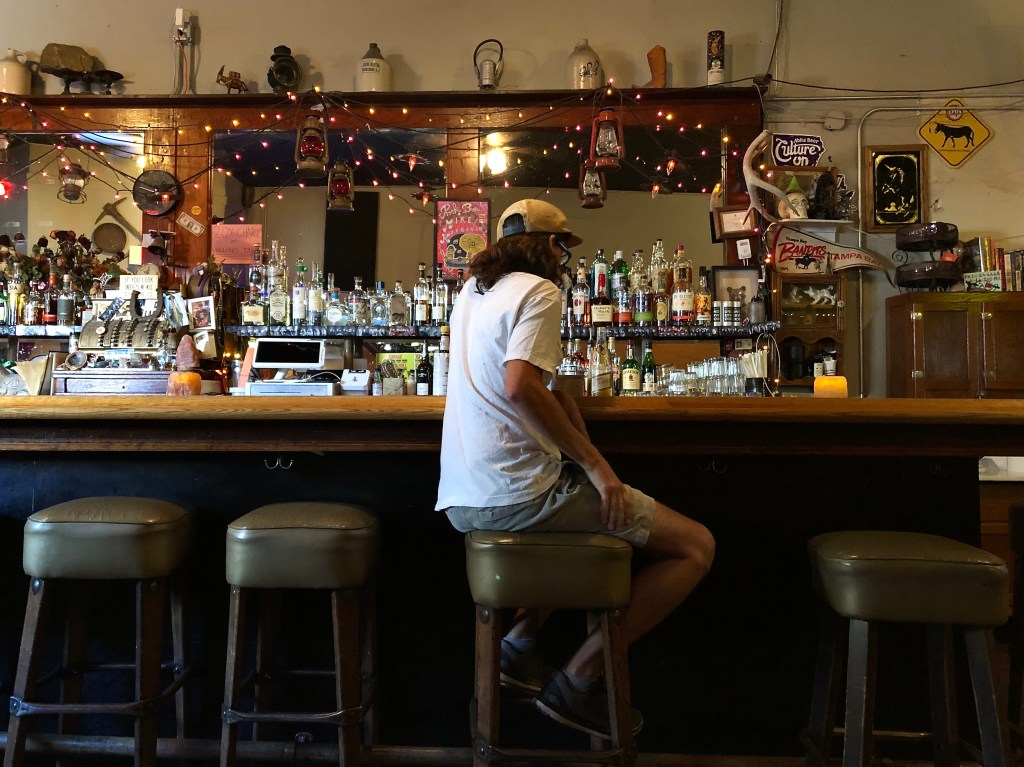
Alone at my booth table, scribbling in my notebook, I did feel a bit out of place. Rock Bar is not a place to be studied. It’s a place to settle into. A true neighborhood bar. Devoid of either pretense or aspirations. Despite my journalistic motive for being there, even I felt entirely at ease. I look forward to returning for the real reasons one might—good music, cheap drinks, no jerks.
Zam Zam
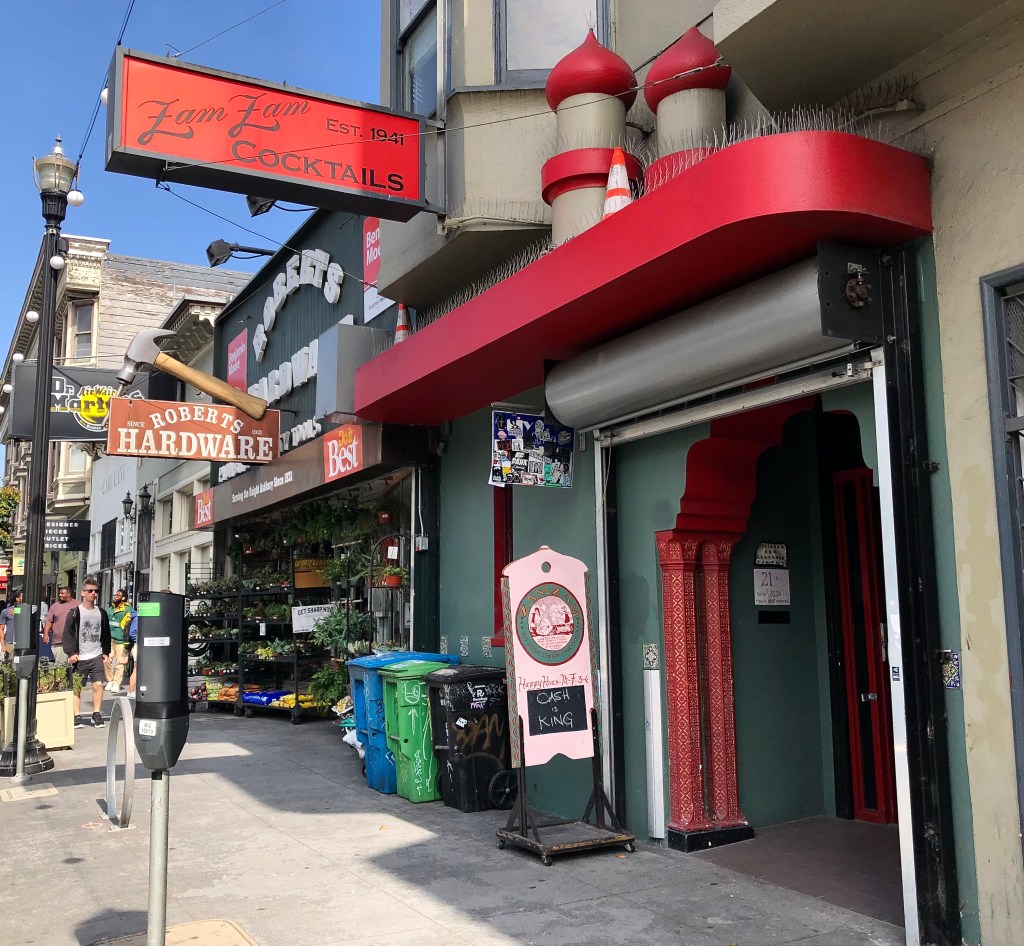
Located at 1633 Haight Street since 1941, and fitted in so snuggly up against its elder neighbor, Robert’s Hardware (Est. 1931) that one could easily miss it among the neighborhood’s many colorful facades, Zam Zam is a true local joint—and very San Francisco.
Its history has already been written about quite nicely, so I won’t recount the full details here. It’s enough for the moment to note that it was formerly owned and solely operated by one Bruno Mooshei, known for his gruff demeanor, exacting standards, and oddly anti-capitalist policy of a two drink maximum. He only stopped working when he passed away in 2000 at the age of eighty. In his time he threw out many customers who did not share his sense of what it means to drink in a bar, and served his famous Martinis to the likes of Janis Joplin, Jefferson Airplane, and The Doors. (Do read David Lebovitz’s excellent article on Mooshei.)
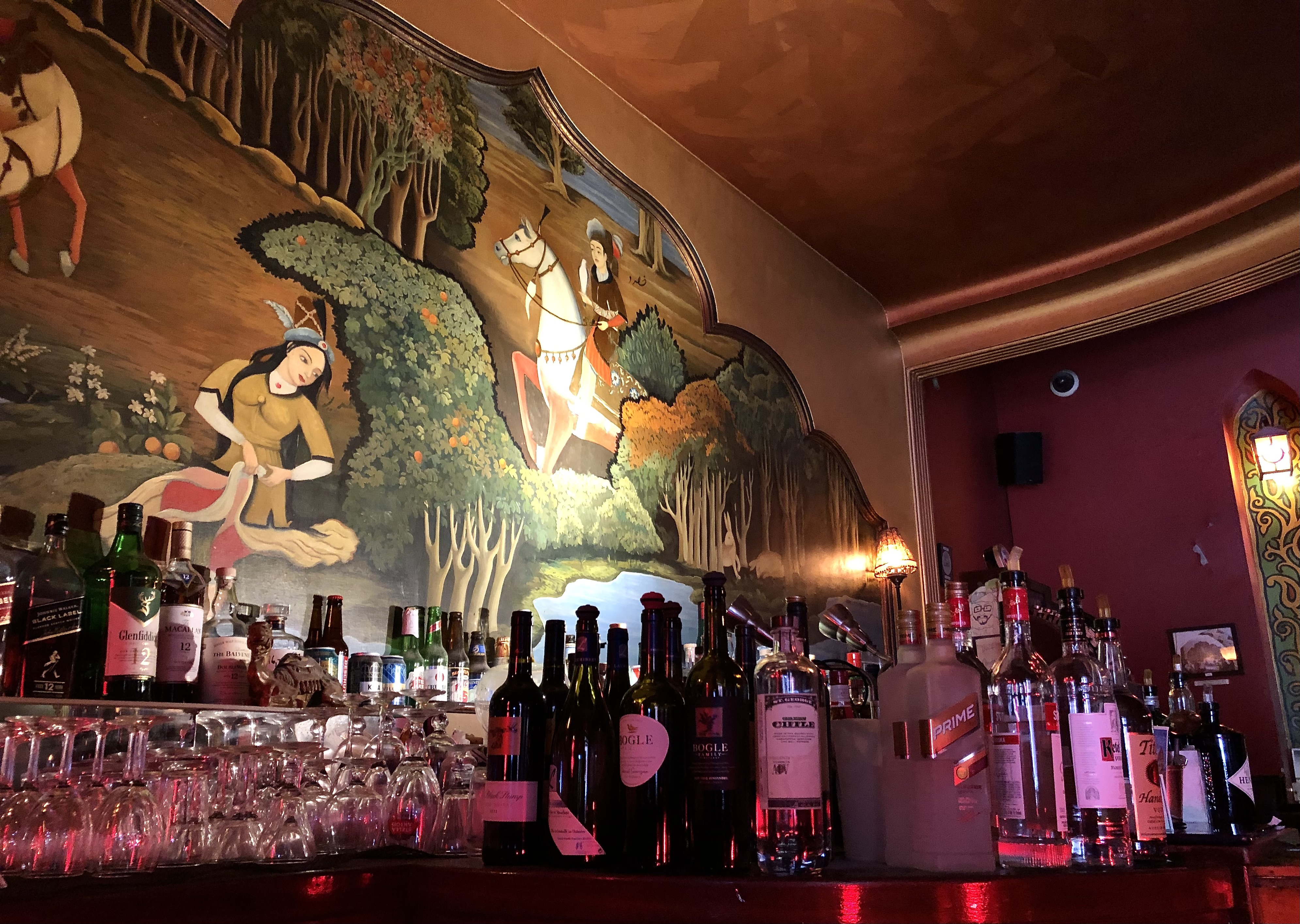
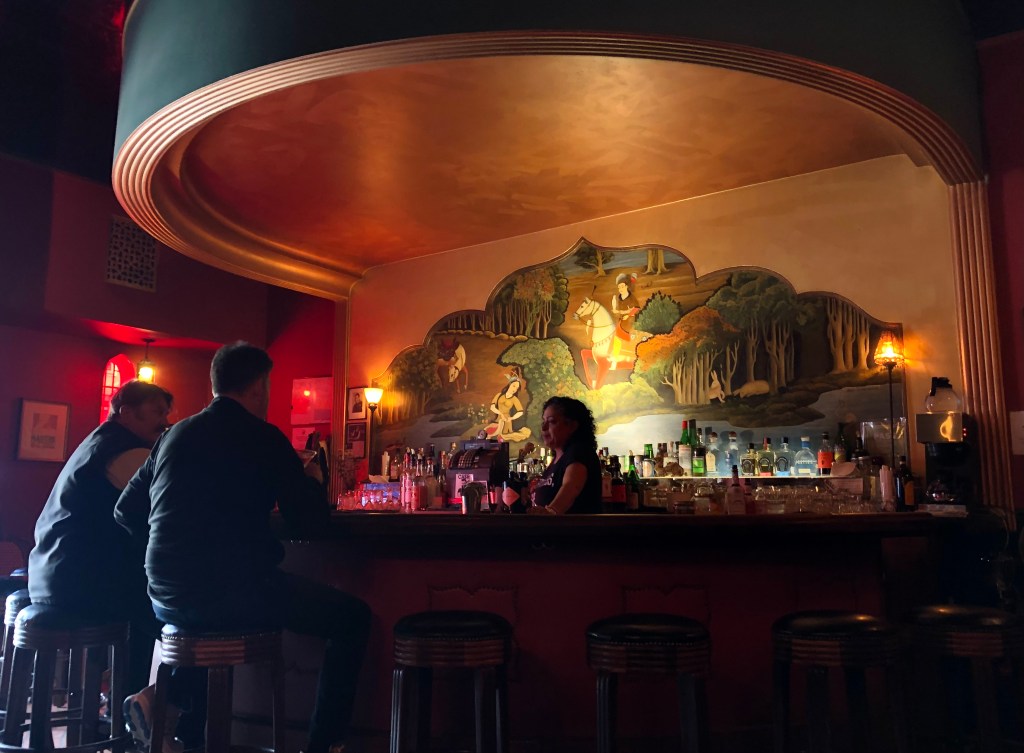
After Mooshei’s passing, Zam Zam was taken up by two of its regulars. They did a great job maintaining the place. Talk about an oasis. Once you step inside the unassuming sage-green street front and its shock-red door, the small curved bar’s ornate wall mural greets you like a page from a Persian fairytale come to life.
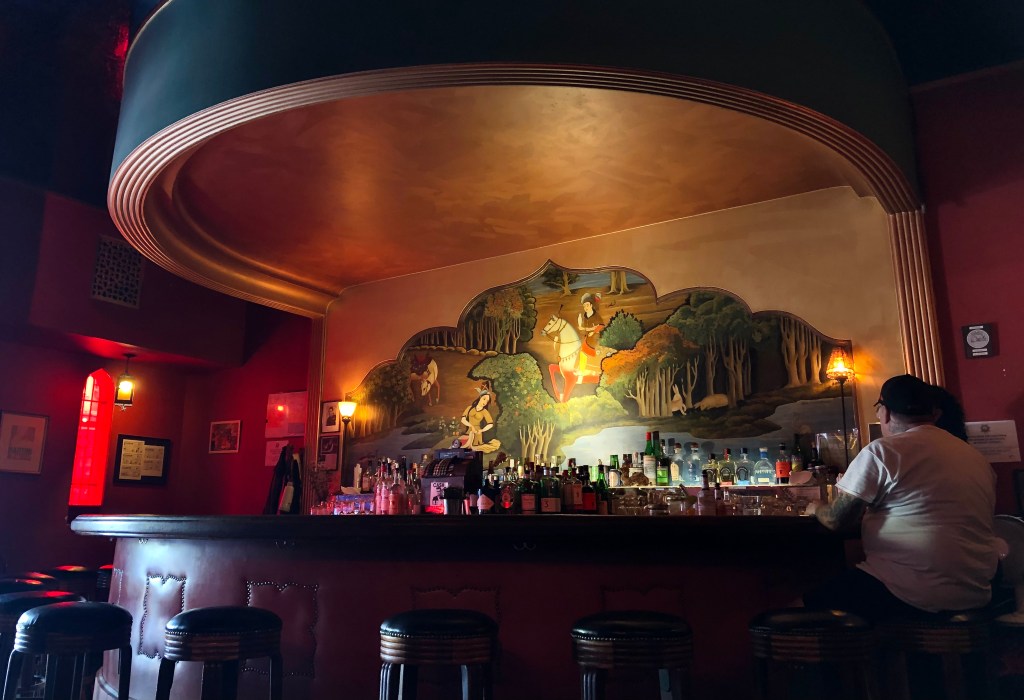
Persian decor defines the entire space, more like a 1940s Hollywood idea of Persia than the actual region. Think Casablanca the movie verses Casablanca the city. A custom-made jukebox remains embedded in the wall. And the floor appears to have once been green carpet, now looking more like patches of moss growing on stone.
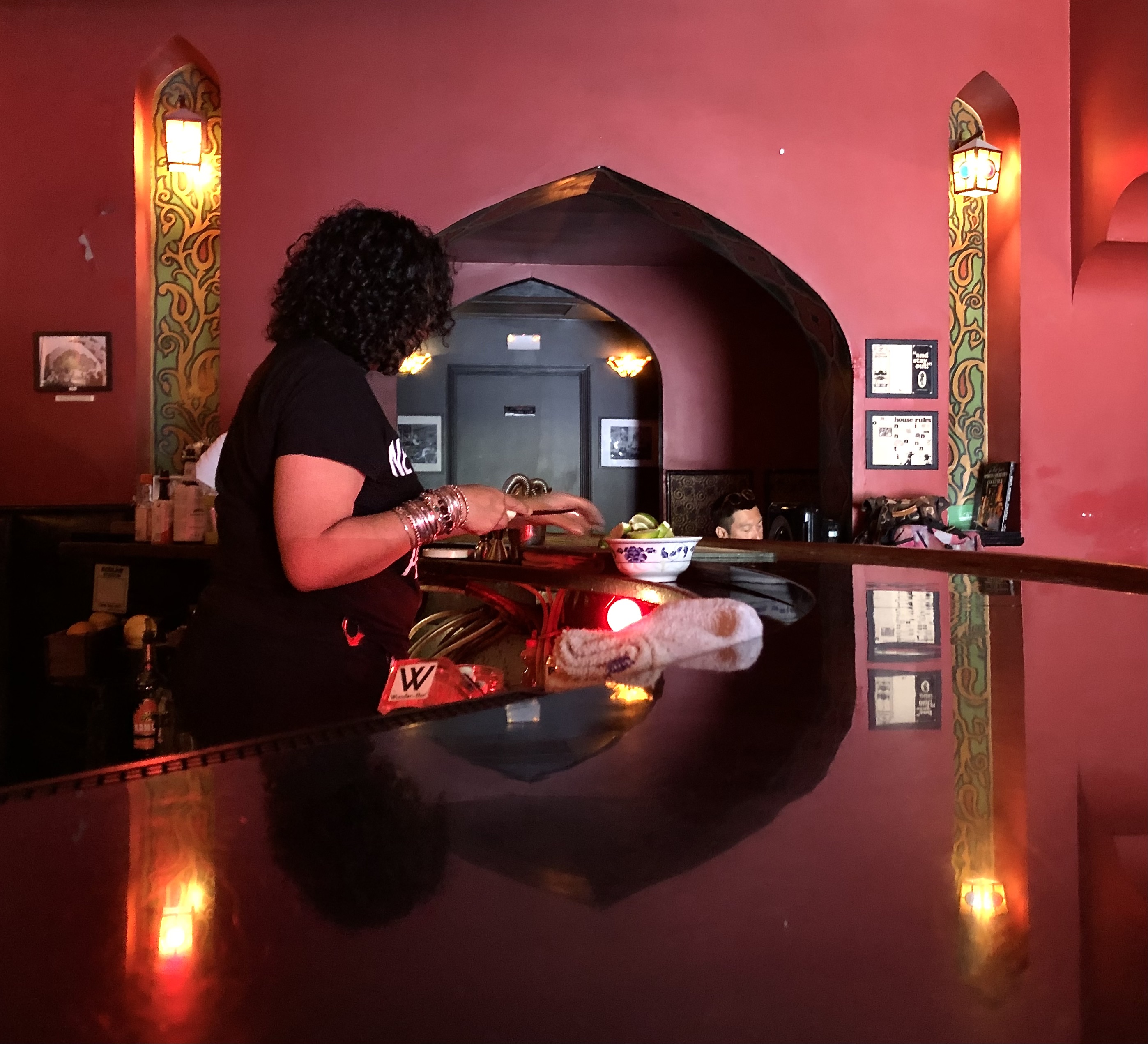
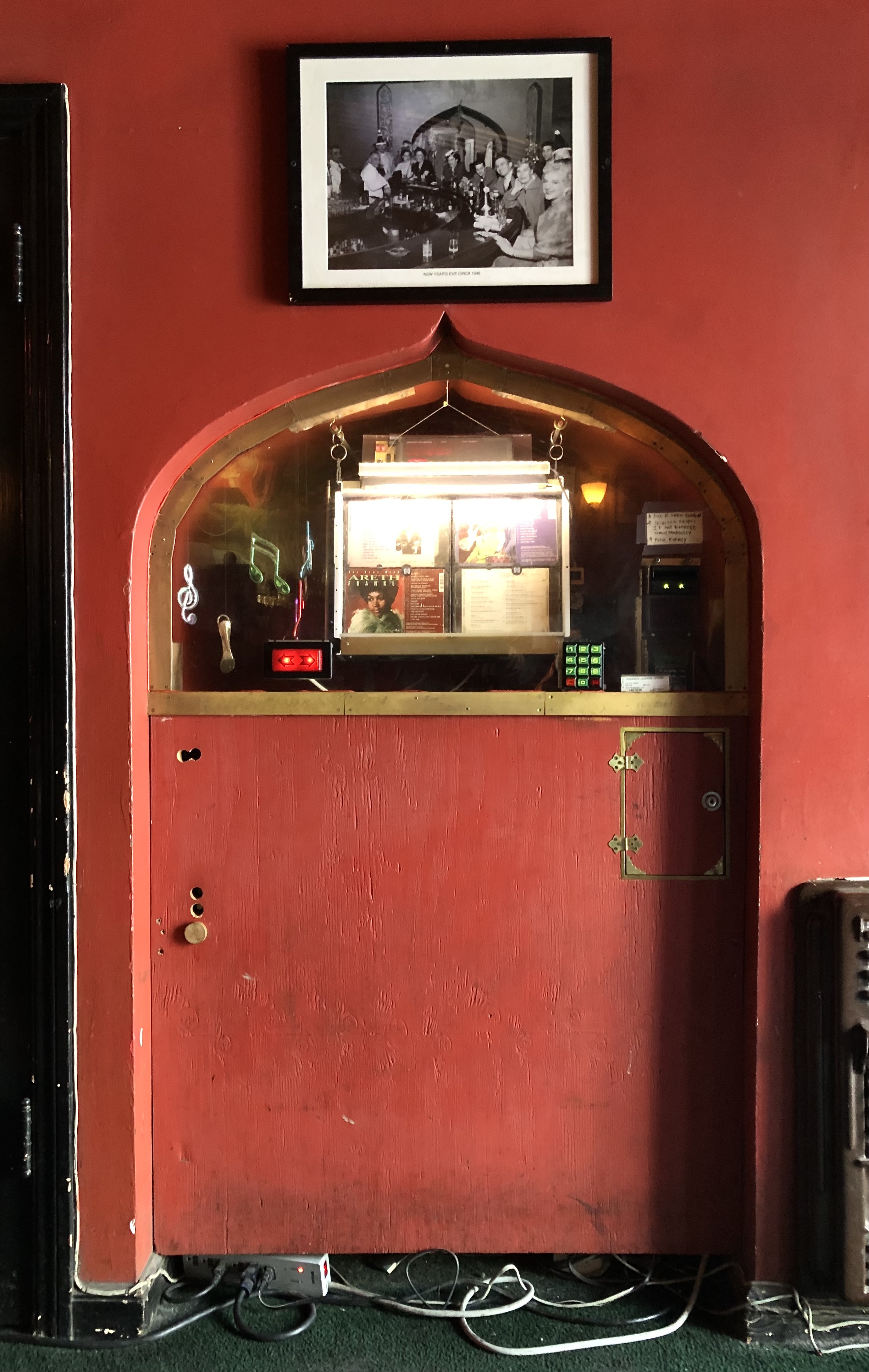
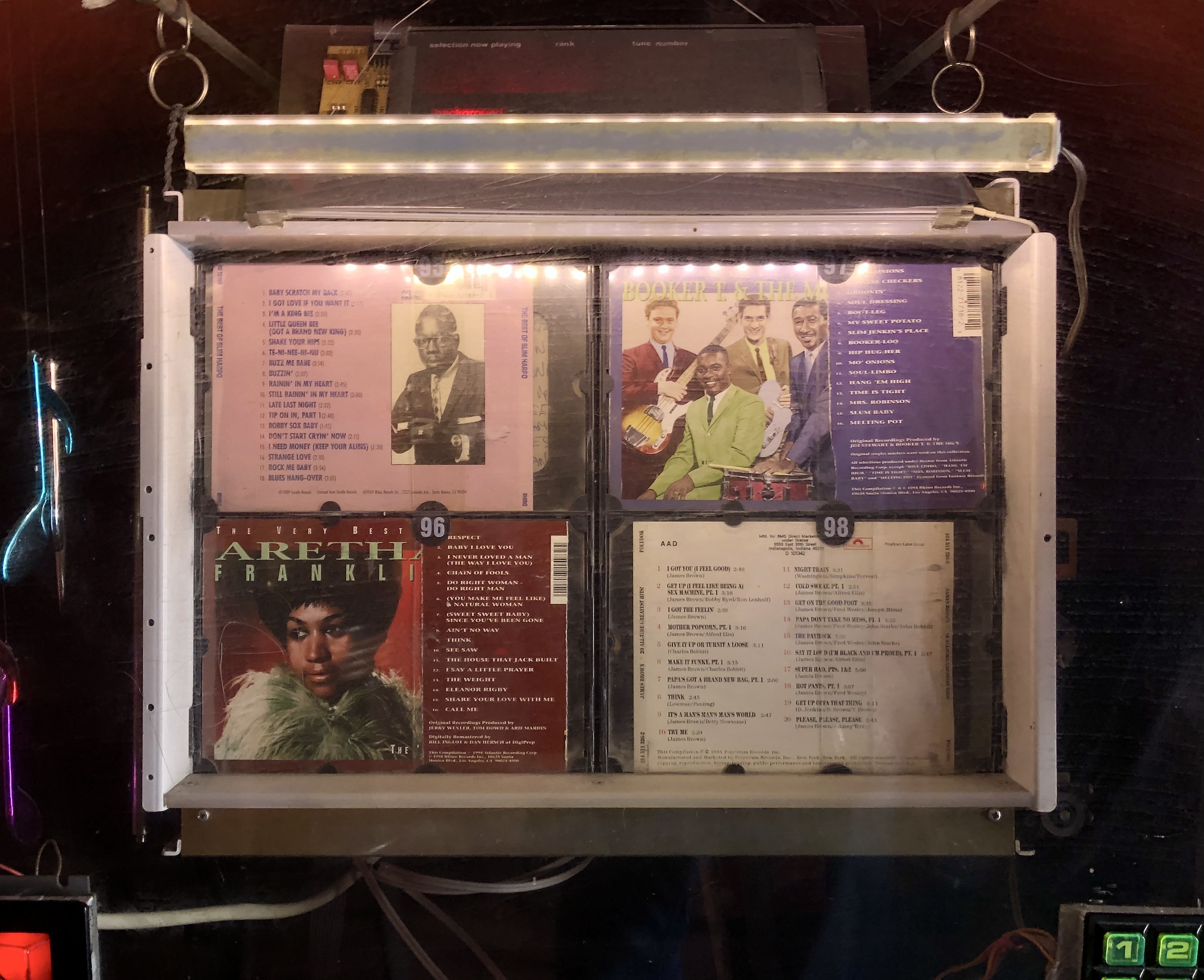
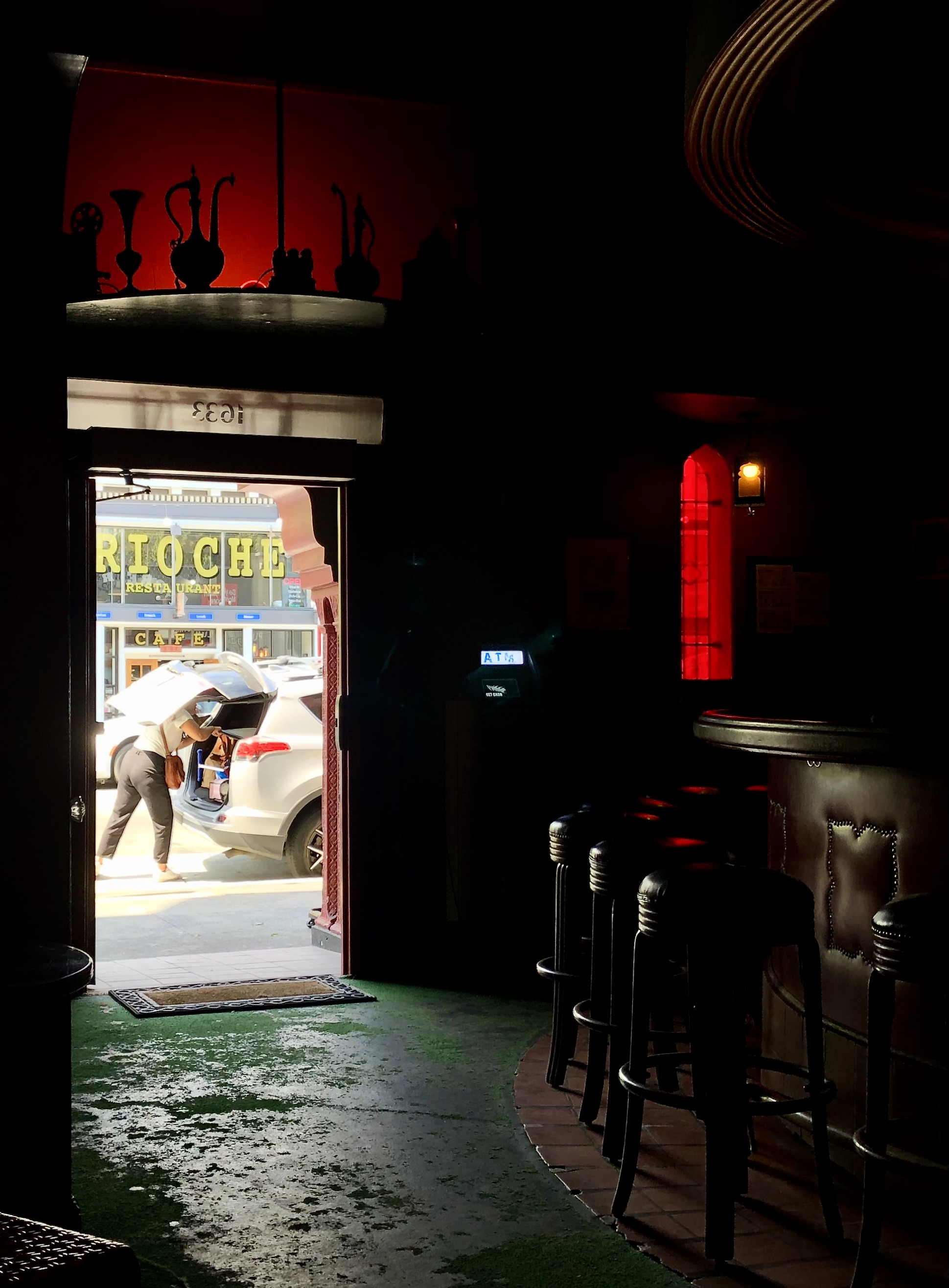
But the centerpiece is that mural. Beautifully carved and illustrated, and perfectly lit. The semicircular bar counter that frames it is the obvious place to park yourself. There are a handful of two-tops scattered off to the sides. But once I landed on a stool at that bar counter, greeted by none other than Etta James singing “At Last” over that old jukebox, I really did feel like I’d skipped back in times—plural! As if a 1960s Etta James gig had somehow been booked in 1940s Rick’s Cafe Americain, still serving drinks smack between in the mid-1950s, and me having lucked into tickets in 2024.
I ordered up an Old Fashioned. It was serviceable. Very sweet, like one might expect from a mass-batched version of the drink. (It may have been; I neglected to clock the bartender’s mixing process.) The ghost of Bruno Mooshei kept me from inquiring about the ingredients, lest I be thrown out! But I probably should have given up my test-cocktail routine for the house speciality, a Martini.
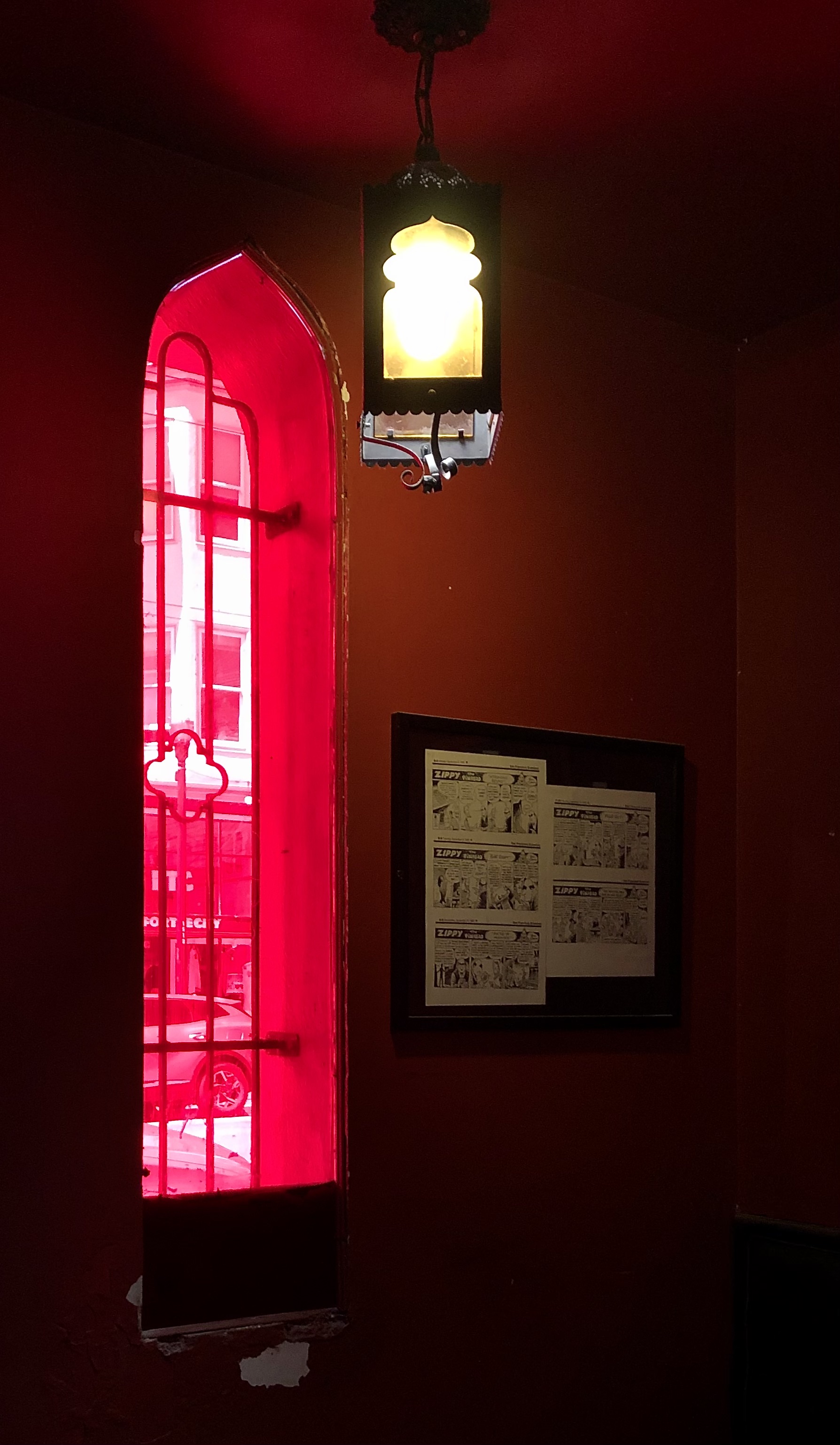
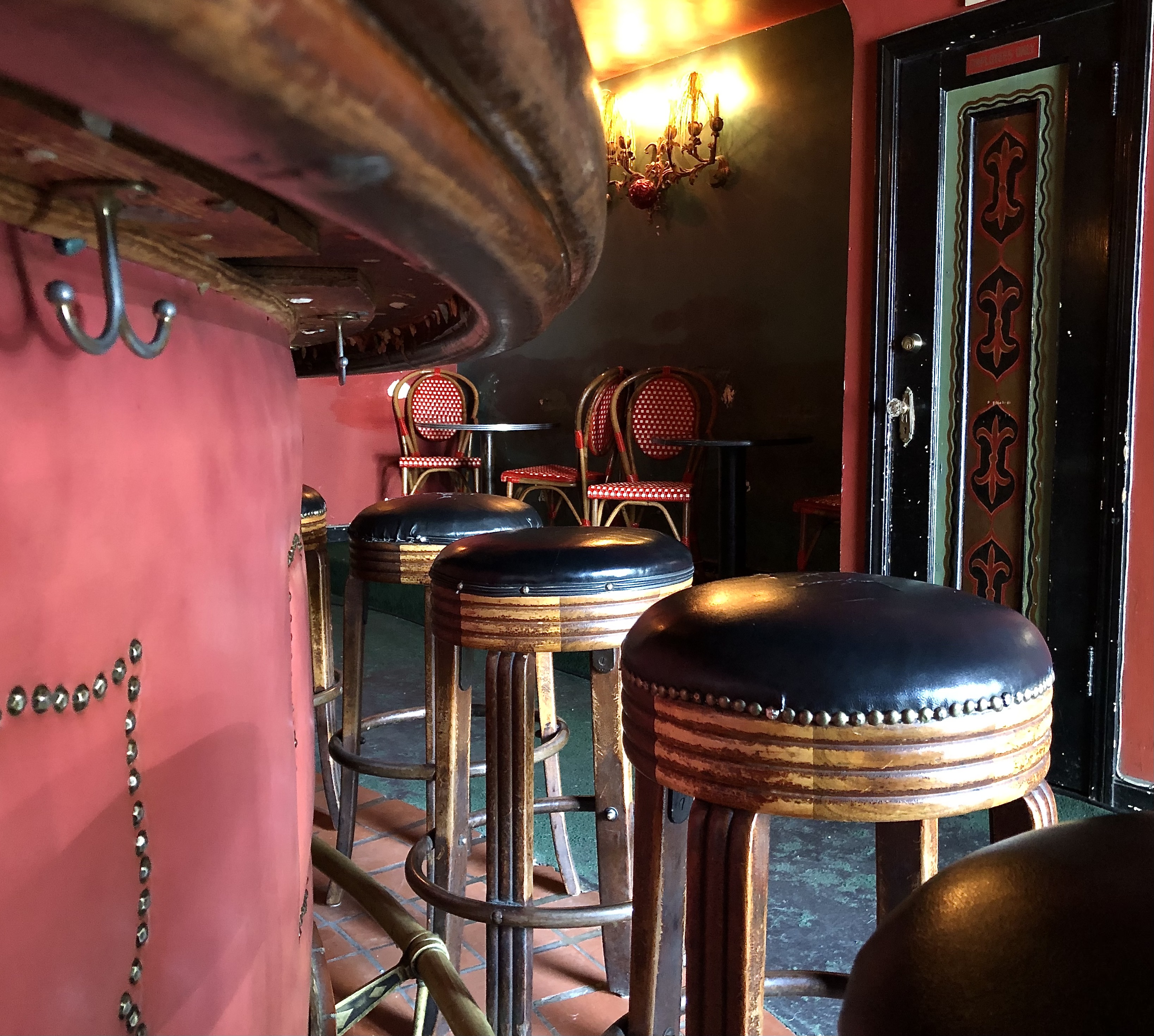
Despite the drink, I spent a very content hour at Zam Zam. The clientele seemed to be a mix of locals and casual travelers—typical of Haight Street’s central drag. Lots of tourists come to the Haight hoping to hop back in time to the Sixties of the Hippies. Out on the street, and in most of the current shops, that’s not possible. The obligatory tie dye t-shirt one will find in this or that store window is as authentic to the Sixties as Casablanca is to Casablanca.
But step inside Zam Zam and woosh! Back in time one goes. In addition to the decor and fantastic jukebox, right on cue the sweet scent of marijuana smoke floats in through the open door. The ghost of Janis coming to hear Etta?
Authentic. Divey. No TV. (🙏🏻) Suspended in time(s). And truly unique. The house Old Fashioned might not be of any consequence. But for a genuinely relaxed atmosphere, with great music and a solid dose of lovingly kept kitsch, and where you can virtually breathe in the history of one of San Francisco’s legendary neighborhoods without suffering any commercialism whatsoever, Zam Zam is a must.
Iron Horse
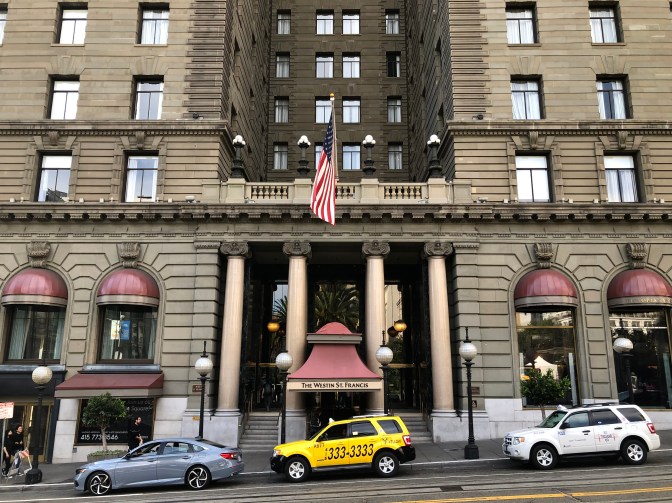
San Francisco’s central mainstream tourist hub, Union Square, certainly has its unique features—the trolly cars jangling their bells up and down Powell Street, the old facade of the iconic St Francis Hotel, the Curran Theater presenting big budget theater since 1922. Otherwise it’s quite like the central mainstream tourist hub of many major cities. The usual flagship stores of international fashion brands like Prada, Louis Vuitton, and Dior stand alongside larger international chains like Zara and H&M—though the latter’s Union Square outlet counted among the many post-pandemic casualties.
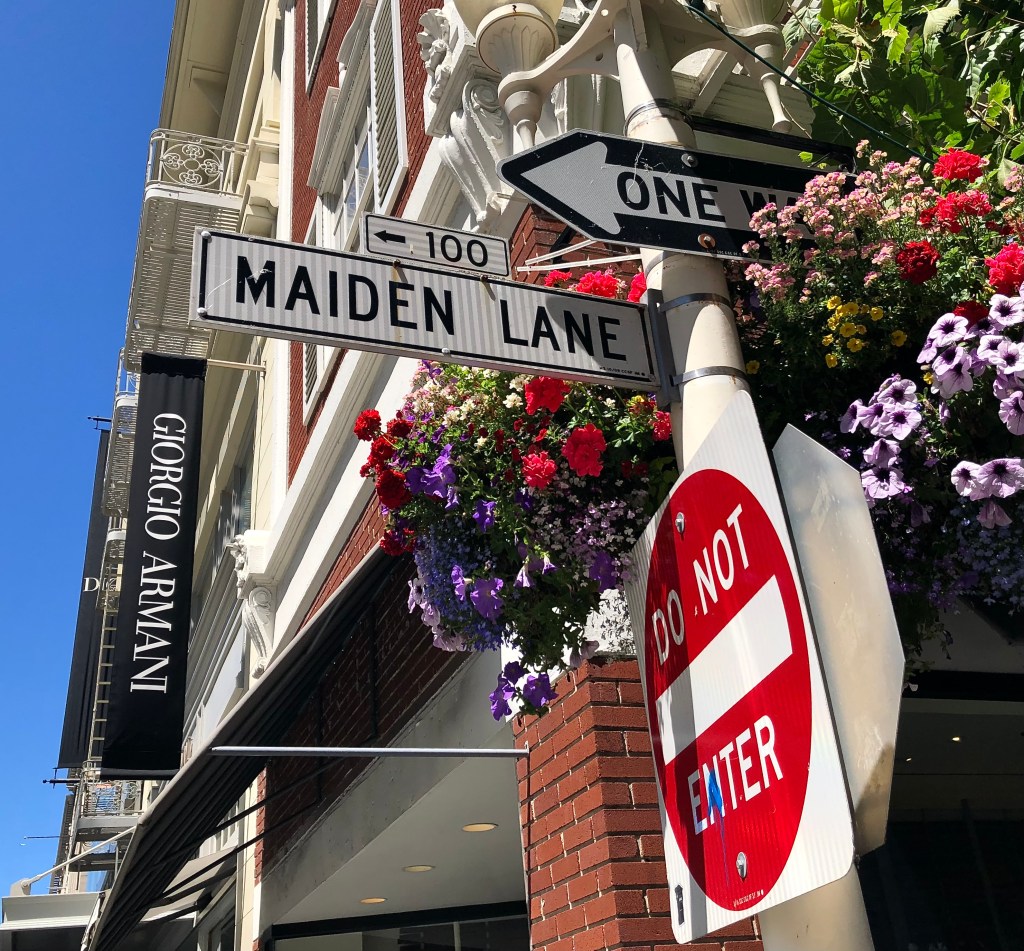
Throughout successive economic eras, Maiden Lane, a two-block alley running from Stockton through Grant to Kearny, has always been a quiet enclave for high-end boutique browsing. Closed to traffic, in recent years cafe tables and chairs have dotted the alley, with colorful lanterns strung above leafy trees and potted flowers.
I never have much cause to visit Maiden Lane myself, other than to make a shortcut through the area. But some years ago, Iron Horse opened a coffee kiosk in their snug lobby, to bring in some cash in the morning before the bar opens. Like the surrounding boutiques, the coffee is pitched at high-end prices, so I’ve only indulged occasionally. But this drew my attention to Iron Horse.
Originally established in 1954 as a restaurant, Iron Horse was frequented by celebrities like Sammy Davis Jr., Liberace, and Joe DiMaggio. When DiMaggio and Marilyn Monroe got married, they held their reception there. Sometime in the 1970s it transitioned to a bar. The interior has clearly been redecorated since then.
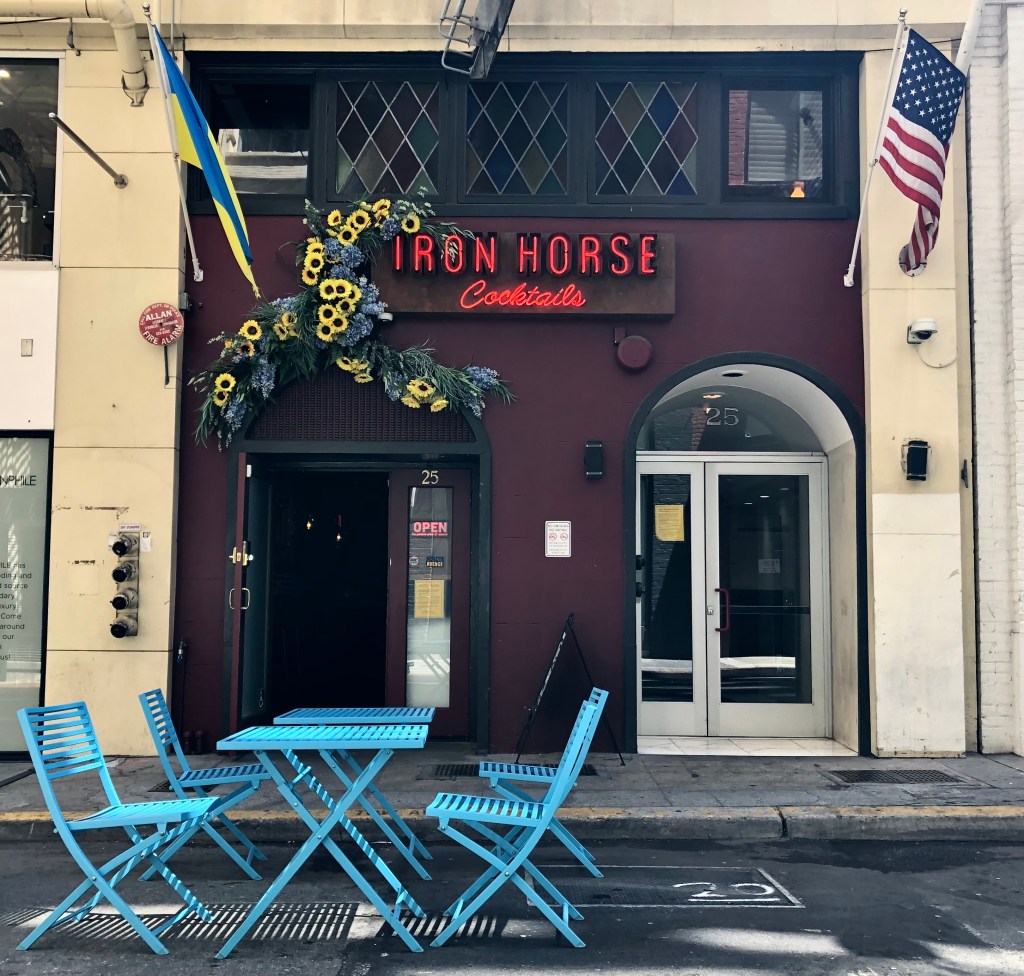
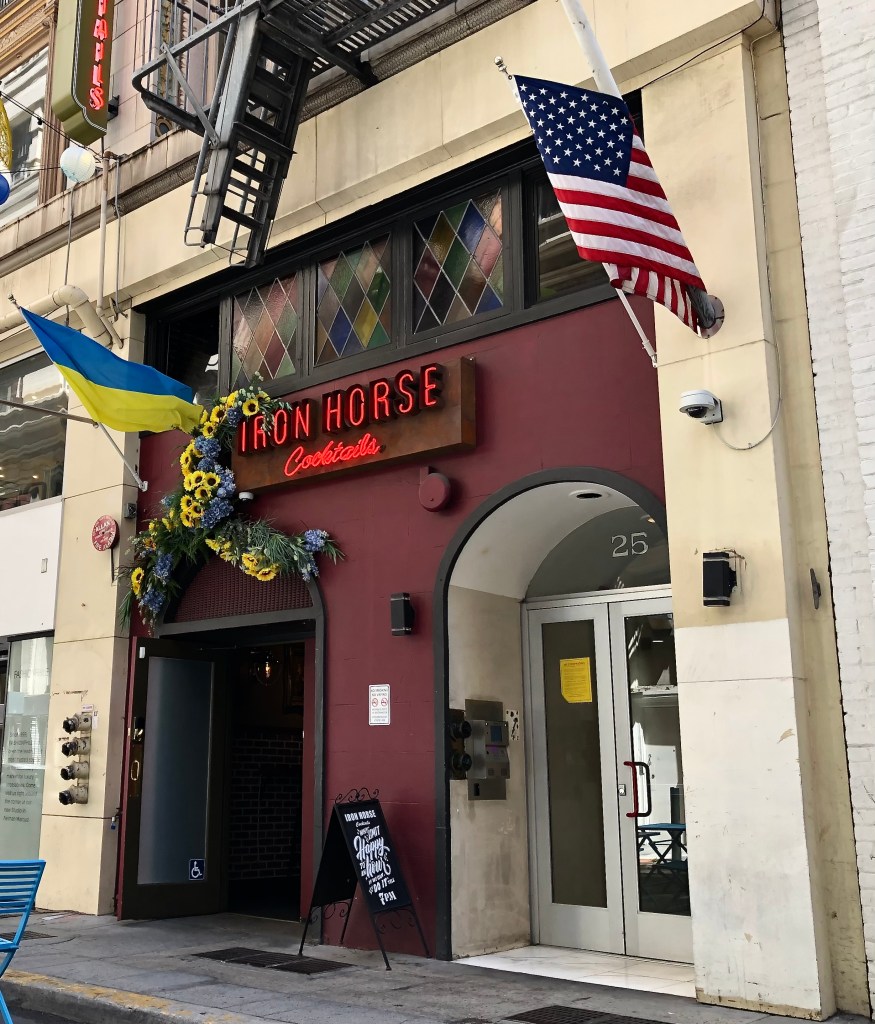
Today it’s no longer the see and be seen establishment it once was. But it attracted me as a destination both central and yet off the beaten path. Tucked away behind its small facade at 25 Maiden Lane, it would be easy to miss. When I visited, American and Ukrainian flags flanked a flowery arrangement above the door as attention grabbers.
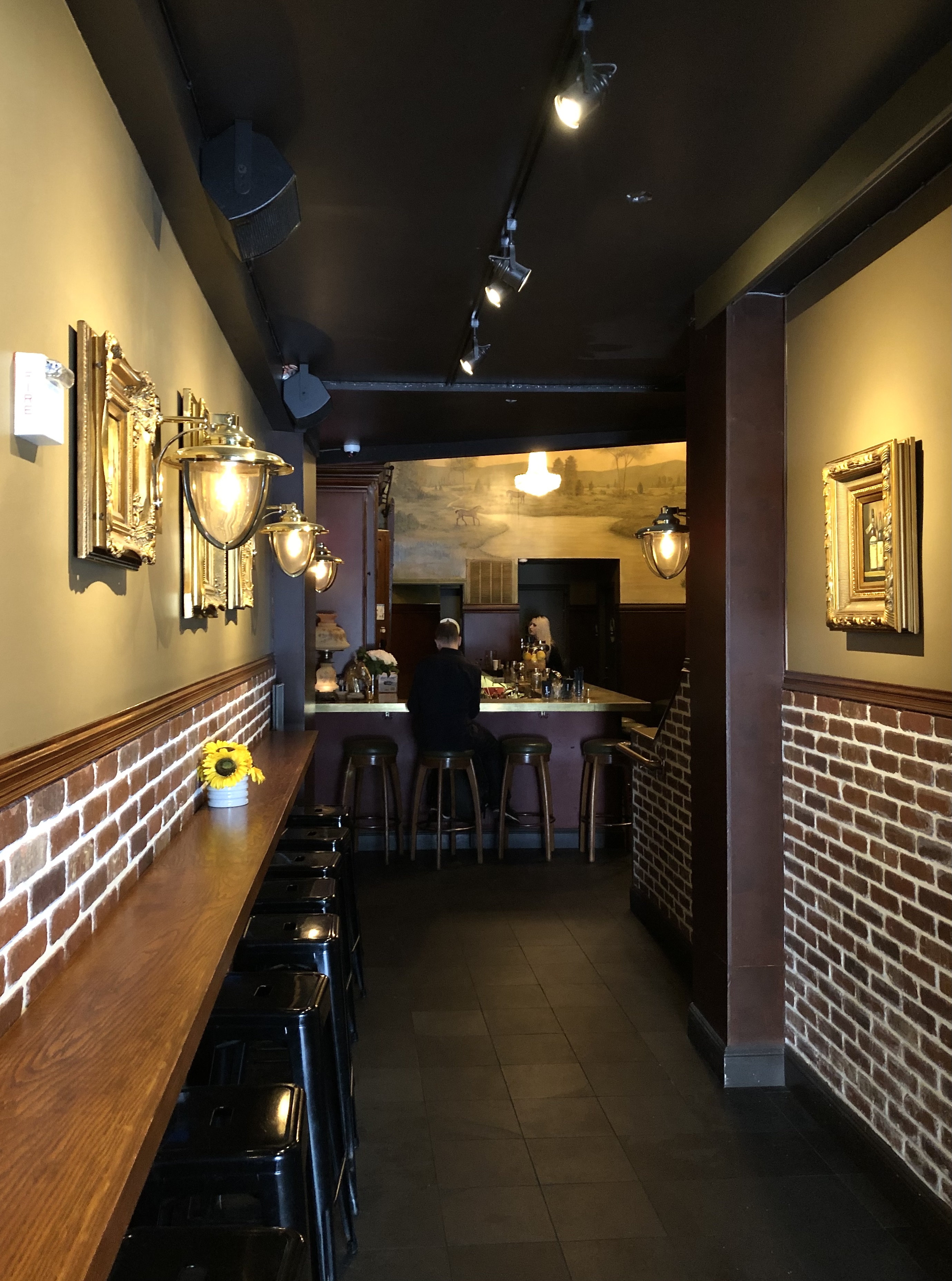
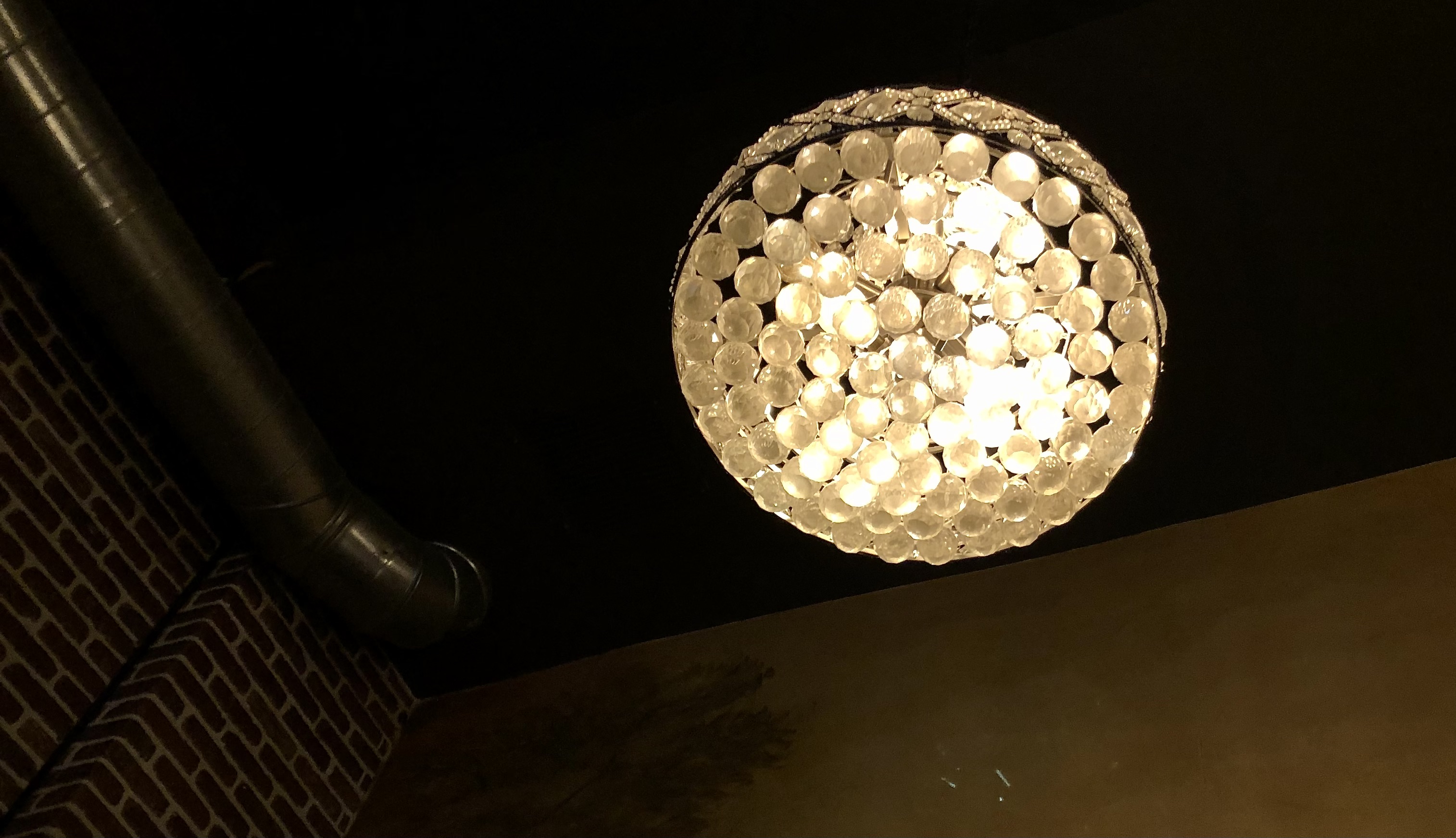
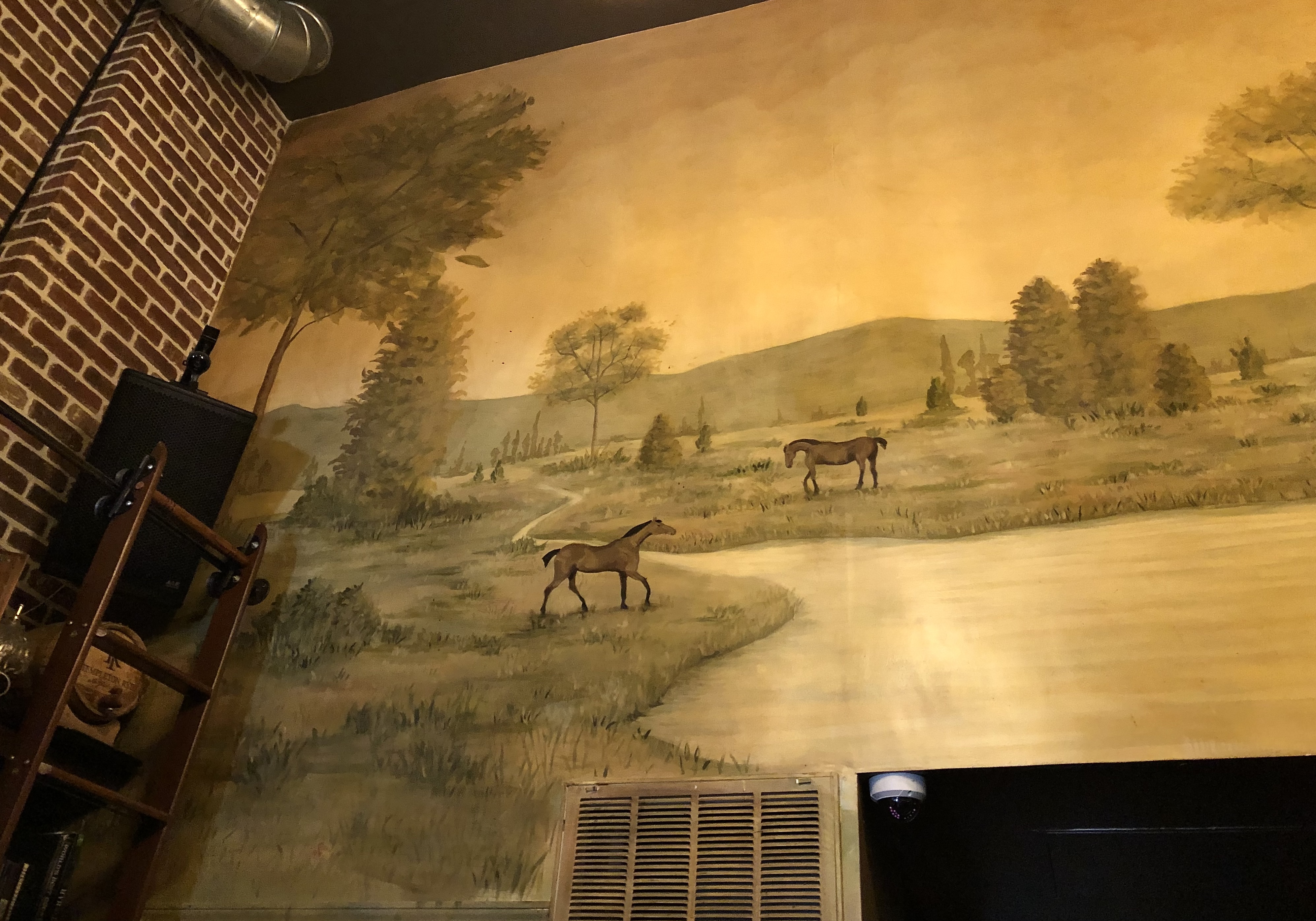
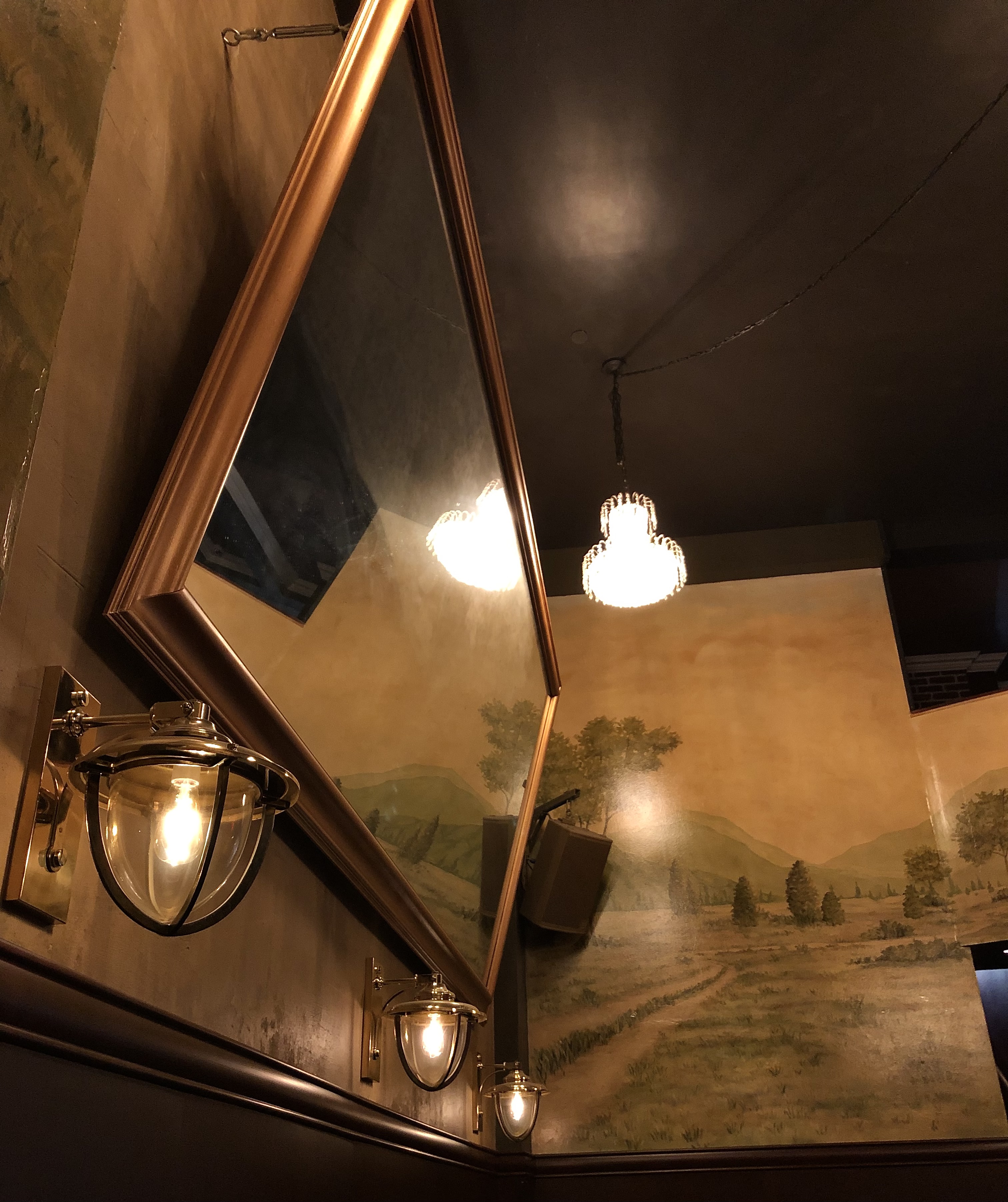
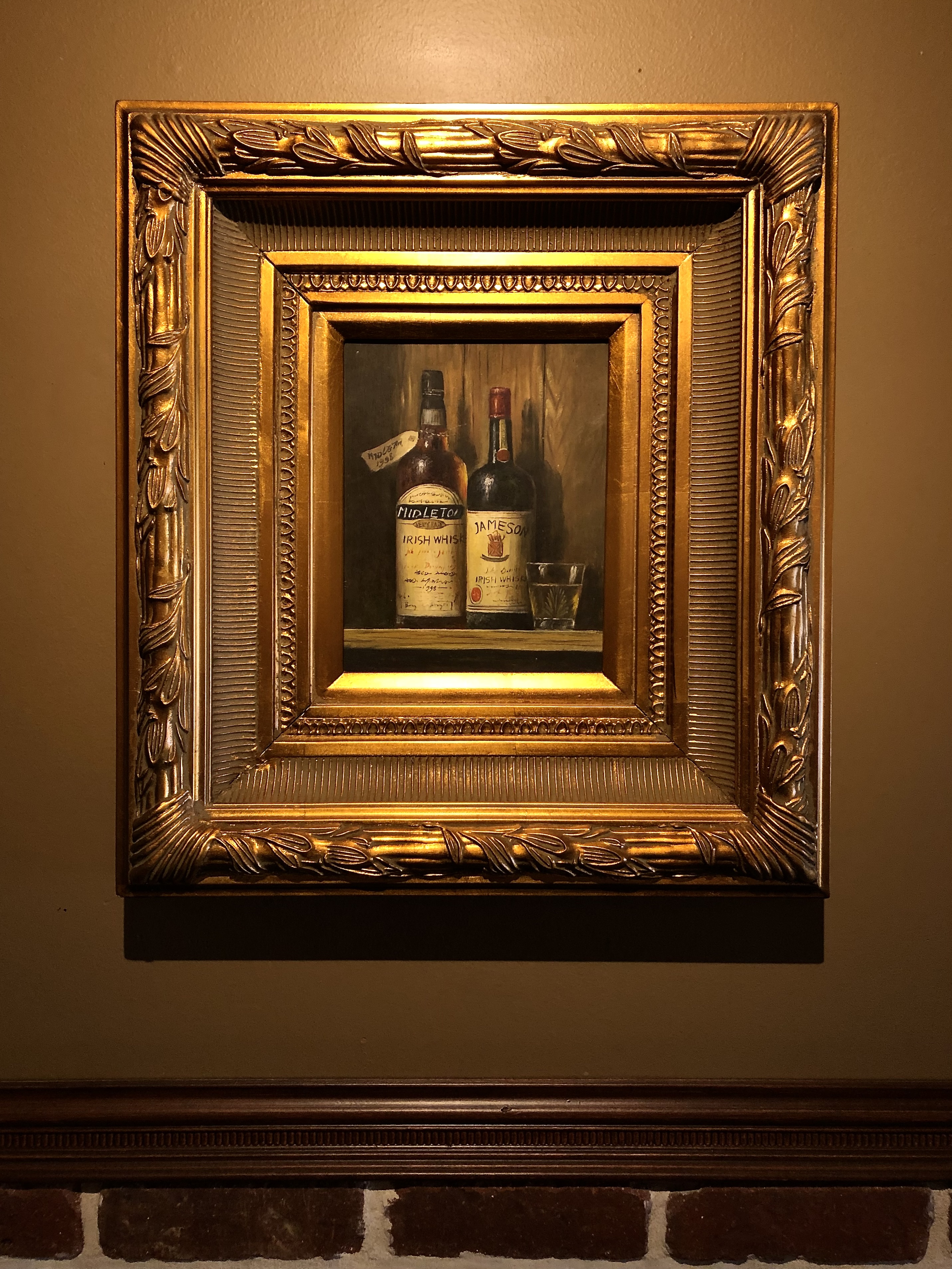
Inside, multiple aesthetic impulses are at work. Nineteenth century styled oil paintings and wall sconces. Crystal chandeliers circa the 1950/60s. The walls covered in murals of a country field with horses, all beige and sage and sepia toned. Generic pop dance music alternating with 1980s soft rock. Brick and plaster walls, exposed metal ducts, a massive wall mirror, an old mahogany bar cabinet and a pale sienna-tinged tin bar counter.
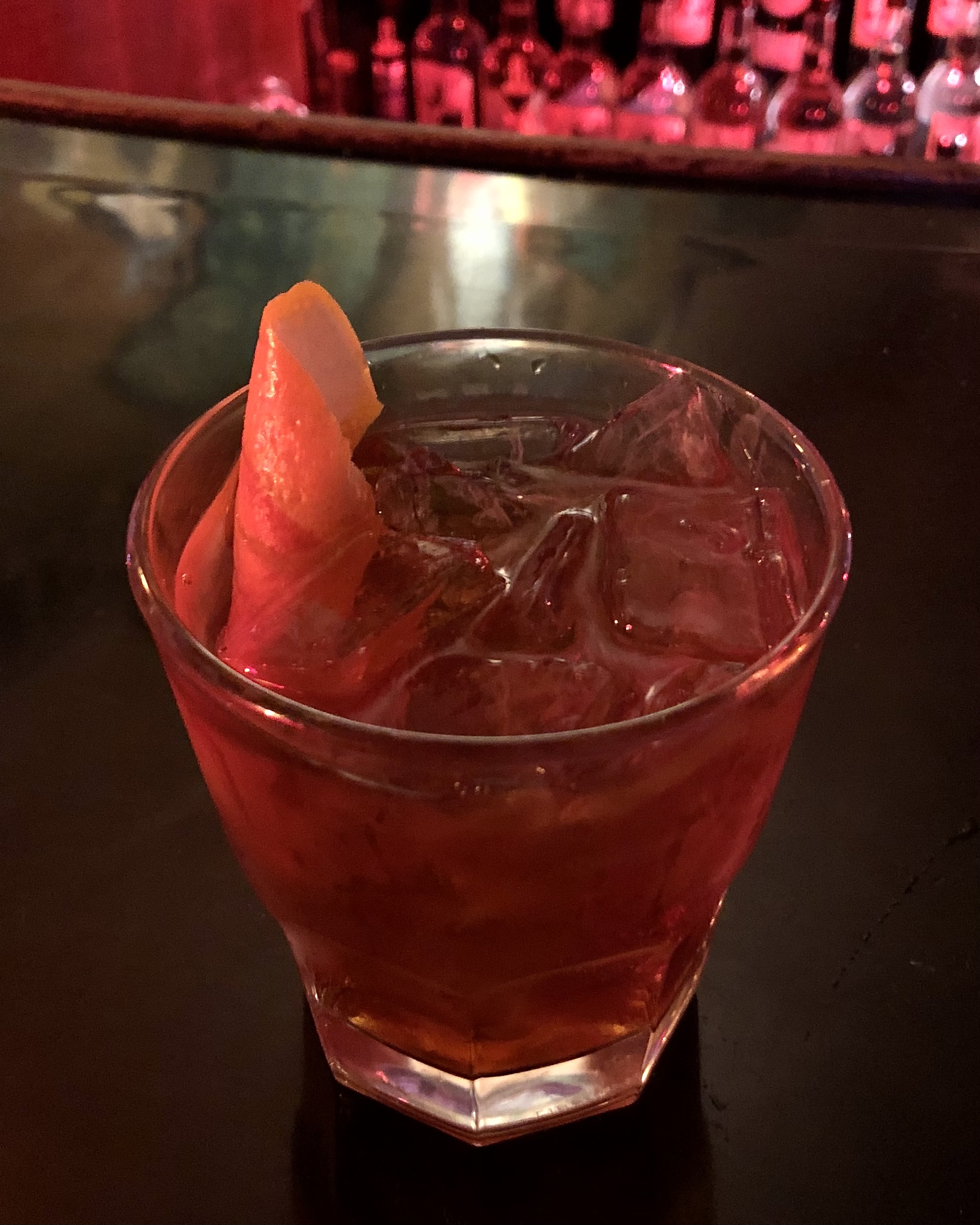
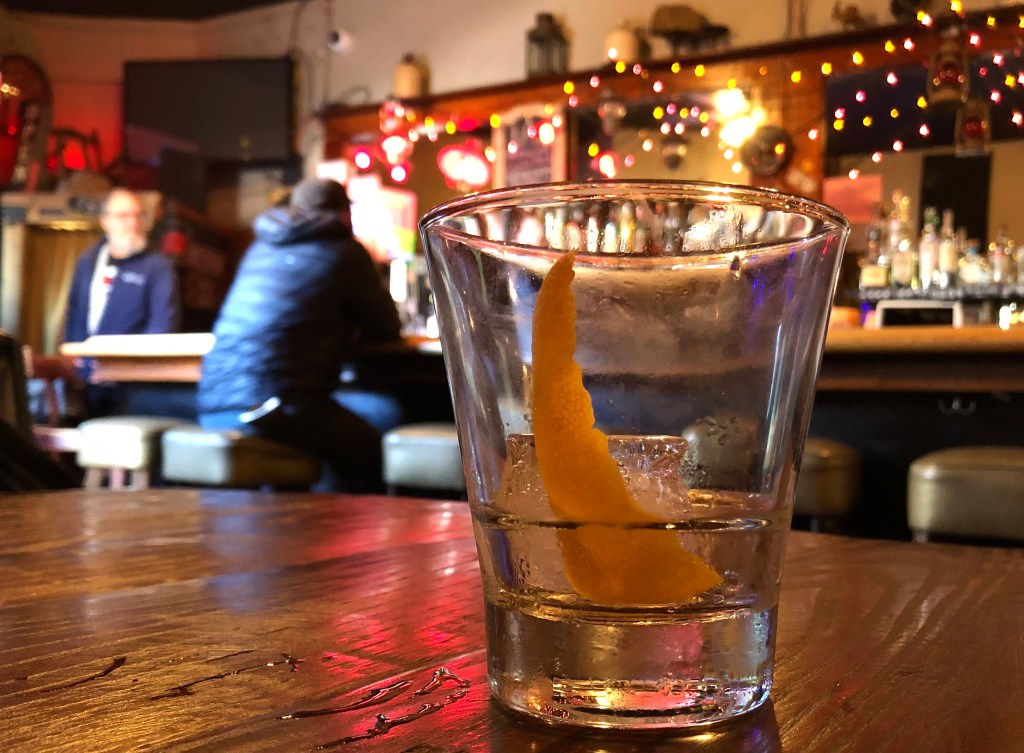
The cocktail menu has clearly been thought through, with a range of offerings featuring classics, classics with new names, and inventive riffs on the various stock templates. I ordered a Tell It Like It Is, essentially an Old Fashioned made with bourbon, maple syrup, orange and Angostura bitters. Served in a chilled tumbler, it was nicely balanced between the sweet and bitter aspects, with a refreshing lift from the lemon zest plopped on top of a single square cube.

As I sipped my drink and took in the atmosphere, a handful of regulars came and went. They all knew the bartender, a blonde woman with thick mascara and an Eastern European accent—perhaps Ukrainian, given the flag outside. Each of these regulars were snappily dressed men, possibly employees of the neighborhood boutiques. One was having a quick drink prior to a nearby haircut appointment. He ordered a Martini up with a twist. “Perfect as always,” he noted after his first sip.
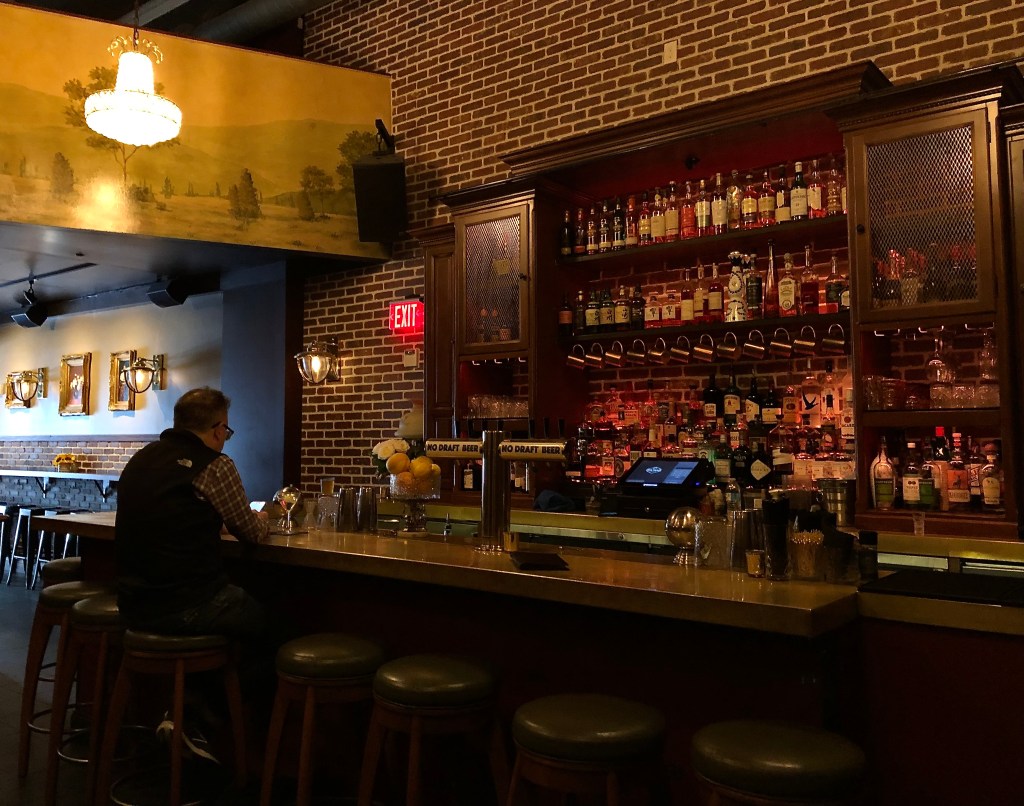
Regulars are always a good sign. It means something is working. But in this instance it wasn’t quite working for me. The prices are decent, whether during or after happy hour. And my cocktail was perfectly fine—though its name suggests a twist on what is actually a pretty straight Old Fashioned. But the atmosphere felt to me caught in a muddle between something genuinely of the past, something trying to be “of the past,” and a contemporary mainstream cocktail lounge without particular ideas. Iron Horse seems to me neither cohesive nor authentic. The lighting, for example. Despite the attractive chandeliers and sconces, the quality of light is distinctly florescent, casting an unappealing artificial lull across the space.
Unsatisfied, I decided to give another Union Square area cocktail bar a try…
Stookey’s Club Moderne
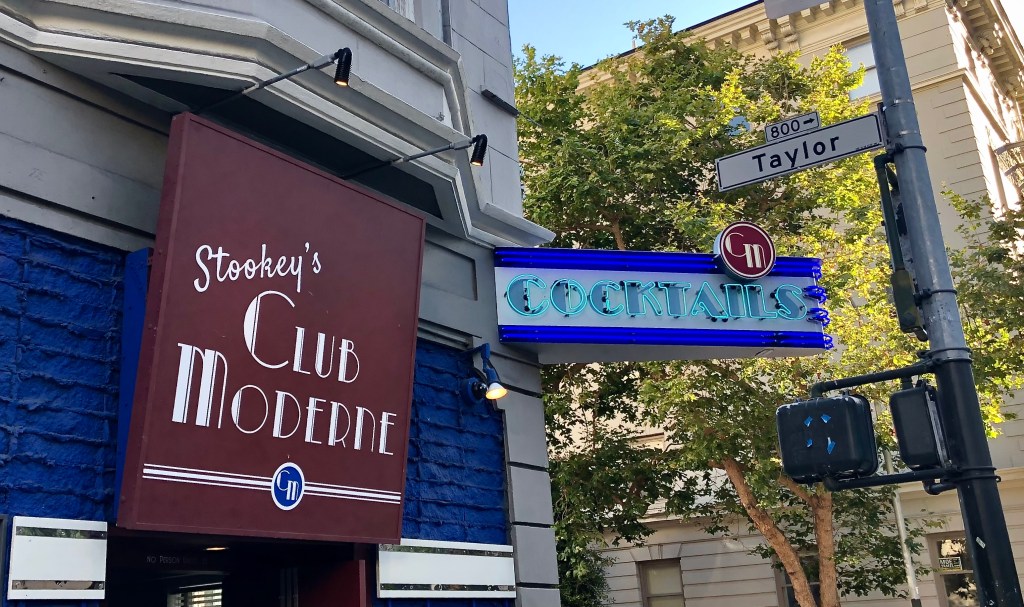
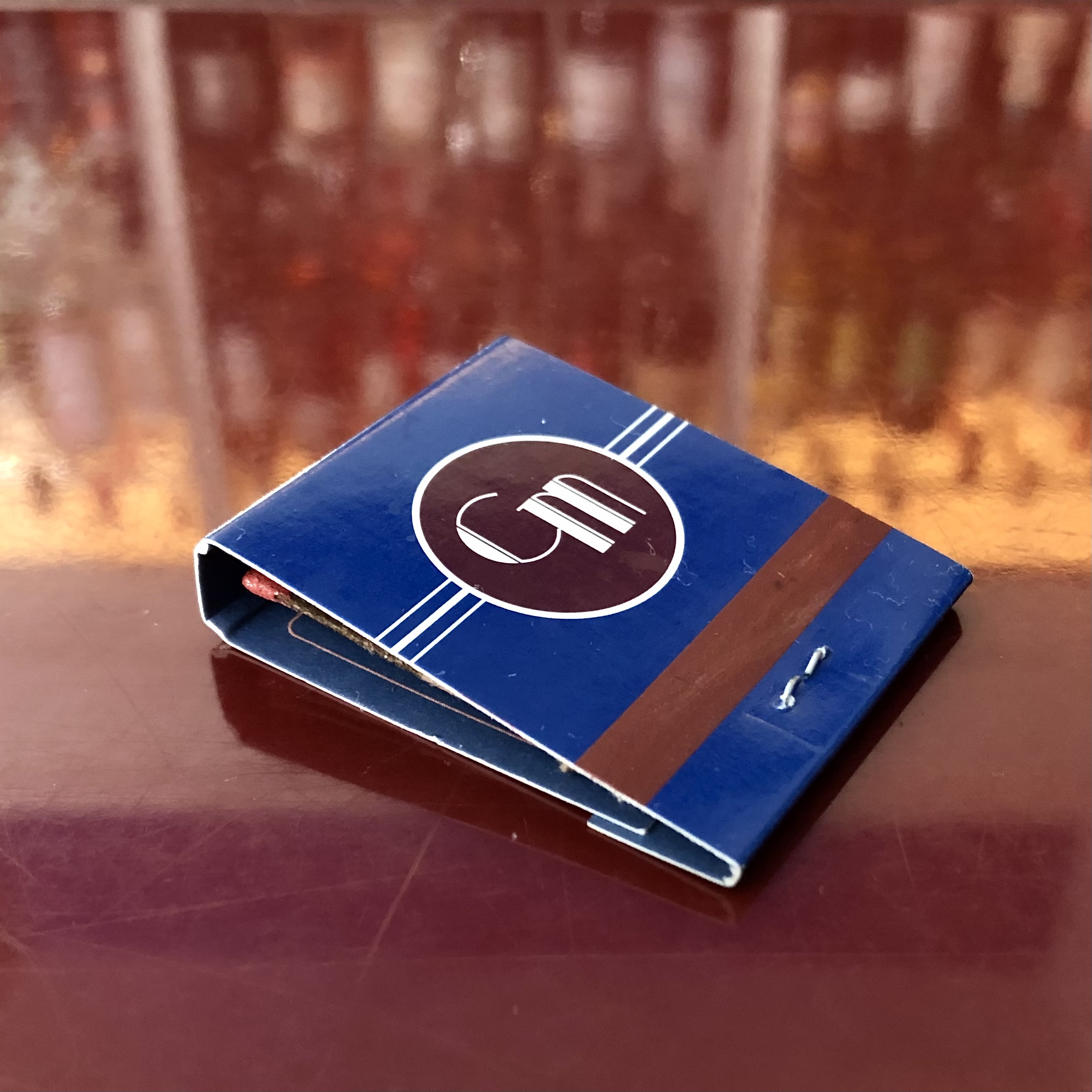
Stookey’s Club Moderne opened at 895 Bush Street, on the corner of Taylor Street, in 2015. The space has been a bar under one ownership or another since the 1940s. Before then it was a convenience store and 24-hour pharmacy. During Prohibition, one can guess many a prescription for whiskey was filled! The history of the address was briefly yet forever immortalized in Dashiell Hammett’s 1929 novel, The Maltese Falcon:
In an all-night drugstore on the corner of Bush and Taylor Streets, Spade used a telephone. “Precious,” he said…. “Miles has been shot…. Yes, he’s dead….”
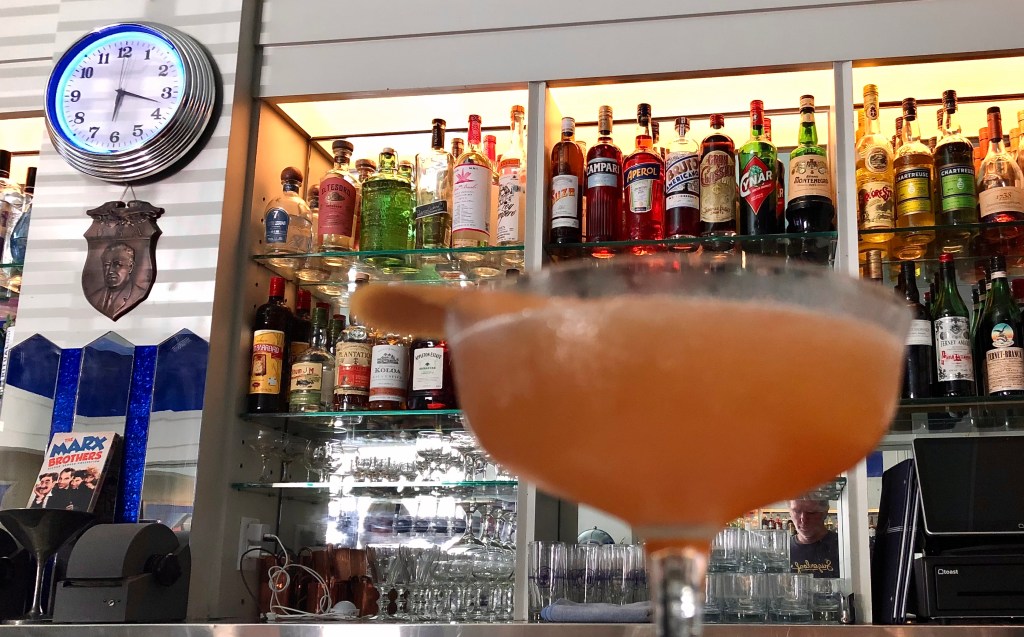
Taking this history as inspiration, the current owners have fashioned a true blast from the past—a casually upscale cocktail bar that fully embraces the Sam Spade era, leaning more art deco than cigarettes and street grit.
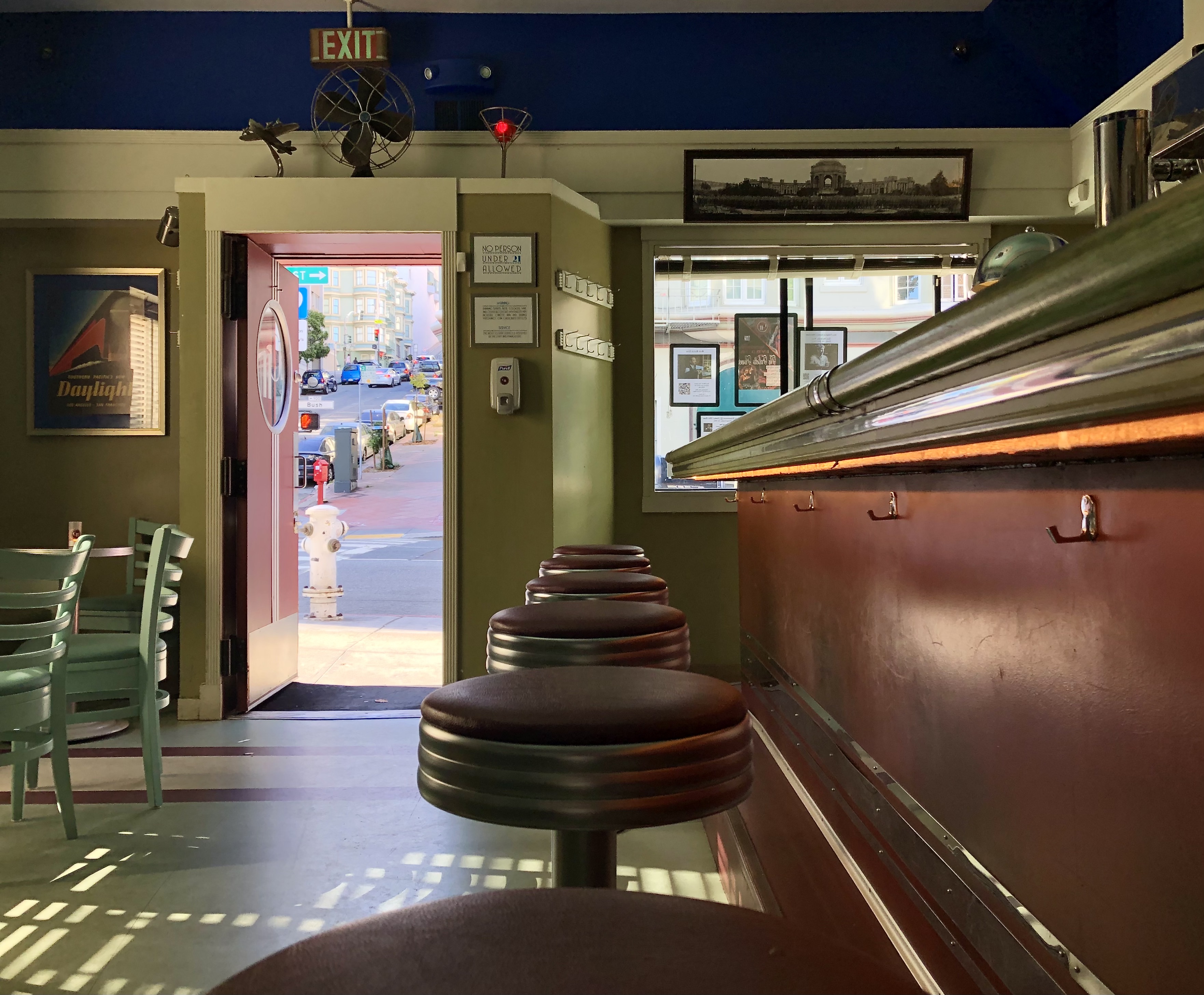
In distinct contrast to Iron Horse, upon entering the bar one is enveloped at once and with seeming ease in a cohesive atmosphere. While the aesthetics of Iron Horse come off as disjointed, here everything is of a piece—streamlined 1930s post-Prohibition moderne, when cocktails could once again be openly enjoyed and celebrated.
Every detail is attended to, from the chrome bar fixtures and lighting sconces and relatively sparse decor to the bartender’s head-to-toe crisp white outfit. The music is vintage 1930s. Naturally there’s no big screen TV. But as a subtle bridge from the past to the present, an old Marx Brothers movie is projected in unobtrusively faded light on a small roll-up movie screen.
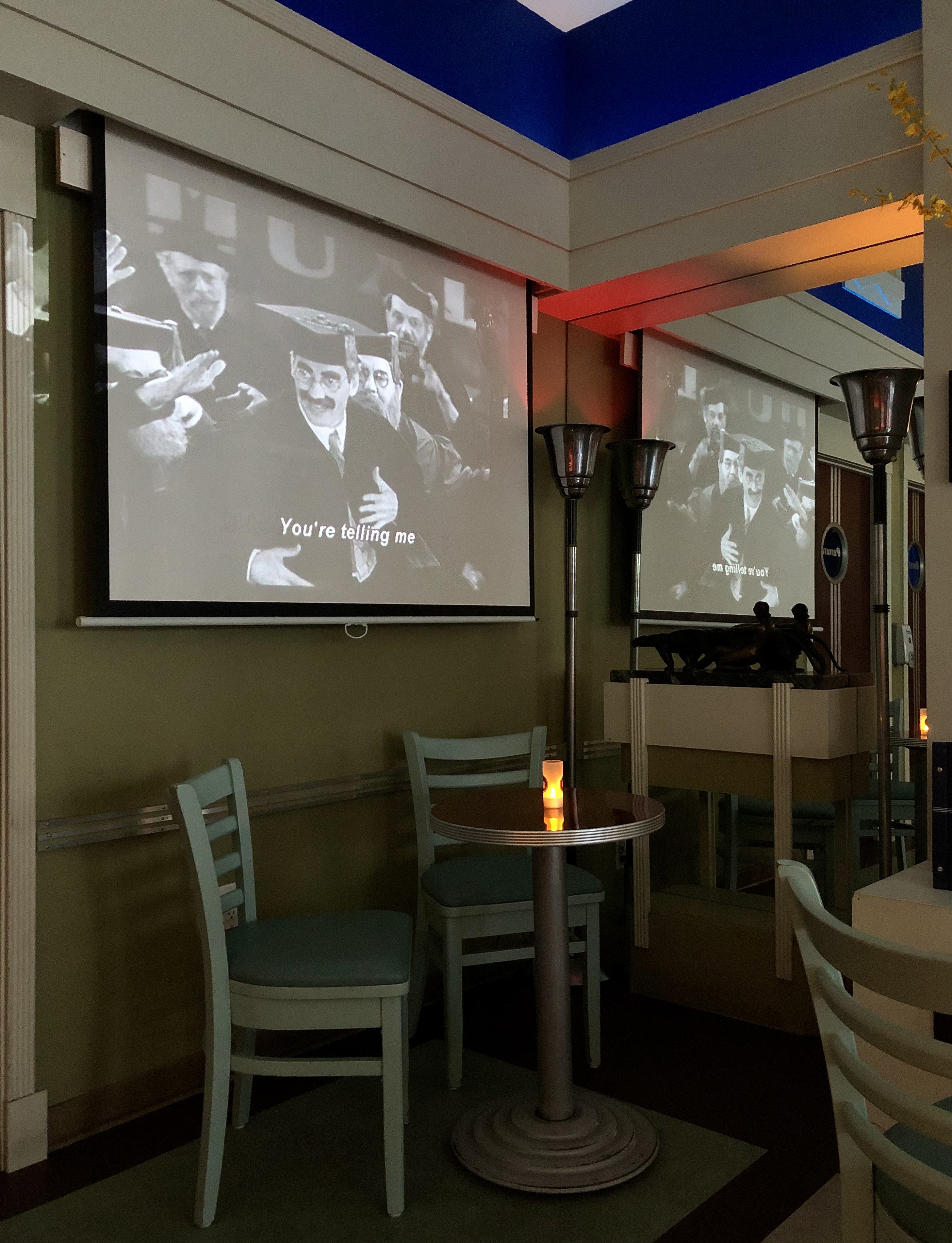
Like Iron Horse, the cocktail menu has been well considered. Stookey’s menu is more extensive, with pages devoted to gin versus bourbon versus rye cocktails. There are also non-alcoholic options alongside the period-true classics and tastefully contemporary riffs—like Stookey’s variant on the Old Fashioned:
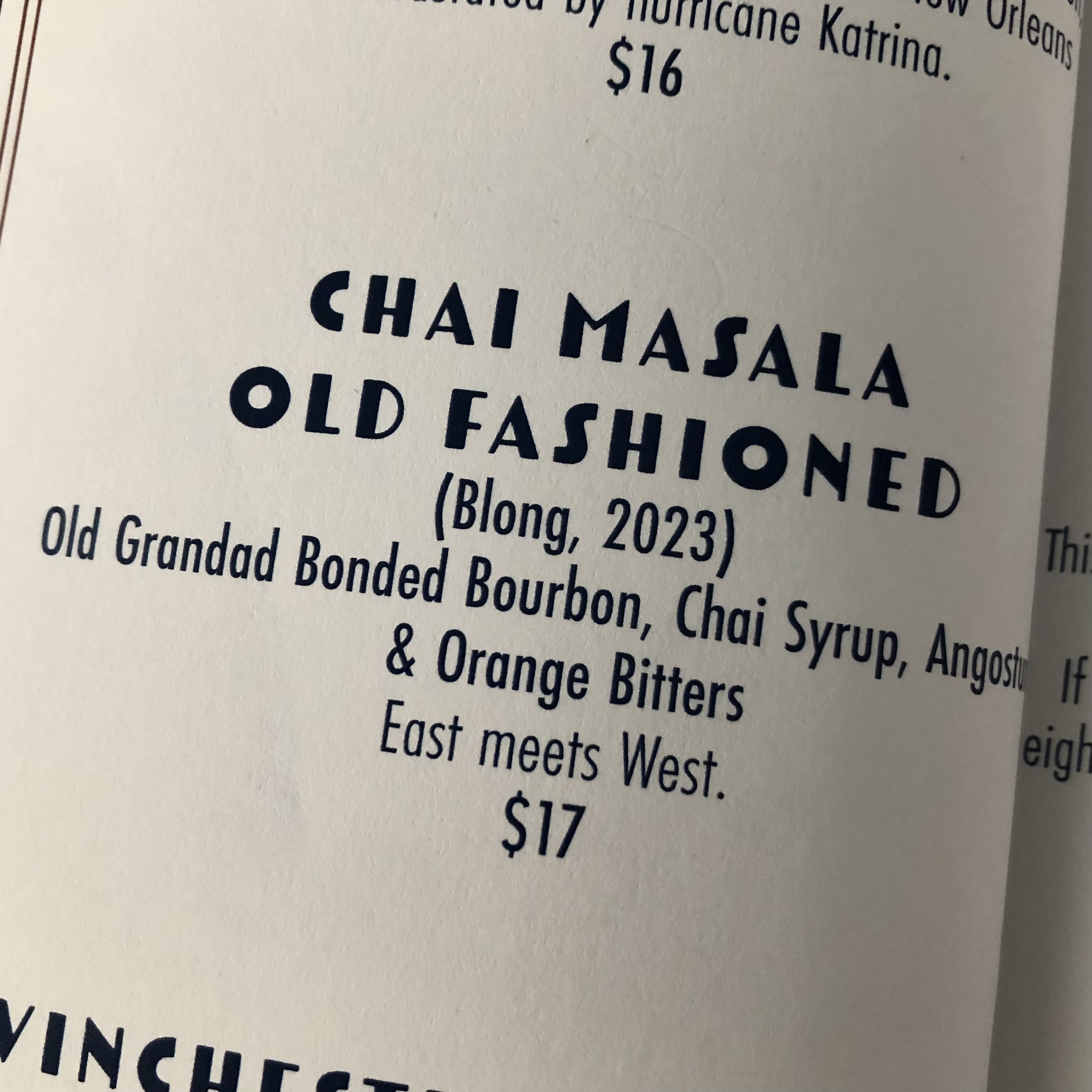
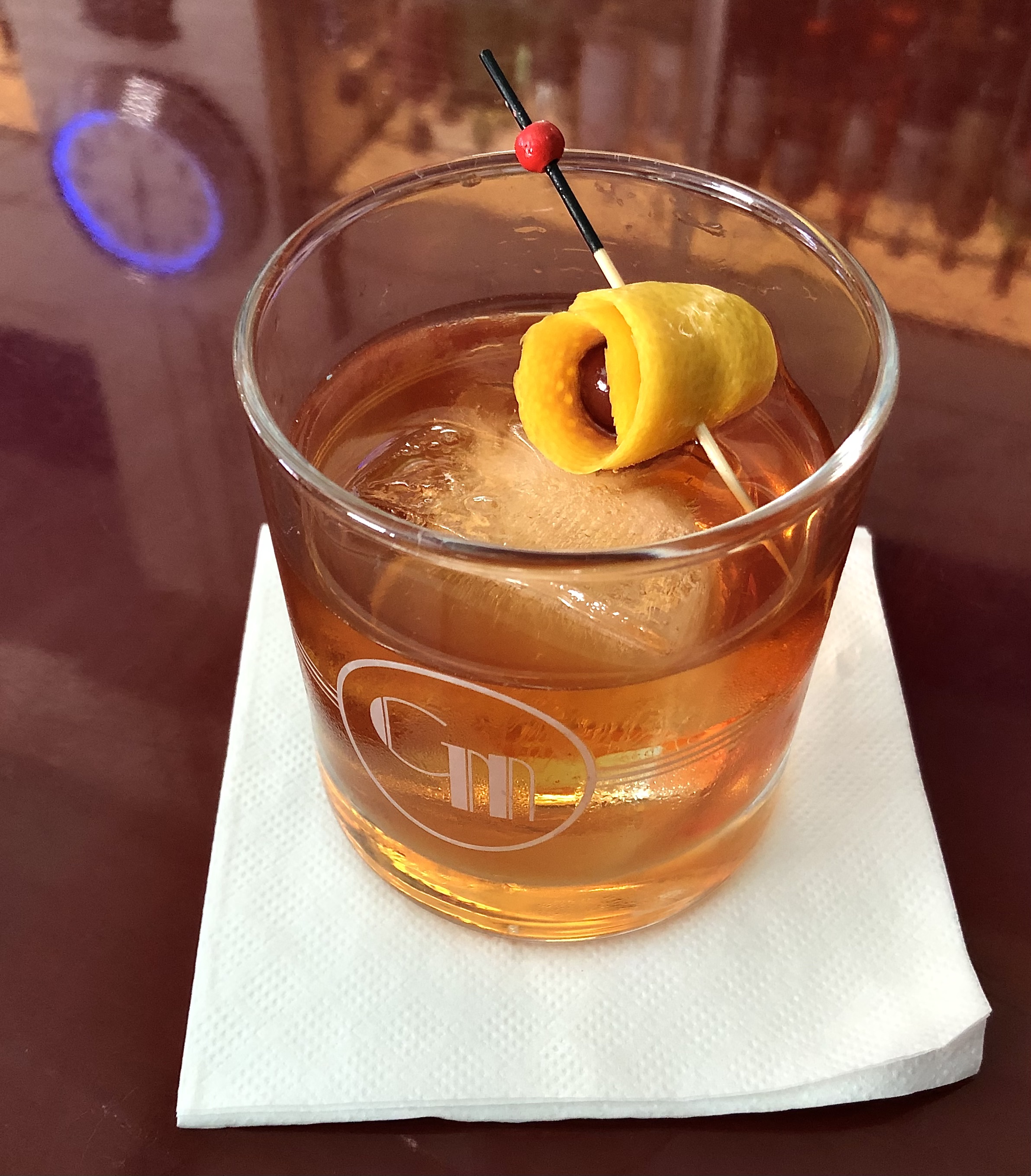
I wondered if the chai syrup would come off a bit too early-2000s. To my delight, the chai’s spiciness blends neatly with the Old Grand Dad Bourbon’s own rye spice. The orange and Angostura bitters help further bring them together. And the garnish is presented in keeping with the art deco ambiance. Just like the atmosphere, the Chai Masala Old Fashioned is a cohesive achievement.
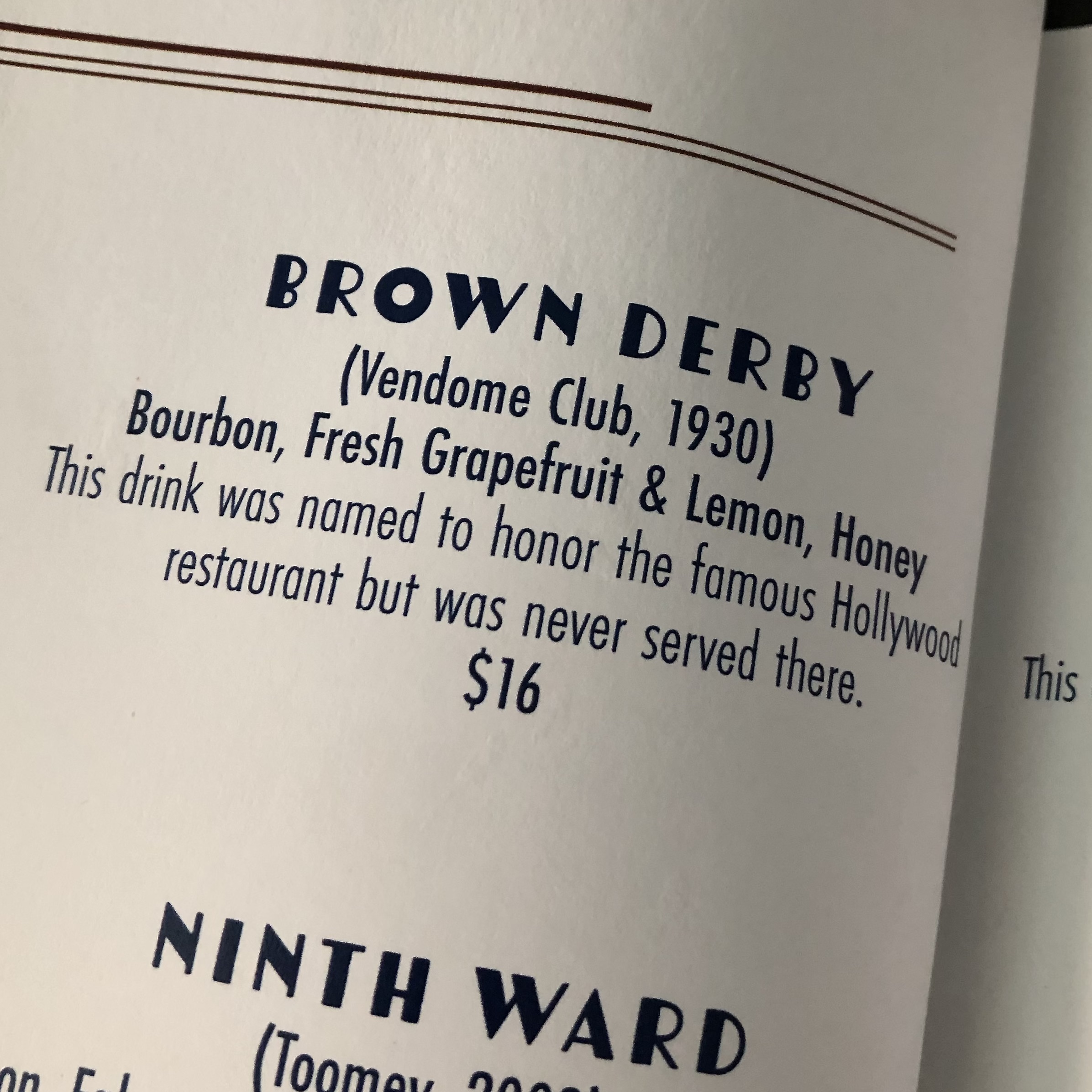
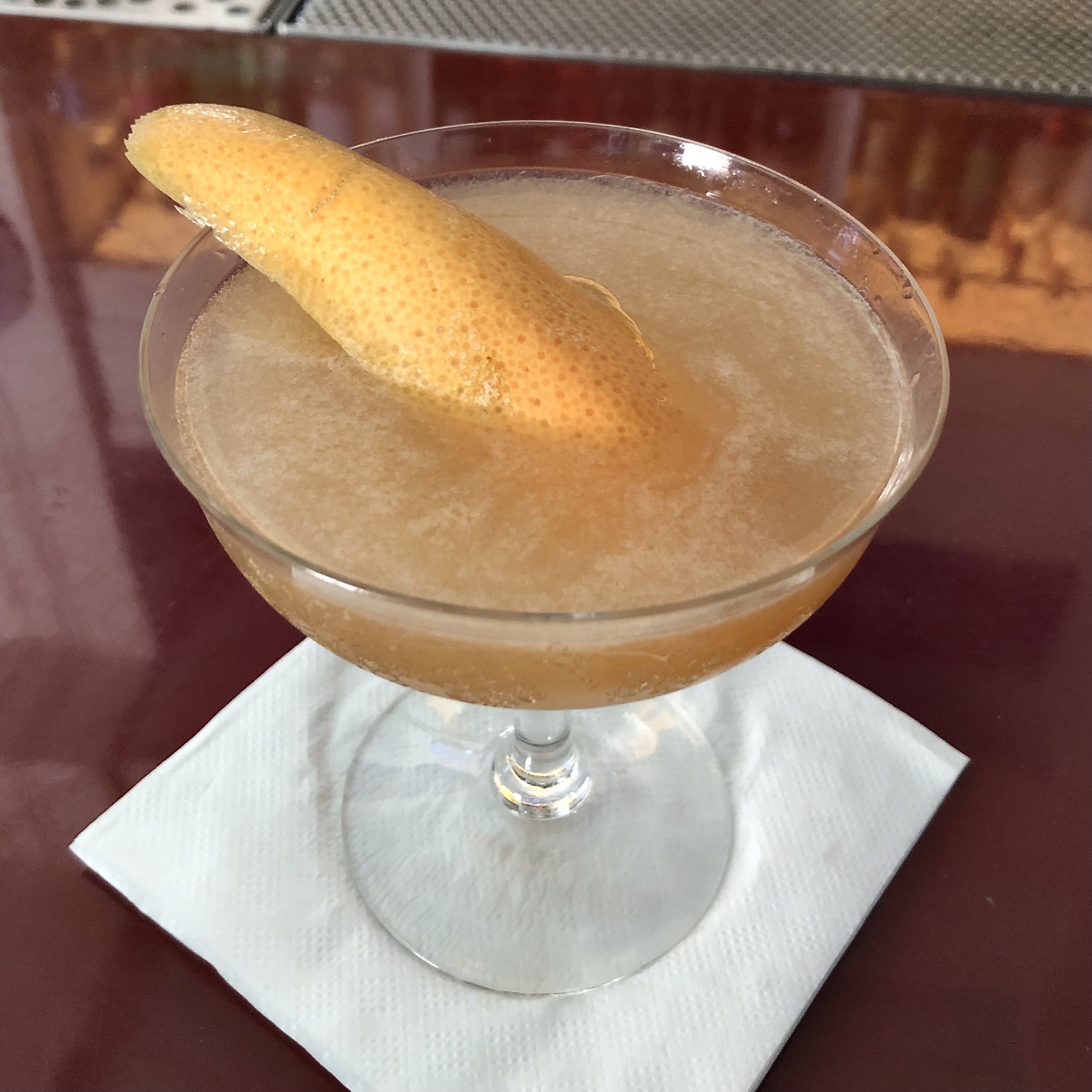
Inspired to try another, I went for a Brown Derby—one of my favorites to riff on at home. Stookey’s makes this one pretty traditionally, no big twists, adding a bit of lemon alongside the grapefruit. A rather overwhelming wedge of grapefruit peel un-artfully plopped across the rim is the only thing off about it, appearing like a disproportioned afterthought. Otherwise, the bitter and sour citrus aspects are perfectly balanced with the sweet honey syrup and light creamy caramel notes from the bourbon.
Both Iron Horse and Stookey’s make their homes at addresses with storied histories. But while Iron Horse gets muddled amidst disparate design elements and a fine but not terribly memorable cocktail experience, Stookey’s is simple and complete. Perhaps because the owners fully embraced the history of their space, their artful re-staging of the past actually comes off as more organic and authentic than the off-lit, idiosyncratic miss-mash of Iron Horse.
It’s worth noting that before I landed at these two bars, I tried the in-house bars at the St. Francis, Beacon Grand, and Fairmont Hotels. Also, across Market Street from Union Square and down a few blocks, the famed Pied Piper Bar at The Palace Hotel. (Go there for a Boothby Cocktail—off menu but they’ll know it.) There are many bars in and around Union Square, and many that I knew would be more immediately my style—Chelsea’s Place, Tunnel Top, The Summer Place… But Union Square is the city’s pseudo-upscale tourist area, so I figured a nice cocktail bar would make an appropriate addition to this bar hop.
For sure, one need not bother with any hotel bar, not even out of convenience. Hotel bars are obligated to appeal to a wide variety of guests coming in from around the world, and are generic by design. For good cocktails, genuine character, and a sure nod to San Francisco’s literary and liquor history, when traveling through Union Square, Stookey’s Club Moderne is well worth a visit.
Durty Nelly’s
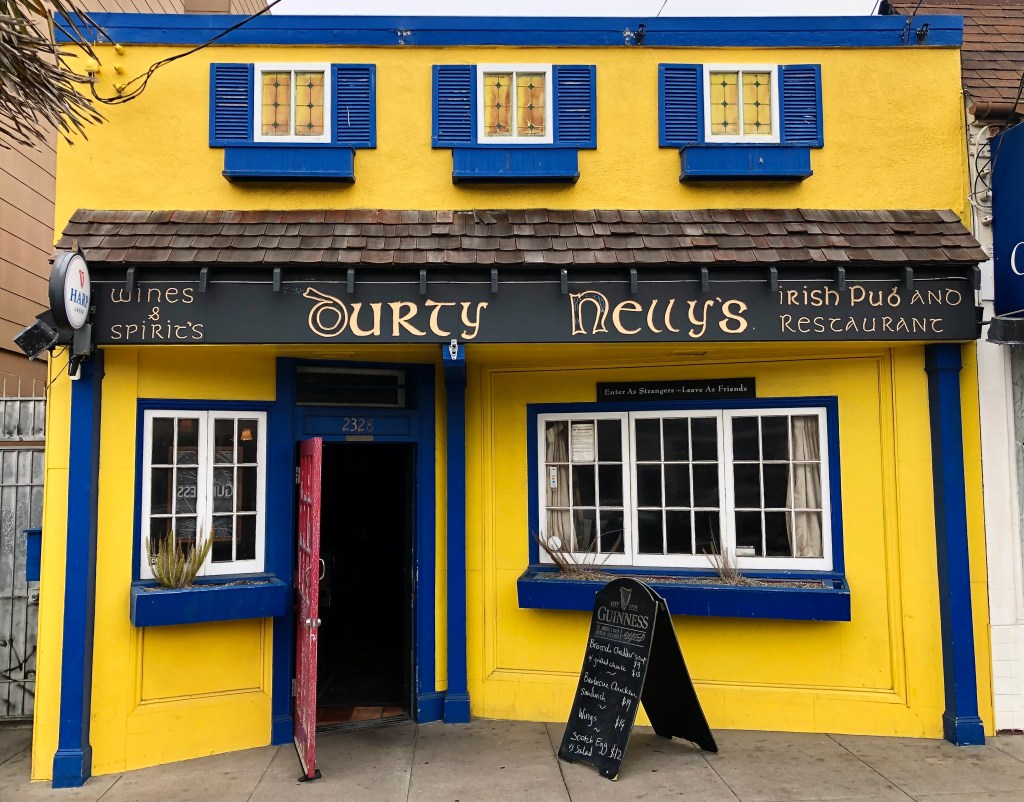
Walking along Irving Street in the Central Sunset District’s mid-20s Avenue blocks, en route to Durty Nelly’s at 2328 Irving, the air is layered with aromas of fresh Chinese food wafting out from Dim Sum restaurants, seafood markets, tea and spice shops. For an even more authentic Chinese working class neighborhood than the famed Chinatown, the Central Sunset is a sure bet.
Clocking a sign for “cheap beer,” I made a brief detour into a combo liquor and knickknack shop run by an affable Russian couple. They had Old Fitzgerald 19 Year for $800 and a used coupe glass with a fancy “F” monogrammed on it for $2.99. I went with the coupe!
It’s very San Francisco for a Russian-owned thrift/liquor store and an Irish pub to set up shop in a Chinese neighborhood. A port city from the start, and cramped for space at only 7×7 miles, San Francisco has always been a place where international immigrants have mingled shoulder to shoulder. Specific neighborhoods might be marketed by the city as “Chinatown” or “Little Italy.” But everyone is everywhere.
So, on to Durty Nelly’s, coupe in hand…
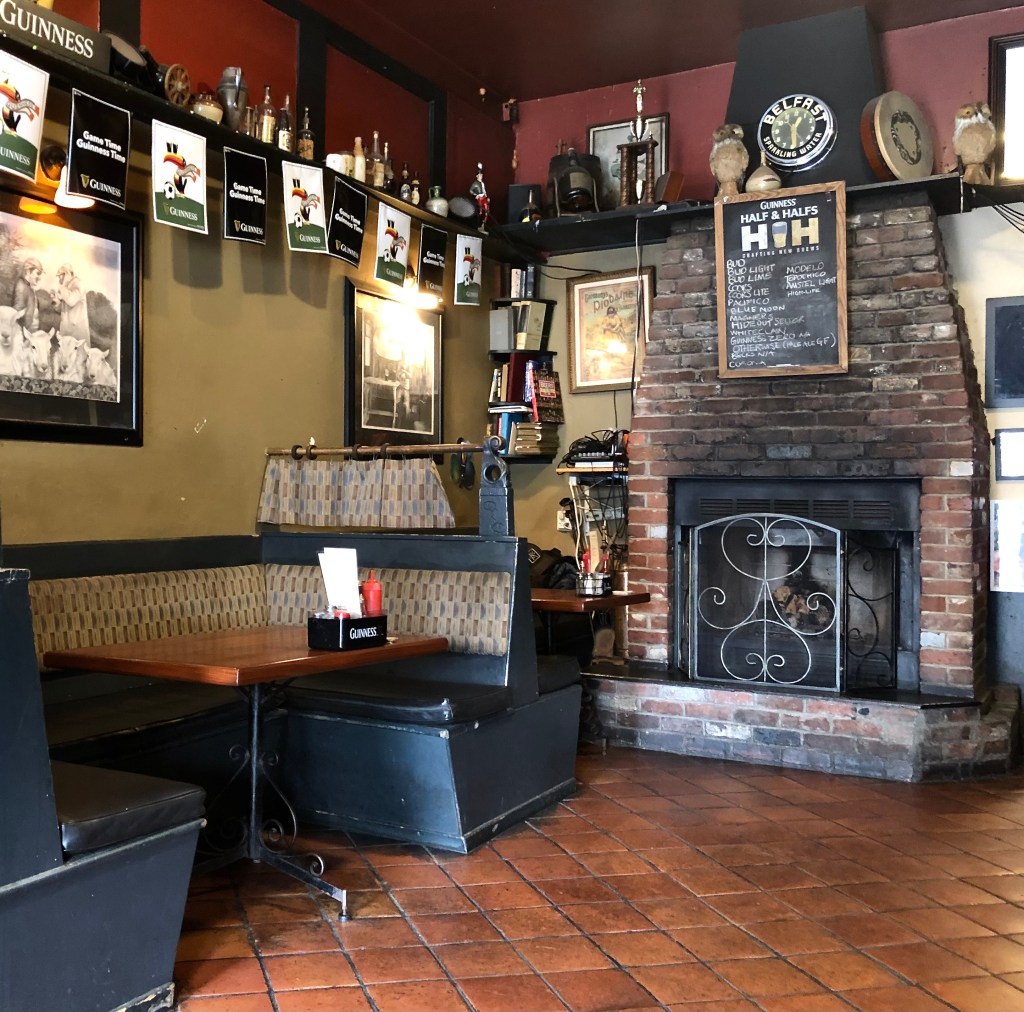
San Francisco is rife with good Irish pubs and Irish-American bars. I could have gone to any number of them for a great experience—Shannon Arms out on Taraval since 1981, The Plough and the Stars on Clement since 1975, Little Shamrock on Lincoln since 1893! The Irish have been coming to San Francisco for a long time, bringing their knack for hospitality with them.
But among the city’s many options, when plotting my bar hop it was Durty Nelly’s that caught my attention. They open daily at Noon, close at 2:00 a.m., and serve a range of traditional Irish pub food to pair with the whiskey and beer and cocktails. This in itself is not unique. But then there’s the bar’s wink of a name. I asked the bartender about it, and she told me Durty Nelly is a legendary Irish character who ran a toll bridge, and was famous for providing travelers with accompaniment beyond the bridge. “She was a hospital woman, let’s say,” smiled the bartender with a knowing nod.
Durty Nelly’s is a simple shoebox shaped room, with barstools and booths and a small handful of two-tops. There’s a brick hearth on one end. Adverts for Guinness and Jameson from multiple eras. Talking Heads, U2, and other 1980s pop and rock on the jukebox. A digital slideshow alternating the bar’s calendar of events with snapshots of neighborhood dogs. (“The dogs drag in their owners,” the bartender told me, “and we feed them both.”) The place is comfortably cluttered, with elbowroom. A cozy, worn, warm atmosphere—despite the four large-screen TVs running at once. Seated at the bar, by some miracle of positioning they do not command attention. They’re up there for when you’d like to look at them. Well done. (I’m thinking of a terrible bar in New York I went to recently, where massive screens dominated the room so totally that it was impossible for me to be aware of anything else.)
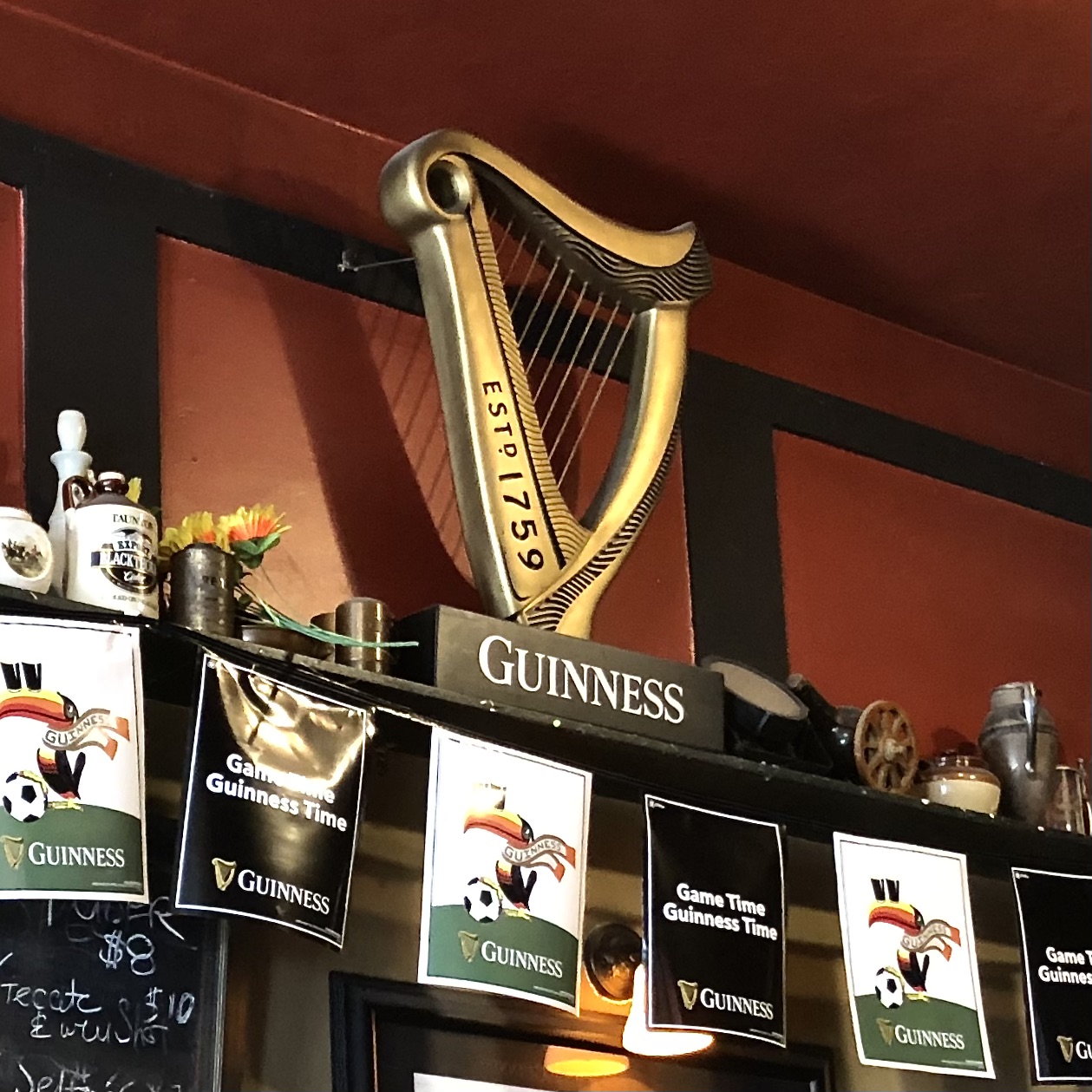
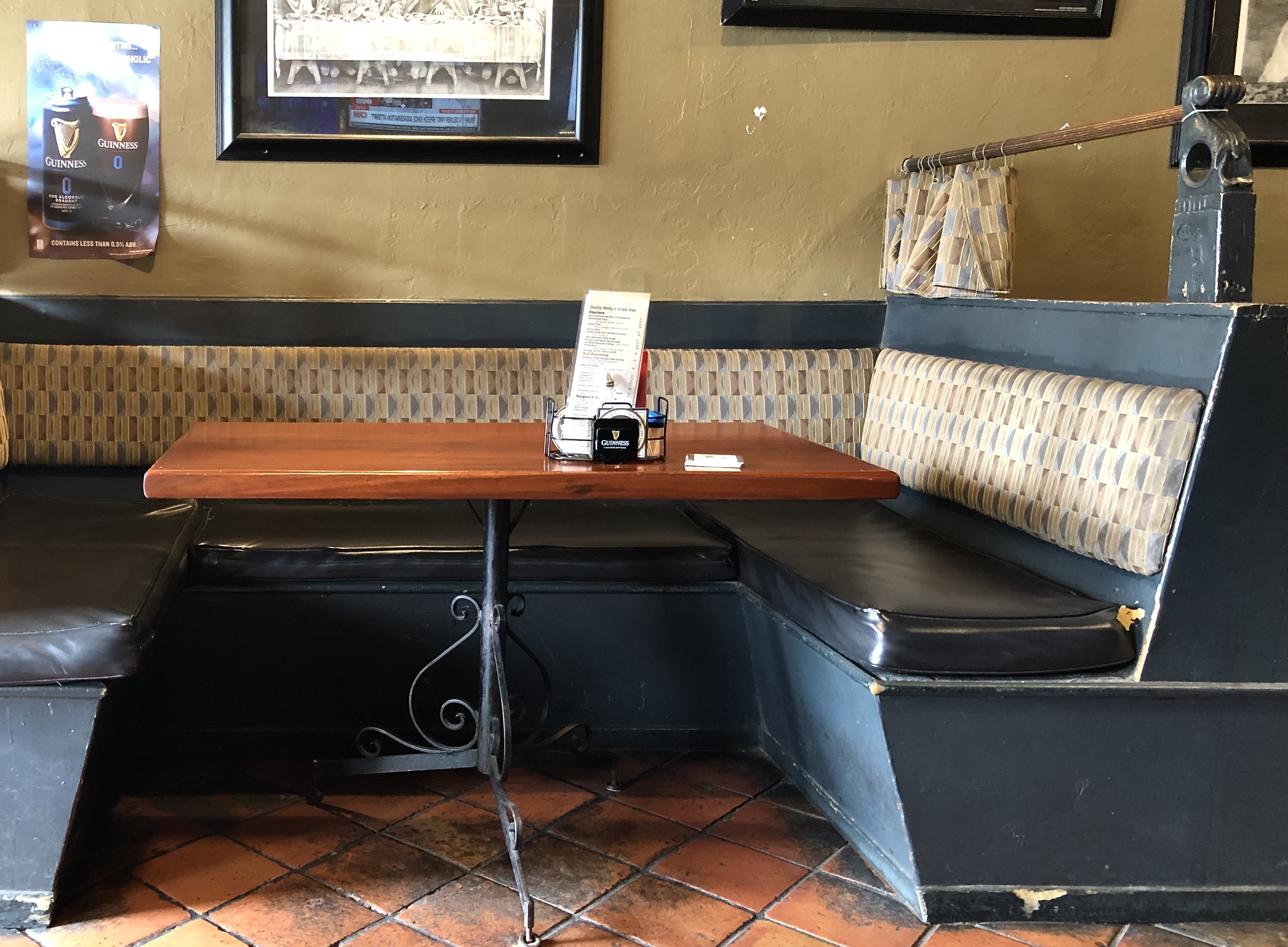
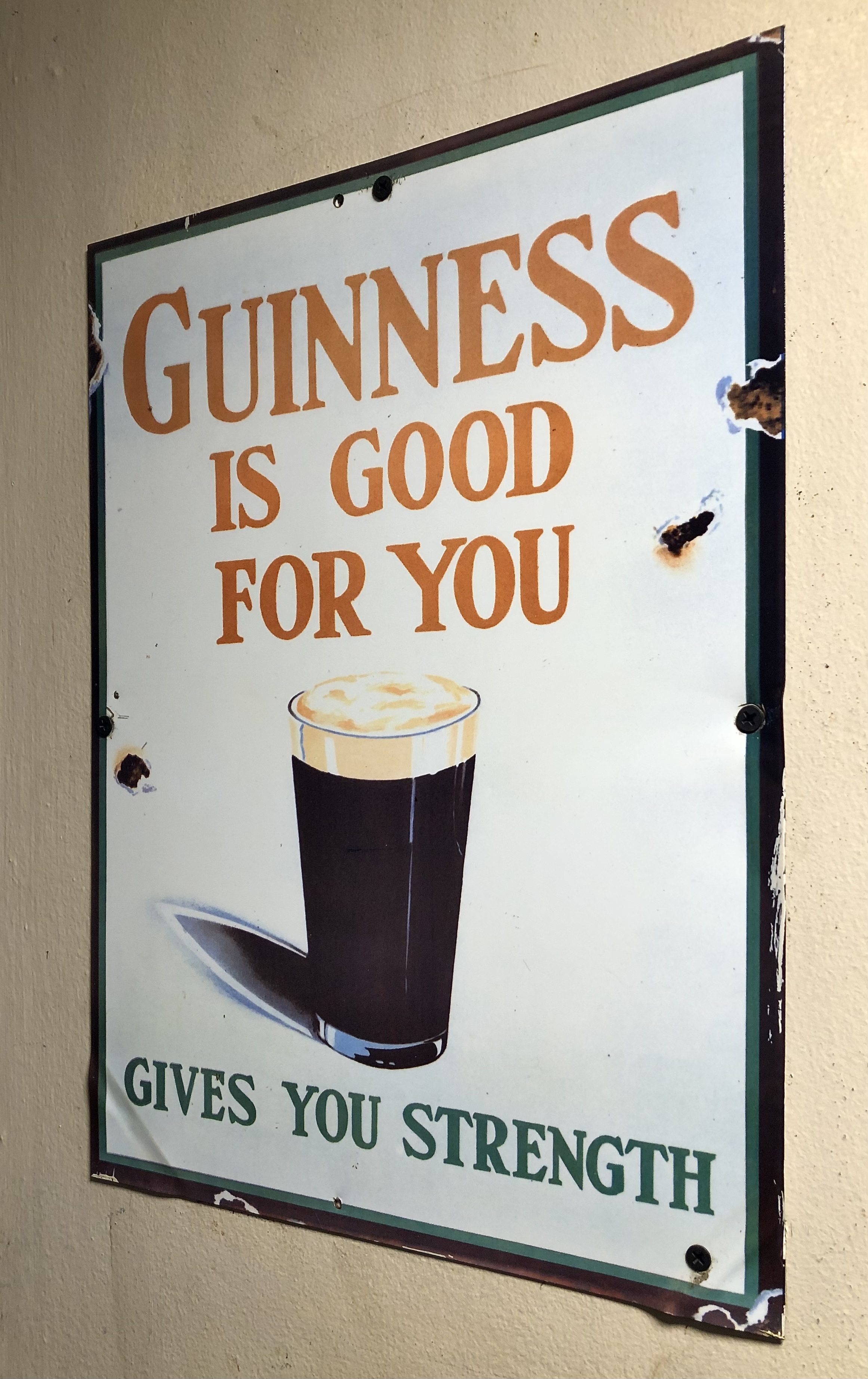
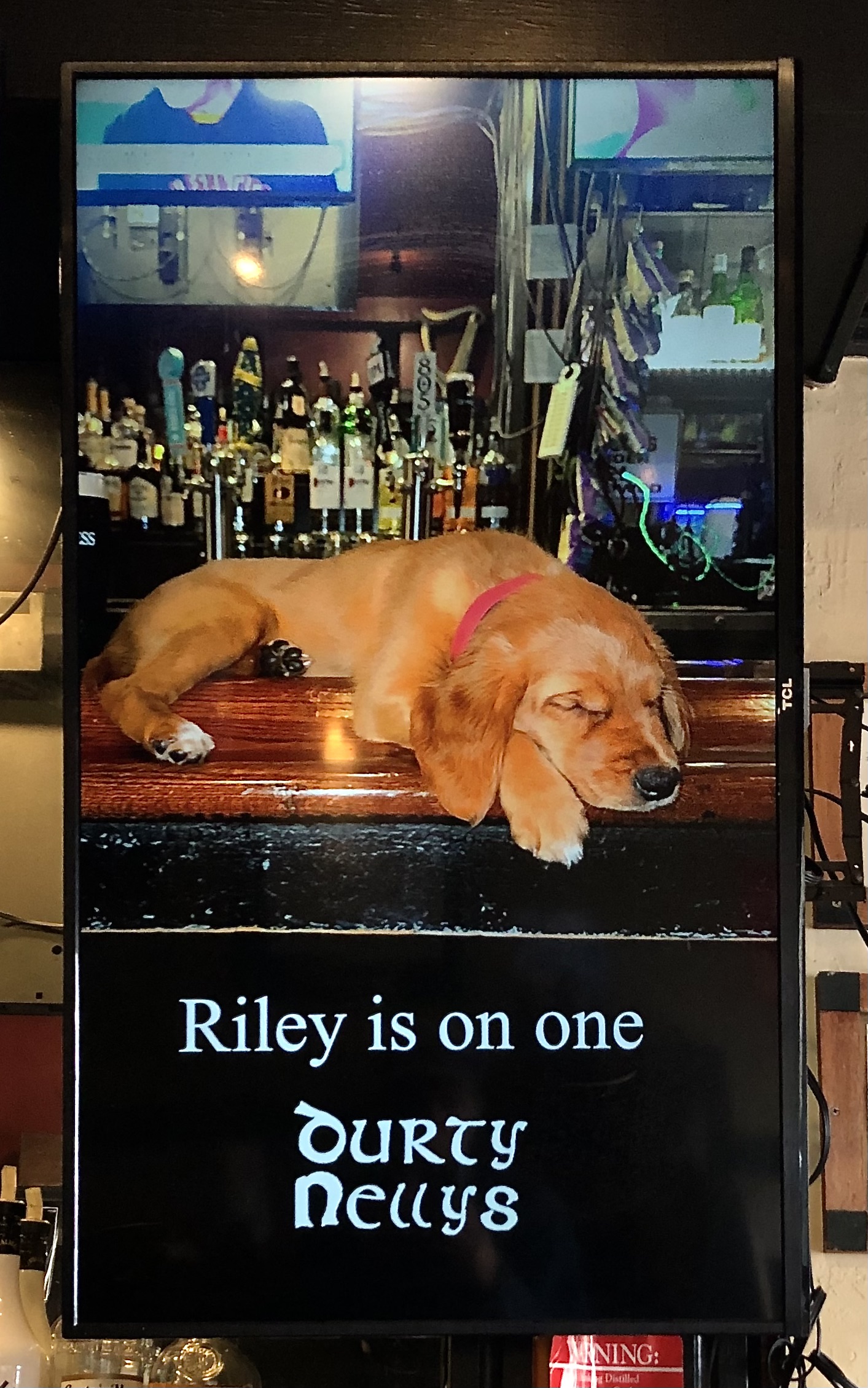
Working with a relatively small amount of space, Durty Nelly’s manages to make room for the full range of activities one might hope to experience in an Irish pub or bar—quiet contemplation alone with your thoughts and drink, hearty conversation with friends or strangers, trivia night, karaoke night, live music, DJ’d music, a raucous afternoon cheering for the team. You name it.
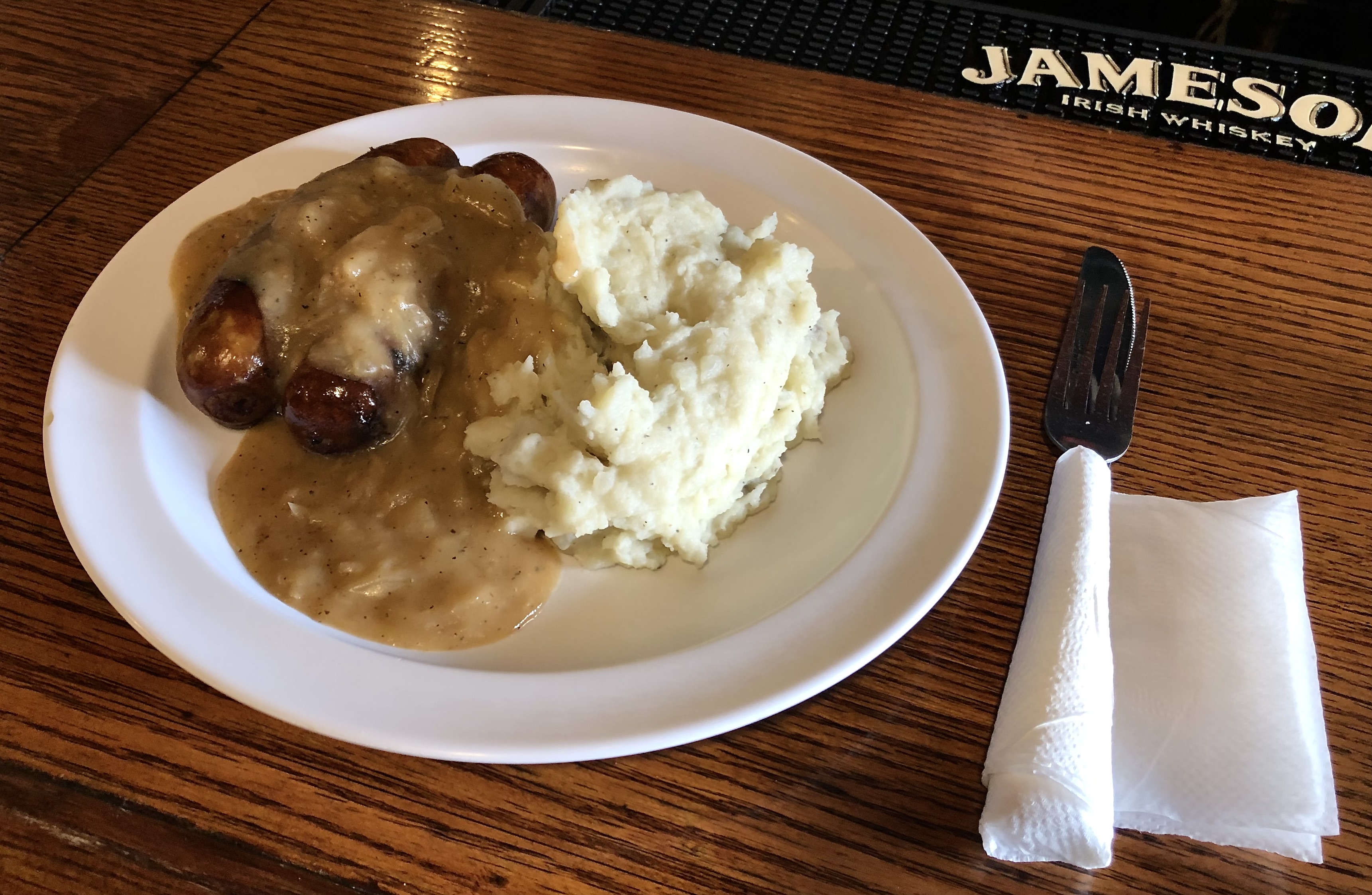
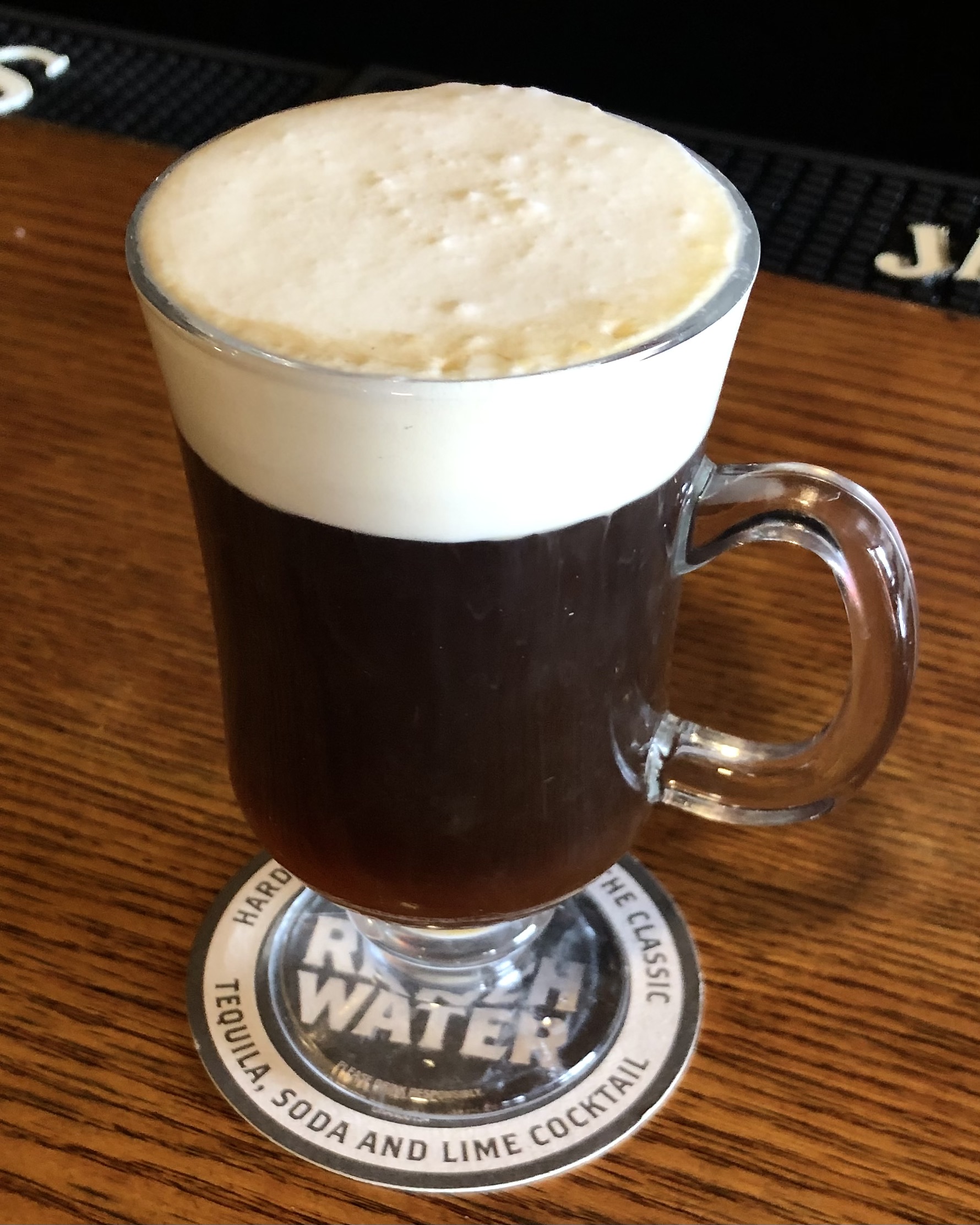
I was there at Noon for the food and a drink. I ordered the Bangers & Mash and an Irish Coffee. The sausage, gravy, and mashed potatoes were the very definition of comfort food. And the Irish Coffee, I must say, put San Francisco’s habitually ballyhooed Buena Vista—known for serving thousands of Irish Coffees a day—to shame! Like Buena Vista, Durty Nelly’s uses Tullamore Dew Whiskey. But the cream is distinctly different, richer and thicker. The coffee is dark and nutty. Just enough brown sugar is used to add sweetness without going saccharine. And it’s made to order, not en masse. Perfect.
I must give special mention to the bartender. She struck the perfect balance of efficiency and friendliness. Always busily on the move, but with a calm that never seemed to stir even a breeze. She chatted congenially when I engaged her in chat, and let me alone when I was eating or scribbling in my notebook. Few bartenders manage to go about the incredibly detailed practical and social aspects of the job with such seeming ease.
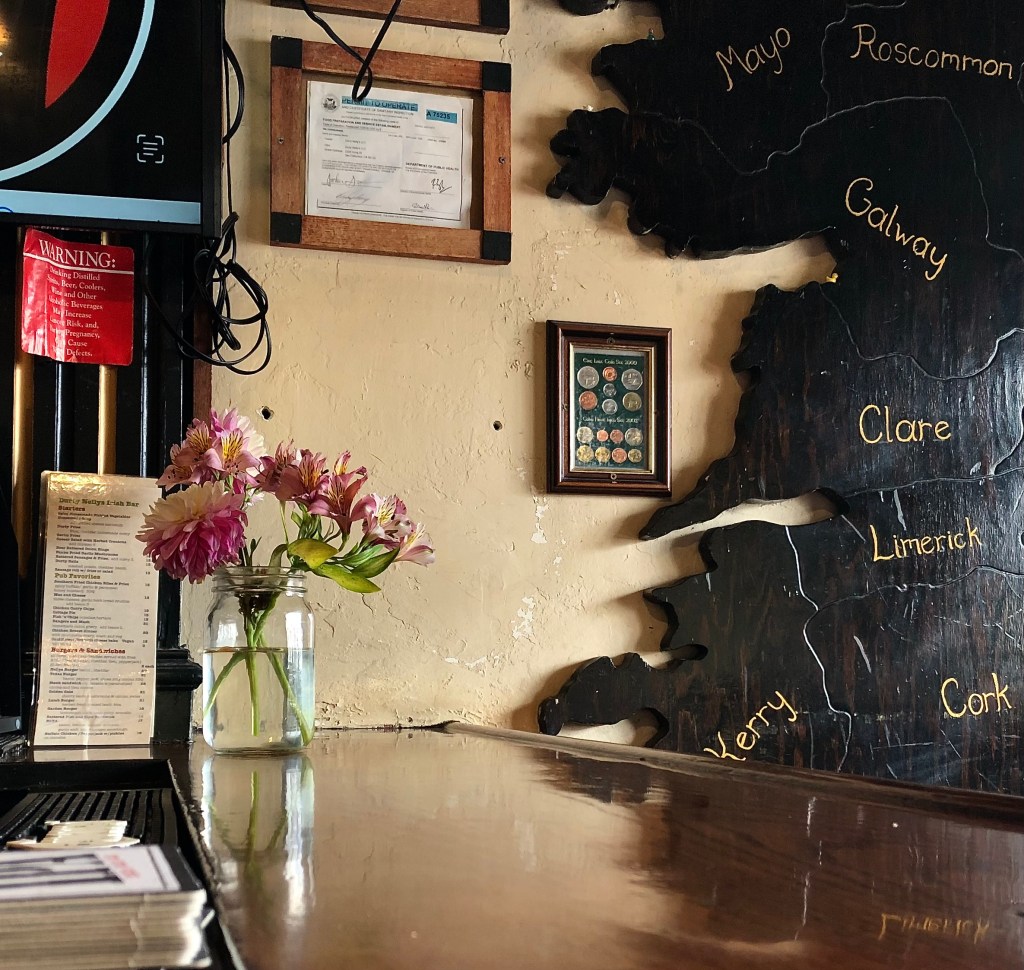
So if you’re ever in the Central Sunset District, Durty Nelly’s, true to its namesake’s legend only without the salaciousness, will be hospitable to most any need a traveller might have for a pub or bar. Sláinte!
Blackbird Bar
San Francisco’s Castro District is arguably the most famous LGBTQ+ neighborhood in the world. Every June, people from everywhere descend upon it for Pride Month. The city’s history of gay and gay friendly bars is long, extending well beyond the Castro into the Mission, Tenderloin, and Bernal Heights districts. Some are legendary:
Aunt Charlie’s – a historical landmark dive and drag combo in the Tenderloin.
El Rio – with its party-hearty back patio in the sunny Mission.
Moby Dick – I mean the name, c’mon!
Oasis – Once a SoMa bathhouse, now a bar / drag / cabaret / event space extraordinaire.
The Stud – The classic SoMa drag destination, recently lost but more recently resurrected.
Twin Peaks Tavern – Great people-watching in the beating heart of the Castro.
Wild Side West – a laidback D.I.Y. artsy refuge in Bernal Heights.
And that’s just to name an overflowing handful!
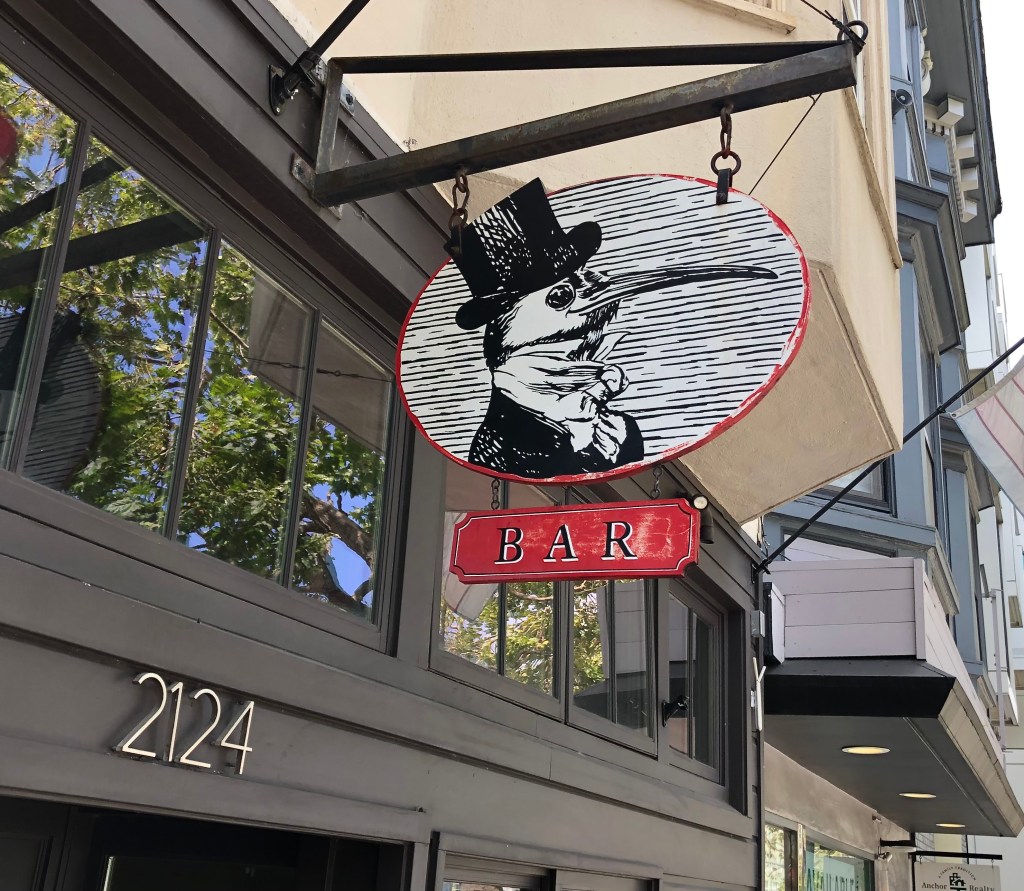
Blackbird Bar is not as explicitly a gay bar in quite the way those listed above are. But it’s certainly gay friendly. Given it doesn’t pop up as readily on the major lists when one Googles “gay bars in San Francisco,” it fit my criteria for lesser recognized destinations.
Blackbird’s address—2124 Market Street near 14th and Church—has been a bar for decades. It became Blackbird in 2009. Before then it was very briefly The Metro. For many years prior it was the exceedingly divey Expansion, lit by florescent lights and known for its Tuesday $2 beers and a trashy drag show called Addiction. So there is history in the walls. But the current owners have made it their own, retaining only a faint whiff of the divey past to leave its dust on the surfaces of their playfully artsy design.
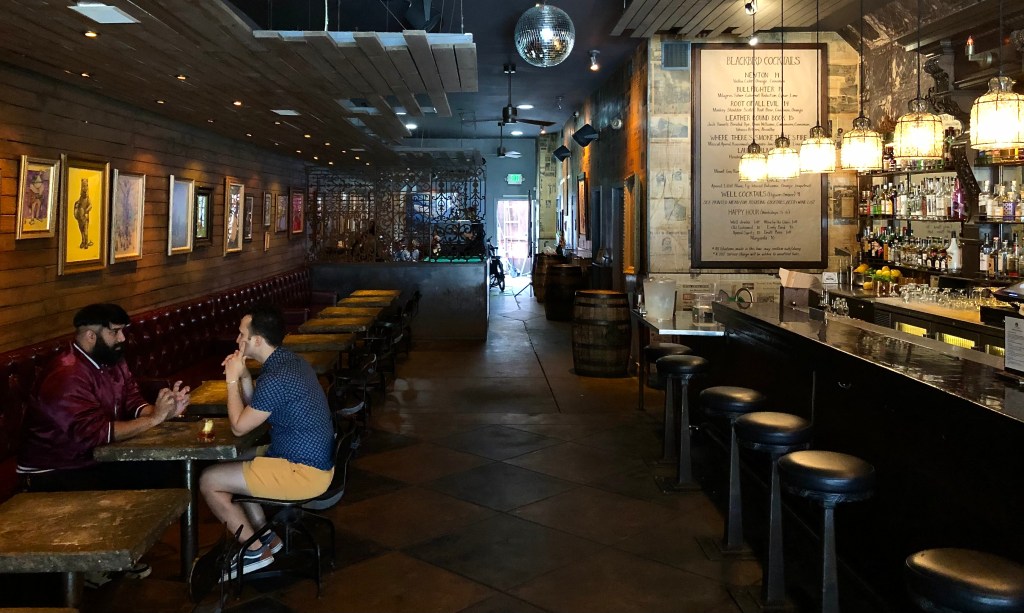
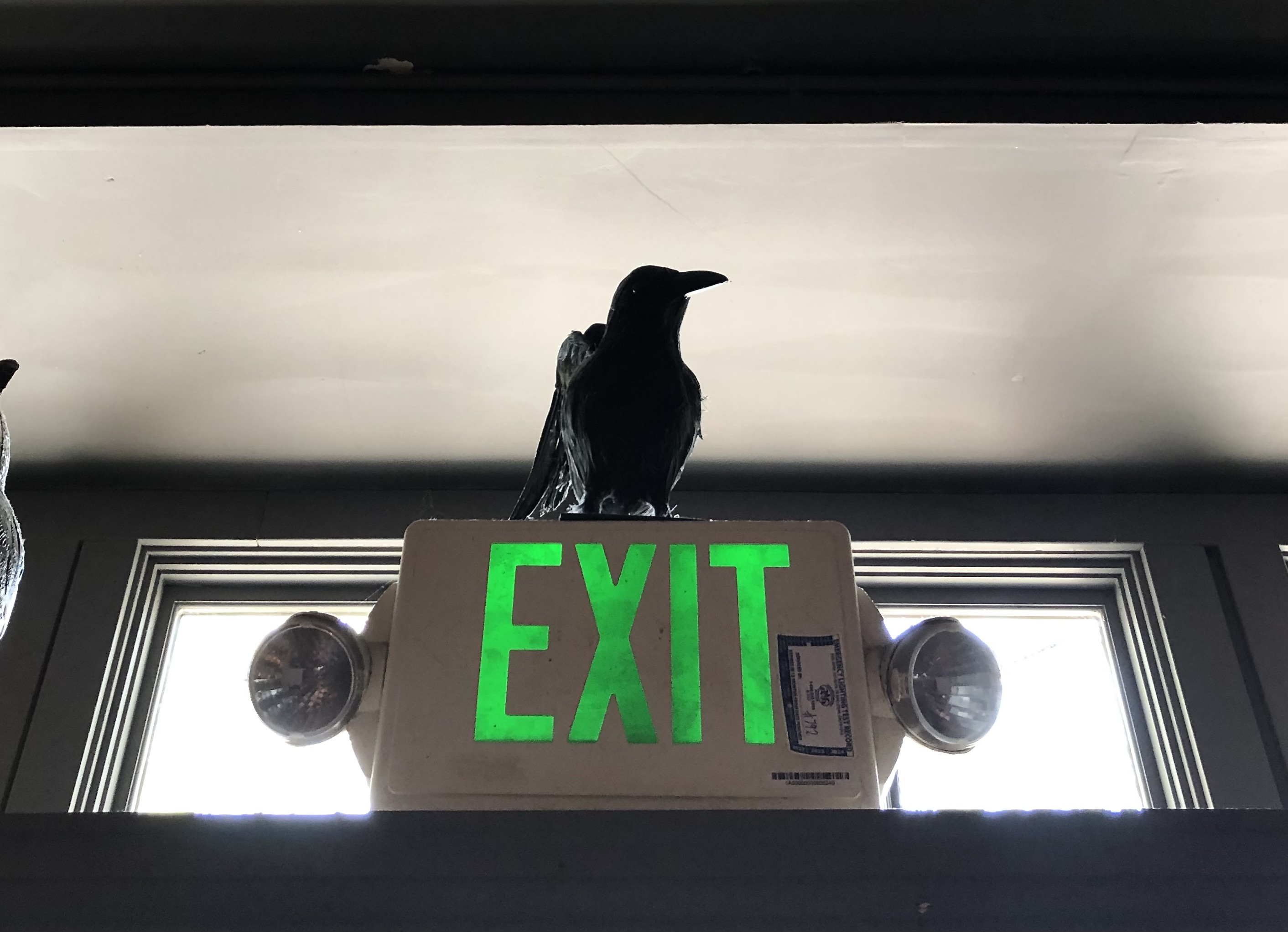
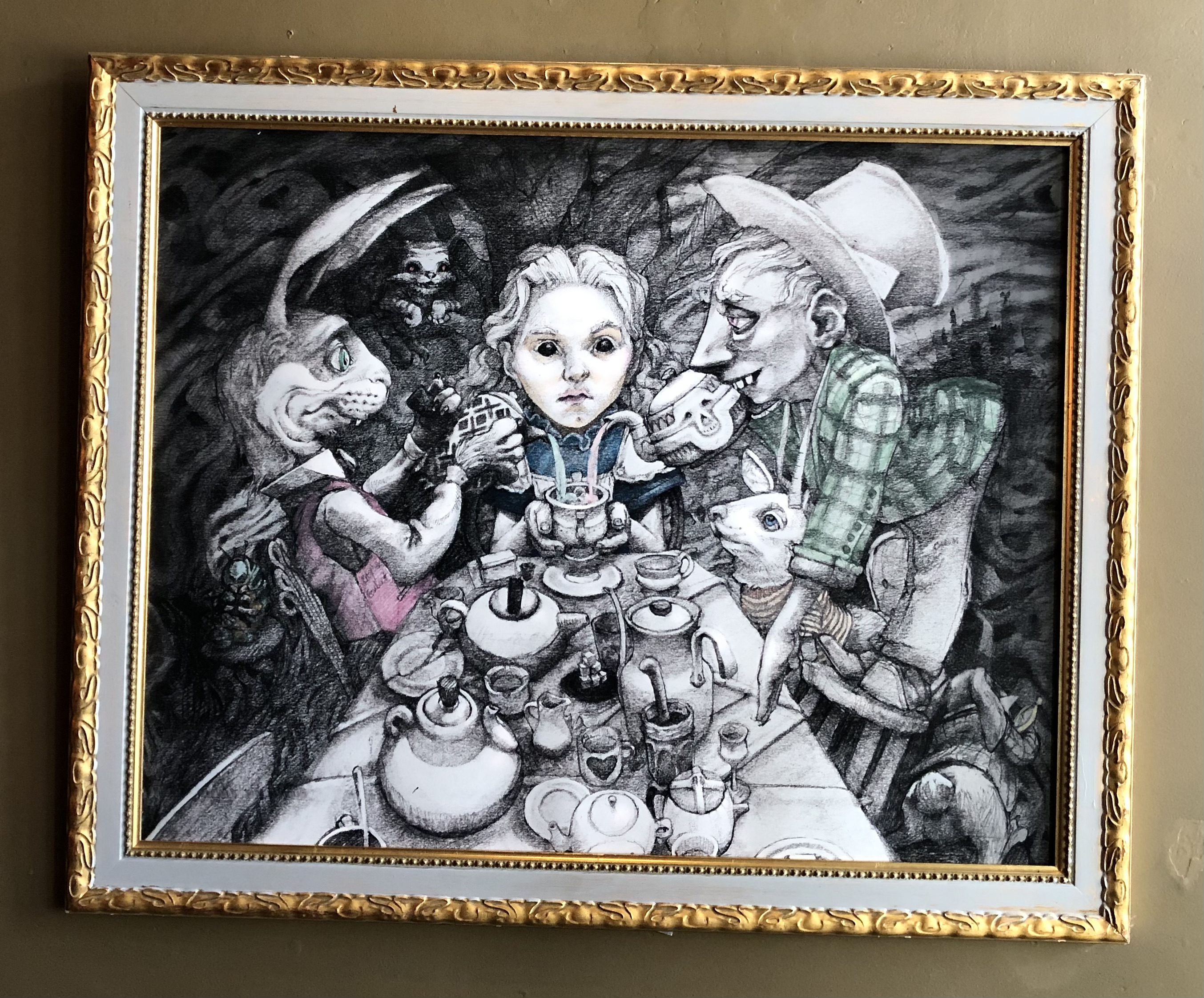
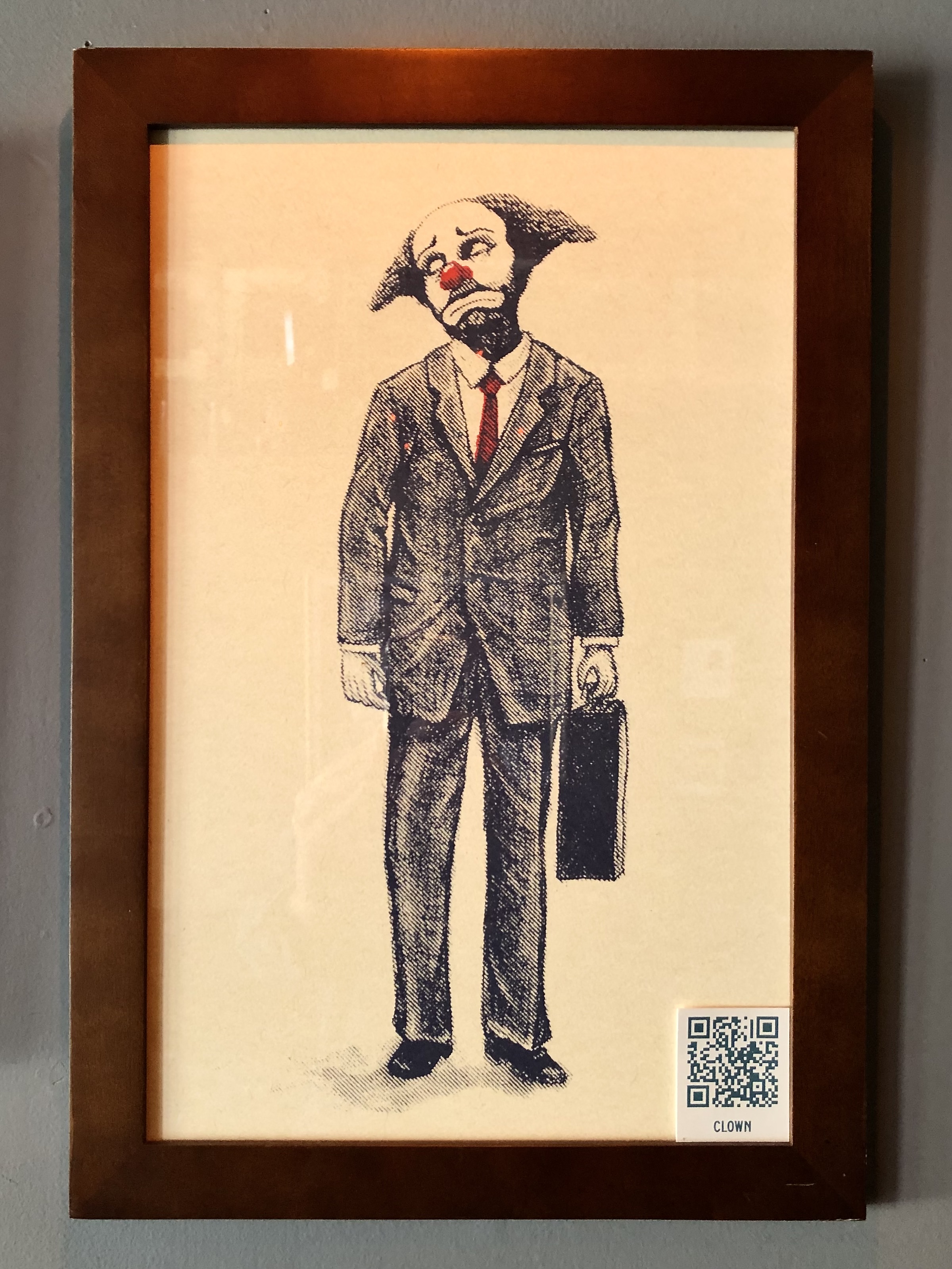
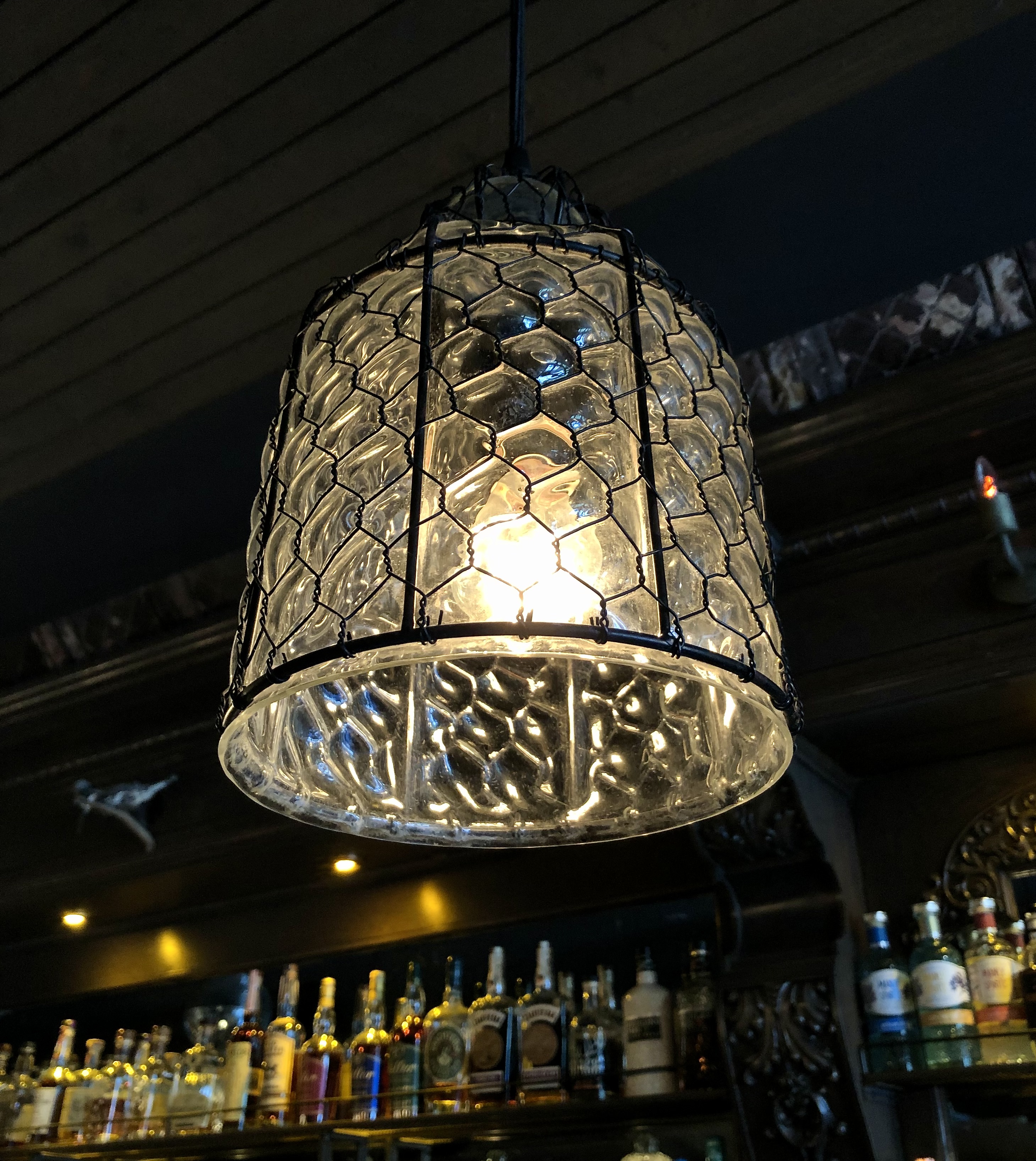
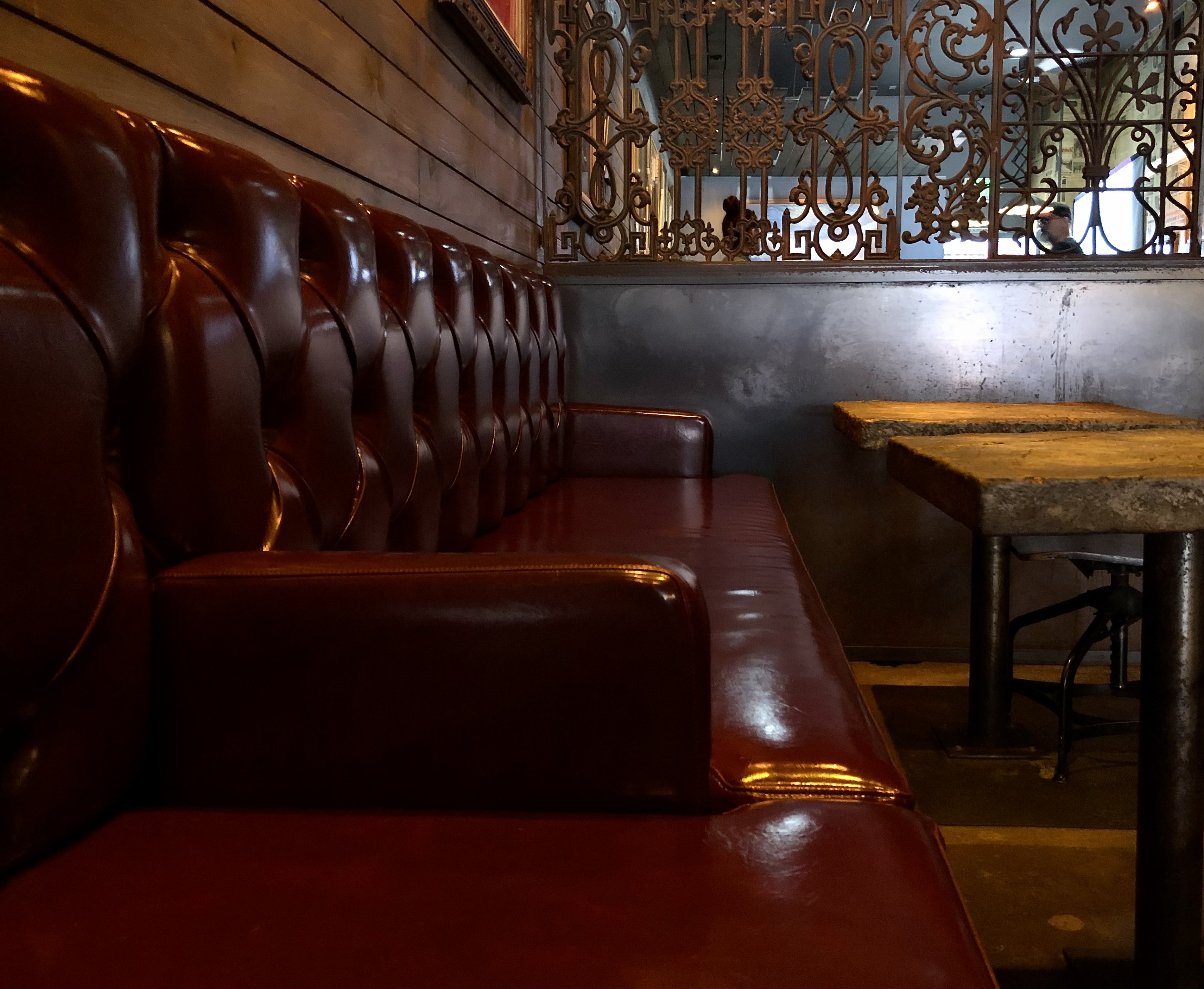
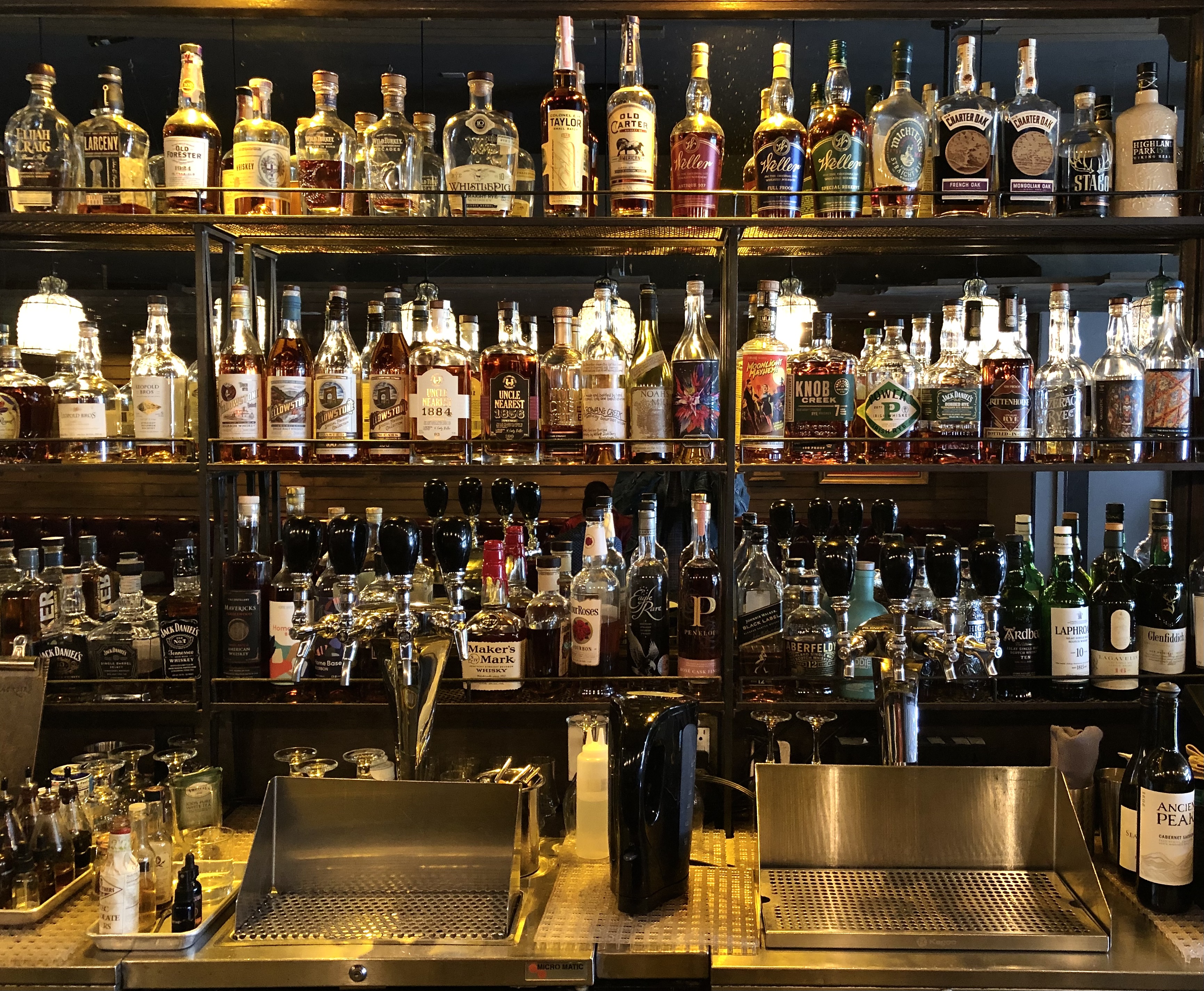
There are statues of birds perched high up on various ledges. An eclectic range of paintings cover the walls. A long red vinyl couch runs along one side of the room. There’s a pool table tucked behind an ornate iron fence toward the back. Black padded barstools line a beautiful old wooden bar, backed by a very impressive wall of booze that seems to emanate its own light. Pop and hip hop dance music play just loud enough you can feel it without having to raise your voice to speak. No TV of any kind. Excellent lighting. A creative cocktail menu with a solid handful of non-alcoholic options prominently listed. And any bar that names a cocktail after Laura Palmer has my respect.

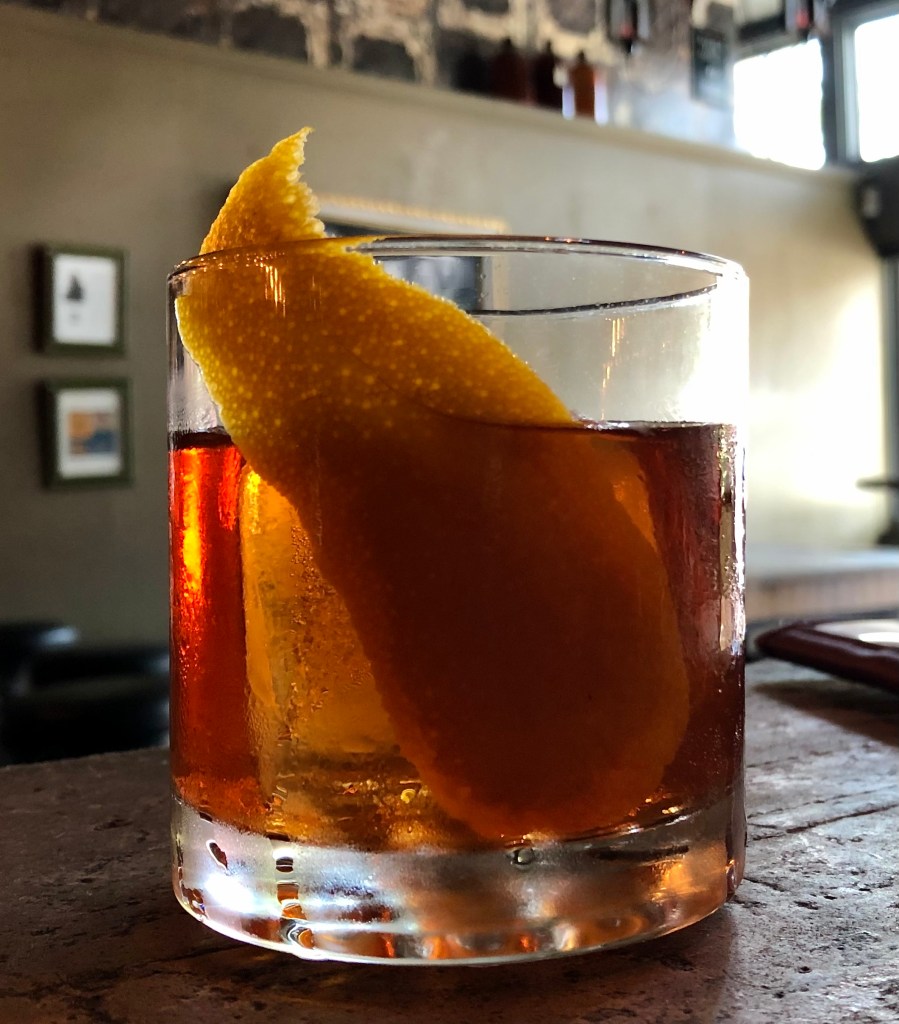
But I ordered an Old Fashioned, of course. Made with Evan Williams Black Label as the base, it was properly built, balanced between spice and sweet notes, with a nice bitter underline from the generous orange peel.
I’d arrived shortly after opening on a Sunday mid-afternoon. There were already a dozen people, all silent and none seeming to know one another, seated along the vinyl couch. Soon they were hailed back to the pool table area for what sounded like a pre-booked Spirits & Cocktails 101 course. Blackbird hosts events and can be rented out as well.
The bartender was casually hip, young in an ageless way, and easygoing. She let customers lead the chat, if they chose to chat at all. With plenty of places to sit and stand, and a sound system clearly not yet operating at its full capacity, I can imagine the place getting quite loud on a busy night. If that’s your jam, great. I don’t mind a busy place, so long as I can hear and speak without straining. But on this afternoon anyway the vibe was very relaxed.
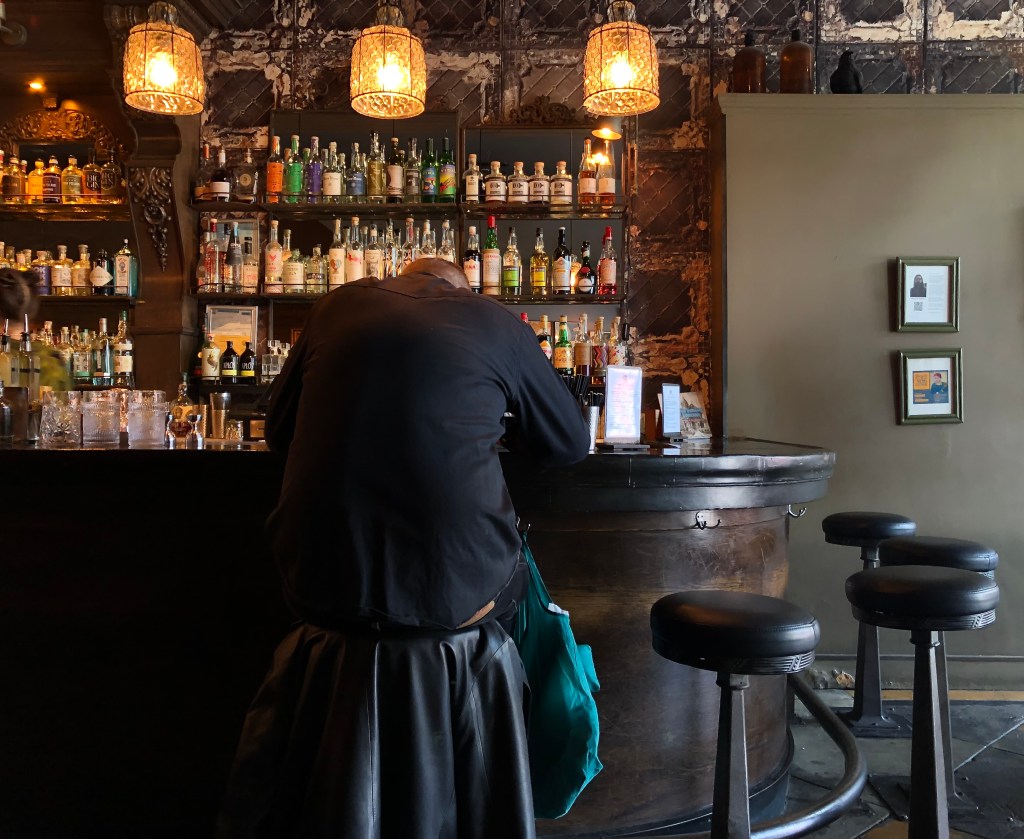
In some other neighborhood, maybe SoMa or Hayes Valley, Blackbird’s combination of quirky decor, Buffalo Trace unicorn bourbons lining the top shelf, and creatively well-appointed cocktail menu, might attract the fashion-conscious hipster crowd. But here at the Castro District’s cozy corner of Market and Church, Blackbird gathers people more interested in relaxing and having a good time than making any kind of impression. Altogether the place comes off as genuinely witty and welcoming, with a tastefully subdued gesture to flamboyance. I think Oscar Wilde would approve.
Club Waziema
Talk about a San Francisco street and neighborhood that has gone through waves of change.
Divisadero is the main thoroughfare cutting through what before the Gold Rush of 1850 was a small farming area, just outside the bounds of the still fledgling port city of San Francisco. When the Cable Cars came about in 1870, Divisadero saw the first hint of its future as a bustling urban neighborhood. By the 1900s it had become a predominantly Black neighborhood, dubbed the Western Addition in reference to the area being at the western most edge of San Francisco at that time.
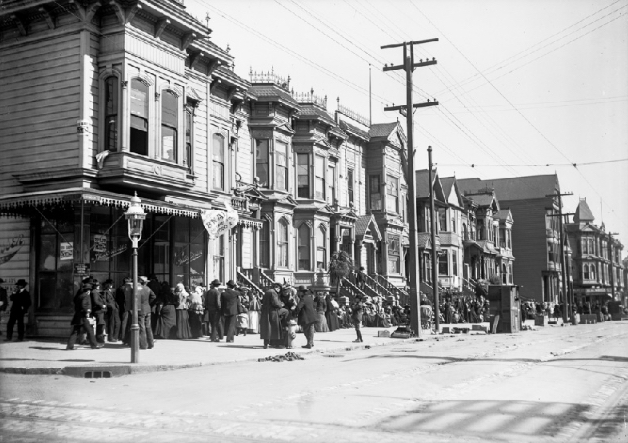
But the city continued to expand, and by the late twentieth century City Hall stepped in to take Western Addition over in the name of “urban renewal,” a common city government euphemism for racial displacement. After years of systematic cultural destruction in the name of progress, in the early 2000s the district was split in two. The posh half was renamed NoPa, short for “north of Panhandle” in reference to the long leafy entry to Golden Gate Park. This split and renaming was the final signal that the longtime Black district was well along the way to full-blown gentrification.
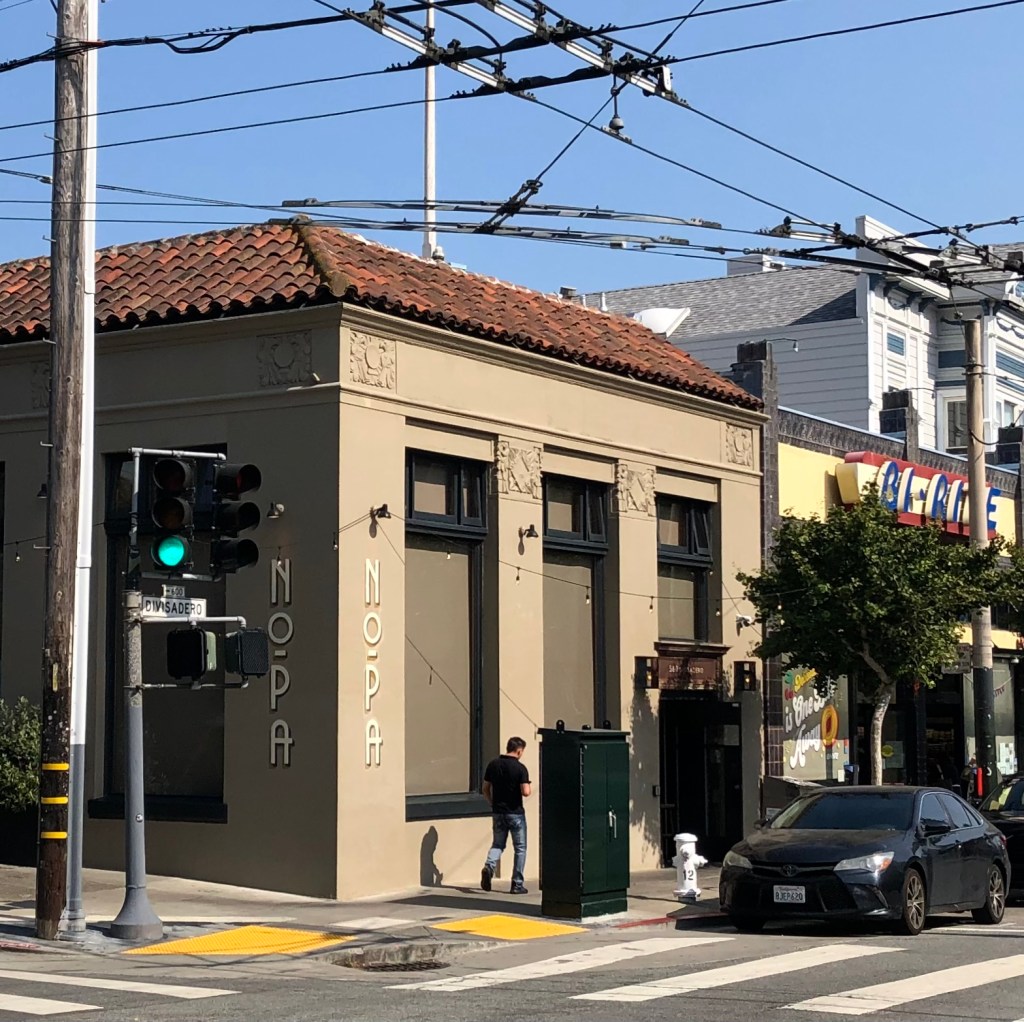
I was entirely ignorant of this history when I first moved to the area myself in the late 1990s, with zero awareness I was contributing to the city’s grand plan. All I knew was my partner and I had found an apartment we could afford. Our landlord was Black and in her nineties. Her niece lived across the hall. Our lease was handwritten on the back of an old “House Rules” sheet. There were two Black-owned businesses on our block—a cleaning service on one side, now many years closed, and a barber shop on the other, Stewart’s Style-O-Rama, still in operation today. Our landlord passed away some years back and a local Chinese American real estate company bought the building. The new landlord offered us $10K to move out. I knew where the neighborhood was continuing to head, and said we’d do it for $500K each. He laughed, I laughed, we shook hands, and my partner and I still live there today.
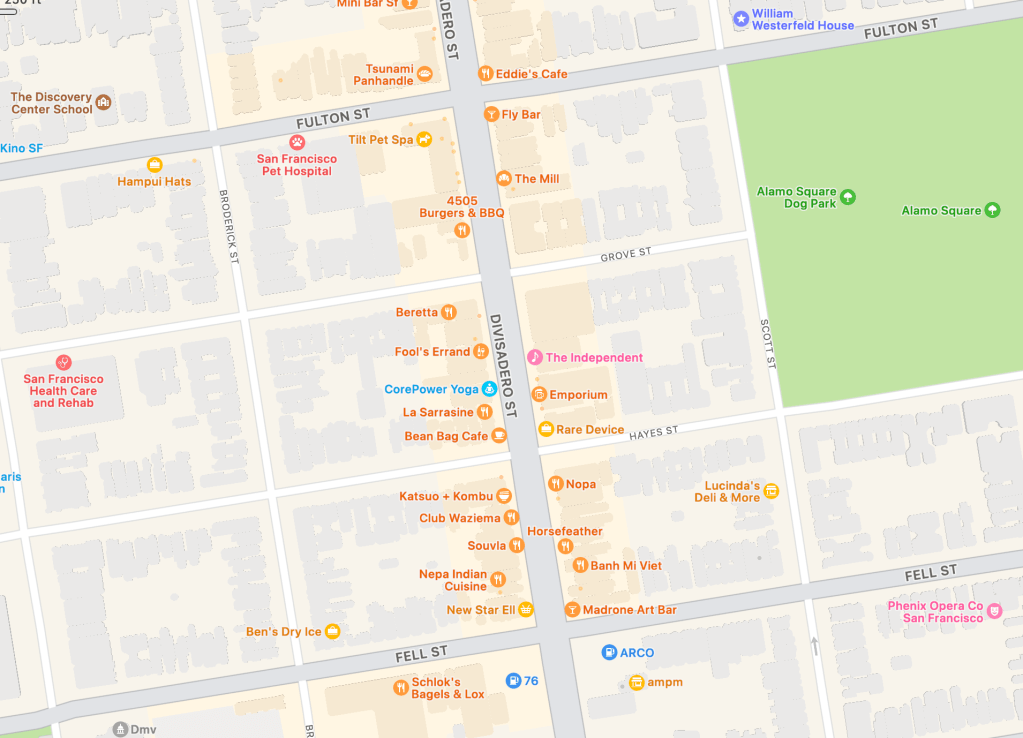
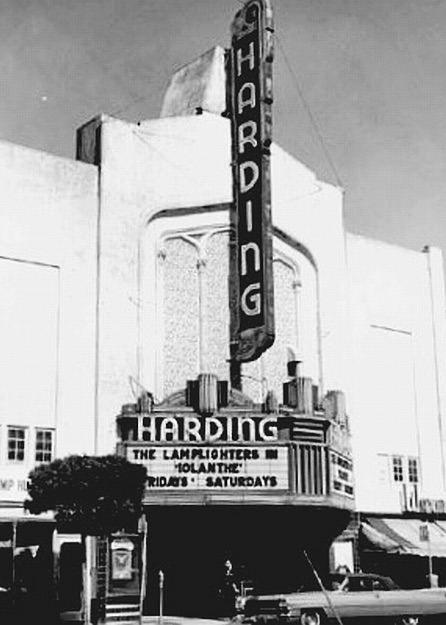
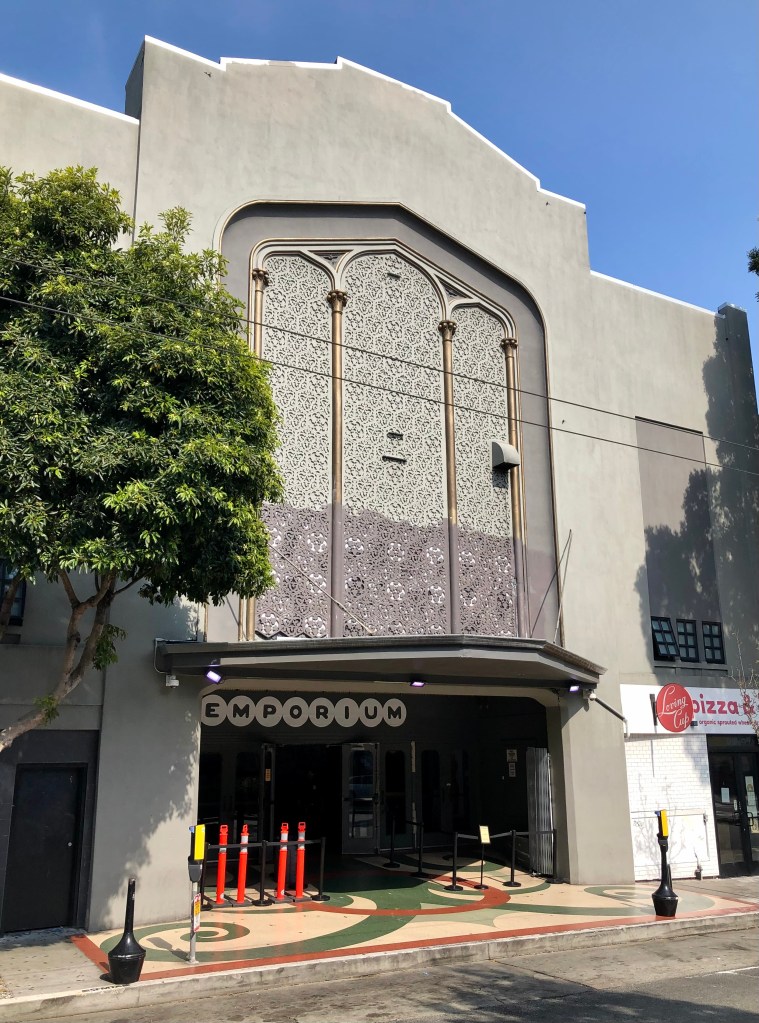
A lot has continued to shift since then. When we first moved into the neighborhood it was still quiet and felt quite removed from the city. The rare shooting outside one corner store or another would remind us of how the city had justified their “urban renewal.” A few blocks away, Divisadero stretched out along its great length like the Main Street of some old ghost town. Lots of boarded up windows, broken up by the occasional small business. Standing like a forgotten monument, the dilapidated facade of the old Harding Theater bore little sign of its great former life—built in 1926 in the best movie palace / live vaudeville house tradition, accommodating decades of movie going, live theater, and music concerts. Eventually it became a church. Today it’s an elaborate club packed with multiple bars, arcade games, pool tables, and DJ stations. The surrounding blocks glisten with similarly overpriced destinations.
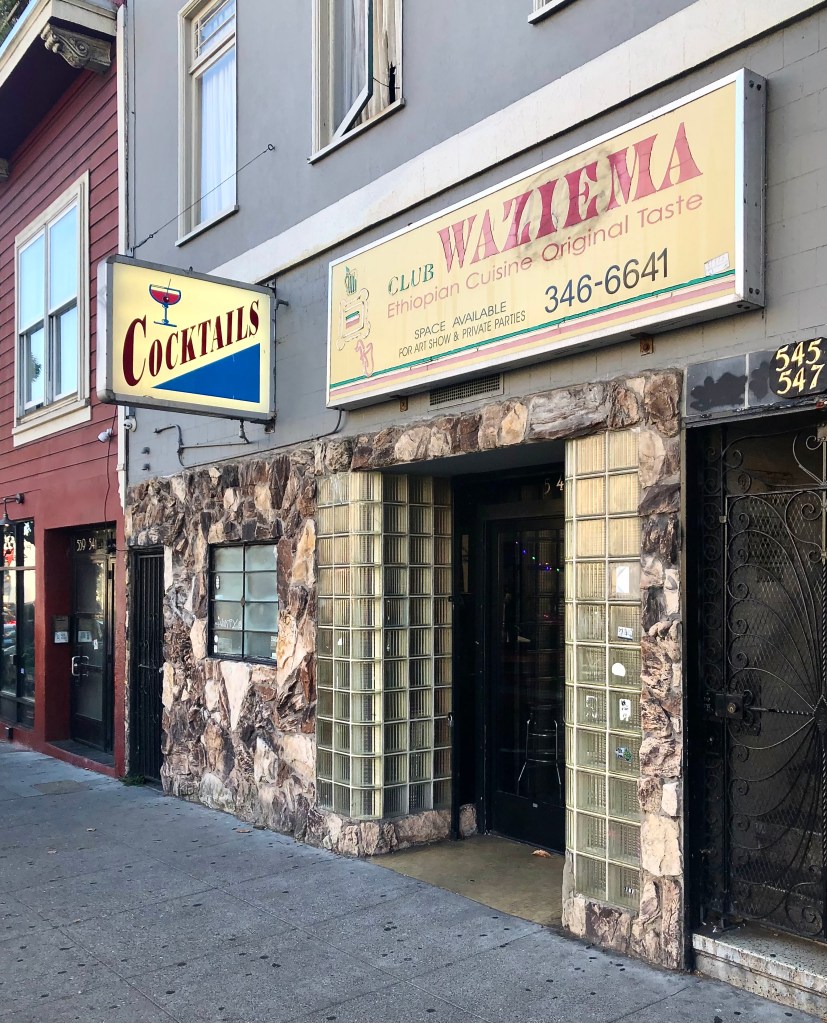
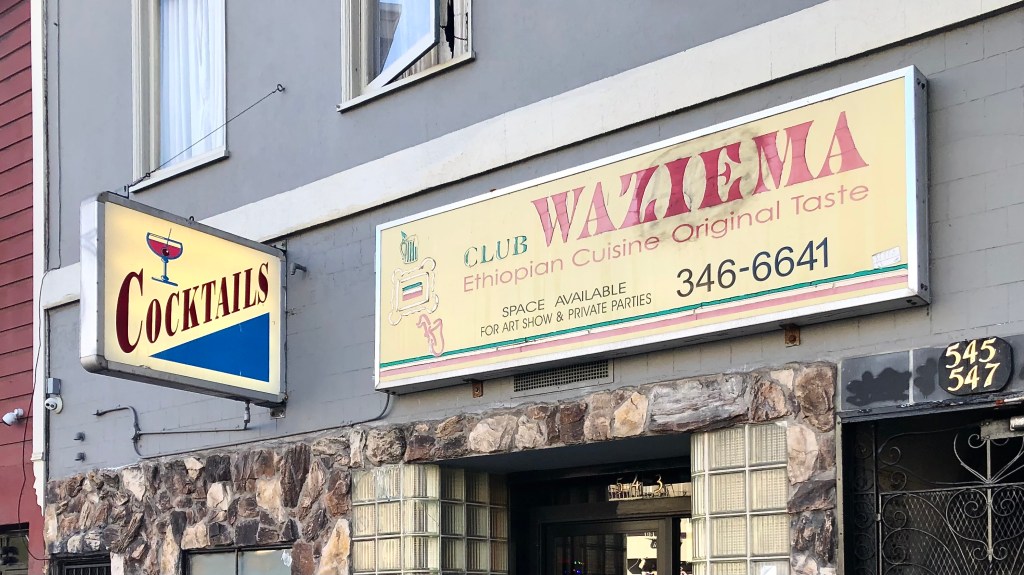
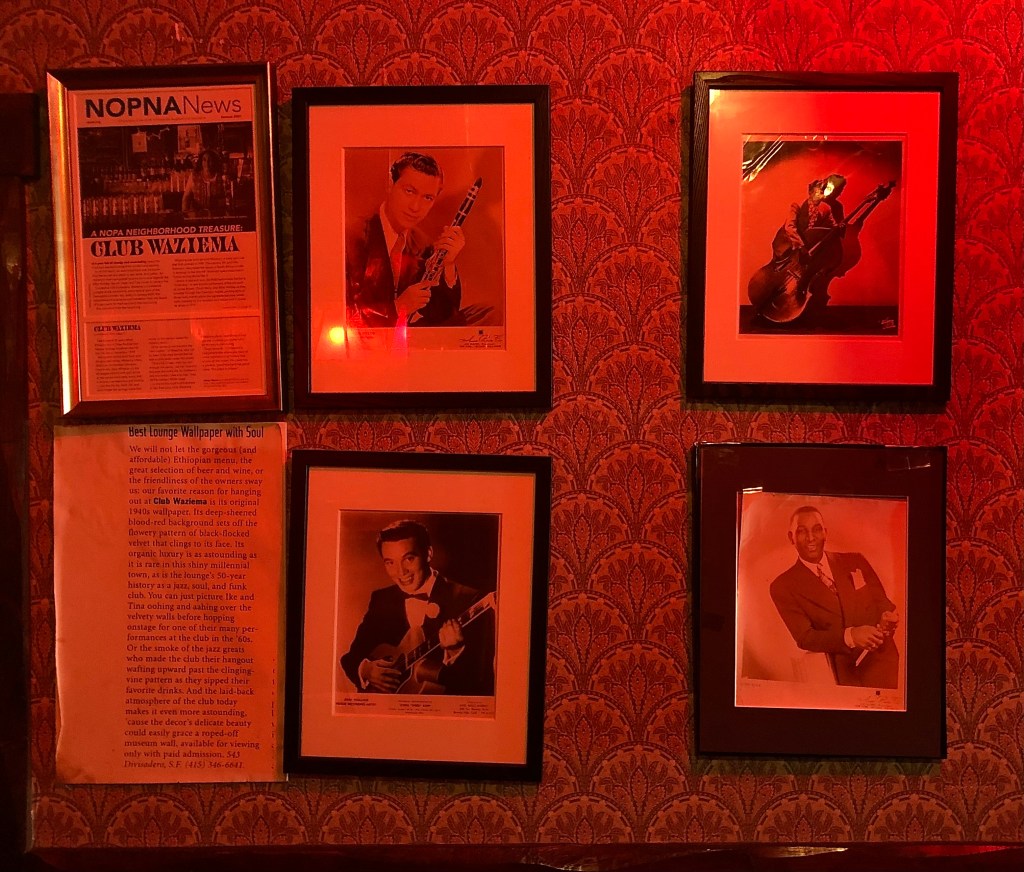
Across from the former Harding and one block down, at 543 Divisadero, one finds the faded facade of Club Waziema, an anachronism amidst the block’s many hipster hangouts. The address has a storied history. In 1959 it opened as Club Morocco, owned and operated by a Black couple known locally only as Mr. and Mrs. Robinson. Club Morocco was a major jazz destination. I mean, major. Billie Holiday, B.B. King, James Brown, Marvin Gaye, Tina Turner—are you kidding me?!—they all played there, along with innumerable other lesser known but great musicians.
Club Morocco closed in 1977. The space was leased out by the Robinsons and reopened the next year as Duffies Cocktail Lounge, which soon closed in 1980. It then sat vacant until 1999, when Nebiat Tesfazgi and Giday Beshue, an immigrant couple from Ethiopia, leased the space—still owned by the Robinsons—cleaned it up, and reopened it with great labor and love as Club Waziema.
Club Waziema is a combo full-bar and Ethiopian restaurant. Tesfazgi and Beshue have operated the place with such genuine care that over the years it has become a beloved fixture of the neighborhood. In 2020 they even received an official commendation from the city Board of Supervisors:
For over 20 years, Giday Beshue and Nebiat Tesfazgi have made Club Waziema a home for the community, bringing together neighbors with delicious Ethiopian food, affordable drinks, and community events… Club Waziema carries on the tradition as a welcoming gathering space in a neighborhood from which so many African American owned businesses have been displaced. Club Waziema is a staple of the community, a gem of the Divisadero corridor, and a nostalgic glimpse into San Francisco’s history.
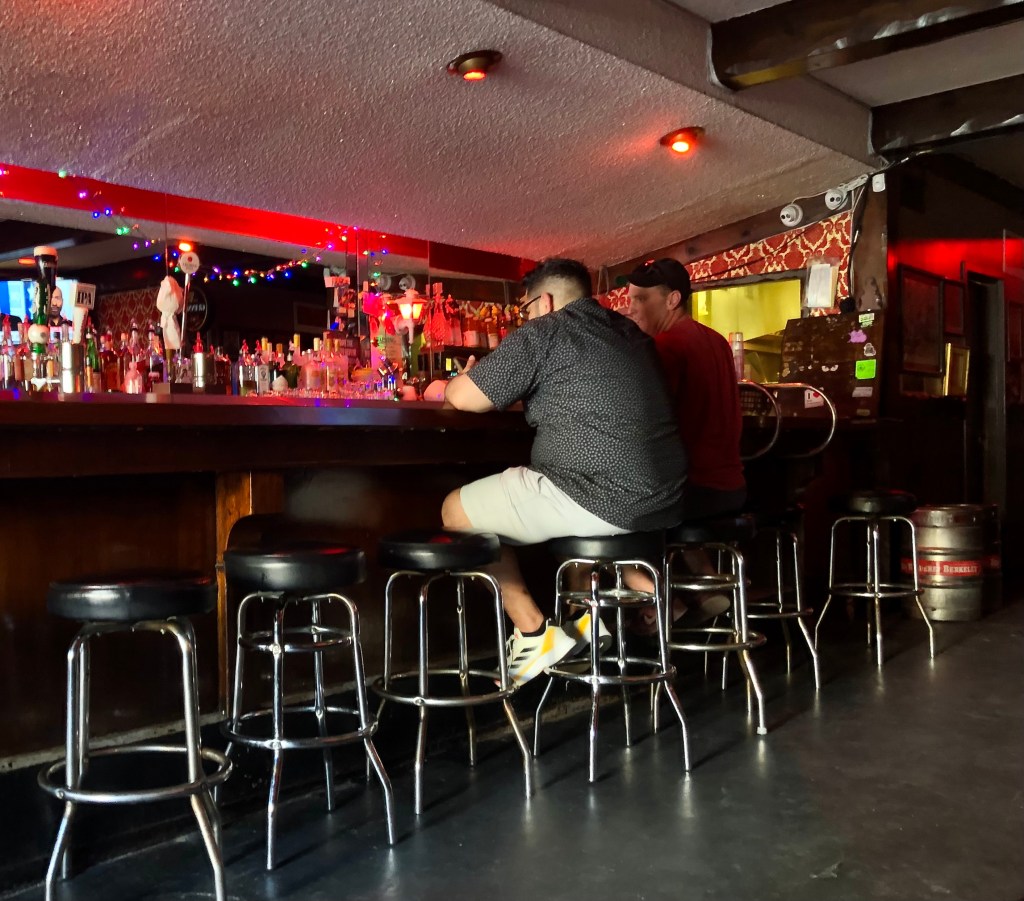
I stopped in on a Wednesday, shortly after opening, and sat on a stool at the bar near the front. A woman was already seated at the other end of the long bar, where the light was murky and red. It was Nebiat Tesfazgi. She glanced over at me, got up, walked around to behind the bar, and approached me unhurried and with a warm smile. I asked if there was a cocktail menu. There isn’t. I ordered an Old Fashioned.
Tesfazgi made her way back down to the other end of the bar. She built the Old Fashioned properly, and in the Prohibition style when cheap illegal whiskey would get sweetened up with chunks of fruit. She muddled a cherry and orange wedge in the glass, dashed in the bitters and simple syrup, scooped in a bunch of ice, then added bourbon, the brand of which I couldn’t make out in the dim red light. After stirring it a short time, she walked the drink over to me and set it down with that warm smile and a nod.
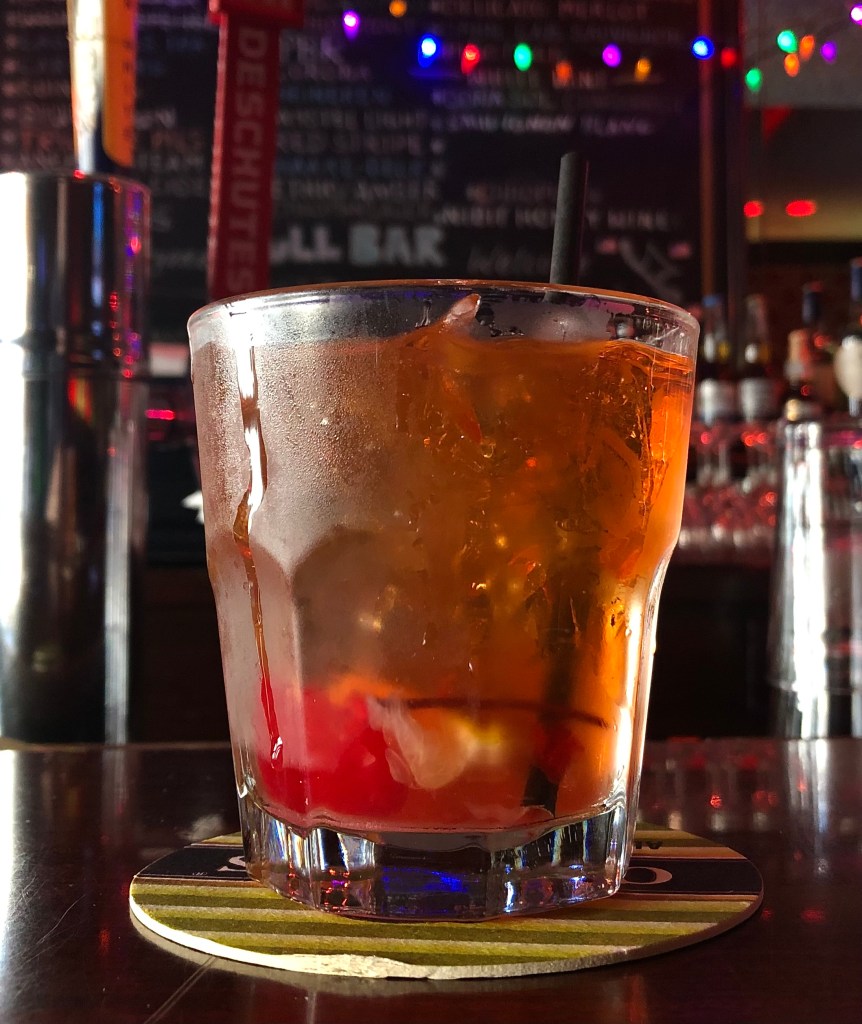
Herbal, light, and fruity, it tasted watery and cheap yet refreshing, like some kind of southern diner’s spiked iced-tea. But at $11 and in this atmosphere? Perfectly good.
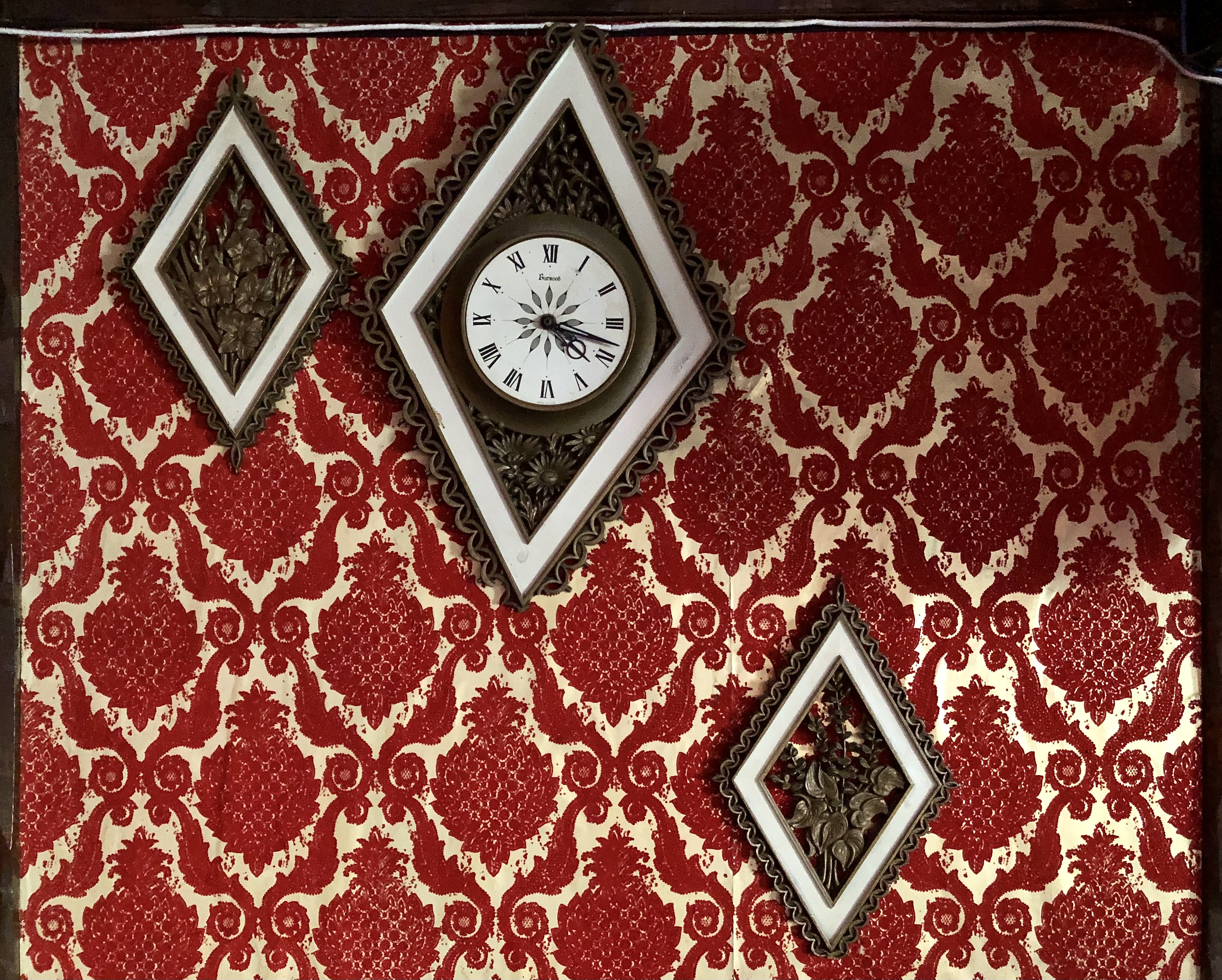
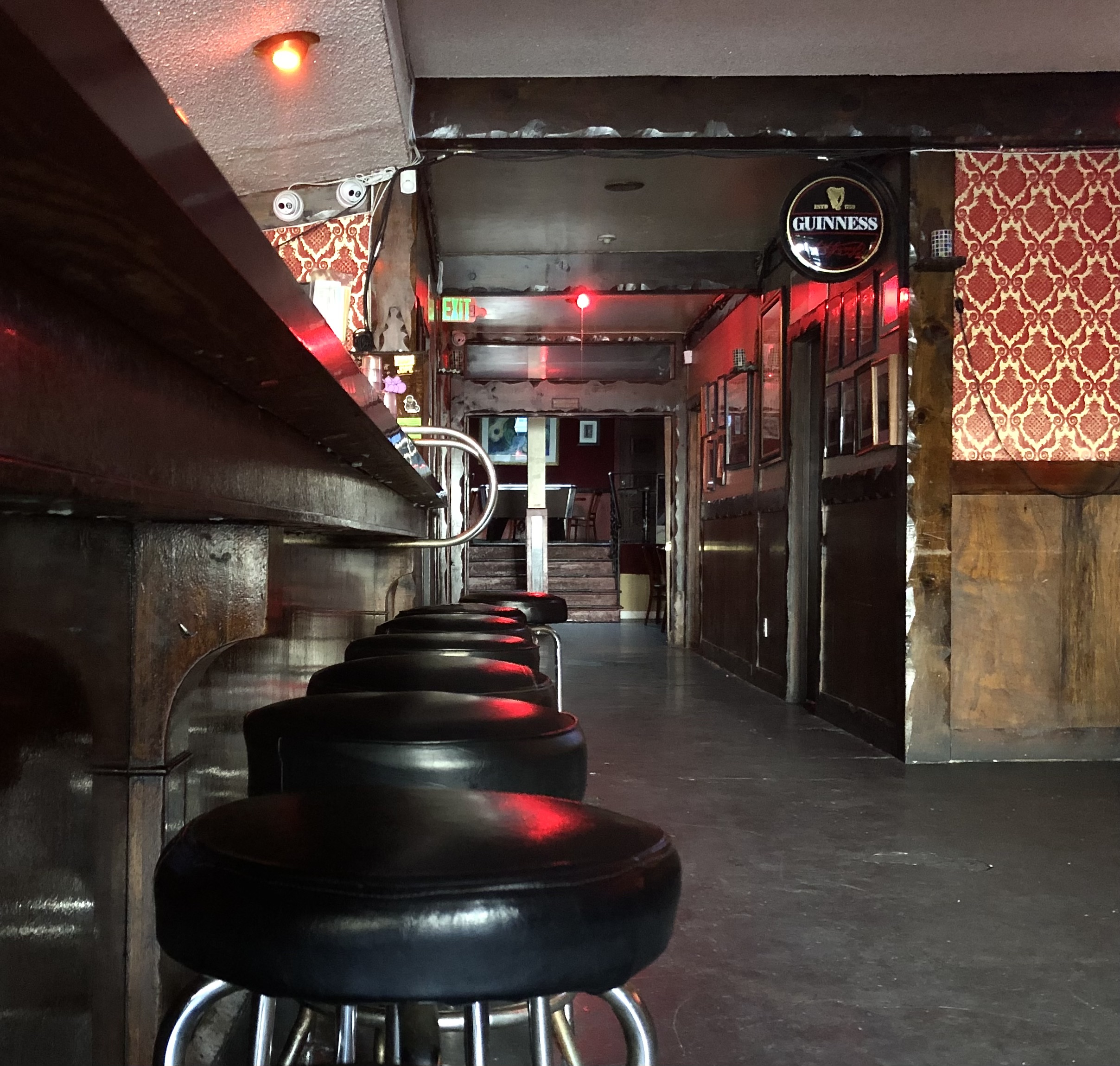
The music coming from the jukebox while I was there spun from Boy George to The Eagles to Blondie to Michael Jackson. The ceiling is low, cream colored, and supported by thick wooden beams. The barstools are chrome and black vinyl. The wooden chairs flanking the two-tops creak with age. The walls are covered in decades-old red velvet wallpaper, with lighting fixtures an antique collector would covet. Paintings and photographs of jazz musicians adorn the walls of the wide hallway connecting the bar area and the backroom.
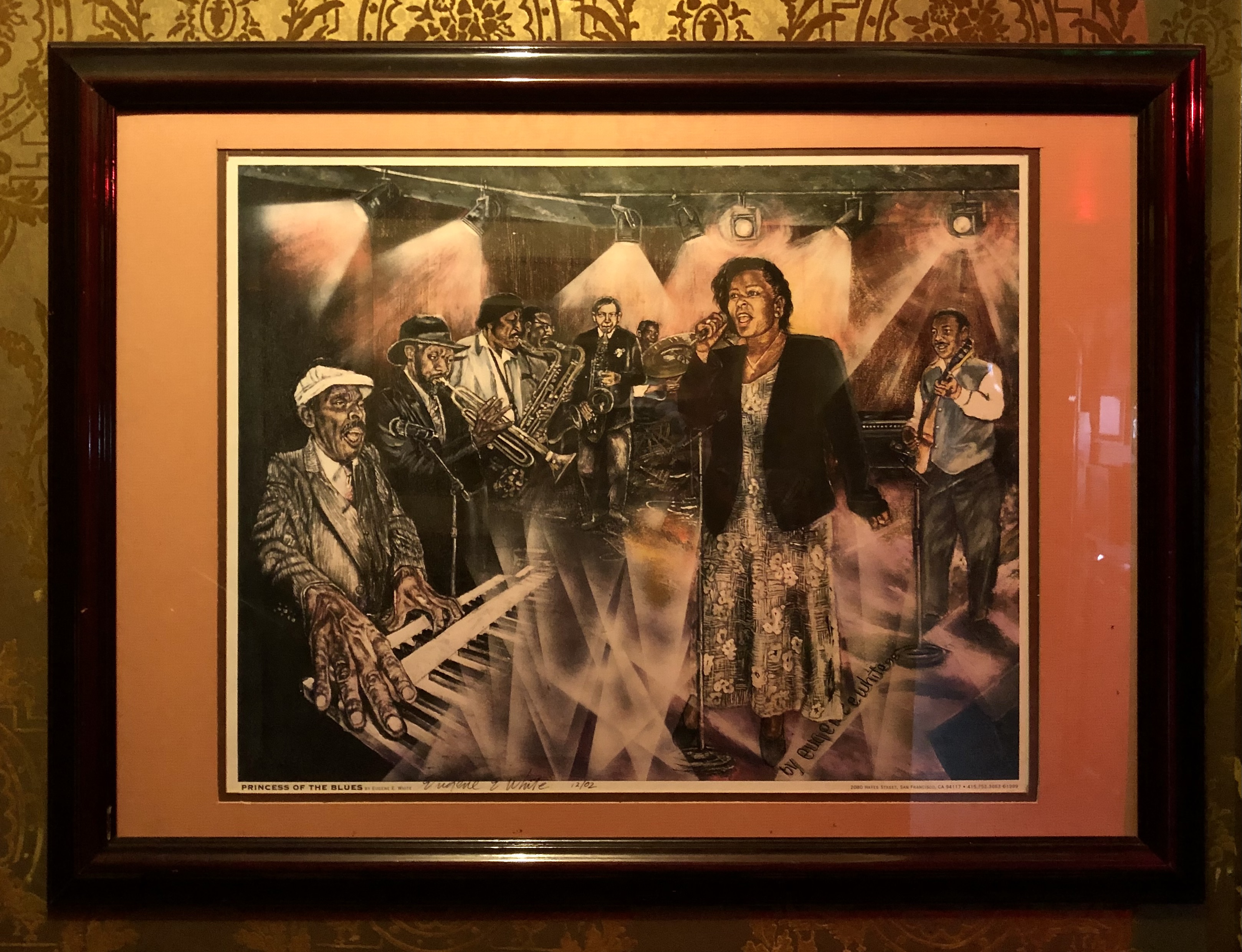
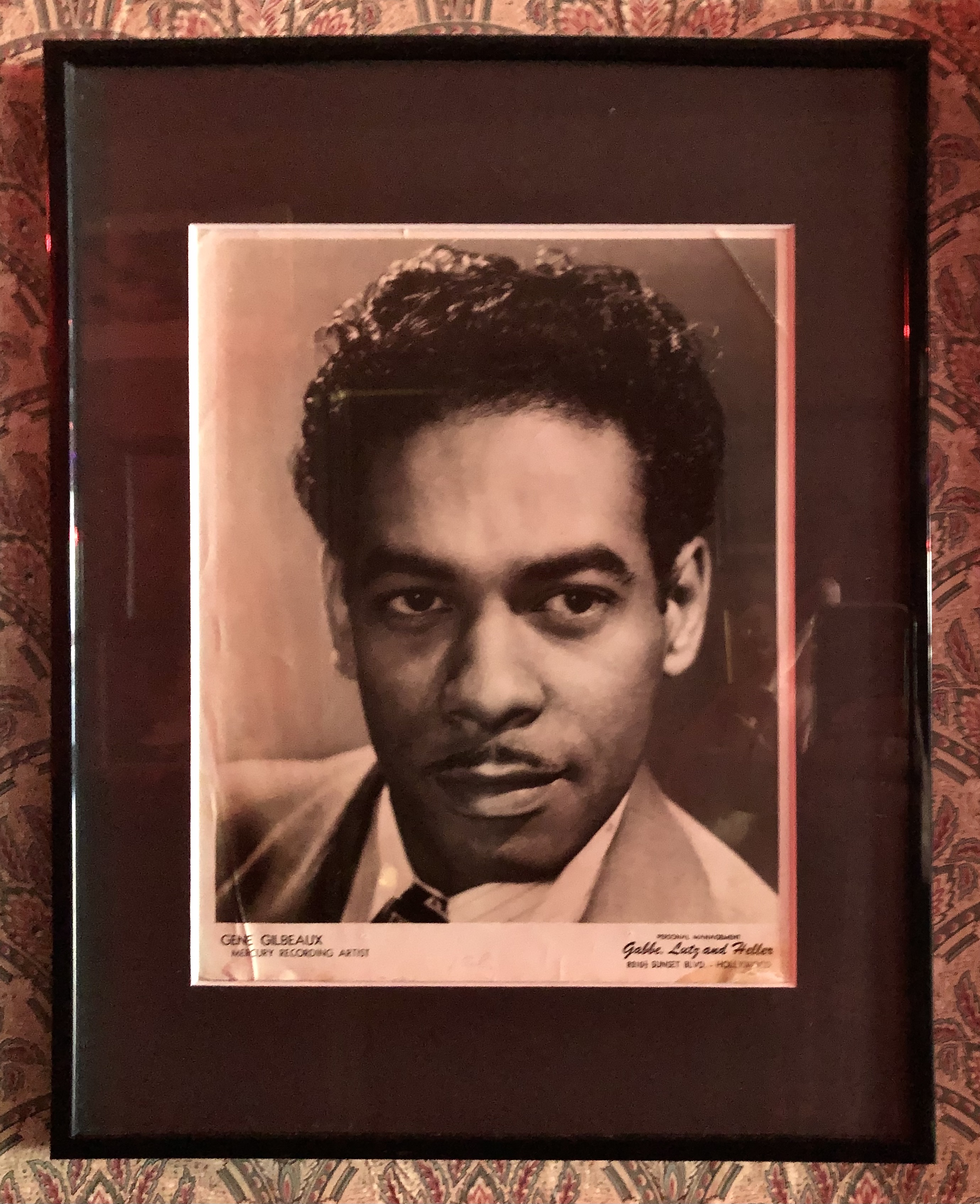
The backroom is where Club Morocco’s raised stage used to be. The bones of its architecture are still there, denuded of whatever stage dressing it once had. In this old photo you can see Billie Holiday playing on it back in the Club Morocco days:
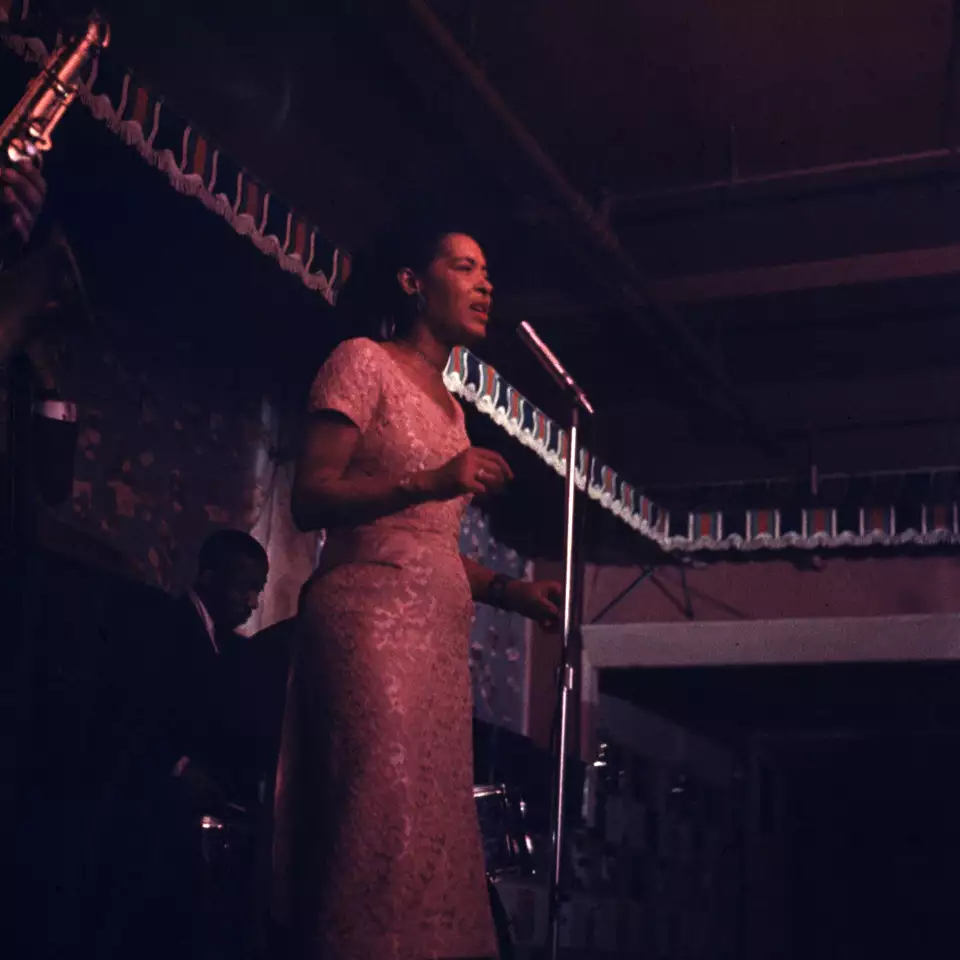
But now that stage houses a pool table.
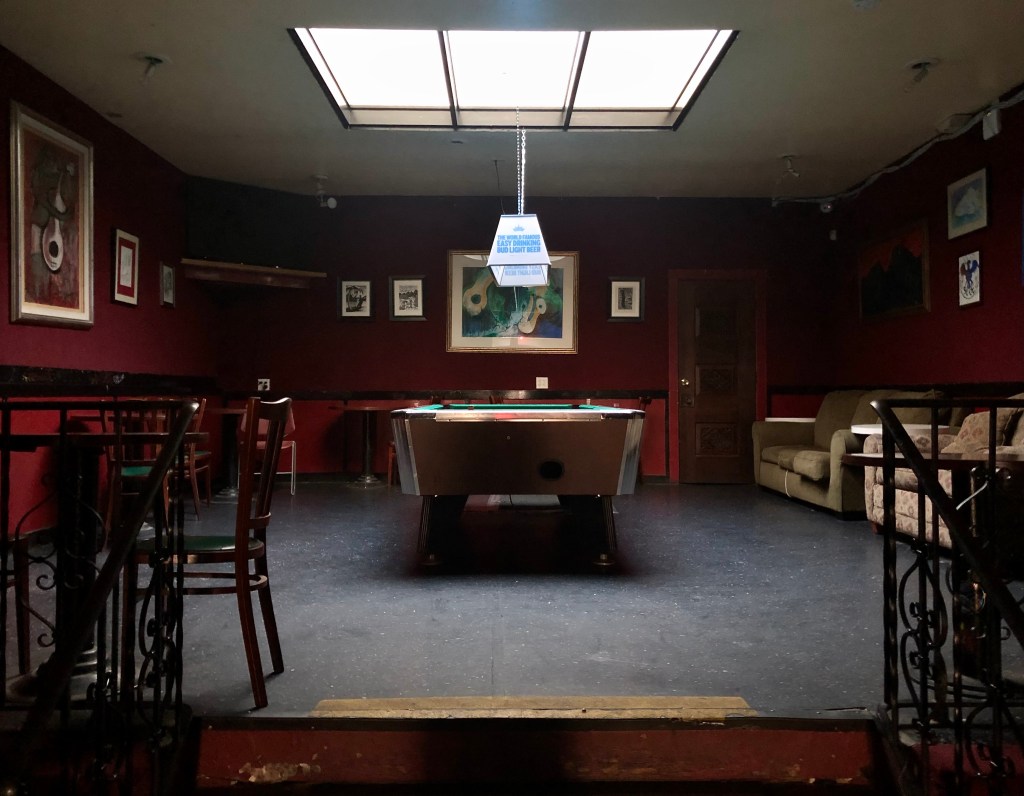
This old stage in this intimate backroom where some of the greatest musicians once shook the walls, now it resembles a common small town dive bar. With its dusty old coaches and dull florescent lighting, it stands in stark contrast to the saturated red velvet bar area up front. Both ends of the room are divey in their respective ways. But I greatly prefer the red velvet dive.
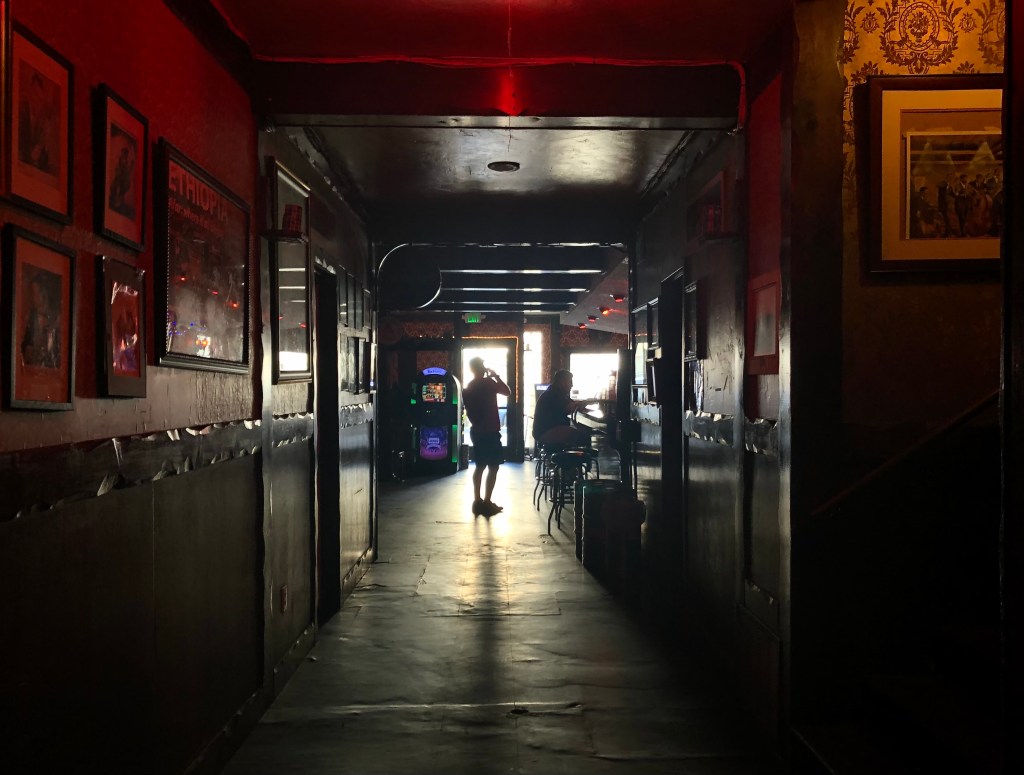
Throughout my San Francisco bar hop I’ve been timing my visits close to opening, to avoid the crowds so I can take in the physical atmosphere—and take photos without annoying anyone. Even more than others, Club Waziema really reminds me how some bars are indeed best when they’re busy. I could feel the neighborhood vibe hardcore in Club Waziema. It’s not just the wide open space, ready and waiting for the party to arrive and fill it up. It’s Nebiat Tesfazgi herself. She said no more than a handful of words to me. And yet in her casual pace and no-fuss warmth, she comes across like the neighborhood grandmother. The kind of business owner locals might go to for advice. For respite. For the simple yet deep reassurance that can come from an authentic pat on the hand, a hot meal, a freshly cracked cold beer, or a handmade no-frills Old Fashioned.
Club Waziema is a dive, a refuge, a hangout, and countless pages of local history. The Robinsons have passed on and left the building’s ownership to younger inheritors. Woe to them if they ever dare try to push Club Waziema out for the sake of higher rent. The locals will be making a visit to the city Board of Supervisors in no time!
Elixir
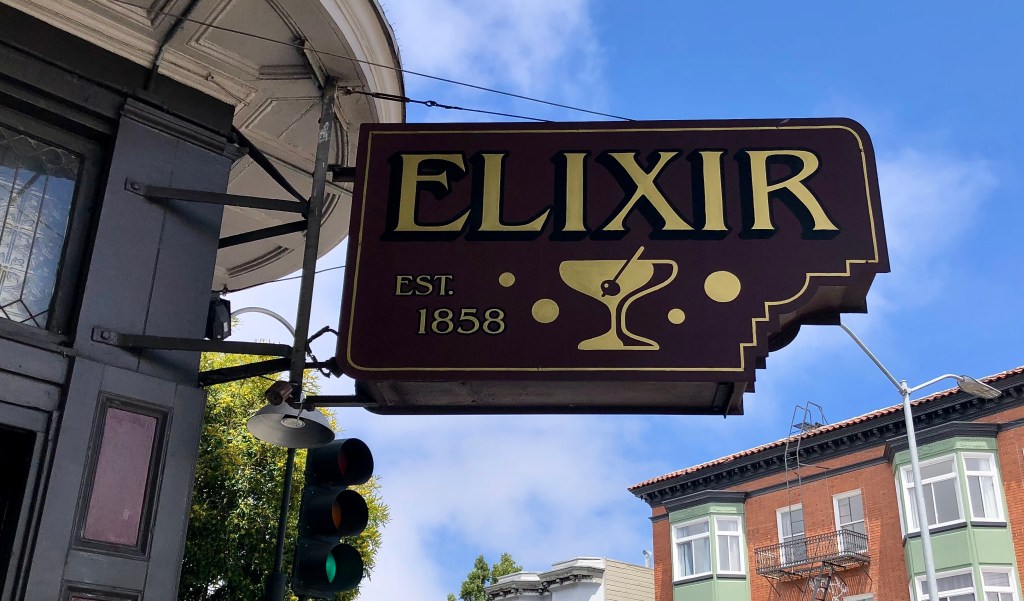
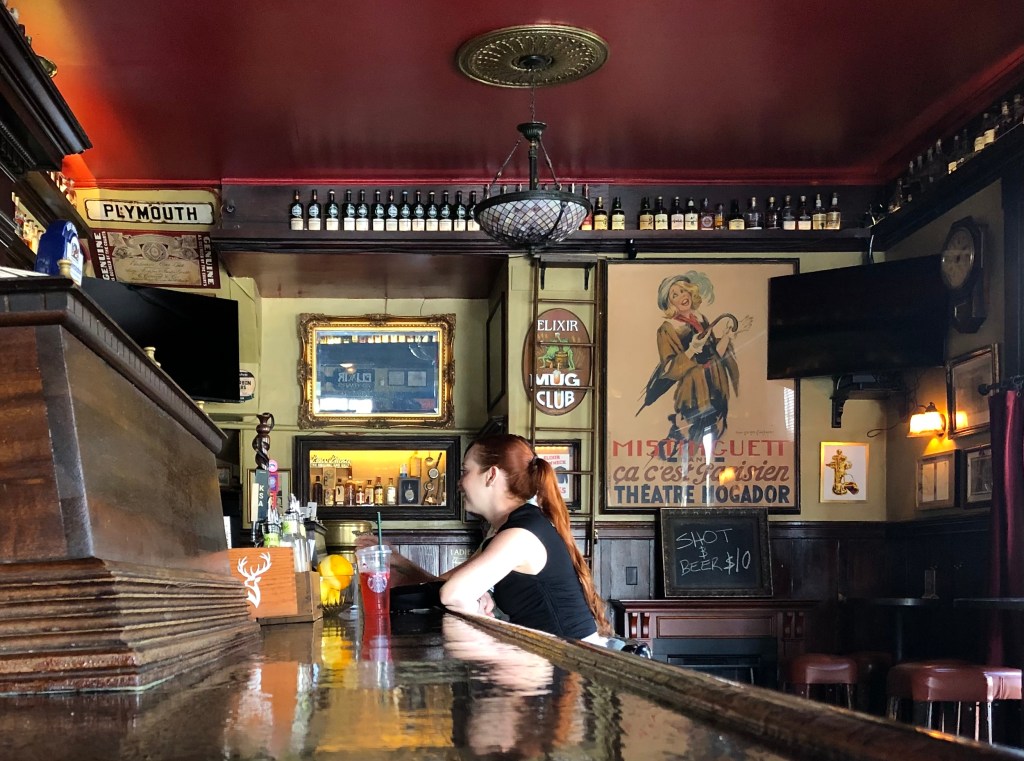
Any San Francisco whiskey fan knows Elixir. It has one of the best—possibly the best—whiskey selections in the city, especially since the upscale whiskey legend, Hard Water, sadly closed in 2022. Holding down the corner at 3200 16th Street and Guerrero in the Mission District, Elixir opened in its current form in 2003, when owner H. Joseph Ehrmann took up the space after it had suffered several years of neglect.
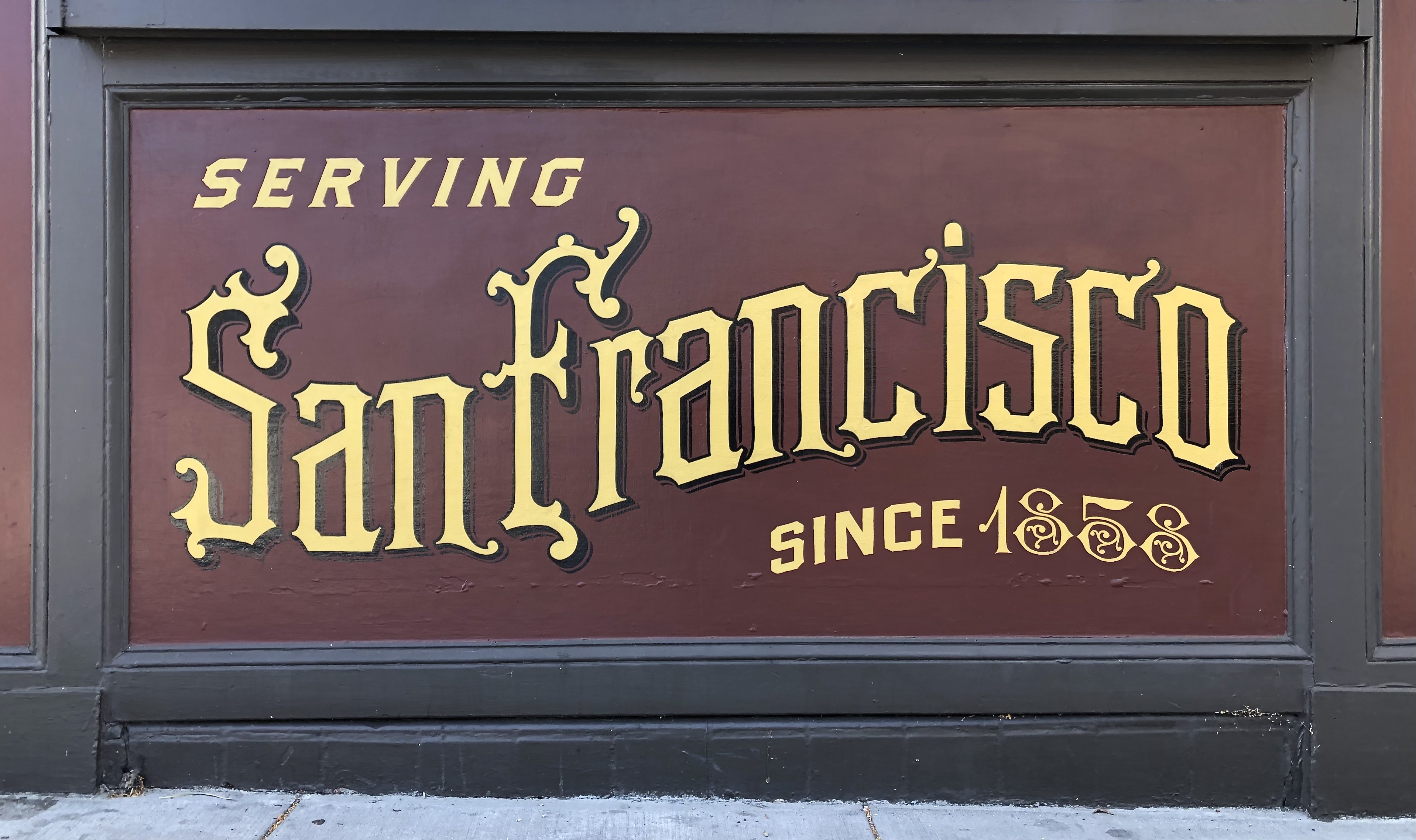
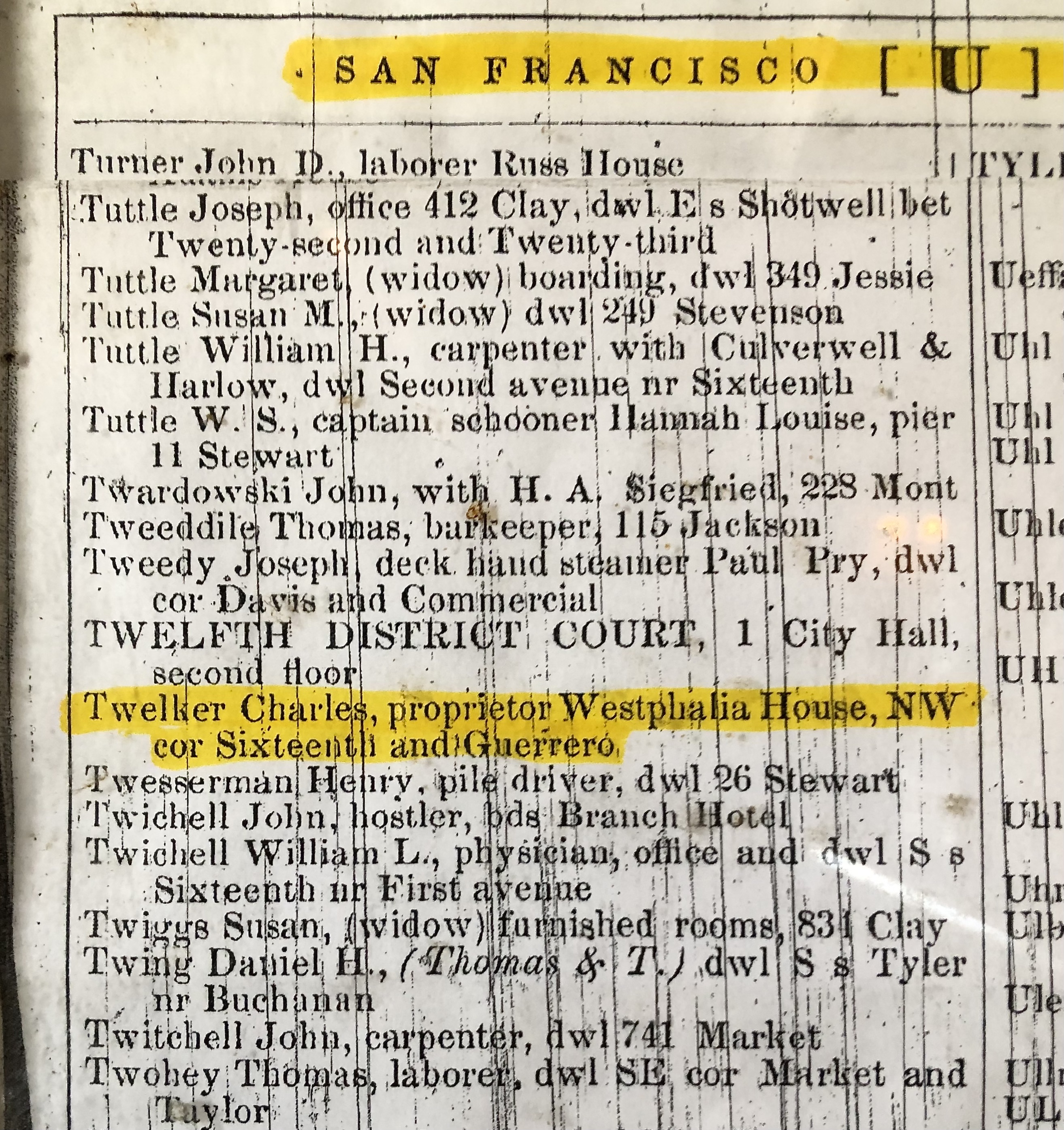
Before Ehrmann’s loving restoration, Elixir had many past bar lives. Historical records confirm it first opened as a saloon in 1858, called Westphalia House, when the old Mission Plank Road connected Mission Dolores to the shoreside commerce area of Yerba Buena Cove, now San Francisco’s Financial District. The original building burned down in the 1906 earthquake. But the owner at the time had rebuilt and reopened by 1907. It changed hands and names several times after that—The Hunt-In Club in the 1940s, Swede’s from the 1960s to 70s, La Bandita in the 1980s, and then Jack’s Elixir Bar for a period of time in the 1990s before it closed and fell into disrepair.
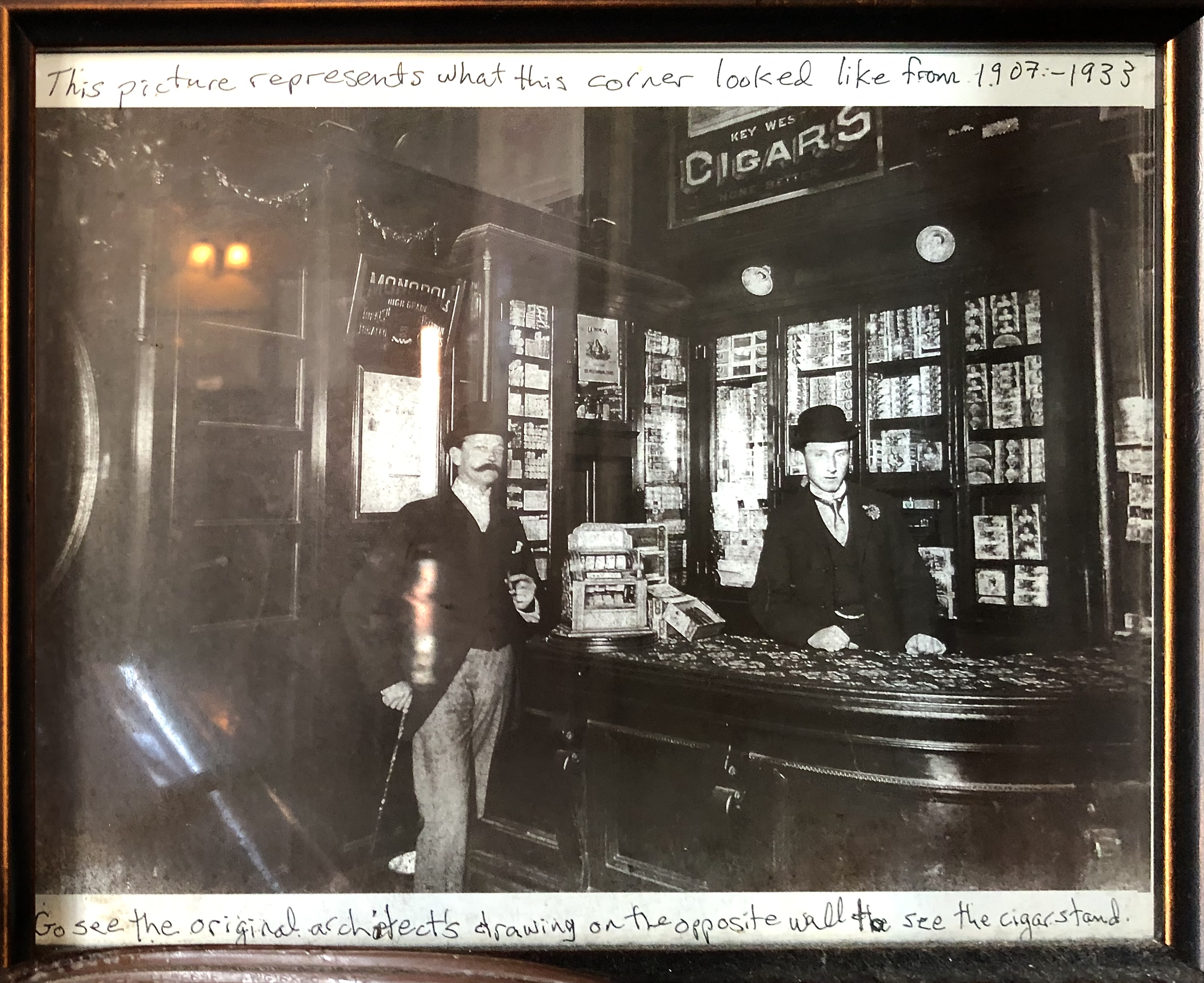
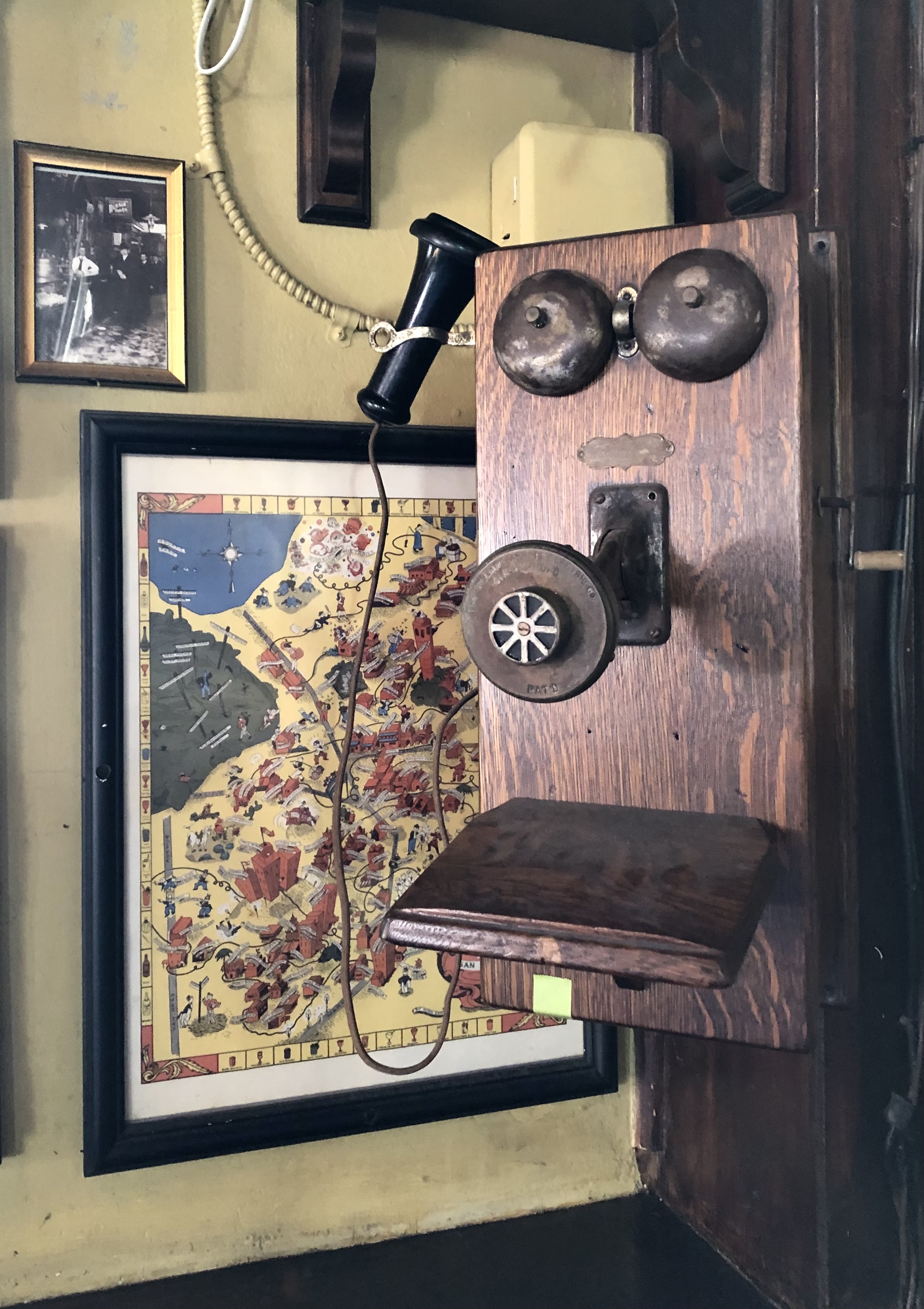
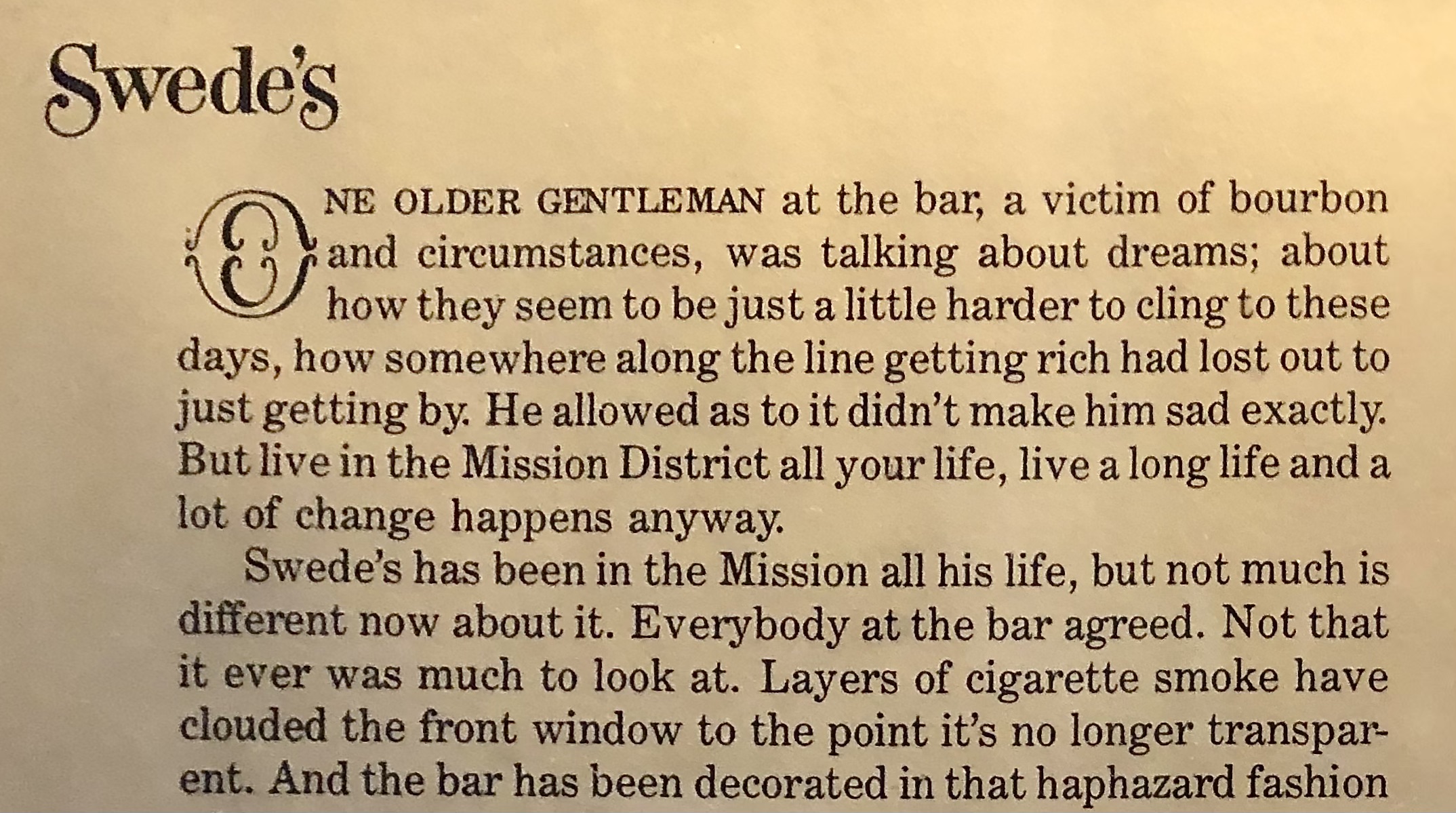
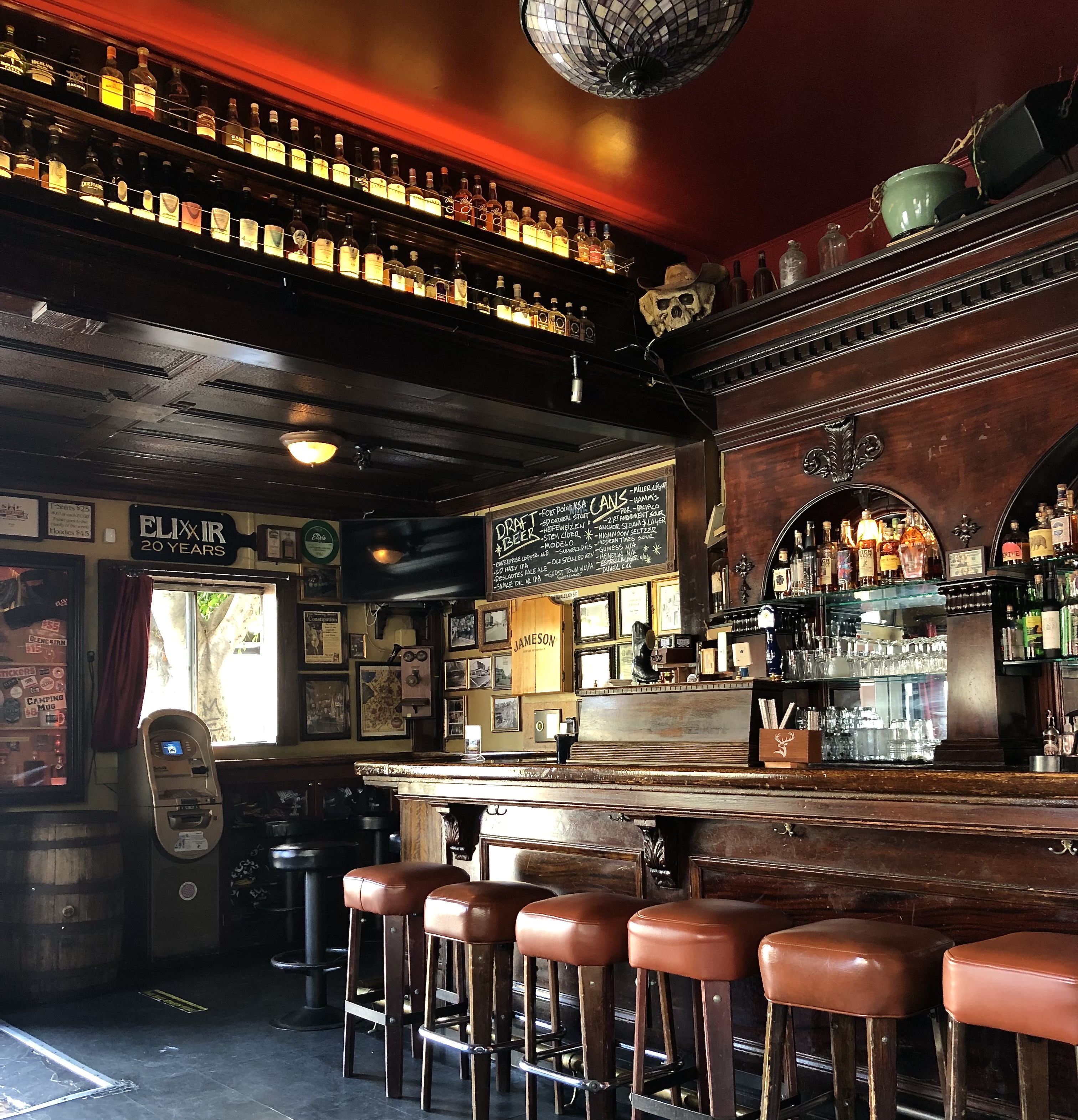
All hail Ehrmann for reopening the space with such care, refurbishing as much of the post-1907 historical features as possible, and shifting the emphasis to whiskey. Most any cocktail you might want is possible. But the extensive whiskey list is a thing to behold.
The bar’s stated intention is this:
Our mission is to serve the neighborhood and the city as a communal gathering place, 365 days a year, while preserving and promoting history, operating as a Certified Green Business, and providing opportunities to support charities.
Elixir has procured many of its own private casks. They host cocktail classes. Every Tuesday is trivia night. There’s a dart board. They have Whiskey and Cocktail clubs, both free to join—all you need do is sign up via email and they’ll let you know when new special bottles arrive or when free spirits tastings are held. The atmosphere is welcoming and timeless in both design and vibe. In so many ways, Elixir ticks all the boxes—without any sense of boxes being ticked. The whole place feels entirely genuine.
I ordered an Old Fashioned. Their standard bourbon for it is Bulleit. But one can choose from any of the 600+ whiskeys on their list, and if a shot of it costs more than $16 they charge you whatever that price is. I chose a 2021 Elixir private barrel of the Four Roses Barrel Strength OBSK recipe, aged nearly 10 years and bottled at 114.2 proof.
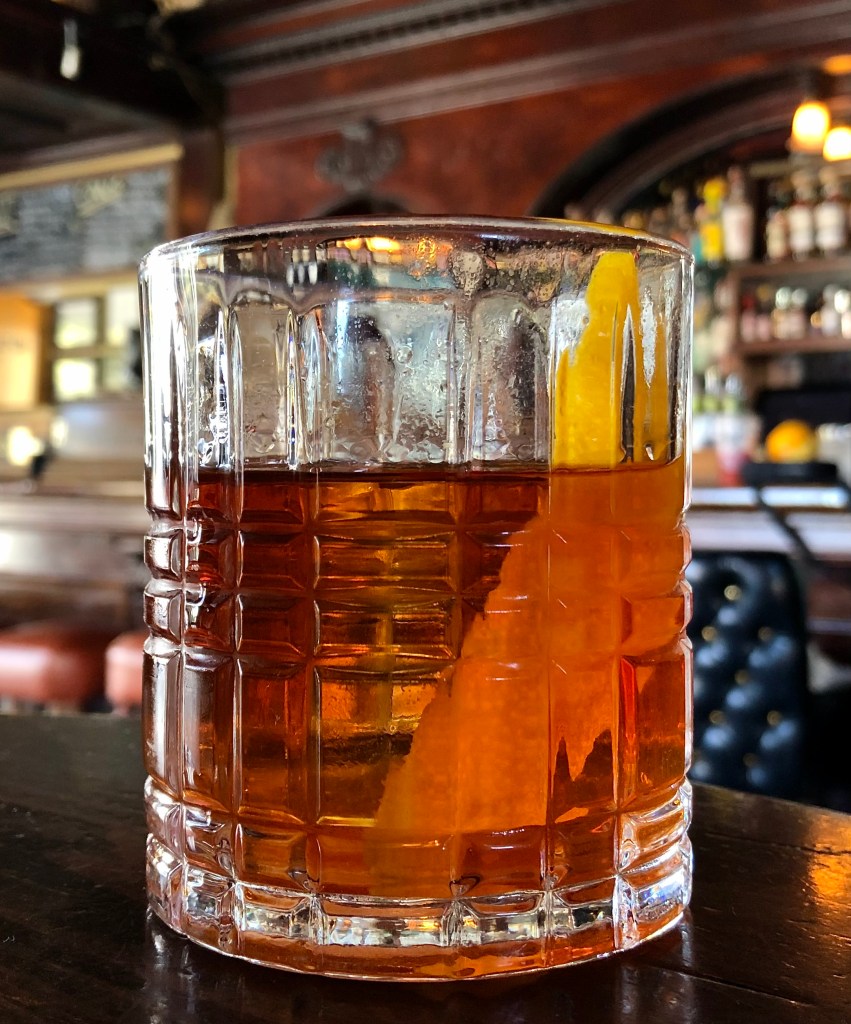
Properly built with a sugar cube muddled in Angostura bitters, it was well balanced between spice, oak, citrus and caramel notes.
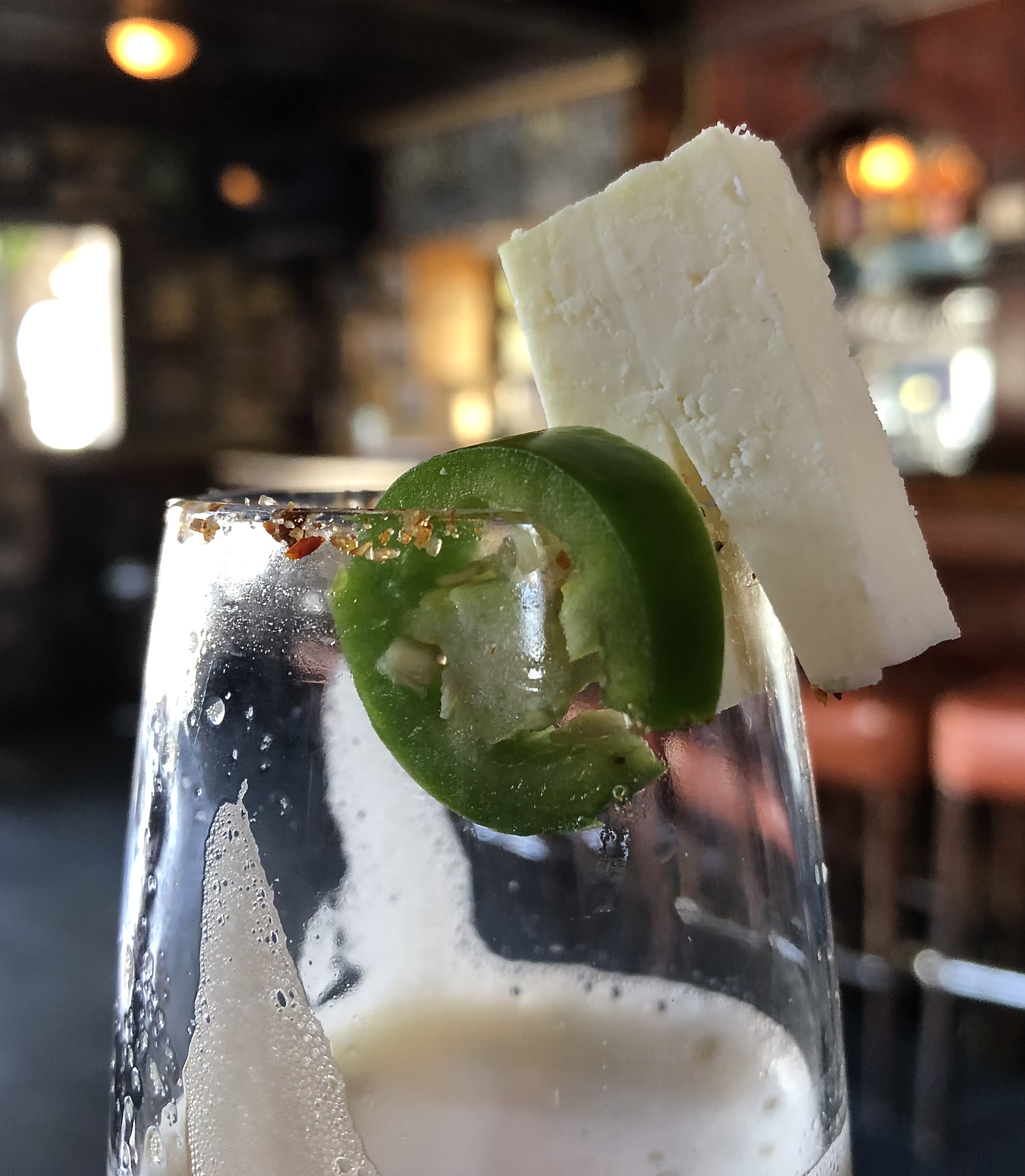
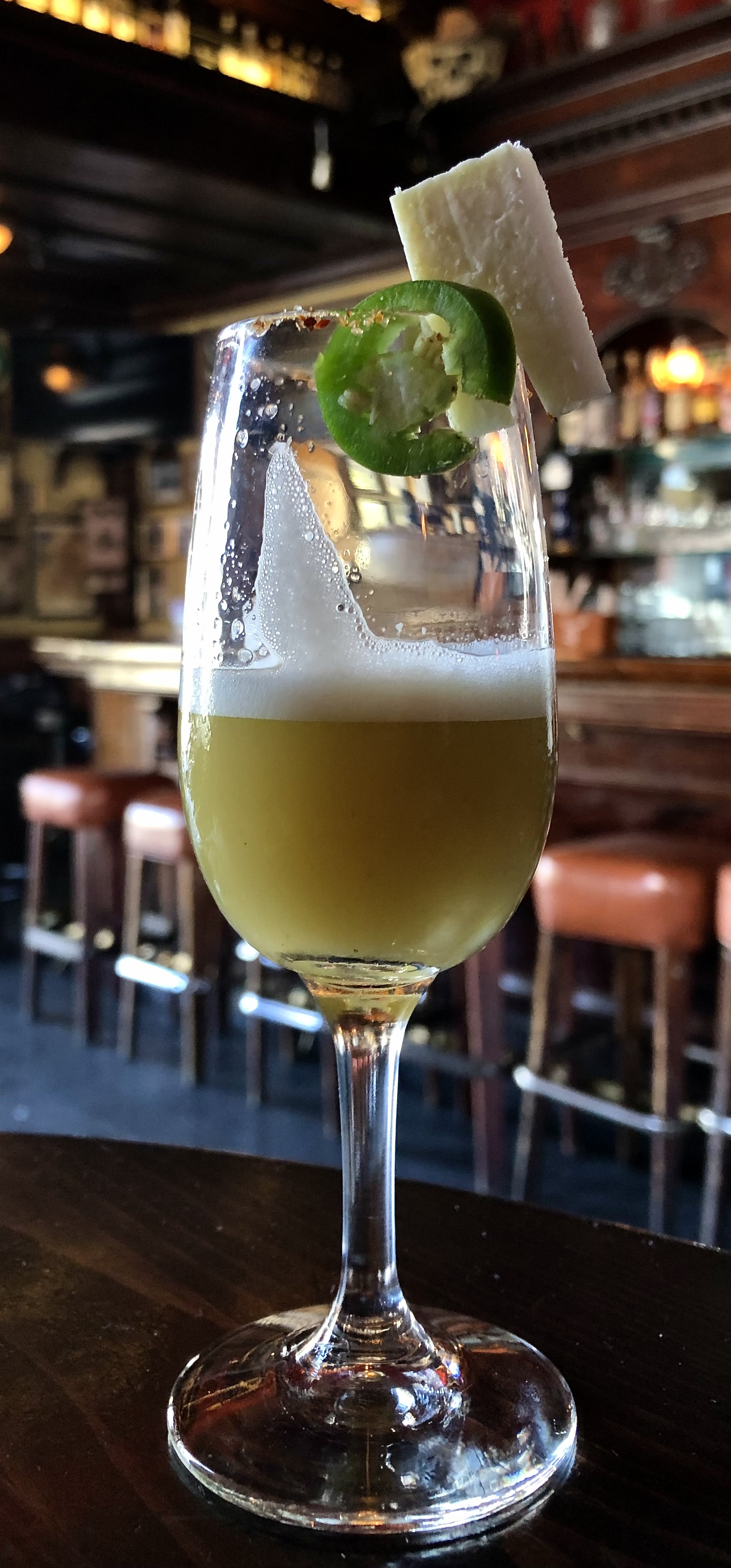
Next I thought I’d try a pour of one of their house private barrel picks. But the bartender hailed to me from across the room to ask whether I wanted to try a cocktail she’d been working on. She’d shaken a sample up and split it four ways into small glasses, one for her, me, and the two other patrons—a couple from Florida visiting San Francisco for the first time. She called it an Elote Sour, made with Nixta Licor De Elote Liqueur as the base, and lime juice for the citrus. Garnished with a wedge of dry Mexican cheese and slice of jalapeño, the spicy nose belied the silky savory/sweet taste. She said she was thinking of butter-washing the spirit, and I agreed that would add a nice flavor to what was already there.
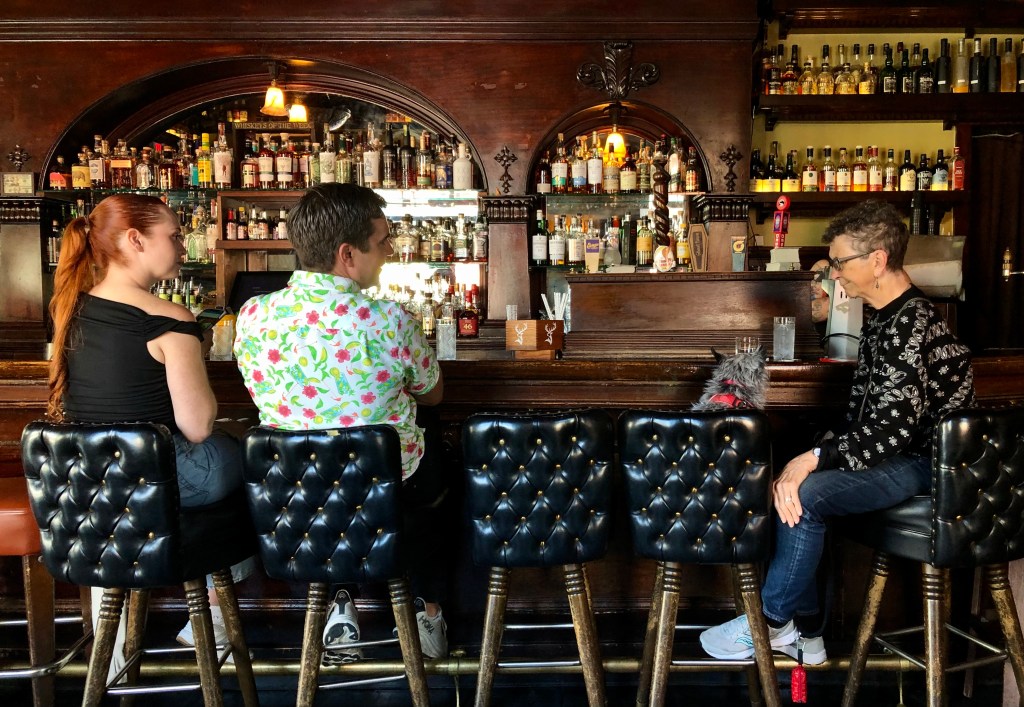
Then, as if to demonstrate the neighborhood-bar aspect, an older woman named Dolores walked in, with her scruffy dog named Betty White. They each sported the same rough chopped peppery-gray hair. Nobody knew her. But she conducted herself with the comfort of a regular. “I just got a phone call from someone I haven’t heard from in twenty years,” she said, “and I’m not sure I want to. So I need a shot of something.” We all laughed. “We are here for you,” the bartender said. Dolores requested a shot of Jack Daniel’s. “I used to order one of these and nurse it,” she said. “I don’t want to nurse it today.” And with that, Dolores and Betty White each took a seat at the bar.
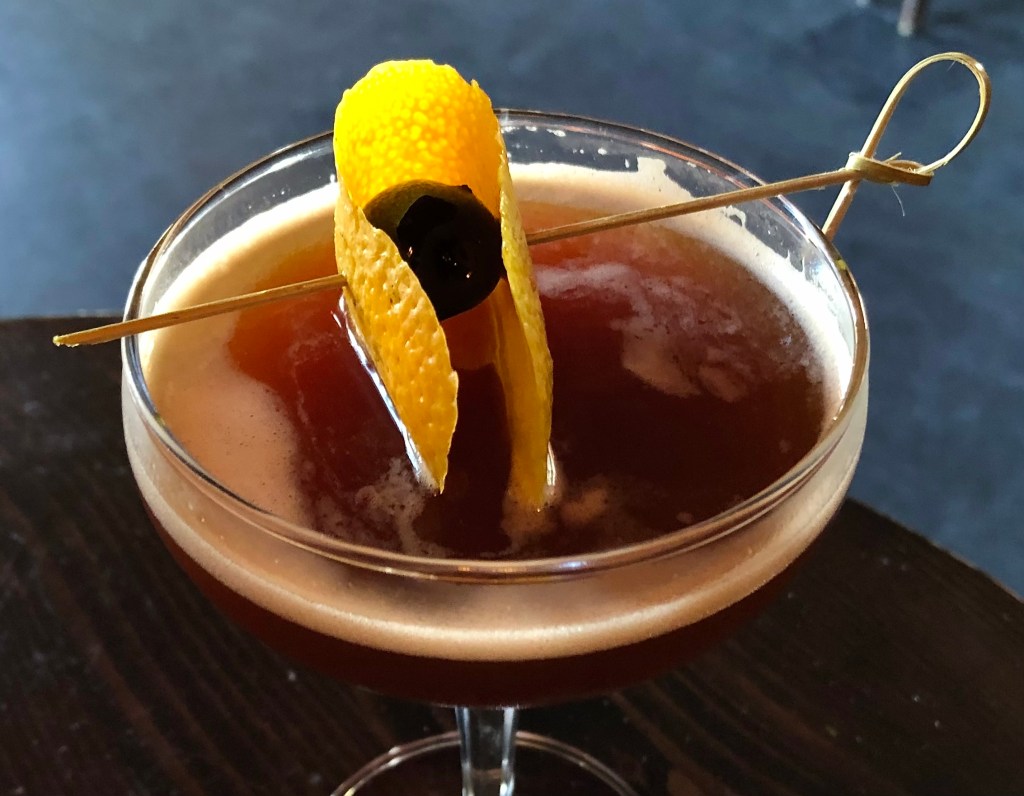
I ordered a Blood & Sand, and asked that it be made with Springbank 10 Year rather than the house standard, Dewar’s White Label. Turns out the bartender had never heard of a Blood & Sand. It was on the menu. But obviously not a common request. One of the other patrons listed out the ingredients by heart. The Bartender mixed one up, giving extra attention to the garnish. I’ve made many Blood & Sands at home, though actually never with the requisite Heering Cherry Liqueur. So this was my first proper Blood & Sand. It was great. (And the Springbank 10 was an excellent choice for the base, if I do say so myself. 😉)
Of all the bars on my San Francisco hop, Elixir may very well be the most satisfying. It’s neighborhoody yet welcoming to strangers. The cocktails are excellent—thoughtfully designed, and with an openness to customer requests. It’s a whiskey geek’s paradise. And there are a range of prices to accommodate most any wallet that can afford a drink.
Owner H. Joseph Ehrmann’s respect for the history of the address goes beyond the architecture and memorabilia. His carefully curated space nevertheless feels ad hoc. Altogether, Elixir embodies the most time-tested ethos of the very best bars—welcoming, comfortable, clean despite the decades, quality drinks, no fussiness. And I mean c’mon, take the 600+ whiskey list alone! How many bars with that many whiskeys are not way overpriced and way over-chichi?
Elixir is the best of many possible bars.
Last Call
So, what makes a bar good? And what makes a bar San Francisco?
Around about my visit to Iron Horse, something I’d already understood came into focus for me: Authenticity is key to a good bar. It doesn’t matter if it’s a shaky old dive on a major tourist drag, like Li Po Cocktail Lounge, or a recently designed ode to the past, like Stookey’s Club Moderne. If a bar is authentic in its choices around design, drink, and service—which together comprise atmosphere—it’s a good bar. Who would disagree on that?
But then there’s the matter of taste. Pretension, for example, is not to my tastes. Now, I will say, “pretension” is a word that gets tossed around a lot and easily, sometimes glibly, hypocritically, even errantly. So for clarity I’ll share my own understanding of the word: that pretension is the opposite of authenticity. Someone who pretends to be something they are actually not, believe in something they actually do not, or makes claims their actions don’t back up, is not authentic. And the things they make, like a bar, will embody this impulse to pretend, making for a discomfortingly false atmosphere.
Similarly, exclusivity is also not to my tastes. An exclusive atmosphere can come about from the prices, the design, the music or particular use of TVs, the approach to service—choices that might in one way or another exclude people from participating.
I like an inclusive bar. To me that means a price range that a range of people might be able to swing. Fun non-alcoholic options for my non-drinking friends to enjoy. A comfortable place to sit. A well-balanced bartender. Music that doesn’t demand I yell. And if there must be a TV, it shares the music’s lack of insistence. I don’t even need the drinks to be amazing! If the atmosphere is authentic and inclusive, I’ll drink most anything. I want to feel welcome to stay awhile, even if I only pop in for a quick drink, and whether I’m alone or with friends.
And as for San Francisco… Well, I’m thinking again about my New York bar hop. There I asked myself what is a “classic” New York bar? In the end I concluded that only a true New Yorker could say. There is something solid and steady about New Yorkers, something that imbues them with the confidence of timelessness. Like granite. They know their city innately.
But San Francisco is such a transient city, more shifting sands than solid granite. Over time people have come and gone in massive waves, reshaping the local culture with the crash of their arrival, and leaving broken expectations in the wake of their departure. The Gold Rush. The post-1906 rebuild and real estate grab. The political Sixties. The gay Seventies. The D.I.Y. Eighties and Nineties. Tech Booms 1 and 2. With all these generations of floods and droughts, who is a “true” San Franciscan? And how can this transient essence of San Francisco be embodied by a bar?
For me, it has to do with Time. Or rather Times, plural. Bars that manage to be authentic and inclusive, yes, and connected somehow to multiple eras in Time. Club Waziema. Elixir. Li Po Cocktail Lounge. Stookey’s Club Moderne. Zam Zam. These are good San Francisco bars. They transcend the present. They have worked, would work, will work, in any of the city’s eras. They are vessels for multiple histories.
There are so many San Francisco bars I could have written up here, each for very good reasons. 500 Club. Cafe Du Nord. Doc’s Clock. Dogpatch Saloon. The Homestead. House of Shields. Jolene’s. Kilowatt. Linden Room. The Lone Palm. The Lucky Horseshoe. Mr. Bing’s. Orbit Room. The Page. Philosopher’s Club. Red’s Place. The Royal Cuckoo. Saint Mary’s Pub. Specs’ Twelve Adler Museum Cafe. Trad’r Sam. Look them all up. Go to all of them.
Anyone can go to The Buena Vista and get their mass produced Irish Coffee. Or Bourbon & Branch for a “speakeasy experience.” Or The Old Ship Saloon for the “oldest bar in San Francisco,” one of several to make the claim. These places are so on the map they dominate it. Take a chance instead on that odd place you haven’t read as much about that catches your eye. Glance inside. If it catches your other eye, stay for a drink. Because why not?
Cheers!

 The Right Spirit