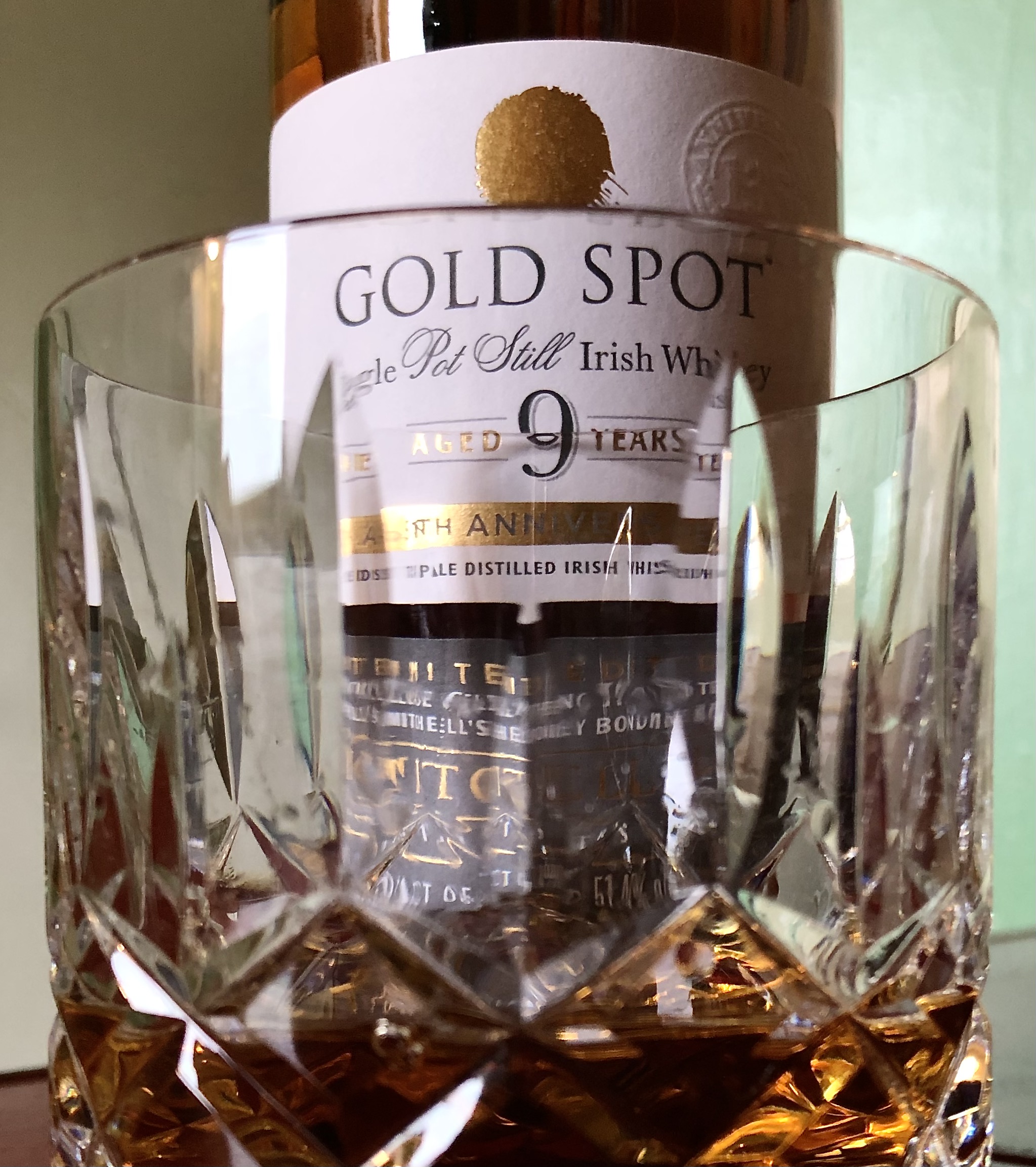
GOLD SPOT
135th Anniversary Release (May 2022)MASH BILL – Undisclosed mash of malted and unmalted barley
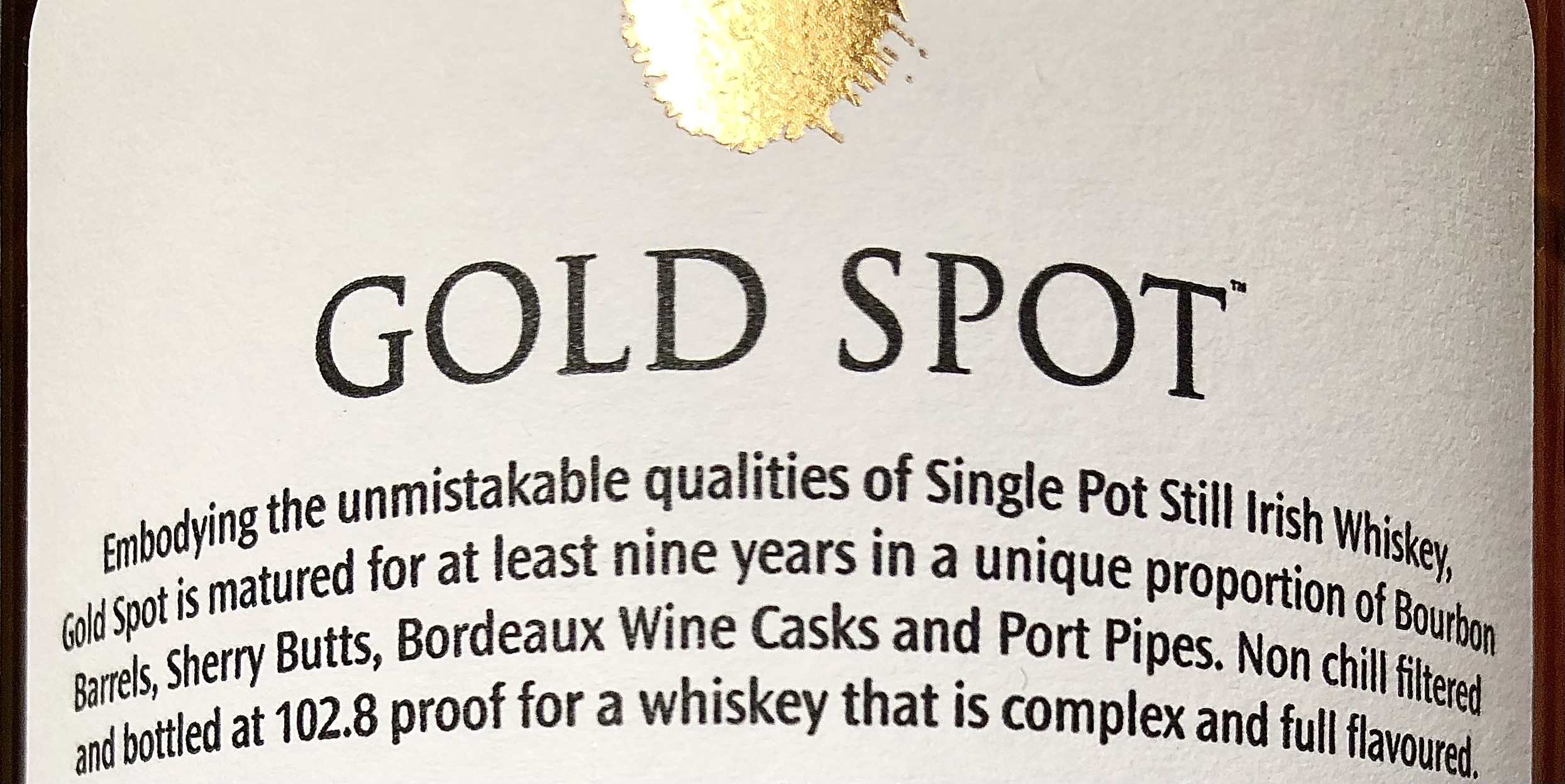
PROOF – 102.8
AGE – 9 years
DISTILLERY – Mitchell & Sons (Midleton Distillery)
PRICE – $110 (more commonly $150+)
WORTH BUYING? – Yes
Uncorked and tasted in The Year of No Buying (The what? 🔗 here.)
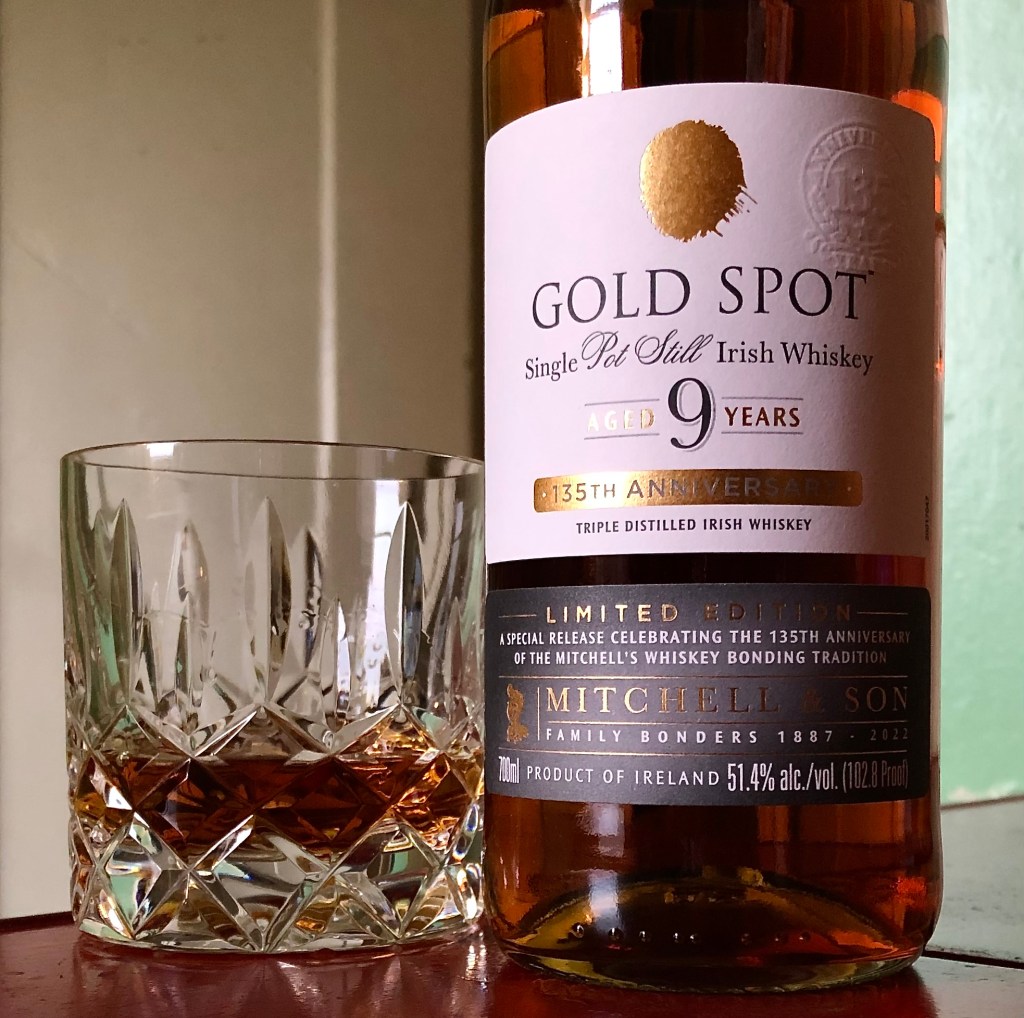
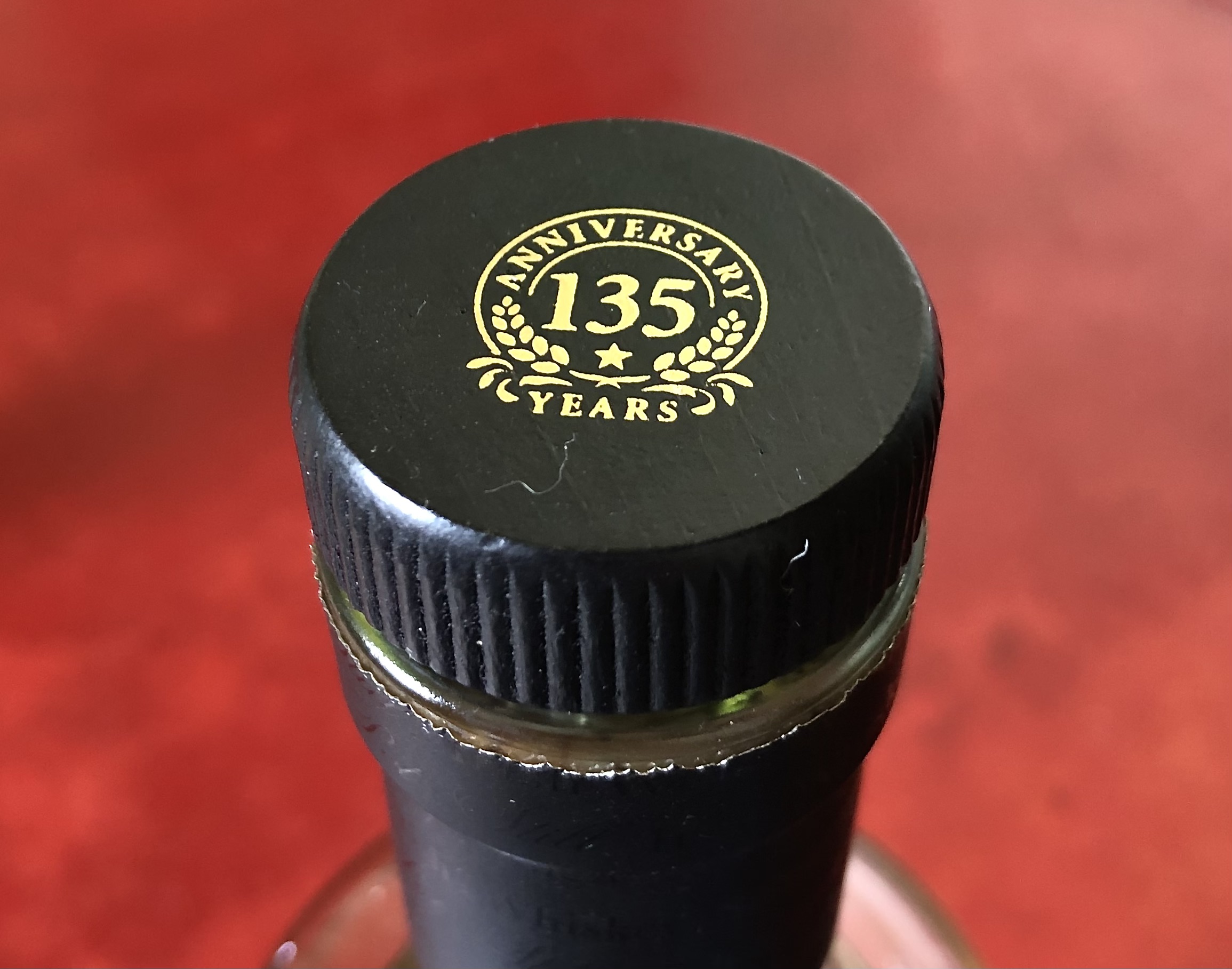
Gold Spot came and went fairly quickly in the summer of 2022, vanishing in a frenzied FOMO fog. It was created to commemorate the 135th anniversary of Mitchell & Sons, arguably Ireland’s most famous and enduring whiskey bonder and family-run wine and spirits merchant.
There wasn’t a subsequent release the following year, so it seemed Gold Spot might be a true one-and-done Limited Edition. But in early 2024, label designs for another release with different specs started to pop up on the social meds, so, we’ll see what Gold Spot’s release pattern eventually turns out to be.
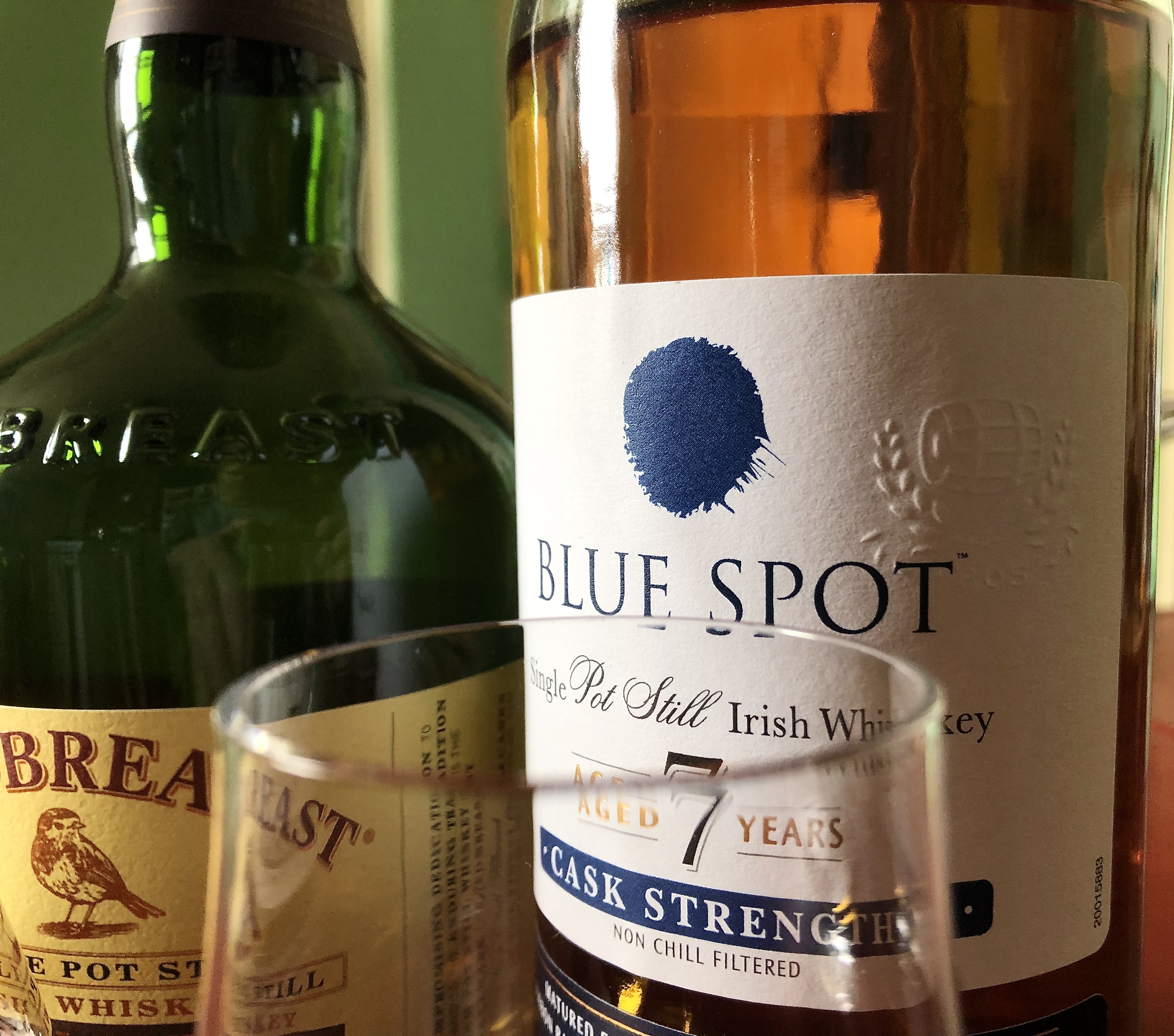
The more regularly available Spots include the Green, Yellow, and Red, with the Blue coming out in limited quantities once a year. Mitchell & Sons still has their name on the brand, which they started in the early 1800s, when Jameson Distillery commonly sold whiskey to merchant bonders who resold it under their own brand names. Mitchell & Sons put various wine casks to use for aging these whiskeys further, using splotches of colored paint to indicate which barrels were destined for the 12 versus 15 year bottlings, etcetera. Today the Spots are produced and managed for Mitchell & Sons by Midleton Distillery, source of some of the most commonly known Irish whiskeys on the market—the Spots, Redbreast, and Jameson among them.
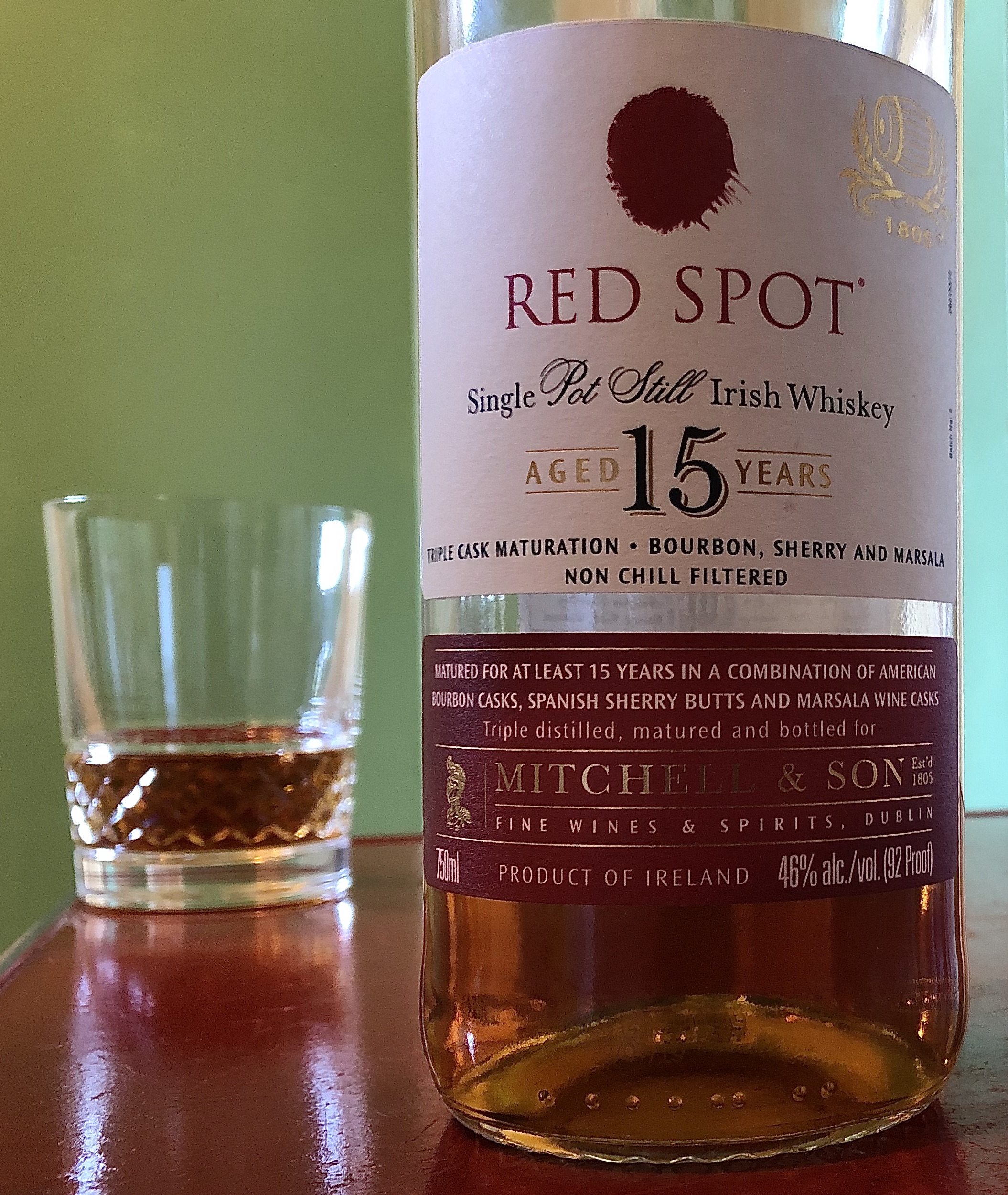
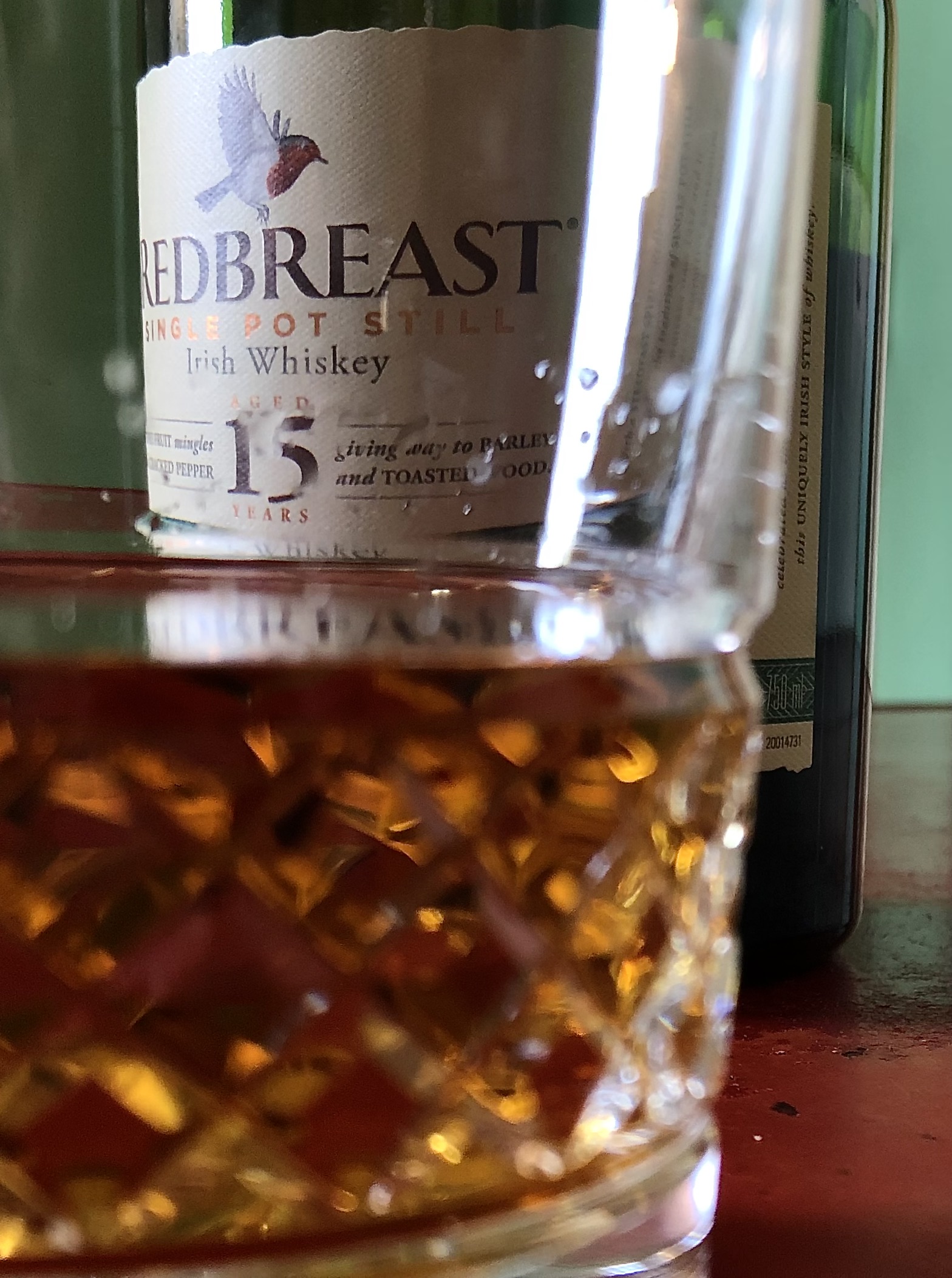
I’ve already written here on the blog about Midleton’s dominance over my palate’s sense for Irish whiskey. I’ve begun to explore other non-Midleton brands, like Teeling, in order to develop a truer sense for Irish whiskey, as opposed to just Midleton whiskey. But I do still have a handful of Midleton products in the bunker to get through.
It’s slow going, though. I’m a big fan of surprise, you see, and the Midleton flavor profile’s ubiquity and familiarity have rendered it notably unsurprising for me from bottle to bottle.
That doesn’t mean it’s bad. Not at all. And as with any distillery, I may prefer one release over another. But for me the reason now to reach for any Midleton product is to get exactly what I expect—bright, flavorful, fun whiskey that’s ready to dance and sing at the party. When a Midleton product goes off for me, it’s typically either because of a plastic note I get from their more mass-processed, artificially colored products, or too much copper pot zing adding a metallic bitterness I don’t enjoy.
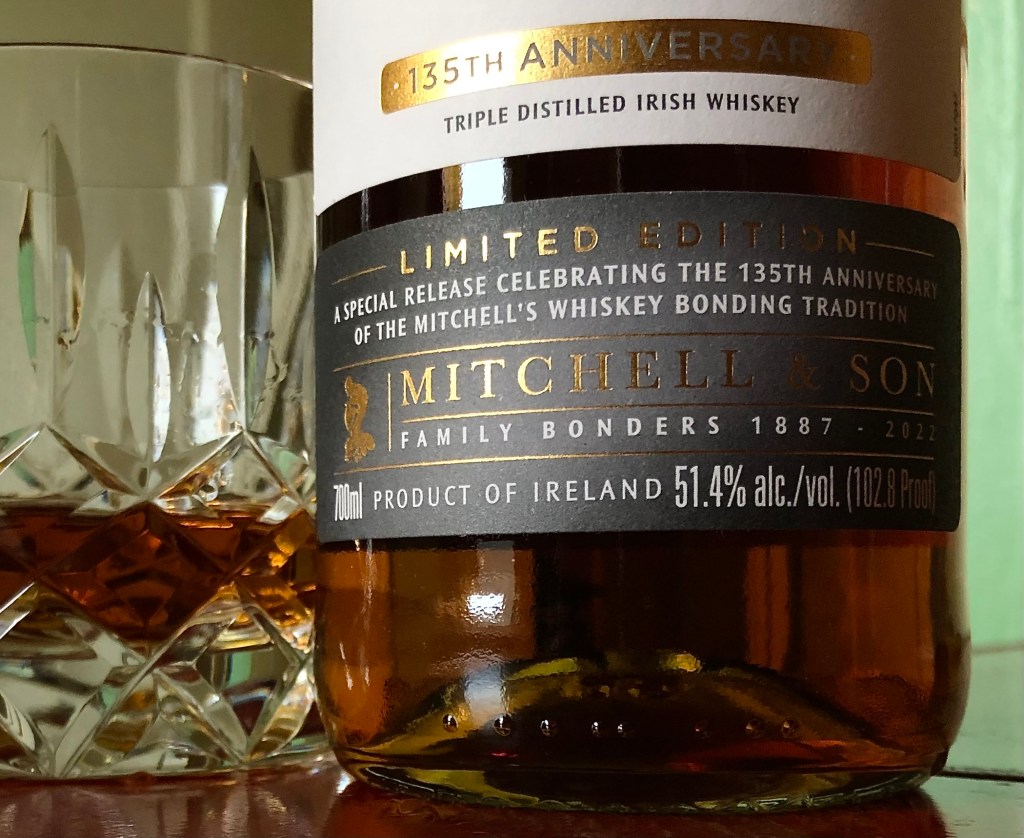
The Gold Spot’s age and proof put it close to the Blue, itself a bit younger at 7 years and much hotter at 117+ proof on average. With a bit more age and a milder proof, Gold Spot promises something perhaps a little less rambunctious, a little more settled in. Aged in a combination of Bourbon Barrels, Sherry Butts, Bordeaux Wine Casks and Port Pipes, this too makes the Gold similar to the Blue and other Spot releases. However, the use of Port Pipes is a first for the Spot line. If the Port’s impact is prominent, perhaps this will nudge the whiskey a step away from Midleton’s familiarity?
Let’s find out.
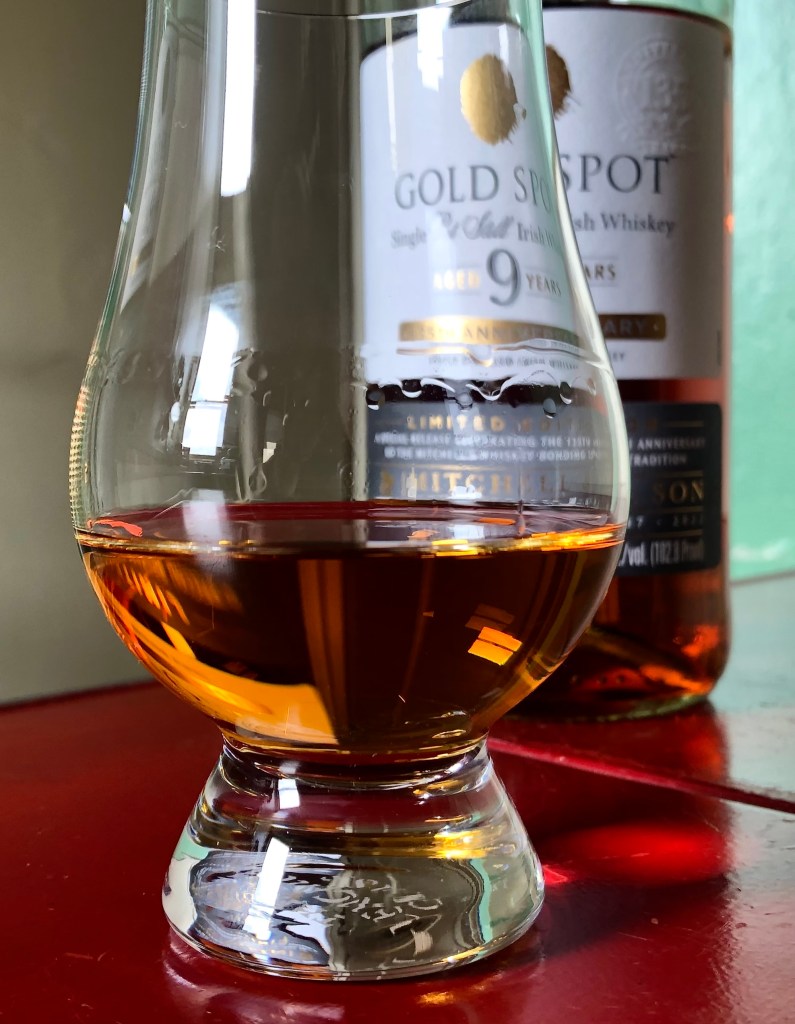
Here we are, four weeks after uncorking and four pours into the bottle. These brief notes were taken using a traditional Glencairn.
COLOR – medium burnt orange with dingy brass and tarnished gold highlights
NOSE – familiar Midleton notes, but, like the color, everything darker and with a rich toasty/burnt quality: the copper pot zing, lemon juice and zest, dry oak, dry vanilla-caramel fudge, a faint whiff of red berries, eventually also baked persimmon
TASTE – immediately sweeter and creamier than the nose, the fruit and caramel notes much more forward and pungent, with the drier metallic copper notes receding to an outline
FINISH – tangy caramel, fresh papaya and rich red berry, copper, a dash of black pepper, dry butter biscuit, faint lemon and orange zest, rindy orange marmalade, a bit of soft ripe mango
OVERALL – a very nice, warm Irish whiskey, both zingy and soft
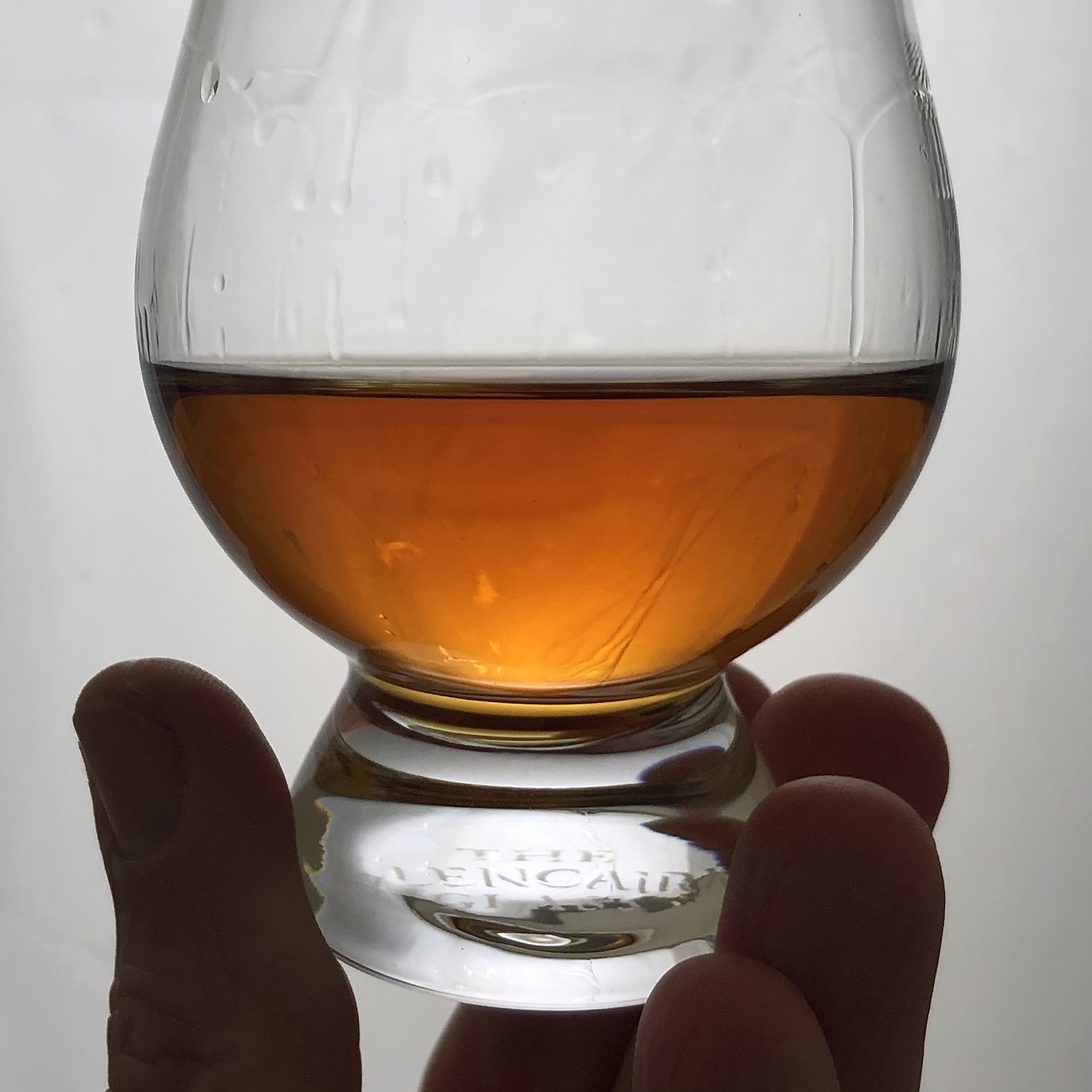
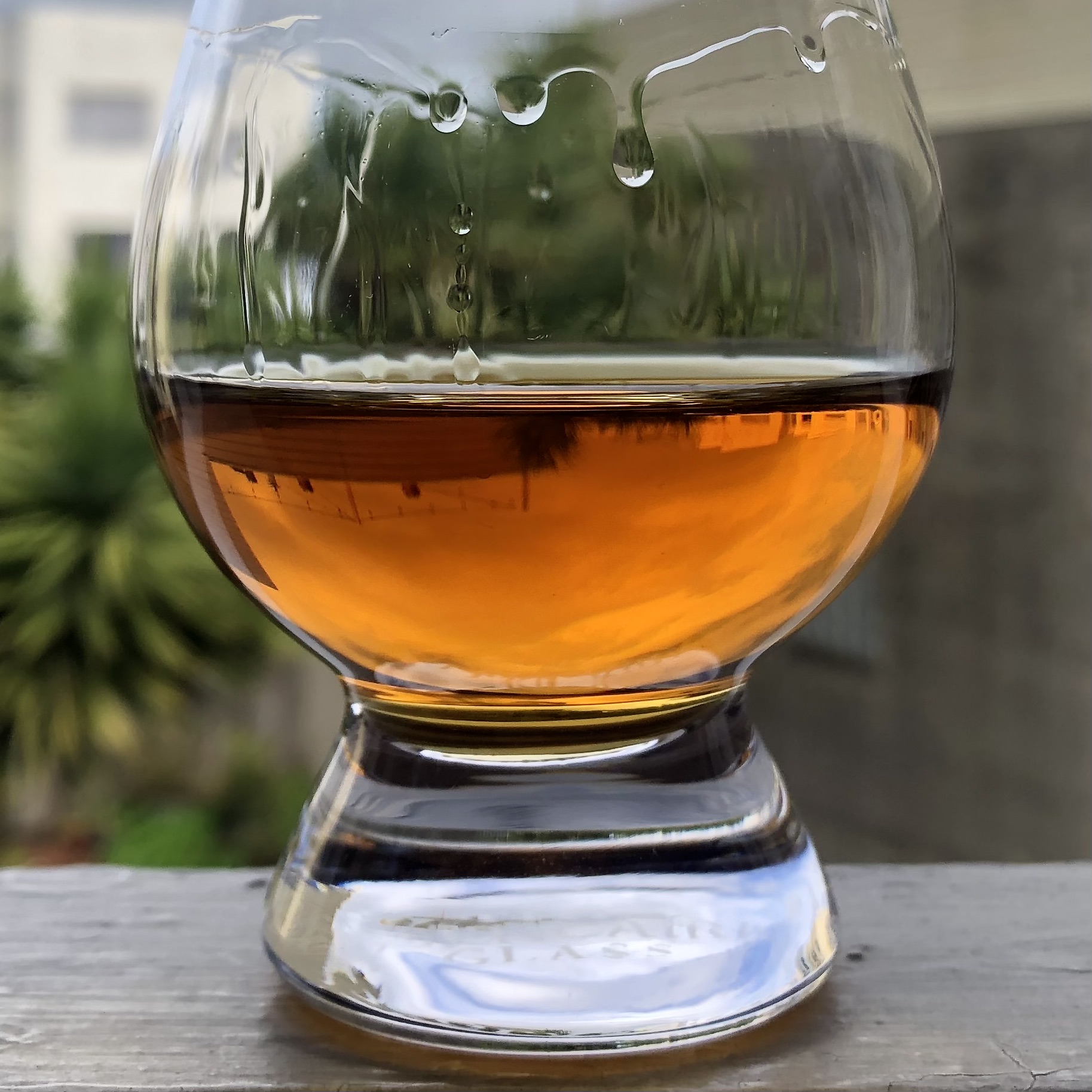
I’m loving the proof on this. At 102.8 it’s not as hot as its Blue Spot or certain Redbreast cask strength cousins. The age isn’t a remarkable number, of course. But as people note more and more, age isn’t really the key factor when it comes to influence over flavor. Naturally it has an impact. But I agree with those who lean toward proof as the greater flavor puncher.
I think of my journey with Four Roses Barrel Strength Single Barrels in this regard. Over time I came to notice that barrels bottled at around 105 proof or so tended to be my favorites. I recently had one aged 10+ years, for example. The oak notes pushed their dryness a bit more than I might have preferred. But that bottle’s 106.2 proof helped keep the oak sweet. At a much higher ABV the oak may have dried out, and, in combination with Four Rose’s high rye mash bills, created something maybe too dry, tannic, and herbal for me.
Here the equivalent is less with the oak than the copper. I’ve discerned over time that triple copper pot distillation can result in a bit too much metal for my tastes. But here the copper zing’s edge has a burnished softness to it. This could also be the influence of the various wine casks. Does the Port cask help round out the sharper metallic edges with its sweet, dark red fruit flavors?

I don’t have any Blue Spot on hand to compare, nor an open Redbreast. But I dare say this Gold Spot is certainly more immediately pleasing to me than the second release of the Blue, and may also rival some of Redbreast’s finer cask strength outings. The quite dry nose had me initially skeptical. But on the taste and finish, the creamy and rich sweet aspects come rushing forward, soaking right into my palate to stay and linger.
Pricing may likely keep future releases off my home shelf. My current bottle does taste a bit better at the price I managed to get it, I’m sure, than it would have with the bite of a higher tab. But in any case, from a flavor experience perspective, Gold Spot ain’t at all a bad way to celebrate a 135th anniversary, or any other.
Sláinte!


 The Right Spirit