PURE KENTUCKY XO
Batch 16-50 (2016)MASH BILL – Unknown
PROOF – 107
AGE – NAS
DISTILLERY – Pure Kentucky Distilling Company (i.e. Willett sourcing from who knows)
PRICE – $55 (purchased in May 2022)
WORTH BUYING? – When I did, yes. Now? No.
Uncorked and tasted in The Year of No Buying (The what? 🔗 here.)
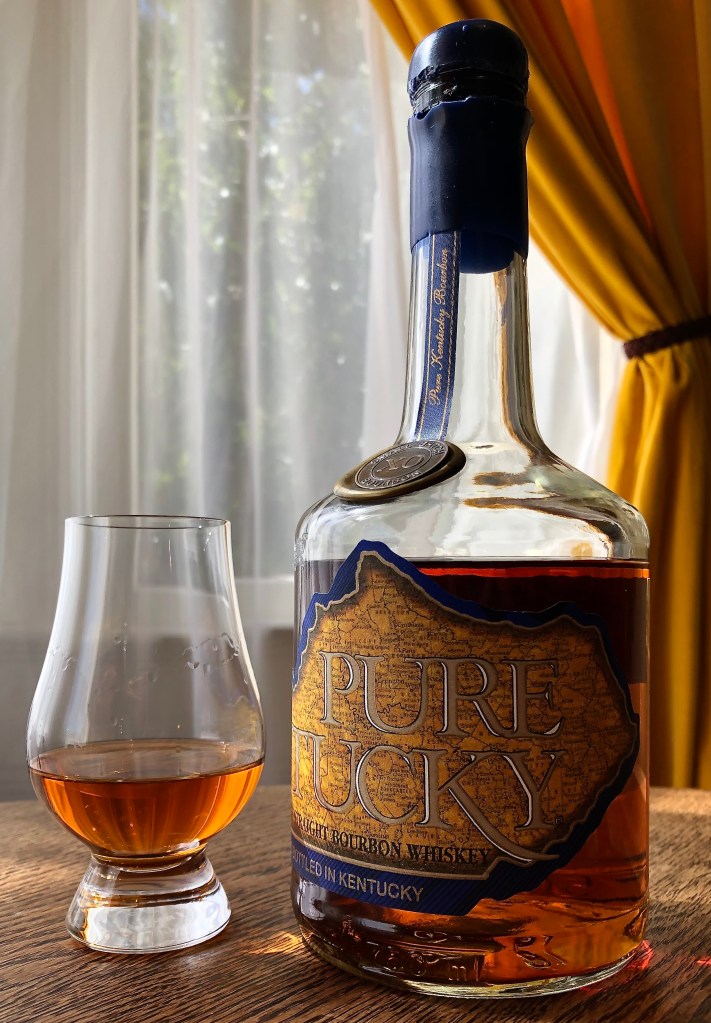
After recently opening a 2017 Noah’s Mill I’d been sitting on since buying it in early 2018, I decided to continue down the not-quite-yet-vintage Willett route and uncork this 2016 Pure Kentucky XO.
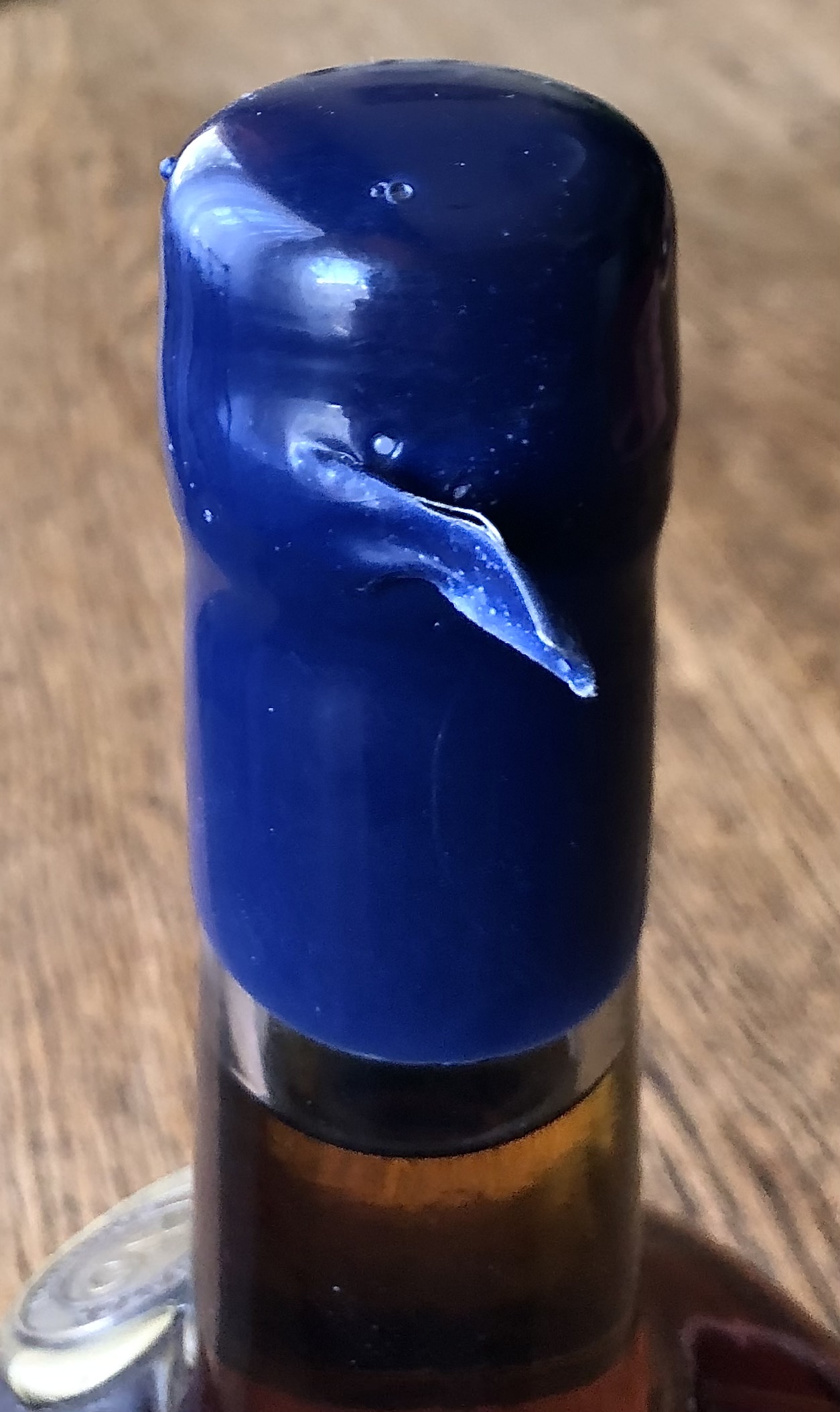
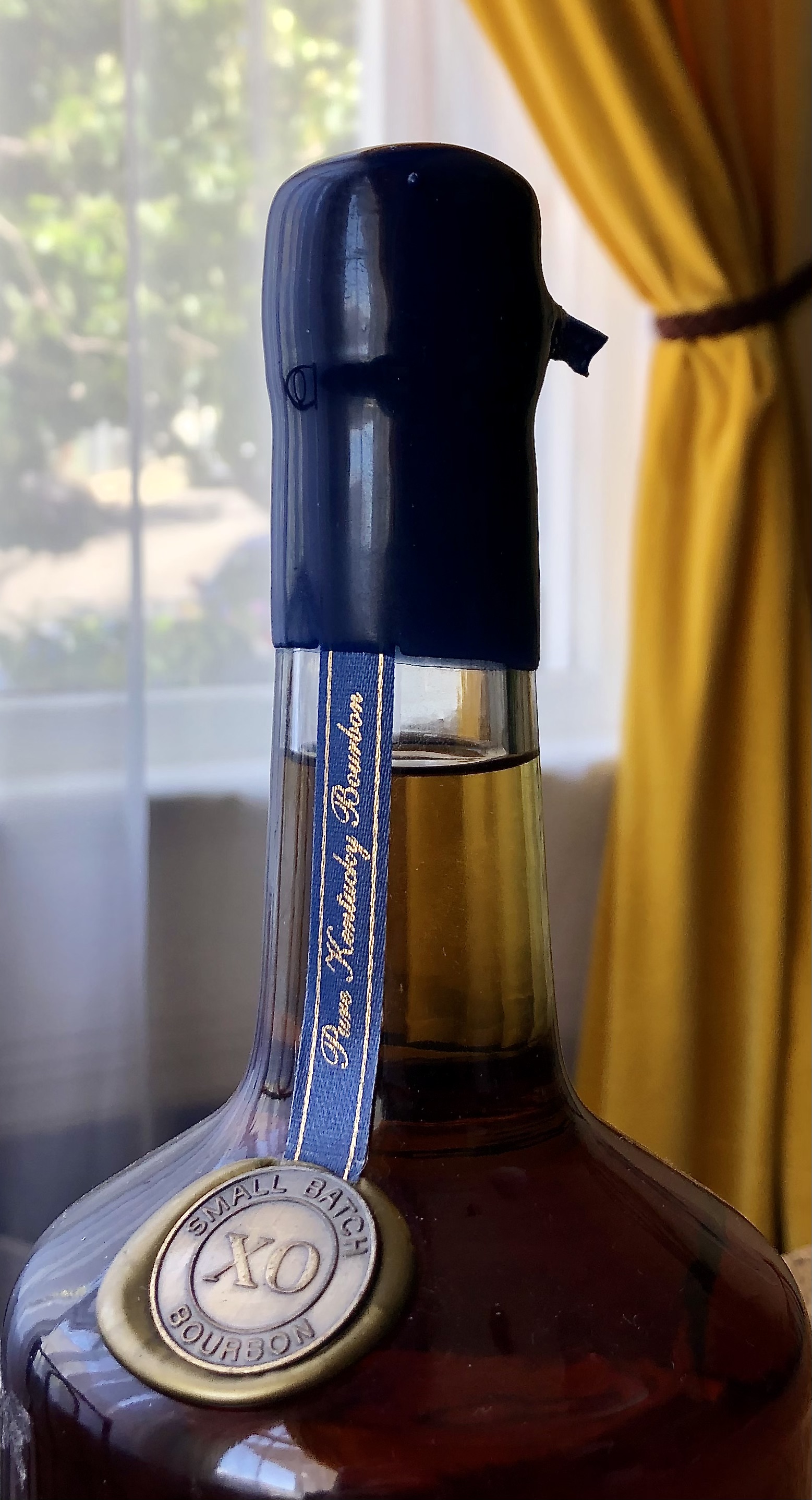
I’d found this bottle cloaked in dust in a downtown San Francisco liquor store in May 2022. The wax-dipped top was an immediate clue that it was an older batch, and a quick check of the label confirmed it.
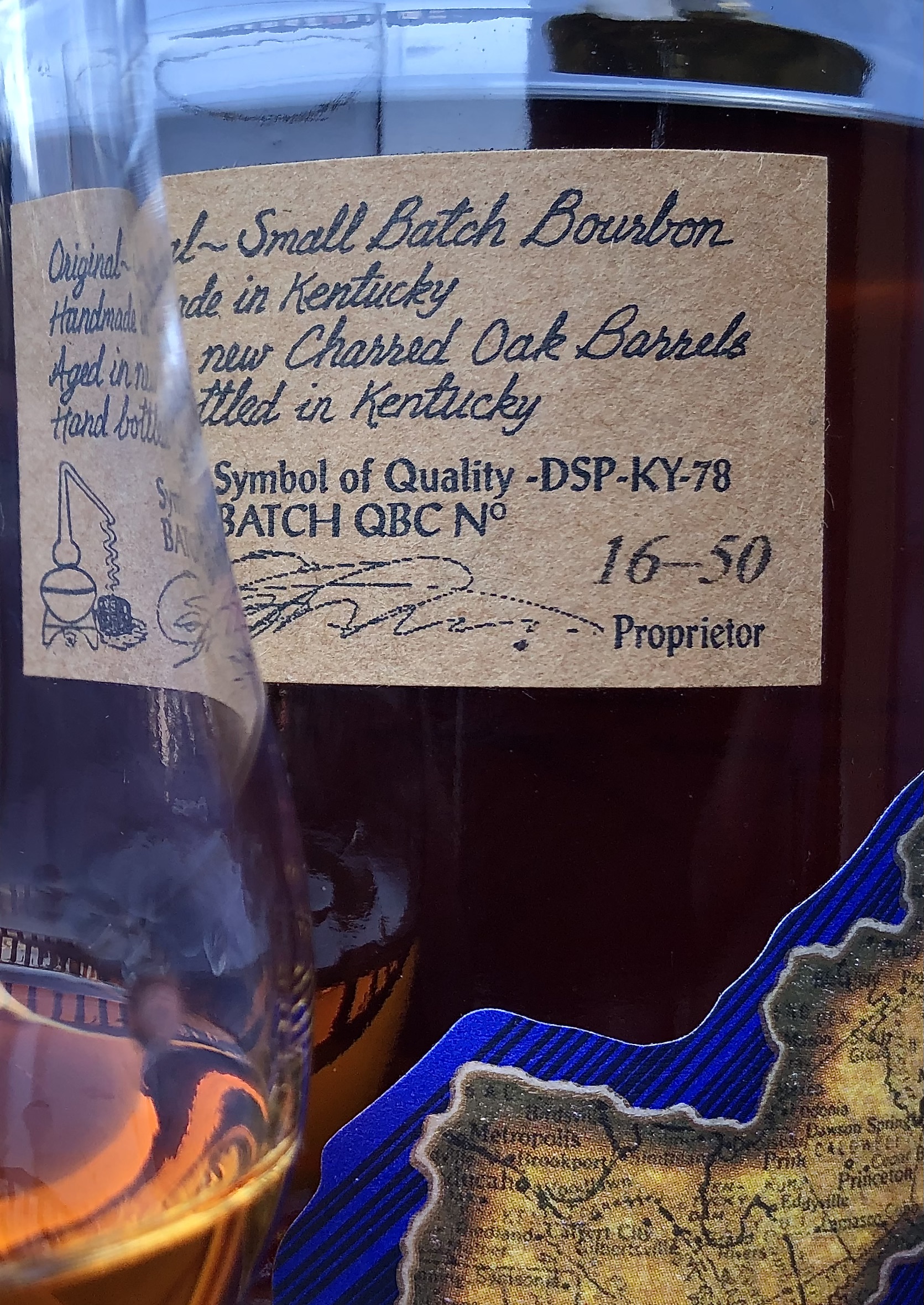
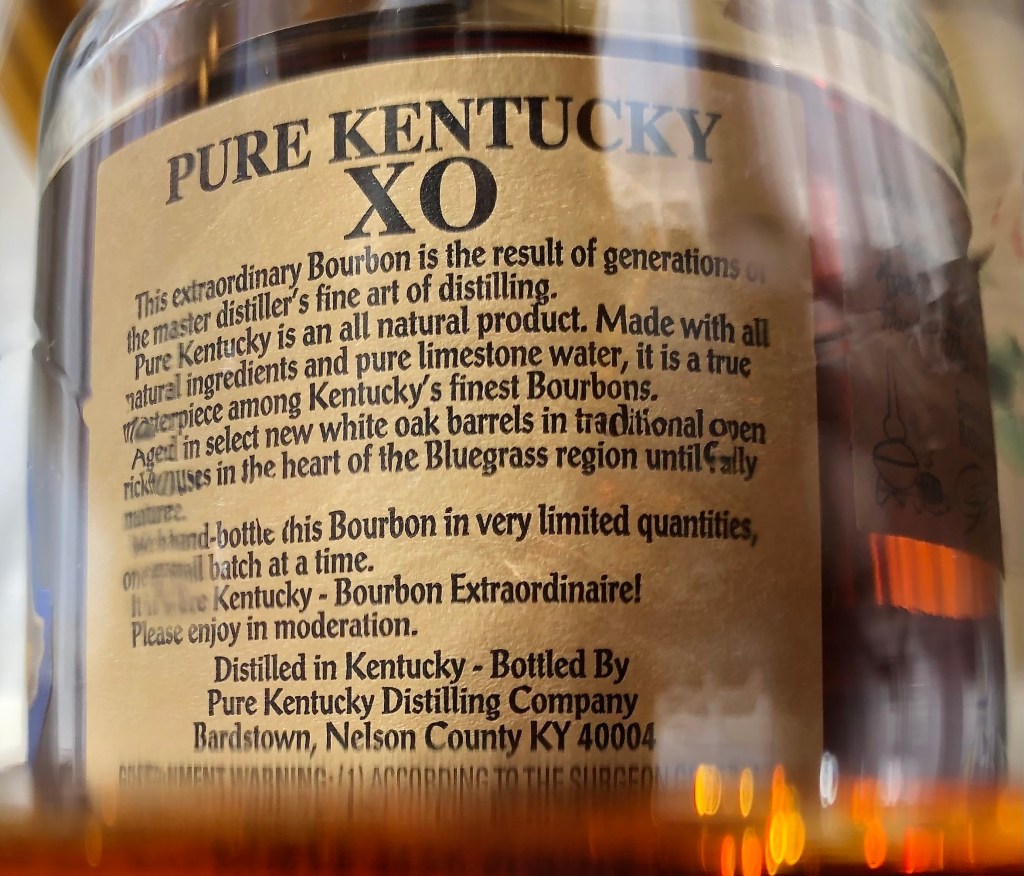
In 2016, Willett was still sourcing the contents of Pure Kentucky XO. Back then they didn’t even put their name on the bottle, crediting instead the fake “Pure Kentucky Distilling Company.” Made-up distilleries named after the whiskey brand itself have been a fairly common practice in American bourbon. I’ve never understood the need for it. Why not sign your name to what you do?
It’s certainly a less common practice today than even a handful of years ago. Sourcing has become increasingly recognized by whiskey fans as a legitimate process of getting great whiskey into the market—so long as the bottlers are honest about what they’re doing. I imagine the various contractually obliged secrecies will continue to fall away as the whiskey boom rolls on. Transparency is where it’s at now.
But in 2016, Willett was still upholding the fake distillery angle, a DBA marketing trick meant to add a sense of authentic origin—at least for buyers unconcerned with authentic authenticity.
So after many years of carefully curated sourced releases, Willett started distilling their own whiskey in 2012. It wasn’t until around 2020 that they fully transitioned from sourced distillate to using their own make in their non-Willett labelled line of bourbons—Johnny Drum Private Stock, Kentucky Vintage, Old Bardstown (in three variations: Estate Bottled, Bottled in Bond, and 90 Proof), Rowan’s Creek, Noah’s Mill, and Pure Kentucky XO. Today the labels of each brand state “Distilled, Aged, and Bottled in Kentucky by Willett Distillery.” But up through 2019, only Willett’s distillery number (DSP-KY-78) indicated who was behind it.
Where Willett sourced their early whiskeys is relegated to eternal speculation. (Bernheim, Buffalo Trace, Heaven Hill, and MGP are among the rumors.) In a way, the shifting details of these brands provide rough markers charting the Bourbon Boom’s gradual mushrooming. For example, Johnny Drum and Noah’s Mill once carried 15-year age statements. Rowen’s Creek once had a 12-year statement. As bourbon grew in popularity, availability of well-aged stocks diminished. And so by around 2006 the age statements were dropped. And then 14 years later, Willett finally put its own name on these bottles because they were finally distilling 100% of the contents. This basic trajectory is a fairly common twenty-first century American distillery journey.
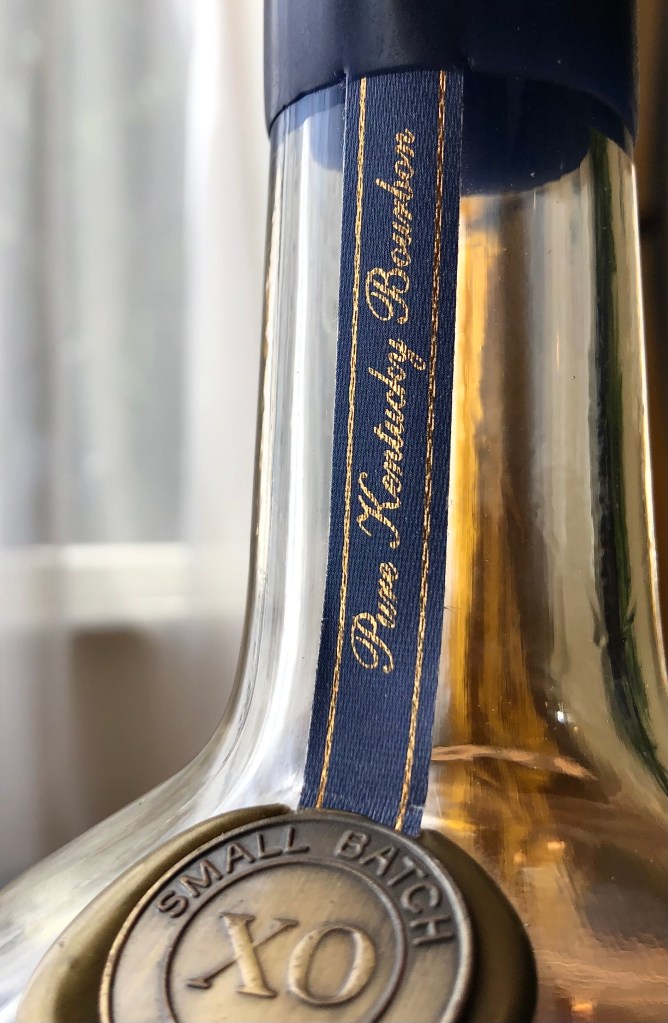
Pure Kentucky XO never had a prominent age statement beyond its suggestive “XO,” though the Google rabbit hole reveals claims of labels circa 2011 with the intriguing fine print, “Barrel aged for at least 12 years, or more, depending upon climatic seasons.” The brand was thought to be the older sibling alongside Kentucky Vintage and Old Bardstown Estate Bottled. The age of any of these brands today is almost certainly in the single digits. By 2016, even that ~2011 fine print recognizing the impact of climate change on a bourbon’s age (😉) had been removed. So the bottle in my hand is very likely predominantly single-digit whiskey, if not entirely so.
I’ll never know for sure. All I know is it’s not Willett in name or substance, only in blending and bottling. Let’s see what it tastes like.
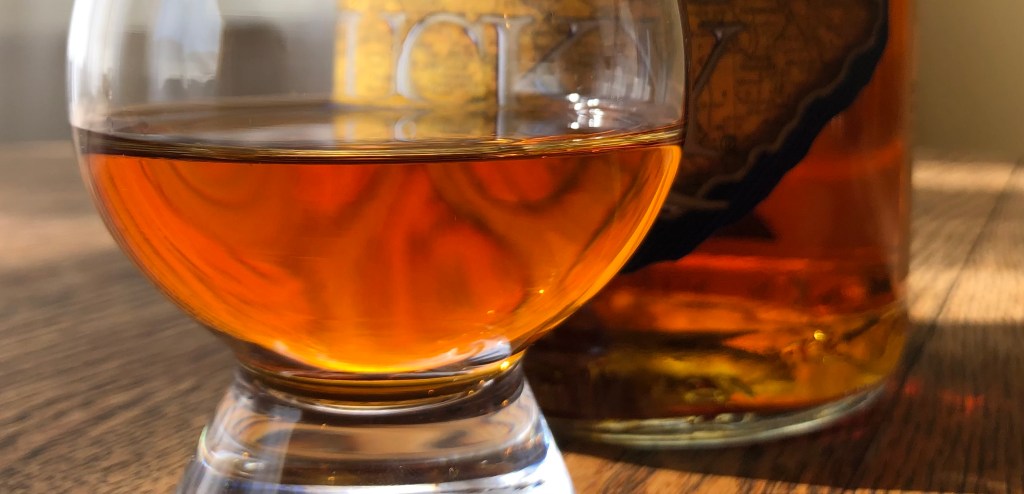
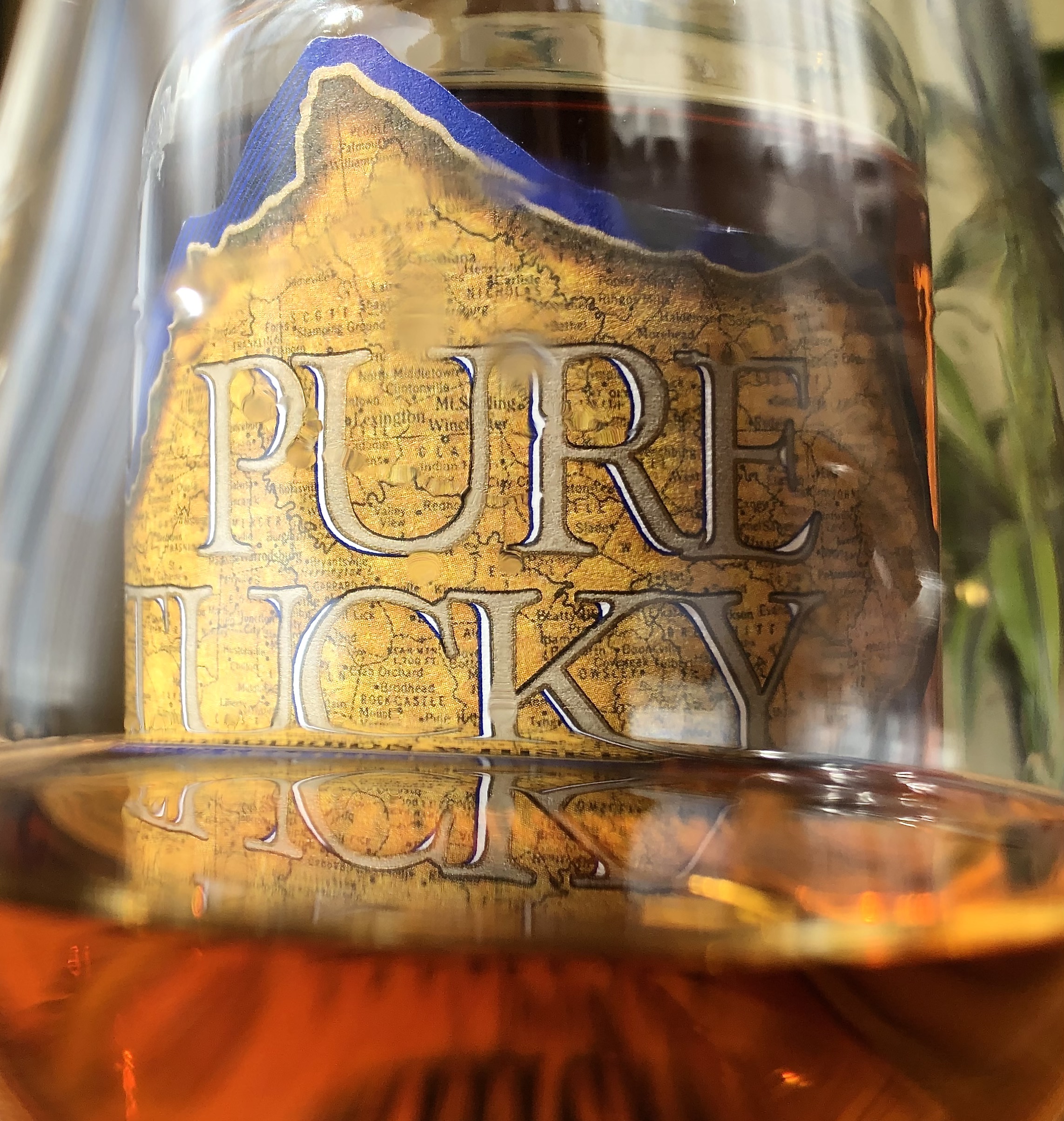
Here we are, nine days after uncorking and four pours into the bottle. These brief notes were taken using both a simple brandy glass and traditional Glencairn.
COLOR – pale oranges and ambers
NOSE – candied orange zest, distractingly garish herbal and wood spices, black pepper, vanilla, tangy caramel, fresh water in a brushed metal bucket, graham cracker
TASTE – darker than the nose yet surrounded by those glaring spices, and very true to the aromas, with the caramel and a spiced orange zest taking the lead, and a clear layer of oak underneath
FINISH – dark toasted bread crust, the orange zest now dried, oak, a light peppery prickle left to fade…
OVERALL – some truly great orange zest and caramel notes upstaged by irritatingly gritty herbal and wood spices
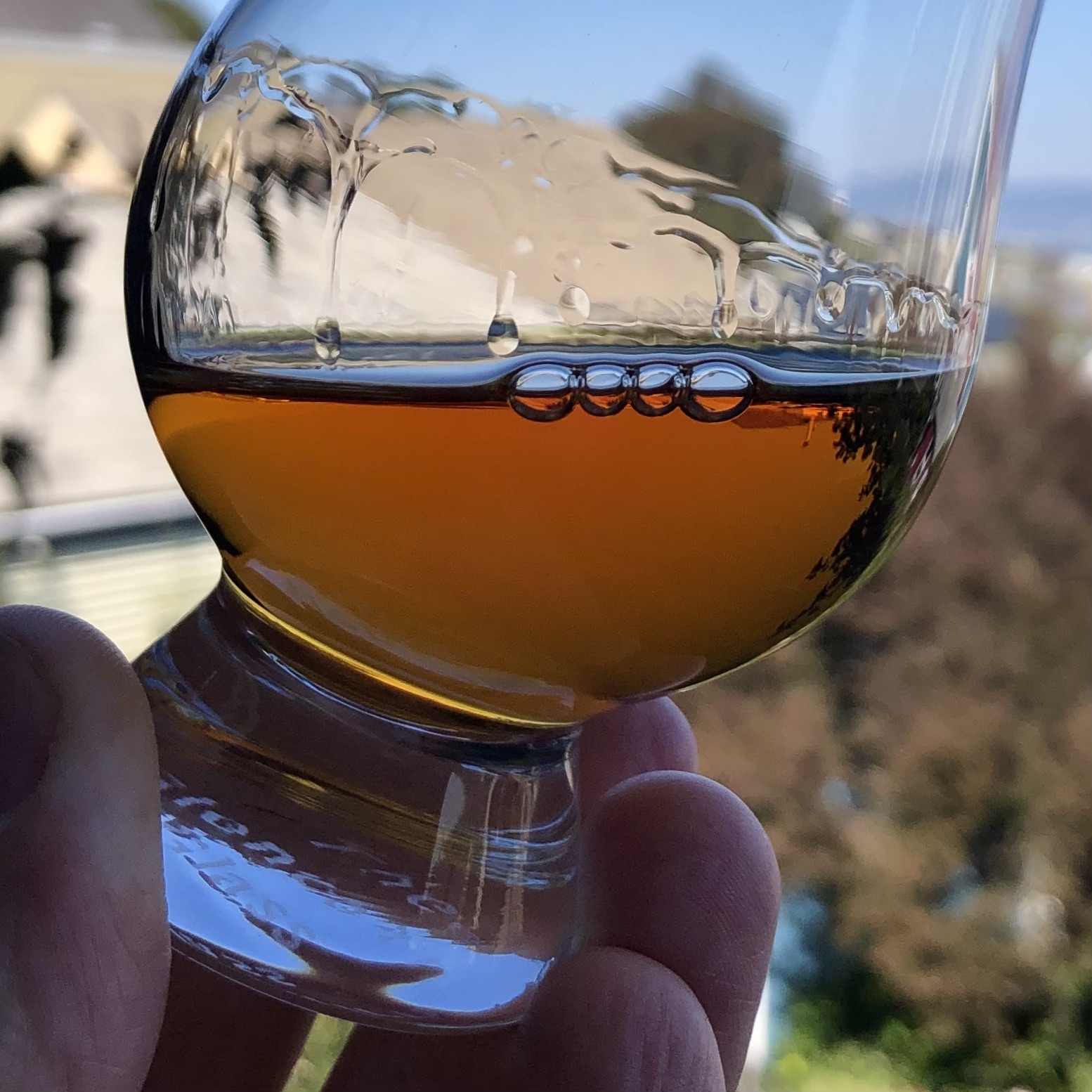
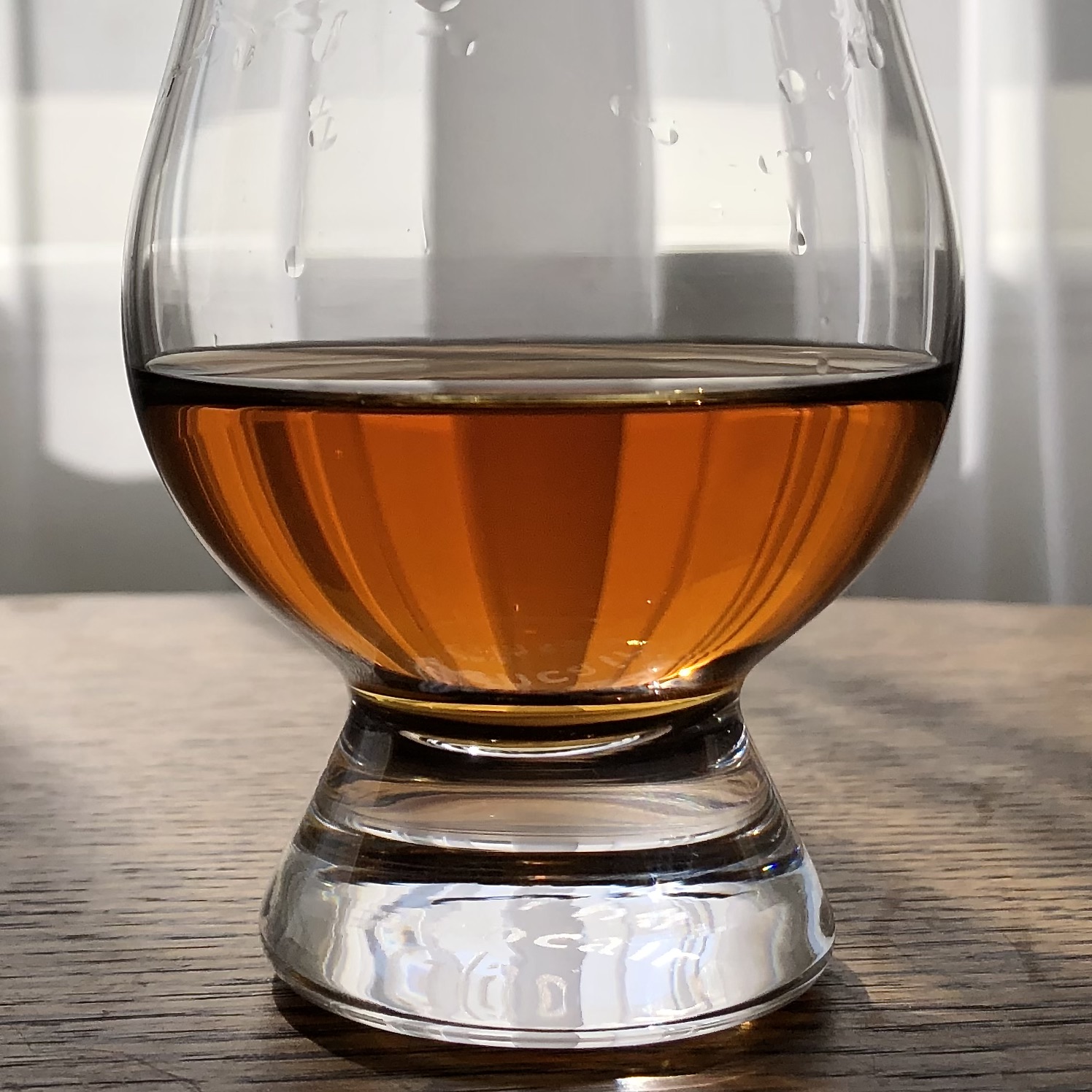
It’s not great. It’s not terrible either. If those darn gritty spice aspects didn’t coat the caramel and orange zest, and if that nagging metal bucket business wasn’t also in the mix, this could be brilliant. And the 107 proof—thought to be a magic proof by many, and I wouldn’t argue against it—keeps things warm without burning. So there are elements to like here.
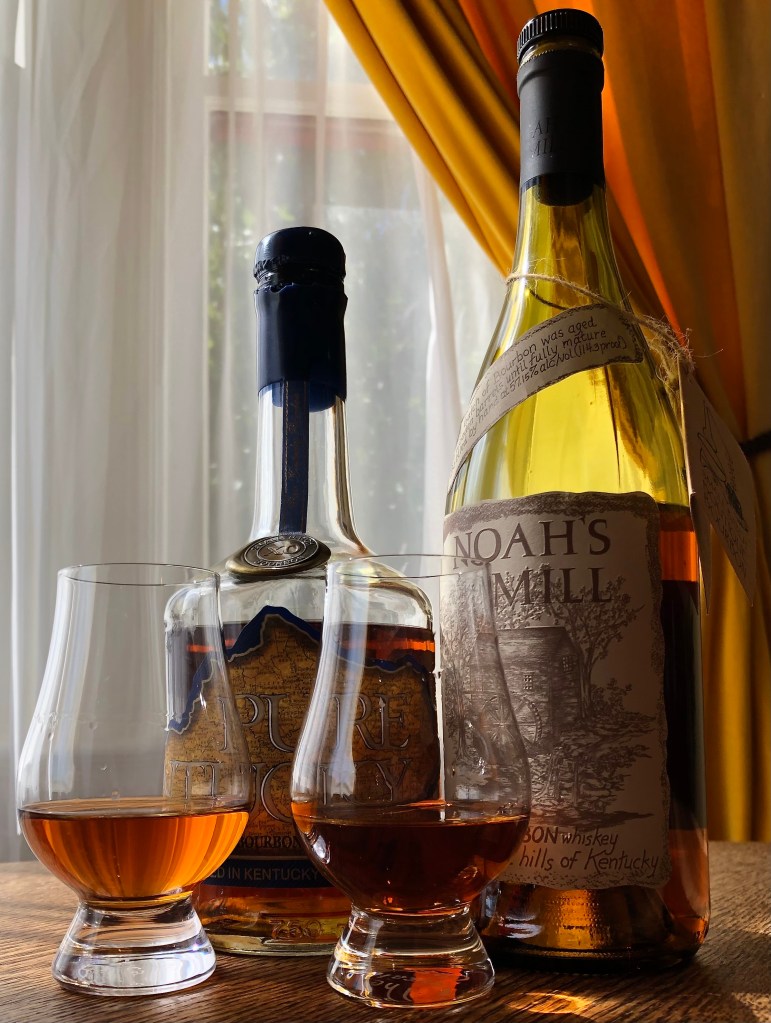
Naturally I was curious how this Pure Kentucky XO would compare with the 2017 Noah’s Mill. With the ages and origins of each unknown, that aspect of the playing field is level. But a proof difference of 7.3 means the Noah’s Mill runs hotter. Might that be the only differential, and what will its impact be?
The color and opacity of each are almost indistinguishable, with the Pure Kentucky XO tinting oh so faintly lighter.
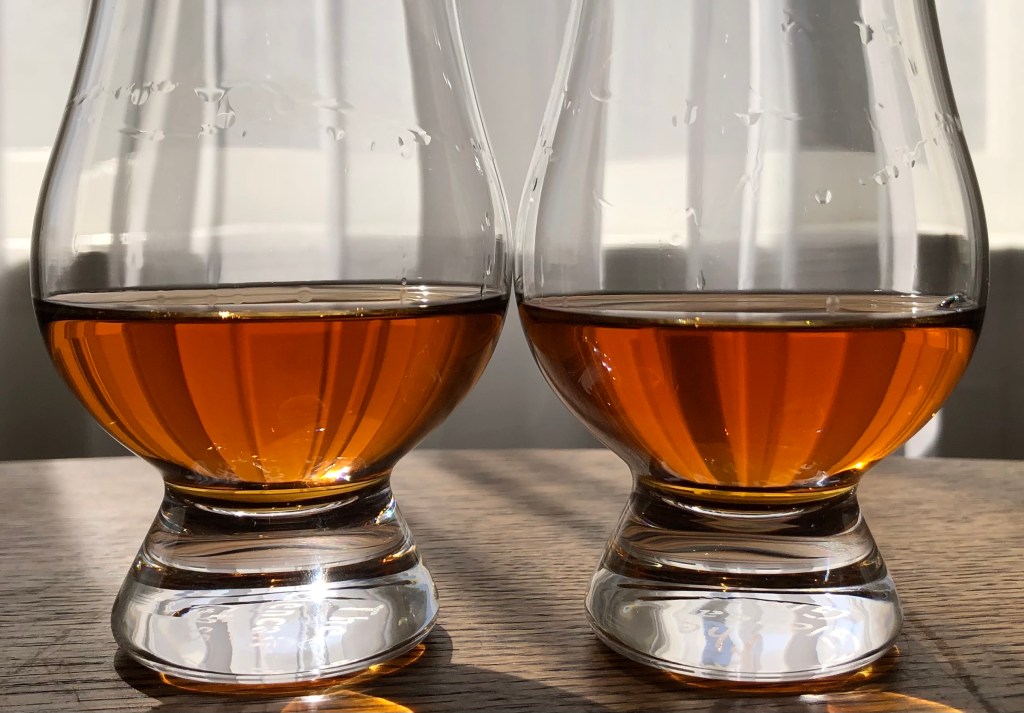
On the nose, the family resemblance is clear. The Pure Kentucky XO comes across more openly, and the Noah’s Mill more reserved. With the Pure Kentucky XO I’m most aware of cinnamon, tangy caramel, and the fresh water / metal bucket note, with some surprise cherry pop tart now coming through. With the Noah’s Mill I get oak, baked cherry, dry cinnamon baking spices, a bit of chocolate cake, and orange zest.
On the taste and finish, the Pure Kentucky XO strikes me now with its creamy texture, the caramels more buttery than earlier. That butteriness continues into the oaky, chocolatey, slightly bitter finish. With the Noah’s Mill, I get a waterier texture, waterier flavors emphasizing oak and orange zest, leaving oak, oak tannins, and a numbing heat to linger on the finish.
I’m seldom compelled to pick favorites. But I’ve got to give it to the Pure Kentucky XO here. It has more to offer overall—comparatively, that is. Like its higher-proof cousin, there’s just something ultimately unsatisfying, even irritating about it.
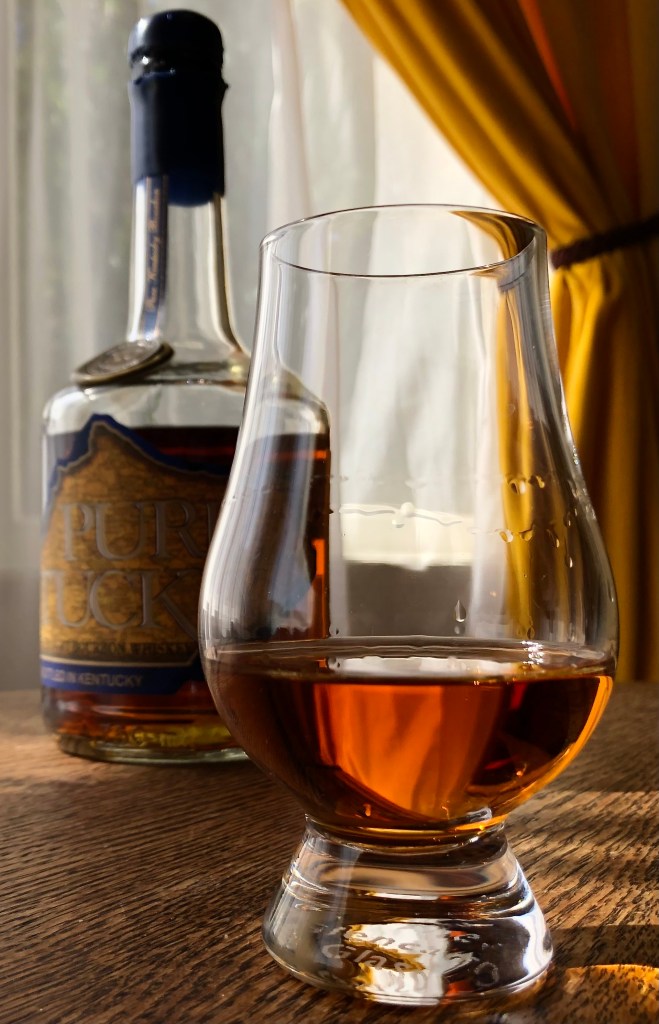
I’d purchased a different bottle of Pure Kentucky XO—it must have been either a 2018 or 2017 batch—back in 2018 for $22, half the usual ~$40 price at that time. This was at a wine shop that was liquidating their small spirits selection. That bottle was exceptional. The nose was nutty, with caramel, butterscotch taffy, faint lemon, and those recognizable herbal Willett spices. The taste was very like the nose, with a pepperiness, sweeter nuttiness, and a light creamy texture. The finish wrapped things up with both bright and dark notes, like light caramel wrapped around dark chocolate, punctuated by a touch of mint. Altogether it was like some excellent old fashioned caramel hard candy. Absolutely incredible for $22! At the $40 average in 2018 it’d also have been good. A common small batch bourbon with a quite uncommonly interesting taste profile, this bottle belied the whole unicorn phenomenon.
And yet this 2016 batch has such a strikingly different impact. I’m so curious to know why! But alas…
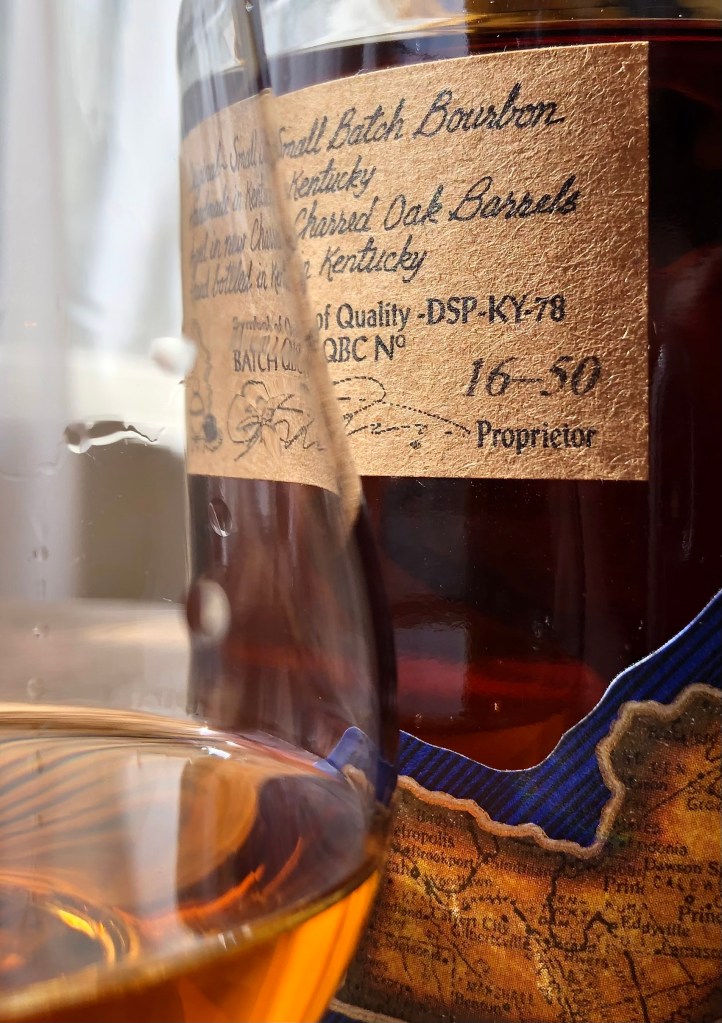
We tend to assume that a whiskey made some amount of years ago, or prior to some set of changes to a distillery’s process, will by nature be better, or at least intriguing. This 2016 batch of Pure Kentucky XO demonstrates that is not at all a dependable assumption.
Of course, now I want to track down a 2018 batch and compare. Was 2018 an exceptional year? If I could even find another 2018 bottle, the chances are less than zero that it would be the same batch I picked up for $22 five years ago. So there’s no way for me to actually test this question. But if I do ever spy a 2018 bottle lingering on some shelf, I’ll go for it whatever the batch. In whiskey tasting at least, pseudo-science will suffice when science is not an available option. 😉
Cheers!
Previously in Part 1:
Noah’s Mill from 2017
Coming Up in Part 3:
Johnny Drum Private Stock from 2016

 The Right Spirit